My mother has told me, several times, that before I was born my father had hoped to have five daughters. As the first born, I quickly put paid to that. It was probably in my father’s best interest. Back in my teens when my father had hair, I liked to tell him that all the grey ones were entirely due to his daughters and none of his sons.
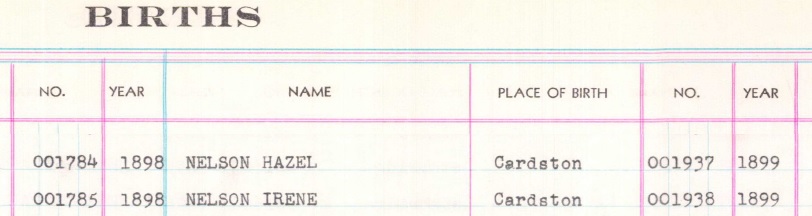
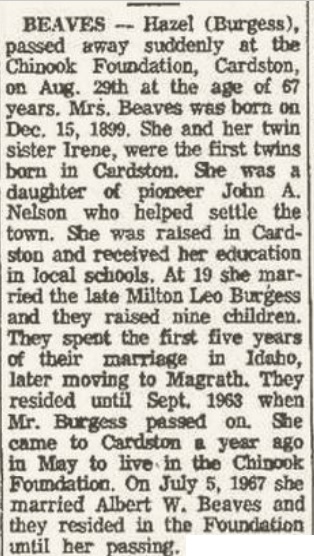
Hazel and Irene Nelson in the Alberta Birth Index
When I saw the topic for this week’s 52 Ancestors Challenge, the first sisters who immediately came to mind were my great grandmother and her sister. They are amongst the very few twins I actually have in my family tree. Unfortunately, they were sisters who never had the opportunity to know each other or to share a childhood together.
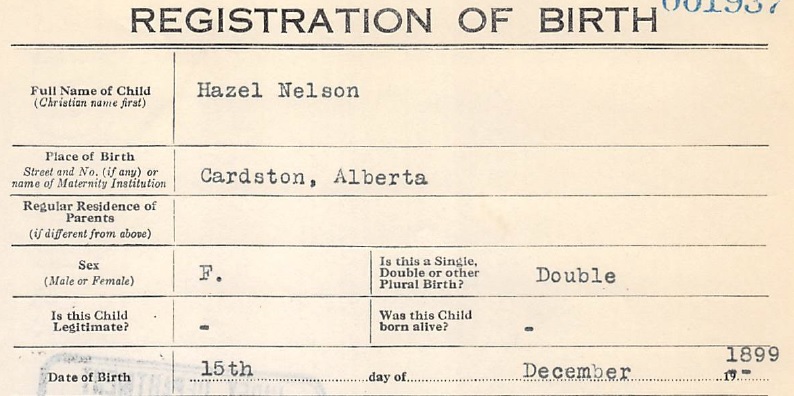
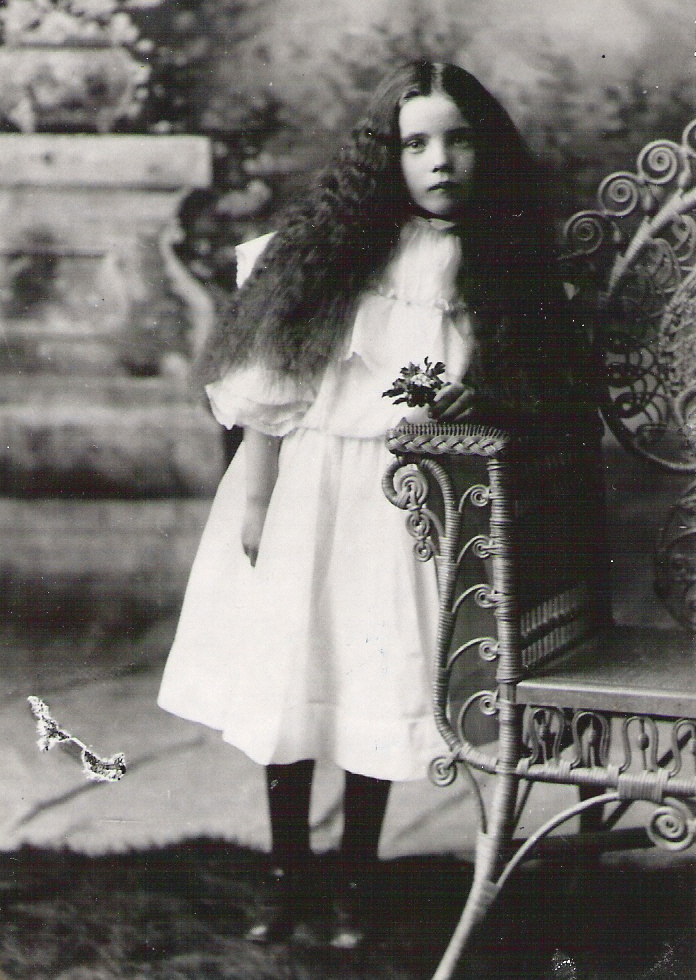
Hazel and Irene Nelson were born to John Alexander Nelson and Ella Elizabeth Thomas on December 15, 1899. The girls were the tenth and eleventh of twelve children. Given that Hazel was registered first, I take it that she was born first.
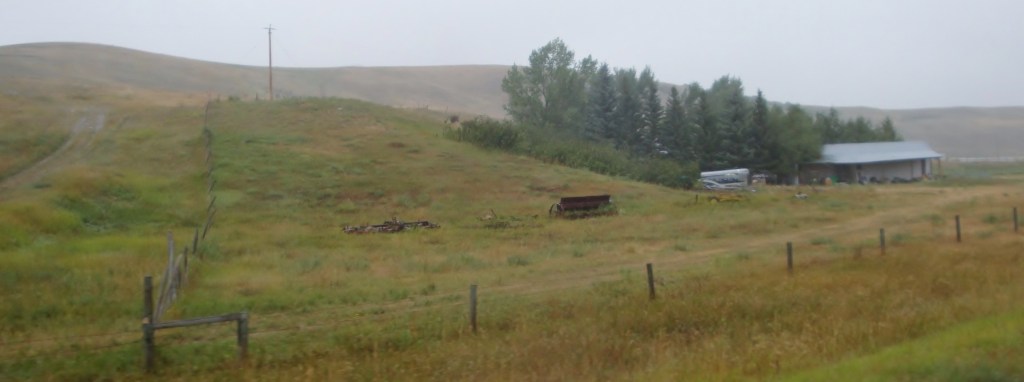
John and Ella were amongst the earliest settlers of Cardston, Alberta, which was founded in 1887 by members of the Latter Day Saints (Mormons). The Nelsons arrived in 1890 and began farming nearby.
This is where my great great grandparents, John and Ella Nelson, first farmed when they settled in Cardston, Alberta
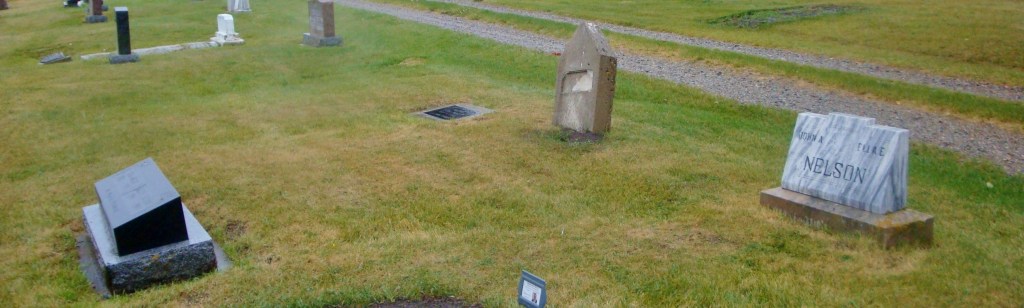
Hazel and Irene Nelson were the first twins born in Cardston. Sadly, Irene passed away five weeks later. I’ve been to the cemetery where she is buried. Unfortunately for me, I only discovered where she is interred after my trip. While I did not realize it at the time, Irene is buried next to her parents. The grave marker is damaged. Information for the Cardston Cemetery on the Town of Cardston website confirms that Irene’s grave is the one beside her parents. Irene’s brother is interred in the plot below hers.
Irene Nelson is buried beside her parents John and Ella, whose grave marker is the white one in the foreground. Irene’s grave is the one with the damaged headstone. The black marker on the left is Irene’s brother Seth Henry Nelson and his wife Mabel.
Hazel Nelson, about 1904
Hazel, on the other hand, lived to be 67. She and her husband, Milton Leo Burgess, had nine children, the oldest of whom was my grandfather, Leo. Milton died in 1964. Eight weeks before she died, Hazel married a widower, Walter Beaves. They met in the seniors’ home where they both lived, which Hazel called “the old fools’ home”.
Hazel passed away three days before I was born. My mother pretty much went from her grandmother’s funeral to the hospital for my arrival.
Twelve weeks of genealogy, my true love gave to me: the theme “Joined Together” for the 52 Ancestors Challenge. Rather than a lot of discussion, I thought this week I’d post photos of some of the couples whose unions ultimately resulted in…me!
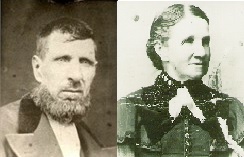
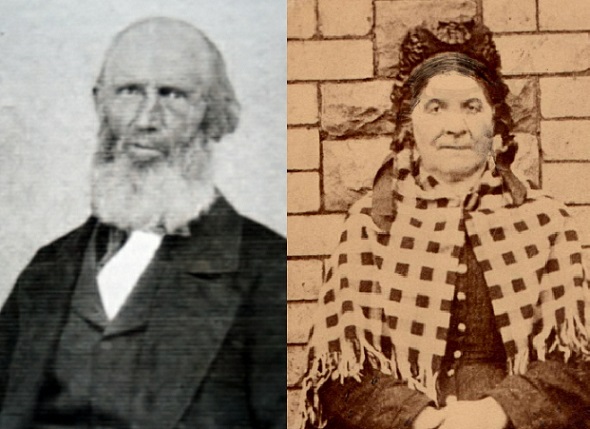
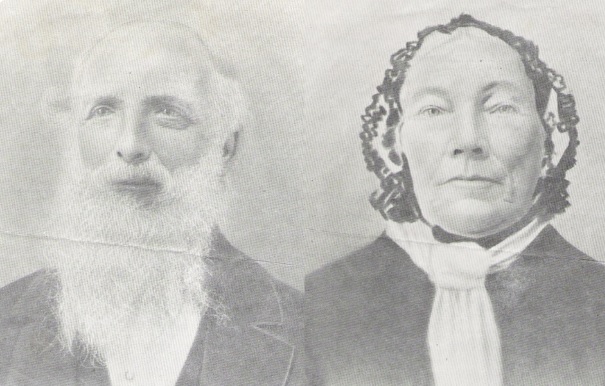
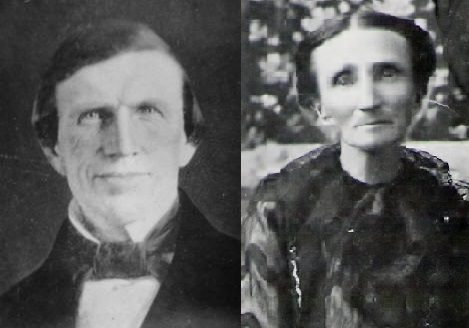
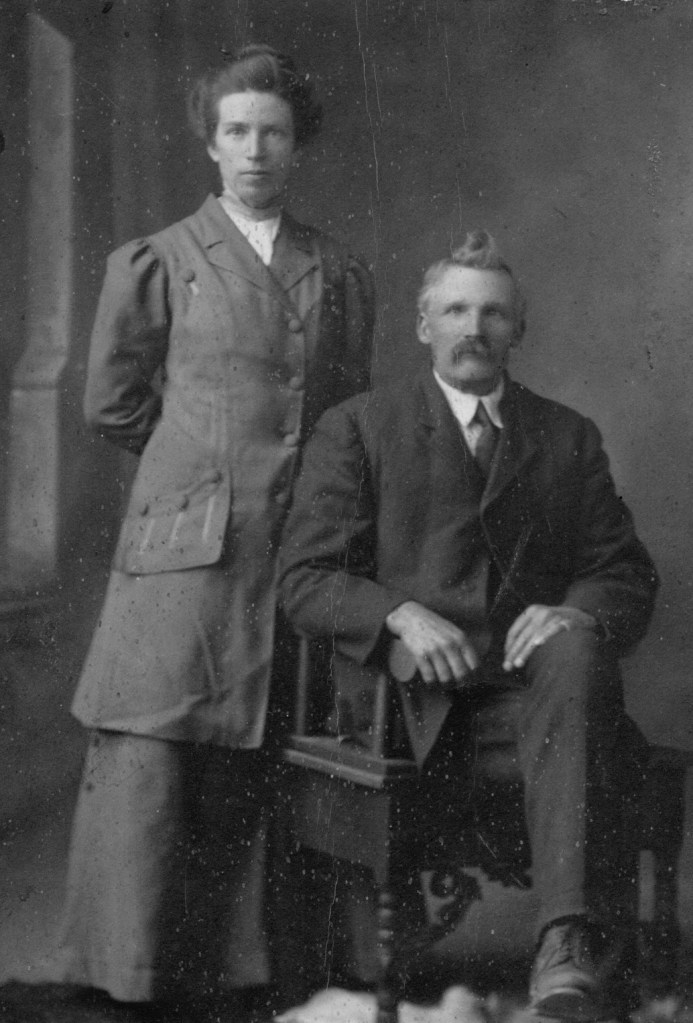
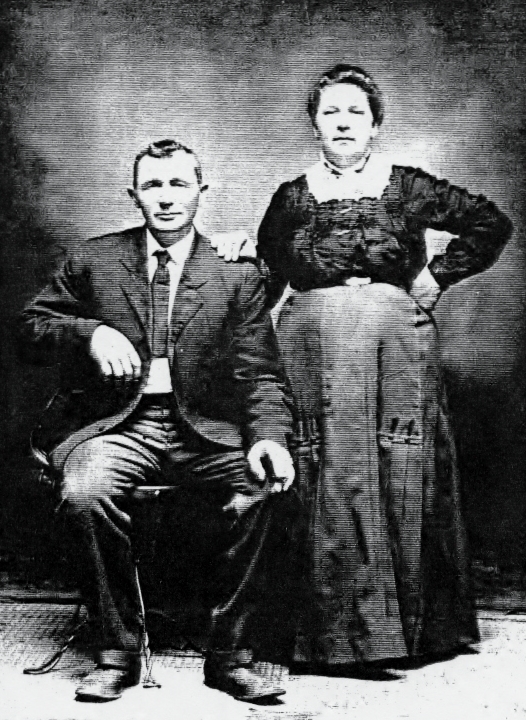
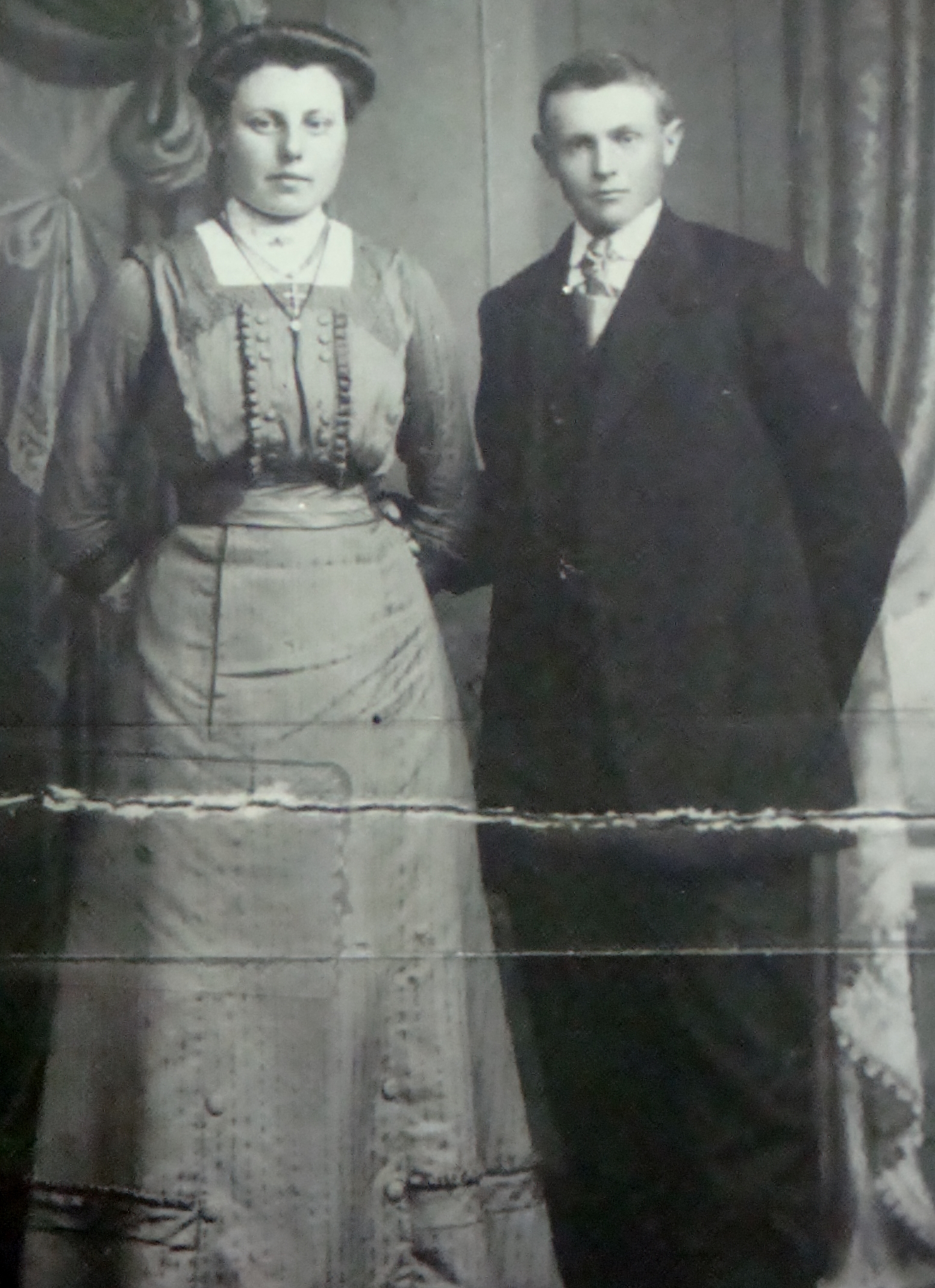
While I have photos of other (great) grandparents, I will only post for those of whom I have the pair. First, my maternal great great great grandparents.
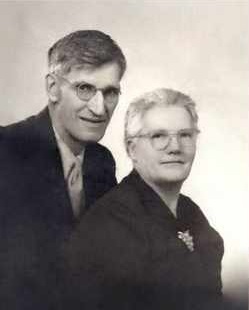
William Burgess (1822 – 1904) Charlotte Liggett (1837 – 1909)Henry Lyman Cook (1803 – 1869) Susan Turple (1818 – 1906)Robert Nelson (1818 – 1902) Elizabeth Joseph (1818 – 1902)Preston Thomas (1814 – 1877) Maria Hadlond (1838 – 1907)
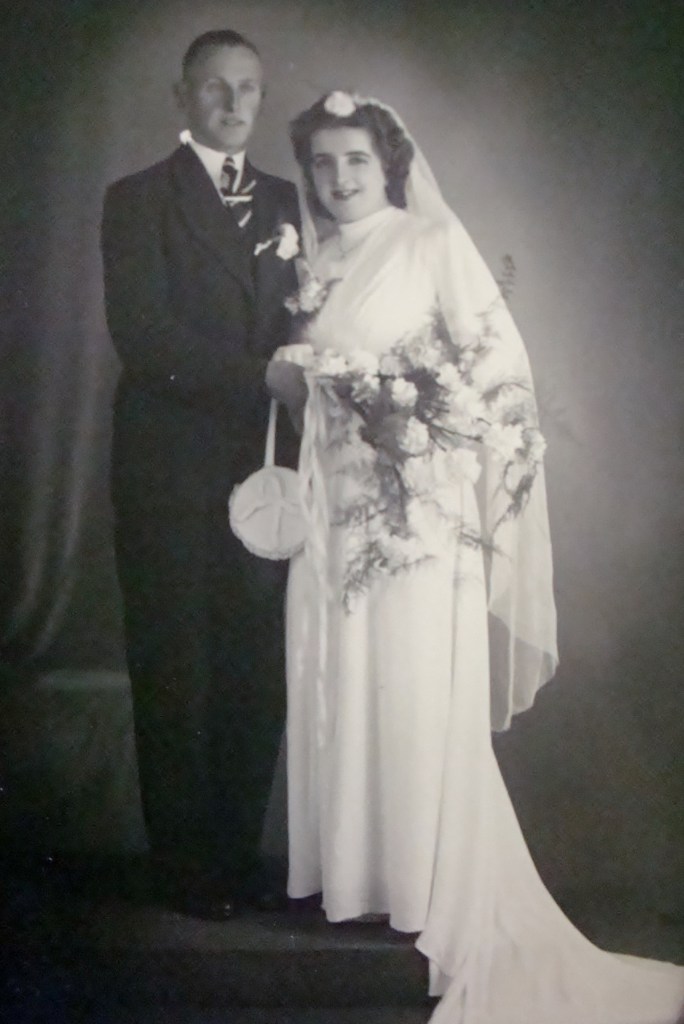
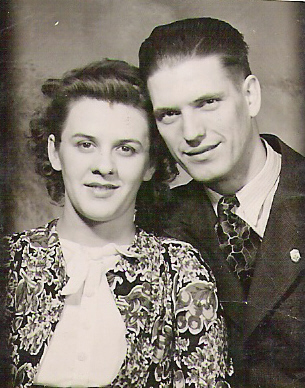
Adrianus Joseph “Arie” van der Fluit (1923 – 2002) Christina Komen (1923 – 2000)
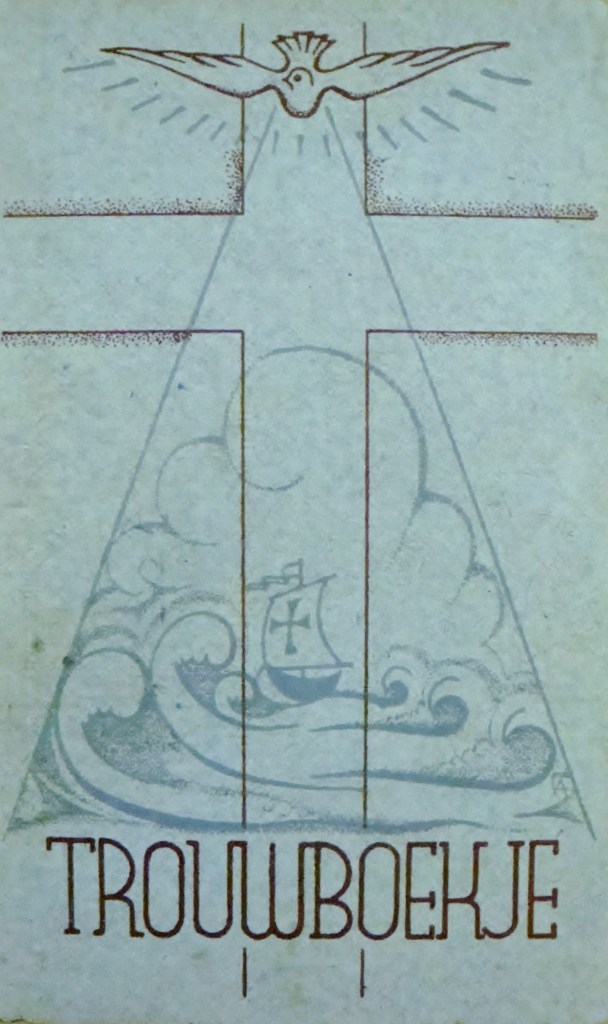
“Trouwboekje” means “marriage booklet” in Dutch. In the Netherlands, only a civil marriage is legally valid. A church ceremony can take place afterward, but is not recognized by the state. The registry office would issue one to a couple at they time they were married. They typically include an extract of the marriage registration. While they can vary from one municipality to another, a trouwboekje usually will include space for the birth information of the couple, as well as for the children of the marriage. They can also include information about religious matters, such as information about the church wedding and baptisms of the couple and their children.
My maternal grandparents.
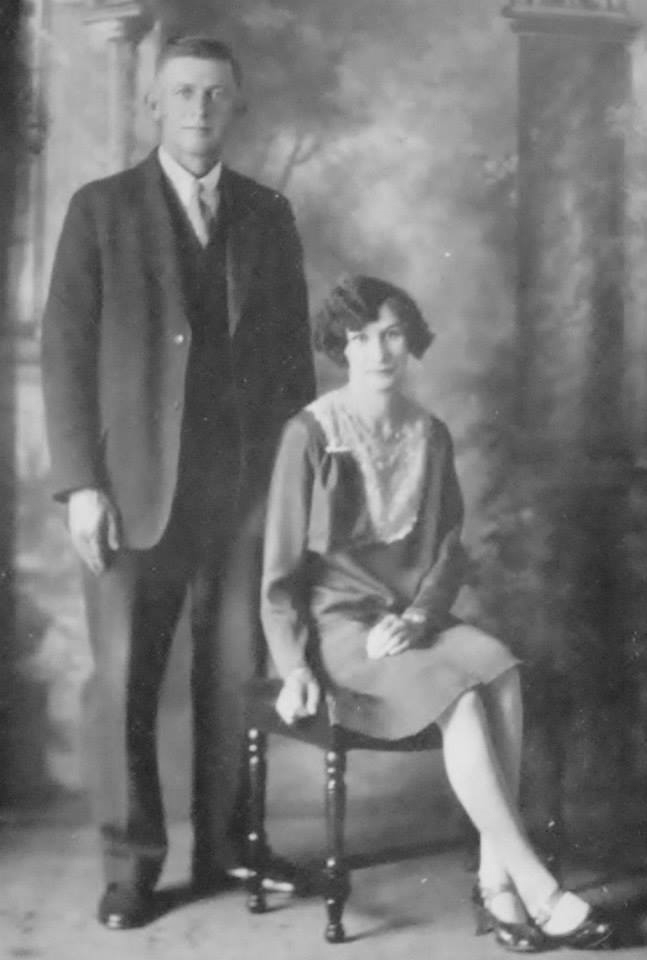
Leo Cleveland Burgess (1920- 1995) Helen Lerner (1921 – 1984) October 1971
Helen and Leo around 1947.
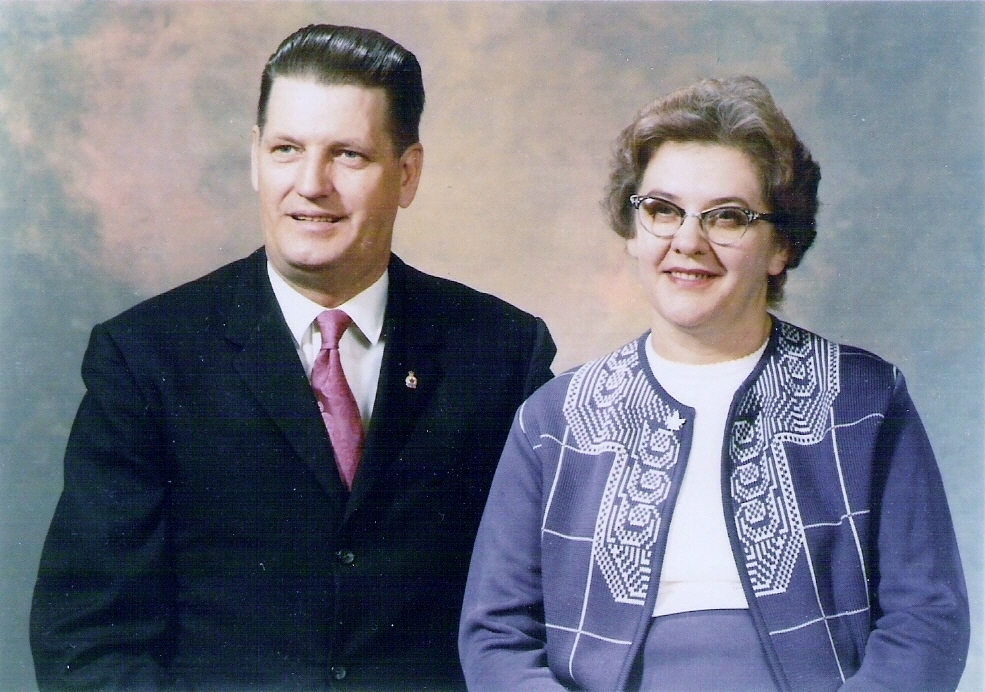
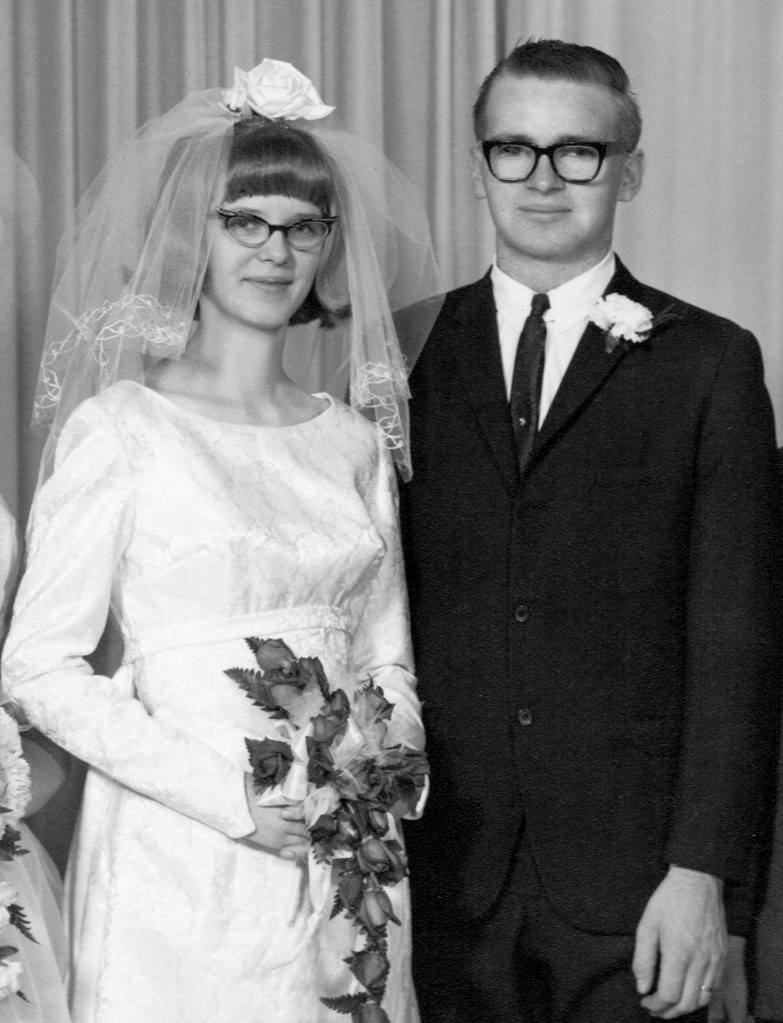
My parents. Married crazy young by current standards and still together, modelling what a great marriage should be.
I have to admit, I found little inspiration this week’s theme for the 52 Ancestors Challenge. My eldest suggested that I write about my Mayflower ancestor, but it’s not really a topic that speaks to me. While I know it’s a goal for many to find Mayflower ancestors, it wasn’t mine. I was underwhelmed and, somehow, strangely disappointed when I discovered I had a Mayflower ancestor.
As for literal flowers, from a family history point of view, I will acknowledge that when I think about it, they do remind me of each of my grandfathers.
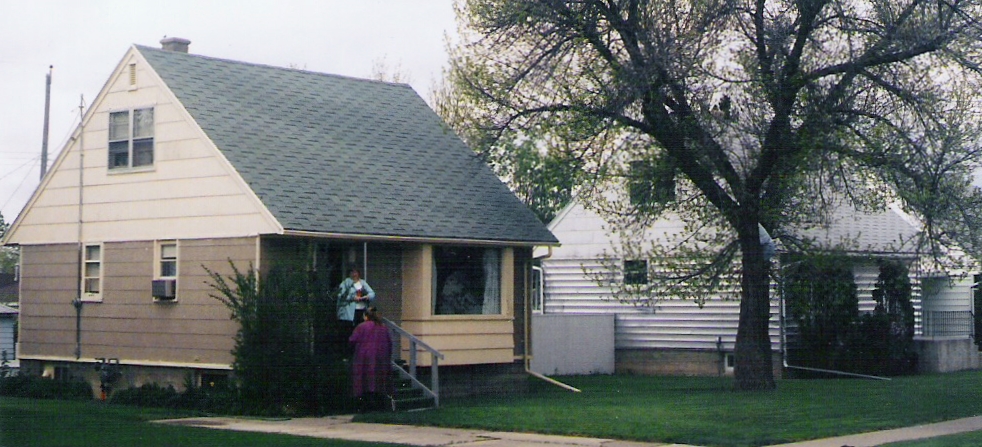
My maternal grandfather, Leo Burgess, had a garden that took up most of half his back yard. While he might have grown other things, my strongest memory is that every year he planted mostly potatoes. One year, when I was little, there was a bee shortage. My grandfather spent many hours going from flower to flower of each potato plant, dabbing them gently with a small paintbrush to pollenate them.
My maternal grandparents’ home in Lethbridge, Alberta. The potato garden was in the back, along the eastern half of the back yard. I took this in May 1995, after my grandfather passed away. You can see my mother and aunt Diana at the front door. We had gone in to sort through my grandfather’s things.
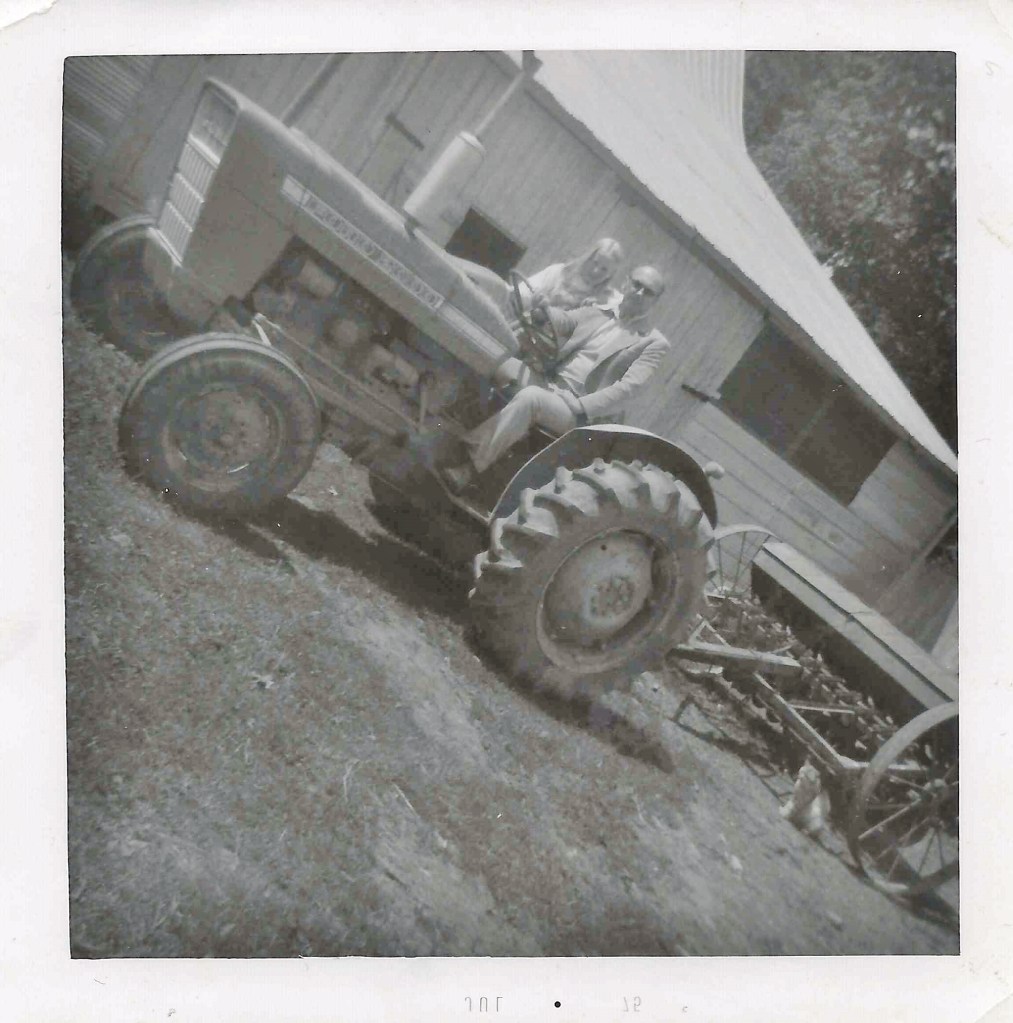
Not the house where my grandfather Vanderfluit turned the front yard into a flower garden. This was in the 1960s, when he still did farm work.
My paternal grandfather, Adrianus “Arie” van der Fluit, was an avid gardener. In his retirement, he removed all the grass from his front yard and replaced it with flower beds.
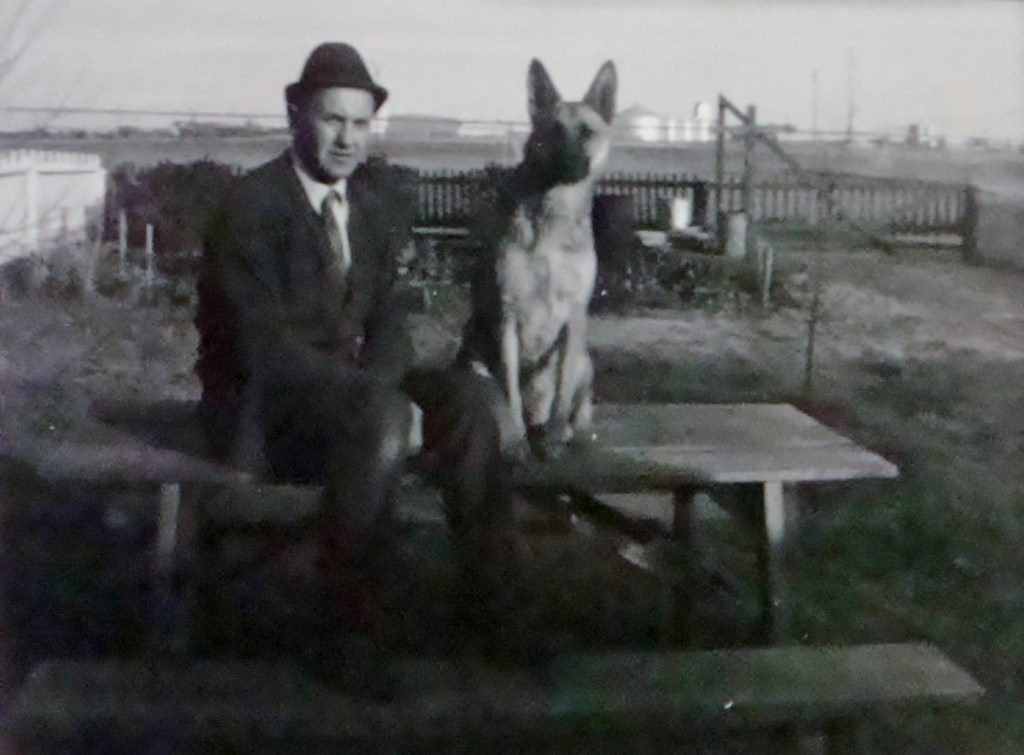
While there are photos of each of my grandfather’s gardens, I don’t happen to have any handy. However, while looking, I came across photos of my paternal grandfather showing him with something that I associate more strongly with him than flowers – dogs.
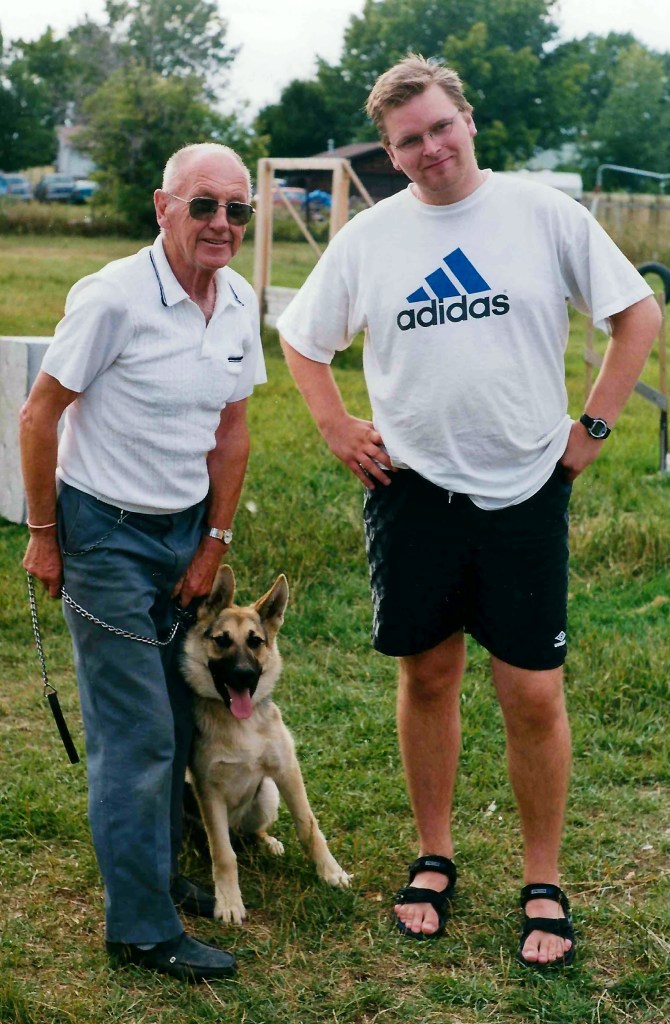
My grandfather in Lethbridge, Alberta with Sheba, in the late 1960s or early 1970s.
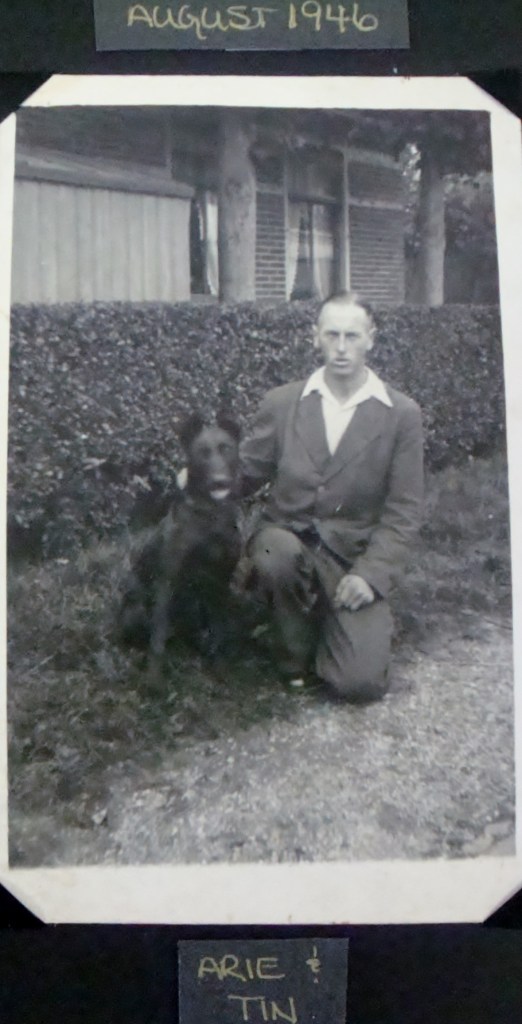
My grandfather in the Netherlands, a few months before he married my grandmother.
My grandfather started training dogs at a young age, when he was still in the Netherlands. It was something he continued to do after coming to Canada. In the 50s or 60s he even trained dogs for the police. As long as I can remember, my grandfather always had at least one dog, usually a German shepherd. My favourite was Sheba, the first dog of his that I’m able to remember.
In my lifetime, my grandfather always had German shepherds until I was in my mid to late 20s. Around that time he and my grandmother moved into an apartment. They were near the top floor. One day my mother told me that he had gotten a Bouvier. I had never heard of the breed before. From the sound of the name and because my grandfather had moved into an apartment, I figured it was some sort of small or toy breed.
Imagine my surprise when I first visited my grandfather after he acquired the dog and I saw how huge it was. My grandfather had turned the entire balcony – which was quite large – into a kennel. They lived next to a huge park, which was helpful. However, my grandfather quickly found more space for the dog. The building was largely unfinished at the ground level with large windows, balcony-style doors, and lots of natural light. My grandfather got permission to house the dog in there. Given the inch, he soon had a menagerie down there – along with many planters of flowers.
My grandparents later moved into a house in a small farm town. It had a huge back yard for dogs. My grandfather set up a huge obstacle course for them. He kept training dogs – even after losing his foot due to complications associated with diabetes – until he passed away at age 79. The last time I visited my grandfather before he passed away, he showed me his latest dog, putting it through its paces along the course. Doggone it, I was impressed, both with the dog’s training and with the fact my grandfather was still able to do what he loved, despite his age and health.
My grandfather in Raymond, Alberta, in September 1999, age 76, with Dekker, along with my brother Trevor.
In what seems a bit of a change of course, this week’s 52 Ancestors Challenge is “Worship”. As the only mayor I’ve found in our family tree is my wife’s third great grandfather, this week I’ll be writing about three men and women of the cloth on my father’s side of the family. My grandmother had a brother who was a priest and a sister who was a nun, while my grandfather had a sister who became a nun.
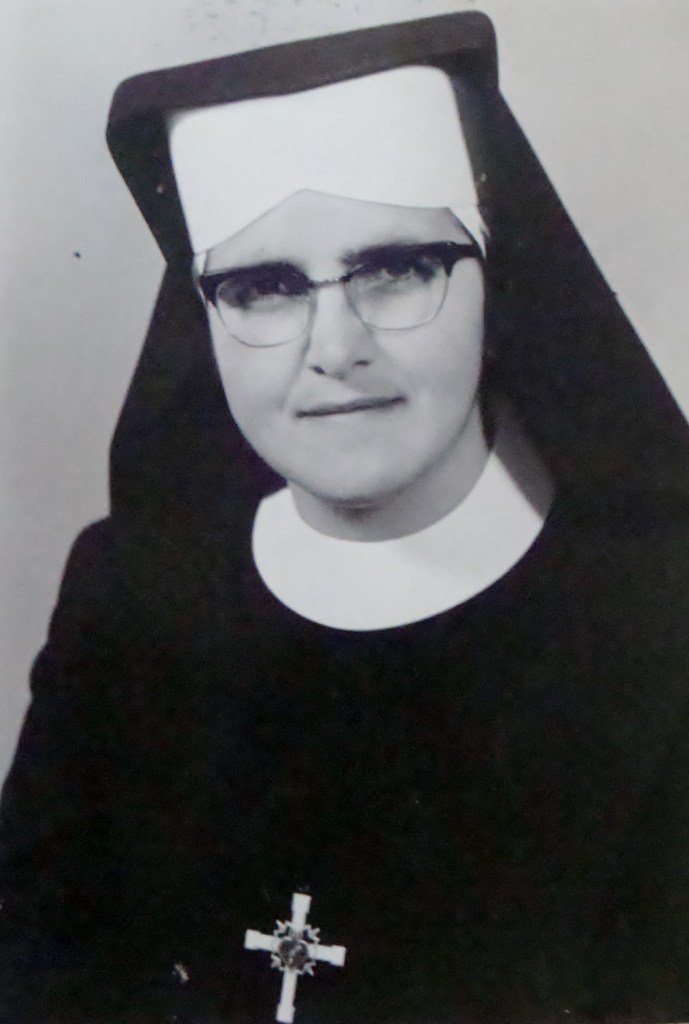
Zr. Marie Adriana Komen (1932-2021)
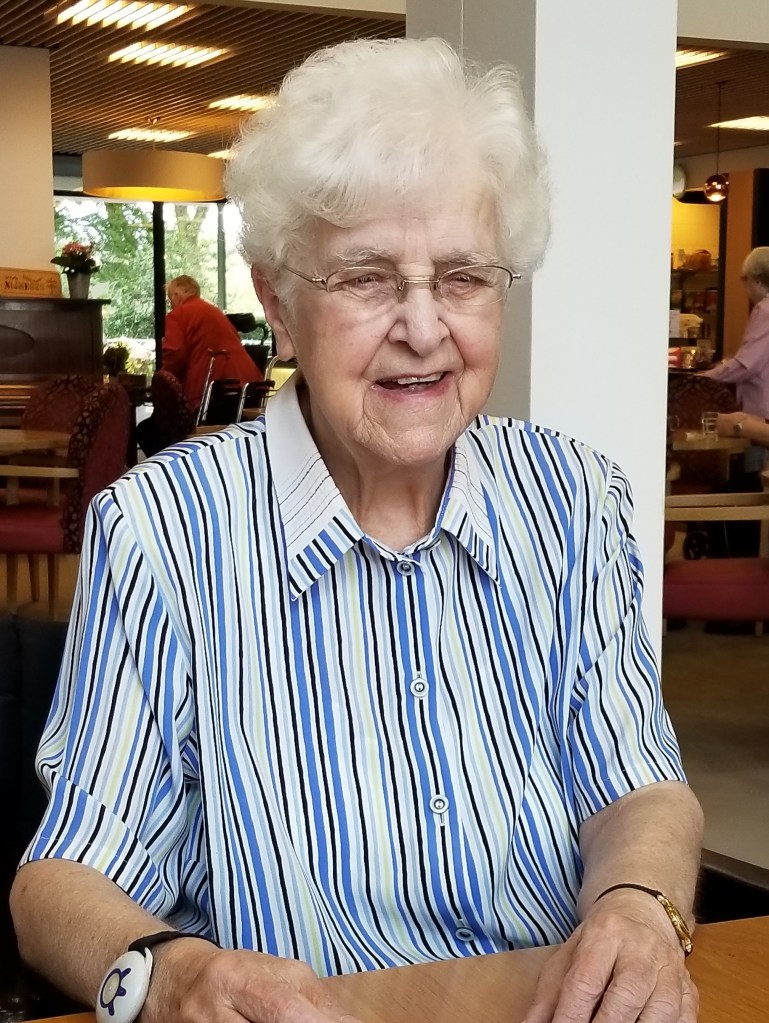
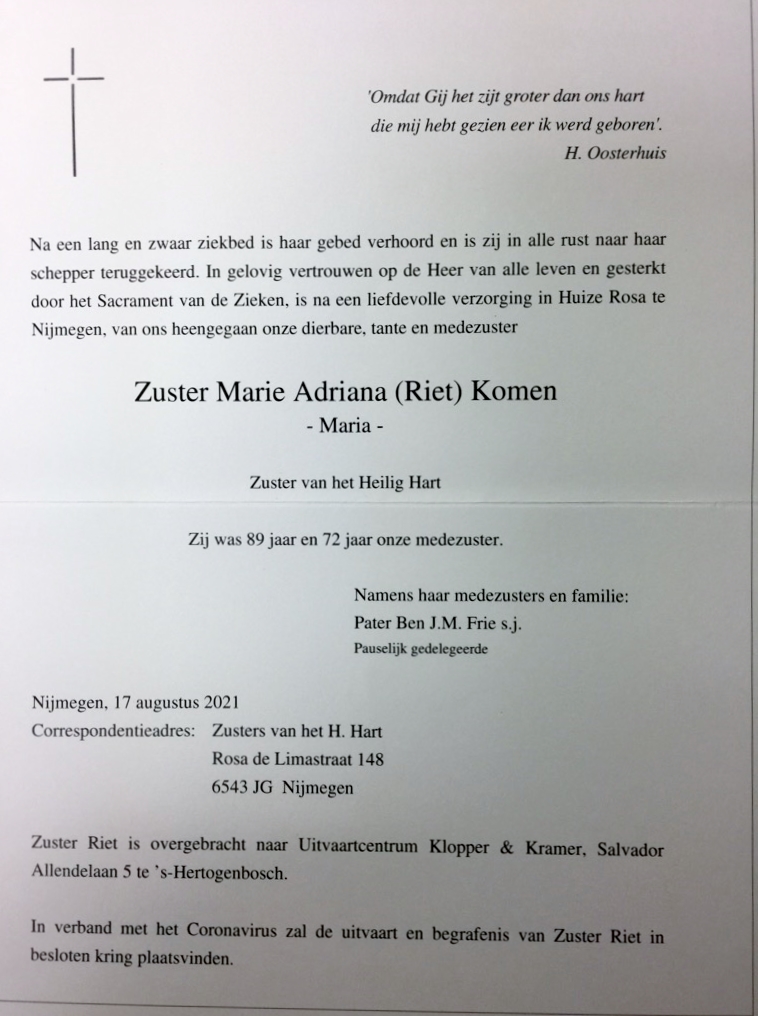
Born in 1932, Marie Adriana “Riet” Komen was the youngest of child of my great grandparents, Adrianus Komen and Elizabeth Bakker. On my reading of the funeral card and “familieberichten” (“family message”, something akin to an obituary) my cousin sent me after she died, Tante* Riet entered religious training when she was 17. Tante Riet took her vows as a Roman Catholic nun in August 1954, when she was 22. She belonged to the order “Zusters van ‘t H. Hart”, which translates as “Sisters of the Sacred Heart”, which was a teaching order. Tante Riet served as a missionary in Metro Lampung, Indonesia for many of years. Tante Riet also spent time in Finland, where her order also served. By 1997, Tante Reit was Mother Superior of her order, in Eindhoven, Netherlands. Later, she spent several years at St. Bernadette Monastery, in Maliskamp, Noord-Brabant before retiring to Nijmegen.
Tante Riet in 2017
When I was in grade ten, Tante Riet came to Canada to visit my grandmother in southern Alberta. My grandparents and great aunt made the drive to visit us in northern British Columbia. During that visit she gave me a hand-painted silk bookmark from her time in Indonesia. During my last visit to the Netherlands in 2017, my dad’s cousin drove me and my parents to visit her. We literally drove across the country, going from Langedijk in Noord Holland to Nijmegen on the German border in a matter of hours. Compare that to Canada, where driving across the whole country is much longer than three hours! I wrote to her several times afterwards, but she found corresponding more difficult in her last years.
Tante Riet passed away last year, in August 2021. Funeral services were restricted due to the Covid-19 pandemic. While a funeral home in Den Bosch, Noord-Brabant handled the services, while writing this it only just dawned on me that I do not know where she was interred.
Familieberichten for Tante Riet
Cornelis Jan “Kees” Komen (1928-1987)
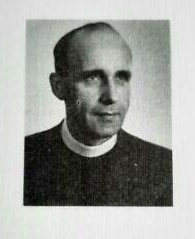
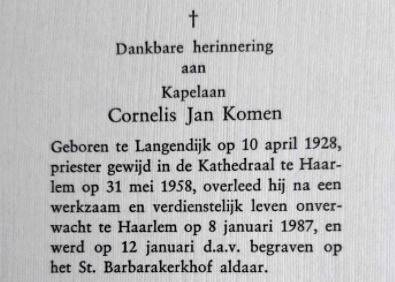
Cornelis Jan “Kees” Komen was the middle child of my grandmother’s family, born in 1928. Oom* Kees was a Roman Catholic priest. I do not know what order he belonged to. In his teens, he attended Het Klein Seminarie Hageveld in Heemstede, Noord Holland, Netherlands. Hageveld was a grammar school and “minor seminary”, a secondary school that prepared boys for eventual enrollment at an actual seminary to prepare for the priesthood. Oom Kees was ordained in May 1958.
Oom Kees is buried at St. Barbara Roman Catholic Cemetery in Haarlem, Noord Holland. He shares a grave marker with two other priests. Kees’s colleagues are named as “Pastoor” on the marker, while he is identified as a “Kapelaan”, suggesting that he had been assigned to work in a secular institution such as a hospital or school.
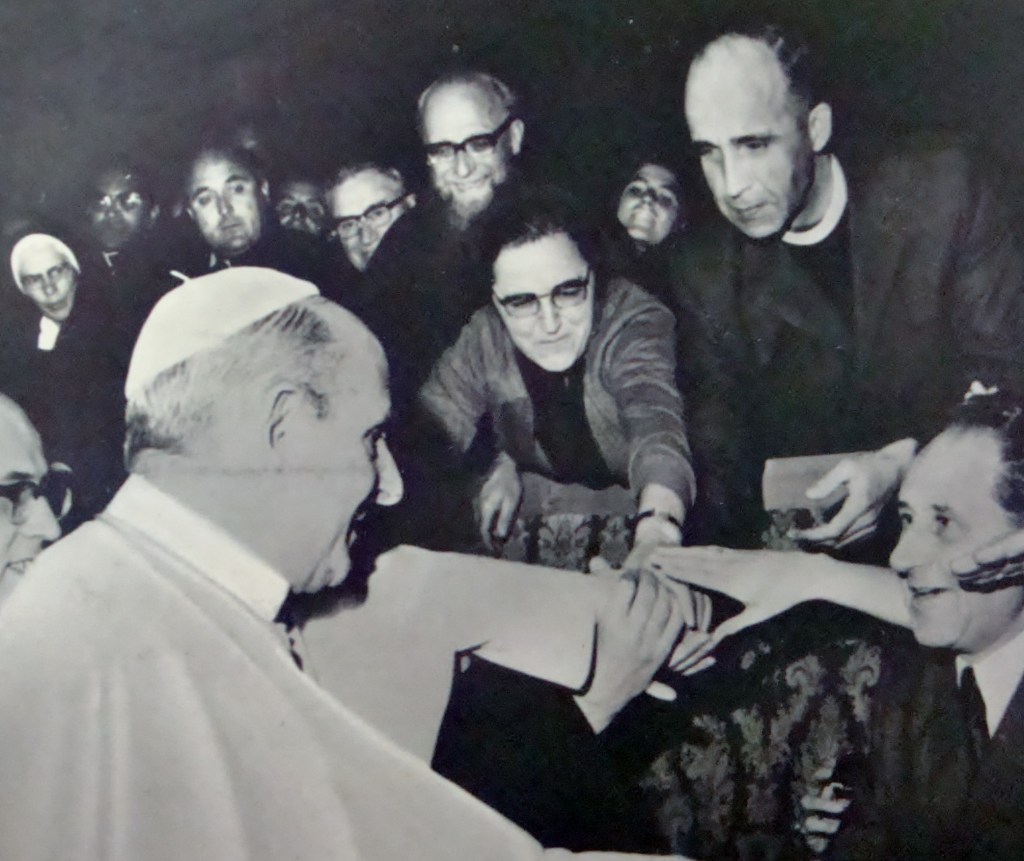
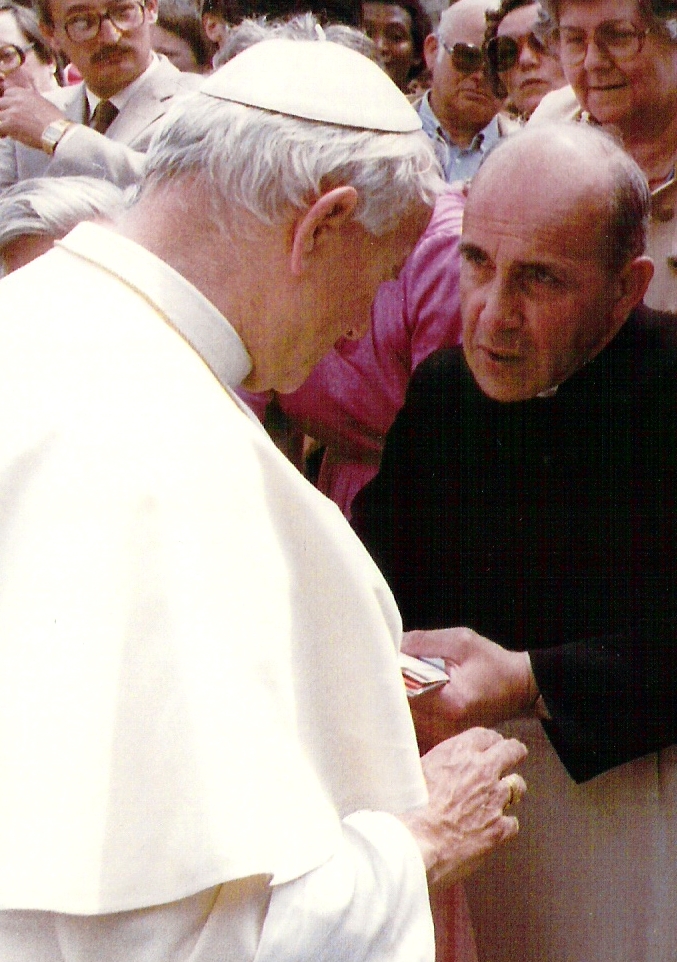
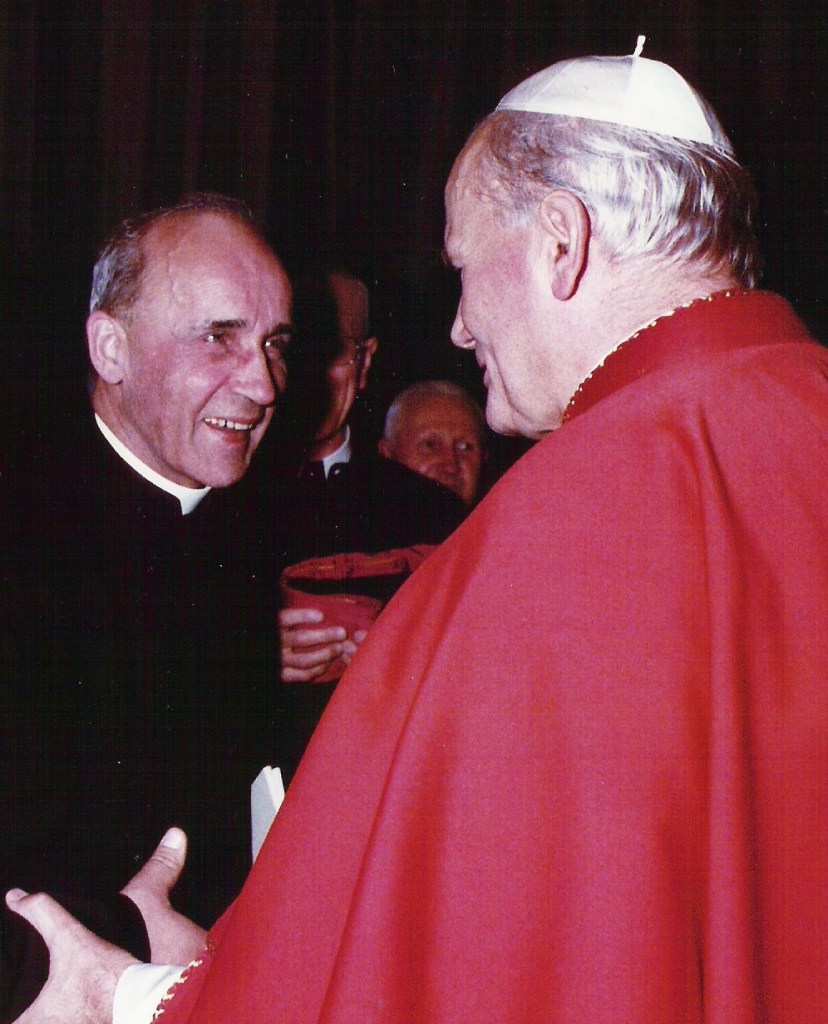
I never met Oom Kees, who passed away in 1987, so I do not know much about him personally. Until a few years ago, the only photos I had ever seen of him were of him and the Pope.
“Grateful Memory of Chaplain Cornelis Jan Komen Born in Langedijk on April 10, 1928, ordained a priest at the Cathedral of Haarlem on May 31, 1958, he died after an active and meritorious life in Haarlem on January 8, 1987 and was buried on January 12 at St. Barbara Cemetery“
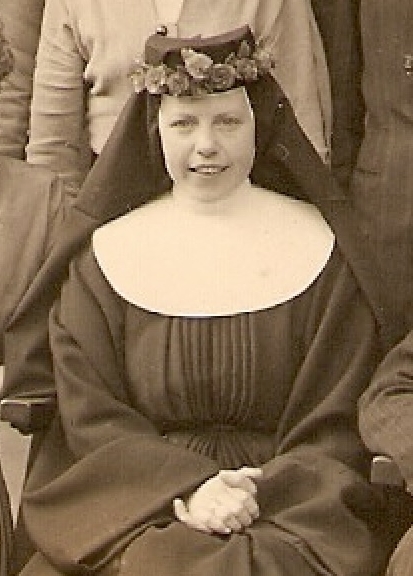
Tante Marie (Zuster Melania) in 1954, shortly after taking her solemn vows.
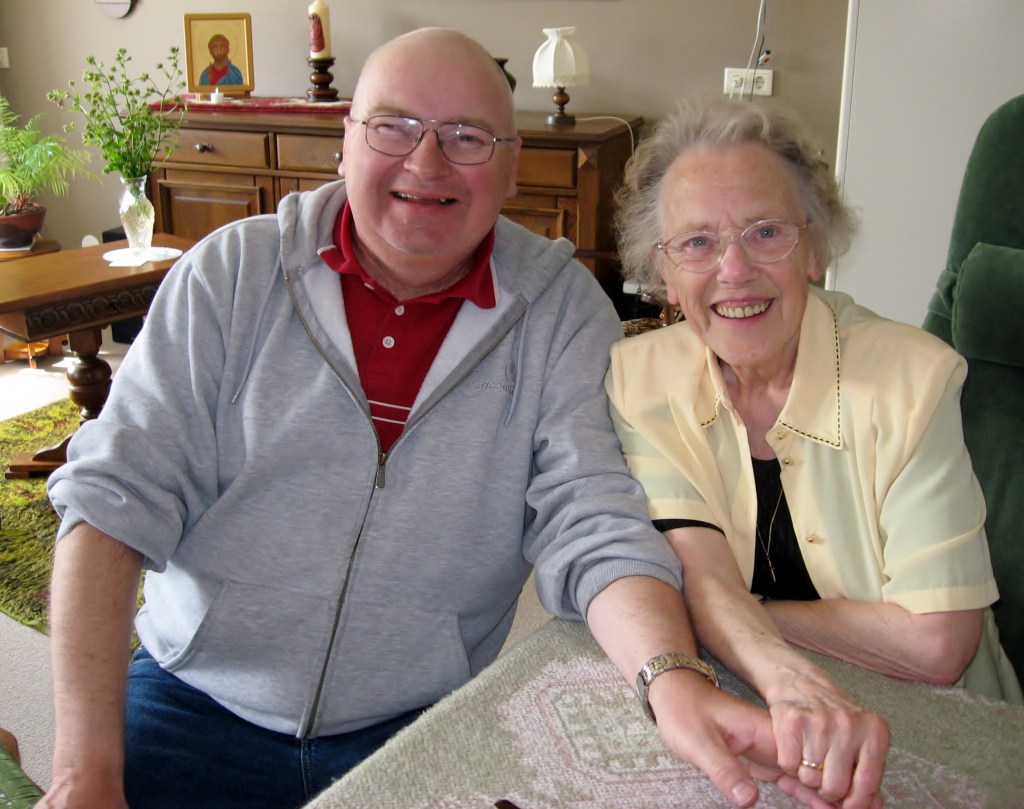
Turning to my grandfather’s side of the family, my Tante Marie van der Fluit was an Ursuline nun. Born in 1925, she likely entered the convent sometime around 1951. Tante Marie took her vows in 1954 and went by the name “Sister Melania”. As far as I have been able to learn, she spent most of her years of service in Bergen, Noord Holland. I met her once, when I was a kid, when she came to Canada to visit my grandparents. I remember being excited to meet her, because she was the first of my van der Fluit relatives living in the Netherlands who I ever met. Tante Marie passed away in October 2016 – three days before her youngest sister who lived in Canada, Anna “Anny” van der Fluit.
My father with Tante Marie (Zr. Melania) in 2009
“Tante” means “aunt” in Dutch. German and French as well.
 A Deck of Ancestors