52W Mark III – Week 47: Random Number

This week’s prompt for the 52 Ancestors Challenge is “Random Number”. At present, I now have 5,442 individuals in my primary RootsMagic database, which assigns each person a unique Record Number. That’s 148 more people than there were as of July 8, 2024, when the theme was “Random“. So, using the same method as last time, I generated a random number between 1 and 5,442. The result was 5,419.
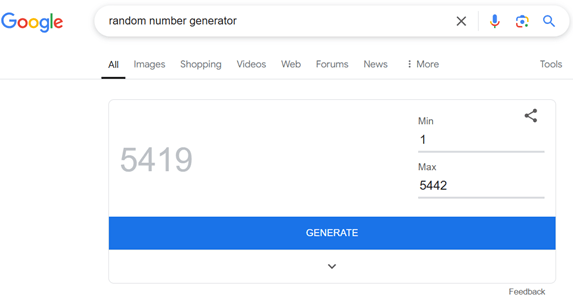
There was a 0.018% chance of this coming up.

Shirley Elizabeth Baxter is #5419 in my database. Shirley is my first cousin twice removed. As with the result I obtained last time I did this, Shirley did not have a very long life. She was born October 31, 1933 in Goshen, Utah and died April 25, 1934 – not quite six months old. Thus, it bears repeating what I said in last year’s post:

One might think that this is an unfortunate result, in that there is not much to say about someone who lived such a short life. However, I was quite happy with the result. To me, it’s important to remember those who never really got to live their lives. Not only were their lives dismally short, they’re often forgotten as a result. They might not have been long in this world, but their time on Earth should be noted.

Shirley was born to John Grant Baxter and Sarah Florilla (“Rilla”) Burgess, who married on October 12, 1911 in Nephi, Utah. Rilla was my grandpa Leo Burgess‘s aunt. Shirley was the ninth of ten children and the only one not to survive infancy. Her eldest brother Evan was 22 years old when Shirley was born.

One of the main sources of information I have for Shirley comes from an item in the Salt Lake City Telegram published on April 26, 1934. In fact, the evening edition contained two separate items.
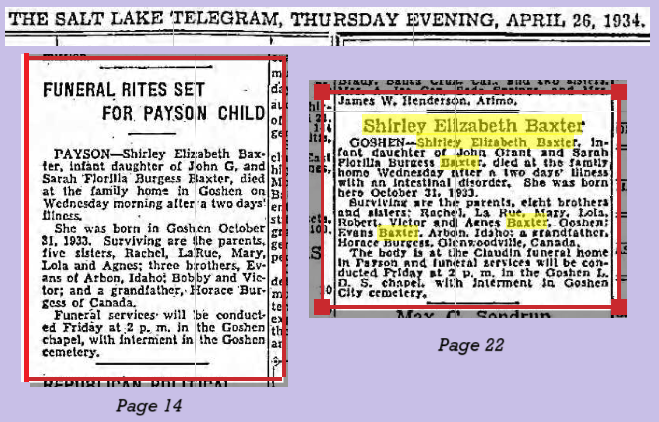
Horace Burgess, who is mentioned in both these items, is the most recent common ancestor that I share with Shirley. He was her grandfather and my great great grandfather.

The other place where I found information about Shirley was Find A Grave. Her entry includes a photo of her headstone.
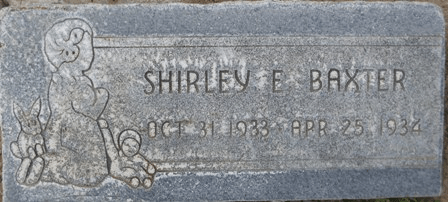
Since starting this post, I thought I’d see what else I could find about Shirley. After all, one of the elements of the Genealogical Proof Standard is requires reasonably exhaustive research to have been conducted.

At FamilySearch, I found Shirley’s death certificate. Because there are contract restrictions, one cannot print or download the image. However, it corroborates what I already knew about Shirley, including her cause of death. I couldn’t read the physician’s handwriting (how stereotypical!), but I showed it to my sister who is a medical doctor. She confirmed that it says “gastroenteritis”.

Other than discovering her grave is also included at BillionGraves, I have not found anything else about her.

Everyone dies twice. Once when you take your final breath, and then again the last time someone says your name.

Attributed to everyone from the ancient Egyptians to Banksy

I say the name “Shirley Elizabeth Baxter” and she lives on.
52W Mark III – Week 28: Trains

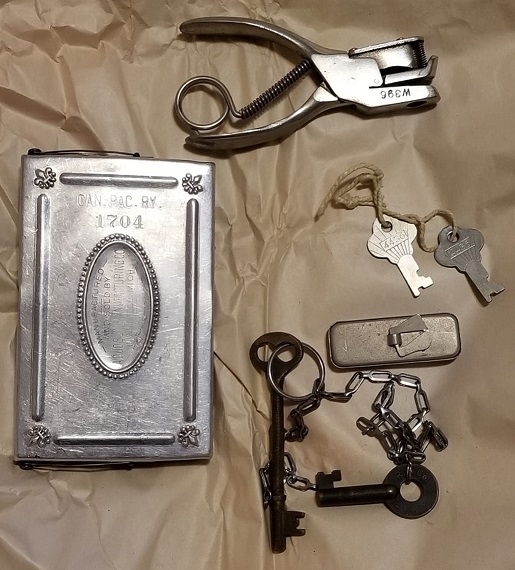
My grandfather, Leo Burgess (1920 – 1995), worked for the Canadian Pacific Railway for 32 years. I’ve written about various aspects of his time with the railway, such as the fact he was a proud member of his union and his brushes with Hollywood, including meeting his movie idol Glenn Ford.

Some of the items my grandfather used as a conductor, which are now in my possession

Leo was based out of Lethbridge, Alberta. He started as a brakeman and worked through the ranks, later becoming a yard manager. Early on, because of winter layoffs, he chose to work for the CPR in Cranbrook because there was more work there during the winter to provide a steady income. In 1972 he became a conductor, performing that role until his retirement in 1982.

One of my earliest memories was travelling on the train from Medicine Hat to Lethbridge. I’m sure my mother would correct me if I’m wrong, but in that memory I am sure my grandfather was travelling with us.

My grandfather often brought me to the train station in Lethbridge when I was little. Of course, the highlight was always getting to go on to the caboose. Of course, I’m showing my age in being able to recall a caboose as an everyday working part of a train and not just as a museum piece.

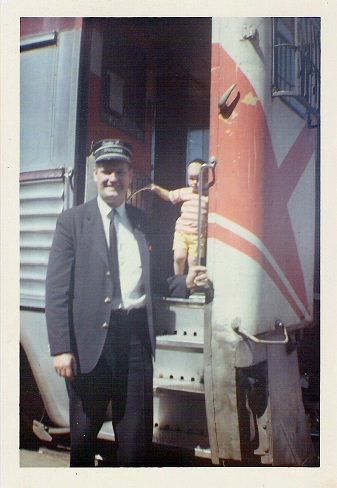
One of my favourite photos, showing me with my grandfather. If there’s any doubt, he’s the one on the left.

The station building still exists and has been designated with heritage status. In the 1980s, the railyard was relocated a few kilometers west of the city and the tracks were removed from central Lethbridge. In 1987, the station building was converted into the Lethbridge Community Health Centre and it still serves in that capacity.

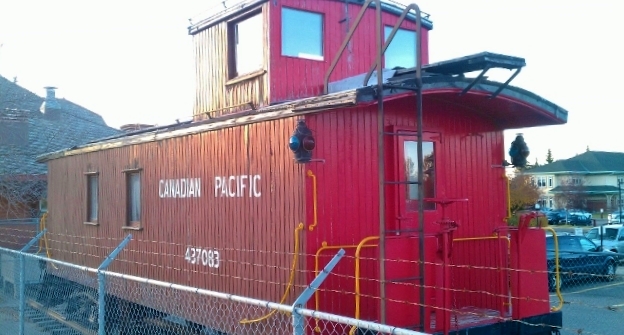
The former train station in Lethbridge is now the Community Health Centre. This caboose remains preserved beside the former station building. I wonder if my grandfather ever worked on this specific railcar. Heck, I wonder if this is one of the cabooses that he took me on!

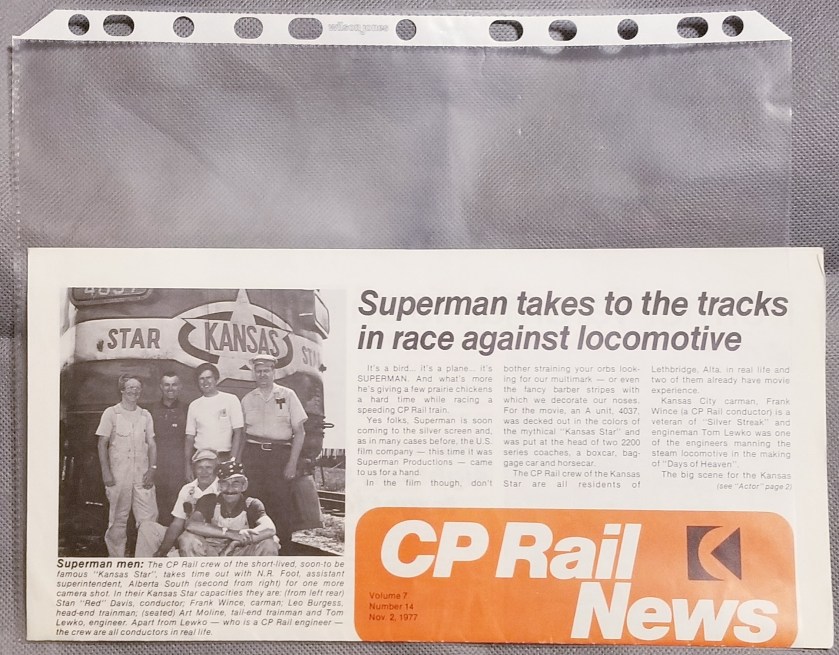
Of course, I would be remiss if I did not repeat the fact that working on the train crew for Superman: The Movie was one of the highlights of his time with the CPR. During the eulogy at my grandfather’s memorial service, one of his friends told an anecdote that suggests my grandfather felt that he had gotten familiar with the cast and crew. The scene took six days to shoot. Apparently during a break in filming, Ford was talking to a group of railway workers when my grandfather sauntering up, put his arm around the actor, and said, “How’s it going, Glenn?”

My grandfather was working in the engine during the filming of this scene. My parents live about a 30 minute drive from where this was filmed. The tracks are gone, but the memories live on.
My grandfather is the man wearing a cap standing on the right side of the photo.

52 Weeks Mark III – Week 12: Technology

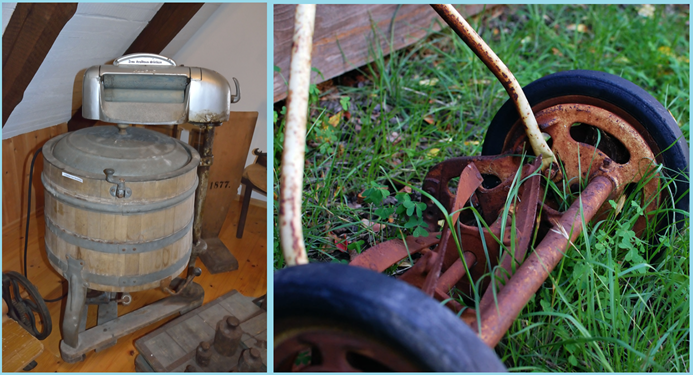
In the early 1970s, my maternal grandparents, Leo Burgess and Helen Lerner, were more than happy to rely on what seemed me to be horribly outdated and obsolete technology. My grandmother still used a wringer-washer and my grandfather used a push mower that to me seemed to be older than Methuselah.

These were both very much like the implements my grandparents used. I remember they each let me have a try at using them. Needless to say, both were hard work. I’ll stick to our modern gizmos, thanks.
[Images shared per Creative Commons licences 3.0 Unported and 2.0 Generic, respectively. Links: washer; lawn mower.]

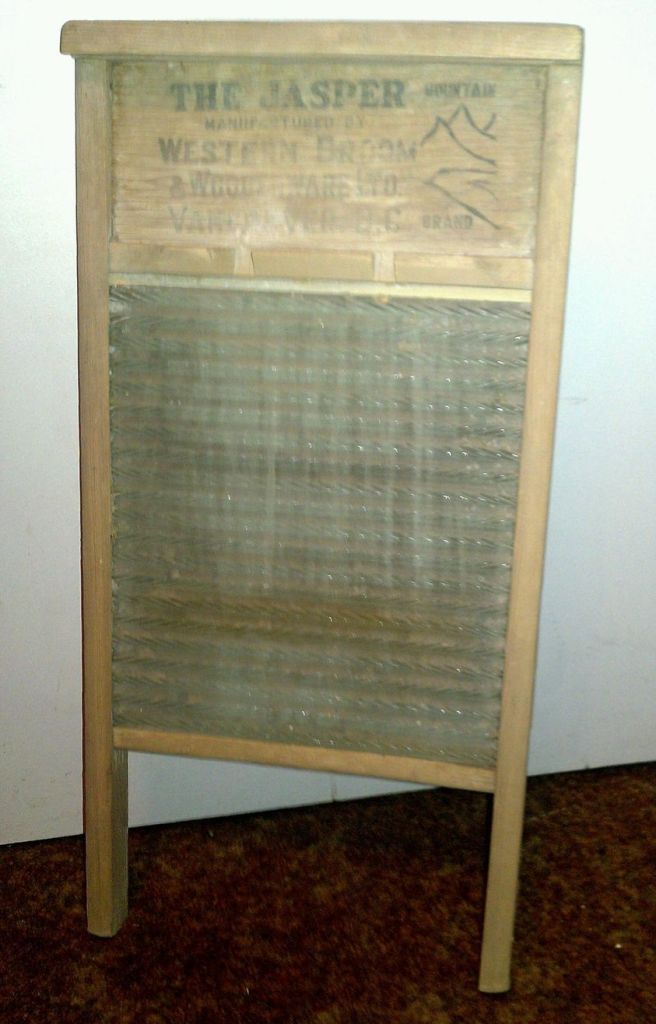
My mother still has the scrub board my grandmother used. She used to keep it in a spare room, which is where I photographed it. A few years ago my folks built a new house, so it now sits in a place of pride.

As can be faintly seen on the washboard, it was manufactured by Fraser Western Broom and Woodenware Ltd. in Vancouver, B.C. I see that the Museum of Vancouver, which is less than a half hour drive from where I live, has one in its collection. Based on the information on the item on its website, this washboard could not have been manufactured any later than 1950. That means my grandmother’s washboard must have been at least 25 or 30 years old when I first saw it.

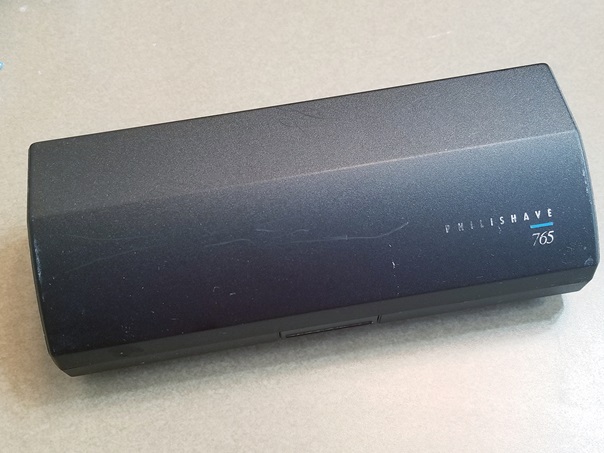
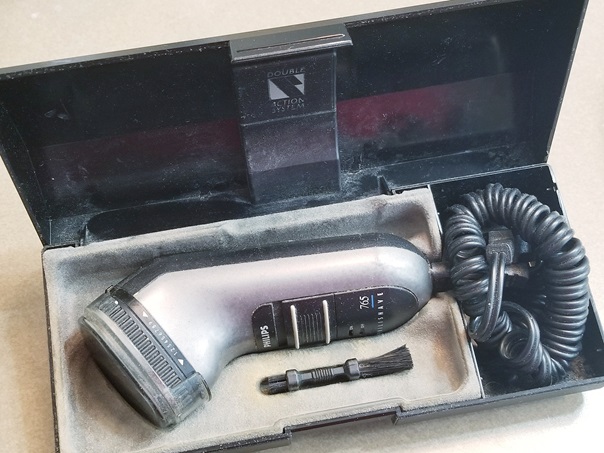
While it may seem my grandparents clung to the past, they did not eschew more modern technology. Ever since before I was in kindergarten, my grandfather always used an electric razor. We always loved it when he would hold it up to our cheeks so that we could have a shave, too. I have the last electric razor my grandfather owned before he passed away in 1995, a Philishave 765. Not only does it still work, but to my surprise I’m still able to buy replacement blades for it. I rarely use it, however, because I still prefer to use a manual razor; plus, several years ago my wife bought me a new one.

This razor must be at least 30 years old, if not older, but it still works!

52 Weeks Mark III – Week 10: Language

As I’ve written about before, my family are avid board gamers and card players. Something else many of us love are puzzles. Jigsaw, crosswords, logic puzzles, trivia, cryptograms, sudoku, and, of course, word search puzzles. Our youngest child not only loves doing mazes, he has been creating his own for the family to solve ever since he was six years old. Heck, the way I studied for the LSAT was by working my way through a stack of Dell‘s Logic Problems and Word Games. I was essentially just continuing to do something I was doing anyway, and I did very well on the exam. (Dell was also was the origin of the modern-day sudoku, which ran in its magazine under the name “Number Place” in the late 1970s – which was where I first saw the game.)

While he was primarily a card player – especially cribbage – my maternal grandfather, Leo Burgess, loved the Wonderword, a word search puzzle.

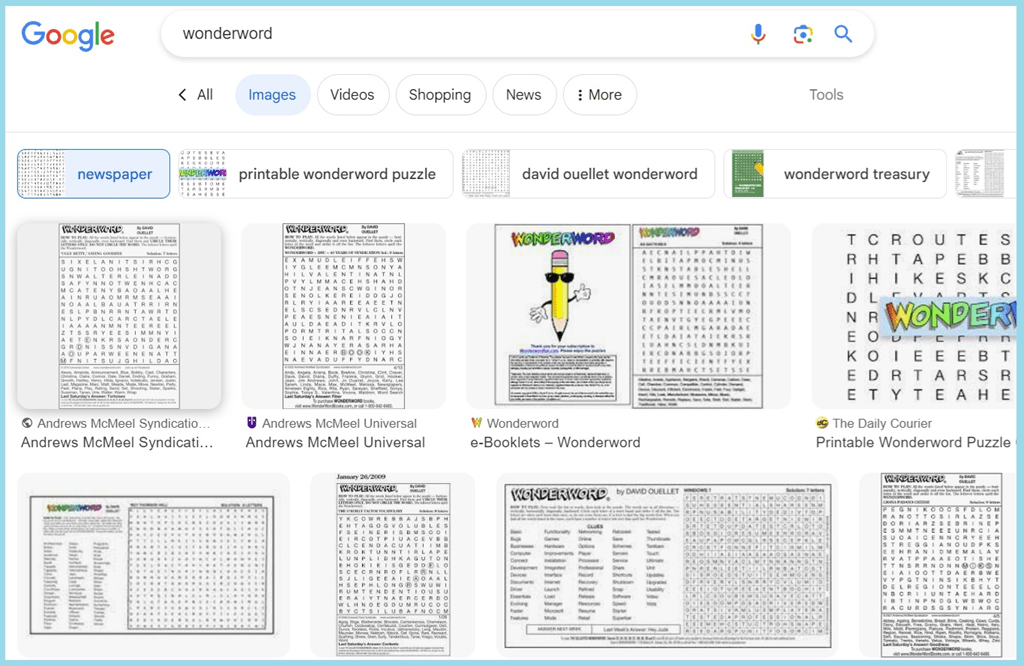
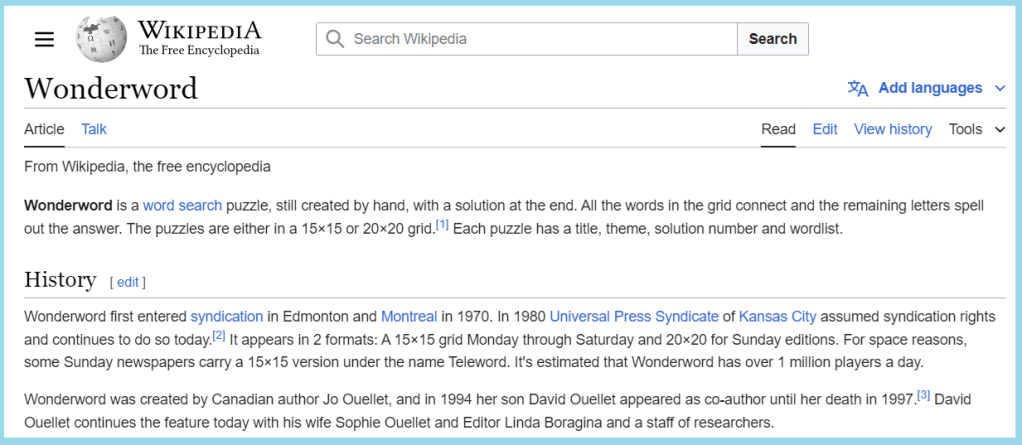
Google Image Search for the Wonderword. I was quite surprised to learn that it’s still a thing!

He did it every day. Unfortunately, his local paper, The Lethbridge Herald, stopped publishing it. However, we were living in Saskatchewan at the time and the Saskatoon Star-Phoenix continued to publish it. So I diligently clipped it from the paper every day. When I had what I considered to be enough, I’d mail him a small collection.

I loved doing it for him. I kept it up for a few years. I only stopped when we moved to British Columbia and our new local paper didn’t publish it.

Maybe my love for puzzles and word games is why I love genealogy. It’s essentially one perpetual puzzle!