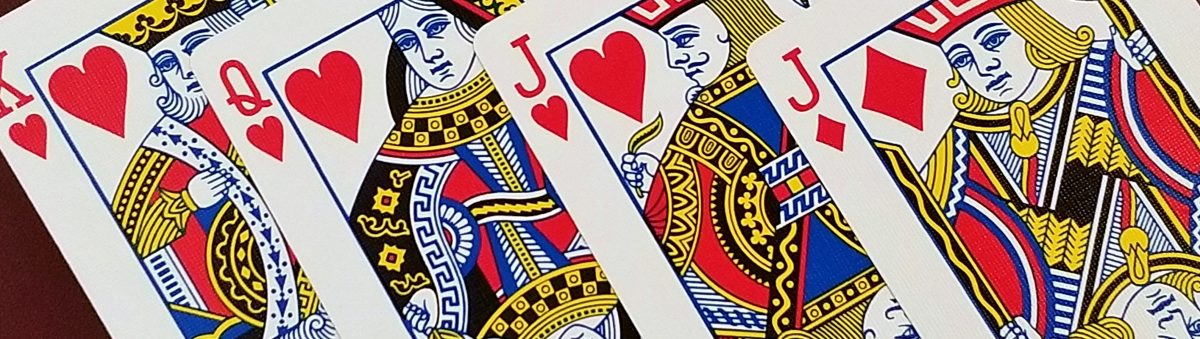
52W Mark IV – Week 7: Card V7 Aaltje Klaasse Stroet

Aaltje Klaasse Stroet (1813-1881)

While it’s still early days, I’m discovering that the different approach I am taking to this year’s 52 Ancestors Challenge is that it has prompted me to do a long-standing but long-languishing research goal: to bolster and verify the research I’ve done for the first few generations of my direct ancestors. While not quite the same, it’s similar to Yvette Hoitink’s “Level-up Challenge.” By focusing on individuals rather than topics, I’ve been discovering a lot of gaps in my knowledge and research for the 52 direct ancestors I’ve chosen to write about this year.

Take this week’s subject, Aaltje Klaase Stroet. A few weeks ago, I had little more than her birth, marriage, and death. Now I know a fair bit more – including a lot of information about the farm where she lived and worked with her husband Dirk.

Aaltje was the youngest and tenth child of Nicolaus Dirkszoon “Klaas” Stroet and Geertje Jansdochter Molenaar. Aaltje was born on June 18, 1813, in Nieuwe Niedorp, Noord Holland, just like all her older siblings.

At the time Aaltje married in 1835, she worked as a housemaid in Nieuwe Niedorp; however, I have yet to find an entry for Aaltje in a Dienstboderegister (a register of domestic servants kept as part of a municipality’s Civil Registration Register). The most significant piece of evidence regarding Aaltje’s occupation as a housemaid is the registration of her marriage to Dirk Pietersz van der Fluit, which occurred on May 16, 1835 in Nieuwe Niedorp.

The top and bottom of Aaltje and Dirk’s marriage registration, which includes mention that Aaltje’s occupation was “dienstmaagd” (maid).

At the time Aaltje and Dirk married, Dirk was employed as a labourer. Dirk later took up farming. While he might have undertaken farming at an earlier time, in 1847 a stolpboerderij (“bell jar” or “covered” farm) in ‘t Veld, Noord Holland was registered in the names of Dirk and Aaltje. Until ‘t Veld was part of gemeente (municipality) Oude Niedorp; it is now within gemeente Hollands Kroon.

Two views of Aaltje and Dirk’s stolpboerderij from ‘t Is Mooi Weest magazine, December 2004. Both photos were taken after Aaltje’s death. The photo on the right shows Maria Veerman, the owner of the property after 1917, along with her daughter Geertje.

A stolpboerderij was a style of farmhouse that was common in the West Friesland area of Noord Holland. They were pyramid-like thatched roof buildings that served as a combination farm house and separate space for animals, hay, wagons, or tools.

The stolpboerderij that Dirk and Aaltje acquired already existed at the time the land registry in which it was registered was created, in 1832, so it is difficult to determine the time of its construction. In 1832, when the registry was created, the farm was owned by the Roman Catholic church of ‘t Veld. Aaltje remained on the farm after Dirk died in 1857, along with all their children, and it remained registered in her name.

Based upon these views from Google Maps, the stolpboerderij where Aaltje and Dirk is still standing.

According to the Bevolkingsregister (population register) for Oude Niedorp for 1860-1885, some of Aaltje’s children remained at the farm after they reached adulthood. In fact, three of Aaltje’s grandchildren through her second son Nicolaas (1838-1876) were living at the farm, at least as late as 1880.

Aaltje died on March 6, 1881 in Oude Niedorp, most likely at the farm in ‘t Veld. An index for the Roman Catholic Parish of St. Martinus in ‘t Veld indicates that Aaltje’s heirs sold the farm by auction. The index suggests that the church council purchased the land, “called the Hofstede, in the Leijerpolder”. That indicates that the farm was less than two kilometers from where my father was born, in Waarland.

The location of Dirk and Aaltje’s stolpboerderij, shown in ‘t Is Mooi Weest magazine, page 9, December 2004.
Dirk and Aaltje’s stolpboerderij was less than two kilometers due east of where my father was born. I see that I came within about 700 meters of this property, if not closer, during my last trip to the Netherlands. If only I had known!

However, another source shows that in 1882, a year after Aaltje died, the farm was sold by auction to Simon Groen and Marijtje Kuilboer.

Death registration for Aaltje Stroet. There was a clerical error in that her husband Dirk was recorded as her father; it is the crossed out item. The margin corrected the error, naming Dirk as her husband.

52W Mark IV – Week 6: Card V6 Dirk Pietersz van der Fluit

Dirk Pietersz van der Fluit (1811-1857) was a labourer and farmer.

This week we take a first look at my 32 Gx3 Grandparents, starting with
Dirk Pietersz van der Fluit. I actually got a bit sidetracked with this post, not because I was trying to fill gaps in my knowledge about Dirk, but because I kept returning to all the outstanding questions I have about Dirk’s father, Petrus Pietersz (“Pieter”) van der Fluit (1759-1829).

I have had a long-standing curiosity about the circumstances that caused Pieter, the eldest of 11 children, to pull up roots from Voorhout, Zuid Holland and relocate to Nieuwe Niedorp, Noord Holland, leaving all his other family behind.

The other thing I’ve started to ponder about Pieter is how he spent the first 40 years of his life. I know absolutely nothing about his life between baptism in 1760 and marriage to Maartje de Vlieger in 1800. Everything I’ve found so far indicates that Pieter married only once, yet I have to wonder if he was married sometime before he turned 40. However, despite all my efforts so far, I can find no record of Pieter before he married Maartje, including a previous marriage.

Unfortunately, Pieter is one generation beyond the scope of my writing plan for the 52 Ancestors Challenge for 2025. Maybe I’ll do a separate post about Pieter outside of the Challenge. In the meantime, this week is supposed to be about Dirk!

Dirk was the third of four children born to Pieter and Maartje. He was born in February 1811 in Nieuwe Niedorp, Noord Holland. He was born only a few short months after Napoleon abolished the puppet state of the Kingdom of Holland and incorporated the Netherlands as an integral part of the French Empire.

Church baptism register showing Dirk’s baptism on February 14, 1811, which is on the bottom half of the image. The entry at the top is Jacobus Stroet, Dirk’s future brother-in-law. Dirk married Jacobus’s younger sister, Aaltje.

I know nothing about Dirk between the time he was baptized and age 24, when he married Aaltje Klaasse Stroet on May 16, 1835 in Nieuwe Niedorp. Dirk was a labourer at the time he married and likely had been in that occupation for several years. He was still a labourer in 1843 according to the death registration for his son, Jan.

Within a year of marriage, the newlyweds had relocated to Oude Niedorp. Sometime around 1847 Dirk became a farmer in ‘t Veld, as that was the occupation listed in the death registration of another son, also named Jan. (There was a third Jan – my Gx2 Grandfather, born between the other two Jans.)

Together Dirk and Aaltje had 13 children; eight survived infancy. All 13 were born in gemeente (municipality) Oude Niedorp, but most likely in ‘t Veld, which was one of the villages in the gemeente. ‘t Veld is now within gemeente Hollands Kroon.

Dirk spent the rest of his life in ‘t Veld (Oude Niedorp). He died there on February 8, 1857, likely little more than a week after his 45th birthday. It appears that Aaltje took over the farm, and lived another 24 years.

Dirk’s death registration.

As for Pieter, like a dog with a bone, I couldn’t stop poking at various sources to find out his past marital status before marrying Maartje. Lo and behold, a register of marriage banns for Voorhout listed Pieter as “jongeman”, which means he had never been married before. So what was he doing the previous 40 years?

Pieter van der Fluyt, jongeman, and Maria de Vlieger, jongedr. So neither had been married before.

52W Mark IV – Week 4: Card V4 Johannes Jansz (Jan) Pater

Johannes Jansz (“Jan”) Pater (1862-1935)

I’ve always found it amazing when talking to my grandparents’ generation about their grandparents. I remember when my great aunt Addie casually mentioned in passing about how she’d usually go to her grandmother’s house every day after school. It immediately popped into my head that she was talking about someone who was born in the mid-19th century. It felt like a bridge through time.

Likewise for my Gx2 grandfather, Johannes Jansz (“Jan”) Pater. I found an article in a Dutch magazine, Toendertoid: Stichting Waarland van Toen (“Then and There: Foundation of Waarland“) containing an interview of my great uncle Jan van der Fluit (“Ome Jan” 1918-2011), where he shared childhood recollections of his grandfather Jan Pater. I met Ome Jan on my first trip to Waarland. He was still living in the house where he was born and spent his childhood. Reading Ome Jan’s story made me feel like there was no barrier in time and space between me and my Gx2 grandfather.

Jan’s birth registration

Jan Pater was born on April 14, 1862 in Oude Niedorp, Noord Holland. By 1882, Jan was working in Oude Niedorp as a farm labourer, as noted in a militia register. Military service was compulsory. Jan’s military service was as a conscript under the national service (the militia), somewhat equivalent to reserve or national guard duty. Adrianus was assigned to the “torpedo corps”. The militia register shows that Adrianus was 172 cm (5′ 7 1/2″) tall with a flat face, low forehead, gray eyes, a “just” nose, and blond hair.

Jan remained in Oude Niedorp at least until 1888, working as a farm labourer. On April 19, 1888, he married Ariaantje Jacobs (“Adriana” or “Jaantje”) Bleeker in gemeente Harenkarspel, Noord Holland. At the start of their marriage, they briefly lived with Adriana’s parents, but by the time their first child was born they had moved out on their own. Together Jan and Adriana had four children, three boys and one girl (my great grandmother, Teetje Pater). The eldest only lived a few weeks; the others lived to adulthood.

After he and Adriana were married, Jan continued to work as a labourer. Sometime around 1917 he began farming in Slootgaard, a village within Harenkarspel. It is now part of gemeente Schagen.

According to Ome Jan’s account, Jan Pater had over three acres of land where he carried out mixed farming. Jan’s youngest son – and Ome Jan’s uncle – was also named Jan, who helped on his father’s farm. The elder Jan had four cows and a horse, while the younger Jan had 100 brown and white chickens.

My records indicate Jan continued farming in Slootgaard at least until 1930, when he was in his late 60s. However, the registration of his death in 1935 indicates that he was still farming at that time. Jan’s death was due to an unfortunate accident with a horse at a railway crossing.

Addendum March 2, 2025: Always pay attention to the FAN club: “Friends, Associates, and Neighbours”! When an ancestor has a lot of siblings, it can be tedious to do all the research on them, too. Often I’ll do a quick-and-dirty entry into my database and then leave it languish for years.

Tonight I was flushing out my research on Jan’s siblings. For the four oldest, it was mostly entering information from death records, as the first two died very shortly after birth and the next two died shortly before their 17th birthdays. It wasn’t until the fifth child, Antje, two years older than Jan, that any child of Jan Pater and Teetje de Groot survived to adulthood.

Going through Antje’s marriage registration, I saw that one of the witnesses was her younger brother Jan. Then I expanded the image on the screen and noticed the signatures on the proceeding page were the same. What? Zooming in, I realized it was Jan and Adriana’s marriage registration! A double wedding. Siblings Antje and Jan got married the same day!

Signatures of the parties and witnesses of the double wedding of siblings Jan Pater (left) and Antje Pater (right)

52W Mark IV – Week 3: Card V3 Maartje Veldman

I have photos of thirteen of my sixteen great great grandparents. Maartje Veldman (1862-1904) is one of three for whom I don’t.

Maartje Veldman was the mother of Johannis Albertus van der Fluit and my father’s great grandmother. She was also the second wife of Jan Dirksz van der Fluit. Maartje was born on December 22, 1862 in Nieuwe Niedorp, Noord Holland, the third child of Jan Veldman and Trintje Stoop.

Like many unmarried Dutch women of her social status, and several of my other female ancestors, Maartje worked as a dienstbode (domestic servant) before she was married. Fortunately for genealogists, many gemeenten (plural of gemeente, a form of municipality usually comprised of several communities) kept a Dienstboderegister as part of their Burgerlijke Standregisters (Civil Registration Registers). This was due, in part, because many domestic servants lived with the families they served.

What caught my eye about Maartje’s registration is that she started work as a domestic servant much younger than my other ancestors. She was 14 years old when she began her first job on June 7, 1877. Her family was resident in Barsingerhorn, but her work was for a family that lived about 7.5 kilometers south, in Oude Niedorp. Maartje remained with that family until February 5, 1879, a couple months after she turned 16.

Another thing that caught my eye was that two weeks before Maartje left Oude Niedorp, her older sister Elizabeth (1861-1935), moved to Oude Niedorp to work as a domestic servant. Elizabeth is directly below Maartje in the Dienstboderegister. Elizabeth was 17 years old at the time. Elizabeth remained there until January 23, 1882, when she returned home to Barsingerhorn. Elizabeth married her first husband, Arie Zut, three months later, on April 21, 1882.

Maartje and Elizabeth in the Oude Niedorp Dienstboderegister (Servant Register) 1860-1889.

I haven’t found any indication that Elizabeth had worked as a domestic servant prior to this posting. What seemed odd is that the younger sister left home for work before the elder sister.

Coming and going. The top line is Maartje, the one below is Elizabeth.

There was no rest for Maartje when she left Oude Niedorp and returned home to Barsingerhorn. She immediately began work for a new family that was also resident in Barsingerhorn, which meant that Maartje was able to live at home with her parents during this job.

The Dienstboderegister does not indicate how long Maartje worked as a domestic servant in Barsingerhorn. All I know is that she was no longer working when she married Jan.

Top of the entry for the registration of Jan and Maartje’s marriage.

Jan and Maartje had seven children together, but the first two died shortly after birth. The rest survived to adulthood and married. The youngest child, a daughter named Brigettha Maria, was born on July 4, 1904. Maartje died one month later, on August 5, 1904, in Oude Niedorp. She was 41 years old. While I do not have a cause of death, I cannot help but wonder if it had been related to childbirth.

The signatures of Jan, Maartje, and the witnesses on the marriage registration.

UPDATE!

February 15, 2025: Eureka, I’ve found a photo of Maartje!

It’s Maartje Veldman!