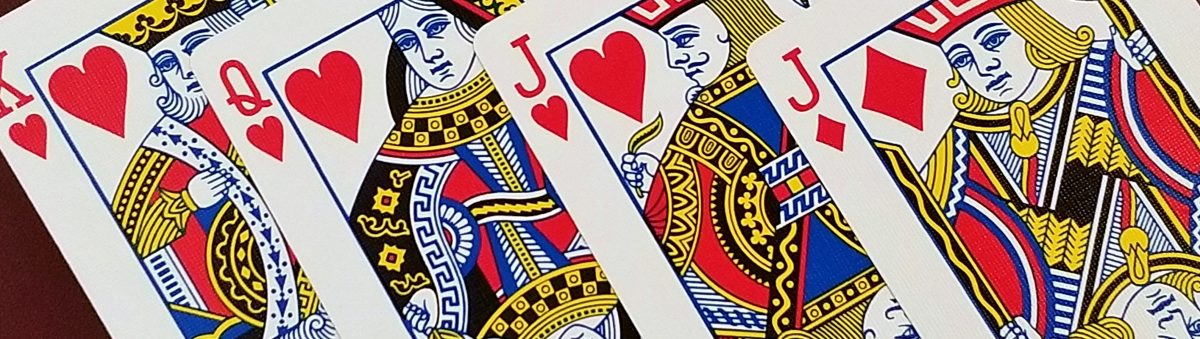
52W Mark IV – Week 12: Card V12 Jacob Bleeker

Jacob Bleeker (1828-1890)

While preparing this long-overdue post, I became distracted by the fact that my grandfather, Arie van der Fluit, has Bleekers on both his paternal and maternal line. Jacob Bleeker, Arie’s great grandfather, is on his maternal line. Arie’s Bleeker connection on his paternal line is much further back – his closest Bleeker ancestor is his Gx3 grandmother, Marijtje Pieterz Bleeker.

The other night I connected the two Bleeker lines. Jacob’s great grandfather, Klaas Pietersz Bleeker (1736-1782), and Marijtje Pietersz Bleeker (1742-?), were siblings. The result is that my grandfather was his own fifth cousin once removed. Hello “pedigree collapse“!

Baptism record for Marijtje Bleeker (top) and Klaas Bleeker (Jan’s great grandfather). The best part of this quest is that I now know the names of Marijtje and Klaas’s parents: Pieter Willemsz Bleeker and Anna Jacobsz.

Turning to this week’s card, Jacob was born on January 21, 1828 in Oude Niedorp, Noord Holland. He was the second of six children and second son, of Cornelis Pietersz Bleeker and Jacoba de Jong. Jacob’s parents, and all his siblings, appear to have lived their entire lives in Oude Niedorp. The one exception was Jan.

Jacob’s birth registration

Jacob married Trijntje Jansen on May 12, 1855, in Oude Niedorp. Like Jacob, at the time of the marriage Trijntje had spent her entire life in Oude Niedorp. Their first two children, Jacoba and Cornelis, were also born in Oude Niedorp. Sometime between Cornelis’s birth in 1859 and his sister Adriana’s birth in 1865, Jacob and family relocated to Harenkarspel, the gemeente (municipality) directly west of Oude Niedorp.

I haven’t found much about what Jacob was doing between 1859 and 1865. I had wondered whether there had been another child born between Cornelis and Adriana, given the six year gap, but found nothing. At most, it appears that in Oude Niedorp and his first years in Harenkarspel, Jacob worked as a labourer. He was still reported as being a labourer in 1867, when his youngest child, Aagje, was born. It appears that he might have worked as a farmer or farm labourer in 1886, but otherwise it seems that he worked as a labourer for most of his life. His death registration listed labourer as his occupation.

Jacob died on May 17, 1890, in Harenkarspel.

Jacob’s death registration

52W Mark IV – Week 10: Card V10 Jan Pater

Jan Pater (1826-1878)

Jan Pater was born on May 20, 1826 in Sint Maarten, Noord Holland, the eldest of five children born to Jacob Janz Pater and Antje “Anna” Lievendag. Sometime between the time Jan was three and seven, the family moved a few kilometers south to the adjacent gemeente (municipality) of Harenkarspel. According to his registration of marriage, Jan lived in Harenkarspel and was working there as a labourer until shortly before he got married.

Jan’s birth registration.
The circle shows where Jan lived with his wife and inlaws. The star is where my father was born.

Jan was 26 when he married Teetje de Groot on June 11, 1852 in Oude Niedorp. After they married, Jan and Teetje moved in with Teetje’s parents, Jan de Groot and Sijtje Sijbecarspel. They lived in Zijdewind, which at the time was part of gemeente Oude Niedorp.

According to an article in Toendertoid: Stichting Waarland van Toen, “Many tragic events took place in this family between 1850 and 1880.” It then went on to describe the house they lived in, without providing any details about what happened.

Toendertoid, May 1994, page 12
WHAT HAPPENED?!?

Jan was a labourer almost his entire life, except for a brief period in 1872 when he was a “veldwachter”; literally, “field guard,” a kind of rural police or constabulary. The veldwachters originated as the “garde champêtre” during the Napoleonic era. They were very poorly paid, if at all, and largely relied upon other sources of income. There were few prerequisites to become a veldwachter and at Jan’s time it was much less than a professional police officer. What authority they had was limited to the municipality in which they served.

Jan was 46 when he was a veldwachter and he did not serve very long. It is not clear what qualification Jan had for the role. He was still described as a labourer when his daughter Maartje was born in March 1871. It was only the April 1872 death registration of his son, Jacob, that showed Jan as a veldwachter. Maartje died later that same year, in December, and her death registration recorded that Jan was a labourer at the time. Jan was still a labourer when he died in Zijdewind at age 52.

Burgerlijke Stand = Civil Register
Died: Jan Pater, age 50, husband of Teetje de Groot.

52W Mark IV – Week 4: Card V4 Johannes Jansz (Jan) Pater

Johannes Jansz (“Jan”) Pater (1862-1935)

I’ve always found it amazing when talking to my grandparents’ generation about their grandparents. I remember when my great aunt Addie casually mentioned in passing about how she’d usually go to her grandmother’s house every day after school. It immediately popped into my head that she was talking about someone who was born in the mid-19th century. It felt like a bridge through time.

Likewise for my Gx2 grandfather, Johannes Jansz (“Jan”) Pater. I found an article in a Dutch magazine, Toendertoid: Stichting Waarland van Toen (“Then and There: Foundation of Waarland“) containing an interview of my great uncle Jan van der Fluit (“Ome Jan” 1918-2011), where he shared childhood recollections of his grandfather Jan Pater. I met Ome Jan on my first trip to Waarland. He was still living in the house where he was born and spent his childhood. Reading Ome Jan’s story made me feel like there was no barrier in time and space between me and my Gx2 grandfather.

Jan’s birth registration

Jan Pater was born on April 14, 1862 in Oude Niedorp, Noord Holland. By 1882, Jan was working in Oude Niedorp as a farm labourer, as noted in a militia register. Military service was compulsory. Jan’s military service was as a conscript under the national service (the militia), somewhat equivalent to reserve or national guard duty. Adrianus was assigned to the “torpedo corps”. The militia register shows that Adrianus was 172 cm (5′ 7 1/2″) tall with a flat face, low forehead, gray eyes, a “just” nose, and blond hair.

Jan remained in Oude Niedorp at least until 1888, working as a farm labourer. On April 19, 1888, he married Ariaantje Jacobs (“Adriana” or “Jaantje”) Bleeker in gemeente Harenkarspel, Noord Holland. At the start of their marriage, they briefly lived with Adriana’s parents, but by the time their first child was born they had moved out on their own. Together Jan and Adriana had four children, three boys and one girl (my great grandmother, Teetje Pater). The eldest only lived a few weeks; the others lived to adulthood.

After he and Adriana were married, Jan continued to work as a labourer. Sometime around 1917 he began farming in Slootgaard, a village within Harenkarspel. It is now part of gemeente Schagen.

According to Ome Jan’s account, Jan Pater had over three acres of land where he carried out mixed farming. Jan’s youngest son – and Ome Jan’s uncle – was also named Jan, who helped on his father’s farm. The elder Jan had four cows and a horse, while the younger Jan had 100 brown and white chickens.

My records indicate Jan continued farming in Slootgaard at least until 1930, when he was in his late 60s. However, the registration of his death in 1935 indicates that he was still farming at that time. Jan’s death was due to an unfortunate accident with a horse at a railway crossing.

Addendum March 2, 2025: Always pay attention to the FAN club: “Friends, Associates, and Neighbours”! When an ancestor has a lot of siblings, it can be tedious to do all the research on them, too. Often I’ll do a quick-and-dirty entry into my database and then leave it languish for years.

Tonight I was flushing out my research on Jan’s siblings. For the four oldest, it was mostly entering information from death records, as the first two died very shortly after birth and the next two died shortly before their 17th birthdays. It wasn’t until the fifth child, Antje, two years older than Jan, that any child of Jan Pater and Teetje de Groot survived to adulthood.

Going through Antje’s marriage registration, I saw that one of the witnesses was her younger brother Jan. Then I expanded the image on the screen and noticed the signatures on the proceeding page were the same. What? Zooming in, I realized it was Jan and Adriana’s marriage registration! A double wedding. Siblings Antje and Jan got married the same day!

Signatures of the parties and witnesses of the double wedding of siblings Jan Pater (left) and Antje Pater (right)

52W Mark III – Week 35: All Mixed Up

Imagine changing municipalities several times in your life while living in the same house the entire time. With the ever changing municipal boundaries of the Netherlands, it can become All Mixed Up – which is the prompt for this week’s 52 Ancestors Challenge!

The Netherlands has thousands of villages, towns, and cities; however, the smallest administrative unit of government is the gemeente, which roughly translates as “municipality” or “local authority”. They are the third and lowest level of government after the national and provincial governments. Some gemeentes (in Dutch the plural is “gemeenten”) consist of a single community, such as gemeente Amsterdam. Many consist of multiple villages and towns.

The gemeentes of the Netherlands as of 2024. The colour groups indicate the provinces of the Netherlands.

In 1812, immediately after the end of Napoleonic rule, the Netherlands had more than 1,100 gemeentes. I don’t know if that includes or excludes modern-day Belgium, which until 1830 was part of the Netherlands. Over the following two centuries, the municipal map was revised many times. Gemeentes expanded, shrank, divided, and merged, such that almost 1,700 different gemeentes have existed over time.

Since January 1, 2023, the most recent reorganization, there are 342 gemeentes in the European part of the Netherlands. There are three in the Caribbean Netherlands, except there they are a “Caribisch openbaar lichaam” (“Caribbean Public Body”).

My father was born in Waarland, a village that currently has about 2,700 inhabitants. When my father was born, it was in gemeente Harenkarspel, which had been in existence for centuries. Its boundaries changed twice after my father was born.

Waarland’s location in the Netherlands.
My grandfather and father visiting Waarland in the late 1980s. It was my father’s first time back since they emigrated to Canada. The sign says “Waarland Gemeente Harenkarspel”. Waarland was in Harenkarspel the first time I visited it; it was in Schagen the next time I was there.

In 2013, Harenkarspel merged with Zijpe and Schagen and ceased to exist as a separate gemeente. Since the merger, the gemeente is simply Schagen. Zijpe itself had six different iterations between its creation in 1817 and its merger with Schagen in 2013.

Harenkarspel in 1867. Waarland is in the south-east, near the border with Niedorp.
Waarland’s location within Harenkarspel and, now, Schagen.

When I enter a Dutch location into my database for any particular fact, I always use the smallest unit, even if it is not an independent administrative body. While gemeentes come and go, or expand and contract, the villages, towns, and cities largely stay the same. Thus Waarland is Waarland, regardless of what gemeente it is in. Fortunately, there is a website that helps track all the gemeentes that have existed “from ancient times” to present: “Gemeentegeschiedenis” (“Municipal History”). With it, you can find which gemeente a place might have been at any time in Netherlands history. No need to be all mixed up!