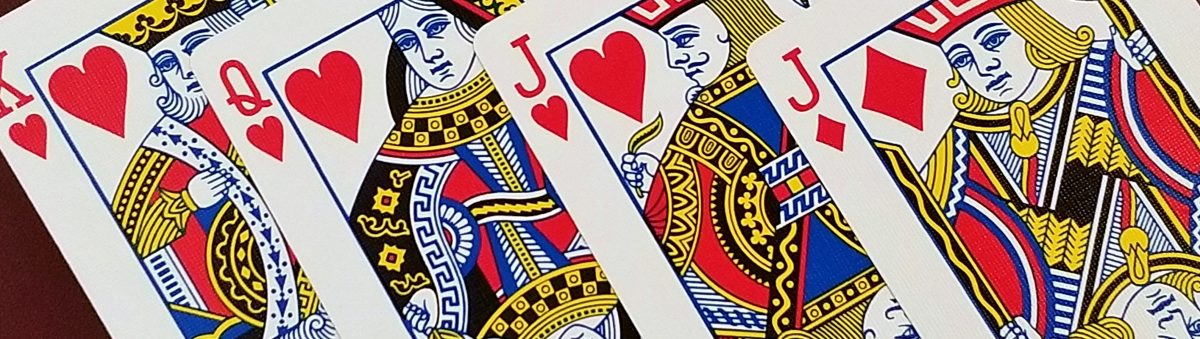
52W Mark IV – Week 26: Card K13 Elisabeth de Waard

Elisabeth “Lisabeth” de Waard (1824-1887)

Halfway through the 2025 52 Ancestors Challenge brings us to the last card on my paternal line. Last but not least, meet Lisabeth de Waard, my Gx3 grandmother.

Elisabeth de Waard was born on February 18, 1824 in Oudeschild, a village on the island of Texel, the largest of the Wadden Sea Islands off the north shore of the Netherlands. It is the only settlement on the island located on the coast. While there is now a ferry dock on the southernmost point of the island, Oudeschild was the only port on Texel in Elisabeth’s time.

Thus, it should come as no surprise that her paternal grandfather, husband, and at least three of her brothers were sailors. Despite the seafaring lives of many of her relatives, Elisabeth’s father, Jan Teunisz de Waard, was a labourer at the time she was born. Jan became a shopkeeper shortly afterwards and remained in that profession until he died in 1863 at age 76.

Registration of Lisabeth’s birth.

Elisabeth’s mother was Cornelia Pieters Kooij. Jan and Cornelia’s marriage intrigues me, because Jan was Protestant and Cornelia was Roman Catholic. Jan was the first direct ancestor I found on my paternal line who was not Catholic. They married at the Catholic church on Texel.

Up until the mid to late 20th Century, Protestants and Catholics in the Netherlands kept well apart. Each had their own schools, newspapers, sports clubs, political parties, and social organizations. Intermarriage between the two groups was not common or as widely accepted as it is now. The 1830 census shows that their eldest child, Teunis, was a Protestant like his father, but the rest of their eight children, were Catholic like their mother.

One might think that my great grandmother’s name was Elisabeth and Lisabeth was her nickname. However, as can be seen above, her father named her as “Lisabeth” when he registered her birth. The only place I have found her name recorded as Elisabeth was in the Bevolkingsregisters (population registers). Moreover, the 1840 census listed her as Betje, another common Dutch nickname for Elisabeth.

One of the many population registers showing my great grandmother as “Elisabeth”. Cornelis and Elisabeth’s names are crossed out because they moved to a different house. In fact, they moved around Den Helder a lot!

The census records also show that Lisabeth lived in Oudeschild at least into her late teens. In fact, the registration of her marriage to Cornelis Ran shows that she was still resident on Texel when they married on February 6, 1851 in Den Helder, where Cornelis was an apprentice harbour pilot. While it appears that Cornelis had lived on the mainland for many years by the time they married, he had deep roots in Oudeschild. It is likely that Jan and Lisabeth came together through familial connections.

Lisabeth and Cornelis settled into life in Den Helder, where they had seven children – five girls and two boys. The boys, who were the youngest, were also drawn to naval life, although as members of the navy.

The couple spent the rest of their lives in the port city. Lisabeth passed away in Den Helder on July 18, 1887, at the age of 63. She was buried in Huisduinen, a village outside of Den Helder, four days later. Cornelis lived another ten years.

Weekblad van Den Helder en het Nieuwediep, 10 February 1851, page 3
Civil Register. Deceased: Lisabeth de Waard, wife of Cornelis Ran, age 63.

Two suits down, two to go!

52W Mark IV – Week 25: Card K12 Cornelis Ran

Cornelis Ran (1824-1897)

Continuing with the foray into my direct Dutch ancestors who were not farmers or labourers, meet Cornelis Ran, my Gx3 Grandfather. In his occupation, Cornelis was following in the footsteps of his father, Reijer Jansz Ran, at least as much as you can follow on the confines of a boat or ship. Cornelis’s maternal grandfather and great grandfather were also sailors, although their forebears were innkeepers, bricklayers, and bakers.

Cornelis’s birth registration

Reijer and his wife Maartje Klaas Gomes had eleven children, all born on Texel. Remarkably for the time, all but two survived to adulthood. Cornelis, born on November 21, 1824, was the sixth of these eleven children. He was born in Oudeschild, a coastal village on the east coast of the island of Texel, which lies only a couple of kilometers across the Marsdiep from the mainland city of Den Helder, a major Dutch port and naval city. Several generations of Cornelis’s ancestors spent their lives in Oudeschild.

Top portion of Cornelis and Elisabeth’s marriage registration

Cornelis’s life on the water was spent as a harbour pilot and sailor. He was serving his apprenticeship as a harbour pilot in Den Helder when he married Elisabeth “Lisbeth” de Waard there on February 6, 1851. Lisbeth, who also went by Betje, was born on Texel in 1824. Delightfully, Cornelis and his sister Johanna Maria were both married on the same day and at the same place, possibly in a joint family celebration in Den Helder.

From the Weekblad van Den Helder en het Nieuwediep, 10 February 1851, page 3. It shows the double-marriage of Johanna Maria Ran (to Reijer Molenaar) and Cornelis Ran (to Lisbeth de Waard).
The item below the civil registration notice are odd little bits of news: “The King of Prussia appointed 1,152 knights in the previous year.” “The Governor of Egypt, Abbas Pacha, is totally insane.”

Elisabeth and Cornelis remained in Den Helder for the rest of their lives, where they raised seven children. Again, remarkably for their time, all seven of their children lived well into adulthood. All seven also went on to marry.

Over those years, Cornelis continued in his profession, working as a harbour pilot and as a sailor until about 1886, when he was 62. Records show that Cornelis had no occupation from 1886 to 1890. This suggests he might have retired. However, he was working again as a sailor in 1890, so it is not clear if he had briefly retired, had been unable to work, or had been unable to find work.

Elisabeth passed away in 1887 at the age of 63 and was buried in Huisduinen, a village near Den Helder. Cornelis lived another ten years, dying in Den Helder on June 26, 1897, at the age of 72. He was also buried in Huisduinen, on June 29, 1897.

52W Mark IV – Week 18: Card K5 Christina Ran

Christina Ran (1858-1924)

My Gx2 Grandmother Christina Ran was born on February 13, 1858, in Den Helder, Noord Holland. She was the third of seven children and third of five daughters born to Cornelis Ran and Elisabeth de Waard.

Christina’s birth recorded in the Den Helder civil register.

Like many Dutch parents of the time, Cornelis and Elisabeth followed the traditional naming conventions for their children. With their third daughter, they had a bit more freedom in naming Christina. I don’t know what inspired the name, I haven’t found any previous Christinas earlier in her tree. It also doesn’t seem to be a particularly common name over the last 200 years. With the family being Catholic, maybe it was inspired by Saint Christina the Astonishing, who lived in what is now Limburg Province, Belgium. Or, like my mother will often suggest, “maybe they just liked the name.”

From the Corpus of Given Names in the Netherlands for the name “Christina”

Christina’s daughter, Elizabeth Bakker, my great grandmother, followed the traditional naming custom. Thus my grandmother, Christina Komen, is her grandmother’s namesake.

On September 29, 1881, Christina married Cornelis Jan Bakker in Den Helder. The couple had eleven children together. While they raised their large family in the same town where she was born, married, and died, eight of Christina’s children moved to other cities or towns after leaving home. Some remained close by, still in Noord Holland; others moved further afield, to the provinces of Utrecht and Zuid Holland.

The two items on the left, reporting Cornelis and Christina’s wedding, appeared on page two of the Nieuws- En Advertentiebode voor Den Helder on September 30, 1881. The item on the right commemorates the celebration of Cornelis and Christina’s 25th wedding anniverary, on page two of the September 22, 1906 edition of the Nieuws- En Advertentiebode voor Den Helder,

Christina died on November 26, 1924, at the age of 66. She was buried at Begraafplaats Huisduinen in Den Helder.

52W Mark III – Week 2: Origins

Week Two for the 2024 edition of the 52 Ancestors Challenge, and I’m already struggling. While my experience with the challenge has been rewarding and continues to be so, as I start my third year participating I am finding it harder to find things I haven’t previously written about one way or another. For this week’s prompt, “Origins”, it would have been quite easy to simply recycle any one of a number of past posts. However, I am trying to do something relatively new each week, because I think that’s most in keeping with the purpose and goal of the challenge.

Finally, today, now that Week Three’s prompt has been issued (on another recurring topic!), I thought I had finally come up with something I hadn’t written about before. Turns out that it’s something I’ve touched upon before. Nevertheless, I’m running with it because it’s never been the primary focus of a post.

My father was born in the Netherlands, so I have deep Dutch roots. My direct ancestors are primarily from the central part of what is now the province of Noord Holland, going back centuries. My paternal line has been there for 200 years but originated in Zuid Holland, in towns and villages between Den Haag (The Hague) and Leiden. Most of my Noord Holland ancestors were born, lived, and died roughly within a 280 square kilometre area.

The area of Noord Holland where many of my paternal ancestors lived. This is immediately north-east of Alkmaar, one of the larger cities in the area.

However, several of my Noord Holland ancestors were from Den Helder, a city on the northern tip of the mainland of Noord Holland. It is an important port city. In the 16th and 17th centuries, it was a significant mustering and departure point for Dutch overseas trade and exploration. It is now the home of the Netherland’s main naval base.

Three kilometers north of Den Helder, across the Marsdiep strait, is the island of Texel. Through my father’s maternal grandmother, Elisabeth Bakker (1888-1976), I have significant roots in Texel. I do not know how far back those roots truly go, but I know that one branch of Elisabeth’s maternal line was on Texel by end of the 15th century.

In English, the “x” is pronounced the same as it is in “Texas”. In Dutch, it’s pronounced “Tessel”. Texel is the first and largest of the Wadden Sea islands, which stretch along the entire north coast of the Netherlands. Nine hundred years ago, Texel was part of the mainland. A catastrophic flood in 1170 dramatically changed the geography of north-west Netherlands, including the creation of the island of Texel. There has been settlement on Texel since at least the 12th century. Texel even has its own dialect, Tessels. It was common until the 1950s, after which time it went into significant decline.

The island received city rights in 1415. It has been the site of significant naval engagements over the last 400 years. It was also the site of one of the last battles of World War II in Europe. The island had been relatively unscathed during the war itself. It was only after the war was over that it was devastated. A German battalion made up of Georgian soldiers occupied Texel during the war. Supported by the Dutch Resistance, they rebelled in April 1945. Fighting between the Georgians and Germans lasted well beyond VE Day, ending only with the arrival of Canadian troops on May 20, 1945.

Historically, Texel’s primary economic activity involved agriculture and the sea. It is famous for a breed of sheep, Texels, that originated there. In present times, the island is primarily dependent on tourism. While most of my Dutch ancestors were primarily farmers and labourers, many of my Texel ancestors were sailors.

Both of Elisabeth Bakker’s grandfathers, Jan Cornelis Bakker (1819-1859) and Cornelis Ran (1824-1897), were harbour pilots. I suspect it was that line of work that led them to relocate and settle in Den Helder. Two of Elisabeth’s four great grandfathers, Cornelis Dirksz Bakker (1789-1858) and Reijer Ran (1792-1860), were also sailors. It was Elisabeth’s father, Cornelis Jan Bakker (1855-1914) who broke with that tradition. He was a cobbler and shoemaker.

One of Elisabeth’s great grandfathers who was not a sailor was Jan de Waard (1787-1863). He began his working life as a labourer but for the last twenty years of his life he was a shopkeeper. Jan is interesting because nearly all my paternal line were Roman Catholic, but Jan was baptised in the Reformed Church. However, his wife Cornelia Pieters Kooij was Catholic and their children were baptised as Catholics. It is possible that Jan might have converted.

The other interesting thing about Jan and Cornelia is that they were amongst the last to be married during the period of French rule during the Napoleonic wars. They married at Texel on October 10, 1813. The record of their marriage is written in Dutch, but bears the seal of Imperial France. Less than a month after their marriage, a popular uprising resulted in the ouster of the French. On November 30, 1813, the son of the former stadholder of the country returned from exile and was named William I, Sovereign Prince of the United Netherlands and subsequently King.

The other of Elizabeth’s great grandfathers who was not a sailor, Johannes Puinbroek (1786-1865), was not even from Texel. In fact, he is quite the oddity in my family tree. He was born so far south from Texel that the town where he was born, Vrasene, is in Belgium (which at the time was the Austrian Netherlands). Sometime around 1822 and 1824 Johannes relocated to Den Helder, where he met and married his third wife. I have no idea beyond speculation as to what prompted him to move. I thought I had written about him before, given his unusual story, but searching through my posts I found nothing. Well! There is something I haven’t written about before! Stay tuned…