I’ve wracked my mind, and I cannot think of who the storytellers in our family might be. However, I have no problem identifying the storykeepers. They might not spin yarns or be captivating narrators, but they are always willing to share the family lore if asked. I wouldn’t call my mother a good storyteller, but I can absolutely count on her to provide the answers to questions I might have about even the most obscure bits of familial trivia.
I’ve been keeping the family history since I was in elementary school!
While I don’t consider myself a storyteller, I definitely count myself amongst the family storykeepers. I think by definition, genealogists are storykeepers. It’s not often that I’m asked, but I’m more than happy to share the stories whenever someone in the family should ask.
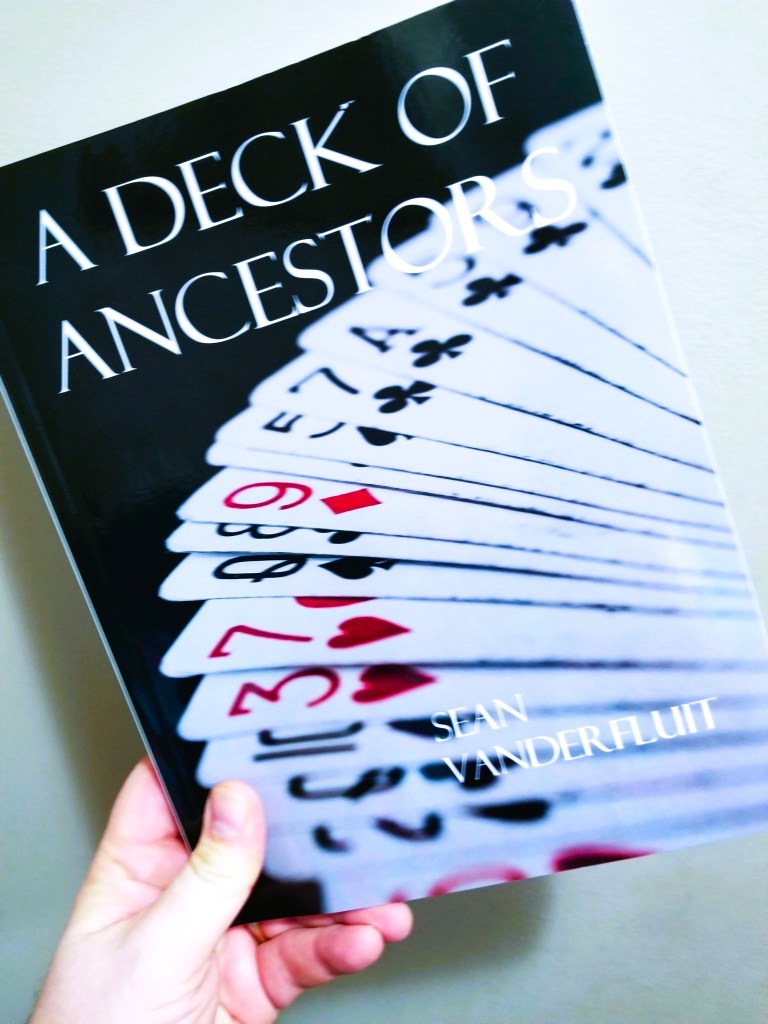
I will concede, however, that maybe I have become a storyteller. This blog is now two-and-a-half years old. This is my third time participating in Amy Johnson Crow‘s 52 Ancestors in 52 Weeks and my 129th post as part of the challenge. I’ve even turned my first year’s set of posts into a print book and have nearly completed turning the second year’s worth into a digital book.
This week, the 52 Ancestors Challenge asks us to consider “Overlooked”. What might I have overlooked? If I knew the answer to that, it wouldn’t be overlooked!
Thinking it over, it’s not so much what I’ve overlooked as what I’ve ignored.
All children of my ancestors other than the child from whom I’m descended
This is actually a thing of the past, but it’s a case of doing the work now that I should have done a very long time ago.
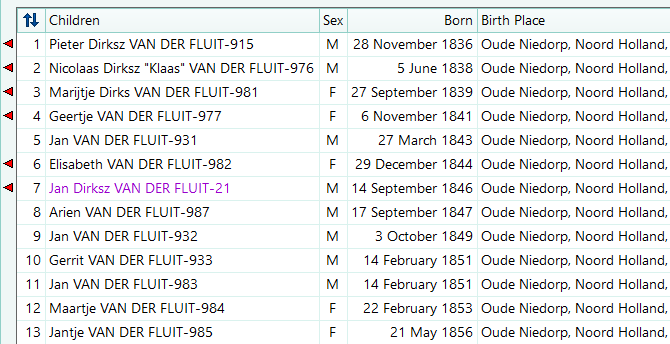
Back in the day – decades ago, now – I would sometimes ignore the multitude of children some of my ancestors brought into this world. Sometimes it was when a couple had ten or more children. More often than not, it was something I did when an ancestor remarried, or had an earlier marriage, which produced children. One of my great great grandfathers had 19 children – nine with his first wife and ten with his second.
There were simply so many kids in some families – even in ones with parents who only ever had one marriage – that I didn’t feel like I had to the time to enter all of them into my database or that it was all that important. In the case of previous or subsequent marriages, I’d usually annotate the entry with a note saying how many children the couple had together. Sometimes I’d include the first names of those children, but without their vital stats. What a time saver!
Not the longest list of children in my database!
Of course, anyone who has done genealogy for a while will have immediately spotted the error of my ways. I was foolishly ignoring my FAN club! Also known as “cluster genealogy”, “FAN” stands for “Friends, Associates, and Neighbours”, although over the years many have included “Family” amongst the friends. It is a term coined by Elizabeth Shown Mills, which involves researching the cluster of people around the person who is the target of the study. It often involves research of a person who might seem otherwise elusive. Evidence about their FANs might shed light on the otherwise mysterious relative.
I now make a point of including all the children of my direct ancestors. As well, I have a couple of direct ancestors for whom I am researching all their descendants. Of course, this has meant going back and properly adding all those children to my tree.
Citations
You have to take the crunchy with the smooth. As much as I love genealogy, like all things, it has its down sides. For me, it’s writing up source citations.
It is such a tedious time-consuming chore that I’ll sometimes put down my genealogy for weeks or even months at a time. All the while, mounds of data, digital and paper, keep piling up because sometimes I can’t not research. On top of that, I often have a gazillion browser tabs open at a time, waiting for the day that I bite the bullet and start doing the work.
It’s the doing dishes of genealogy, yet absolutely vital to the process.
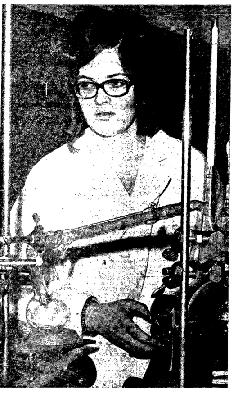
I often see queries on social media asking for recommendations or advice about the preservation of paper documents and other media. Those questions always make me miss my late aunt, Helen Diana Burgess, who was a conservation scientist. She’d have known the answer. I wish I had gotten more conservation tips from her.
Helen Diana Burgess (1951 – 1999). I love this photo because it shows her at work doing cool science stuff.
The professional world knew her as Helen Burgess, to me she was my Aunt Diana. I wrote about her in Week 9, “Women”. Sadly, she passed away in 1999.
Fortunately, I learned early on from her about things like the acids in paper and what not to do with photographs. Based on advice I had received from my aunt, I created one of my very first pieces of preservation, an album of compiled family photos, past and present.
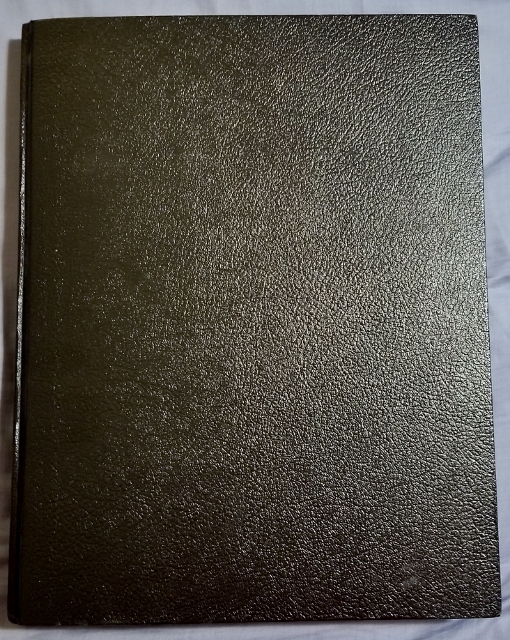
The cover is boring but the contents are awesome.
I started putting this album together sometime in the mid-1990s. As a result, I cannot remember where I bought the materials, the brand names, or other specifics of the items I used to create this album. I don’t even know if the retailers I visited are still in business. Clearly I was more focused on preserving the family memories than preserving the methodology and materials.
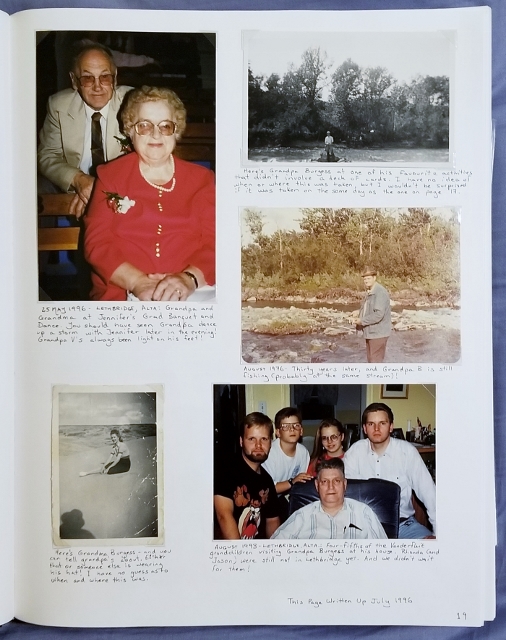
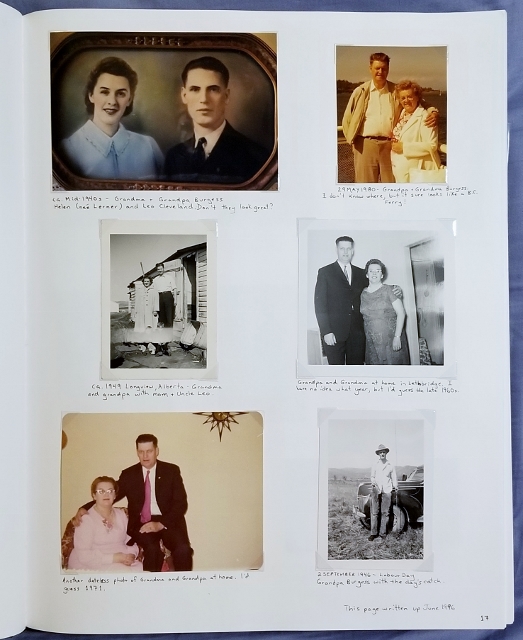
What I can say is that the book is about 11″ x 17″ and contains several hundred pages of very high-quality acid-free paper. I used photo corners Aunt Diana recommended that were acid-free, with adhesive that would likely result in minimal harm to the paper and photos over time and remain in place for years. I even recall buying the types of pens she recommended for the project. I only use the odd numbered pages, so photos don’t press against each other when the book is closed.
I organized the book by starting with myself and then my four siblings. I then have a section for my parents, followed by sections for each set of grandparents.
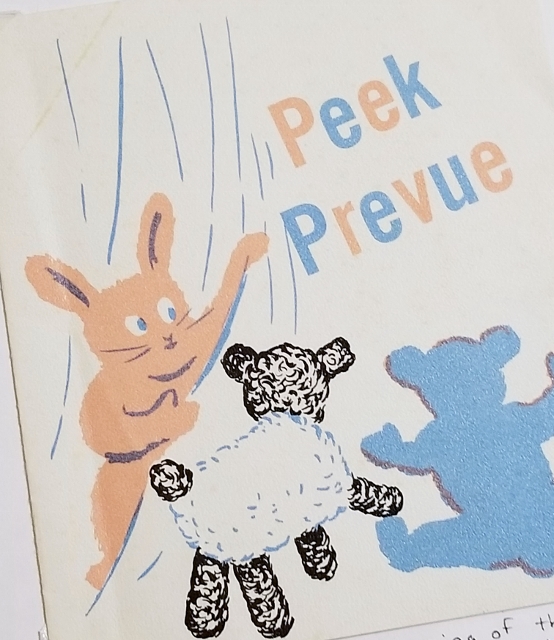
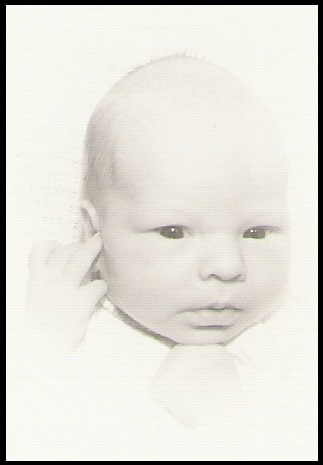
On the first page I’ve included the card with my birth announcement. I mounted it on the page in such a way that you can see this delightful photo of me taken shortly after I was born.My paternal grandparentsMy maternal grandparentsSome of the pages for my grandparents
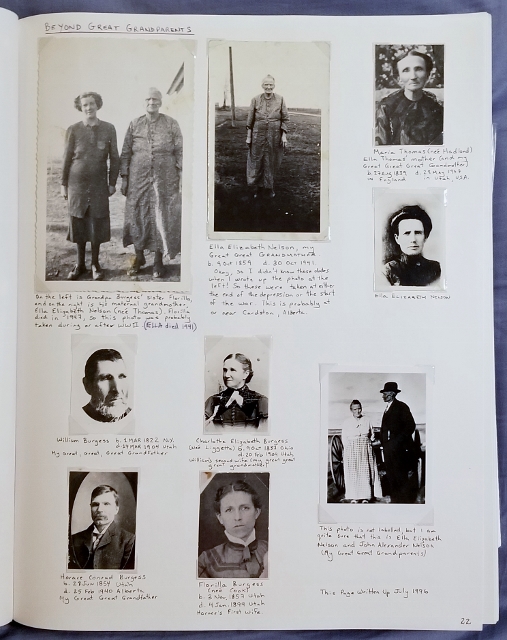
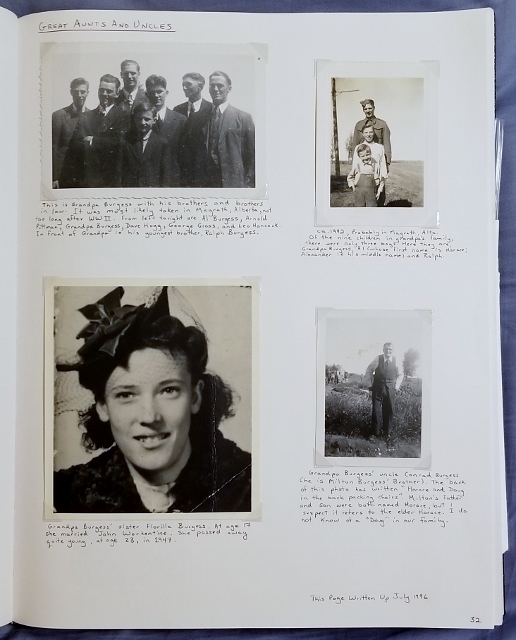
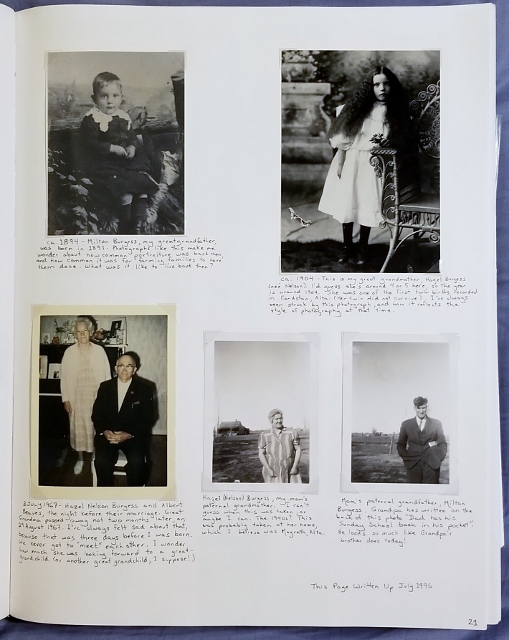
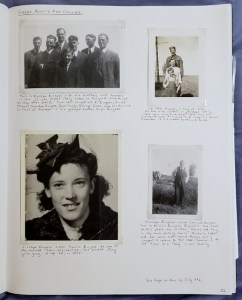
It progresses to great grandparents and then onto direct ancestors beyond my great grandparents. I then move on to aunts and uncles, great aunts and uncles, and then finally cousins.
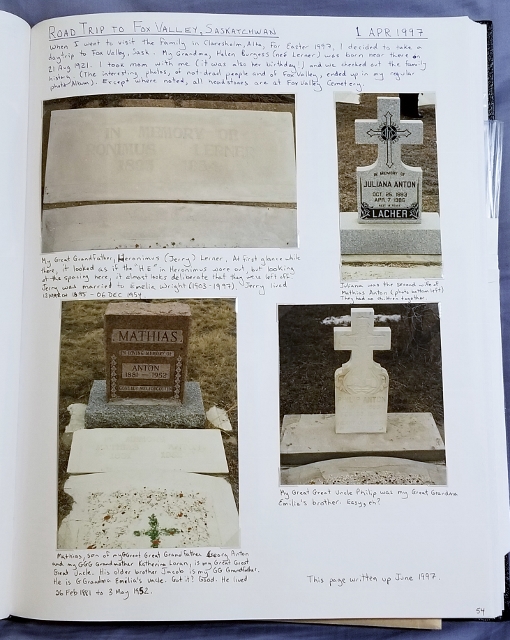
Great GrandparentsBeyond Great GrandparentsGreat Aunts and UnclesGenealogy RoadTripSamples of other pages from the album
I am quite proud of the results so far. While I haven’t worked on it in twenty years, it remains very much a work in progress. There are many blank pages waiting to be filled and there is no shortage of material to add. In the time since I last worked on it I’ve married and had kids. While one sister was married when I started this, she has had two children since I set it aside. One of my brothers has married and has a child of his own. Other marriages have occurred and many babies have been born. There are also graduations and other milestone occasions that could be included.
I can say with certainty that the materials are well preserved. The pages are crisp and white and the photos look as good as they were when I started. I see no signs of discoloration, fading, wear, or decay. Hopefully this book has many long decades ahead of it.
The greatest genealogical help I received began 26 years ago this summer. It started with a simple invitation I spotted on a message board. Someone was planning a visit to a Dutch archive later in the week and was offering to do a lookup for anyone who might be interested.
Two things immediately came to mind when I saw this week’s 52 Ancestors Challenge theme, “Help”. First was the earworm that has resulted in the Beatles’ song bouncing around in my head all day. Second was my friend Nol, who over the years has provided me with an incredible amount of help in researching the Dutch side of my family.
Back in the early days of online research in the 1990s, there wasn’t the variety or depth of resources that we now enjoy today. One source I found said that as of 1996, there were only 10 million users of the internet world-wide. While many libraries, archives, and genealogical societies had begun to stake out a presence, they weren’t yet able to provide the scope of digital materials that are so easily accessible today. It was still often necessary to obtain documents the old-fashioned way, by using the mail. Bulletin boards and Usenet were still a common way of connecting with other genealogists.
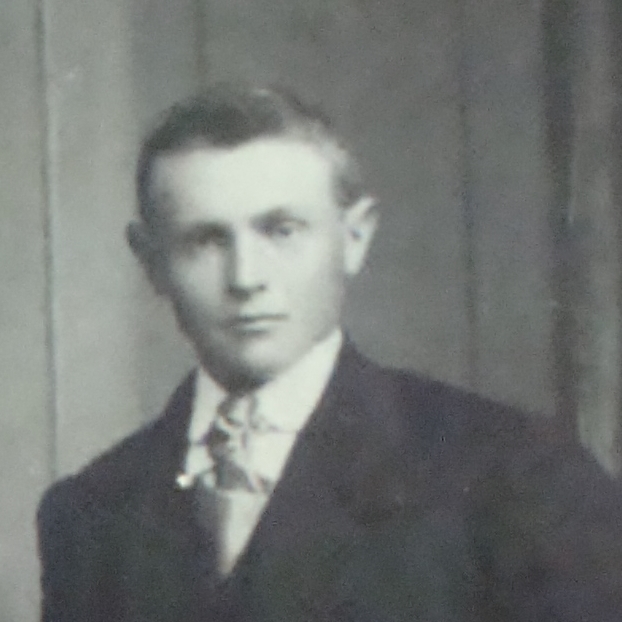
Johannis Albertus van der Fluit (1894 – 1932), the subject of my first query to Nol.
While I know it was sometime in early September 1996, I can’t remember where I first saw the original post I saw by Nol (short for “Arnoldus”), or whether it was a message board or something else. It was just a brief statement saying that he was going into a local archive the next day and asking whether he could look anything up for anyone while he was there. I contacted him and asked him if he’d be willing to look up one name for me, my great grandfather Johannis Albertus van der Fluit.
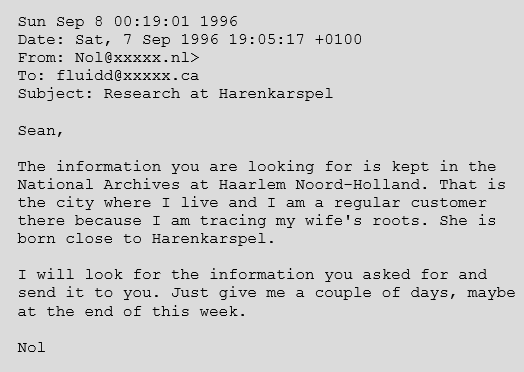
Nol emailed me the next day, telling me that the information I needed was held in the Noord Holland Archives in Haarlem (Noord-Hollands Archief). To my good fortune, Nol lives in Haarlem. He said he would be going into the archive sometime later in the week and he would get back to me.
My first email from Nol after we moved off the message boards. Later in our correspondence, I learned that the family line of Nol’s wife intersected with mine.
Nol followed up less than a week later. Not only had he looked up my great grandfather, but he looked up all four of my father’s paternal great grandparents (my great great grandparents). Furthermore, Nol took it further and looked up several of my great great great grandparents. The email he sent me set out a summary of the birth records for each of them, including the record numbers, dates and places of birth, each person’s parents’ names, the names of the witnesses, and the occupations of the persons named in the records.
While I had some prior knowledge, my early exchanges with Nol provided a significant introduction to the nomenclature with which I am now so familiar, including the types civil institutions and records sources (such as the “Burgerlijke Stand” – civil register), the municipal system of local governance (“gemeente”), population registers, and the Dutch words and phrases associated with genealogical research. So not only has Nol been a mentor in Dutch genealogy, I have often relied upon him as a language coach as I tried to teach myself Dutch. No Duolingo back then!
Over the next two years and over fifty emails, Nol provided me with countless records summaries: births, marriages, and deaths of ancestors and cousins from all over Noord Holland. I still have a copy of each and every one of them. I originally converted each email into a WordPerfect document. Over the years I have updated the format in which they’re saved and made sure that they remain accessible. I still go back to them often. One time several years ago I went through them again, one by one from the beginning, to ensure that I squeezed them for every drop of information I could gather.
The timing during which our paths crossed online resulted in a much longer and deeper relationship than what might have resulted had we met online nowadays. Dutch archives are amazing in how much they’ve scanned and made available online for free. Nowadays, over the course of a week I could probably find scanned online images of everything Nol found for me over that two-year period of in-person archival visits. In fact, over the last many years, I pretty much have found and downloaded digital images of all those records. So while we might still have become acquainted online, I would not have been as reliant on Nol as I might have been in the present.
Unfortunately, I’ve been unable to reciprocate Nol’s incredible kindness. He needs more Canadian relatives! Despite that, what makes me particularly happy is that our connection has evolved into much more of a friendship, particularly given that he and I connected in the early days of Facebook. Our connection has reached a point that I often forget the genealogical origins of our relationship.
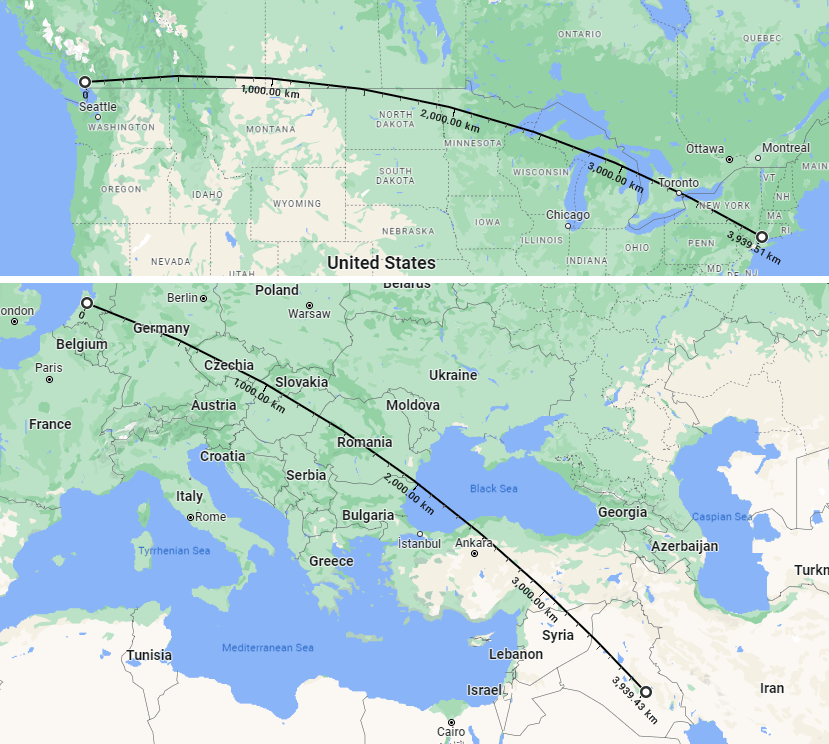
My only regret is that in the 26 years I have known Nol, we have never met in person. Pre-COVID, he often visited the United States, but his travels mainly took him to the east coast. From where I am on the west coast of Canada, the eastern seaboard of the United States is about as far as Baghdad is from Amsterdam. Not exactly a trip down the street. It’s also why I don’t know your cousin in Toronto. 😂
This is why my Dutch relatives and I have such different points of view about long road trips.
I have only been to the Netherlands twice. The first time was before I met Nol. My last trip there occurred in 2017. I had hoped that I could meet Nol at that time, as I was literally going to be in Haarlem during part of my trip. Unfortunately, at the same time I was in the Netherlands, Nol was in the United States. Wat jammer, as you might say in Dutch.
I am still hoping that one day our paths might cross in real life. Nevertheless, I am grateful for all the help, mentoring, and friendship Nol has provided to me over the years. The depth of my gratitude is profound. Dank je wel, Nol!
 A Deck of Ancestors