
52W Mark V – Week 13: Frances “Fanny” Robinson

Frances “Fanny” Robinson (1783-1859)

Having managed to catch up on this year’s 52 Ancestors Challenge, I’m once again weeks behind. At least it was for a good reason, as I’ve spent much of the last three weeks learning about my Great x4 Grandmother, Frances “Fanny” Robinson. While I did not find much more in the way of sources, I have managed to form a somewhat better understanding about what little I know about her.

A large part of that time was spent trying to learn more about when and where she was born and died. Nothing major!

Fanny was born sometime around 1783. Many of the secondary sources I have say she was born in Fewston, Yorkshire, England. Few of those sources provide much supporting information, if any, and what they relied upon is tenuous. A newspaper record regarding her marriage indicated that her father was “J. Robinson” of Cornwallis, Nova Scotia. Some of the researchers relied on a baptism registration for a Frances Robinson for August 19, 1783, naming Jonathan Robinson as her father. Other records show Jonathan Robinson was married to a woman named Susannah Snell.

The baptism registration of a Frances Robinson – hopefully the Frances Robinson

I have found some poll and census records of a John Robinson and a Jonathan Robinson from Cornwallis from around the relevant time, but they don’t show a connection to Fanny. They also don’t show a clear connection to Fewston. Moreover, the Jonathan Robinson shown in the baptism record appears to have spent his whole life in Fewston, without ever having emigrated.

Even if Fanny was born in England, I cannot find any indication as to when she left that country. The one thing I do know is that Fanny and her husband are on the only branch of my family tree that goes into the Maritimes.
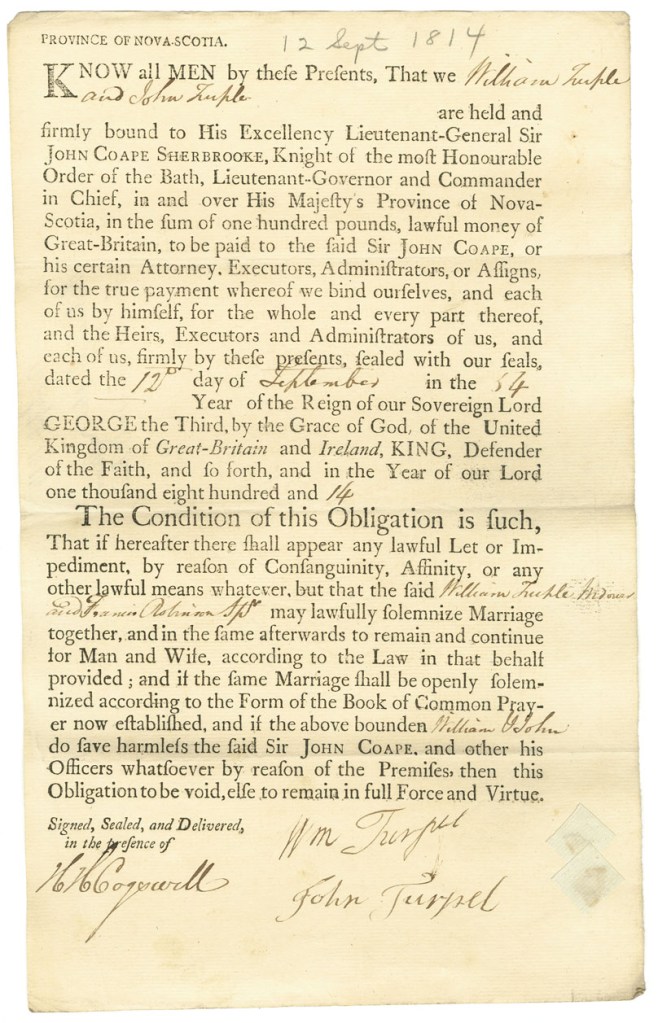
Marriage bond for William Turple and Frances Robinson.

The first reliable records I can find for Fanny are the records of her marriage to William Turple, which took place on September 12, 1814 in Halifax, Nova Scotia in St. Paul’s Church.
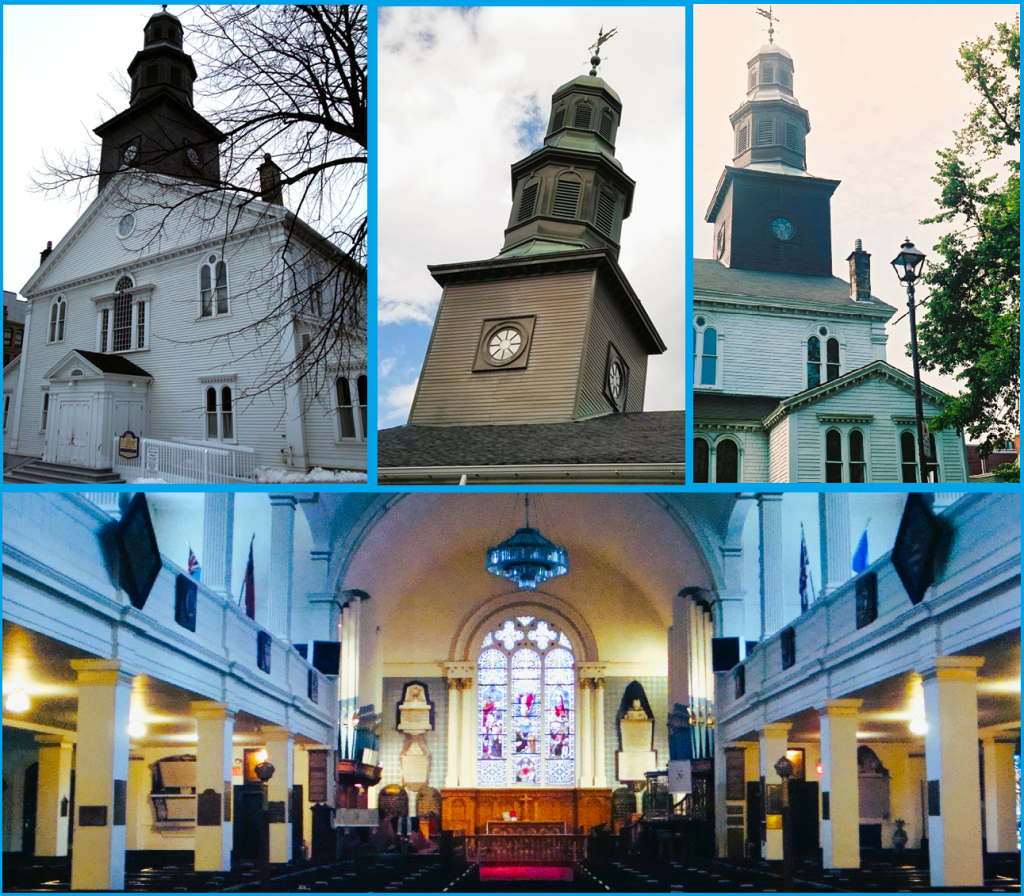
Photos of St. Paul’s that I’ve taken on various trips to Halifax.

Completed on September 2, 1750, St. Paul’s Church is a Halifax landmark. It’s the oldest building in the city and the oldest surviving Protestant church in Canada. My wife has much deeper and more recent Haligonian roots and many of her family have connections to St. Paul’s. Her grandmother, aunts, and uncles were all baptized at St. Paul’s. Her great grandparents, Edmund MacDonald and Beatrice Dimock, were also married at St. Paul’s.
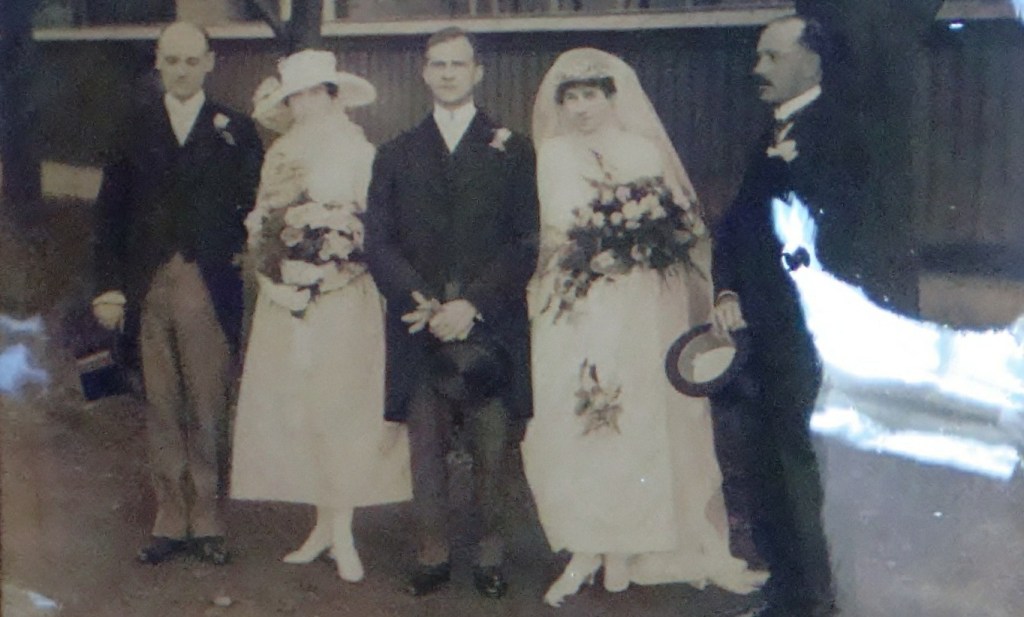
Edmund MacDonald and Beatrice Dimock, who married at St. Paul’s Church in Halifax on September 25, 1918. Beatrice is wearing the veil worn by her grandmother, Ellen Venning, who married George Dimock in 1866. My wife wore that same veil when we got married.

St. Paul’s also bears some interesting scars from the Halifax Explosion of December 6, 1917. It was the largest man-made explosion at the time, resulting from the collision of two ships in Halifax harbour during World War I. One is a piece of wood blown from another building into the interior of St. Paul’s, where it wedged into the wall and has remained there ever since. The other is the Explosion Window. A shattered window on the side of the building bears an eerie human-shaped silhouette. The legend is that it’s the outline of a Deacon who was standing beside the window at the time of the explosion. Of course, that makes no sense, since the force of the explosion came from the outside and the Deacon was standing on the inside.
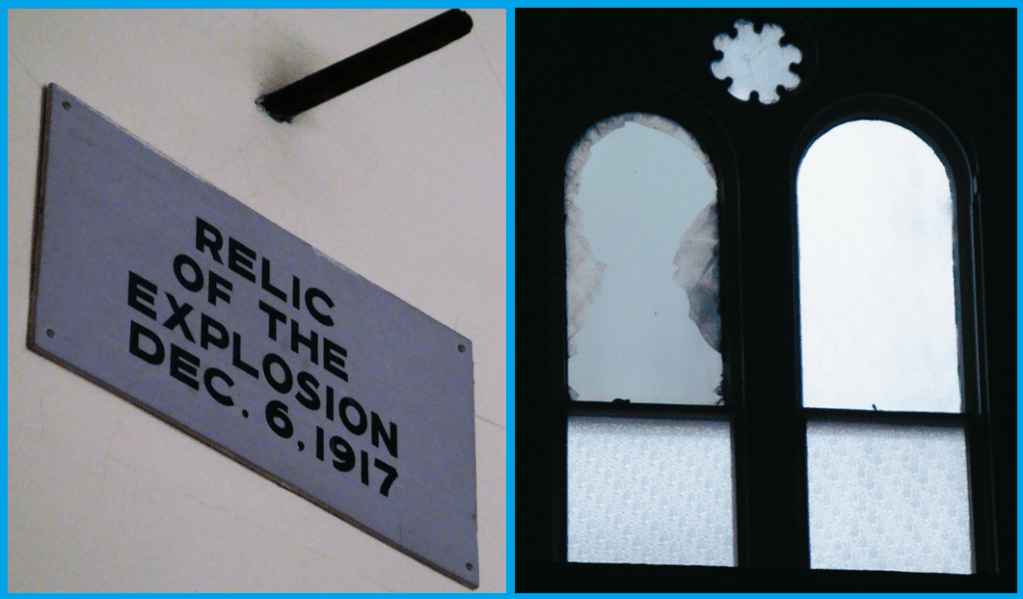
The “relic” of the explosion and the explosion window.

But I digress. Very much.

Returning to Fanny, she and William had at least seven children, although some of my secondary sources list eight. The wrinkle likely involves a William. Fanny and William’s third child and first son was named William, who lived to be 80. Fanny’s fifth pregnancy may have been twins – boys named Stephen and William. It is this William that isn’t included in some lists I’ve seen. The second William is also not mentioned in his father’s will, although it is as likely that he predeceased his father as much as he never existed. Then there’s the next born, who was named Edmund William. Fanny must have really liked the name William.

In 1838, Mormon missionaries appeared in Halifax. By 1843, the Latter Day Saints had established a church there. Fanny and some of her children all joined. Fanny was baptized on November 16, 1844. This was only five months after church founder Joseph Smith died, which had resulted in a succession crisis with several claimants to the leadership of the church.

Fanny and her children found themselves aligned with James Strang, who himself had only joined the Mormon church four months before Smith’s death. However, like many Halifax Mormons, it appears this largely occurred by default rather than any actual theological position or political choice. Strang had risen quickly through the church’s ranks and claimed that a week before his death Smith had given him a letter naming him as his successor. The “Strangites” were one of the smallest factions and Strang’s claim failed quickly.

Brigham Young, who was the successful claimant to Smith’s mantle, sent a delegation to Halifax in 1851 to establish his control of the church in the city. Upon arrival, the delegation excommunicated Strang’s followers, including Fanny and her children. Over time, many of those followers were re-admitted into the church and re-baptized. It seems that Fanny and her children recanted and rejoined the church, but eventually they all left the church other than Fanny’s daughter Susan, my 3x Great Grandmother.

Susan had been married to a man named Charles Brady, who she left sometime after giving birth to a daughter, Amelia. Susan moved in with her parents, who helped raise Amelia. Late in life after moving to Utah with her mother, Amelia wrote about Fanny:

“My dear gramar that raised me (her) name was Fanny Turpel. My grandfather’s name was William Turpel…I love to sit and think of her.”

Just as mysterious as Fanny’s birth was her death. I have not been able to find any record or mention of her death. At most, I assume she died before her husband, because there is no mention of her in William’s will, which was written in 1861 and proved in 1862.
52W Mark III – Week 49: Handed Down

The prompt for this week’s 52 Ancestors Challenge is “Handed Down”. At first, I thought this would be another week where I would struggle to think of something that would even remotely fit the topic. Thanks to my niece, inspiration struck. The other night I was planning what to wear to her university convocation ceremony, which included selecting a pair of cufflinks.

When I was little, cufflinks seemed to ubiquitous and commonplace. To me, it seemed that everyone wearing a suit had a pair of cufflinks for their dress shirts. My father always wore cufflinks in his early days with Woolworths, where he always wore a suit to work. I thought they were very cool. I also liked flipping the toggle around.

As time passed and fashions changed, my father wore cufflinks less and less often. Buttons on the cuffs became the norm. My dad rarely, if ever, wore cufflinks anymore. Then, in the mid-90s, my father had a career change, which did not require him to wear a suit for work anymore.

When I began wearing dress shirts on a regular basis, they all had buttons on the cuffs. However, at some point, my mother gave me a few pairs of my dad’s old cufflinks. I can’t remember why, or what the occasion might have been that I would have worn cufflinks.

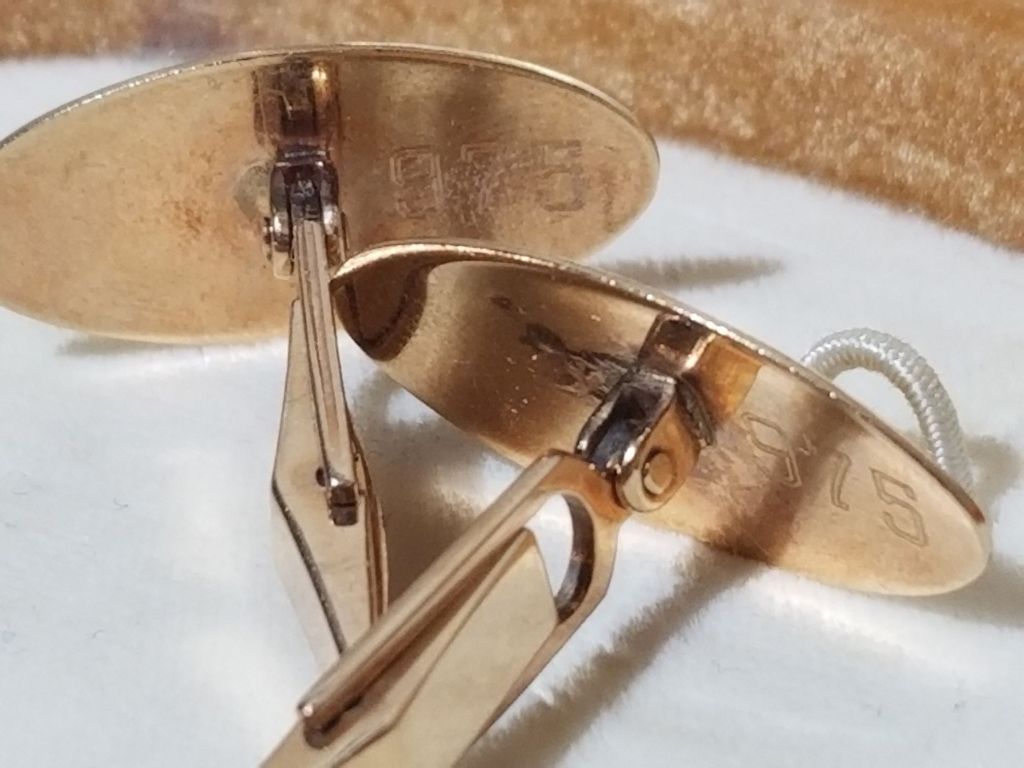
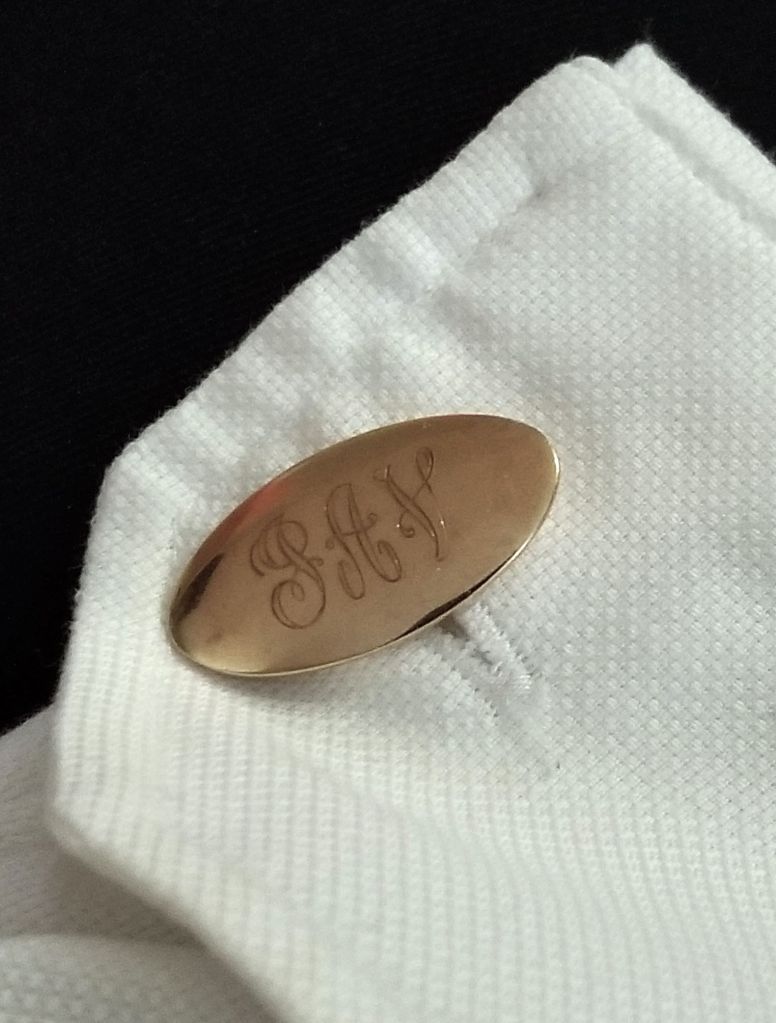
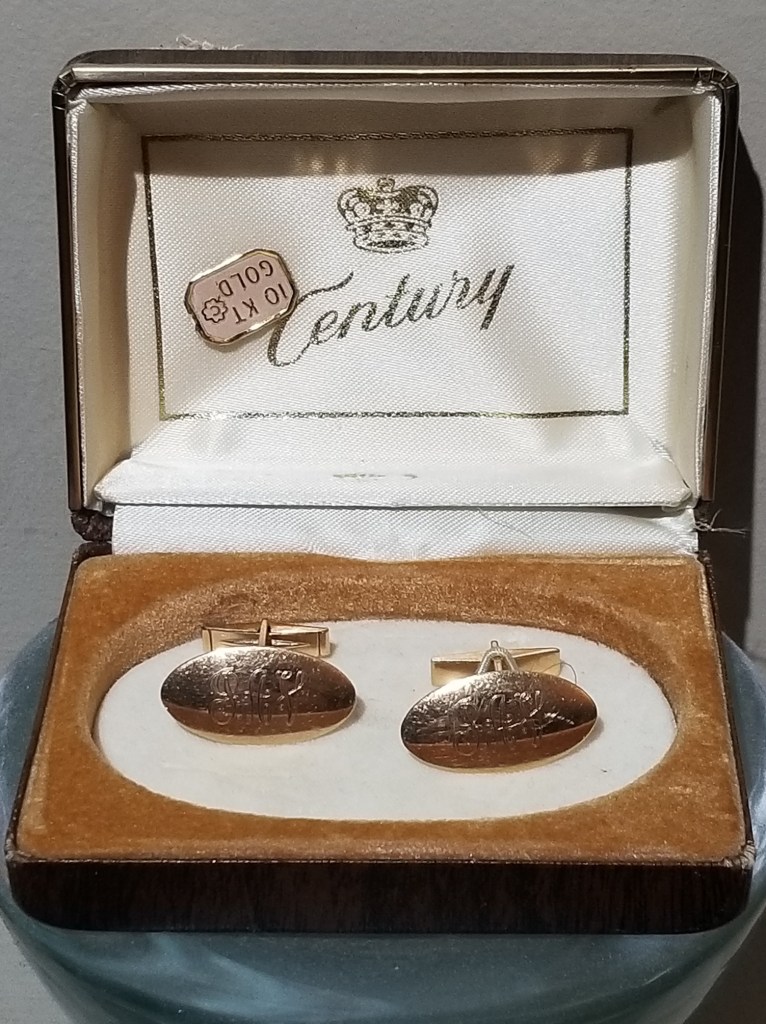
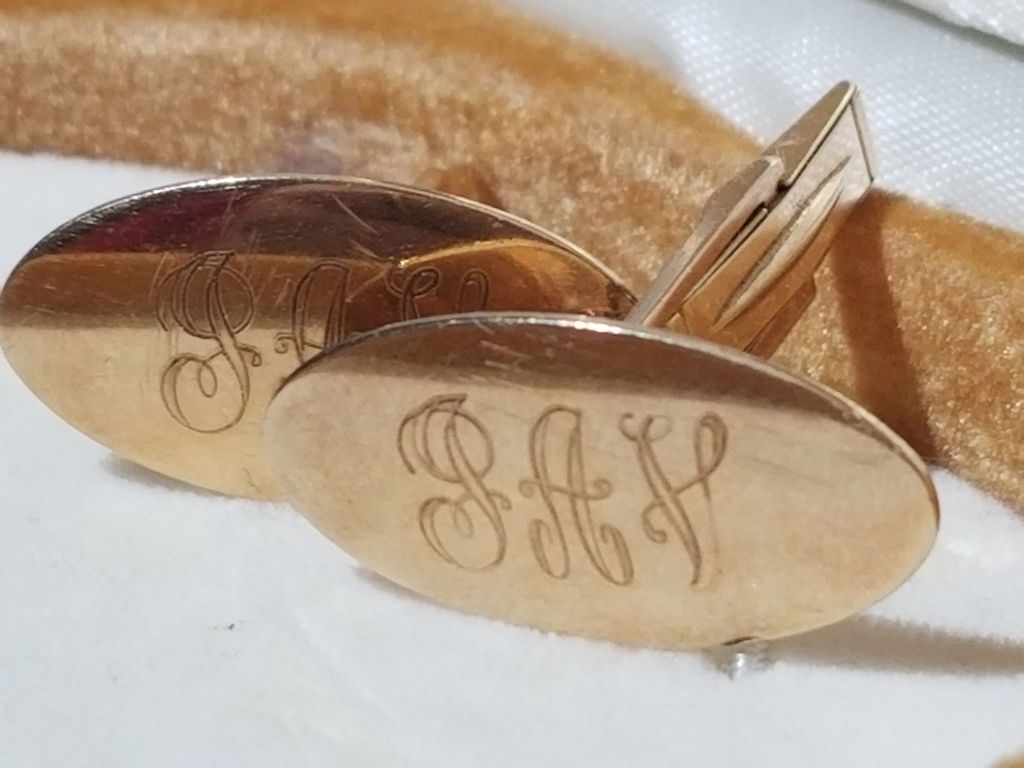
Not too long afterward, my father gave me a pair of his old cufflinks that have become my favourite and most treasured. They’re clean, classic, and simple. There’s stamp on the post indicating that they’re 10 karat gold. They’re engraved with my father’s initials and, about five minutes ago, I discovered that “1975” is engraved underneath the face. That must have been the year he received them.

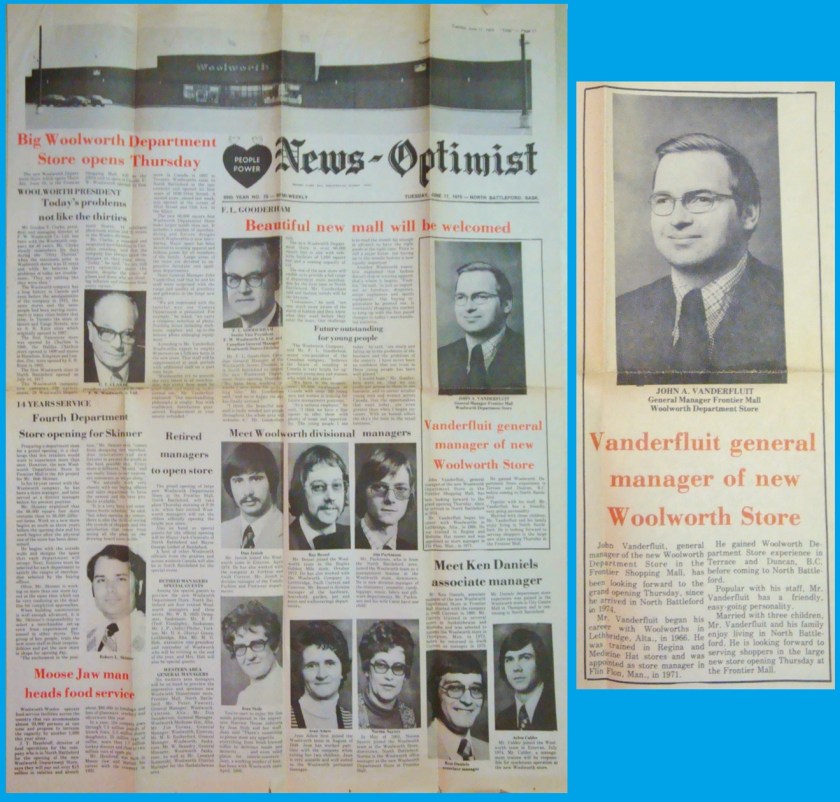
I can’t exactly recall how he came to possess them, although I knew he received them at work. Having discovered “1975” engraved on them, he must have received them to commemorate the opening of the new Woolworths in North Battleford, Saskatchewan. We had moved there the year before, when dad took over as general manager of the old store in the downtown core. The new store was far larger and was an anchor tenant of the new mall in which it was located.

Big news in a small town. I wonder if my father was wearing his fancy new cufflinks when the photo of him was taken.

Ever since I received these cufflinks, I have worn them to almost every major occasion at which I’ve had to wear a suit. I wore them at weddings and funerals. I wore them at my law school graduation and my call to the bar. And, of course, I wore them at my wedding.

This week I wore them when I attempted to attend my niece’s commencement ceremony, when she graduated with her Bachelor of Education degree. Unfortunately, I got no closer than 200 meters from the ceremony and was unable to attend. Long and boring story. At least I got to join the family celebration later that evening – sans cufflinks.

Wearing the cufflinks to the event I didn’t attend.

52 Weeks Mark III – Week 12: Technology

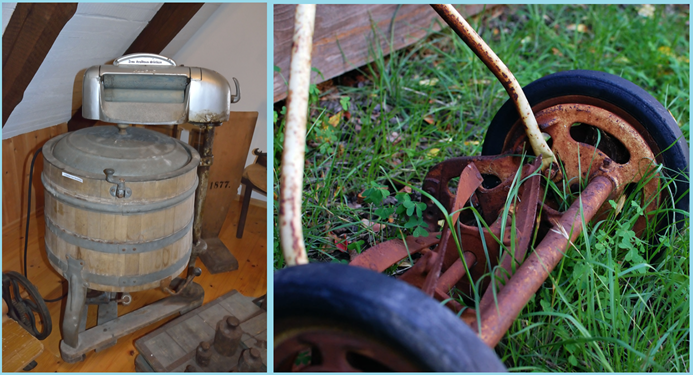
In the early 1970s, my maternal grandparents, Leo Burgess and Helen Lerner, were more than happy to rely on what seemed me to be horribly outdated and obsolete technology. My grandmother still used a wringer-washer and my grandfather used a push mower that to me seemed to be older than Methuselah.

These were both very much like the implements my grandparents used. I remember they each let me have a try at using them. Needless to say, both were hard work. I’ll stick to our modern gizmos, thanks.
[Images shared per Creative Commons licences 3.0 Unported and 2.0 Generic, respectively. Links: washer; lawn mower.]

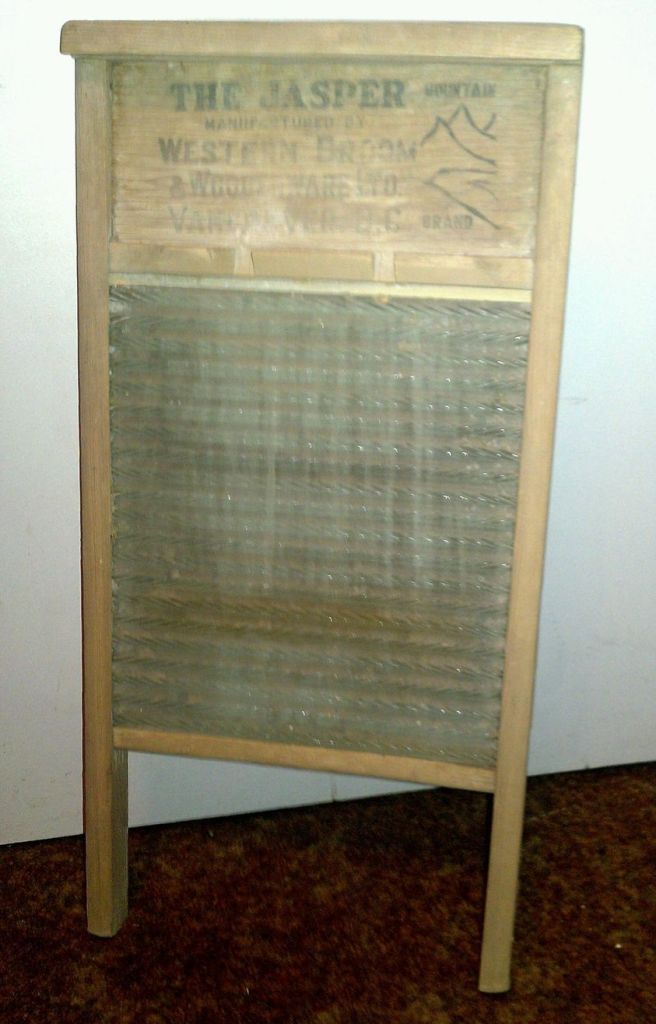
My mother still has the scrub board my grandmother used. She used to keep it in a spare room, which is where I photographed it. A few years ago my folks built a new house, so it now sits in a place of pride.

As can be faintly seen on the washboard, it was manufactured by Fraser Western Broom and Woodenware Ltd. in Vancouver, B.C. I see that the Museum of Vancouver, which is less than a half hour drive from where I live, has one in its collection. Based on the information on the item on its website, this washboard could not have been manufactured any later than 1950. That means my grandmother’s washboard must have been at least 25 or 30 years old when I first saw it.

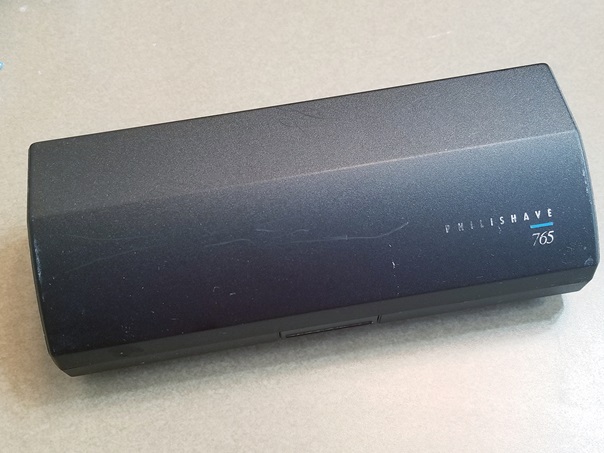
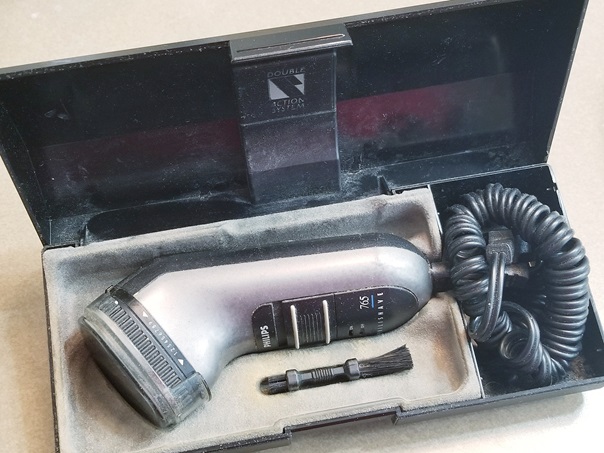
While it may seem my grandparents clung to the past, they did not eschew more modern technology. Ever since before I was in kindergarten, my grandfather always used an electric razor. We always loved it when he would hold it up to our cheeks so that we could have a shave, too. I have the last electric razor my grandfather owned before he passed away in 1995, a Philishave 765. Not only does it still work, but to my surprise I’m still able to buy replacement blades for it. I rarely use it, however, because I still prefer to use a manual razor; plus, several years ago my wife bought me a new one.

This razor must be at least 30 years old, if not older, but it still works!

52 Weeks Mark III – Week 8: Heirlooms

I’m one of five siblings. My sisters and I live in British Columbia, both of my brothers live in Alberta. Until a few years ago, both my brothers lived in the same town as my parents. During the first summer of the pandemic, the elder of my two brothers moved to another town, about 90 minutes away from my folks. As a result, it was a couple years until I saw his new home.

In October 2022, my father’s younger brother passed away. That same week, my father ended up in hospital with a broken hip. I flew out to Alberta for the memorial service and to see our dad. On my return trip home, I spent a night at my brother’s new place.

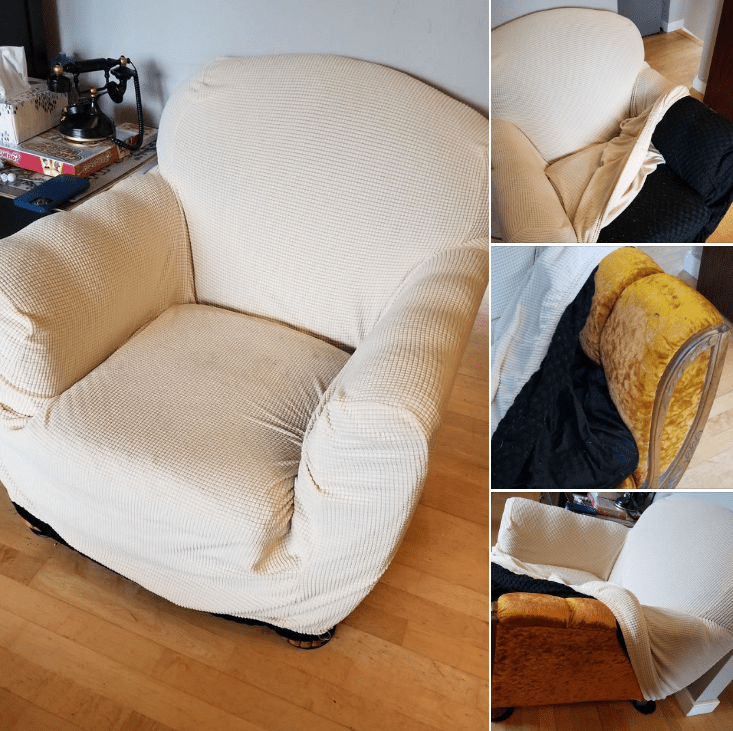
I was completely flabbergasted to discover that in his living room, under two upholstery covers (they have a lot of pets!), was the armchair that belonged to my great grandmother, Emelia Anton. I have no idea how old it actually is.

I know my grandmother acquired it from her mother sometime in the late 70s or early 80s and had it reupholstered. I thought it was disposed of after my grandfather passed away. I never realized that it ended up with my brother someway, somehow. It was really cool to see something that had once belonged to my great grandmother, which I remember well from our visits with her when I was a kid.

Update: Talking to my mother in August 2025, it turns out that this chair belonged to her other grandmother, her father’s mother, Hazel Nelson.