
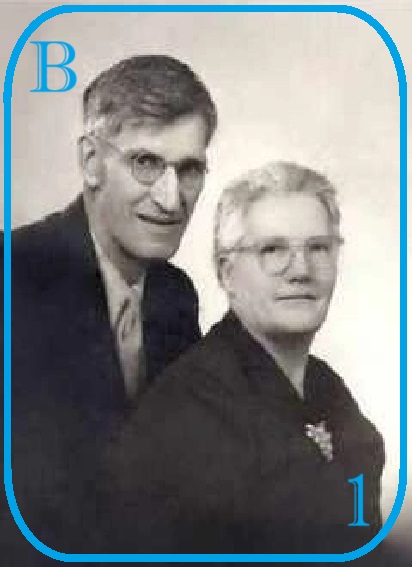
52W Mark IV – Week 27: Card B1 Milton Leo Burgess and Hazel Nelson

Milton Leo Burgess (1891-1964)
Hazel Nelson (1899-1967)

We’re halfway through the 2025 edition of my take on Amy Johnson Crow’s 52 Ancestors in 52 Weeks Challenge. With it I start the maternal side of my family and a new suit involving my mother’s paternal line. It’s also my Mormon lineage. In fact, my  Gx4 Grandfather, William Burgess (1794-1880), joined the church in 1832, two years after it had been founded. Moreover, all eight of my maternal grandfather’s great grandparents joined the church in the 1830s and 1840s.

However, after five generations, that came to an end with my grandfather, Leo Burgess, as none of his four children were members of the church or raised Mormon. In fact, my grandfather was pretty much a lapsed Mormon, if there is such a term, by his late teens. He only returned to the church after my grandmother, Helen Lerner, passed away.

Leo’s parents, and the subject of the first card of this suit, were Milton Leo Burgess and Hazel Nelson.
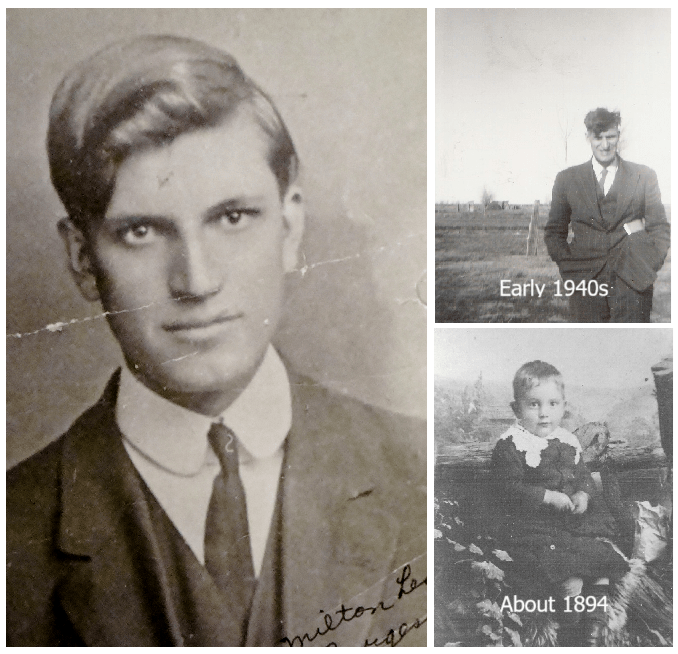
Milton was born in Vernal, Utah, on September 9, 1891, the eighth of nine children born to Horace Conrad Liggett Burgess and Sarah Florilla Cook. Florilla passed away in January 1894, a few weeks after her last child, also named Sarah Florilla (“Rilla”), was born. Milton was only two years old at the time. Horace remarried shortly afterwards, to Julia Josephine Lundquist, with whom he had at least another eight or nine children. The family moved Canada when Milton was 14. They settled in Vulcan County, Alberta.

After completing a two-year mission to Australia in 1915, Milton settled in Glenwood, Alberta, which is about 22 kilometers from Cardston as the crow flies. There he worked as a farm labourer. Sometime afterwards, he met Hazel Nelson, who he married in Cardston on April 13, 1919.
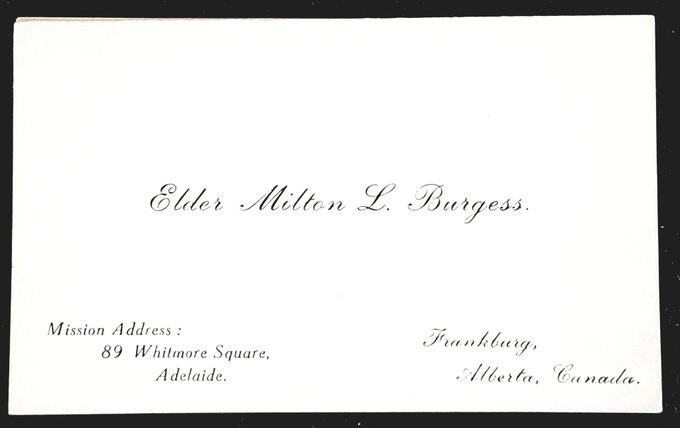
Calling card of Milton Leo Burgess from his time as a Mormon missionary in Adelaide, Australia

Milton’s calling card from his time as a Mormon missionary in Adelaide, Australia

Hazel’s family was amongst the earliest settlers of  Cardston, Alberta, which Mormon immigrants from the United States founded in 1887. Her parents, John Alexander Nelson and Ella Elizabeth Thomas settled there in 1890. Six of their 12 children were born in Utah; the other six were born in Canada. Hazel and her sister Irene were born on December 15, 1899. They were the first twins born in Cardston. Sadly, Irene passed away five weeks later, but Hazel lived to be 67.
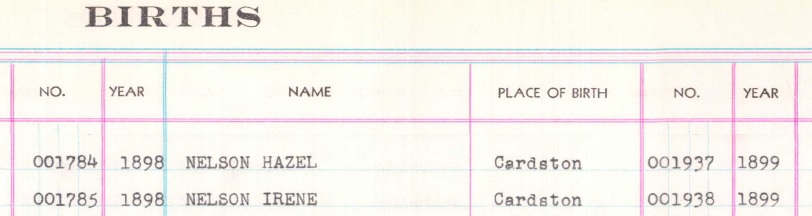
Because Hazel is listed first, I take it to mean that she was born first.
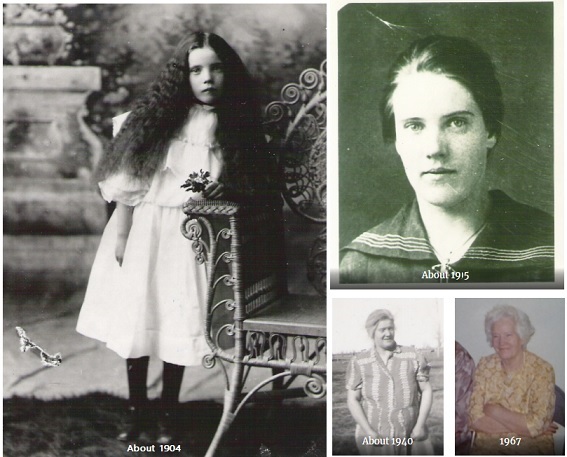
The year after they married, Milton and Hazel had the first of their nine children, my grandfather Leo. Shortly afterwards, the family moved to Nampa, Idaho, where Milton worked at an orchard with his in-laws. In Nampa they had three more children before permanently returning to Canada in 1924.

By 1927, the family had settled in Magrath, where Milton and Hazel spent the rest of their lives. While he continued to do farm work over the decades, Milton had a wide variety of jobs. In the early 1940s he worked as a plumber. Milton later worked in a woolen mill, where he lost a finger of his left hand in a work injury. Milton also worked for a short time as a grave digger around 1950. By 1958, when he was 67, Milton retired.

My mother has told me many stories about him over the years. One story that she has recounted many times is that her grandfather would often talk about how, according to the bible, no man was meant to live more than 72 years. Milton died on September 10, 1964, the day after he turned 73.

I also have a small cache of letters Milton wrote to my grandfather in the 1940s. Most of them were gentle admonishments, such as disapproving of my grandfather working in establishments that served alcohol, coffee, and tea, or telling him that it was time to stop seeing the Catholic girl he had been dating and to find a nice Mormon girl to settle down with. Fortunately for me, my grandfather did not follow that advice, as that Catholic girl became his wife and my grandmother!
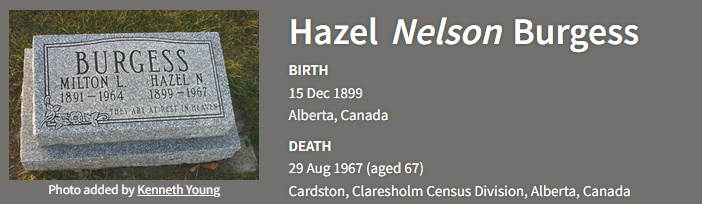
Screenshot of the entry for Hazel at Find a Grave, showing the headstone she shares with Milton.
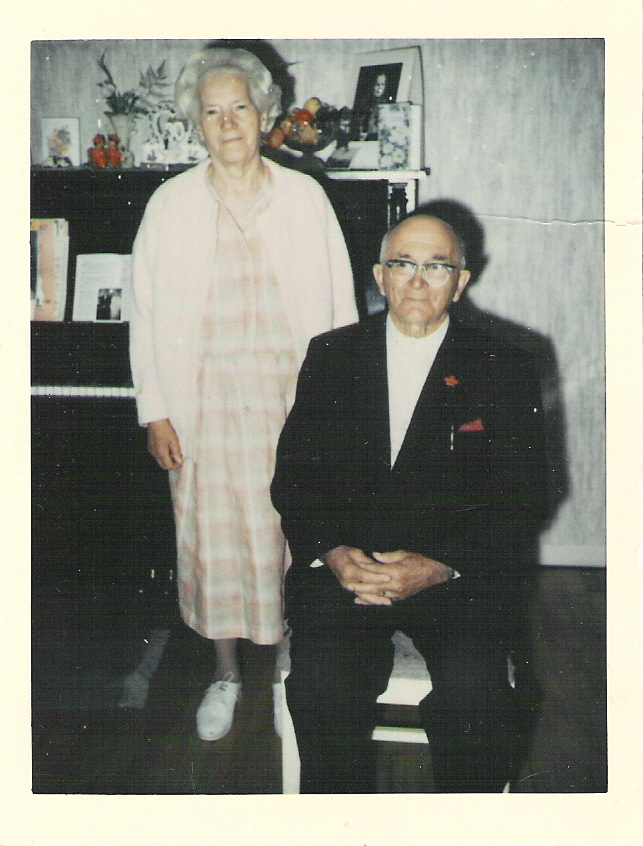
Hazel was 64 when Milton passed away. Around that time she moved to a seniors’ home in Cardston, which she derisively called “the old fools’ home”. There she met a widower, Albert Beaves, who she married in July 1967. Eight weeks later, Hazel passed away. My mother literally went from the funeral to the hospital, where I was born.

The newlyweds, Hazel Nelson and Albert Beaves, about July 5, 1967.
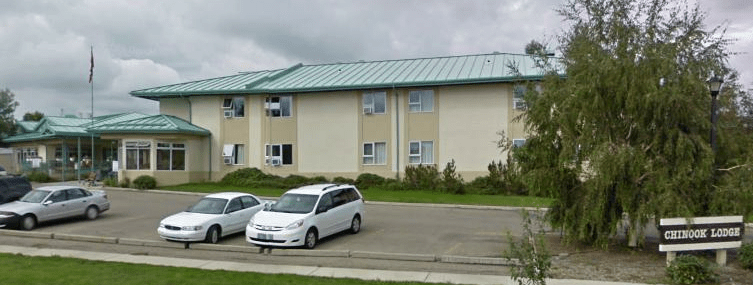
“The Old Fool’s Home” – Chinook Lodge in Cardston, Alberta
52W Mark III – Week 34: Member of the Club

My Gx3 grandfather, William Burgess, was an active member of his community. In addition to participating in local politics as a school board trustee and later as an alderman, he was involved in a variety of social activities.

William was one of the original Mormon settlers of Utah, having travelled west with Brigham Young’s company, in a party of 1220 individuals. William and his first wife, Maria Pulsipher, arrived in 1848 and first settled in Huntington. Within a year, they had relocated to Salt Lake City. In 1852, William entered into a polygamist marriage with my Gx3 grandmother, Charlotte Liggett. The family then moved to Lehi in 1854.

William was one of the founders of the Lehi Dramatic Club. On February 16, 1855, he obtained the necessary licence to produce plays from the town, without fee. The club performed in Lehi’s log schoolhouse, using tallow candles for footlights and painted wagon covers for scenery and curtains.

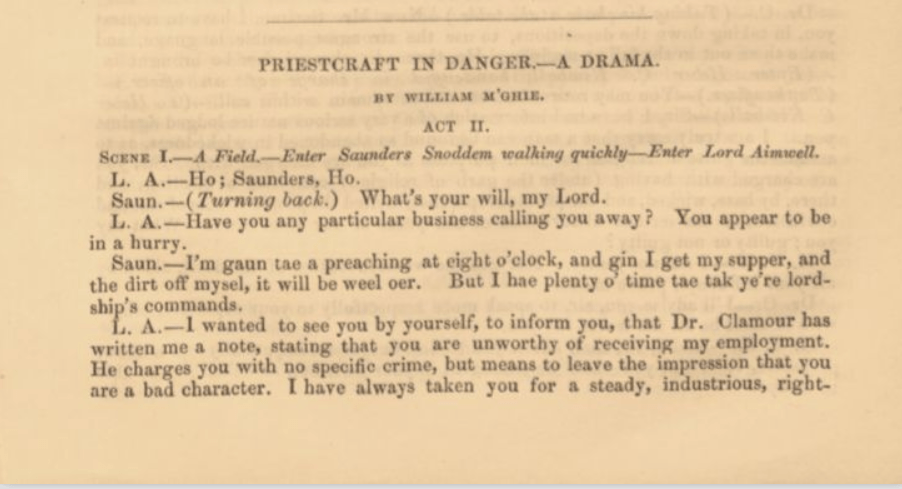
The first productions of the club were plays called “Luke the Labourer” and “Priestcraft in Danger”. The former, a melodrama written by John Baldwin Buckstone in 1826, is the tale of a farm worker and his turbulent dealings with his former employer. The latter, by William M’Ghie, was first published in The Latter-day Saints’ Millennial Star, a periodical in Manchester, England, on May 15, 1849.

I doubt William actually performed on stage. Rather, I believe he was one of the people working behind the scenes overseeing the operations of the club. Nevertheless, it is entirely possible that he may have been treading the boards!

52W Mark II – Week 33: Strength

I am not a member of the Latter Day Saints (“Mormons”), but my maternal grandfather, Leo Burgess, was. In fact, his direct paternal line were Mormons almost since the beginning. The early members of the church were required to draw on their strength as they faced persecution, exile, and hardship.

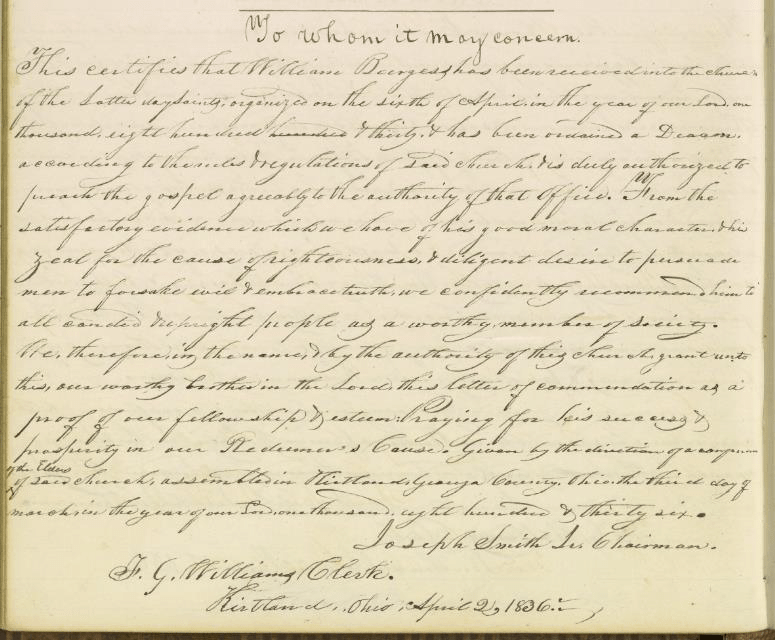
Most sources state that my Gx4 Grandfather, William Burgess (1794-1880) was baptised into the church in 1832, two years after it had been founded by Joseph Smith. However, the Kirtland Elders’ Certificates from the Joseph Smith Papers state that William joined the church and was ordained a deacon on April 6, 1830. All eight of my grandfather’s great grandparents had joined the church in the 1830s and 1840s.

“This certifies that William Burgess has been received into the church of the Latter-Day Saints, organized on the sixth of April, in the year of our Lord, one thousand, eight hundred hundred & thirty, & has been ordained a Deacon…

Joseph Smith Jr. Chairman.
F[rederick] G. Williams Clerk.
Kirtland, Ohio, April 2, 1836.”

Kirtland Elders’ Certificates, p. 84, The Joseph Smith Papers

While I am quite skeptical about much of the church’s dogma, I absolutely respect the strength of its early adherents, including many of my direct ancestors who were early members of the church. Many of them experienced and survived unnecessary suffering due to religious persecution. Several others endured an arduous – and for some,  deadly – journey from Illinois to Utah over the winter of 1846-1847.

Joseph Smith sought to create a “New Jerusalem”. He and his followers moved to Ohio and soon began building a settlement in Missouri. In 1833, church members were run out of Missouri and a failed banking venture crippled the Ohio settlement. The Mormons attempted a settlement elsewhere in Missouri, but were driven out upon an executive order of the governor, calling for them to be exterminated or expelled from the state. In 1939, the church regrouped in a new community, Nauvoo, Illinois, and began to build their Zion there.

Two years after Joseph Smith’s death in 1844, tensions with non-Mormons increased, such that the Mormons were driven out of their settlement once again. They upped stakes and began the migration to Utah. During the westward migration, over the winter of 1846-1847, about 2,500 church members encamped at Winter Quarters, which was just north of where Omaha, Nebraska came to be. The first settlers arrived in what is now Salt Lake City in July 1847, in what was still Mexican territory.

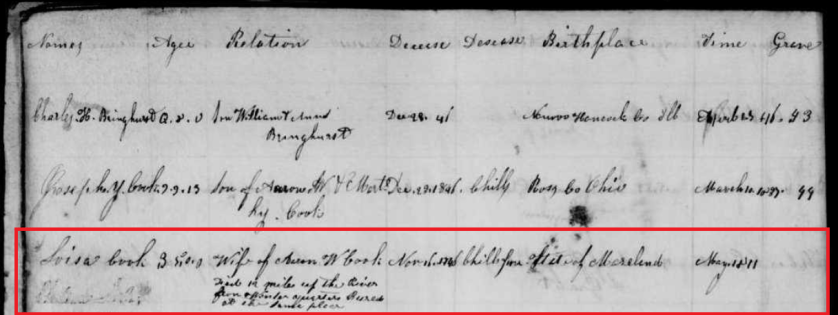
Many of the trekkers did not survive. There are varying accounts of the death toll at Winter Quarters. This is due, in part, to the lack of sufficiently complete and reliable records. It is also due to what was included in each account: some measure death only due to disease, others include deaths of all causes. The periods of time also vary: from a few months over the winter of 1846-1847, to longer periods of time, e.g.,1846 to 1848. Louisa Thomas, my 4x great grandmother, was one of those who perished at Winter Quarters. She died on November 16, 1846. An entry in the Winter Quarters sexton’s records shows that she died 19 miles up the river from Winters Quarters. Louisa’s daughter Charlotte, my Gx3 grandmother, was only nine at the time.

The entry for Louisa Thomas in the Winter Quarters sexton’s records, 1846-1848: “Loisa Cook. 36 years, 0 months, 0 days. Wife of Aaron W. Cook [her third husband]. Died 19 miles up the River from Winter quarters Bur[i]ed at the same place. [Died] Nov 16 1846. [Disease] chills fever. [Born] State of Mareland May 1811.”

To have survived long journeys to settle in new lands, religious persecution, and perilous migration took incredible strength – mental, physical, social, and spiritual. Their conviction and belief carried them through difficult times and experiences. For that I am grateful, because without their strength I would not have been.

52W Mark II – Week 7: Outcast

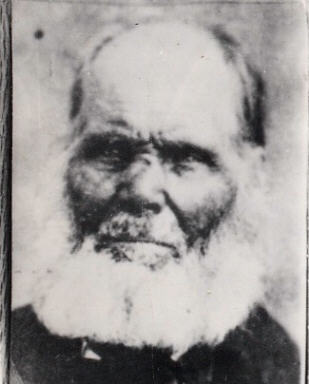
While my mother is not Mormon, her paternal line is, having been connected with the Latter Day Saints almost since its inception. By some accounts, my great x4 grandfather, William Burgess, joined the church in 1832. However, there are church records stating that he joined the church and was ordained a deacon on April 6 1830 – the date the church was formally established. Despite this, I suspect that William’s ordination date may have been “backdated” and the accounts that he joined in 1832 are correct.

William Burgess (1794 – 1880)

The church was founded by Joseph Smith. his successor was Brigham Young. However, the transition in leadership was not seamless. Joseph had actually designated his brother Hyrum as his successor; however, Hyrum was killed by a mob along with his brother in 1844. This resulted in a leadership crisis within the church.

While Brigham Young quickly took control and the majority of the church came to support him in short order, several other church leaders continued to maintain their claims to leadership. Among other things, this resulted in the establishment of other, albeit smaller, denominations within the Latter Day Saint movement. Many church members, including my ancestors, were caught up in the chaos created by the power struggle and church schisms.

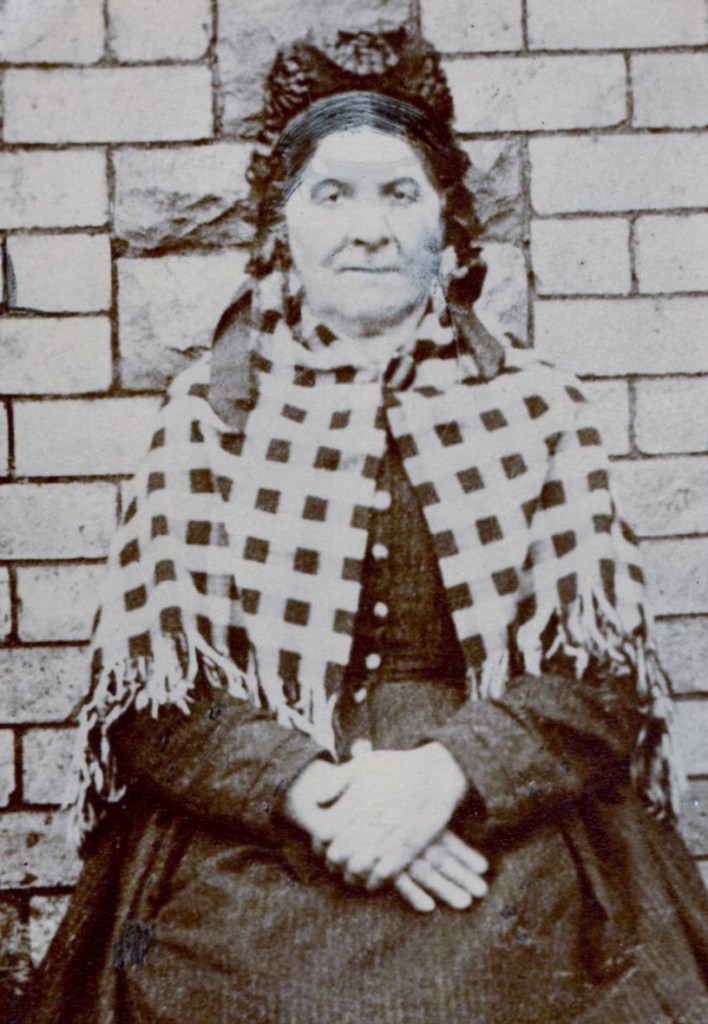
Susan Turple 1818 – 1906

On another branch of my mother’s paternal line is Susan Turple, my great x3 grandmother, who was born in Halifax in 1818. Susan, her mother, and several of her siblings joined the church in the late 1840s. Susan was baptised into the church in 1849.

However, in August 1851, Susan found herself excommunicated from the church, because she had aligned herself with one of the factions who were not backing Young. Her mother and her siblings shared in that experience. After confessing her “error”, Susan was rebaptized and rejoined the church in October 1851. However, her mother and siblings ultimately left the church. This led to estrangement from her family.

The next year Susan struck out on her own and emigrated to the United States, with the goal of joining the Mormon migration to Utah. By September 1852, Susan was in Salt Lake City, where she was an outcast no more. Within weeks of her arrival, she married Henry Lyman Cook, who was fifteen years her senior. Together they had four children, including Sarah Florilla Cook, my great great grandmother.