

52W Mark V – Week 17: Louisa Thomas

Louisa Thomas (1811-1846)

My 4xG Grandmother, Louisa Thomas, had a short and difficult life. While she passed away when she was 35, she had married three times and had partaken in one of the great westward treks of American history, the Mormon Migration.

While by every account Louisa was possibly born on May 28, 1811, I have had a great amount of difficulty in determining where her birth occurred. I have not found any primary records on the matter. The few sources I have are secondary or tertiary in nature.

When I first learned about Louisa in the mid-1990s, what little I found indicated that she was born in “Berks” or “Berks County” Virginia. However, there is no such place.

There’s a Berks County in Pennsylvania, not Virginia. There is a Burkeley County in West Virginia, in the panhandle bordering Maryland, which would have been part of Virginia when Louisa was born. There was also a Berkley, Norfolk County, Virginia, but the town was annexed by the City of Norfolk and the Norfolk County no longer exists. There is also Burke, Virginia, an unincorporated community in Fairfax County, about 20 kilometers southwest of Washington, D.C. The death certificate for Charlotte Liggett, Louisa’s daughter, says Louisa was born in West Virginia. The entry for Louisa’s death in the Winter Quarters Sexton’s Records says she was born in Maryland.

Considering all this information together, it seems that Louisa was most likely born in Burkeley County, then part of Virginia, close to the border with Maryland.

Louisa’s parents are also largely a matter of speculation and were said to be James Thomas and Elizabeth Stevens. The one source I had that named Louisa and her parents was a family history of Louisa’s second husband, the Liggetts, which I first consulted in 2013. The current version of that document no longer mentions Louisa or her parents. However, after writing this paragraph, I came across a history of Scioto Township in Delaware County, Ohio, which includes mention of James and Elizabeth. Unfortunately, the book does not indicate the source of this information.

FamilySearch had a James Thomas named as Louisa’s father, but named a Catherine Simmons as her mother. There were no sources for this connection, so I edited Louisa’s entry on FamilySearch by disconnecting her from those individuals. As it stands, I have no actual knowledge of who Louisa’s parents might have been.

The fog of history continues with Louisa’s first marriage. She is said to have married Lazarus Absolom Beakley in 1835, when Louisa was 24. However, I cannot find any record of this marriage or of Lazarus himself, who is said to have been born in 1811 and died before 1837. One secondary source even suggested that his name was only Absalem, with no Lazarus as a first name. Lazarus and Louisa supposedly had a son. Not only can I not find a record of this child, I can’t even find anything indicating what his first name might have been. Most of what I have about this marriage comes from a memoire by George Burgess, who was born 50 years after Louisa died, so I do not consider it particularly reliable.

At most, the registration of Louisa’s marriage to her second husband, Conrad Liggett (my Great x4 Grandfather) names her as “Louisa Beakley”. For the longest time, I had assumed this indicated a previous marriage to a man with the surname “Beakley.” However, that was based upon the belief that Louisa’s surname at birth was Thomas. The record of her marriage to Conrad does not indicate she was a widow.
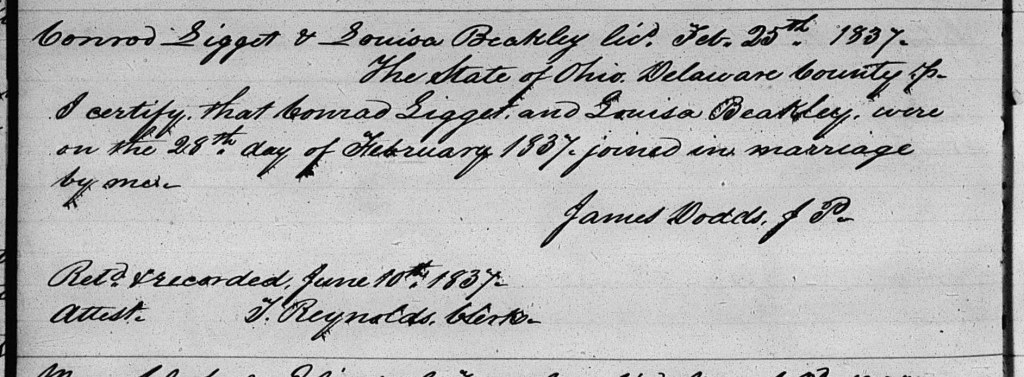
The registration of marriage for Conrad Liggett and Louisa Beakley. There is no indication that Louisa was previously married or whether Beakley was her surname at birth or that of a previous husband.

What if there was no Lazarus Absolom Beakley (given that I can find no record of him) and Louisa’s surname at birth was Beakley? I’ve been unable to find any record or mention of a Louisa Beakley, so that thought remains largely theoretical.

The real paper trail for Louisa begins with her marriage to her second husband, Conrad, as reproduced above. It’s the first tangible record indicating that Louisa even existed. Louisa and Conrad married on February 28, 1837 in Delaware County, Ohio. They had one child together, my Great x3 grandmother, Charlotte Liggett. It was a short marriage, as Conrad died on April 21, 1838, when Charlotte was only five months old.

With Conrad’s death, Louisa had to find work to support her family. As a result, Conrad’s parents, James Liggett and Susana Carr, took Charlotte in, possibly along with her half brother through her mother’s marriage to Lazarus Beakley. It is not clear if Charlotte’s grandparents had full-time custody and care of her or whether they only looked after her during Louisa’s working hours. Based upon the second-hand descriptions of their custody I’ve read, it appears that James and Susana had full-time care of Charlotte.

Three years and one week after Conrad died, Louisa married for a third (second?) time, to Aaron W. Cook. Aaron’s birth information I take with a grain of salt, because it’s exactly the same as what I have for Lazarus, and with an equally flimsy evidentiary basis. What is definitely far more certain is that Louisa married Aaron on April 28, 1841 in Delaware County, since there is a registration for their union in the Delaware County records.
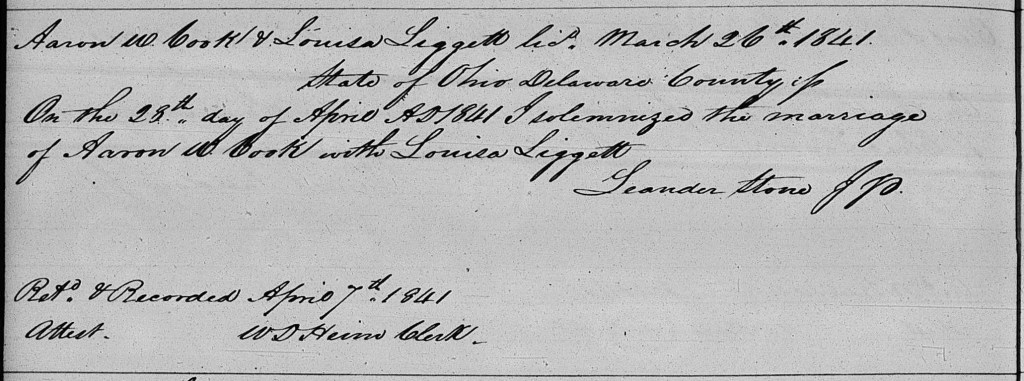
The registration of Louisa and Aaron’s marriage.

Here is where the story becomes (allegedly) more dramatic. According to George Burgess’s memoire, Louisa and Aaron married in secret. Around the same time, the couple joined the relatively new Mormon church.

Shortly after the marriage, Louisa asked James and Susanna if she could take Charlotte home with her for a week or a weekend. However, Louisa never returned Charlotte to her paternal grandparents. In George’s words, they “ran off” with Charlotte and joined the Mormons in their westward migration. However, it seems to me that Louisa was well within her rights to keep her daughter with her, since her in-laws never had any form of legal custody of Charlotte.

George said that Louisa had three daughters with Aaron when they were living in Nauvoo, plus another child about 12 miles out of Nauvoo after the Mormons were driven out of there. I have no records of these children, so I have not included them in my database. Louisa and her youngest child died during childbirth. Allegedly – again! – because I cannot find any mention of a child in the record of Louisa’s death or that Louisa had died in childbirth.

After leaving Ohio, Louisa and Aaron apparently settled in Nauvoo, Illinois, where the Mormons had established a settlement and built a temple. However, in 1846, a few years after the death of church founder Joseph Smith, the Mormons were driven out of Nauvoo. This motivated the Mormons to migrate to what is now Utah, which was then still part of Mexico.

Because of the rushed departure from Nauvoo late in the year, the Mormons set up camp known as Winter Quarters, near present day Omaha, Nebraska. Conditions were rough and many of the trekkers died there. Depending on the source, anywhere from 350 to 2,000 Latter Day Saints perished at Winter Quarters. Louisa was one of those who died there.

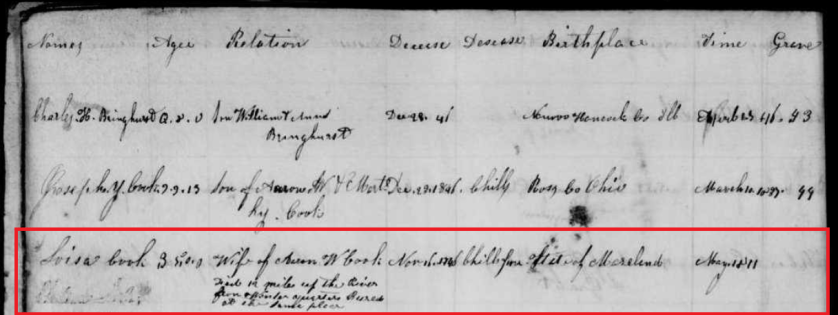
An entry in the Winter Quarters Sexton’s Records shows that Louisa died on on November 16, 1846, about 19 miles up the river from Winters Quarters. Charlotte was only nine at the time.
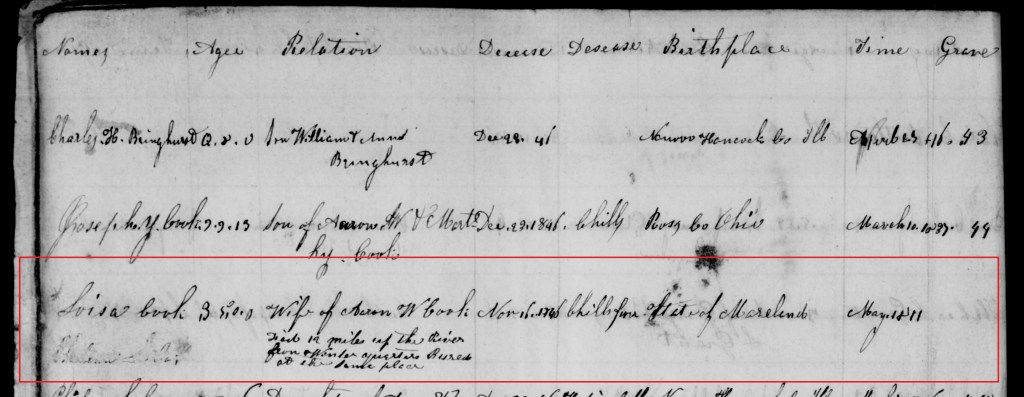
“Loisa Cook. 36 years, 0 months, 0 days. Wife of Aaron W. Cook [her third husband]. Died 19 miles up the River from Winter quarters Bur[i]ed at the same place. [Died] Nov 16 1846. [Disease] chills fever. [Born] State of Mareland May 1811.”

While Louisa only lived for 35 years, I only have documentation I have for her only coves the last ten years of her lifen. What little there is shows short marriages, family strife, religious persecution, and an early death. Despite what I have found, Louisa remains a solid brick wall ancestor.

Hello Louisa!

52W Mark II – Week 33: Strength

I am not a member of the Latter Day Saints (“Mormons”), but my maternal grandfather, Leo Burgess, was. In fact, his direct paternal line were Mormons almost since the beginning. The early members of the church were required to draw on their strength as they faced persecution, exile, and hardship.

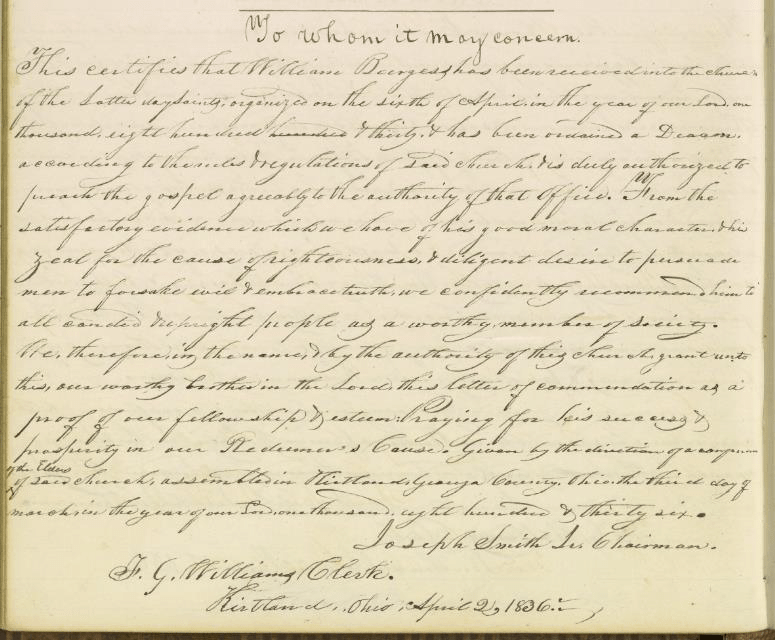
Most sources state that my Gx4 Grandfather, William Burgess (1794-1880) was baptised into the church in 1832, two years after it had been founded by Joseph Smith. However, the Kirtland Elders’ Certificates from the Joseph Smith Papers state that William joined the church and was ordained a deacon on April 6, 1830. All eight of my grandfather’s great grandparents had joined the church in the 1830s and 1840s.

“This certifies that William Burgess has been received into the church of the Latter-Day Saints, organized on the sixth of April, in the year of our Lord, one thousand, eight hundred hundred & thirty, & has been ordained a Deacon…

Joseph Smith Jr. Chairman.
F[rederick] G. Williams Clerk.
Kirtland, Ohio, April 2, 1836.”

Kirtland Elders’ Certificates, p. 84, The Joseph Smith Papers

While I am quite skeptical about much of the church’s dogma, I absolutely respect the strength of its early adherents, including many of my direct ancestors who were early members of the church. Many of them experienced and survived unnecessary suffering due to religious persecution. Several others endured an arduous – and for some,  deadly – journey from Illinois to Utah over the winter of 1846-1847.

Joseph Smith sought to create a “New Jerusalem”. He and his followers moved to Ohio and soon began building a settlement in Missouri. In 1833, church members were run out of Missouri and a failed banking venture crippled the Ohio settlement. The Mormons attempted a settlement elsewhere in Missouri, but were driven out upon an executive order of the governor, calling for them to be exterminated or expelled from the state. In 1939, the church regrouped in a new community, Nauvoo, Illinois, and began to build their Zion there.

Two years after Joseph Smith’s death in 1844, tensions with non-Mormons increased, such that the Mormons were driven out of their settlement once again. They upped stakes and began the migration to Utah. During the westward migration, over the winter of 1846-1847, about 2,500 church members encamped at Winter Quarters, which was just north of where Omaha, Nebraska came to be. The first settlers arrived in what is now Salt Lake City in July 1847, in what was still Mexican territory.

Many of the trekkers did not survive. There are varying accounts of the death toll at Winter Quarters. This is due, in part, to the lack of sufficiently complete and reliable records. It is also due to what was included in each account: some measure death only due to disease, others include deaths of all causes. The periods of time also vary: from a few months over the winter of 1846-1847, to longer periods of time, e.g.,1846 to 1848. Louisa Thomas, my 4x great grandmother, was one of those who perished at Winter Quarters. She died on November 16, 1846. An entry in the Winter Quarters sexton’s records shows that she died 19 miles up the river from Winters Quarters. Louisa’s daughter Charlotte, my Gx3 grandmother, was only nine at the time.

The entry for Louisa Thomas in the Winter Quarters sexton’s records, 1846-1848: “Loisa Cook. 36 years, 0 months, 0 days. Wife of Aaron W. Cook [her third husband]. Died 19 miles up the River from Winter quarters Bur[i]ed at the same place. [Died] Nov 16 1846. [Disease] chills fever. [Born] State of Mareland May 1811.”

To have survived long journeys to settle in new lands, religious persecution, and perilous migration took incredible strength – mental, physical, social, and spiritual. Their conviction and belief carried them through difficult times and experiences. For that I am grateful, because without their strength I would not have been.

52 Weeks – Week 37: High and Low

Highs and lows bring to mind the Guinness Book of World Records. So for this week’s 52 Ancestors Challenge, I thought I’d consider some of the superlatives in my family tree. Bear in mind that this is for entertainment purposes only, because some of these superlatives have not been sufficiently researched or verified such that they can be taken as fact.

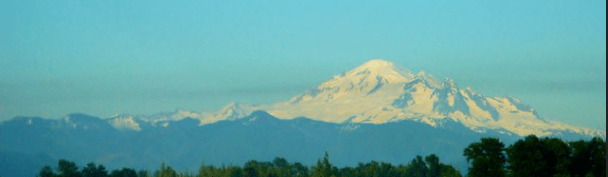
Here’s a high: Mount Baker, Washington

I cannot verify with certainty the longevity of the few centenarians in my database. According to my database, my longest-lived ancestor died at age 110. I don’t believe that for a second, so I won’t even name them. The person for whom I have at least a scintilla of information regarding their longevity is Joseph Metz, my first cousin three times removed. According to his headstone, as seen on Find a Grave, Joseph lived to be about 102 or 103. The longest-lived person in my database with the most reliable information regarding their lifespan is my fourth cousin three times removed, Fern Renner. She was better known to the world as Fern Welk, as she was married to the well-known band leader, Lawrence Welk.

My relative who was the oldest on their wedding day was my great great great uncle, Samuel Nelson, who married for the fourth time when he was 77. The bride, Cecilie Anderson, was 62. Samuel lived to be 93, making him one of my longer lived relatives.

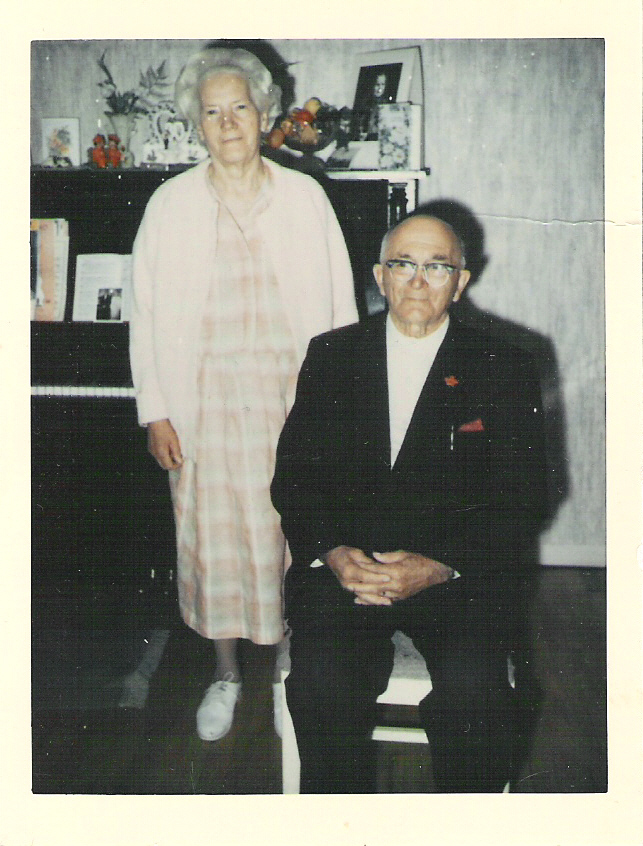
The newlyweds, Hazel Nelson and Albert Beaves, about July 5, 1967.

My great grandmother, Hazel Nelson, married for a second time at age 67, not quite two months before she passed away. Her husband, Albert Beaves, was also a widower marrying for the second time. Albert was 85 years old at the time. He lived another nine years after Hazel’s death. Albert died when he was 94.

While Samuel Nelson had been married four times, the record for most marriages is my 7x great uncle, Archelaus Kenney, who apparently married five times. Not even any of the Mormon polygamists in my tree married that many times. However, I have not verified any of Archelaus’s marriages.

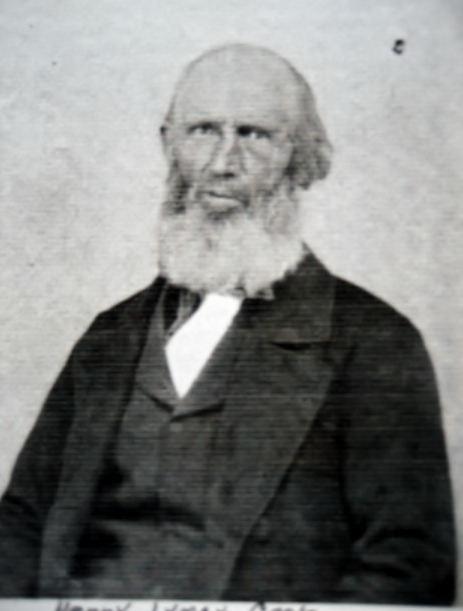
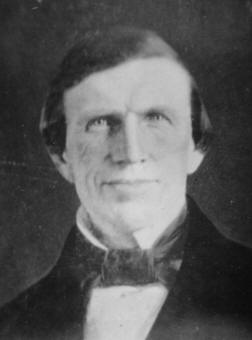
Otherwise, Samuel’s record was tied by his younger brother, my great great grandfather, John Alexander Nelson. However, while it appears that Samuel had been widowed each time he remarried, John was a polygamist. Another ancestor, my great x3 grandfather, Henry Lyman Cook, was also a polygamist who married four times. Other polygamist ancestors, including my great x3 grandfathers William Burgess, Jr. and Preston Thomas, only married three times.

A bunch of polygamists: John A. Nelson, Henry L. Cook, William Burgess Jr., Preston Thomas.

It probably comes as no surprise that the women in my family tree have had fewer multiple marriages than the men. I can find few examples of women who married more than twice. One of the exceptions is my great x4 grandmother, Louisa Thomas, who married three times. Her first husband, Lazarus Beakley, died a year or two after they married, when Louisa was around 24 or 25 years old. Louisa’s second husband, my great x4 grandfather Conrad Liggett, died 18 months after they married, when Louisa was 26. Louisa married again at age 29, to Aaron Cook. Unfortunately, that was another short-lived marriage, as Louisa died when she was 35.

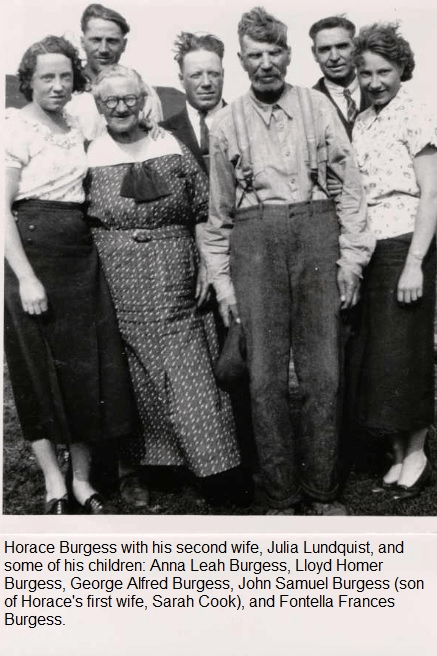
Of course, with marriage there are often children. Of course, the person with the most children in my tree is a father. My great great grandfather, Horace Burgess, had nineteen children. He had nine children with his first wife, my great great grandmother Sarah Cook. Their eight child and youngest son was Milton Leo Burgess, my great grandfather. After Sarah died, Horace remarried, to Julia Josephine Lundquist, with whom he had ten children.

The woman in my family tree who appears to have had the most children is Horace’s paternal grandmother, Violate Stockwell. Violate and my great x 4 grandfather, William Burgess Sr., had 12 children, including my great x 3 grandfather William Jr, who had 12 children with three different wives.

Delving far from what I’ve established through the genealogical proof standard, the earliest occurrence of a surname in my direct lineage is de Fleg, which dates back to the 10th century, through my 9x great grandfather Thomas Flegg. My connection to Thomas is through Henry Lyman Cook. While I have done a pretty good job at demonstrating my connection to Henry, I have not really done much work on his ancestry beyond the basics.

Here’s a low: standing a meter below sea level in Waarland, Netherlands

I realize that in this examination of superlatives, I have only considered the highs. Of course, considering the people in my tree who are at the opposite end of most of the categories I have discussed are in the multiples. The one category that might lend itself to reasonable consideration of the low end is the surname that might be the opposite end of earliest occurrence. In other words, the surnames I have traced the least far back in time. I’ve identified all 32 of my great x3 grandparents. It is the next generation where I face my first brick walls. I am missing nine of my 64 great x4 grandparents, all on my maternal grandmother’s side of the family. They are all Germans from Russia, who are particularly difficult to research. These lines trace back to settlements in what is now Ukraine, when it was part of the Russian Empire.

Genealogy: all the highs and lows are fascinating!