52W Mark II – Week 52: Me, Myself, and I

After posting last week’s entry, in which I wrote about being my own cousin, I realized that it very well could have fit in with this week’s theme of “Me, Myself, and I”. However, to mark the last (!?!) week of Amy Johnson Crow’s 52 Ancestors Challenge for 2023, the thing I will share about myself is how I have used the challenge to the fullest.

I wrote a family history book!
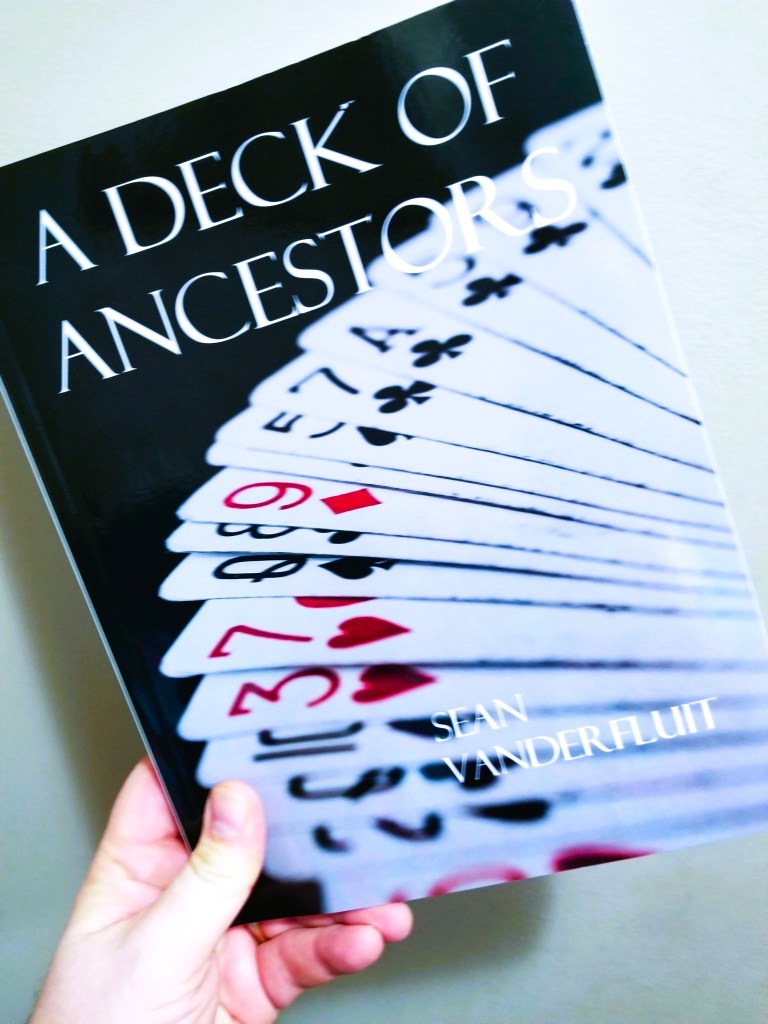
I originally signed up for the 52 Ancestors Challenge for 2020, but did nothing afterwards. I signed up again for 2021, for which I also did nothing.

Somehow third time was the charm. I know there was something that spurred me on to actually do something for the 2022 challenge, but now for the life of me I can’t recall what that was!

For years I had vaguely pondered a genealogy blog, but really couldn’t think of a niche that wasn’t already being addressed by dozens of other genealogy blogs. However, the 52 Ancestors Challenge was the catalyst to creativity that I needed. So a quarter century after blogging was cool, I created this blog as a means of participating in the challenge.

At the same time, I set up a second Twitter (I refuse to use the “new” name) account that would only be used for genealogy, also named Deck of Ancestors. I’ve since created namesake accounts on Mastodon, the now defunct Pebble, Mastodon, and Bluesky. I’ve largely abandoned Mastodon. I’m active on Bluesky, but it doesn’t seem to be gaining the traction I thought it had when I first joined.

It was hard at times, but I was successful in posting something for all 52 weeks of the challenge. With this post, I’ll be successful for a second year in a row. The second year was more difficult. It felt harder to come up with something I hadn’t written about before and some of the weekly prompts were not easy for me. Nevertheless, I persevered! I’ve signed up for the challenge again for 2024. Looking at the prompts, it looks like it will be another difficult year, but I will try to rise to the challenge.

However, what I’ve always wanted to do is create some sort of family history book. However, I was reluctant to churn out one of those dry tomes that’s just a bunch of pedigree charts and a BMD narrative. I’ve started and stopped all sorts of drafts and have the works in progress still sitting in a folder on my computer.
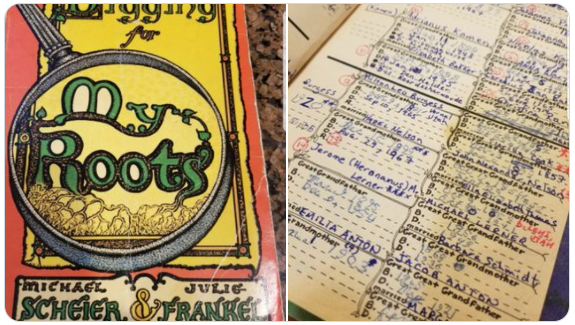
My real first genealogy book!

Moreover, like a lot of family historians, I had lots of ideas for genealogy-related Christmas presents, but kept putting it off until it was too close to the holiday to get it done.

Thanks to the 52 Ancestors challenge, I inadvertently hit upon what I thought was a winning solution – the blog posts were essentially a book! I had the foresight to start working on this project in the summer, which began with reformatting the blog entries into a book format. The other problem was figuring out how to print it.

Luckily, this year I discovered Lulu, an online self-publishing site. I had used others before, but none worked for this project. In September I ordered a test copy. It passed muster, so I ordered enough copies for my Christmas gift giving – my parents, our kids, my siblings, and my nibblings, plus copies for the Library and Archives Canada. (It may be nerdy, but I was really excited to get an ISBN for the project!)
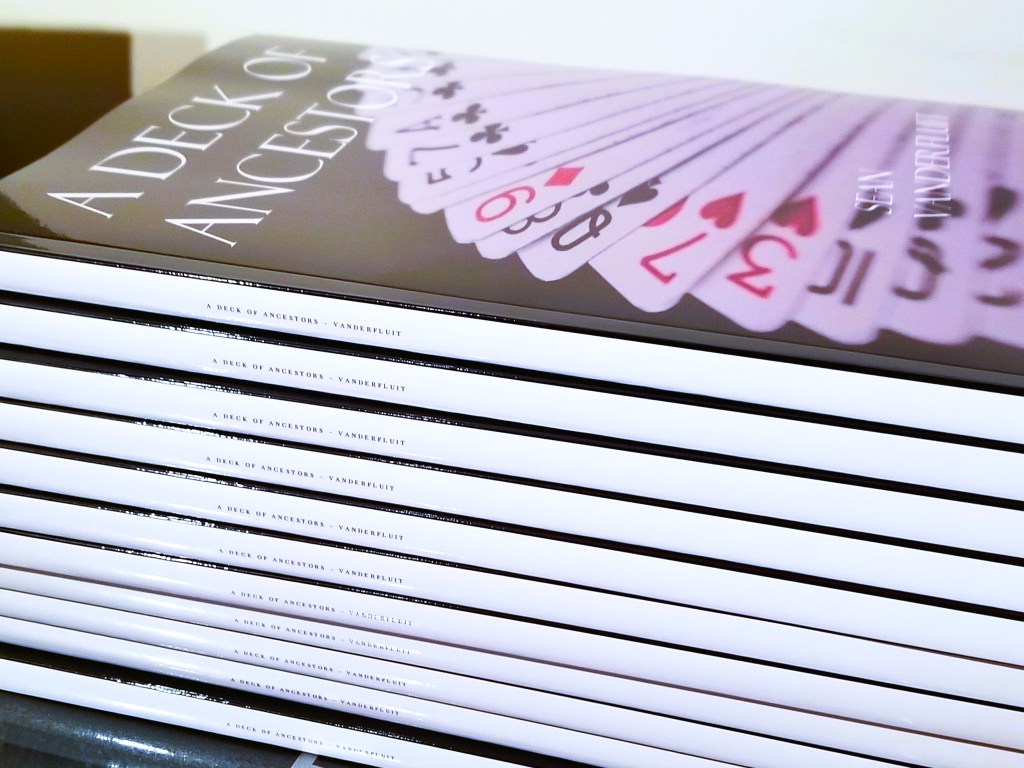
A Stack of Ancestors!

So here it is, my family history book, A Deck of Ancestors, consisting of my 52 posts for the first year I participated in the 52 Ancestors Challenge. One of my sisters and her kids opened theirs early, as they went overseas for the holidays. I just made it a Hanukkah gift instead. The reviews were great. On Christmas Eve, my sister-in-law sent me photos of my father reading the copy I gave my parents. Seeing that was really special. While my father used to be a voracious reader, he doesn’t really read much anymore since his vision has deteriorated terribly over recent years. What I was most excited for was to see our kids open their copy. I was happy to come downstairs on Boxing Day morning to see our eldest engrossed in his.

In addition to the print version, I created an expanded digital edition (with its own unique ISBN, of course), which I sent to everyone after they opened their print copy. Among other things, I added an Ahnentafel, a 17-generation pedigree chart, and a full index. (I hate non-fiction books without an index!) It would have been extremely expensive to include all that in a print version. Plus, the digital version has all the hyperlinks, which are pretty hard to click in a print edition!

So thank you Amy Johnson Crow for creating the 52 Ancestors Challenge and helping me fill the one gap in my years of genealogy practice – writing!
52W Mark II – Week 51: I’m My Own Gran…er, Cousin

Wow, hard to believe that it’s the penultimate week of Amy Johnson Crow’s 52 Ancestors Challenge!

This week we’ve been challenged with the theme “Cousin”. As stated by Amy, “The neat thing about this theme is that we genealogists know that everyone is our cousin! That definitely opens up the possibilities for who to write about!” Thus, no cousin is too distant!

So what do a sixth cousin, ninth cousin, tenth cousin, and fourteenth cousin in my family tree all have in common? They’re all me!

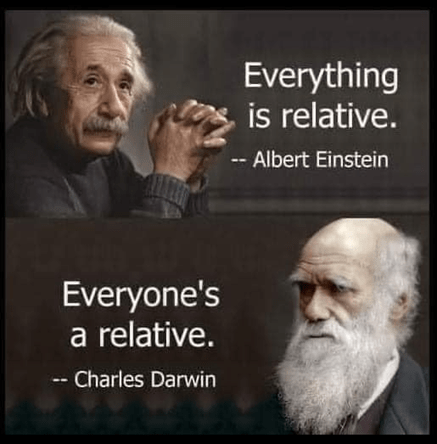
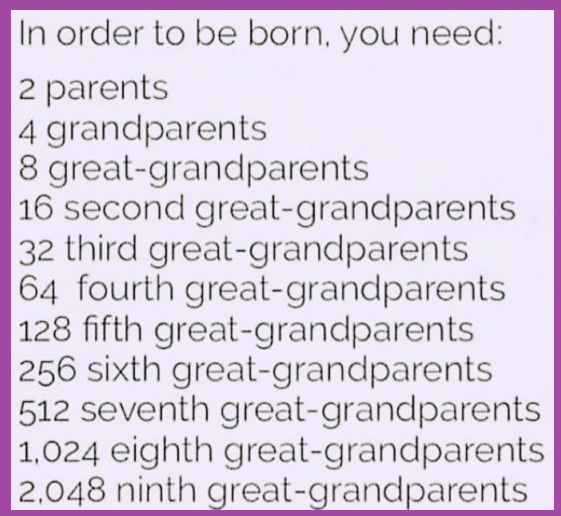
Being one’s own cousin is not unique to me. Most genealogists have seen the posts, memes, and graphics showing how many ancestors we have:

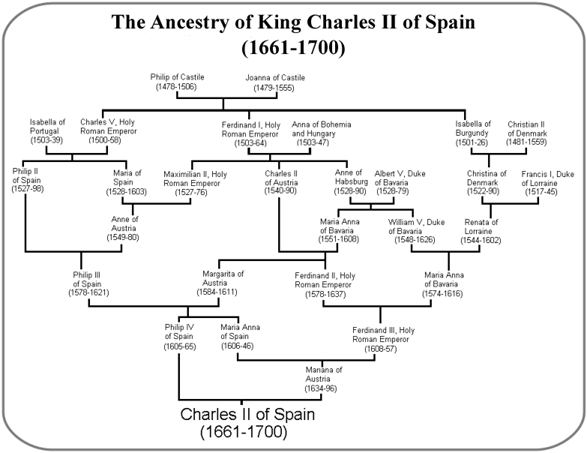
While technically correct – you need all these ancestors to have been born – it gives the impression that these are all separate unique individuals. However, the truth is that somewhere along the line two great x n ancestors are the same person. Otherwise, the math simply does not work out. It would mean that you have 67,108,864 individual great x 25 grandparents, which would have exceeded the population of the Earth at the time they lived. Robin Fox, an anthropology professor at Rutgers estimated that 80% of marriages in history were between second or closer cousins. The resulting phenomenon is referred to as “pedigree collapse“, although I was amused by the term “genealogical shrinkage“.

An extreme example of aristocratic pedigree collapse.

It’s well-known that the aristocracy and nobility have had marriages between close relations for diplomatic, political, and financial reasons. However, this practice also occurred at the lower end of the social ladder (here’s an extreme example from Yvette Hoitink, a Dutch genealogist). It’s inevitable to find first, second, and third cousins who are married living in small and isolated communities, and not just in colonial times. Moreover, once you get to a more distant relationship – who really knows (other than genealogists) who their fifth cousins might be – couples might not have even been aware that they were cousins.

A considerable example might be Iceland, a country of fewer than 400,000 people, with a relatively stable population of few immigrants over 1,000 years. Icelanders concerned about their consanguinity can consult an app that helps identify how closely they might be related to a potential partner.

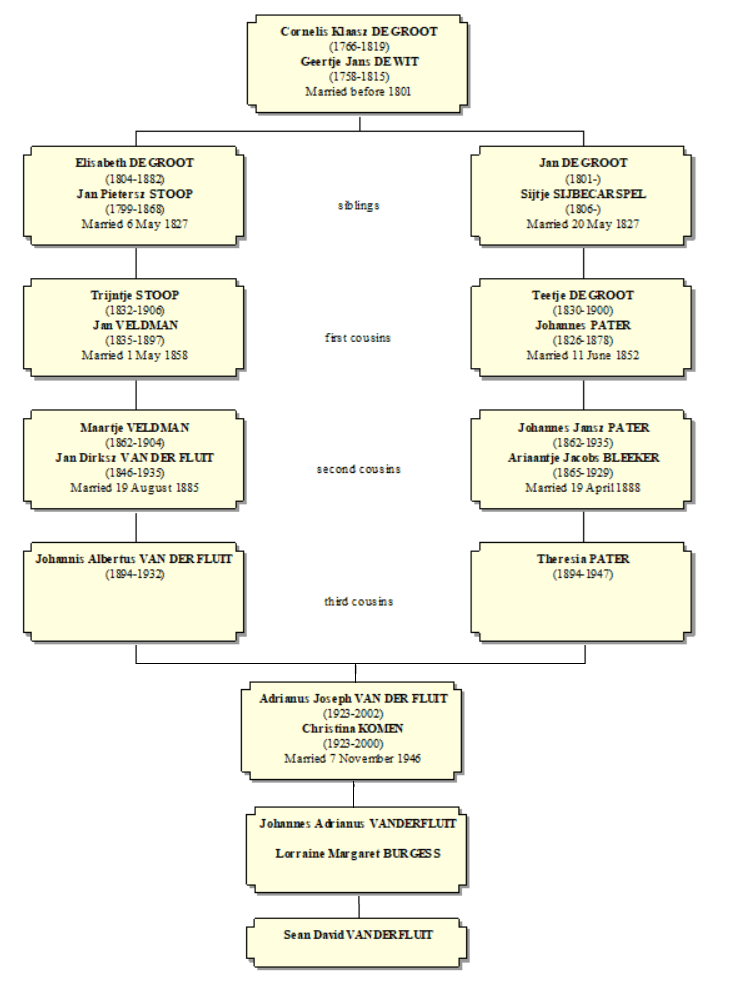
My closest relationship to myself is through my father’s paternal grandparents, Johannis Albertus van der Fluit and Theresia “Teetje” Pater, who were third cousins. They were born in raised in nearby villages in the Netherlands that are less than two kilometers apart. They married on July 20, 1917.

Johannis and Teetje are both descendants of Cornelis Klaasz de Groot and Geertje Jans de Wit, their great great grandparents and my G x 5 grandparents. Teetje is descended from their eldest son, Jan, while Johannis is descended from their youngest daughter, Elisabeth. Johannis and Teetje would have had to have known the surnames of their great grandparents to even have a clue that they might have been related. I doubt they did.

My grandfather is his own fourth cousin, and fourth cousin with his siblings. My father is his own fifth cousin, and fifth cousin with his siblings. I am my own sixth cousin, and sixth cousin with my siblings.

I can hold a family reunion anytime I want, even if I’m the only one there!

52W Mark II – Week 50: “You Wouldn’t Believe It”

Old newspapers are a great resource for genealogists. However, I do more than read just the item I’m looking for. I enjoy seeing what else was in the news on the same day as an ancestor’s birth, marriage, death, or other newsworthy action. Not only because it provides context for the familial event, but also because there are some really fun or interesting items to be found. There are all sorts of things you wouldn’t believe.

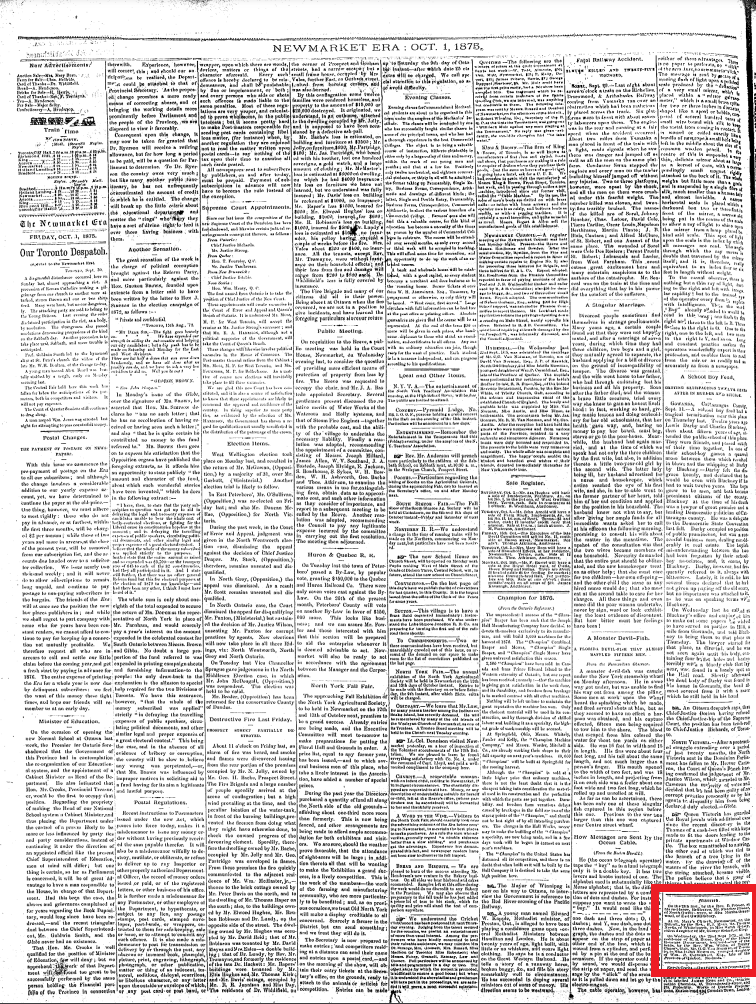
This is page two of the Newmarket Era (Newmarket, Ontario) for October 1, 1875.

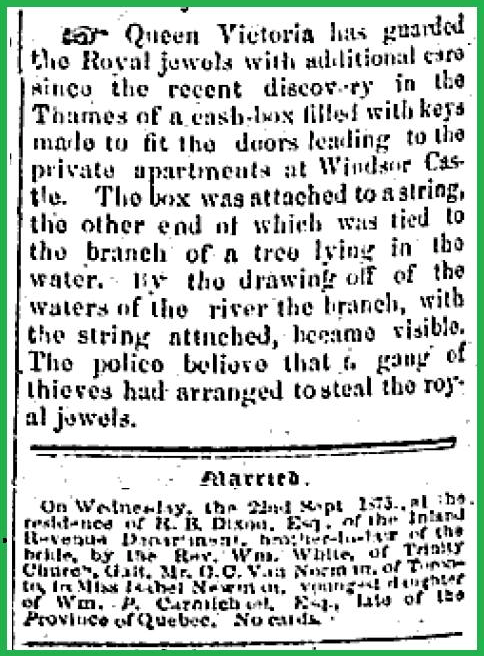
The item I was interested in is found in the bottom right-hand corner, marked in red. It announces the marriage of our sons’ great great great grandparents, Charles Crittenden Van Norman and Isabella Newman Carmichael.

However, there are lots of fun, interesting, and odd bits on the rest of the page. The first thing I noticed is immediately above the marriage notice: a great bit about what appears to have been a foiled plot to rob Windsor Castle, when Queen Victoria was on the throne.

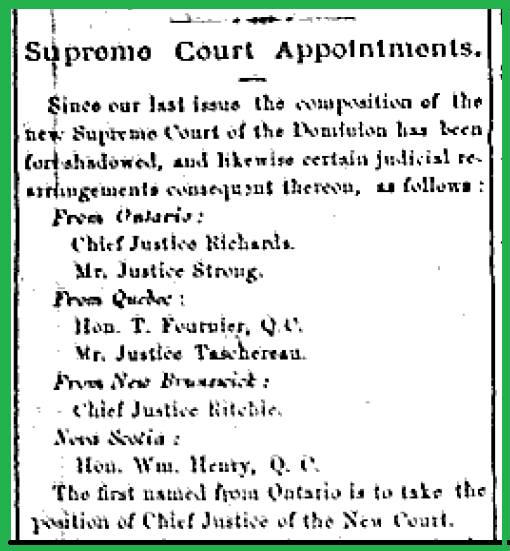
Buried elsewhere on the middle of the page was an item about the first appointees to the newly created Supreme Court of Canada. Note that there were no appointees from west of Ontario, although the only western provinces at the time were Manitoba and British Columbia.

That’s right, you wouldn’t believe it, the Supreme Court of Canada did not come into existence until seven years after Confederation. It wasn’t even front page news. The placement of the item in the middle of the page, in the third column, below a piece on new regulations for local postmasters, indicates the relevant unimportance of the court at that time. It wasn’t even the highest court for the country. That role was held by the Judicial Committee of the Privy Council in the UK until 1949 – 82 years after Confederation. Elsewhere on the page is an item noting that the first choice for Chief Justice of the new court turned down then offer – he preferred to remain in his position as the head of one of the provincial appeal courts.

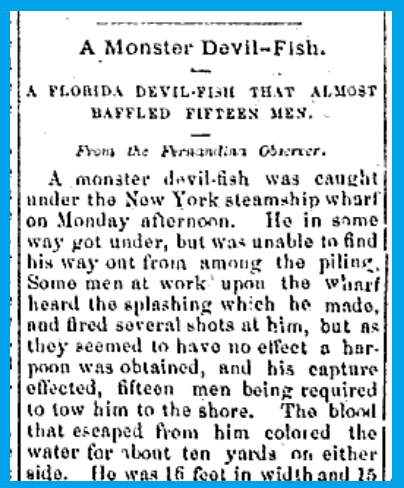
A few columns over is an item that you wouldn’t believe – “A Monster Devil Fish”. An incredible story about “A Florida Devil-Fish That Almost Baffled Fifteen Men”! The item ends by noting that “only only of these singular fish” had been captured before, “previous to the war.” Obviously, readers at the time would have known what war the story was referring to. Today, given that the item came from an American wire service, it’s most likely the reference was to the American Civil War.

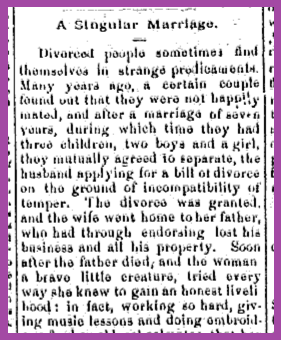
Above the Devil-Fish item is another story that not only you wouldn’t believe, you probably would not want to believe.  “A Singular Marriage” tells the story of a divorced single mother of three (a “brave little creature”). She ended up in such a state of poverty that she was left with the prospect of begging, starving or going to the poor-house, unless she took a job as the housekeeper and nanny for her ex-husband, his new wife, and their two-year old daughter. “All these things and even more did the poor woman undertake, never by sign, word or look exhibiting the least evidence of discontent. But bitter her feelings must have been!”

You wouldn’t believe it.

52W Mark II – Week 49: Family Recipe

Years ago on The Great Canadian Baking Show, one of the contestants said that she was using her *great* grandmother’s recipe. I have all sorts of recipes from my grandmothers (and copious notes on the recipes they didn’t write down that I’ve spent years trying to recreate). However, it never crossed my mind to think about my great grandmothers’ cooking. So the episode inspired me to ask my mother and mother-in-law if they had any of their grandmothers’ recipes.

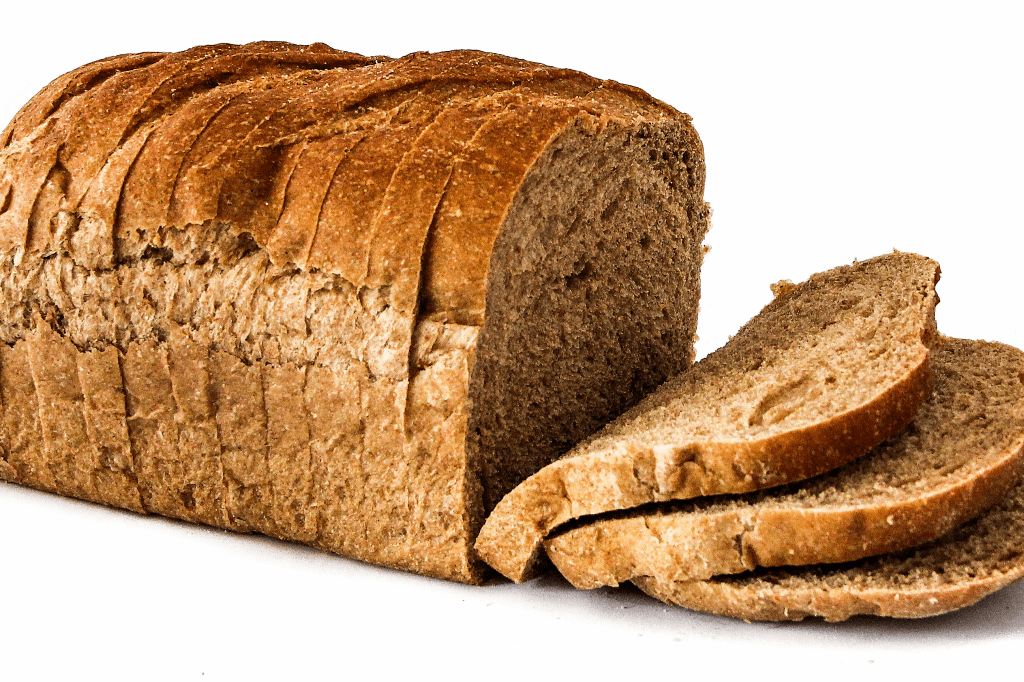
My mother-in-law responded first and provided me with her maternal grandmother’s recipe for brown bread. I’m happy to have it, but I doubt I’ll ever make it. It not only calls for nine cups of flour, it also requires two cups of rolled oats. I know that nine cups of flour isn’t outlandish for two loaves of bread, but adding in all those oats, it strikes me as a lot. However, the real impediment is that while I love to cook, I do not enjoy baking – despite the fact I am a pretty good baker. Nevertheless, I am thrilled to have a recipe that our kids can say was their great great grandmothers! (In fact, writing that last sentence has me thinking that maybe I should make this recipe…)

My mother responded by saying that she didn’t think she had any. She reminded me that her maternal grandmother was not a very good cook. The one exception was that her grandmother made fantastic raisin drop cookies, which all the grandchildren loved. My mother doesn’t have the recipe, which is fine by me. The only thing more boring than raisin cookies is oatmeal cookies.

As for my grandmothers, I’ve written about their cooking in some detail before, but I can add a bit of an update.

This past summer we participated in a 16-week Community Supported Agriculture (CSA) program through a local Richmond farm, Sweet Digz Farm. Overall, we had a very positive experience. What became apparent very early on was that a lot of the produce we were receiving lent itself to a lot of Dutch dishes. In particular, we had a lot of potatoes and kale, the key components of boerenkool stamppot (the Dutch were eating kale decades before it was cool and trendy in North America). My paternal grandmother often made stamppot, and it was awful. I knew I could do better.

My youngest and I went to a local butcher in Steveston Village and he selected the sausage for the recipe. (Sometime I will have to write about the Steeves family of New Brunswick, after whom the west coast village is named. My kids are Steeves descendants.) I also was a bit non-traditional with my stamppot. While there are no hard and fast rules, stamppot is usually potatoes and kale, while a combination of potatoes, onions, and carrots is hutspot. I was a rebel and not only used potatoes, carrots, and kale in the same dish, I used a few kohlrabi in place of a couple potatoes.

If I say so myself, it turned out amazing, and needless to say, much better than my grandmother’s. Not only that, but everyone in the family loved it and wanted seconds. While my family are generally not picky eaters, there are very few things that appeal to all of them. There’s always something I can tell someone is less than thrilled with. Even moreso with the Dutch foods I make – there’s always one who loves it and one for whom the dish is not for them. Pity, because in the winter months I really could go for some snert. A few days later I made shepherds pie (another universal favourite), but used leftover stamppot instead of the typcial mashed potatoes. Another win!

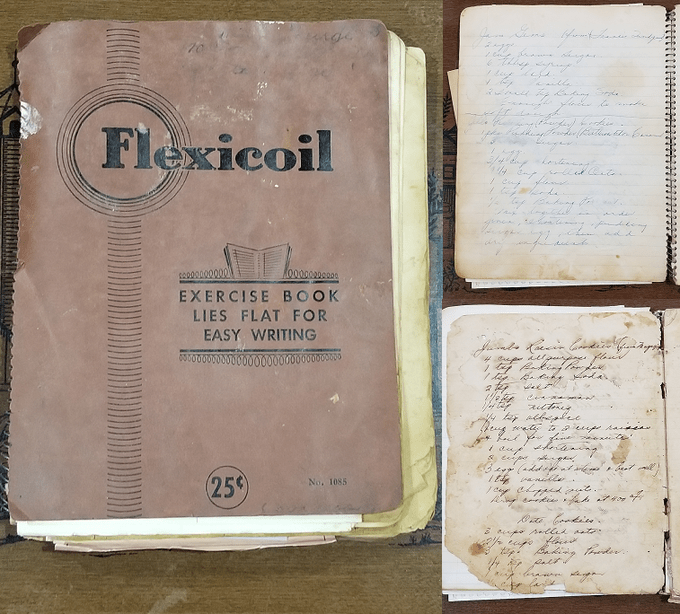
The biggest score, however, was during a visit to my mother’s a year ago. She distractedly removed an item from the back of a shelf and casually said, “oh, it’s my mother’s recipe book.” Yes, my head exploded. I had been asking her for years if she would find it for me sometime. I immediately absconded with it and photographed every page. The vast majority of the recipes were her desserts and sweet dishes but very few of her savoury dishes. However, a few of the savoury dishes seemed familiar – they were things my mother made, but in a whole different way. I could see how my mother adapted and changed her mother’s recipes over time – just as I do with my mother’s recipes!

My maternal grandmother’s recipe book.

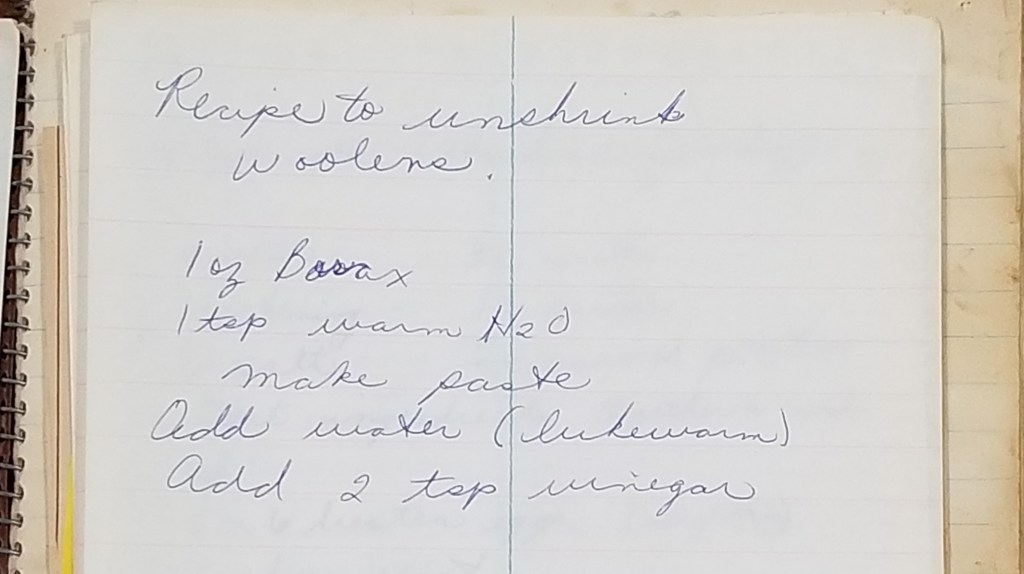
My grandmother also wrote down a few non-culinary recipes, such as this Recipe to Unshrink Woolens:

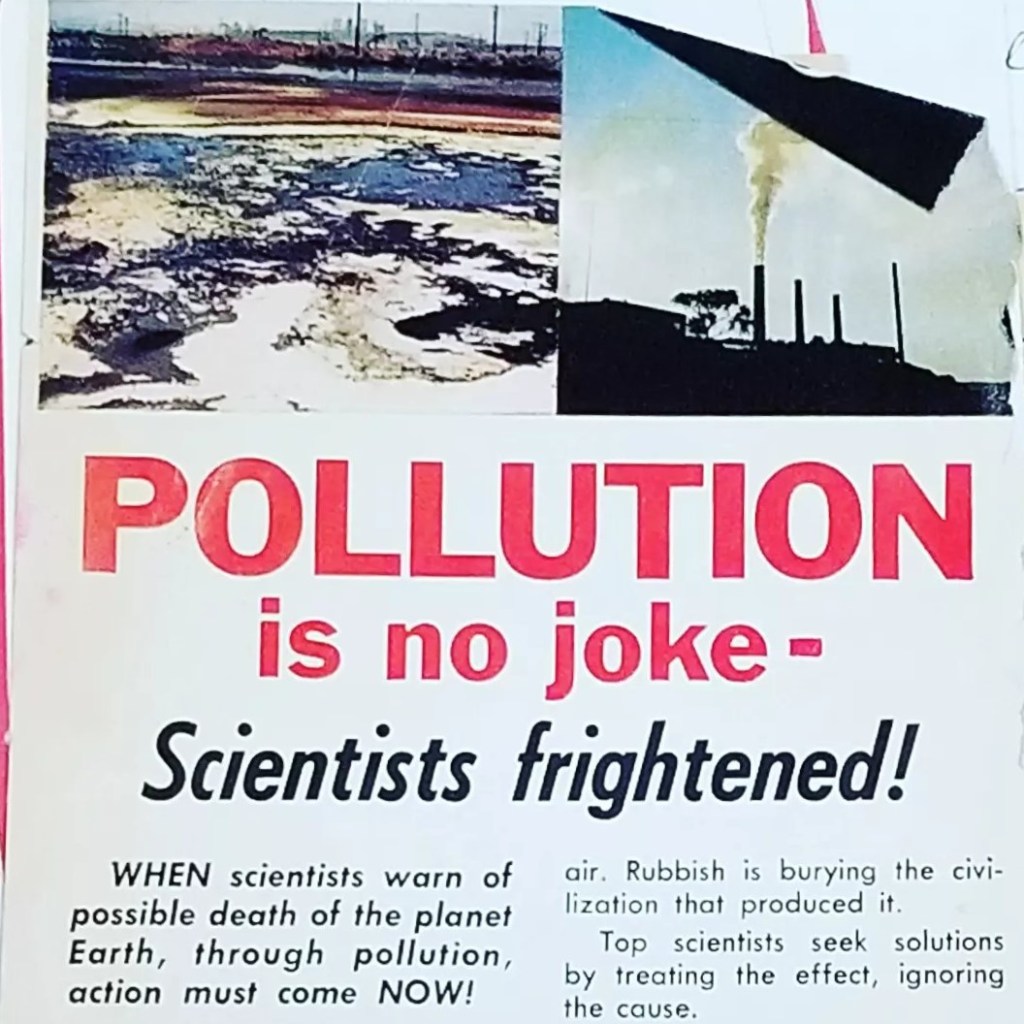
There were also a lot of clippings of recipes from magazines and product packaging. This was an advertisement on the reverse side of a recipe my grandmother clipped from a magazine in the 1970s:

I suspect those scientists – and their successors – remained frightened, and rightfully so.