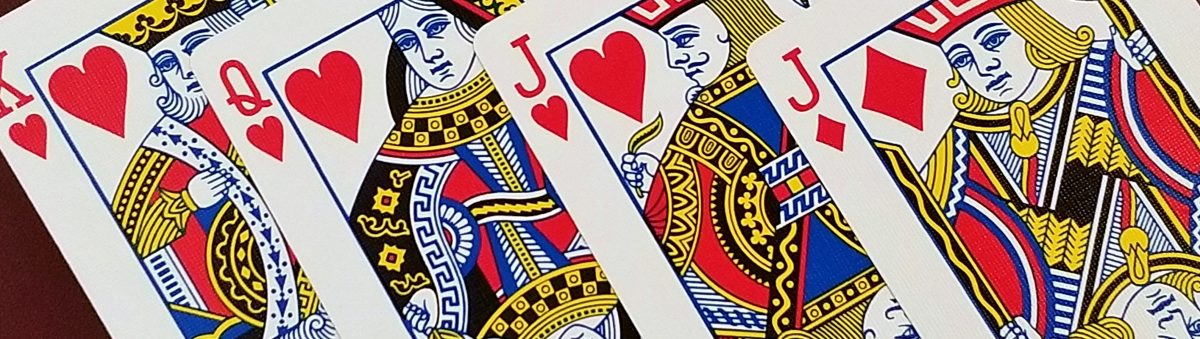
52W Mark IV – Week 20: Card K7 Maartje Mettes

Maartje Mettes (1812-1896)

Merry Christmas and happy birthday!

Like one of our children, my Gx3 Grandmother, Maartje Mettes, was a Christmas baby. I can’t say how significant that was to Maartje or her family. My understanding is that in the Netherlands, historically, greater emphasis was placed on the religious aspect of Christmas. Maartje’s family was Roman Catholic, so it was more likely they had a nativity scene on display than a Christmas tree. As well, there is also the related celebration of Sinterklaas on December 6, which involves greater emphasis on the gift giving and festive nature of celebration. However, I don’t think Sinterklaas was as significant during Maartje’s childhood as it was later in the 19th century, or celebrated in the same way.

Maartje lived most of her life in small towns in Noord Holland, where she raised two families and experienced multiple relocations.

I do not have much information about Maartje’s childhood or early years, but by 1841 she was working as a domestic servant in Hensbroek. That same year, on April 29, she married Klaas Buur, a domestic servant from nearby Heerhugowaard. Klaas was born around 1814 in Oude Niedorp. At the time of their marriage, Klaas was working as a labourer in Hensbroek, an occupation he carried out until his death on May 8, 1847.

Part of Maartje and Klaas’s marriage registration

Maartje and Klaas’s short six-year marriage was marked by both joy and sorrow. Their first son, Pieter, was born in April 1842 in Heerhugowaard but died just two months later. A second son, also named Pieter, followed in 1843 and survived. A third son, Jan was born in 1844. A daughter, Pietertje, came in 1846 but died before her first birthday. With Klaas’s early death at age 33, Maartje was left a widow at age 29 with two young sons.

After four years on her own, Maartje married again. On May 2, 1851, she wed Cornelis Komen in Heerhugowaard. Cornelis, born in 1812 in Zuid-Scharwoude, had worked as both a farmer and a labourer, moving from Oterleek to Heerhugowaard and later Zuid-Scharwoude. Together, Maartje and Cornelis made a home that would remain steady for decades.

Some interesting trivia: when Maartje married Cornelis, she also had a brother-in-law named Cornelis Komen through her older sister, Neeltje Mettes. The two Cornelises were first cousins once removed.  It appears Neeltje’s husband went by “Crelis”, a diminutive of Cornelis that was less common than the more frequently seen “Kees”.

Maartje and Cornelis had two sons, my Gx2 Grandfather Nicolaas (“Klaas”) in 1852 and Adrianus (“Arie”) in 1853. Both Klaas and Arie lived long lives, into their mid-70s. By 1854, the family was living at House 149 in the hamlet of Pannekeet, adjacent to Langedijk. They later moved to Zuid-Scharwoude in Langedijk, and eventually back to Heerhugowaard in the final years of their lives. Of course, in addition to Klaas and Arie, Maartje’s sons from her first marriage lived with the family until their adulthood. It is likely that Klaas’s son, Jan, from his first marriage, was living with the family for some period of time. As well, in the 1890s, Maartje’s teenage granddaughter, Maartje Buur, was living with Maartje and Klaas.

The Bevolkingsregister (“Population Register”) of Zuid-Scharwoude for 1850-1860 showing Cornelis and Maartje, along with their blended family.

Cornelis died in 1893 at age 81. Maartje outlived him by three years, passing away in Heerhugowaard on June 15, 1896, at the age of 78. Maartje’s death registration is not entirely accurate, likely because the declarants were neighbours rather than family members. Among other things, her age at death was listed as 80, and the identities of her parents were unknown.

Death registration for Maartje.
The Schager Courant, July 5, 1896, page 3. “Maartje Mettes, widow of Cornelis Komen, previously widow of Klaas Buwe (sic), aged 80 years.”

52W Mark III – Week 46: Cultural Tradition

My wife and I dread December. Not only is the whole month a whirlwind of activity leading up to Christmas, both our children have December birthdays. My brother-in-law is Jewish, and we’re always welcomed into the Hannukah festivities. The worst year was when a birthday, Christmas, and first night of Hannukah all occurred on the same day – something that is happening again this year. Plus, of course, we celebrate Sinterklaas.

Sinterklaas is a traditional holiday generally celebrated in the Netherlands and its former colonies, Belgium, and parts of Germany and France. It takes its name from its central figure who, like Santa Claus, has his origins in St. Nicholas, an early Christian bishop who lived in what is now Turkey. In fact, Santa Claus owes much of his origin to Sinterklaas.

Sinterklaas has much in common with Christmas. However, unlike Christmas, Sinterklaas is celebrated on December 6, the feast day of St. Nicolas in the Christian calendar. Both Sinterklaas (also called “Sint”) and Santa deliver gifts the night before their respective holidays, Sinterklaas often arrives in the Netherlands in mid-November and travels around the country visiting children, participating in parades, and handing out treats and gifts.

While Sint and Santa have much in common, they have many differences. Sint lives in Spain (probably rooted in the fact that the Netherlands was part of the Spanish empire until the 16th century), travels by steamboat, and rides a horse. As well, Sint’s appearance is rooted in his church origins, so he is dressed like a bishop.

A Few Differences Between Santa and Sint
Elizabeth Bakker

Since only my father is Dutch, we did not observe many of the Dutch cultural traditions, and definitely not in the way they do in the Netherlands. My great grandmother, Elizabeth Bakker (1888 – 1976), always sent us a package of goodies for Sinterklaas. However, at the time I didn’t know it was for Sinterklaas. I never even heard of Sinterklaas until well after my great grandmother died. I thought the package was for Christmas and that she sent it early in the month so it would get to us in time.

I loved those packages – they always contained many of the traditional Sinterklaas treats: pepernoten, kruidnoten, taai taai, and speculaas (all forms of spiced cookies, somewhat like gingerbread, although the former two are quite small); marzipan; borstplaat; and, of course, chocoladeletters  (“chocolate letters”)!!

The letters originated centuries ago as baked goods, but are now almost exclusively made of chocolate. It is traditional to receive a chocolate letter of the initial of your first name. When we were kids, there was always an argument that some letters were bigger than others so they had more chocolate. The truth is that, while the surface area of each letter might differ, they are manufactured in different thicknesses so that every letter contains the same amount. The other problem is finding letters that are uncommon initials for names in the Netherlands, although that is less of a problem than it used to be.

I found a Droste store in Amsterdam!

Chocolate letters are another item for which, outside the Netherlands, the availability seems to change over time. When I was a kid, they seemed to be available everywhere. Purdy’s made their own for a while, but I haven’t seen them there in a long time. In recent years, the only place I could find them were in Dutch stores. Even then, I could not find Droste letters – the absolute best ones, bar none – anywhere. You could only find the secondary brands. I once asked a vendor if Droste no longer shipped to Canada, and was told they were simply too expensive to carry. Luckily, a couple years ago I found Droste chocoladeletters in a Dutch store in Lethbridge.

Fortunately, chocolate letters seem to be getting easier to find again, as I saw them being sold in many mainstream supermarkets and shops last Christmas. I first noticed them showing up a couple years ago in a local independent grocery store that specializes in Asian foods and ingredients of all places. Plus, in our neighbourhood of Steveston, there is a chocolatier that makes them – in every letter!

I have no idea where my son learned the Dutch he wrote on the note. There are a couple small mistakes, but it says “Hi, my clog and the little clog” (the small one’s not in the photo).

Our kids are more immersed in Sinterklaas. We’ve been marking it every year since our eldest was born. In fact, we thought he might arrive on Sinterklaas! Every year, the kids will put out their shoes along with some klompen (clogs), as well as a snack for Sint and his horse. The last few years they’ve also left notes. Then we’ll watch a few YouTube videos with Sinterklaasliedjes (“Sinterklaas songs”) and then off to bed.

The kids didn’t do too bad last year.

When our eldest was in second or third grade, he made a presentation to his class about Sinterklaas. He asked for help with that, and I gave him a few things he could take to school. Our youngest did the same thing last year – except I had no idea he was doing it until after the fact! He had asked me to email his teacher a video of a Sinterklaas song, but I didn’t know what it was for or that it was part of his presentation. His teacher emailed us to say that he knocked it out of the park!

Sharing Sinterklaas with his class!

Of course, anyone even vaguely familiar with Sinterklaas has probably heard of Zwarte Piet (“Black Piet”). For decades, Zwarte Piet was seen as Sint’s delightful helper. The association many people have with a beloved childhood memory likely makes it difficult to accept the unsavory fact that Piet is anything other than a negative stereotype. I don’t buy any of the arguments defending this outdated and offensive figure, which are based on fallacies, myths, and disregard for history. It’s often a waste of breath to argue and about this time of year I have to mute my social media feeds connected to the Netherlands.

While a bit on the academic side, Black Pete: Analyzing a Racialized Dutch Tradition Through the History of Western Creations of Stereotypes of Black Peoples provides a thoughtful analysis of the problem.

While Piet remains a polarizing topic, in recent years it seems that attitudes are changing and the popularity of Zwarte Piet as traditionally depicted has begun to decrease dramatically. Over the last ten years or so, there has also been a shift to reforming or rebooting the character, with the emergency of Roetveegpiet (“Sooty Piet”) (characters with dirty faces due to the soot of the chimney) and Kleurenpiet (“Coloured Piet”) (characters with faces of all colours of the rainbow).

Meanwhile, Sinterklaas is less than a month away – better start planning for another busy December!

“Sinterklaas Kapoentje” – You can see the lyrics, English translation, and history of the song here.

52W Mark III – Week 44: Challenging

The prompt this week for the 52 Ancestors Challenge is “Challenging”. You know what is challenging? The 52 Ancestors Challenge, that’s what!!

Starting the 52 Ancestors Challenge was hard:

Three years in a row, I signed up for Amy Johnson Crow’s “52 Ancestors in 52 Weeks”. The first two times, that was as far as I got. Hopefully, third time’s the charm. Hence this blog, only a quarter century behind the times.

As I later described it:

I originally signed up for the 52 Ancestors Challenge for 2020, but did nothing afterwards. I signed up again for 2021, for which I also did nothing.

Somehow third time was the charm. I know there was something that spurred me on to actually do something for the 2022 challenge, but now for the life of me I can’t recall what that was!

Halfway through my first year actually participating in the Challenge, I wrote:

Holy smokes, we’re now halfway through the year. Moreover, with 26 installments, we’re halfway through this year’s 52 Ancestors Challenge! With that, I’ve managed to consistently blog for six months. While it has been a bit of a slog the last few weeks, I’m so pleased I’ve stuck with it and made it this far!

I persevered and successfully completed the year. Building on that success, I signed up for 2023 edition of the Challenge. Once again, I completed all 52 weeks. Not only that, but I turned my first year’s set of posts in to a book that I printed and handed out as Christmas and Hannukah gifts!

Buoyed by that success, I re-upped a third time, for the 2024 edition of the Challenge. With eight weeks to go, I’m confident I’ll successfully complete all 52 weeks.

However, I have to be honest. The Challenge is becoming more challenging. I’ve picked the low hanging fruit several times now. It’s getting harder and harder to write about things I haven’t already covered before – sometimes more than once. Many times this year I thought I had come up with something entirely new, only to discover partway through or near completion that I had already written about the same thing. This year seems to have a few reruns, as I really did not want to start over. In fact, just discovered that I’ve already sort of covered the topic of the challenge of participating in the Challenge.

As a result, for the last month or so I haven’t produced anything for the current week before the next prompt is posted. (Although, ironically, the one week I was ahead of the prompt, it was delayed!) I know what Amy would say about that, but I’d still enjoy it more if I could keep more current.

As I’ve said before, the primary purpose of undertaking this blog was to get myself to write more about my family history after decades of researching and compiling information. Even though this year has been more challenging, I am still achieving that goal and continue to find value in participating.

That said, I don’t think I have it in me to do another full year of the Challenge, at least not in the way I’ve participated for nearly three years. However, I will need to think of something that is still regular and structured; without it, I can see a future where posts become fewer and farther apart in time, until it just peters out. Fortunately, Amy recently posted (I can’t remember if it was in her Facebook group, Generations Cafe, or in her emails) that she was planning something new or different for 2025. I can’t wait to see what that might be!

In the meantime, having completed a second full year of posts, I once again created a family history book based upon the compiled collection of entries for 2023! I hadn’t planned on another print edition, but as I started working on the electronic version I began to feel the need to be able to hold it and read it the old fashioned way. So here it is, A Book of Ancest0rs – Mark II!!

52W Mark III – Week 14: Favourite Recipe

The topic of food is one of the prompts that shows up in the  52 Ancestors Challenge every year. This makes it a difficult topic to write about, since I covered it broadly in the first and second year I participated in the challenge. However, as Amy often reminds participants, the prompts are merely suggestions and we can interpret them as broadly as we want. Which I’ve done, writing about pets when the prompt was flowers, and vice versa!

With this week’s prompt, I’ve not stretched the topic as far as pets to flowers. Rather, I am looking at the favourite treats of my ancestors.

I’ll start with my mother’s maternal line. As I’ve often written about here, that branch of the family are Germans from Russia. One of their favourite treats is halva. It’s a confection that originated in Persia (now Iran) that spread throughout the Middle East and, later, throughout the Ottoman Empire. While halva was originally made with a variety of different ingredients, such as flour and dates, the traditional Turkish version is usually made with sesame seeds and most often sweetened with honey or sugar. You can find halva in many varieties. Halva with pistachios, chocolate, or vanilla is quite common.

Many German settlements in the Russian Empire were in what is now the Ukraine, which the Russians had taken from the Ottoman Turks in a series of wars in the 17th and 18th centuries. While the German population was originally introduced to the Turkish version of halva, they most likely learned of the sweet treat from the local Jewish population that had been in Ukraine for centuries, including the time of Ottoman rule. However, the Germans soon modified the recipe using sunflowers, which are abundant in Ukraine and that are a symbol of that country. I’ve heard that many German-Russians prefer the sunflower variety, but I’ve never seen it. My grandmother and mother always bought the traditional Turkish version. While not a traditional Christmas food, that is the time of year my mother would most often buy it. My mother often spread it on toast, which is quite delicious.

Turning to my father’s side of the family, I’ll admit that Dutch cuisine is not world-famous for many good reasons. That said, there are many delicious treats that make up for it. One of my favourites, bitterballen, is commonly found as a bar snack. They are somewhat similar to croquettes, but are smaller and rounder. They are made of a mixture of minced beef, roux, onions, and seasonings, breaded, and fried. They’re addictive little snacks. There is a chain of cafes and coffee shops in the Netherlands called The Bulldog. In the 1990s, they had a location in Vancouver. I often went there for lunch with a friend and we always started with bitterballen.

Bitterballen are traditionally served with mustard. Lekker!

The Dutch also have many sweet treats. Almond-based treats (including marzipan) and baked goods made with warm spices are quite popular. The one I can remember having ever since I was little is speculaas. They always contain ginger, along with spices such as cinnamon, nutmeg, cloves, cardamom, anise, allspice, and white pepper. With those flavours, they were a common Christmastime treat, but now it is common to enjoy them year-round. They are particularly good with coffee. While speculaas might have been obscure outside the Netherlands and its former colonies, they’ve always been relatively easy to find in Canada. I’ve also noticed them popping up on baking and cooking shows in recent years.

Another delicious treat that is also good with coffee are stroopwafels. They’re made up of thin waffle-like wafers with a thin layer of caramel sandwiched in the middle. (“Waffle”, by the way, is an English word of Dutch origin.) They originated in the city of Gouda as a means for bakers to repurpose crumbs and scraps. You can get them freshly made from street vendors in the Netherlands, as well as bakeries and cafes. The availability of stroopwafels in Canada seems to wax and wane, although they’re always available in Dutch specialty stores. They were also featured as the technical challenge during “Caramel Week” on Season Eight of The Great British Bake Off (airing as The Great British Baking Show in the United States and Canada). It’s common to place them on top of a hot cup of coffee, which warms and softens them. So delicious!

Finally, many people know that the Netherlands is famous for its chocolate. During Sinterklaas, a favourite treat is chocoladeletters (“chocolate letters”). Centuries ago they originated as baked goods, but are now almost exclusively made of chocolate. It is traditional to receive a chocolate letter of the initial of your first name. My great grandmother, Elizabeth Bakker, always included chocolate letters in the box of goodies she sent us every Christmas. When we were children, there was always an argument that some letters were bigger than others so they had more chocolate. The truth is, while the surface area of each letter might differ, they are manufactured in different thicknesses so that every letter contains the same amount. The other problem is finding letters that are uncommon initials for names in the Netherlands, although that is less of a problem than it used to be.

Chocolate letters are another item for which, outside the Netherlands, the availability seems to change over time. When I was a kid, they seemed to be available everywhere. Purdy’s made their own for a while, but I haven’t seen them there in a long time. In recent years, the only place I could find them were in Dutch stores. Even then, I could not find Droste letters – the absolute best ones, bar none – anywhere. You could only find the secondary brands. I once asked a vendor if Droste no longer shipped to Canada, and was told they were simply too expensive to carry. Luckily, a couple years ago I found Droste chocoladeletters in a Dutch store in Lethbridge.

Fortunately, chocolate letters seem to be getting easier to find again, as I saw them being sold in many mainstream supermarkets and shops last Christmas. I first noticed them showing up a couple years ago in a local independent grocery store that specializes in Asian foods and ingredients of all places. Plus, in our neighbourhood of Steveston, there is a chocolatier that makes them – in every letter!

During my first trip to the Netherlands, I discovered a Droste store directly across from the Amsterdam Centraal Station. I enjoyed being able to buy any letter I wanted, well out of season! Sadly, the last time I was in Amsterdam, the store was gone.