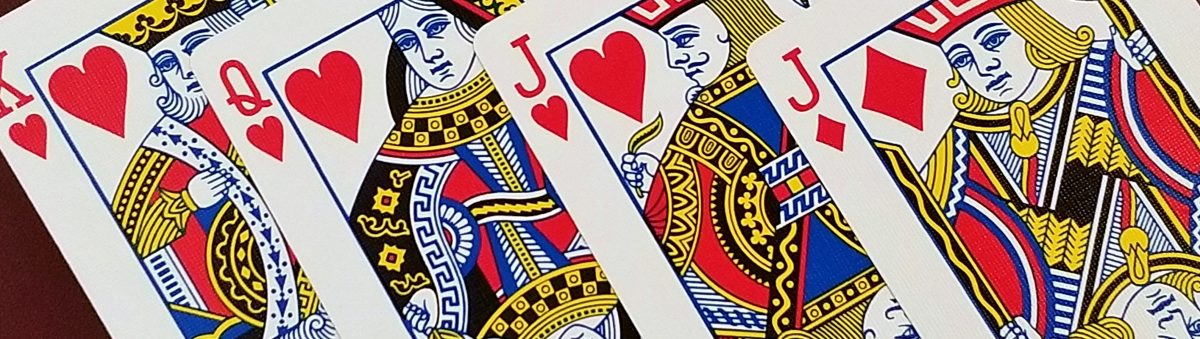
52W Mark IV – Week 14: Card K1 Adrianus Komen and Elizabeth Bakker

Adrianus Komen (1888 – 1948)
Elizabeth Bakker (1888 – 1976)

It’s the second fiscal quarter of 2025 and time to start the second suit of my Deck of Ancestors. This suit involves my father’s maternal line, starting with his grandparents, Adrianus (“Arie”) Komen (1888 – 1948) and Elizabeth Bakker (1888 – 1976). They were born only a few months apart; Arie was born on May 11 and Elizabeth was born on September 12. They were both 32 when they married and spent 27 wedded years together, but Elizabeth spent more years than that as a widow.

Arie was born in Zuid-Scharwoude, Noord Holland, while Elizabeth was born in Den Helder. I have no idea how they met, as their home towns are 30 kilometers apart – a significant distance at the time. (Heck, it still is for a lot of my Dutch relatives!) Arie spent almost his entire life in Zuid- and Noord-Scharwoude (both part of what was then gemeente Langedijk). In her 20s, Elizabeth worked as a domestic servant. She spent some time in that job in Amsterdam, but from 1918 to when she married in 1921, Elizabeth worked in Den Helder.

First part of the registration of Arie and Elizabeth’s marriage.

It might be that they met during Arie’s military service. The Netherlands used to have mandatory military service. In practice, most conscripts never really served in active duty; rather, it was more like a reserve militia or national guard. In fact, Arie spent his whole life as an agricultural worker.

Arie initially sought an exemption from service due to poor eyesight. On December 24, 1907, the military deemed him fit for service. Arie was assigned to the 4e Regiment Vesting-Artillerie (4th Regiment Fortress Artillery) based out of Den Helder. Like many conscripts, Arie was never in active service, but likely had to report in or attend training from time to time. Perhaps he met Elizabeth during one of those times.

Arie Komen and Elizabeth Komen

Arie and Elizabeth married on April 7, 1921 in Noord-Scharwoude. (This coming Monday will be their 104th wedding anniversary!) They had seven children together, with my grandmother being the eldest – or so I thought. I was surprised to discover through WieWasWie that Arie and Elizabeth had a daughter one year after they were married, who did not live the day. I doubt my grandmother even knew.

For the first seven years of their marriage, Arie and Elizabeth lived on Dorpstraat in Zuid-Scharwoude. The history of their house is documented in a October 2004 article in Van Otterplaat tot Groenveldsweid (now Otterplaat) magazine:

…the newly married couple Adrianus (Arie) Komen and Elisabeth Bakker moved there, on June 10, 1921 to be precise. Three of their children were born here. The house passed into the hands of Maarten Verweel Voorn in 1928, who lived in the neighboring house (now number 451).

The house on Dorpstraat where Arie and Elizabeth lived, and where my paternal grandmother Christina Komen was born. I saw this house during my first visit to the Netherlands.

They then moved to Pikstraat (now Werfstraat), where they lived together for the next 20 years. Arie died on January 14, 1948. Arie was only 59 years old when he passed away. My father was only a few months old at the time, so he has no recollection of his grandfather. I don’t recall my grandmother ever speaking about her father, but she rarely spoke about the past. To be fair, I never asked her about him, either.

Arie was buried in the parish churchyard of St. Jan de Doper Katholieke Kerk (St. John the Baptist Catholic Church) in Noord-Scharwoude. I’ve been to that cemetery, but his grave is no longer there. Graves in the Netherlands are usually leased, not purchased, and are routinely cleared after a few decades.

Elizabeth remained at the house on Pikstraat and she lived there the rest of her life. She died exactly 28 years after Arie, on January 14, 1976. Her remains were cremated. I don’t know if they were ever interred.

Unlike his grandfather, my father knew his grandmother well. In August 2017, my father and I walked to where his grandmother lived on Werfstraat. My dad told me that when he was a child, the street was a path alongside a canal. It is now a fully-paved street, which might be the reason for the name change from Pikstraat to Werfstraat.

My father walking in front of his grandparent’s house on Werfstraat in Noord-Scharwoude.

Elizabeth died when I was in elementary school. While I never met her, Oma Komen was well known to me. She regularly sent us letters, postcards, and – most significantly to us as children – boxes of goodies in time for Sinterklaas. However, at the time, I really didn’t know anything about Sinterklaas. I just thought they were really early Christmas treats.

Speculaas, stroopwafels, and chocoladeletters – just some of the treats that Oma Komen would send to us for Sinterklaas!

Supplemental (April 6, 2025): Isn’t this always the case – within a day of hitting publish (late, as usual!), I found interesting new information.

I discovered that Arie spent some or most of 1918 in Heerlen, Limburg. It is almost as far as you can get from Langedijk (Noordscharwoude and Zuidscharwoude) and still remain in the Netherlands. They are pretty much opposite corners of the country.

The dates during which Arie was in Heerlen are unclear from the Bevolkingsregister (population register). It has has him returning from Heerlen (May 10, 1918) before he departs for Heerlen (August 29, 1918). The record of his return was entered on the register on December 10, 1918. It would make more sense that this was also the date he returned from Heerlen.

It is not clear why Arie went to Heelen. His younger brother, Jacob, spent his later years in Limburg and died in Heerlen in 1938. However, it appears that during the time Arie was in Heerlen, Jacob was in Wijchen, Gelderland, which is significantly further north than Heerlen. However, it may be that by 1918 Jacob was in Limburg. Unfortunately, the relevant population registers aren’t available online. As much as I’d love a trip to the Netherlands, that is not happening anytime soon!

52W Mark III – Week 46: Cultural Tradition

My wife and I dread December. Not only is the whole month a whirlwind of activity leading up to Christmas, both our children have December birthdays. My brother-in-law is Jewish, and we’re always welcomed into the Hannukah festivities. The worst year was when a birthday, Christmas, and first night of Hannukah all occurred on the same day – something that is happening again this year. Plus, of course, we celebrate Sinterklaas.

Sinterklaas is a traditional holiday generally celebrated in the Netherlands and its former colonies, Belgium, and parts of Germany and France. It takes its name from its central figure who, like Santa Claus, has his origins in St. Nicholas, an early Christian bishop who lived in what is now Turkey. In fact, Santa Claus owes much of his origin to Sinterklaas.

Sinterklaas has much in common with Christmas. However, unlike Christmas, Sinterklaas is celebrated on December 6, the feast day of St. Nicolas in the Christian calendar. Both Sinterklaas (also called “Sint”) and Santa deliver gifts the night before their respective holidays, Sinterklaas often arrives in the Netherlands in mid-November and travels around the country visiting children, participating in parades, and handing out treats and gifts.

While Sint and Santa have much in common, they have many differences. Sint lives in Spain (probably rooted in the fact that the Netherlands was part of the Spanish empire until the 16th century), travels by steamboat, and rides a horse. As well, Sint’s appearance is rooted in his church origins, so he is dressed like a bishop.

A Few Differences Between Santa and Sint
Elizabeth Bakker

Since only my father is Dutch, we did not observe many of the Dutch cultural traditions, and definitely not in the way they do in the Netherlands. My great grandmother, Elizabeth Bakker (1888 – 1976), always sent us a package of goodies for Sinterklaas. However, at the time I didn’t know it was for Sinterklaas. I never even heard of Sinterklaas until well after my great grandmother died. I thought the package was for Christmas and that she sent it early in the month so it would get to us in time.

I loved those packages – they always contained many of the traditional Sinterklaas treats: pepernoten, kruidnoten, taai taai, and speculaas (all forms of spiced cookies, somewhat like gingerbread, although the former two are quite small); marzipan; borstplaat; and, of course, chocoladeletters  (“chocolate letters”)!!

The letters originated centuries ago as baked goods, but are now almost exclusively made of chocolate. It is traditional to receive a chocolate letter of the initial of your first name. When we were kids, there was always an argument that some letters were bigger than others so they had more chocolate. The truth is that, while the surface area of each letter might differ, they are manufactured in different thicknesses so that every letter contains the same amount. The other problem is finding letters that are uncommon initials for names in the Netherlands, although that is less of a problem than it used to be.

I found a Droste store in Amsterdam!

Chocolate letters are another item for which, outside the Netherlands, the availability seems to change over time. When I was a kid, they seemed to be available everywhere. Purdy’s made their own for a while, but I haven’t seen them there in a long time. In recent years, the only place I could find them were in Dutch stores. Even then, I could not find Droste letters – the absolute best ones, bar none – anywhere. You could only find the secondary brands. I once asked a vendor if Droste no longer shipped to Canada, and was told they were simply too expensive to carry. Luckily, a couple years ago I found Droste chocoladeletters in a Dutch store in Lethbridge.

Fortunately, chocolate letters seem to be getting easier to find again, as I saw them being sold in many mainstream supermarkets and shops last Christmas. I first noticed them showing up a couple years ago in a local independent grocery store that specializes in Asian foods and ingredients of all places. Plus, in our neighbourhood of Steveston, there is a chocolatier that makes them – in every letter!

I have no idea where my son learned the Dutch he wrote on the note. There are a couple small mistakes, but it says “Hi, my clog and the little clog” (the small one’s not in the photo).

Our kids are more immersed in Sinterklaas. We’ve been marking it every year since our eldest was born. In fact, we thought he might arrive on Sinterklaas! Every year, the kids will put out their shoes along with some klompen (clogs), as well as a snack for Sint and his horse. The last few years they’ve also left notes. Then we’ll watch a few YouTube videos with Sinterklaasliedjes (“Sinterklaas songs”) and then off to bed.

The kids didn’t do too bad last year.

When our eldest was in second or third grade, he made a presentation to his class about Sinterklaas. He asked for help with that, and I gave him a few things he could take to school. Our youngest did the same thing last year – except I had no idea he was doing it until after the fact! He had asked me to email his teacher a video of a Sinterklaas song, but I didn’t know what it was for or that it was part of his presentation. His teacher emailed us to say that he knocked it out of the park!

Sharing Sinterklaas with his class!

Of course, anyone even vaguely familiar with Sinterklaas has probably heard of Zwarte Piet (“Black Piet”). For decades, Zwarte Piet was seen as Sint’s delightful helper. The association many people have with a beloved childhood memory likely makes it difficult to accept the unsavory fact that Piet is anything other than a negative stereotype. I don’t buy any of the arguments defending this outdated and offensive figure, which are based on fallacies, myths, and disregard for history. It’s often a waste of breath to argue and about this time of year I have to mute my social media feeds connected to the Netherlands.

While a bit on the academic side, Black Pete: Analyzing a Racialized Dutch Tradition Through the History of Western Creations of Stereotypes of Black Peoples provides a thoughtful analysis of the problem.

While Piet remains a polarizing topic, in recent years it seems that attitudes are changing and the popularity of Zwarte Piet as traditionally depicted has begun to decrease dramatically. Over the last ten years or so, there has also been a shift to reforming or rebooting the character, with the emergency of Roetveegpiet (“Sooty Piet”) (characters with dirty faces due to the soot of the chimney) and Kleurenpiet (“Coloured Piet”) (characters with faces of all colours of the rainbow).

Meanwhile, Sinterklaas is less than a month away – better start planning for another busy December!

“Sinterklaas Kapoentje” – You can see the lyrics, English translation, and history of the song here.