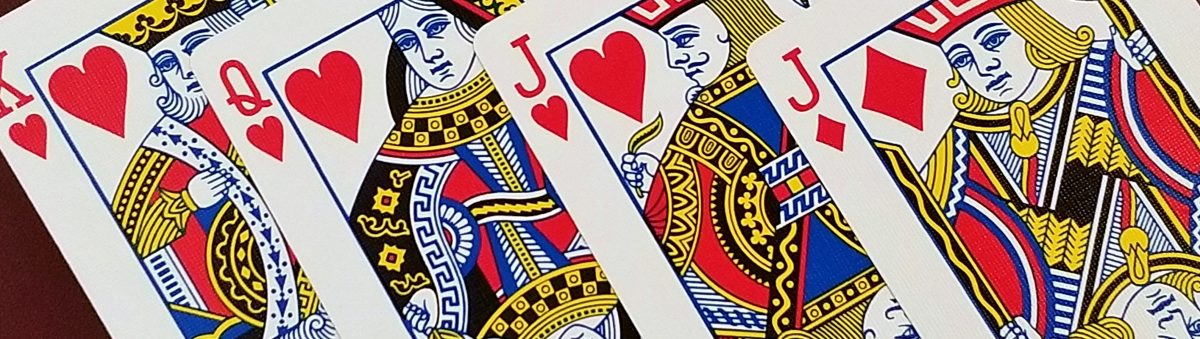
Antje “Anna” Woltering, my Gx2 grandmother, was born in Zuid-Scharwoude, Noord Holland on February 25, 1853. She was the youngest of four children born to Cornelis Woltering and Neeltje Smit. [Update: I have since learned that Anna was the fifth of six children. An older brother died before Anna was born, and a younger sister died at age five.]
Anna lived over half her life in Zuid-Scharwoude. There she married Nicolaas “Klaas” Komen on May 19, 1878.
Opening paragraph of Anna and Klaas’s marriage registration, from the civil register of Zuid-Scharwoude.
Together Anna and Klaas had ten children, all of whom were born in Zuid-Scharwoude, although two did not survive infancy. Seven of their children married and had families of their own. Their youngest son, Jacob, took up a religious life as a “kloosterbroeder” with the Franciscan Fathers in the province of Limburg – almost as far as one could get from Zuid-Scharwoude and still be in the Netherlands.
The caption in English: “ABOVE: Family KLAAS KOMEN and ANTJE WOLTERING with the children (from left to right: Cornelia, Nicolaas, Adrianus, Jacob, Laurentus, Johannes, Corenlis, and Freek [a diminutive of Frederik].”
On March 20, 1900, after two decades of marriage and a few years after Jacob was born, the family moved to Noord-Scharwoude. It was not a far move, since Zuid- and Noord-Scharwoude are adjacent to each other and were part of the then gemeente of Langedijk (now part of Dijk en Waard). Anna and Klaas lived together in Noord-Scharwoude for over 30 years and Anna remained there after Klaas died on February 28, 1929. The photo of Anna in the playing card was taken in front of her house.
Less than a year before she passed away, Anna went to live with her son Arie and daughter-in-law Elizabeth at Pikstraat (now Werfstraat) 8 in Noord Holland. Elizabeth lived at that house until her death in 1976. My father remembers visiting that house as a child, and I walked down that street with him during a visit in 2017.
Six years after Klaas passed away, Anna died on April 21, 1935 at the age of 82. She was laid to rest on April 25, 1935, likely at St. Jan de Doper (St. John the Baptist) church in Noord-Scharwoude. However, her remains are no longer there, as graves in the Netherlands are usually leased, not purchased. They are routinely cleared after a few decades.
Anna’s death noted in the Schager Courant, May 6, 1935, page 6: “Antje Woltering, age 82, widow of Klaas Komen”
Adrianus Komen (1888 – 1948) Elizabeth Bakker (1888 – 1976)
It’s the second fiscal quarter of 2025 and time to start the second suit of my Deck of Ancestors. This suit involves my father’s maternal line, starting with his grandparents, Adrianus (“Arie”) Komen (1888 – 1948) and Elizabeth Bakker (1888 – 1976). They were born only a few months apart; Arie was born on May 11 and Elizabeth was born on September 12. They were both 32 when they married and spent 27 wedded years together, but Elizabeth spent more years than that as a widow.
Arie was born in Zuid-Scharwoude, Noord Holland, while Elizabeth was born in Den Helder. I have no idea how they met, as their home towns are 30 kilometers apart – a significant distance at the time. (Heck, it still is for a lot of my Dutch relatives!) Arie spent almost his entire life in Zuid- and Noord-Scharwoude (both part of what was then gemeente Langedijk). In her 20s, Elizabeth worked as a domestic servant. She spent some time in that job in Amsterdam, but from 1918 to when she married in 1921, Elizabeth worked in Den Helder.
First part of the registration of Arie and Elizabeth’s marriage.
It might be that they met during Arie’s military service. The Netherlands used to have mandatory military service. In practice, most conscripts never really served in active duty; rather, it was more like a reserve militia or national guard. In fact, Arie spent his whole life as an agricultural worker.
Arie initially sought an exemption from service due to poor eyesight. On December 24, 1907, the military deemed him fit for service. Arie was assigned to the 4e Regiment Vesting-Artillerie (4th Regiment Fortress Artillery) based out of Den Helder. Like many conscripts, Arie was never in active service, but likely had to report in or attend training from time to time. Perhaps he met Elizabeth during one of those times.
Arie Komen and Elizabeth Komen
Arie and Elizabeth married on April 7, 1921 in Noord-Scharwoude. (This coming Monday will be their 104th wedding anniversary!) They had seven children together, with my grandmother being the eldest – or so I thought. I was surprised to discover through WieWasWie that Arie and Elizabeth had a daughter one year after they were married, who did not live the day. I doubt my grandmother even knew.
For the first seven years of their marriage, Arie and Elizabeth lived on Dorpstraat in Zuid-Scharwoude. The history of their house is documented in a October 2004 article in Van Otterplaat tot Groenveldsweid (now Otterplaat) magazine:
…the newly married couple Adrianus (Arie) Komen and Elisabeth Bakker moved there, on June 10, 1921 to be precise. Three of their children were born here. The house passed into the hands of Maarten Verweel Voorn in 1928, who lived in the neighboring house (now number 451).
The house on Dorpstraat where Arie and Elizabeth lived, and where my paternal grandmother Christina Komen was born. I saw this house during my first visit to the Netherlands.
They then moved to Pikstraat (now Werfstraat), where they lived together for the next 20 years. Arie died on January 14, 1948. Arie was only 59 years old when he passed away. My father was only a few months old at the time, so he has no recollection of his grandfather. I don’t recall my grandmother ever speaking about her father, but she rarely spoke about the past. To be fair, I never asked her about him, either.
Arie was buried in the parish churchyard of St. Jan de Doper Katholieke Kerk (St. John the Baptist Catholic Church) in Noord-Scharwoude. I’ve been to that cemetery, but his grave is no longer there. Graves in the Netherlands are usually leased, not purchased, and are routinely cleared after a few decades.
Elizabeth remained at the house on Pikstraat and she lived there the rest of her life. She died exactly 28 years after Arie, on January 14, 1976. Her remains were cremated. I don’t know if they were ever interred.
Unlike his grandfather, my father knew his grandmother well. In August 2017, my father and I walked to where his grandmother lived on Werfstraat. My dad told me that when he was a child, the street was a path alongside a canal. It is now a fully-paved street, which might be the reason for the name change from Pikstraat to Werfstraat.
My father walking in front of his grandparent’s house on Werfstraat in Noord-Scharwoude.
Elizabeth died when I was in elementary school. While I never met her, Oma Komen was well known to me. She regularly sent us letters, postcards, and – most significantly to us as children – boxes of goodies in time for Sinterklaas. However, at the time, I really didn’t know anything about Sinterklaas. I just thought they were really early Christmas treats.
Speculaas, stroopwafels, and chocoladeletters – just some of the treats that Oma Komen would send to us for Sinterklaas!
Supplemental (April 6, 2025): Isn’t this always the case – within a day of hitting publish (late, as usual!), I found interesting new information.
I discovered that Arie spent some or most of 1918 in Heerlen, Limburg. It is almost as far as you can get from Langedijk (Noordscharwoude and Zuidscharwoude) and still remain in the Netherlands. They are pretty much opposite corners of the country.
The dates during which Arie was in Heerlen are unclear from the Bevolkingsregister (population register). It has has him returning from Heerlen (May 10, 1918) before he departs for Heerlen (August 29, 1918). The record of his return was entered on the register on December 10, 1918. It would make more sense that this was also the date he returned from Heerlen.
It is not clear why Arie went to Heelen. His younger brother, Jacob, spent his later years in Limburg and died in Heerlen in 1938. However, it appears that during the time Arie was in Heerlen, Jacob was in Wijchen, Gelderland, which is significantly further north than Heerlen. However, it may be that by 1918 Jacob was in Limburg. Unfortunately, the relevant population registers aren’t available online. As much as I’d love a trip to the Netherlands, that is not happening anytime soon!
While preparing this long-overdue post, I became distracted by the fact that my grandfather, Arie van der Fluit, has Bleekers on both his paternal and maternal line. Jacob Bleeker, Arie’s great grandfather, is on his maternal line. Arie’s Bleeker connection on his paternal line is much further back – his closest Bleeker ancestor is his Gx3 grandmother, Marijtje Pieterz Bleeker.
The other night I connected the two Bleeker lines. Jacob’s great grandfather, Klaas Pietersz Bleeker (1736-1782), and Marijtje Pietersz Bleeker (1742-?), were siblings. The result is that my grandfather was his own fifth cousin once removed. Hello “pedigree collapse“!
Baptism record for Marijtje Bleeker (top) and Klaas Bleeker (Jan’s great grandfather). The best part of this quest is that I now know the names of Marijtje and Klaas’s parents: Pieter Willemsz Bleeker and Anna Jacobsz.
Turning to this week’s card, Jacob was born on January 21, 1828 in Oude Niedorp, Noord Holland. He was the second of six children and second son, of Cornelis Pietersz Bleeker and Jacoba de Jong. Jacob’s parents, and all his siblings, appear to have lived their entire lives in Oude Niedorp. The one exception was Jan.
Jacob’s birth registration
Jacob married Trijntje Jansen on May 12, 1855, in Oude Niedorp. Like Jacob, at the time of the marriage Trijntje had spent her entire life in Oude Niedorp. Their first two children, Jacoba and Cornelis, were also born in Oude Niedorp. Sometime between Cornelis’s birth in 1859 and his sister Adriana’s birth in 1865, Jacob and family relocated to Harenkarspel, the gemeente (municipality) directly west of Oude Niedorp.
I haven’t found much about what Jacob was doing between 1859 and 1865. I had wondered whether there had been another child born between Cornelis and Adriana, given the six year gap, but found nothing. At most, it appears that in Oude Niedorp and his first years in Harenkarspel, Jacob worked as a labourer. He was still reported as being a labourer in 1867, when his youngest child, Aagje, was born. It appears that he might have worked as a farmer or farm labourer in 1886, but otherwise it seems that he worked as a labourer for most of his life. His death registration listed labourer as his occupation.
I have three direct ancestors with the forename “Teetje”: Teetje Pater (my Great Grandmother); Teetje de Groot (my Gx3 Grandmother); and Teetje Bakker (my Gx5 Grandmother). It might not surprise you that Teetje de Groot is Teetje Pater’s maternal grandmother and that Teetje Bakker is Teetje de Groot’s maternal grandmother, especially if you are aware of Dutch naming customs.
Traditionally, the first son is named after the paternal grandfather, the second son is name after the maternal grandfather, the first daughter is named after the maternal grandmother, and the second daughter after paternal grandmother. I knew of this custom for years before it dawned on me to apply it to my father and his siblings, and sure enough, they followed this pattern, assuming that “Thecla” is a variant of Teetje. I also had it that “Teetje” was a form of Theresia, at least according to some records I have of my great grandmother.
However, I recently learned of the Corpus of First Names in the Netherlands. It does not indicate any relationship between “Teetje” and “Thecla”. It also does not indicate that “Teetje” has any relationship with “Theresia”, nor does Dutch Wikipedia. I had similar results at Voornamenboek (“first name book”). However, there would be nothing stopping someone named Theresia from using the roepnaam (nickname) Teetje, or my grandmother substituting “Thecla” for “Teetje” when she named my aunt.
The first paragraph of Teetje’s birth registration.
Turning to the middle of my chain of Teetje grandmothers, Teetje de Groot was born December 18, 1830 in Oude Niedorp, Noord Holland. She was the third of thirteen children, and the first daughter, born to Jan de Groot and Sijtje Sijbecarspel, my Gx4 grandparents. Teetje was also the first to live past childhood. In fact, only four of Jan and Sijtje’s children lived to adulthood. Of those who died in childhood, one lived to age eight, one lived to be three, and none of the others survived infancy. Of the four who attained adulthood, Teetje lived the longest and was the last of the de Groot children to pass away.
Extract from the marriage registration for Jan Pater and Teetje de Groot, June 11, 1852.
The circle shows the location of Jan and Sijtje’s farm, where their daughter Teetje and son-in-law Jan Pater later came to live. The star shows where my father was born.
Teetje likely spent all of her adult life living at the same home. After they married, Teetje and Jan moved into Teetje’s parent’s house in Zijdewind, which at the time was part of gemeente (municipality) Oude Niedorp. Teetje was still living there after her parents and husband passed away. At least two of her children, Gerrit and Bregje, were still living with her at the house in Zijdewind in 1880. It seems that Gerrit remained at the house after Teetje passed away; he sold it in 1917.
The house was an elongated structure that was divided into a living room with two box beds and a stable for four cows. In the living area there was a small kitchen with a rainwater tank. Rainwater was collected via the gutters and a pipe indoors. The house burned down in 1926.
Teetje died on April 26, 1900 in Oude Niedorp, at the farm in Zijdewind.
Died April 26 (1900) > Teetje de Groot, widow of Jan Pater, age 69.