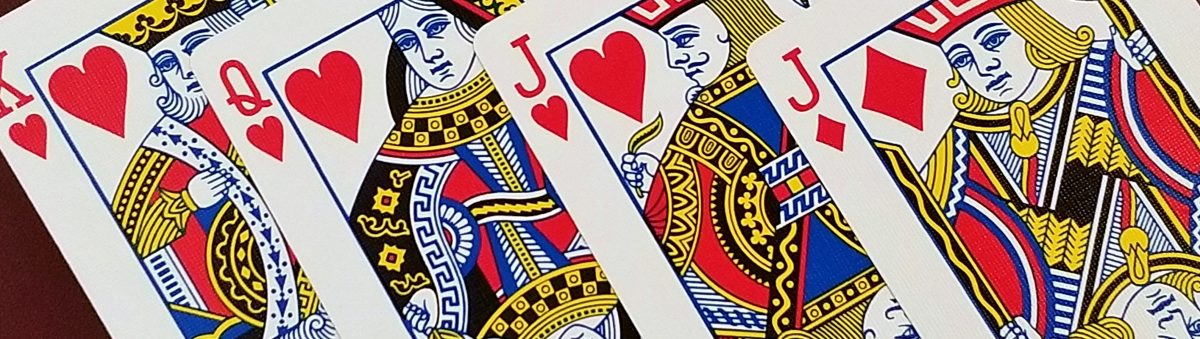
52W Mark IV – Week 12: Card V12 Jacob Bleeker

Jacob Bleeker (1828-1890)

While preparing this long-overdue post, I became distracted by the fact that my grandfather, Arie van der Fluit, has Bleekers on both his paternal and maternal line. Jacob Bleeker, Arie’s great grandfather, is on his maternal line. Arie’s Bleeker connection on his paternal line is much further back – his closest Bleeker ancestor is his Gx3 grandmother, Marijtje Pieterz Bleeker.

The other night I connected the two Bleeker lines. Jacob’s great grandfather, Klaas Pietersz Bleeker (1736-1782), and Marijtje Pietersz Bleeker (1742-?), were siblings. The result is that my grandfather was his own fifth cousin once removed. Hello “pedigree collapse“!

Baptism record for Marijtje Bleeker (top) and Klaas Bleeker (Jan’s great grandfather). The best part of this quest is that I now know the names of Marijtje and Klaas’s parents: Pieter Willemsz Bleeker and Anna Jacobsz.

Turning to this week’s card, Jacob was born on January 21, 1828 in Oude Niedorp, Noord Holland. He was the second of six children and second son, of Cornelis Pietersz Bleeker and Jacoba de Jong. Jacob’s parents, and all his siblings, appear to have lived their entire lives in Oude Niedorp. The one exception was Jan.

Jacob’s birth registration

Jacob married Trijntje Jansen on May 12, 1855, in Oude Niedorp. Like Jacob, at the time of the marriage Trijntje had spent her entire life in Oude Niedorp. Their first two children, Jacoba and Cornelis, were also born in Oude Niedorp. Sometime between Cornelis’s birth in 1859 and his sister Adriana’s birth in 1865, Jacob and family relocated to Harenkarspel, the gemeente (municipality) directly west of Oude Niedorp.

I haven’t found much about what Jacob was doing between 1859 and 1865. I had wondered whether there had been another child born between Cornelis and Adriana, given the six year gap, but found nothing. At most, it appears that in Oude Niedorp and his first years in Harenkarspel, Jacob worked as a labourer. He was still reported as being a labourer in 1867, when his youngest child, Aagje, was born. It appears that he might have worked as a farmer or farm labourer in 1886, but otherwise it seems that he worked as a labourer for most of his life. His death registration listed labourer as his occupation.

Jacob died on May 17, 1890, in Harenkarspel.

Jacob’s death registration

52W Mark II – Week 51: I’m My Own Gran…er, Cousin

Wow, hard to believe that it’s the penultimate week of Amy Johnson Crow’s 52 Ancestors Challenge!

This week we’ve been challenged with the theme “Cousin”. As stated by Amy, “The neat thing about this theme is that we genealogists know that everyone is our cousin! That definitely opens up the possibilities for who to write about!” Thus, no cousin is too distant!

So what do a sixth cousin, ninth cousin, tenth cousin, and fourteenth cousin in my family tree all have in common? They’re all me!

Being one’s own cousin is not unique to me. Most genealogists have seen the posts, memes, and graphics showing how many ancestors we have:

While technically correct – you need all these ancestors to have been born – it gives the impression that these are all separate unique individuals. However, the truth is that somewhere along the line two great x n ancestors are the same person. Otherwise, the math simply does not work out. It would mean that you have 67,108,864 individual great x 25 grandparents, which would have exceeded the population of the Earth at the time they lived. Robin Fox, an anthropology professor at Rutgers estimated that 80% of marriages in history were between second or closer cousins. The resulting phenomenon is referred to as “pedigree collapse“, although I was amused by the term “genealogical shrinkage“.

An extreme example of aristocratic pedigree collapse.

It’s well-known that the aristocracy and nobility have had marriages between close relations for diplomatic, political, and financial reasons. However, this practice also occurred at the lower end of the social ladder (here’s an extreme example from Yvette Hoitink, a Dutch genealogist). It’s inevitable to find first, second, and third cousins who are married living in small and isolated communities, and not just in colonial times. Moreover, once you get to a more distant relationship – who really knows (other than genealogists) who their fifth cousins might be – couples might not have even been aware that they were cousins.

A considerable example might be Iceland, a country of fewer than 400,000 people, with a relatively stable population of few immigrants over 1,000 years. Icelanders concerned about their consanguinity can consult an app that helps identify how closely they might be related to a potential partner.

My closest relationship to myself is through my father’s paternal grandparents, Johannis Albertus van der Fluit and Theresia “Teetje” Pater, who were third cousins. They were born in raised in nearby villages in the Netherlands that are less than two kilometers apart. They married on July 20, 1917.

Johannis and Teetje are both descendants of Cornelis Klaasz de Groot and Geertje Jans de Wit, their great great grandparents and my G x 5 grandparents. Teetje is descended from their eldest son, Jan, while Johannis is descended from their youngest daughter, Elisabeth. Johannis and Teetje would have had to have known the surnames of their great grandparents to even have a clue that they might have been related. I doubt they did.

My grandfather is his own fourth cousin, and fourth cousin with his siblings. My father is his own fifth cousin, and fifth cousin with his siblings. I am my own sixth cousin, and sixth cousin with my siblings.

I can hold a family reunion anytime I want, even if I’m the only one there!