52W Mark V – Week 20: William Burgess

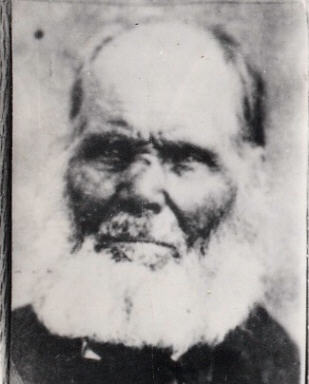
William Burgess, Sr.
(1794-1880)

With William Burgess, Sr., we reach the last of my maternal Great x4 Grandparents. William was born in Putnam, Washington County, New York on May 20, 1794, the fourth of eight children born to Chris John Burgess and Hannah Newland.

Chris John was born Johann Christian Borges, who was born in Fischbach, Hesse Nassau. Johann was a Hessian mercenary who initially fought for the British in the American Revolution, but later switched sides.

Johann was a member of the Second Hessian Division, under the command of Lt. General von Knyphausen, which mustered near Bremen in June 1776. His regiment then sailed for England. In July they set sail for the colonies. In August 1778, he and two others deserted, with Johann ending up in Rhode Island. After doing so, Johann set himself up as a weaver, an occupation he may have had in Hesse. As well, the legend is that Johann changed his name during this time in order to fit in with the colonials.

On March 19, 1782, Johann enlisted with the Rhode Island Regiment and served for nine months. Johann served with a fellow named Jabez Newland, whose sister was Hannah Newland. Johann and Hannah married in Providence, Rhode Island in 1786.

Hannah had deep roots in colonial Massachusetts, with both sides of her family having arrived there in the early to mid 17th century. In fact, Hannah is most likely a direct descendant of Francis Eaton, one of the passengers on the Mayflower, although there is one link in her lineage that I haven’t quite confirmed.

Five years before marrying Johann, Hannah had been engaged to a man named John Watterman, who was also a Hessian mercenary who deserted to serve with the rebels. In February 1777, Hannah and John declared their intention to marry, but the Selectmen of Norton, Massachusetts denied them permission to do so. One account is that John had a “questionable” German background. That is somewhat ironic, given that Hannah ultimately ended up marrying another former Hessian mercenary.

The more likely reason is that Hannah and John had conceived a child out of wedlock. Hannah was fined five shillings for “fornication and having had a bastard child born of her body”, as well as paying the cost of the prosecution. John was in attendance at the court proceeding and acknowledged paternity. The court ordered John to pay for the maintenance of the child. It appears from the court record that the order was less for social welfare purposes and more to prevent the town from bearing the cost of supporting an unwed mother.

After Johann and Hannah married, they moved to New York and settled at Fort William on the shore of Lake George. From there the family moved to Putnam, where they had their first five children. The family moved to Bolton, New York sometime around 1797, where Hannah gave birth to three more children.

While the family had moved to Bolton, William appears to have ended up back in Putnam later in life, because that is where he married Violate Stockwell on May 1, 1813. Over the next ten years, William and Violate had six children, with five more after a move to adjacent Warren County.

Then William’s world changed.

Joseph Smith published the Book of Mormon in March 1830. Two years later, in July 1832, William’s eldest child, Harrison, heard a Mormon missionary by the name of Simeon Carter. Harrison joined the fledgling church and was baptised in October 1832. Harrison then convinced his parents and two of his siblings to join. William, Violate, and their children Horace and Rosina were all baptized into the new church, which at the time was called the “Church of Christ”. They were all baptized on December 2, 1832 by another recent convert, William Snow, who himself had only joined the Mormon church earlier in 1832.

This makes William a ground-floor member of the church. He became an active and prominent member. William was well-known to Joseph Smith. William testified on behalf of the defence at one of Joseph Smith’s trials. As well, William’s son William Jr. lived in Joseph Smith’s residence during the time the Latter Day Saints were in Kirtland, Ohio.

In fact, the Kirtland Elders’ Certificates from the Joseph Smith Papers purport that William was ordained a deacon on April 6 1830 – the date the church was formally established. Clearly there was some backdating of his membership.
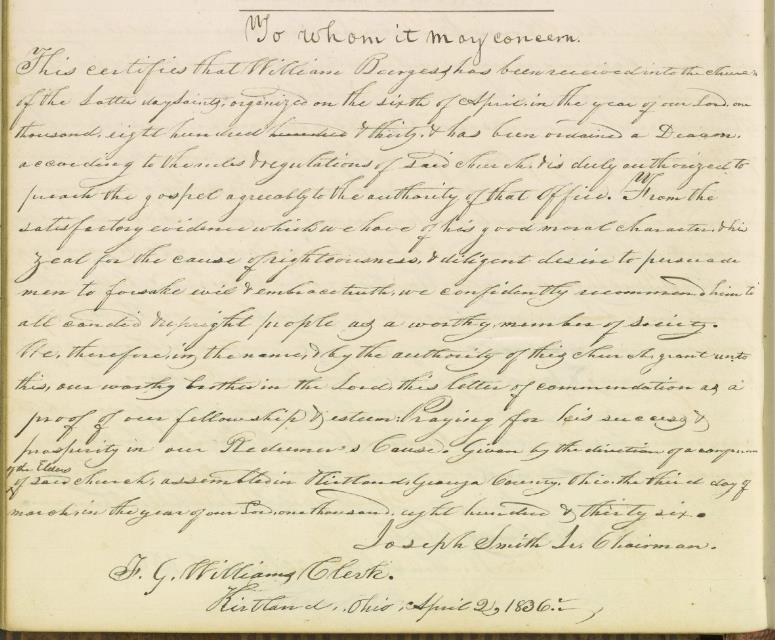
“This certifies that William Burgess has been received into the church of the Latter-Day Saints, organized on the sixth of April, in the year of our Lord, one thousand, eight hundred hundred & thirty, & has been ordained a Deacon…

Joseph Smith Jr. Chairman.
F[rederick] G. Williams Clerk.
Kirtland, Ohio, April 2, 1836.”

Despite the official church record, created years after the event, William and Violate’s baptism is documented in William Snow’s journal, written at the time of the event. So I place no weight on the Kirtland certificate. A copy of the diary is reproduced in last week’s post about Violate.

William and family joined the Mormon migration and their search for Zion, a New Jerusalem and holy city in the Americas that the church desired to build its community of the righteous. This was originally Kirtland, Ohio, where William and Violate’s youngest child was born in 1837.

In Kirtland, William purchased a half acre tract of land in 1834 for $50 from a John Reed. The legal description of the property was Lot No. 44, Tract 1. William was one of the chief carpenters who helped construct the church’s temple at Kirtland. Among other things, William laid out the roofing timbers. When William left Kirtland, he sold his land for $180. Not a bad return for a few years’ investment.

In 1840, William and family moved with the Saints to Nauvoo, where William’s primary occupation was farming. William was also involved in the construction of the temple in Nauvoo. The family remained in Nauvoo until the Mormons were driven out in 1846. The Burgesses were amongst the first companies to leave Nauvoo, destined for what is now Utah, but which at the time was still part of Mexico.
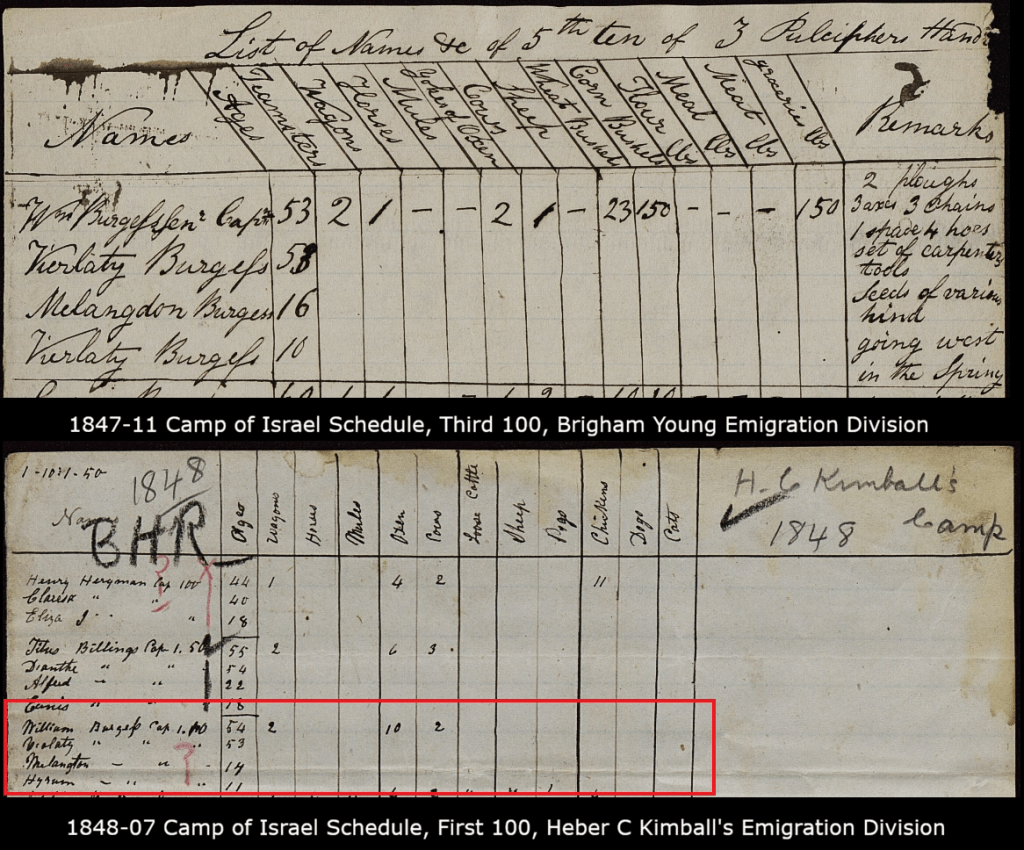
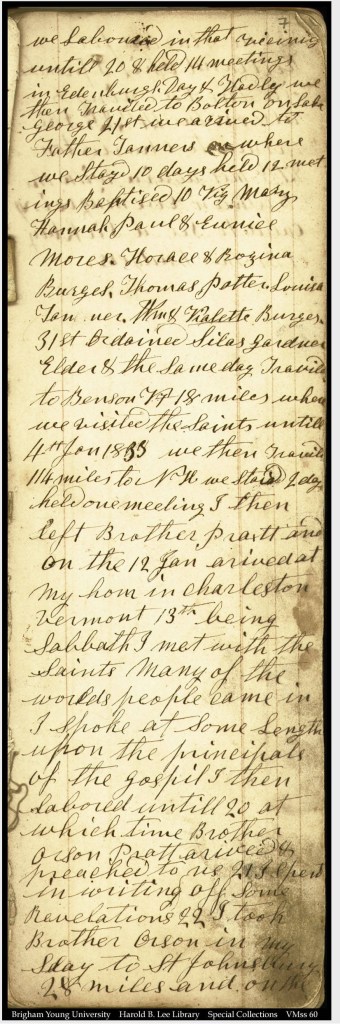
“Camp of Israel” was a name used to describe Winter Quarters. These are entries from William’s time there, one from 1847 and the other from 1848, when William and family left for Utah.

Due to the late and rushed start of the migration, the Mormons were forced to set up camp in Nebraska at a site known as Winter Quarters, near where Omaha came to be. William and family were at Winter Quarters for most of its existence, from 1846 to 1848. When they departed, it was with a company of 662 and arrived in Salt Lake City in September 1848.
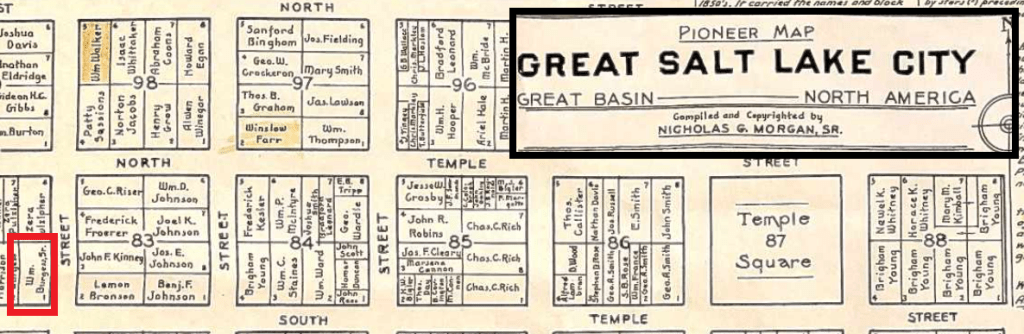
Location of William’s home in Salt Lake City. Today that is some prime real estate.

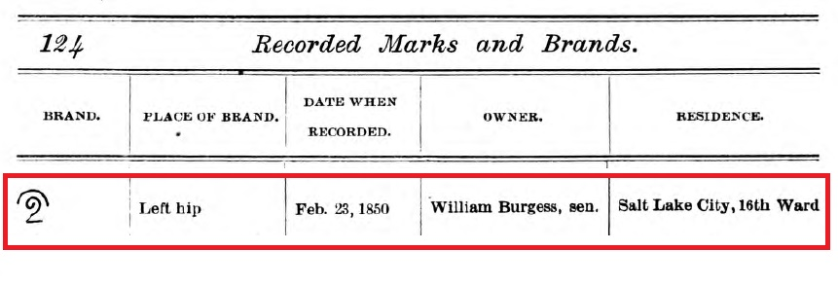
William lived in the 16th Ward of Salt Lake City for 12 years, where he was a farmer. He also raised cattle, and had a brand recorded on February 23, 1850. The mark was a stylized number “2” (having a curled flourish at the top) with an arch above, placed on the left hip.
On December 17, 1854, William entered into a polygamous marriage with Dorcas Keeling, who was 43 years old at the time. They married in the President’s Office in Salt Lake City. Dorcas was a recently divorced mother of three. She had been married to George Dykes, who left the church after serving a mission to Great Britain and Denmark in 1852. Dorcas and her children lived in William’s household until Dorcas’s children married and moved out. In fact, two of William’s grandsons, through his son Horace, married two of Dorcas’s daughters. So the sisters were also sisters-in-law, and the brothers were brothers-in-law.

In 1861, the church directed William to move to Pine Valley, which had been established two years earlier as a logging settlement. William was instructed to establish a saw mill there. Lumber produced at William’s mill was used throughout Utah, including the temple at Salt Lake as well as its pipe organ. Lumber from the mill was also used to build the Pine Valley Chapel, the oldest Mormon chapel in continuous use. As well, William built a separate home for Dorcas, a block from where he and Violate lived. By 1870, William had real property worth $500 and personal property worth $200.

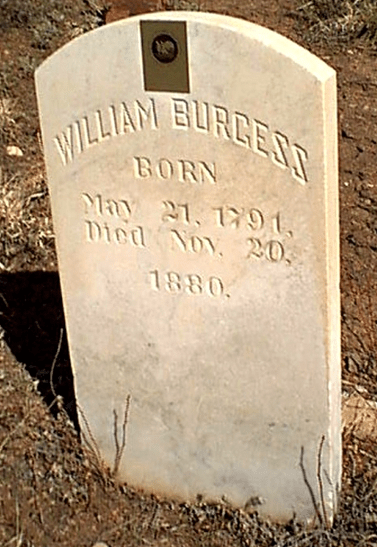
William died on November 20, 1880 in Pine Valley, only four months after his wife Violate. Dorcas survived him by a year. William is buried at the Pine Valley Cemetery.

52W Mark V – Week 19: Violate Stockwell

Violate Stockwell (1794-1880)

I’m amazed – it feels like it’s been months since I last posted, but I see it’s only been three weeks. Yay me.

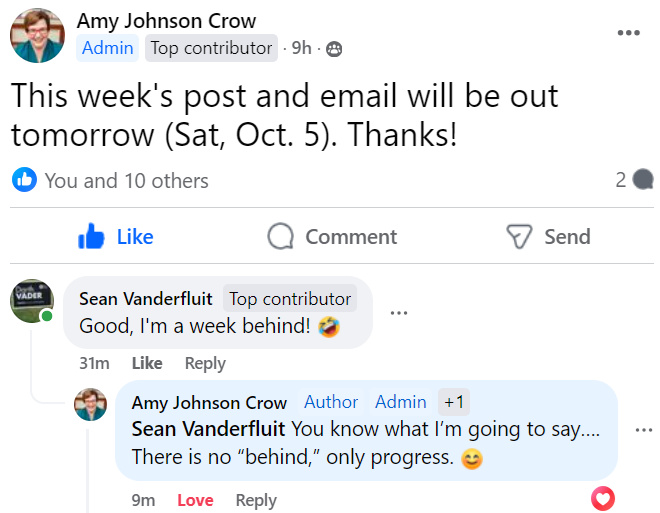
I am, however, eight weeks behind in the  52 Ancestors Challenge. When I commented on that fact a week ago on Amy Johnson Crow’s Facebook group, Generations Cafe, her only response was “You know what I’m going to say.” Of course I did! I even have the receipt to prove it.

October 2024. Not the first time I received that reminder.

So let’s get a move on and talk about my Great x4 Grandmother, Violate Stockwell. She was born on October 10, 1794 in Windham, Vermont, to Abraham Stockwell and Vilate (Violette? Vierlaty?) Gale, who were both originally from Massachusetts. They were third cousins. Even outside their common ancestor, Abraham and Vilate both had deep roots in colonial New England going back to the 1600s.

If I have fancy-pants ancestors or famous cousins, many of them are through Violate. Violate’s Great x4 Grandmother was Rebecca Towne Nurse, one of the accused who was convicted and executed by hanging during the Salem Witch Trials. Violate is also a descendant of the Putnam family, whose members included some of the accusers at Salem. As well, since it’s the Fourth of July (otherwise known as “Saturday” here) while I am writing this, I might as well point out that Violate is a direct descendant of Richard Singletary, who is my Gx 10 Grandfather. Richard is Barack Obama’s Gx9 Grandfather. So the former President and I are 1oth cousins once removed. As far as I know, he’s the only US President I connect to.

While Violate’s parents were from Massachusetts, they married in New Hampshire. I don’t know if they met there or in Massachusetts. Their first two of seven children were born was the third of seven children. Violate, Abraham and Vilate’s third child, was born in Vermont, as were the next three children. The youngest child was born in Hartford, Washington, New York. There was a 27-year difference between the eldest and youngest child. Violate was 23 and had been married for five years when her youngest brother was born. This may have foreshadowed the age span of Violate’s own offspring, for there was a 22-year difference between her eldest and youngest child.

Violate married William Burgess, Sr., on May 1, 1813, in Putnam, New York. While Hartford and Putnam are both in Washington County, they are over 40 kilometers apart, so I have no idea how Violate met her husband.

Violate and William had 12 children together. In fact, Violate appears to be the one who has had the most children of all the women in my family tree. Violate was 18 when she married and gave birth to her first child, Harrison, a year later. The next five children, including my Gx3 Grandfather William Burgess, Jr. were all born in Putnam, while the next five were born in nearby Warren County, New York. The youngest, Vierlaty (or Vilate!), was born in 1837, in Kirtland, Ohio, after Violate and William joined the fledgling Mormon church. Violate was 42 years old when she had her last child.

Extract from William Snow’s Journal, in which he writes about baptizing Violate and William, and two of their children.

Violate and William, along with their second and third oldest children (aged 14 and 18 at the time), were baptized into the church on December 2, 1832. This makes them amongst the earliest converts to the church, as Joseph Smith had only published the Book of Mormon in 1830. In fact, the church founded by Smith was known merely as the “Church of Christ” until 1834 when it was renamed as the Church of Jesus Christ and Latter Day Saints. They were all baptized by William Snow, who himself had only joined the church earlier in 1832.

Violate’s conversion, along with her husband and two children, came through her son Harrison’s involvement with the early Mormon church. According to Harrison’s diary, he first heard a Mormon missionary by the name of Simeon Carter in July 1832. Harrison converted and was baptized by Elder John S. Carter on Oct. 10, 1832 and confirmed as a member of the church by Elder Orson Pratt. Harrison described Violate as “a very gifted and talented mother and of a very religious nature.”

Violate and family joined the migration of Mormon adherents to Kirtland, settling there around September 1833. They remained there until about 1840, when they moved with the Latter Day Saints to Nauvoo, Illinois, which was to be a new Zion for the church.

However, tensions grew between the Mormons in Nauvoo and their neighbours elsewhere in the county, as well as the state. Matters culminated with the state revoking the city’s charter in 1845, followed by the expulsion of the Mormons in 1846. Brigham Young, by then the head of the church, called on church members to migrate west, beyond the western frontier of the United States into Utah, which was then still part of Mexico. Violate and family were part of that migration.

Due to the rushed departure from Nauvoo and the lateness of the season, in September 1846 the Mormons established a camp and waystation near what is now Omaha, Nebraska, known as Winter Quarters. While it essentially began as a refugee camp, it quickly evolved into a small organized town. Despite that, conditions were rough and there were waves of disease that took their toll. The Latter Day Saints vacated Winter Quarters by December 1848.

Violate and family were in Winter Quarters for most of its existence. Two of her children died during their time there. The family set out from Winter Quarters in 1848 destined for Utah, in a party of 662 individuals led by Heber C. Kimball, who was essentially Brigham Young’s right hand man. Violate and family arrived in Salt Lake City in September 1848 and settled in the 16th ward. Violate was 53 years old by that time.

Compared to the tumultuous events that marked Violate’s life from her conversion in 1832 to her arrival in Salt Lake City in 1848, the next 32 years of her life were relatively quiet. So much so that I have little indication of her activities, which presumably were centered around the home and domestic life.

Perhaps the most significant events during that time was Violate’s husband entering into a polygamous marriage in 1854 and the family’s move to Pine Valley, Utah in 1861 at the direction of the church. Coincidentally enough, the first bishop of Pine Valley was William Snow, the man who had baptized Violate into the church.

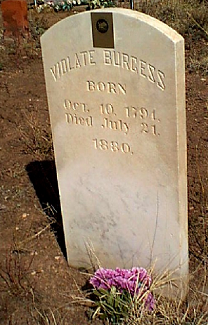
Violate died in Pine Valley on July 21, 1880, aged 85, having outlived nearly half of her children, and predeceasing her husband by only four months. Violate is buried at the Pine Valley Cemetery.
52W Mark IV – Week 39: Card B13 Maria Hadlond

Maria Hadlond (1838-1907)

We’ve reached the last card in the deck for my mother’s paternal line and the last of my Mormon ancestors who I’ll be looking at for this year’s 52 Ancestors Challenge.

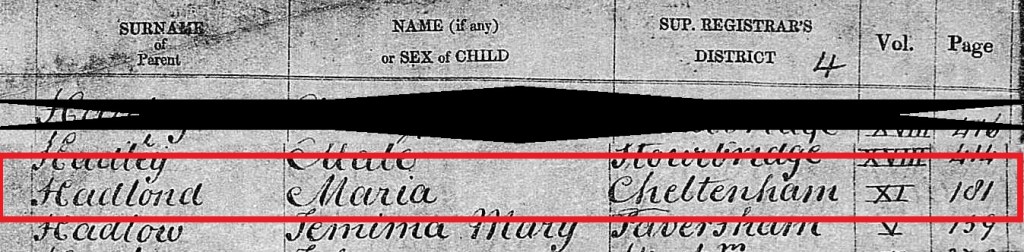
Maria Hadlond, my Gx3 Grandmother, is my most recent ancestor from England. I have to go back another five generations on some of my other maternal lines before I can come upon anyone else from Old Blighty. Maria was born in Cheltenham, Gloucester, England on August 27, 1838, to Thomas Hadlond (1814-1892) and Rachel Franklin (1817-1879).

Thomas and Rachel were originally from West Oxfordshire, but were living in Cheltenham, on the edge of the Cotswolds, in the years before they emigrated. At the time, Thomas was working as a domestic servant.

Sometime in the late 1840s, the Hadlonds heard the preaching of some Mormon missionaries. On November 23, 1846, Rachel was baptized into the church. Several of their older children were baptized in the next two years, including Maria who was baptized on December 21, 1848, when she was 10 years old. I have the impression that while Rachel was a fervent convert, Thomas wasn’t too taken with the new religion and never actually joined it in his lifetime. He wasn’t baptized until 1893, a year after his death.

Whatever Thomas’s beliefs, the family left England for America to join the migration of Mormon converts who hoped to join the settlement in Utah. It is most likely the family left England sometime after September 1850, when their daughter Alice was born, and before June 1853, when their son Franklin was born. In fact, while their destination was ultimately the United States, it seems that the family entered North America through Canada, as Franklin was born in the Province of Canada (likely Canada West, which is modern-day Ontario).

By no later than 1856, the Hadlonds were in St. Louis, Missouri. It seems that the family’s circumstances were such that they did not plan to move to Utah anytime soon. However, I have not been able to determine whether this was because of finances (many Mormon migrants took years moving west while saving up for the trip) or because Thomas was not an adherent or all that serious about the church.

When Maria was 16, her mother met a Mormon missionary by the name of Preston Thomas who was passing through St. Louis on his way to Texas. When Rachel learned that Preston planned to arrange for a company of Texan converts to migrate to Utah, she “begged” him to take her three oldest children with him. This included Maria. Thomas did as requested and took the three Hadlond children to Utah. Ultimately, Maria’s two siblings returned to St. Louis and lived out the rest of their lives there. Maria remained in Utah.

Two years later, on October 8, 1856, Maria married Preston in Brigham Young’s office in Salt Lake City, with Young himself officiating. Preston was 42 years old at the time; Maria was 18. Moreover, this was a plural (polygamous) marriage, as Preston had two other wives. Preston’s first wife, Sarah Jane Morehead, was born the same year as Maria’s mother and they had a daughter only a few months younger than Maria. Preston’s second wife, Maria Foscue, was 16 years older than Maria. In order to avoid confusion between the two wives, Maria went by “Molly”. Molly and Preston had nine children together. This was in addition to the nine Preston fathered with Sarah Jane and four he fathered with Maria.

For the first four years after Molly married Preston, the entire family lived in Lehi, Utah, where Molly gave birth to her first two children. This included Ella Thomas, my Gx2 Grandmother.

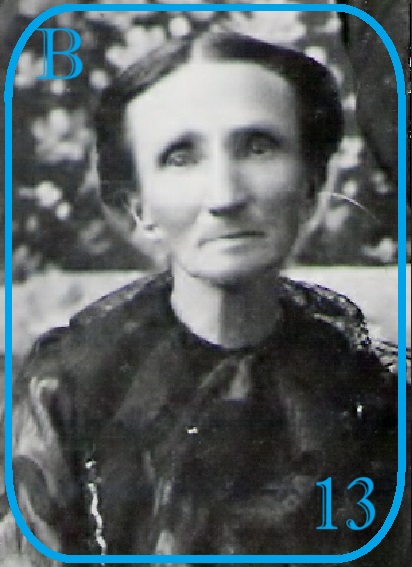
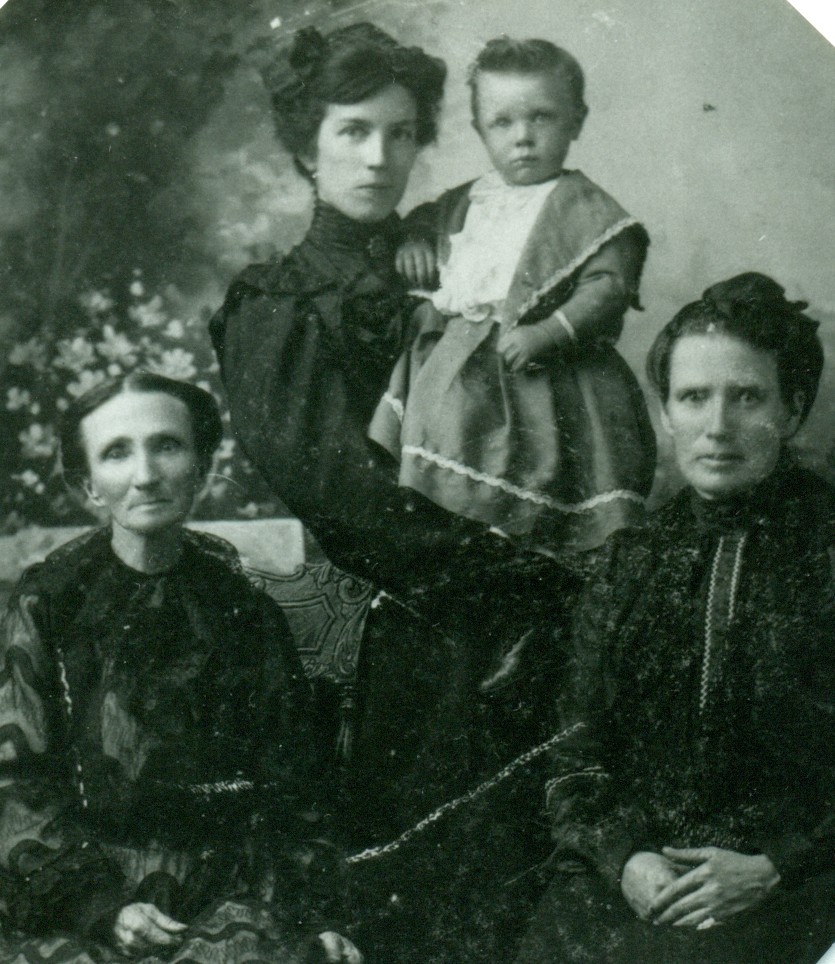
Four generations: Maria with her granddaughter Maria (“Mimie”) Lamb (née Thomas) holding great granddaughter Rulon Lamb, and Ella Nelson (née Thomas), my Gx3 Grandmother.

In 1860, Brigham Young had Preston join a team exploring an area in northern Utah, where Young intended to form a new settlement that is now Franklin, Idaho. However, at the time, and for many years afterwards, the inhabitants thought they were in Utah. They only discovered later that the town was a mile north of the Utah-Idaho border.

Young directed Preston to return to Lehi to collect his family and join the first settlers. In addition, Young appointed Preston as the first Bishop of Franklin. Preston did as he was asked (today we might say “voluntold”), but it appears that Maria Foscue might have refused and remained in Lehi with her children.

In 1863, Brigham Young formed a team of 12 to 15 men to explore the Bear Lake Valley in Idaho, not far from Franklin. This group included Preston. By September 1863 a settlement had been erected in Bear Lake Valley where Paris, Idaho now stands. Preston moved the family there in the spring of 1864. A few years later, Preston moved the family to Fish Haven, about 20 kilometers south of Paris.

During the family’s time in Idaho, Preston carried out at least one more major mission to the South. This was in addition to Preston’s other endeavors, which included a term as a judge of the Utah Probate Court (when it was still believed that Franklin was in Utah) and a run for office for the Idaho territorial legislature (after the discovery Franklin was in Utah). This obviously left Sarah Jane and Molly without his support while they raised a significantly large household of children.

Preston’s absences from home were compounded when he left this world following an accident that occurred in 1877 while he was building a house on his property. Molly’s youngest child was seven months old at the time.

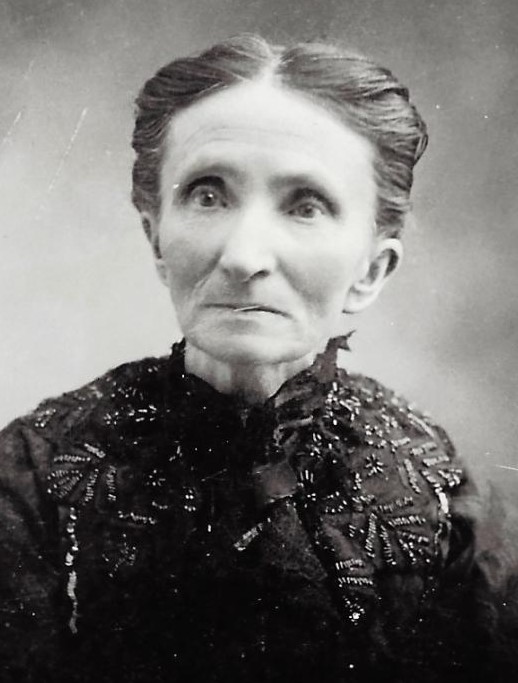
Maria with her three youngest children: Daniel, Letitia, and Rosabell (seated).

I have not yet tracked where Molly lived in the years immediately following Preston’s death, so I don’t know if she remained in Idaho or moved back to Utah. However, over the years several of her children joined the Mormons who were settling in Canada, in what is now the southern part of the province of Alberta. For example, her daughter Ella had moved there with her husband John Nelson. So in 1896, Molly and four of her children – all of whom were now adults – moved to Cardston, Alberta. Census records show that in 1901 Molly (who was going by Maria again) was a neighbour of one of her sons.

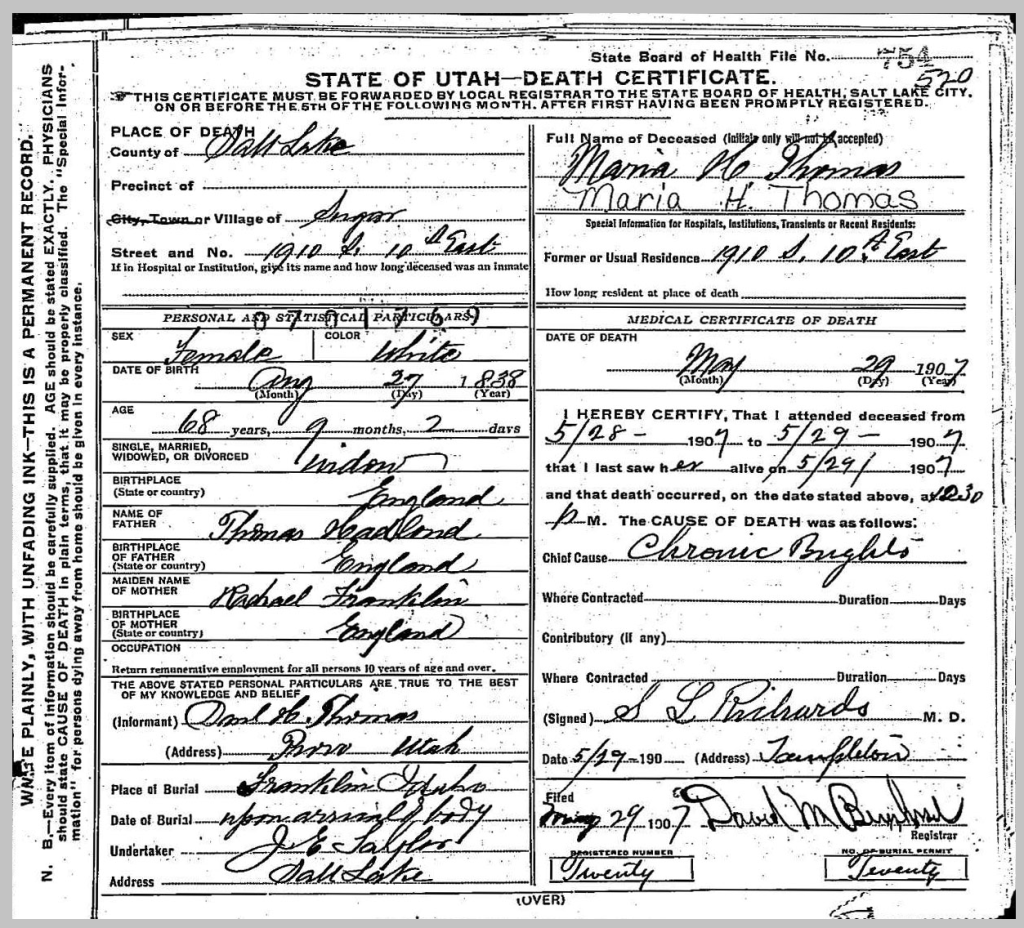
In 1902, Maria moved back to the United States and settled in the “Sugar House” neighbourhood of Salt Lake City, one of the oldest neighbourhoods in the city. Maria remained at the same house for the rest of her life. She passed away at home on May 29, 1907. She is interred in Franklin at the Franklin Cemetery.

Next week we start the last suit, covering my mother’s maternal line, who are Germans from Russia.

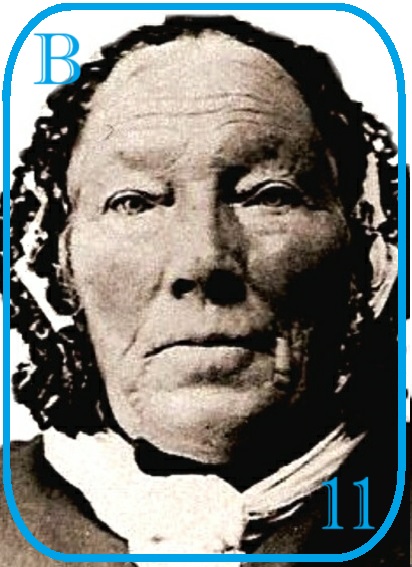
52W Mark IV – Week 37: Card B11 Elizabeth Joseph

Elizabeth Joseph (1818-1902)

I know I’ve said it before, but I’ll say it again: my Gx3 Grandmother, Elizabeth Joseph, was not Jewish. I cannot find a shred of evidence to support the suggestion, which definitely falls short of the Genealogical Proof Standard. Elizabeth also wasn’t Scottish, which I’ve also addressed before.

Elizabeth was born on September 16, 1818 in Muff, Donegal, Ireland. It is very likely that she was baptized on November 1, 1818. While the document is not available online, my great aunt  Fon Hogg (née Burgess) apparently had or saw a copy of a church record showing Elizabeth’s baptism, which is definitely contrary to her being Jewish.

While there has been a nominal Jewish presence in Ireland for centuries, it was miniscule and largely confined to Dublin or the south coast. However, exclusionary laws resulted in the decline of the tiny Jewish population up until the early 19th century. By the time of the Great Famine, there were only about 25 Jewish families in Dublin. The Jewish population in all of Ireland in 1871 was only 258. Muff is about 8 km north of Londonderry, where the Jewish community was not established until 1893. In 1894, there were only 43 Jews in Londonderry. As of 2016, there were only 25 Jews in Donegal. I also have not seen any DNA test results of Elizabeth’s descendants suggesting that have even a trace of Jewish ancestry. So it is extremely unlikely that Elizabeth was Jewish.

I know nothing of Elizabeth’s life between her birth and marriage to Robert Nelson on December 12, 1842 in Muff. One thing I find interesting about Elizabeth and Robert is that they had remarkably similar lifespans. Robert was two weeks older than Elizabeth and died three months before she did.

The other interesting thing is that Elizabeth and Robert left Ireland for Scotland by 1844 – a year before the Great Famine. However, their departure was not unusual. Ireland was poor, many Irish worked in Scotland as seasonal migrants, and emigration was already on the rise before the Famine.

Elizabeth and Robert had three children in Scotland. While there, the couple joined the fledgling Mormon church and were baptized in 1848. In 1850, Elizabeth and Robert joined the exodus of converts travelling from the UK to Utah. The family travelled from Liverpool to New Orleans in September 1850.

However, upon arriving in the United States, Elizabeth and family did not immediately make their way to Utah. Rather, they spent a year or two in Missouri. In May 1852 in St. Louis, Elizabeth had another child, her first daughter, Mary. Within months of Mary’s birth, the family were in Utah, settling in Farmington. Elizabeth had four more children in Farmington.

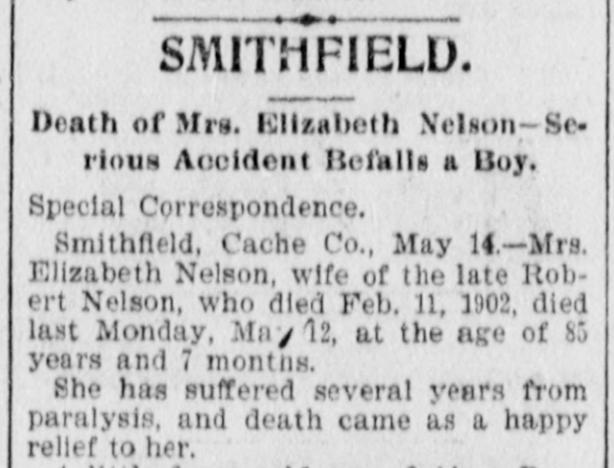
In 1860, Elizabeth and Robert moved for the last time, to Smithfield, Utah. There, Elizabeth gave birth to her last child, a daughter named Jane, in September 1862. Elizabeth spent the next forty years in Smithfield, where she died on September 12, 1902.

Deseret Evening News, May 16, 1902 (Last Edition), Page 7