52 Weeks – Week 47: Wrong Side of the Law

Absent any very well-kept family secrets, I don’t have a lot of possibilities for this week’s 52 Ancestors Challenge theme, “Wrong Side of the Law”. For the most part, I have more ancestors who have been on the correct side of the law.

The only ancestor who readily came to mind who had any significant legal problems was my Great x5 Grandmother, Hannah Newland of Norton, Massachusetts. Today her problem – if it would even have been a problem had she been able to do as she wanted – would have been more of a social than legal issue and, frankly, one that would be no one else’s business.

48. John Watterman residing in Norton and Hannah Newland, both Norton. Entered February 15th, 1777, and cryed one time and forbid by the Selectmen.

Hannah’s problem arose from her relationship with a John Watterman (often described as Watters due to the legibility of the records). It seems that John may have been a Hessian mercenary who fought for the British during the American revolution, but later who joined with the rebels. In February 1777, Hannah and John declared their intention to marry. However, the Selectmen of Norton, Massachusetts denied them permission to do so.

While not well documented, one account was because of John’s “questionable” German background. If so, that is somewhat ironic, given that Hannah ultimately ended up marrying another Hessian mercenary, my Great x5 Grandfather, “Chris John Burgess”. Despite this rather English-sounding name, Chris John was born Johann Christian Borges (or Burges) in Prussia. Like John Watterman, Chris John also came to America to fight for the British, only to change sides later in the war. The legend is that he changed his name after doing so, in order to better fit in with the colonials.

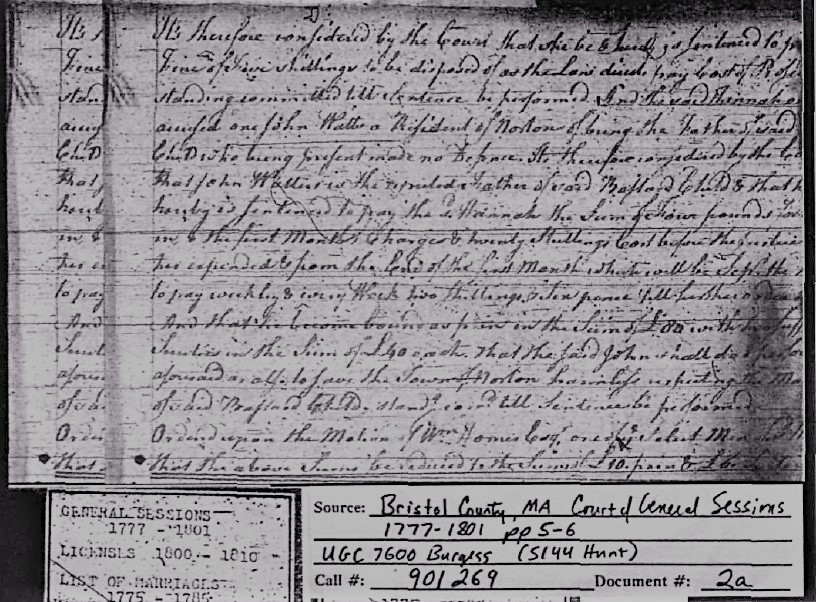
However, what is more likely is that Hannah and John had conceived a child out of wedlock. The child, Benjamin Newland, was born in August 1777, six months after Hannah and John declared their intention to marry. A copy of an extract of a court record that I have shows that Hannah was fined five shillings for “fornication and having had a bastard child born of her body”, as well as paying the cost of the prosecution. John was in attendance at the court proceeding and essentially acknowledged paternity. The court ordered John to pay for the maintenance of the child. It appears clear from the court record that the order was less for social welfare purposes and more to prevent the town from bearing the cost of supporting an unwed mother.
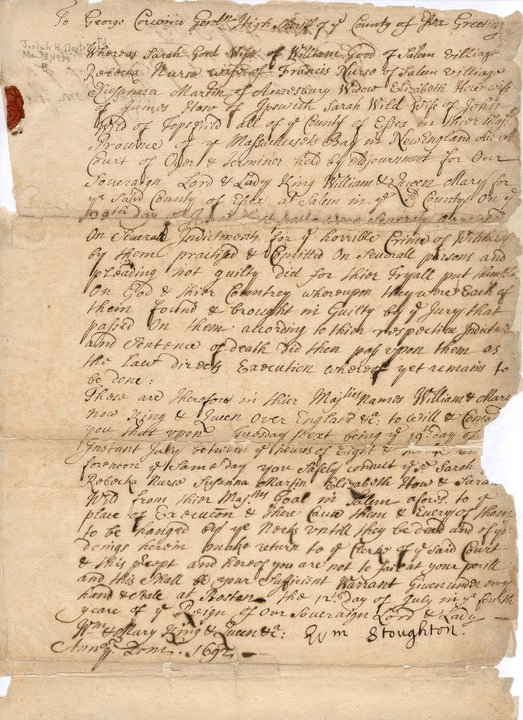
The death warrant for Rebecca Nurse

Of course, after completing this post I remembered an ancestor who was infamously on the wrong side of the law. My Gx10 grandmother was Rebecca Nurse, who was one of the women of Salem Village executed on the false accusation of being a witch. While on the wrong side of the law – albeit through a mockery of the law, even by the standards of the day – Rebecca certainly was on the wrong side of what constitutes justice.

Suffice to say, one need not necessarily be a scoundrel, ne’er-do-well, or criminal to be on the wrong side of the law. Just make sure you don’t live in the wrong era, depending on what you do.
52 Weeks – Week 46: Tombstones

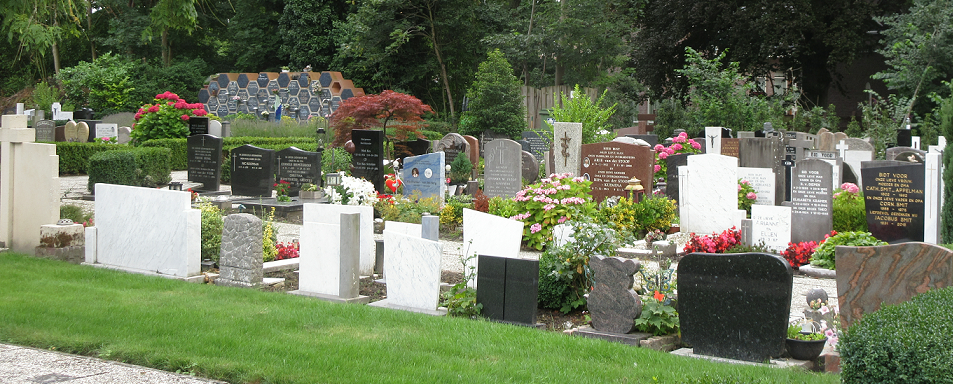
Pretty much anyone who has been doing genealogy for a significant period of time has likely visited their fair share of cemeteries. So it’s no surprise that one of this year’s weekly themes for the 52 Ancestors Challenge is “Tombstones”.

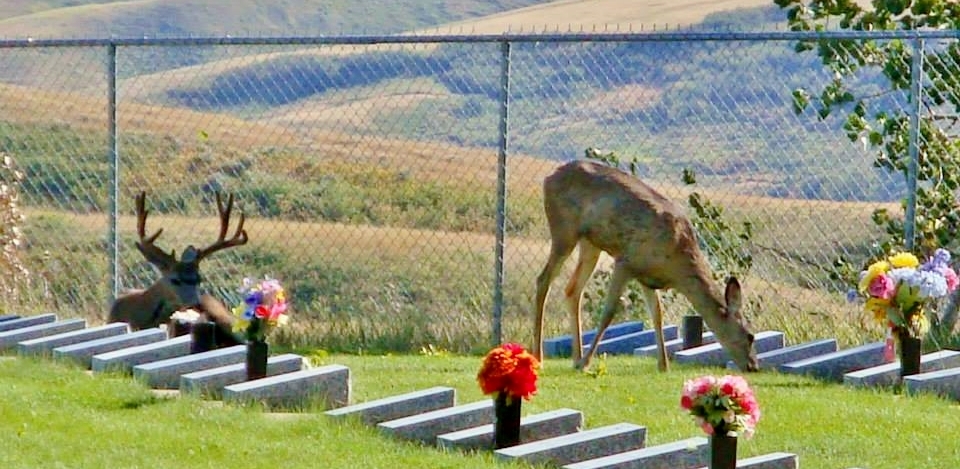
A couple of visitors I ran into at Mountain View Cemetery in Lethbridge, Alberta.

On Week 14, “Check it Out“, I considered some unique ways to consider my pedigree. For this week’s theme, I thought about my pedigree in terms of whose tombstone/headstone/grave marker I have visited.

What I was surprised to realize is that I’ve visited the final resting place of more of my great great grandparents than my great grand parents. I’ve been to where two of my great grandparents are buried, but to the site of three of my great grandparents. Granted, it’s a matter of three to two, but still, it seems like an odd statistic.

None of these include my Dutch ancestors. In general, Dutch graves are cleared after a few decades. I’ve only been to one church graveyard in the Netherlands, the Parochiële Kerkhof of St Jan de Doper (St. John the Baptist) in Noord Scharwoude, North Holland. My father has at least one aunt and uncle buried there, as well as a number of cousins of varying degrees.

Parochiële Kerkhof of St Jan de Doper

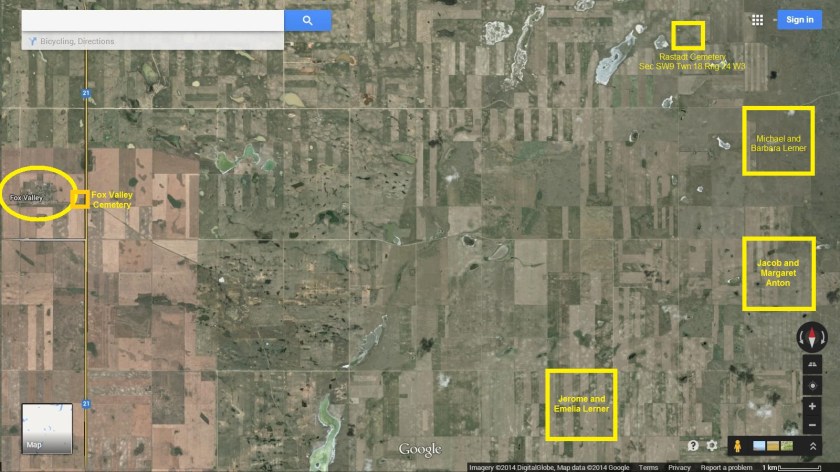
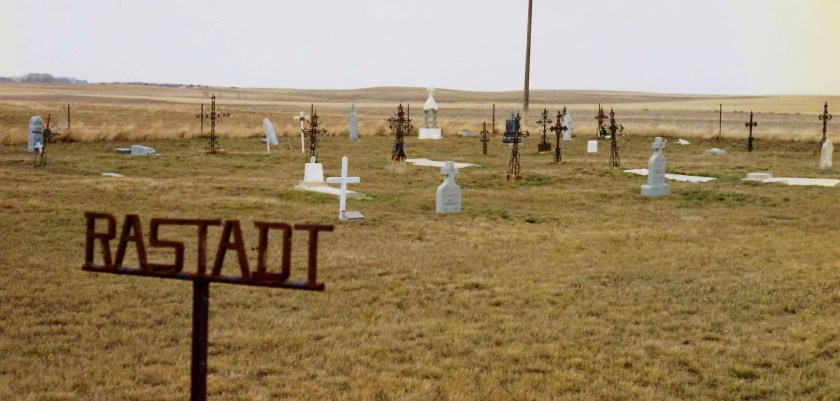
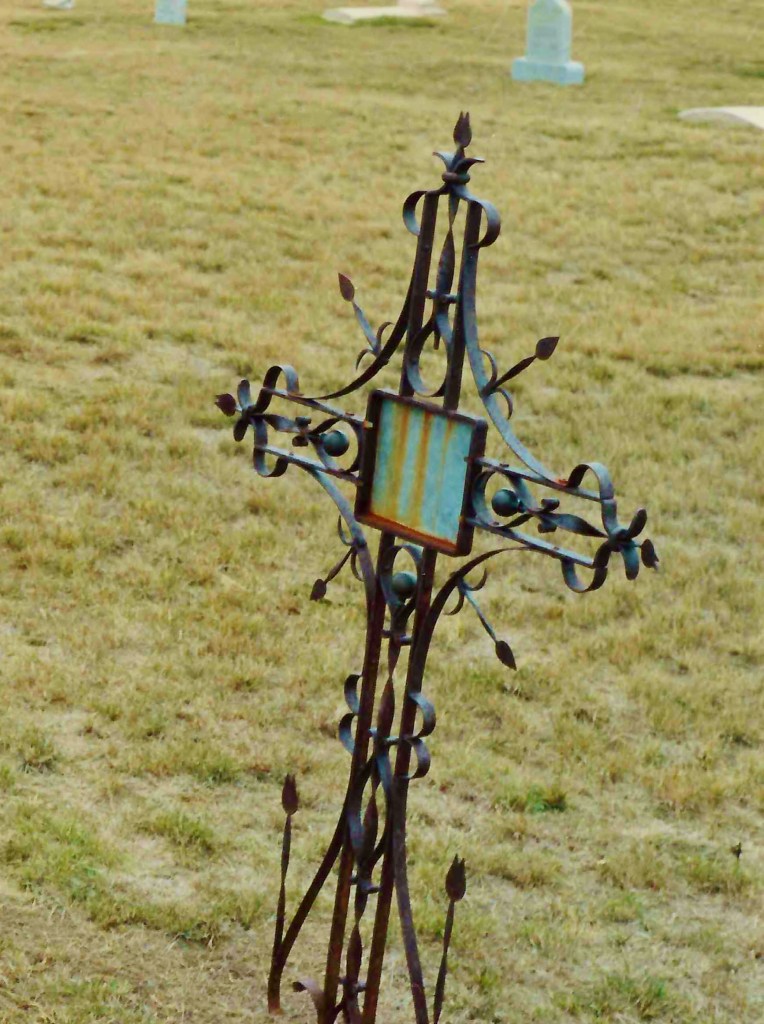
I’ve written several times about my road trip to Fox Valley, Saskatchewan with my mother, where we visited the Rastadt and Fox Valley cemeteries. My great great grandfather Jacob Anton is buried at Rastadt, while his son-in-law (my great grandfather) Heronimus (“Jerome” or “Jerry”) Lerner is buried in Fox Valley.

Fox Valley is the oval on the left, with the Fox Valley cemetery immediately to the east. The Rastadt cemetery is located in the upper right hand corner.
Rastadt, Saskatchewan Cemetery, April 1, 1997. Located at 50°30’00.9″N 109°15’32.3″W
You can find the cemetery listing here.

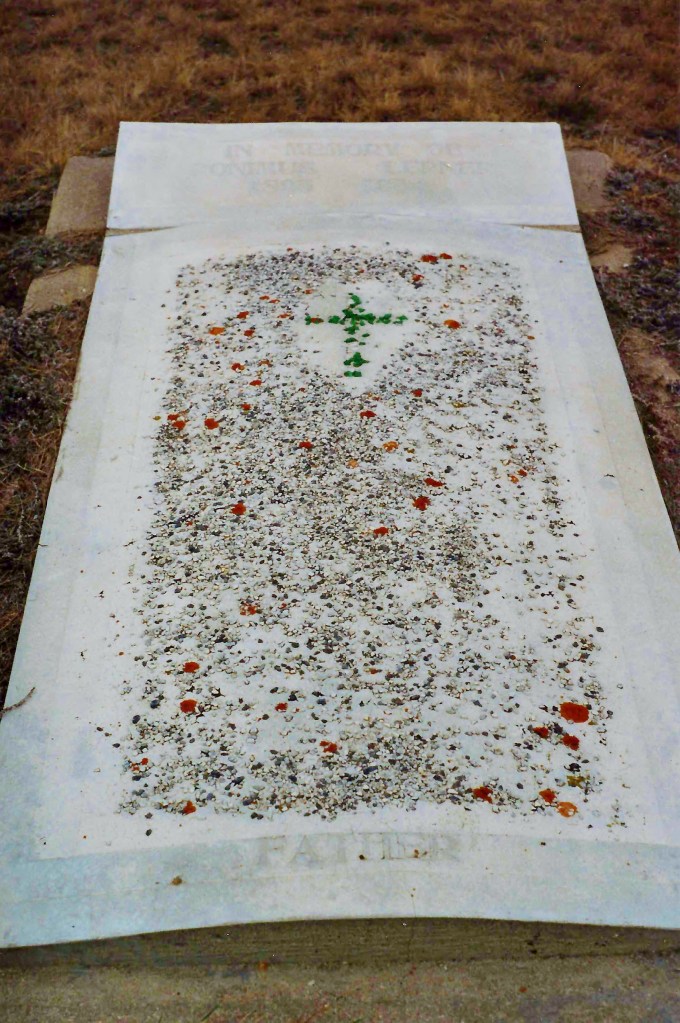
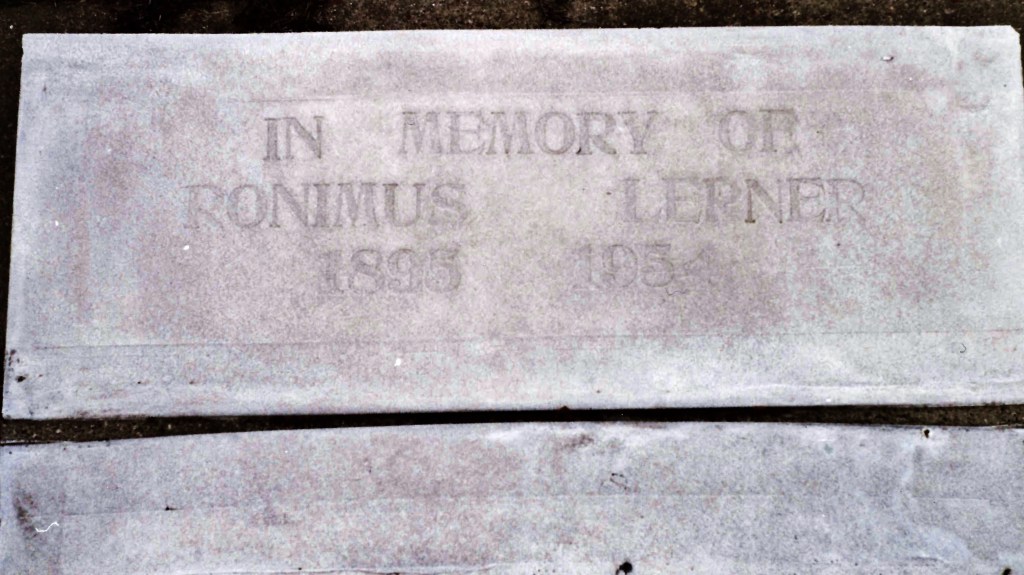
There’s an error on the headstone. I guess you could say that it’s a grave mistake.

The inscription on my great grandfather’s headstone is wrong. It should read “Heronimus” rather than “Ronimus”. During our visit, we tried to determine if the first two letters (“HE”) had worn off the headstone or if it had been deliberately written this way. Because of the centering of the text, it appears to have been deliberate. The Medicine Hat News, of December 20, 1954, page 4 states, “Jerome Lerner, of Fox Valley, Sask., who died at Maple Creek December 6. Interment was in Fox Valley cemetery.”

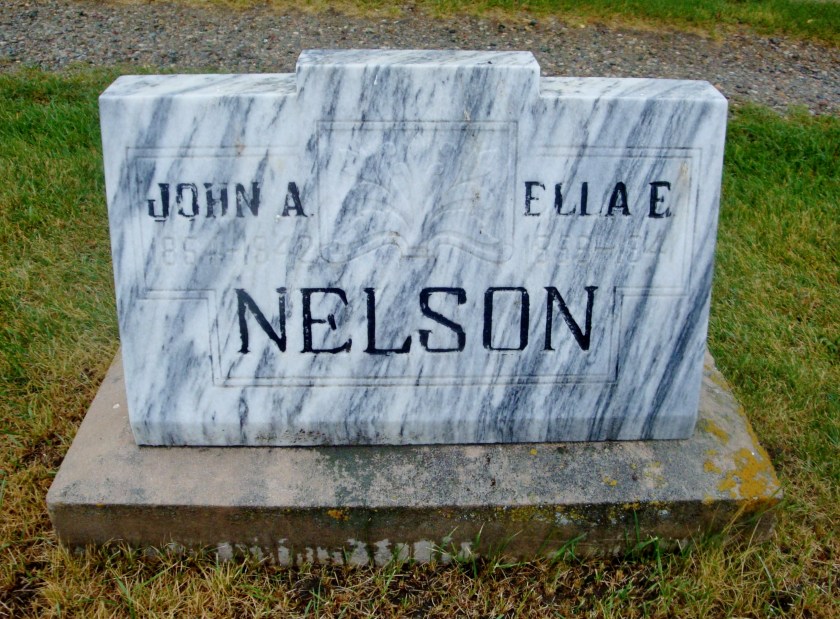
The other great great grandparents whose grave I’ve visited are John Alexander Nelson and Ella Elizabeth Thomas. They’re buried at the Cardston Cemetery. I wrote about my visit there on Week 36.

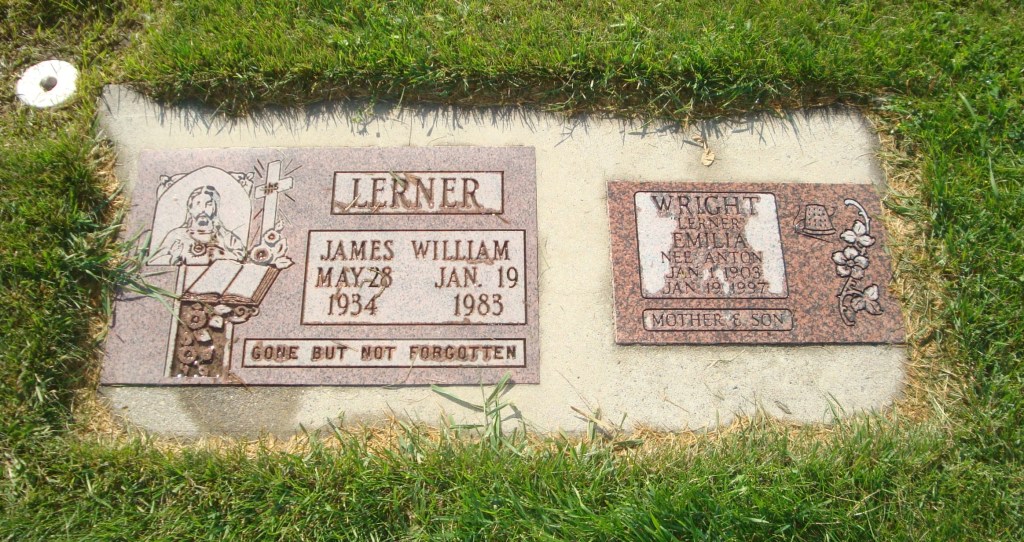
Besides Jerome, the only other great grandparent whose grave I have visited is that of his wife, Emilia Anton. She is buried at Mountain View Cemetery in Lethbridge, Alberta, along her son (my great uncle) Jim Lerner.

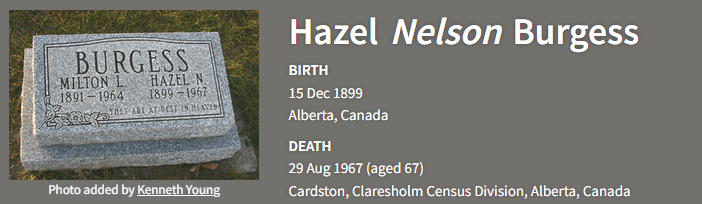
Then again, for what it’s worth, my mother was at the burial of her grandmother Hazel Nelson the day before I was born. She was buried at the Magrath, Alberta cemetery alongside my great grandfather, Milton Burgess, so in a way I’ve been to the burial site of four of my great grandparents. I’ve been to Magrath many times, just never to the cemetery.

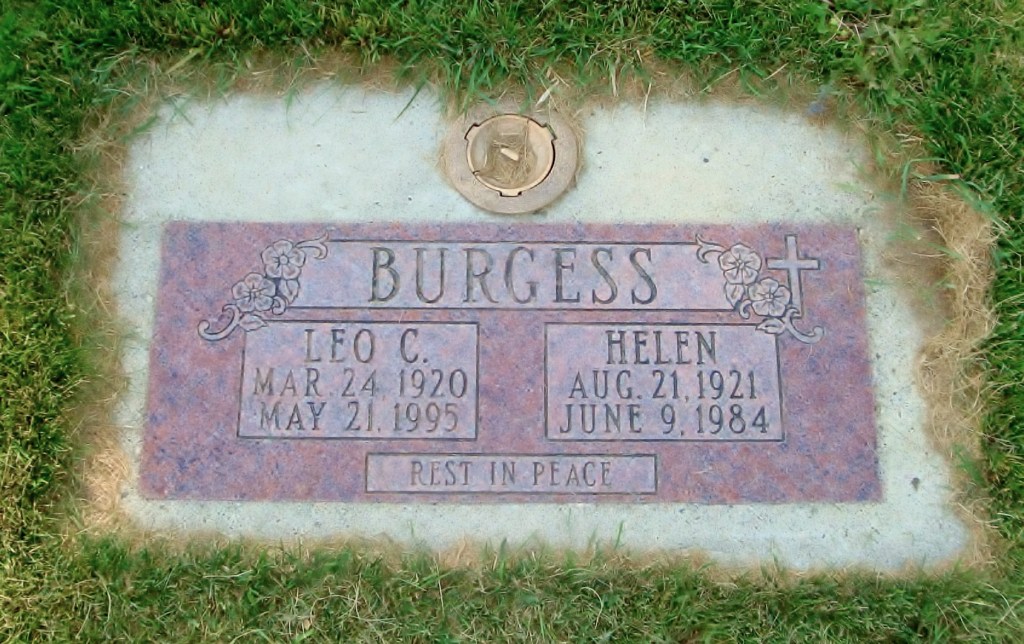
Screenshot of the entry for Hazel Nelson at Find a Grave. The headstone is for both Hazel and her husband, Milton Burgess.

However, I should add that I’ve been to where all four of my grandparents are interred, although I was only present for three of their funerals. I was in high school and writing final exams when my grandmother, Helen Burgess, passed away. Both pairs of my grandparents are buried in close proximity to each other at Mountain View Cemetery in Lethbridge. Among others, they’re also close to Emelia, as well as my aunt Helen Diana Burgess.

52 Weeks – Week 45: Ghost Story

While this week’s 52 Ancestors Challenge theme is “Ghosts”, I don’t really have any ghost stories. So this week’s post might be a bit of a stretch.

This week, on November 11, it is Remembrance Day in Canada and many other countries. In the US, it’s Veterans Day. We think of all those who gave their lives for their country. The fallen are much more than ghosts. They are the lost, who were robbed of their futures, many with no descendants to remember them. One of those fallen was Lee Anton, my maternal grandmother’s second cousin (also her first cousin once removed through a different ancestor).

Lee was a farm boy from a practically non-existent village in south-west Saskatchewan. That village, Rastadt, is no longer even a ghost town. All that remains of it is the cemetery and a one-room schoolhouse. Lee would have turned 100 this year. Instead, he died at 22, in the liberation of the Netherlands.

Lee was a Trooper of the 8th Reconnaissance Regiment (14th Canadian Hussars) R.C.A.C. Lee was killed in action on April 12, 1945, less than a month before V-E Day, in the northern part of the Dutch province of Drenthe, the day before the start of the Battle of Groningen. Along with many of Canada’s other fallen soldiers, Lee is memorialized in two very special ways.

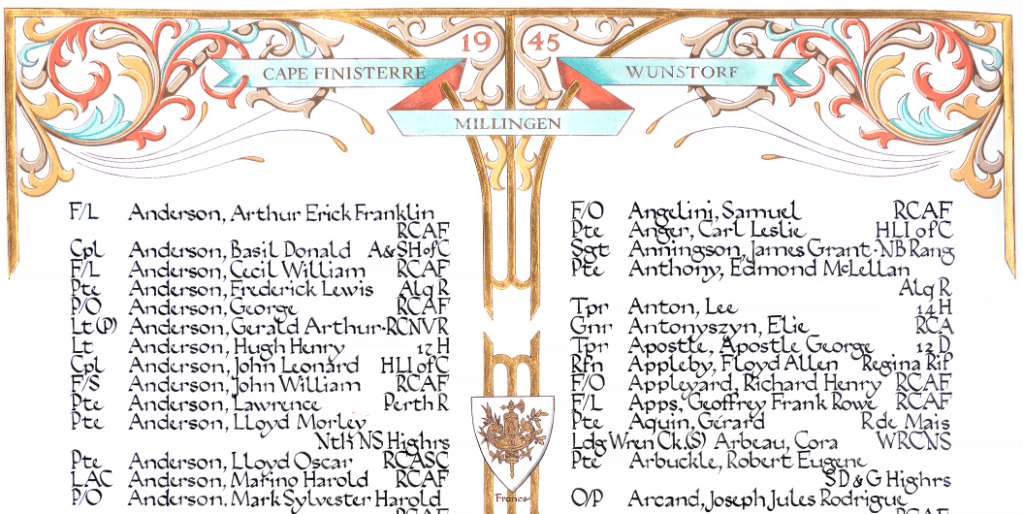
One is through the Book of Remembrance for the Second World War. This is one of seven books that are normally housed in the Memorial Chamber at the top of the Peace Tower of the Centre Block at Parliament Hill in Ottawa. However, they are being temporarily displayed elsewhere while the Parliament Buildings undergo renovations. The books record the names of over 120,000 Canadians who lost their lives in various conflicts Canada has been a part of. Every morning, a page of each book is turned, so throughout the year every name can be seen. The books can be searched online. The result will include a link to an image of the page the person appears upon, as well as a link to a virtual memorial hosted by Veterans Affairs Canada.

Lee is commemorated on page 491 of the Second World War Book of Remembrance.

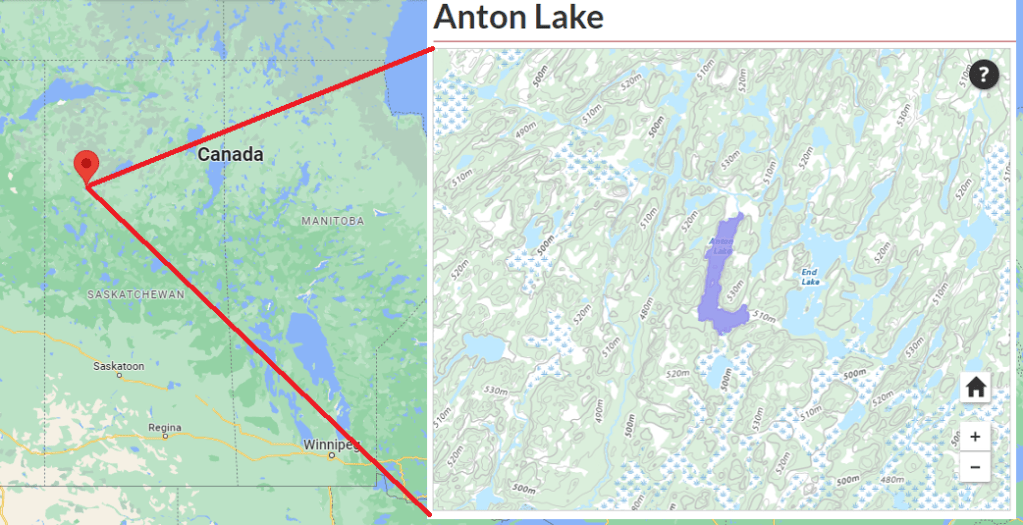
Lee’s memory is also commemorated by a lake in northern Saskatchewan that is named after him, Anton Lake, which you can see on Google Maps. From 1947 to 1965, the province operated a “Geo-Memorial” program by which it named lakes and other geographic features after people from Saskatchewan who died in WWII. This project, as well as the stories of some of the veterans who were commemorated this way, is documented in the book, Their Names Live on: Remembering Saskatchewan’s Fallen in World War II.

Lee is interred at the Holten Canadian War Cemetery, located just outside of Holten, Overijssel, Netherlands.

52 Weeks – Week 44: Shadows

This week’s 52 Ancestors Challenge theme is a difficult one: “Shadows”. It has taken me a while to think of anything relating to this theme. If only I had an ancestor who was a spy. Or maybe I do, and don’t know it, they were that good!

After pondering the theme for a while, I began to consider that what often lies in the shadows are those skeletons in the closet and other parts of family histories that people don’t want to talk about. These things are not always misdeeds or scandals or salacious affairs. Sometimes they are things out of our control that have a cultural or societal stigma, such as mental health. The stories, or even existence, of family members afflicted with mental health problems were often deliberately kept in the shadows.

Two ancestors of mine who most likely had some form of psychological condition come to mind. While the fact they may have had a mental health condition was not entirely kept hidden, I have very little information about their circumstances because their stories came to me second or third hand, with little detail. From the accounts, it seems clear that the lack of detail is due to the hushed nature of the way their circumstances were recounted by those who knew them best.

Johannis Albertus van der Fluit (1894-1932)

I will start with my great grandfather, Johannis Albertus van der Fluit. He died when my grandfather was eight years old. I really never had any contact with anyone else who knew Johannis personally or was old enough to remember him. However, over the years I heard passing references to his mental health and related problems.

I do know that my grandfather could recall some of the circumstances of his father’s mental health. Apparently, Johannis sustained some sort of head injury after an accidental blow to the head and began to exhibit strange behavior afterward. He suffered from delusions, which were very unsettling to him. According to one account of a delusional episode, it took my grandfather’s two older brothers and some neighbours to restrain him. From what I know of the story, Johannis was placed in a sanitorium, where he continued to suffer from delerium. However, shortly before his death, he experienced a period of rational thought. At that time, my great grandmother was summoned to see him, which occurred close to the time Johannis died.

Heronimus Michael “Jerome” Lerner (1895-1954)

Another ancestor who, I believe may have had mental health problems was my mother’s maternal grandfather, Heronimus Michael “Jerome” Lerner. This is based upon things some of my relatives mentioned, briefly, over time. My mother never knew him; her grandparents separated long before she was born. However, my mother believes, based on what she heard from her mother, that Jerome had some sort of mental health condition.

Apparently Jerome’s mental health was a significant factor in the breakdown of his marriage. My mother says that a rift developed between the Lerners and my great grandmother over the separation. It seems there was some sort of expectation that my great grandmother should have remained with Jerome despite his troubles.

Whatever mental health problems my great grandfather may have had, I do not know what they were or how long they persisted. I know Jerome was farming in the 1940s. When my grandmother’s younger sister was in her teens, she went to live with her father on his farm for some time. As well, the record of his death noted that he was a farmer at the time of his death; it also made no mention of any mental health conditions. I spoke to my great aunt at length about her time living with her father, but she never really spoke of his mental health.

Finally, a mental health problem that may have affected a number of my female ancestors was postpartum depression. Again, I have no solid evidence of this. Rather, brief and cryptic conversations and speculation about the circumstances of some ancestors’ experience after childbirth certainly sounds consistent with what was likely postpartum depression.

In recent years, the stigma around mental health has diminished, although it still may be a difficult thing to talk about. Fortunately, there are now many more resources available for people who need help. In Canada, one can start with this “Get Help” resource page.