52W Mark III – Week 27: Planes

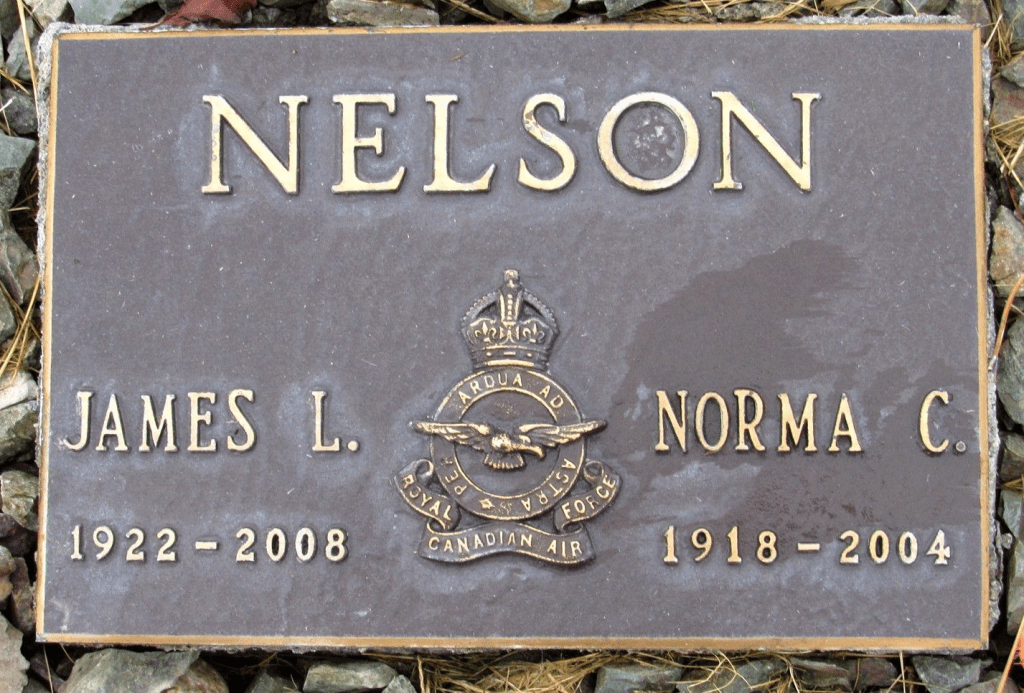
James Lorenzo Nelson (1922 – 2008) was my grandfather Leo Burgess’s cousin. James had a distinguished career as a Royal Canadian Air Force pilot, which included a four-year stint assigned to the Royal Air Force. During his career, he served on 16 different kinds of aircraft and logged 8334 flying hours.
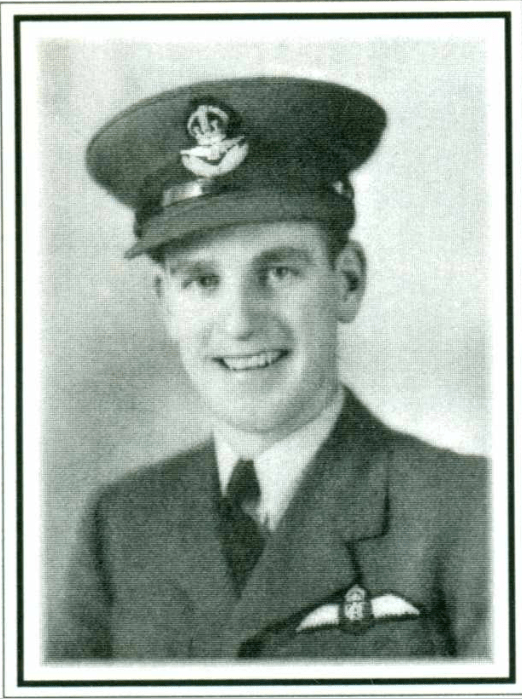
James Lorenzo Nelson

James was the second of the nine children of Lorenzo Snow Nelson and Mary Ireta Turner. However, James’s older sister Clea died within weeks of birth, so James essentially grew up as the eldest child.

When he was 20, James joined the Royal Canadian Air Force during World War II, in October 1942. After training, James was transferred to Bomber Command in Leeming, Yorkshire, flying Halifax and Lancaster bombers. After the war, he remained in England as part of the post-war demobilization. During that time, he transported soldiers out of Italy, cleared armament dumps, disposed of unused bombs and ammunition by dropping them into the Irish and North Seas, and flew old aircraft to the “junk yard”. James was part of the last Canadian-crewed Lancaster flight.
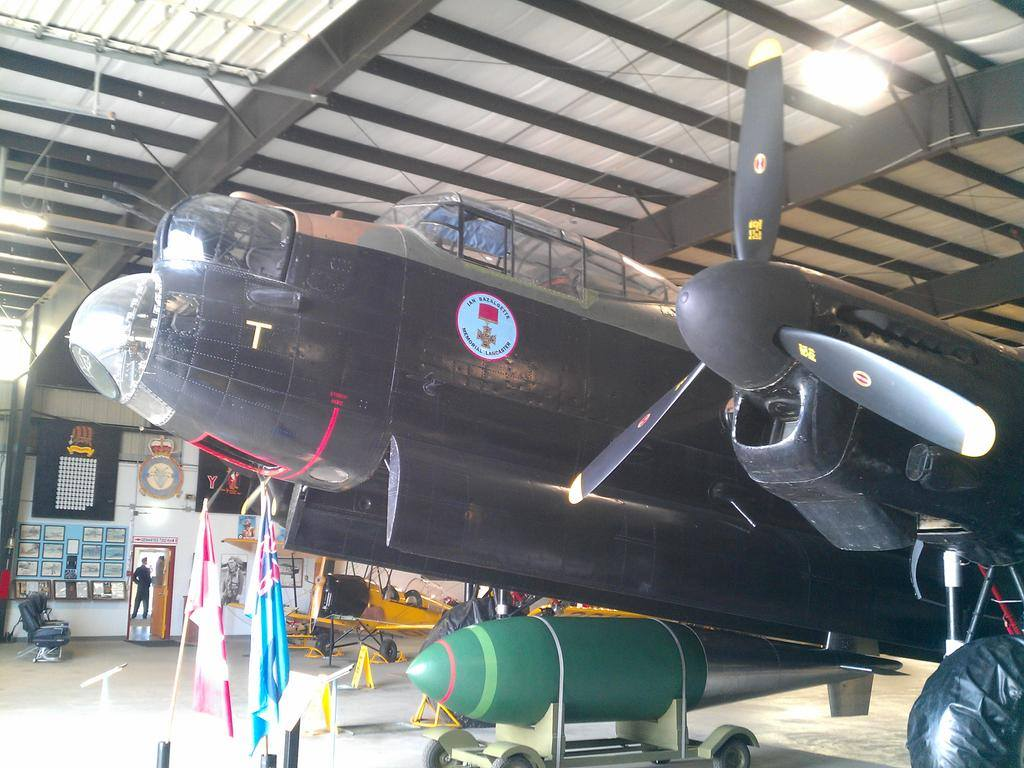
This Lancaster is on display at the Bomber Command Museum of Canada in Nanton, Alberta. It is one of 17 remaining Lancasters in the world. It is also one of four Lancasters that can taxi under its own power. We were lucky enough to see the engines in operation during a test in 2016.

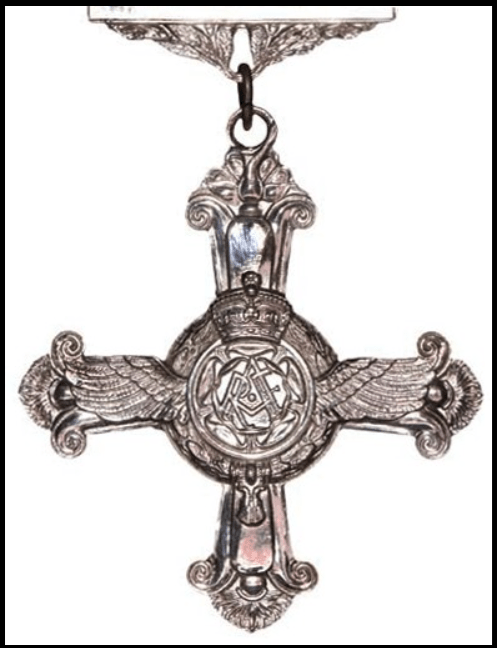
After the war, James returned home to Alberta and briefly spent some time as a grain buyer. Clearly the land was not where James’s heart laid, as he joined the Royal Air Force in 1947. James served with the #224 Squadron in Belfast, Ireland and with a detachment in Gibraltar. His duties included long-range meteorological reconnaissance. King George VI awarded James the Distinguished Flying Cross at Buckingham Palace on October 31, 1951. The commendation read:

This officer has served with No. 224/269 Squadron at Aldergrove and Gibraltar for two and a half years from March 1948 to 1951. During this time he has flown one hundred meteorological sorties, and on nine occasions he has experienced engine failure in flight. He has coped with these problems coolly and with exceptional skill, proving an excellent leader under most adverse conditions.

James completed his service with the Royal Air Force in 1951. He returned to Canada and immediately reenlisted in the Royal Canadian Air Force. James was initially posted in Calgary and then later in Edmonton. During his time in Edmonton, James was awarded the Air Force Cross by Governor General Vincent Massey for his service. After four years in Edmonton, James was transferred to Training Command. In 1959, James served as Guard Commander during Queen Elizabeth’s visit to Regina. In 1967, James was transferred back to Edmonton to serve as Provincial Air Cadet Liaison Officer.
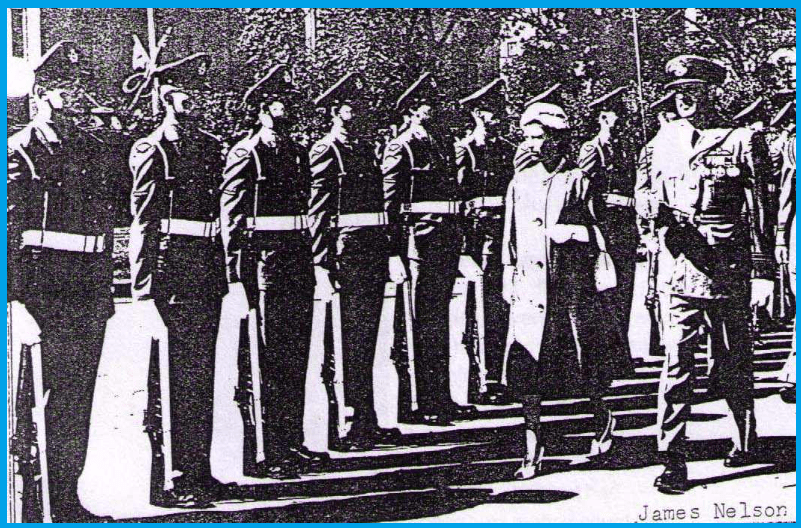
James serving as The Queen’s Guard Commander during her Royal Visit in 1959.

In 1953, while stationed in Calgary, James married Norma Dunford (1918 – 2004). Together they had two children, one of whom was a dentist. I am pretty sure he worked on my teeth, but I didn’t discover the familial connection until well after the fact.

After James left the military, he and Norma relocated to Penticton, British Columbia. James owned and operated a picture-framing business there from 1971 to 1976, when he sold the business. James spent his retirement in Oliver, British Columbia, spending his time golfing, fishing, hunting, and caring for a small fruit orchard. He died in 2008, at the age of 86.
52W Mark III – Week 17: War

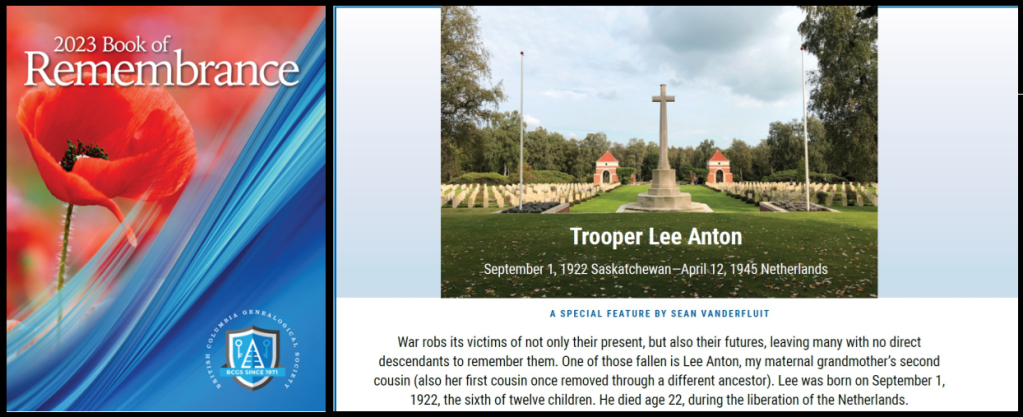
In Week 45 of the 2022 52 Ancestors Challenge, I wrote about my maternal grandmother’s cousin Lee Anton. I also wrote about Lee as one of the Featured Articles for the 2023 Book of Remembrance published by the British Columbia Genealogical Society. With this week’s writing prompt, I’d like to share what I’ve learned since writing these two pieces.

              The cover of the book.                                        Feature about Lee on page 98.

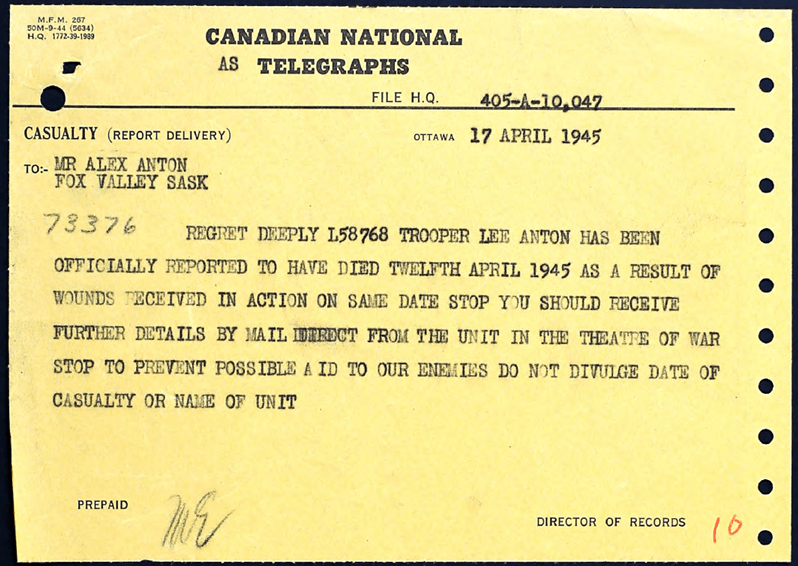
First, to recap, Lee was a Trooper of the 8th Reconnaissance Regiment (14th Canadian Hussars, also known as the 8th Recce) R.C.A.C. Lee was killed in action on April 12, 1945, age 22, less than a month before V-E Day, in the northern part of the Dutch province of Drenthe, the day before the start of the Battle of Groningen. Along with many of Canada’s other fallen soldiers, Lee is memorialized in two very special ways.

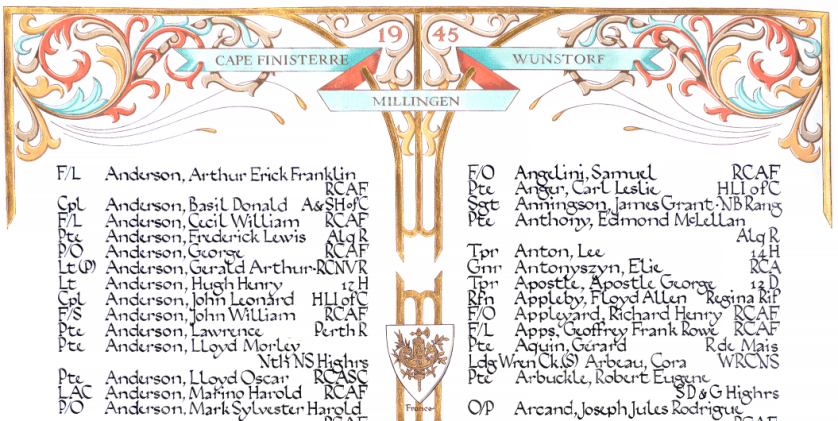
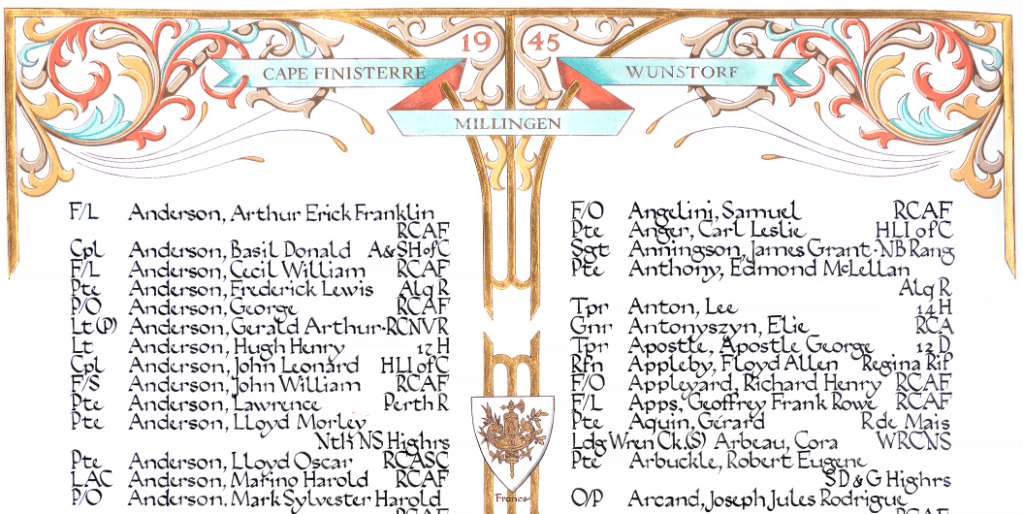
One is through the Second World War Book of Remembrance for the Second World War. Lee is commemorated on page 491.

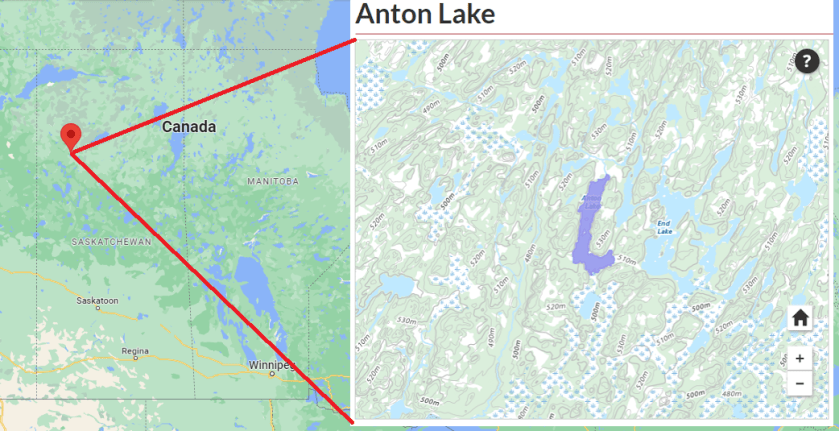
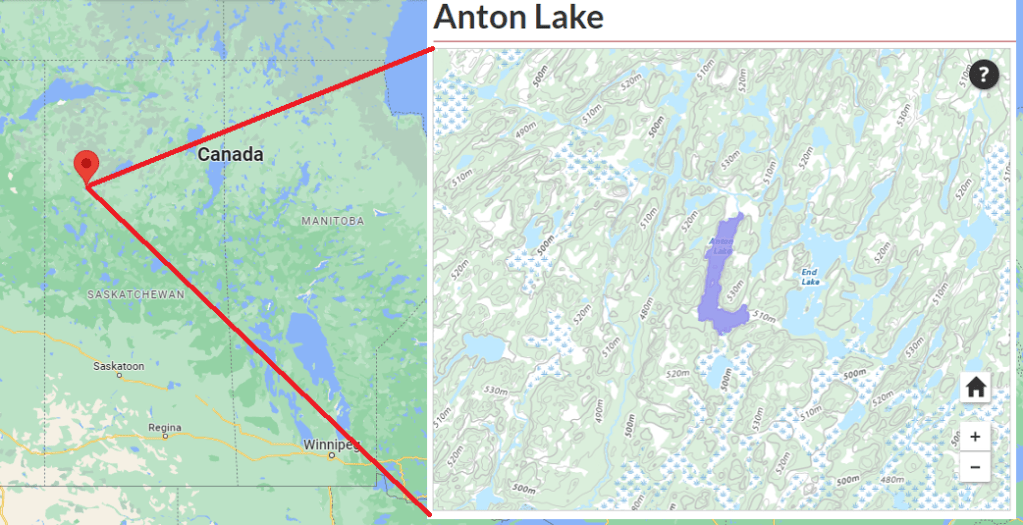
Lee was also memorialized through Saskatchewan’s “Geo-Memorial” program. You can see Anton Lake, which was named after Lee, on Google Maps. This project is documented in the book, Their Names Live on: Remembering Saskatchewan’s Fallen in World War II.

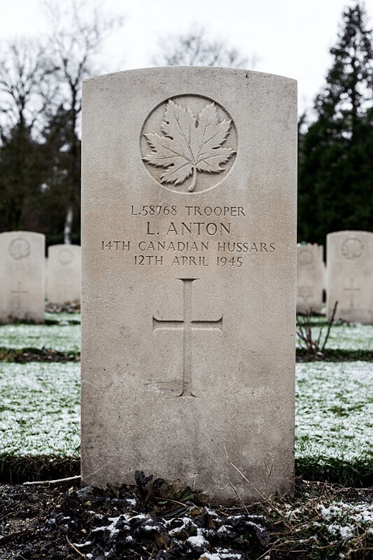
Lee is interred at the Holten Canadian War Cemetery, located just outside of Holten, Overijssel, Netherlands. It is not far from where Lee was killed.

It was only a few weeks ago that the significance of the date on which Lee had been killed dawned on me. April 12, 1945 is the day that Canadian troops liberated Camp Westerbork. It was the transit point where the Nazis gathered Dutch Jews before sending them to the death camps. It was the first place they interred Anne Frank after she and her family were betrayed.

Going through the regimental diaries for Lee’s regiment, I discovered that it was the 8th Recce that liberated the camp, which the Germans had abandoned hours beforehand.

Entry from the War Diary of the 8th Reconnaissance Regiment for April 12, 1945 documenting the liberation of Camp Westerbork.

Based upon the chronology set out in the diaries and other war records, advancing on the camp was the first thing Lee’s regiment did that day. It means that the fighting in which Lee was killed occurred after the camp was liberated. While the entire regiment was not involved, there were at least 100 members of the regiment present at the camp, so there is a good chance that Lee was present for the liberation of Westerbork.

Lee’s grave as seen on Find a Grave

52W Mark II – Week 38: Adversity

In which my grandparents unwittingly recreate the Four Yorkshiremen sketch

My paternal grandparents were 16 and 17 years old when the Nazis invaded the Netherlands in 1940. The occupation was a difficult one. My grandfather and his brothers were all rounded up to work as forced labourers in Germany; somehow my grandfather escaped. Only a few weeks ago I found records about one of my great uncle’s time as a forced labourer through the Arolsen Archives – International Center on Nazi Persecution. I was surprised to find that discovery, only because I was expecting to find records about one of the other brothers.

Needless to say, my grandparents rarely spoke about the war in my presence. In particular, the two times I ever heard my grandmother speak about it were astonishing because it was so rare it was for her to do so. My grandfather must have spoken about it more often, because I have heard several stories about the hardships he endured and the close scrapes he had with the Nazi occupiers. My father also tells the tale of when he was a boy, after his family had immigrated to Canada, about walking in a farm field with my grandfather. While they were walking, a small airplane flew overhead. My grandfather instinctively dove to the ground for cover. The war would have been over for at least ten years at the time, but clearly it had left its scars.

While the war was generally a proscribed topic, much to my amazement it came up during a visit I had with them in the late 90s, shortly before my grandmother passed away. I can’t remember how the topic came up, but I remember being absolutely gobsmacked that it did. It was particularly stunning that my grandmother participated in the discussion. Even more amazing was that the topic of conversation was the Hongerwinter (“Hunger Winter”), a famine the Nazis imposed on the Netherlands during the last winter of the war. However, what started off as a very somber recollection of their experience quickly spiraled into the famous Monty Python sketch.

The Allied strategy in the Netherlands was to get to Germany as quickly and directly as possible. This meant bypassing large parts of the northwest part of the country, including Amsterdam and the province of Noord-Holland. The Germans retained control of those areas until they surrendered on May 5, 1945. Over the winter of 1944-1945, which was particularly harsh, the Nazis deliberately blockaded the food and fuel supplies into the occupied portions of the Netherlands, resulting in the Hongerwinter. Malnutrition was rampant and about 22,000 people died of starvation.

My grandparents both lived in the central part of Noord-Holland and experienced full effects of the Hongerwinter. The famine occurred before they were married, so they experienced the hardship with their families.

When the topic came up, my grandparents began discussing how hard that winter had been and how they had each suffered. What caused the discussion to go sideways was when my grandmother said to my grandfather, “At least you lived on a farm!”

My grandfather countered by acknowledging the fact, but adding that my grandmother’s family was much better off economically. My grandmother reciprocated by pointing out some other advantage she believed my grandfather had that she did not. I am certain that my grandfather added that his mother was raising the family on her own, as his father had passed away in 1932.

They then began countering with what foodstuffs the other had access to, which they themselves did not. Finally, one of them said, “all we had to eat was the white beans!”, to which the other responded in a somewhat overdramatic voice, “oh, if only we had the white beans!”

I am certain that the competition to outdo the other’s hardship was black humor that served to ameliorate the trauma they had both experienced, even though it had been fifty years in the past.

I feel nothing but love and empathy for my grandparents when I think back on this. To this day, whenever I am in a Dutch store (my favourites are the Holland Shopping Centre in New Westminster and Coombs Wooden Shoe on Vancouver Island), I always make a point of buying a jar of white beans in their honour.

White Beans

52 Weeks – Week 45: Ghost Story

While this week’s 52 Ancestors Challenge theme is “Ghosts”, I don’t really have any ghost stories. So this week’s post might be a bit of a stretch.

This week, on November 11, it is Remembrance Day in Canada and many other countries. In the US, it’s Veterans Day. We think of all those who gave their lives for their country. The fallen are much more than ghosts. They are the lost, who were robbed of their futures, many with no descendants to remember them. One of those fallen was Lee Anton, my maternal grandmother’s second cousin (also her first cousin once removed through a different ancestor).

Lee was a farm boy from a practically non-existent village in south-west Saskatchewan. That village, Rastadt, is no longer even a ghost town. All that remains of it is the cemetery and a one-room schoolhouse. Lee would have turned 100 this year. Instead, he died at 22, in the liberation of the Netherlands.

Lee was a Trooper of the 8th Reconnaissance Regiment (14th Canadian Hussars) R.C.A.C. Lee was killed in action on April 12, 1945, less than a month before V-E Day, in the northern part of the Dutch province of Drenthe, the day before the start of the Battle of Groningen. Along with many of Canada’s other fallen soldiers, Lee is memorialized in two very special ways.

One is through the Book of Remembrance for the Second World War. This is one of seven books that are normally housed in the Memorial Chamber at the top of the Peace Tower of the Centre Block at Parliament Hill in Ottawa. However, they are being temporarily displayed elsewhere while the Parliament Buildings undergo renovations. The books record the names of over 120,000 Canadians who lost their lives in various conflicts Canada has been a part of. Every morning, a page of each book is turned, so throughout the year every name can be seen. The books can be searched online. The result will include a link to an image of the page the person appears upon, as well as a link to a virtual memorial hosted by Veterans Affairs Canada.

Lee is commemorated on page 491 of the Second World War Book of Remembrance.

Lee’s memory is also commemorated by a lake in northern Saskatchewan that is named after him, Anton Lake, which you can see on Google Maps. From 1947 to 1965, the province operated a “Geo-Memorial” program by which it named lakes and other geographic features after people from Saskatchewan who died in WWII. This project, as well as the stories of some of the veterans who were commemorated this way, is documented in the book, Their Names Live on: Remembering Saskatchewan’s Fallen in World War II.

Lee is interred at the Holten Canadian War Cemetery, located just outside of Holten, Overijssel, Netherlands.