

Favourite Photo
As expected, I found this week’s 52 Weeks challenge to be particularly difficult, as I am lucky to have so many photos that I cherish. So I am going to cheat a little and post more than one, as I really do not have one photo that I favour above all others. With one exception, I’ve had a copy of all these photos for a very long time. Some of these photos were what helped kindle my love of genealogy.
On her Facebook group, Generations Cafe, Amy Johnson Crow suggested telling “the story of a favorite photo: who is in it, where and when it was taken, and why it was taken. What was the event?” I have to admit, for some of these photos I never thought of who took them or why they were taken, even though I had known of them for years.
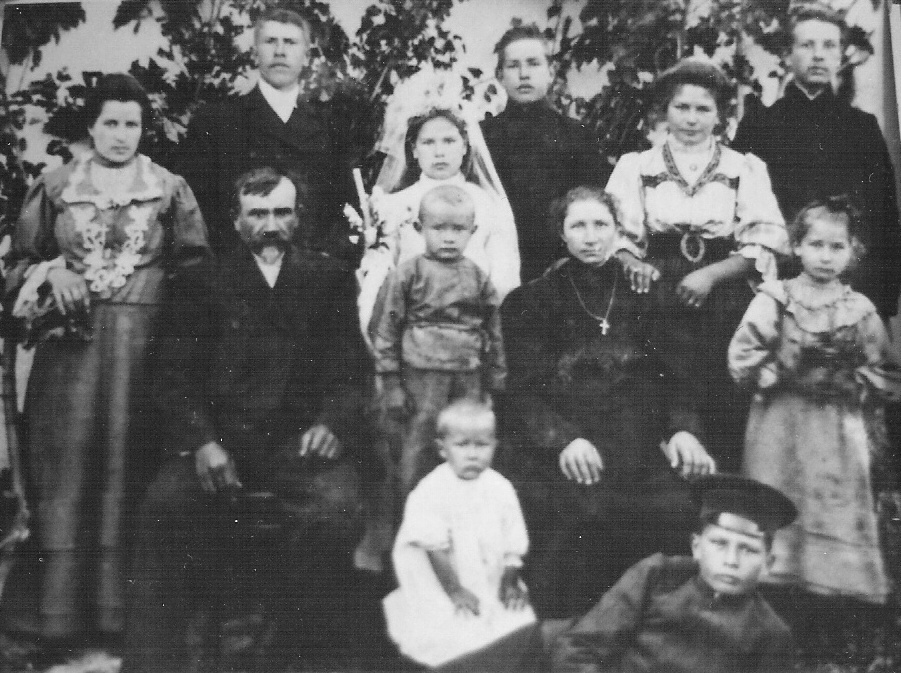
This is a photo of my great great grandparents, Jacob Anton and Margaretha (“Margaret”) Heck. Given the attire, this was likely the confirmation of their daughter, Elataria (“Lottie”). My great grandmother, Emilia, is the girl on the right holding flowers. She was about 7 years old here. She lived to be 94. I visited her many times. She is the one who I mentioned at the outset of this blog, who surprised me by speaking fluent German when I thought she was of English heritage.
While this photo was taken in Russia, the family was German. Their forebears were amongst the many Germans who migrated to the Russian Empire in the 18th and 19th centuries. My family settled in the Beresan region of what is now Ukraine. A few years before Emelia was born, the family migrated to Russia. They stayed there until 1912, when they emigrated to Canada.
The next few photos all relate to my father and his family.
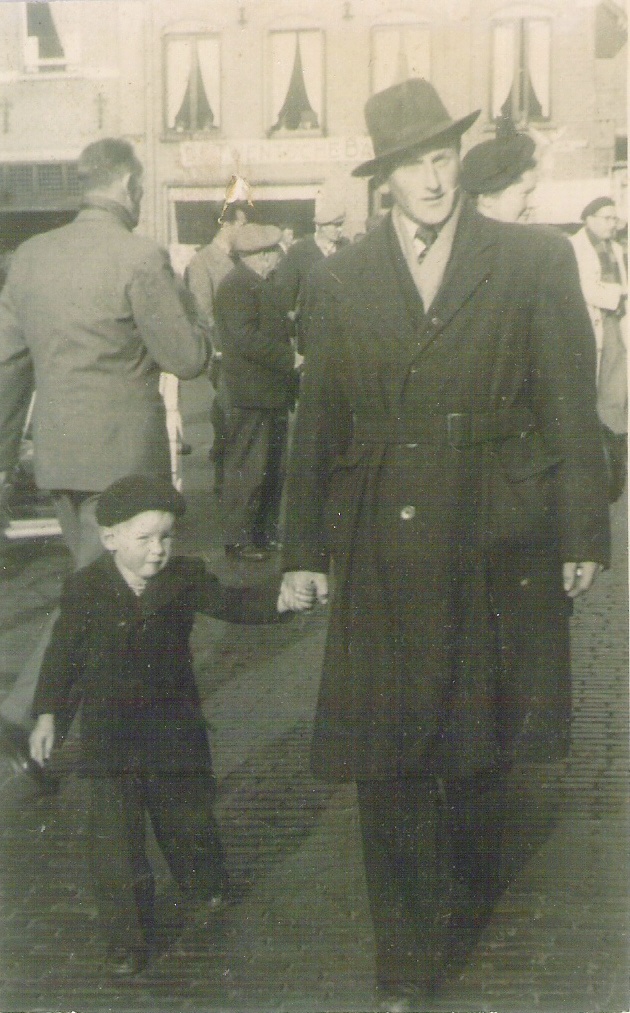
This photo is definitely a contender for my absolute favourite. While I know when and where it was taken, it never crossed my mind to wonder who took it or why. I have no idea why they would have been visiting Schagen, but there they were. They certainly were dressed very fine and are looking very dapper. My grandfather was a farmer and a labourer, and they’re a bit of a way from home, so it must have been an important occasion. Looking through the family timeline, I can’t find an event that occurred in Schagen at this time.
I was in that same square with my father a few years ago. I should have recreated this photo with him, but I couldn’t quite figure out where in the square this had been taken.
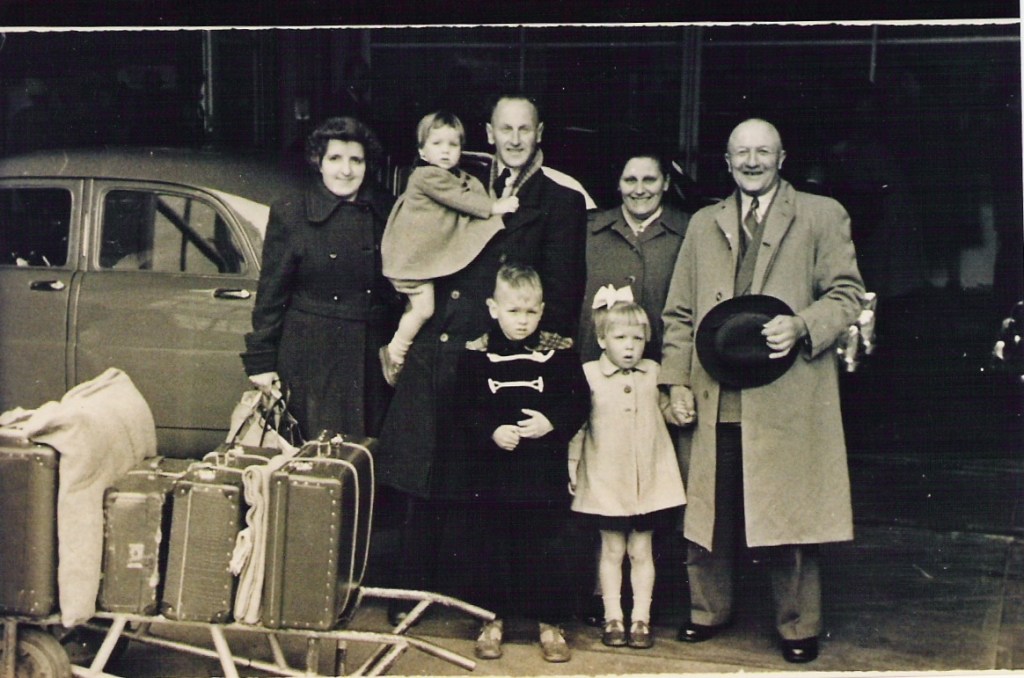
This is a photo of my grandparents, my father, and his siblings being dropped off by a family friend at the port in Rotterdam. The family is about to board the ship that will take them to Canada.
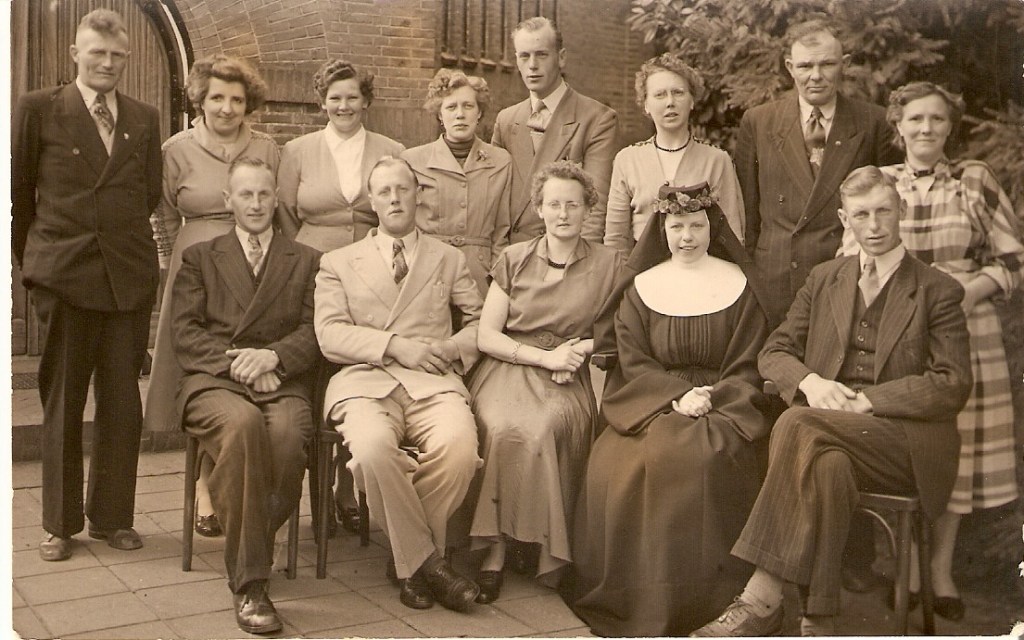
Unlike the other photos, this one only came into my possession relatively recently.
My paternal grandfather had seven siblings. He is the first person seated in the front row on the left side of the photo. My grandmother, Christina (“Tiny”) Komen is standing behind him. All of my grandfather’s siblings are here, except for his youngest sister. She might have been absent because this might have been taken after she emigrated to Canada, sometime in early 1954. My grandfather and grandmother left for Canada later in the spring of 1954. An older brother, Joop, seated immediately beside my grandfather in front of his wife Agie, left for Canada a fortnight after my grandfather.
However, this might have been taken in 1951 to mark the ordination of my great aunt, as an Urseline nun. She went by the name Sister Melania. I considered whether this might have been the occasion for which my grandfather and grandfather were dressed so fine in the above photo, but as far as I can find she was ordained in Bergen, not Schagen.
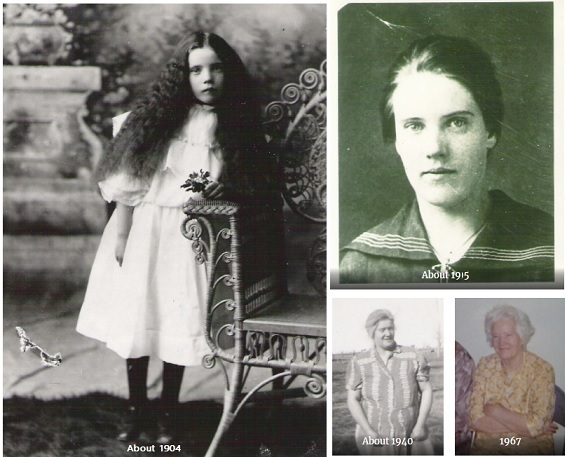
Finally. this set of photos of my mother’s maternal grandmother, Hazel Nelson. It’s the photo on the left, taken when she was about four years old, that is one of my favourites. It’s an amazing photo. I added the others because I thought it was a nice idea to see her progressing through life.
Hazel was born in December 1899. She and her sister Irene were the first twins born in the town of Cardston, Alberta, where her parents were amongst the original settlers. Irene only lived a month, but Hazel lived to be 67. I also have a copy of one of the last photos taken of her, around July 1967. Hazel died only a couple days before I was born. My mother practically went from the funeral to the hospital.
Next week: “Curious”. I wonder what that could be be? 😉

 A Deck of Ancestors