My Gx3 grandfather, William Burgess, was an active member of his community. In addition to participating in local politics as a school board trustee and later as an alderman, he was involved in a variety of social activities.
William was one of the original Mormon settlers of Utah, having travelled west with Brigham Young’s company, in a party of 1220 individuals. William and his first wife, Maria Pulsipher, arrived in 1848 and first settled in Huntington. Within a year, they had relocated to Salt Lake City. In 1852, William entered into a polygamist marriage with my Gx3 grandmother, Charlotte Liggett. The family then moved to Lehi in 1854.
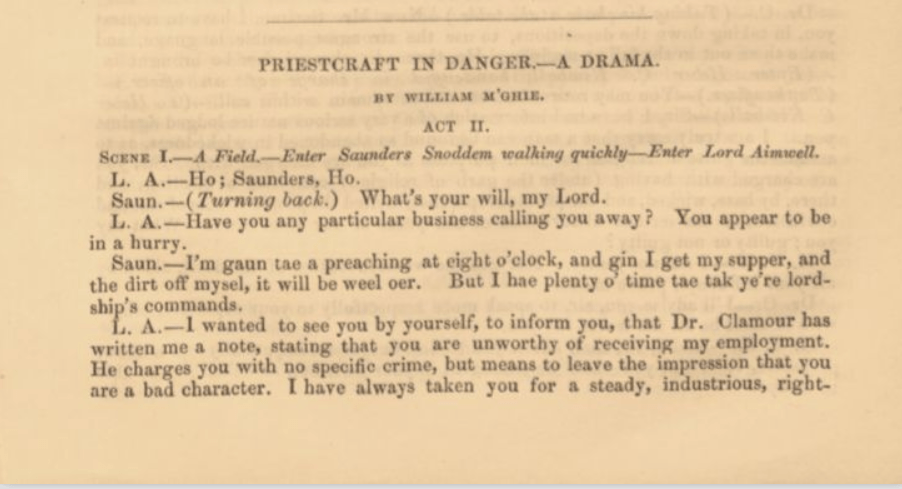
William was one of the founders of the Lehi Dramatic Club. On February 16, 1855, he obtained the necessary licence to produce plays from the town, without fee. The club performed in Lehi’s log schoolhouse, using tallow candles for footlights and painted wagon covers for scenery and curtains.
The first productions of the club were plays called “Luke the Labourer” and “Priestcraft in Danger”. The former, a melodrama written by John Baldwin Buckstone in 1826, is the tale of a farm worker and his turbulent dealings with his former employer. The latter, by William M’Ghie, was first published in The Latter-day Saints’ Millennial Star, a periodical in Manchester, England, on May 15, 1849.
I doubt William actually performed on stage. Rather, I believe he was one of the people working behind the scenes overseeing the operations of the club. Nevertheless, it is entirely possible that he may have been treading the boards!
While the prompt for this week’s 52 Ancestors Challenge is “Favourite Discovery”, I’m hard pressed to choose just one. Rather, what immediately comes to mind is my Favourite Exploration, when I visited the farmhouse where my father was born, Waarland, North Holland. At the time it was part of Gemeente Harenkarspel (Municipality of Harenkarspel), but now Waarland is part of Gemeente Schagen.
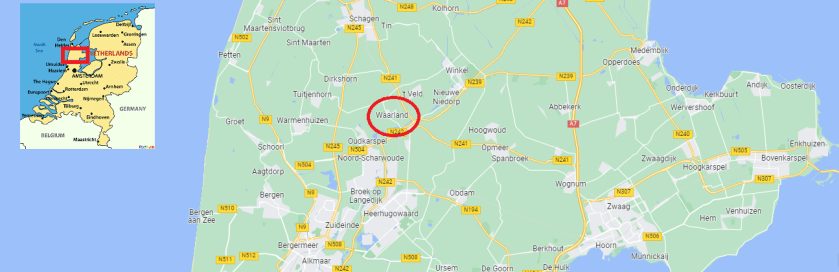
Waarland’s location in the Netherlands
The first time I visited the Netherlands was part of a post-university backpacking tour through Europe with one of my friends. In the Netherlands, we stayed with one of my grandmother’s sisters and her husband, Tante Anny and Ome Nic, who lived in Zuid-Scharwoude, Gemeente Langedijk (which is now part of Dijk en Waard). It’s only a few kilometers from Waarland. Near the end of our stay in Langedijk, Ome Nic and I went for a bicycle ride to Waarland so I could meet my grandfather’s (van der Fluit) side of the family.
Waarland
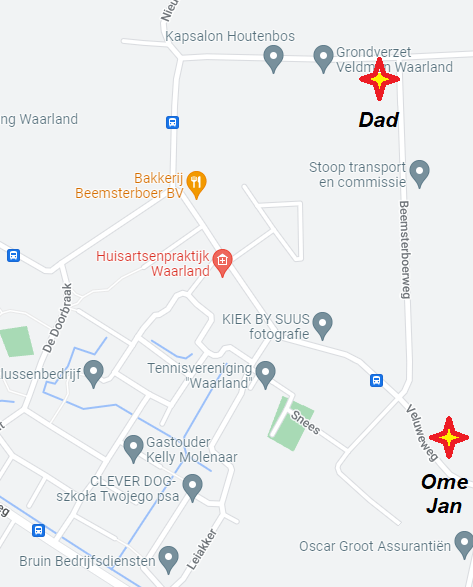
Once in Waarland, we went to the home of my grandfather’s oldest brother and his wife, Ome Jan and Tante Marie. Their house is less than two kilometers due south of the house where my father was born. Ome Jan’s house was also the place where he and and my grandfather were both born. Many of Jan and Marie’s children and grandchildren were there for our visit.
One of Jan and Marie’s children (my father’s cousin), Pieter, took me on a short bike ride up the road to the house where my dad was born. Not only that, he knew the current owner, so we were able to go inside. That was incredibly special. I was even in the room where my father was born!
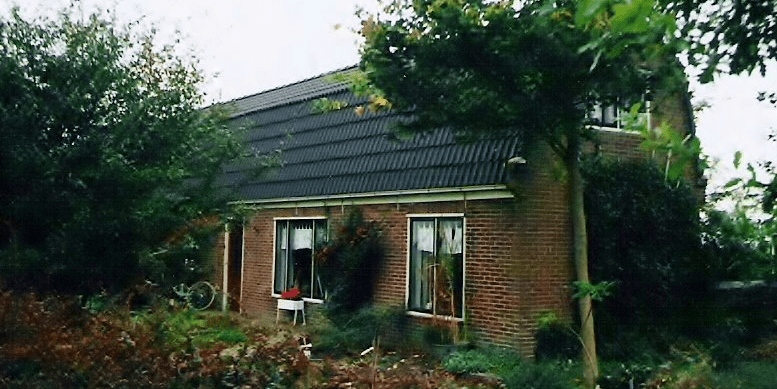
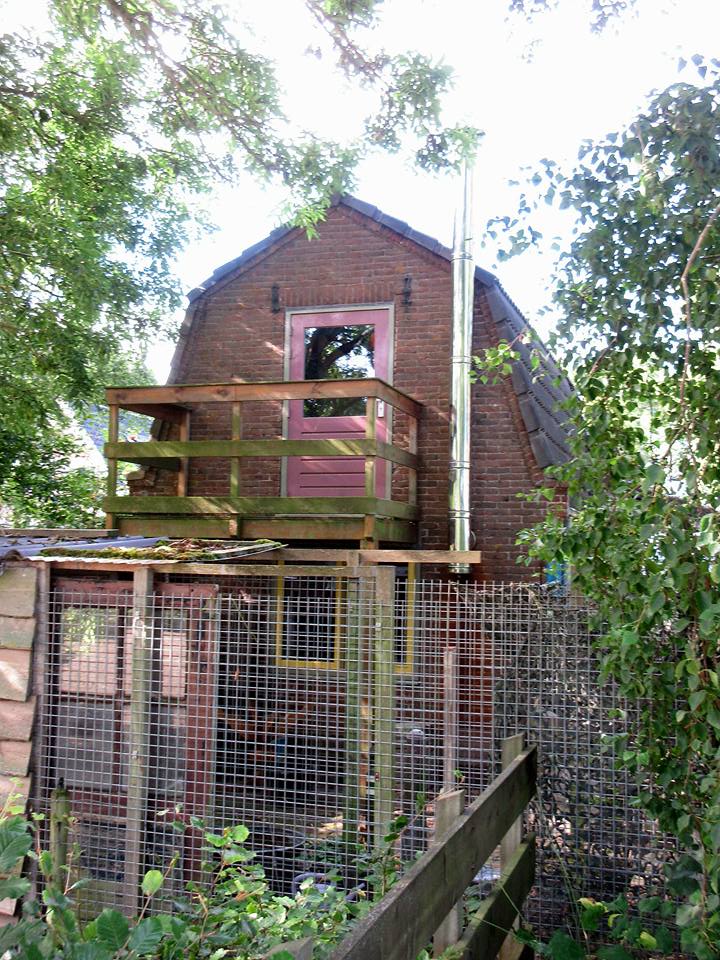
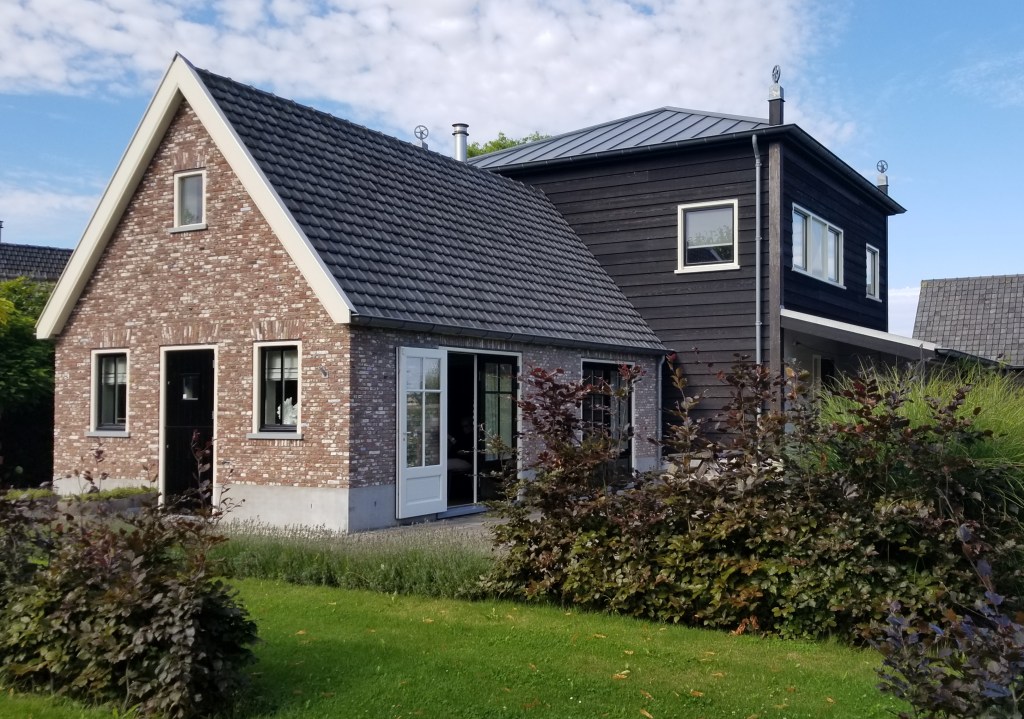
The house where my father was born, the first time I visited Waarland
Many many years later, in 2017, my parents planned to take a cruise that departed out of Amsterdam, so they went early so they could spend time with our family in Noord Holland. I had always wanted to visit the Netherlands with my father, so I made the trip over there.
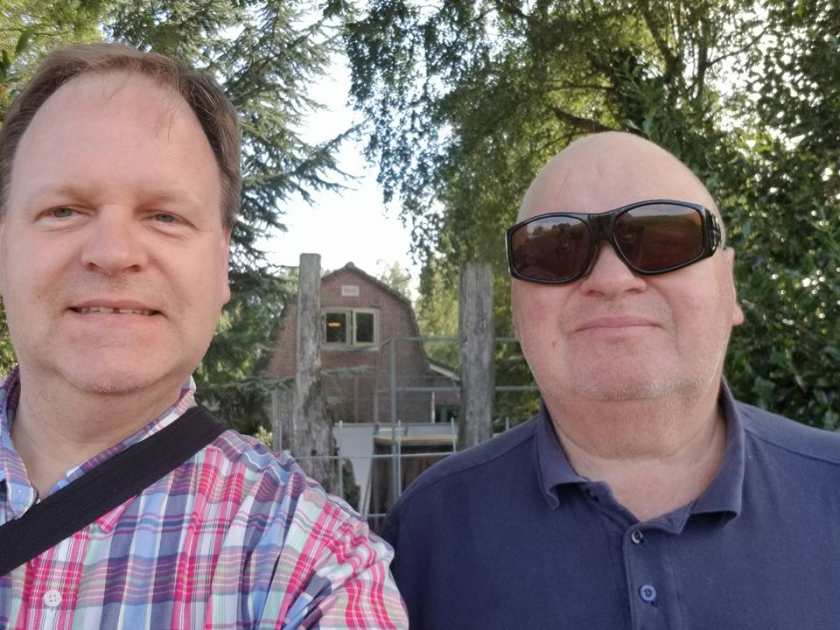
With my father outside the house here he was born. He’s more than happy to say, yes, he was born in a barn.
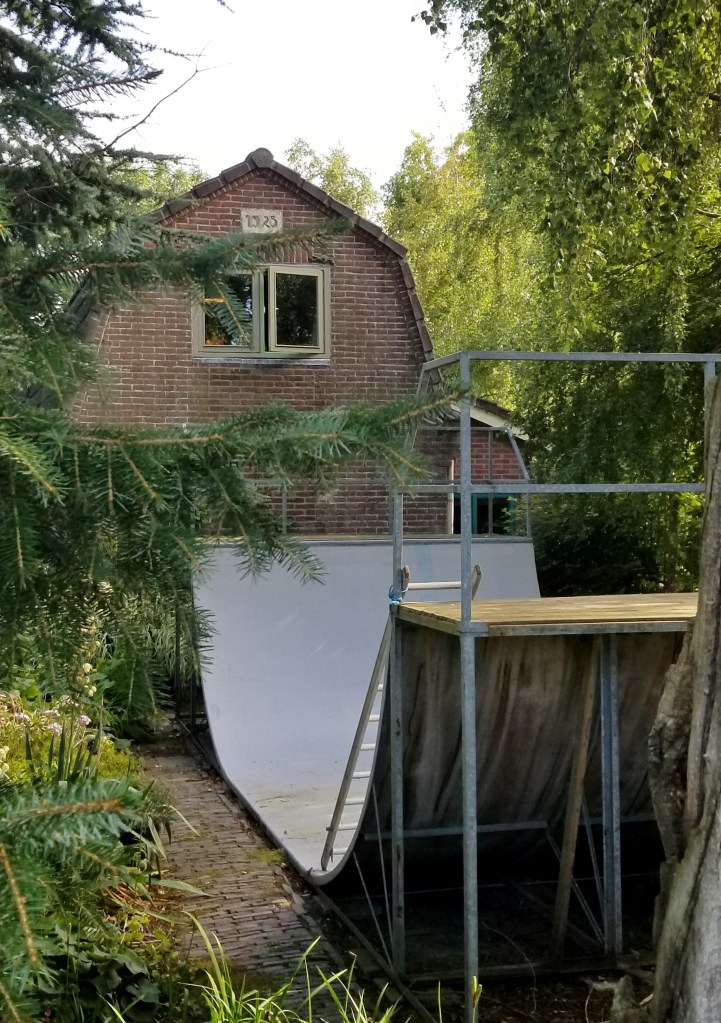
Of course, the trip would not have been complete without a visit to Waarland. After a short visit with one of my father’s cousins, we made our way to the house where my father was born. It looked as if the place had not been well maintained by its current owners. It looked quite run down since the last time I was there. I also had to tease my father by asking him whether he remembered the skateboard halfpipe that was in the back yard.
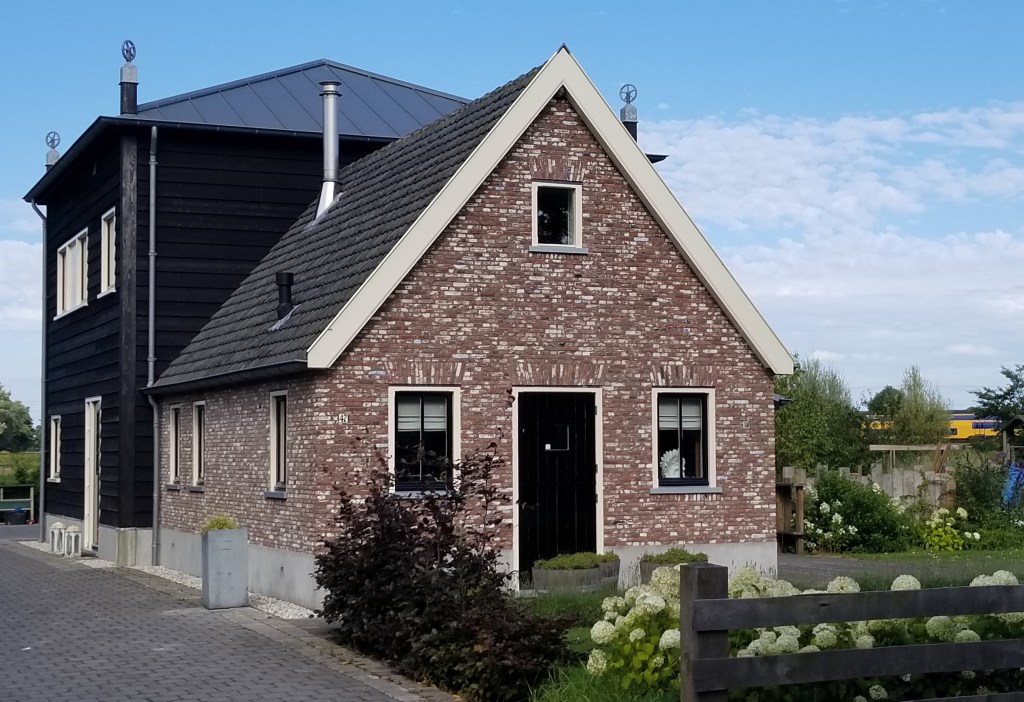
We then made our way to Ome Jan’s and Tante Marie’s house. Ome Jan had passed away in 2011 and Tante Marie died in 2013, so the house had a new owner. In fact, it was an entirely new house. The old one had been demolished, but the new one that replaced it looked almost identical.
The rebuilt version of my great grandparents’ house, where my grandfather was born.
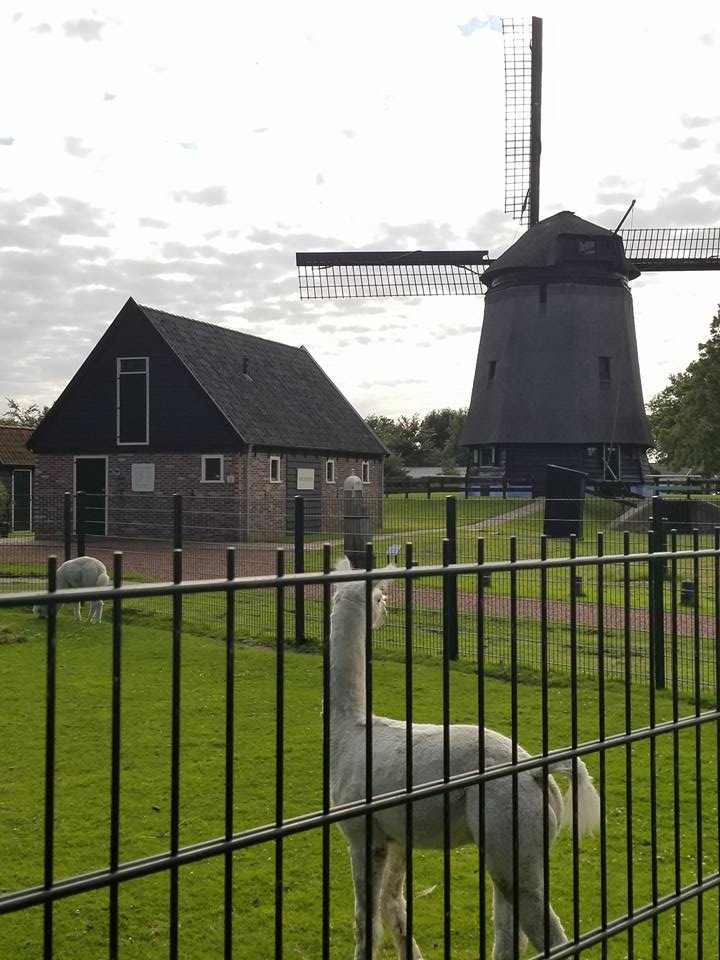
We also passed by the church where my father was baptized. Unfortunately, there wasn’t time to go inside. As well, we stopped by a 450-year-old windmill that has been a museum since 1920, where I suppose I did make a surprising discovery – llamas! They were grazing on the property immediately adjacent to the windmill.
I had originally drafted this as a post separate from the 52 Ancestors Challenge, but then I noted “Free Space” as an upcoming post. So nice to be ahead of the prompt for a change!
The Database of Surnames in The Netherlands contains about 300,000 surnames found in the Netherlands in 2007, with similar data for 1947. It is maintained by the CBG Centrum voor familiegeschiedenis (“CBG Centre for Family History”) in the Netherlands, formerly called the Centraal Bureau voor Genealogie (“Central Bureau for Genealogy”).
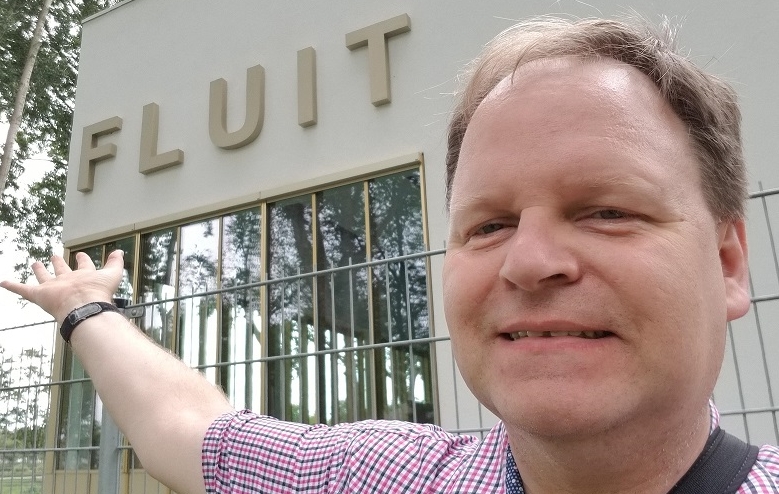
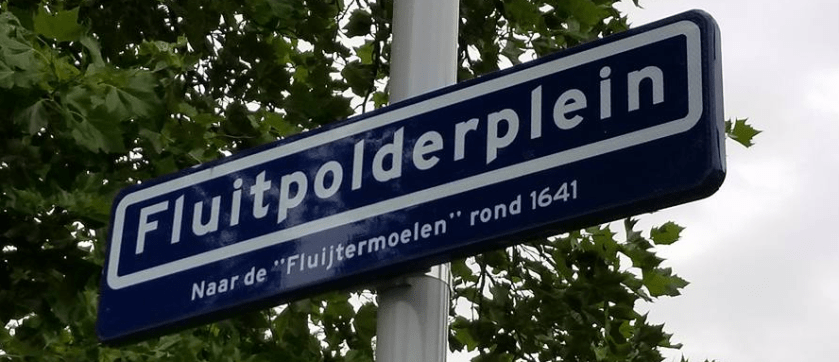
A swimming pool with my surname on it, located on Fluitpolderplein in Leidschendam, Zuid Holland. Our surname either comes from the polder on which this pool is located, or the polder is named after my ancestor. There’s also an adjacent library, where I tried to do a bit of family history research.
You’d be hard pressed to find many Vanderfluits/van der Fluits in North America. Yes, there are a few of us, mostly in New Brunswick and Alberta, and some in British Columbia (like me!). There are also a few in the United States.
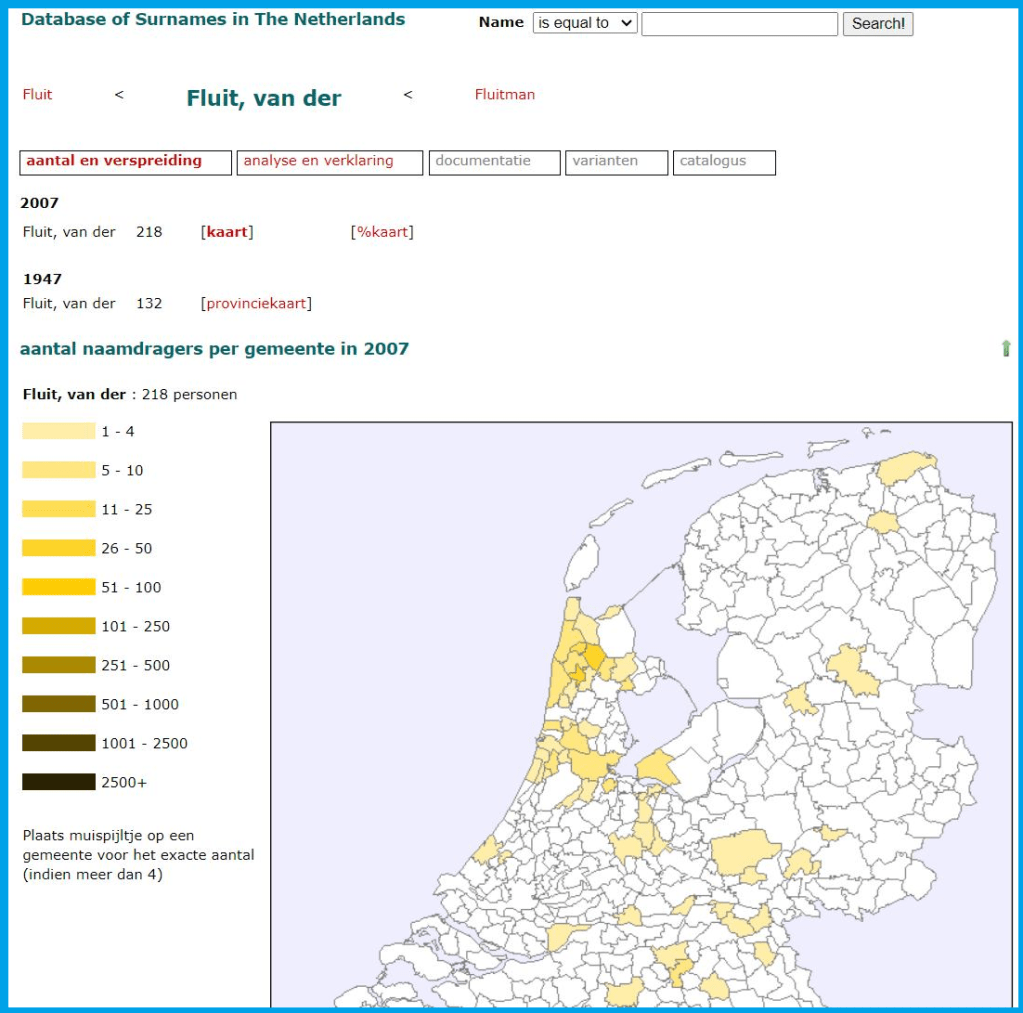
There aren’t many van der Fluits in the Netherlands, either, but 218 (in 2007) seems like a huge number when I think of how few are on this side of the Atlantic.
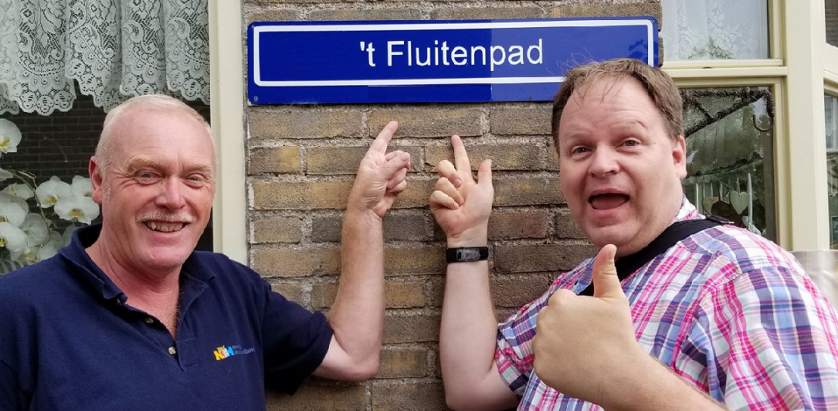
Visiting my cousin in the Netherlands, whose house is on “‘t Fluitnpad” – which is actually the name he gave his driveway. In English, it says “The Fluit Path”.
It’s no surprise to me to find the concentration in Noord Holland (the bit below Texel, the largest of the islands on the map). It’s where my father was born and pretty much where all the van der Fluits who I know in the Netherlands live. What’s surprising are the pockets of van der Fluits in Gelderland and Noord Brabant (the south-east). I have no idea who they are or how they got there. Even more surprising is the dearth of van der Fluits in Zuid Holland (around The Hague and Leiden), especially since that is the primary source of the surname. There are *zero* in many of the municipalities where my ancestors came from.
Summertime means reruns (does Gen Alpha even know what a “rerun” is?), and since I’ve been on vacation, I thought I’d rerun a post from last year.
“Endling”: a perfectly cromulent word that should be adopted by genealogists to describe someone who is the last of a family line.
At the monthly general meeting of the BC Genealogical Society in December 2022, the guest speaker was David Landers. He gave a fascinating talk on the topic of the last of a family line, which he termed an “endling”. The discussion after his talk proposed applying “endling” to other genealogical ends, such as when a senior branch of a family dies out, leaving only the cadet lines, or the end of a surname, such as when a family only has daughters.
Mr. Landers acknowledged that he had not come up with the term, but he certainly was a strong advocate for adopting it. He even applied the term to himself, as he did not have children, and his family line was ending with him.
Unfortunately, I have been unable to find anything online regarding Mr. Landers or anything relating him to the topic. I only have my recollection of his presentation to rely upon. What I do remember was that he identified the source of the term as it relates to genealogy. In particular, I remember him saying that the original proponent of the neologism wrote to a magazine to advance the cause of employing “endling”.
While it might not be the same place where Mr. Landers discovered the word, I was able to find this article at The New Yorker, What Do You Call The Last of a Species?, which fits my recollection of Mr. Lander’s talk. The article credits a physician in Georgia, Robert Webster, with coining the term.
Dr. Webster contacted Merriam-Webster to propose adding “endling” to its dictionary, but was told a word would need to regularly appear in print before it could be considered for inclusion. Taking up the challenge, Dr. Webster took out an advertisement in a medical journal to suggest adoption of the term. Later, Dr. Webster and a colleague wrote a letter to Nature, arguing the “need for a word in taxonomy, and in medical, genealogical, scientific, biological and other literature, that does not occur in the English or any other language.”
One final note. If you are an endling with no siblings, nibblings, or cousins to pass your work on to, you might consider donating your material to an archive.
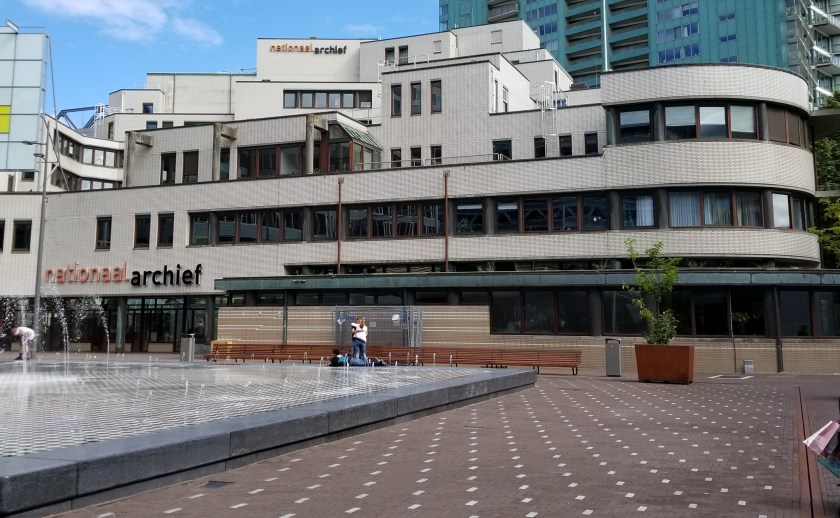
The Nationaal Archief of the Netherlands in The Hague. I wish I had known my hotel was two blocks away before I arrived in the city!
 A Deck of Ancestors