I had originally drafted this as a post separate from the 52 Ancestors Challenge, but then I noted “Free Space” as an upcoming post. So nice to be ahead of the prompt for a change!
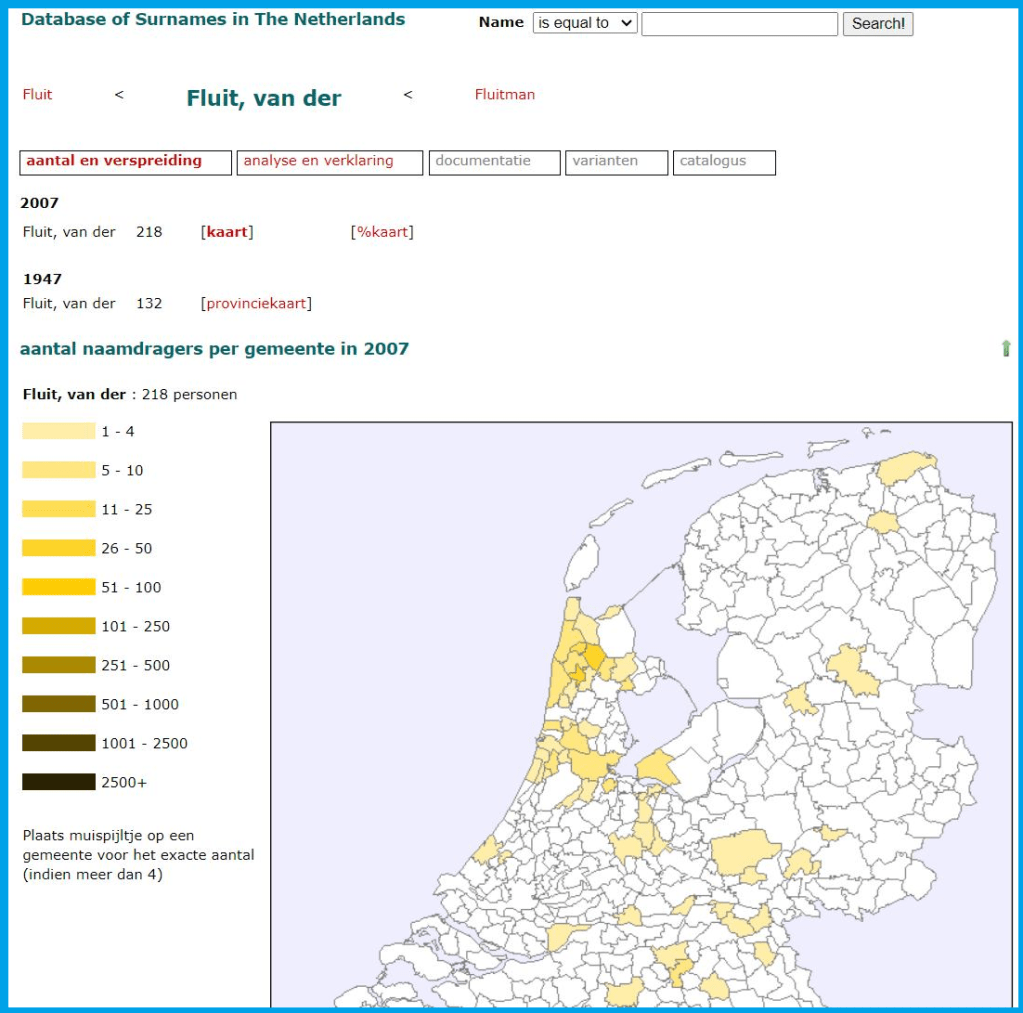
The Database of Surnames in The Netherlands contains about 300,000 surnames found in the Netherlands in 2007, with similar data for 1947. It is maintained by the CBG Centrum voor familiegeschiedenis (“CBG Centre for Family History”) in the Netherlands, formerly called the Centraal Bureau voor Genealogie (“Central Bureau for Genealogy”).
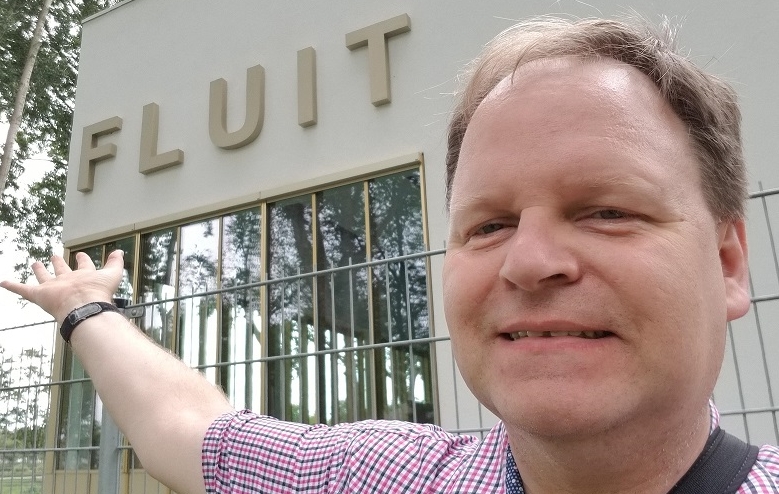
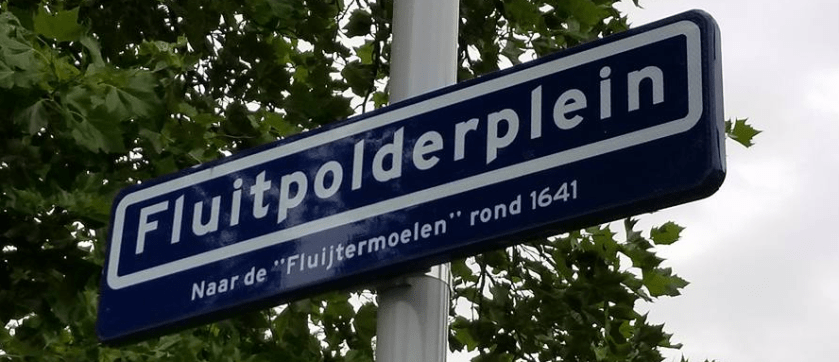
A swimming pool with my surname on it, located on Fluitpolderplein in Leidschendam, Zuid Holland. Our surname either comes from the polder on which this pool is located, or the polder is named after my ancestor. There’s also an adjacent library, where I tried to do a bit of family history research.
You’d be hard pressed to find many Vanderfluits/van der Fluits in North America. Yes, there are a few of us, mostly in New Brunswick and Alberta, and some in British Columbia (like me!). There are also a few in the United States.
There aren’t many van der Fluits in the Netherlands, either, but 218 (in 2007) seems like a huge number when I think of how few are on this side of the Atlantic.
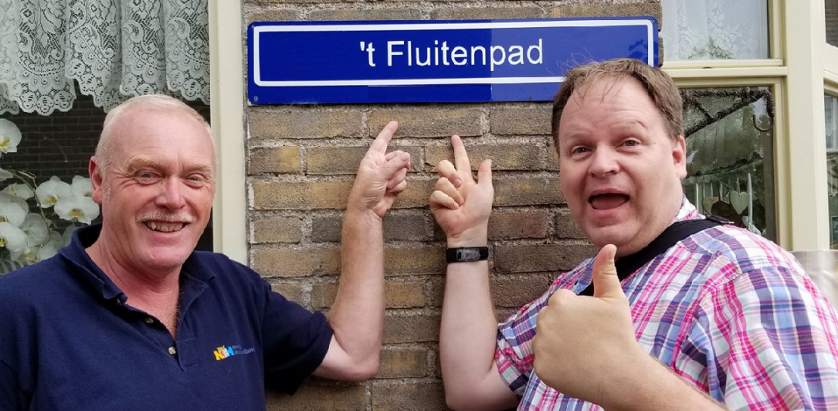
Visiting my cousin in the Netherlands, whose house is on “‘t Fluitnpad” – which is actually the name he gave his driveway. In English, it says “The Fluit Path”.
It’s no surprise to me to find the concentration in Noord Holland (the bit below Texel, the largest of the islands on the map). It’s where my father was born and pretty much where all the van der Fluits who I know in the Netherlands live. What’s surprising are the pockets of van der Fluits in Gelderland and Noord Brabant (the south-east). I have no idea who they are or how they got there. Even more surprising is the dearth of van der Fluits in Zuid Holland (around The Hague and Leiden), especially since that is the primary source of the surname. There are *zero* in many of the municipalities where my ancestors came from.
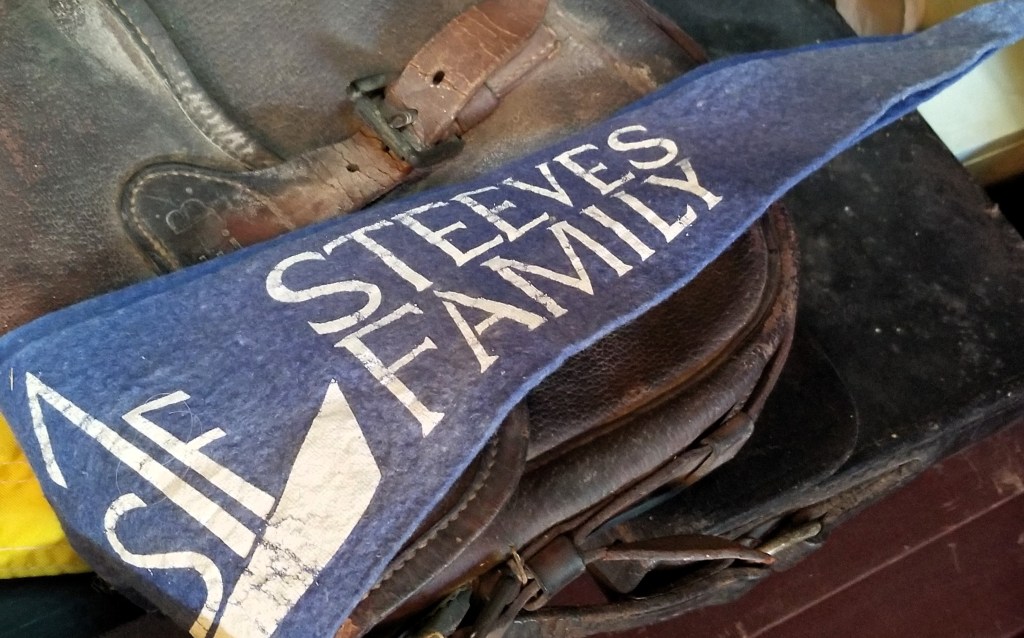
If you’re a “Steeves” in North America, odds are you’re a direct descendant of Heinrich Stief and Regina Stahleker. In 1749, they emigrated from Münsingen in the Duchy of Württemberg (now southwest Germany) and settled in Pennsylvania. There they had seven sons. 250 years ago, in 1766, under land grants arranged by Benjamin Franklin and others, they moved to what is now New Brunswick and were amongst the original settlers of Moncton. The family later settled in Hillsborough, New Brunswick and there they started multiplying.
Apparently there are over 200,000 direct descendants of Heinrich and Regina. Our kids are two of them! At a family reunion in New Brunswick in 2016, there was an attempt to set a Guinness World Record for largest gathering of individuals with the same last name. Unfortunately, the attempt fell short.
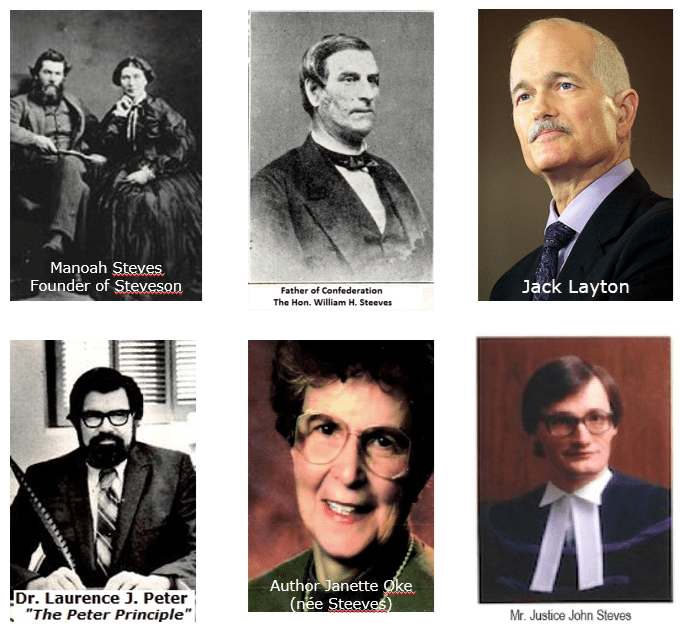
Notable Steeves descendants include the Hon. William H. Steeves (one of the “Fathers of Confederation” of Canada), Jack Layton (late Leader of the Opposition in Canada’s parliament), Laurence J. Peter (author of The Peter Principle), and Janette Oke (author). A few years ago, I gave a presentation on “Law and Genealogy”, using my sons’ Steeves connection as a research example. Through sheer serendipity, the presenter who spoke before me was also a Steeves descendant, John Steeves, a now-retired Justice of the B.C. Supreme Court. Right before the program started, I leaned over and quietly asked him if it was okay to incorporate him into my presentation.
Coincidentally enough, our Steeves connection does not end there. Several years ago we moved to Steveston, a fishing village that is now part of Richmond, B.C. The village was founded by Manoah Steeves, who left New Brunswick with his wife Martha Taylor, dropped an “e” from his surname, bought land in the southwestern corner of Lulu Island in 1877, and established a dairy farm.
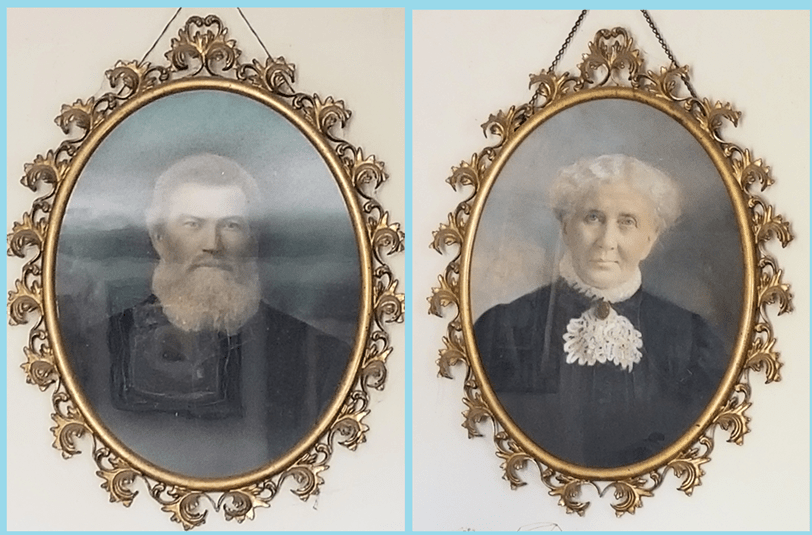
Manoah and Martha Steves
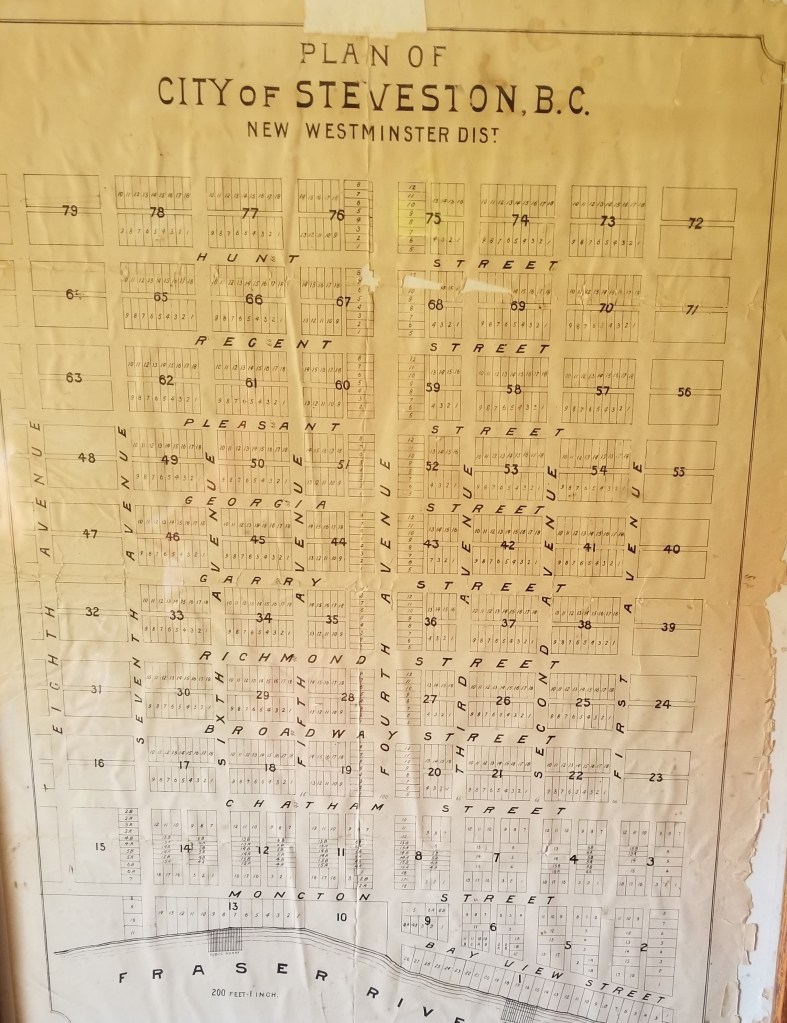
Nearly all of Lulu Island is now part of Richmond. In 1880, Manoah’s son William Herbert obtained a crown grant of the land that became the townsite of Steveston.
The streets in our neighbourhood share the names of Steeves relatives and places in New Brunswick. Manoah’s descendants still operate a farm on the land he originally purchased.
Harold has turned part of the house into a private museum. In addition to artifacts reflecting all aspects of his and the Steves family history of farming, politics, and conservation activism, Harold has turned part of the home into a recreation of the Hong Wo Store, a general store that had been established in 1895. Beside the Hong Wo store, Harold has recreated the canteen his parents operated during World War II, serving the soldiers stationed at a base beside the farm.
Harold opened up his museum to the general public earlier this year as part of “Doors Open Richmond”, a city-wide festival of culture and community operated by the Richmond Museum. Needless to say, we couldn’t pass up the opportunity. I could have spent days in there. His bookshelves alone could keep me occupied for weeks. Plus it was a chance for the boys to meet their fourth cousin three times removed! 😉
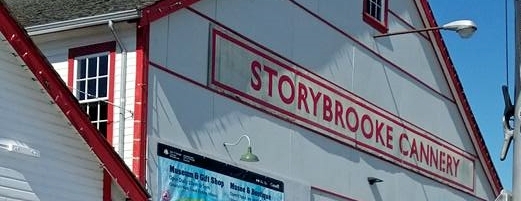
Steveston, B.C., or as you might recognize it from television, Storybrooke, Maine.
With a new month and new week comes a new theme for the 52 Ancestors Challenge. The theme for February and the first week of the month is “Branching Out”.
A bit literal, don’t you think?
Frankly, at first this one had me stumped. (By the way, my theory is that all puns are intended.) While Amy offers gentle suggestions as to what a theme might mean, she leaves it to participants to decide what we think it means. Many people are taking this as an opportunity to talk about their collateral branches. Others are sharing that while many genealogists look up their trees, they are in pursuit of the downward branches of a specific ancestor. There have also been many discussions of research strategies involving genealogy FAN clubs – “Friends, Associates, and Neighbours”, a term coined by Elizabeth Shown Mills describing a method of cluster research.
These forms of branching out didn’t speak to me for the challenge. For the most part, I’m primarily climbing up my tree, looking for direct ancestors. I keep track of their FANs in pursuit of that goal. I also have a couple of ancestors for whom I am tracing all their descendants. Yet I found no real inspiration there for this post.
For me, a significant moment of branching out for me was when I got married. By then I had already spent many years on my own tree, and by that point in time it was becoming a lot of work to make little progress. However, with my wife, there was a whole new set of branches to explore with all sorts of low-hanging fruit ripe for easy picking. Besides, I considered her family to be my family, so it was like researching my own tree. Moreover, as we planned to have children some day, I simply saw it as getting a head start on their family tree.
To my great pleasure, our eldest child shares my interest in genealogy. I even bought him a membership to the BC Genealogical Society as a birthday present. Much of my branching out has been in pursuit of questions he has put to me.
There are all sorts of fascinating things about our children’s maternal line. For example, they are direct descendants of Heinrich Stief (“Steeves”) and Regina Stahlecker. Originally from Baden-Württemberg, they emigrated to Pennsylvania, where they had seven sons. The family relocated to New Brunswick in 1766. If you’re a “Steeves” in Canada or the United States, odds are you’re one of their direct descendants. In 2016, there was an attempt to set a Guinness World Record for largest gathering of individuals with the same last name. Unfortunately, the attempt fell short.
Notable Steeves descendants include the Hon. William H. Steeves (one of the “Fathers of Confederation” of Canada), Jack Layton (late Leader of the Opposition in Canada’s parliament), Laurence J. Peter (author of The Peter Principle), and Janette Oke (author). A few years ago I gave a presentation on “Law and Genealogy”, using my sons’ Steeves connection as a research example. Through sheer serendipity, the presenter who spoke before me was also a Steeves descendant, John Steeves, a judge of the B.C. Supreme Court.
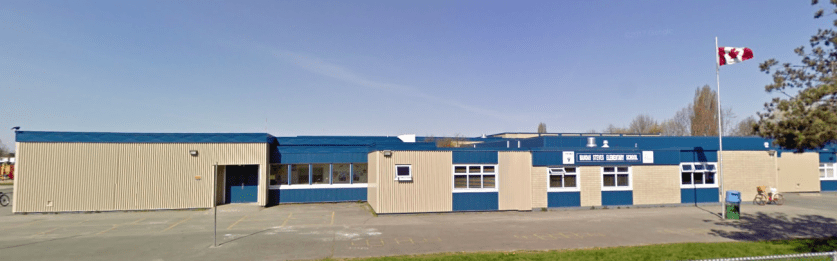
The interesting connection is to Manoah Steeves, who later in life dropped an “e” from his surname and became “Steves”. In 1877, he and his wife moved west and bought land on Lulu Island in British Columbia, where they established a dairy farm. From this grew Steveston, a fishing village that is now part of Richmond, B.C., where we now live. Manoah’s descendants still operate a farm here. The streets in our neighbourhood share the names of Steeves relatives and places in New Brunswick, 4300 kilometres away. Taking our kids to school is like a daily trip through their family tree.
Steveston, B.C., or as you might recognize it from television, Storybrooke, Maine.
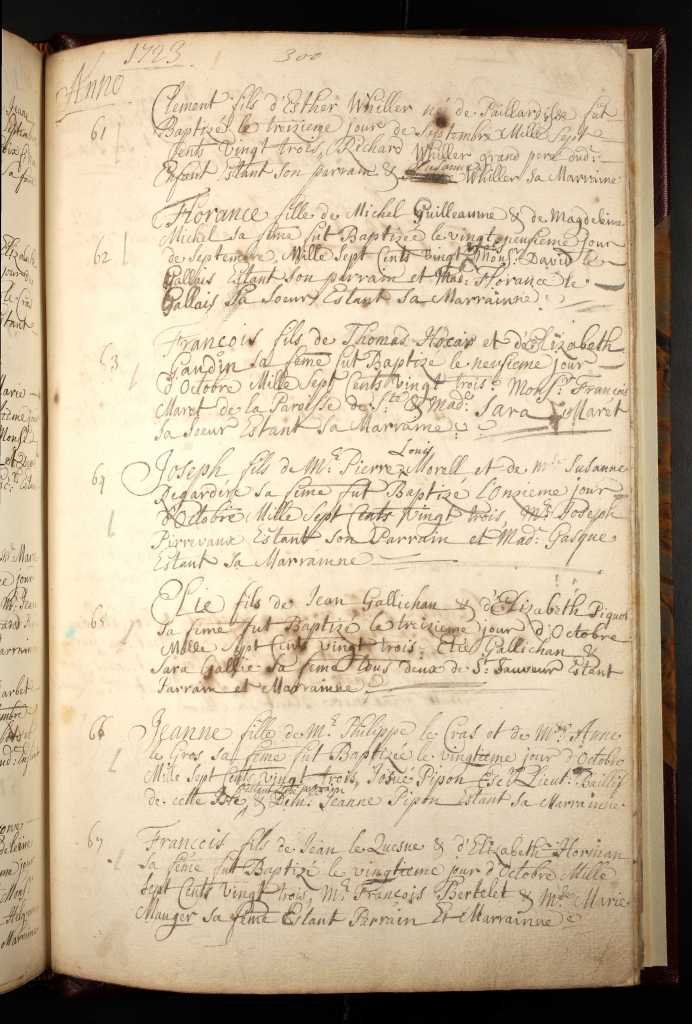
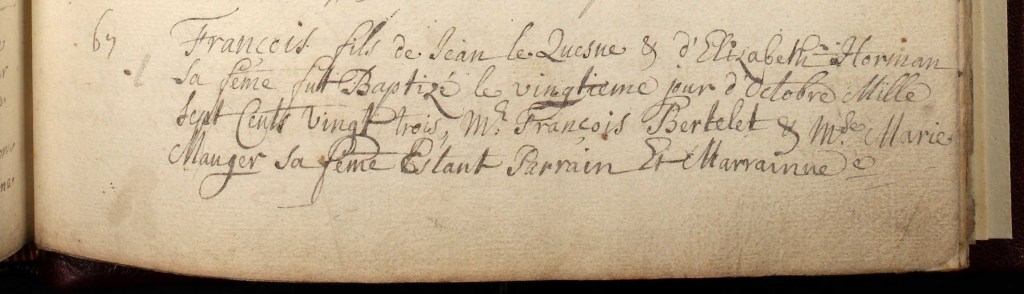
Page from the Jersey Parish Register showing the baptism of Francois Le Quesne (Francis LeCain)
Another branch on which I have spent more hours of research than I ever expected to do came from a seemingly random question my son asked about a name on his maternal line that he saw in my database, Francis Barclay LeCain. It also turned into a great way of showing him what genealogical research really entails and that not everything can be found with few clicks online. Years later he still asks to do research on Francis and the LeCains.
Francis is our childrens’ great x8 grandfather. He was born Francois Le Quesne around October 1723 in St. Helier Parish, Bailiwick of Jersey. The connection to the Channel Islands alone was an immediate point of fascination. The Le Quesnes appear to go back on Jersey for many centuries.
From the French: “Francois, son of Jean le Quesne & his wife Elizabeth Horman, was baptized the 20th day of October, 1723. Mr. Francois Bertelet and his wife Madame Marie Manger, being the godfather and godmother“
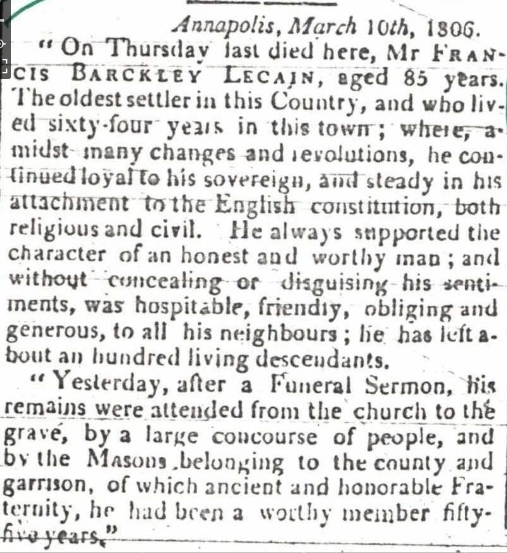
Francis came to Annapolis Royal with the British army as a “Master Artificer” or “Armourer” in the employ of the Board of Ordnance, which among other things was responsible for the manufacture and supply of weapons for the military. Francis’s obituary noted that he had lived in Annapolis for 64 years, which puts the year he came to Nova Scotia as being about 1742. In 1745 he married Alicia Maria Hyde, a daughter of a military man who also hailed from Jersey. Our children are descended from Francis and Alicia’s youngest daughter, Mary. Alicia died in 1758. Francis married again in 1761, to Elizabeth Foster. The blacksmith shop he established remained on the same site for over 100 years. Francis died in Annapolis Royal in March 1806.
Francis LeCain’s obituary published March 15, 1806, from Minn’s Weekly Chronicle, a Halifax newspaper.
Next week’s theme is “Maps”. I’m looking forward to that. I love maps. Atlases of historical maps I found in grade eight fostered my love of history, which was my major in university.

 A Deck of Ancestors