Talk about “slow”, this week’s theme for the 52 Ancestors Challenge. It has taken me forever to think of anything that suits, no matter how broadly I interpreted the word. After alternatively wracking my brains and sleeping on it, I was reminded of something my great grandmother, Emelia Anton, once said.
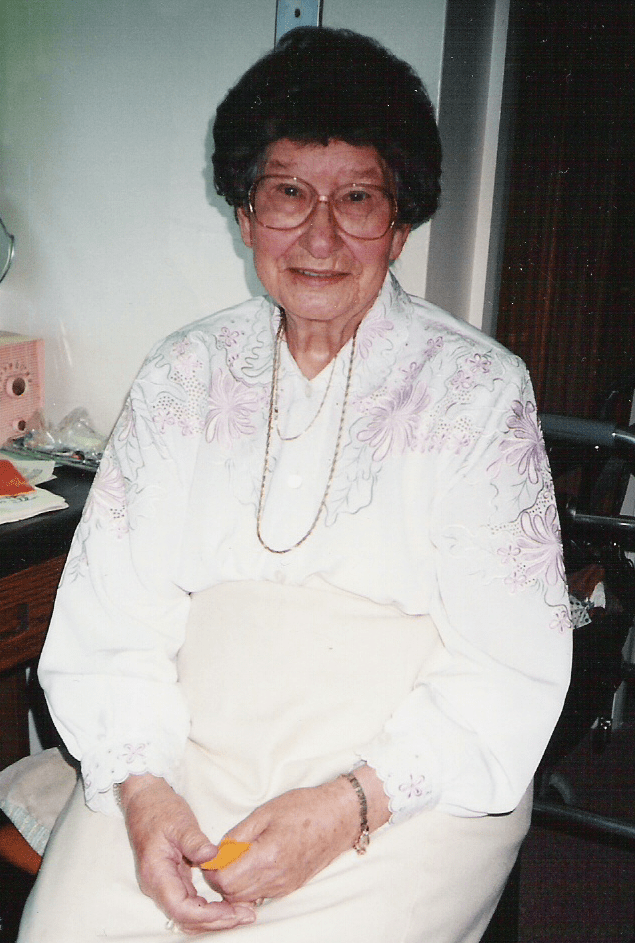
My great grandmother lived to be 94. While she experienced some dementia in her last year or so, she remained active. She regularly participated in bingo outings with my grandfather (her son-in-law), playing multiple cards at once, keeping pace better than I could (or still can).
Great grandma’s favourite game was bridge, a game I’ve struggled to grasp despite being an avid and seasoned card player. She took great pride in the fact she still had the mental acuity for the game, even into her 90s. However, but complained that her peers were getting too slow for her.
My great grandmother, Amelia Anton, late in her life, and still an avid bridge player.
Last week, on June 1, 2023, the Library and Archives Canada released the 1931 Canadian census. The site was overwhelmed at first, but now it seems to be operating without any problems. As of now, the LAC only has the raw images, in that they are not indexed. You can search the images by Province, District, and Sub-District. Fortunately, I knew where to look for many of my ancestors and found them without any problem.
The Library and Archives Canada page for the 1931 Canadian Census on June 1, 2023
Yesterday, Ancestry Canada went live with a searchable indexed version of the 1931 census. It enabled me to find some of my more elusive family members, particularly some of those in urban areas for whose sub-districts I could not quite identify.
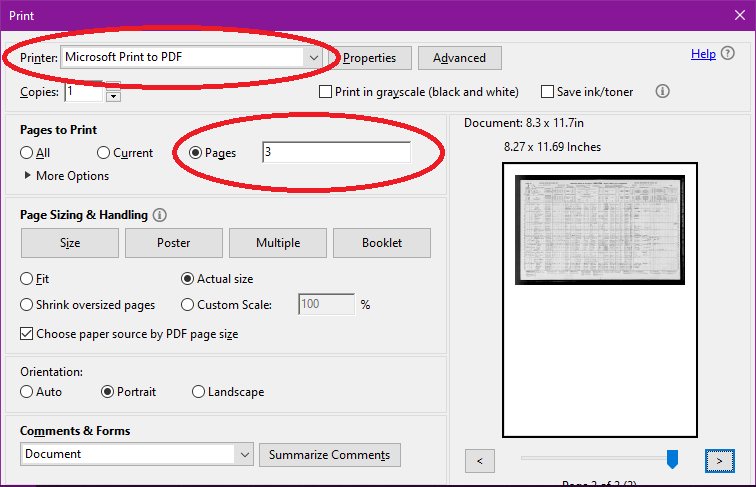
Both the LAC and Ancestry.ca allow you to download census records in jpg format. The LAC also allows you to download entire sub-district files in pdf format. What I’ve done is download both versions. For the pdf version, I’ve used the “print to pdf” function to create a file for the single page I am interested in.
I save the single page with my family members with a unique file name, using the system I established for myself many years ago.
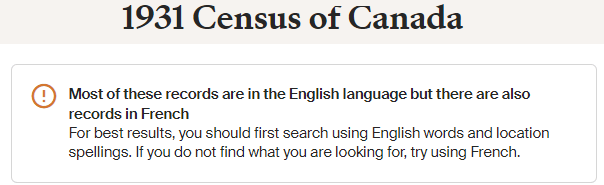
The LAC website seems to be better set up for those who are searching in French, looking for francophone ancestors. For now, Ancestry recommends searching first in English and then again in French if the initial search was unsuccessful.
So far, the biggest surprise was learning that my great aunt (who’s still alive) is a year older than I thought she was. The census was taken on June 1, 1931. Everything I had so far indicated that my aunt was born in October 1931, which was after the census was taken, so she shouldn’t have been there. However, the entry for my great grandparent’s family includes my great aunt, saying that she was 8 months old at the time. This means she would have been born in October 1930.
My mother’s maternal grandparents, and her mother Helen. My great grandparents separated later in life. I don’t have an exact date, but the fact they’re still together here is consistent with my theory that they separated around 1937. I guess I’ll have more evidence in 5 years, when the 1936 prairie census come out, and more in 10 years, when the 1941 census comes out.
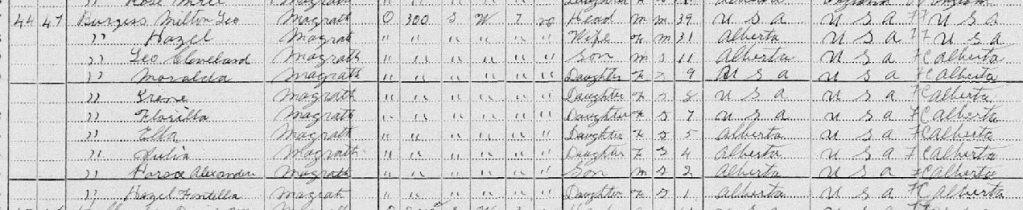
This is the second census in which my maternal grandfather, Leo Burgess, appears. I see the enumerator was much more careful than his predecessor who prepared his entry for the 1921 census, which for some bizarre reason stated my grandfather was Dutch. Wrong grandfather.
This census includes my grandfather and all his siblings, other than his youngest brother Ralph, who was born in 1935. His youngest sister, Fon, (seen here as Hazel Fontella), was an avid genealogist. She missed being able to see herself her by 18 months.
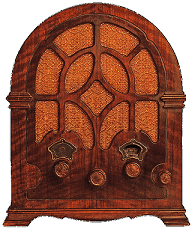
One of the most interesting things about the 1931 census was that it asked whether the household owned a radio. It was no surprise to me that neither of my grandparents’ families owned a radio. However, I was surprised to see that another member of the extended family, who was very successful and well-off, did not. My suspicion was that he was not interested in such new-fangled things like radios.
This week’s theme for the 52 Ancestors Challenge is “Oops”. A true “oops” does not readily come to mind, although I know I’ve had a few over the last many years. This is about more of a mistaken conclusion based upon incomplete information than it was an actual “oops”, but it was a misleading error nonetheless.
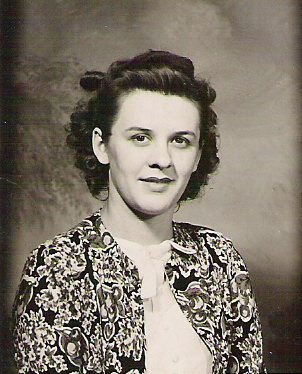
Helen Lerner, about 1945. Not English.
When I was about four or five, my maternal grandmother, Helen Lerner, went to England. At the time, my mother told me that grandma was going over to visit relatives. To me, it seemed reasonable to conclude that grandma must have been English. On top of that, at that young age I had no idea what my grandmother’s surname at birth had been, I just knew her as “Grandma Burgess”, and Burgess sounded like it could be English (spoiler alert: it wasn’t).
Meanwhile, I only knew Helen’s mother, my great grandmother, as “Grandma Wright”. Again, I had no idea what her surname at birth might have been or that she had previously been married. Wright also seemed pretty English to me, which only reinforced my belief that Grandma Burgess was English.
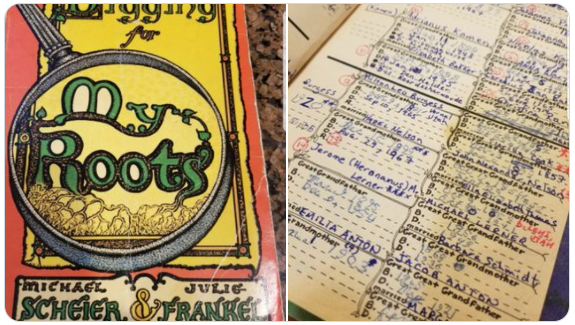
By eight or nine I developed my interest in genealogy. I even bought a book to help me along, Digging for My Roots, by Michael Scheier and Julie Frankel, which I still have to this day. When I started, I unknowingly did what one is supposed to do as a beginner in genealogy: ask your parents or other close family members. In addition to asking my mom some questions, I also copied what she had written in the family bible. In doing so, I learned my grandmother and great grandmother’s surnames at birth; however, I didn’t realize that “Lerner” and “Anton” were German. It seemed to me that those surnames could also be English. Moreover, my mother had not entered the place of birth for either of her maternal grandparents. When filling out the pedigree in my book, I can’t recall asking my mom where her grandparents were born. However, what little space there was to write place of birth remains blank. (Needless to say, it is recorded in my desktop database!)
My copy of Digging for My Roots, which I still have. On the right, you can see that I don’t have a place of birth for my great grandmother Ameilia Anton.
When I was in grade seven, I started taking French in school. However, when I started high school in grade eight, there were many other language options. I decided to drop French and take German. By that time, I had already begun trying to teach myself Dutch, so I figured studying German would help me with that goal. I also knew that, for some reason, my Grandma Burgess knew German. How or why she did, I had no clue. It clearly didn’t cross my mind to ask. It seems pretty daft in hindsight, but there you go.
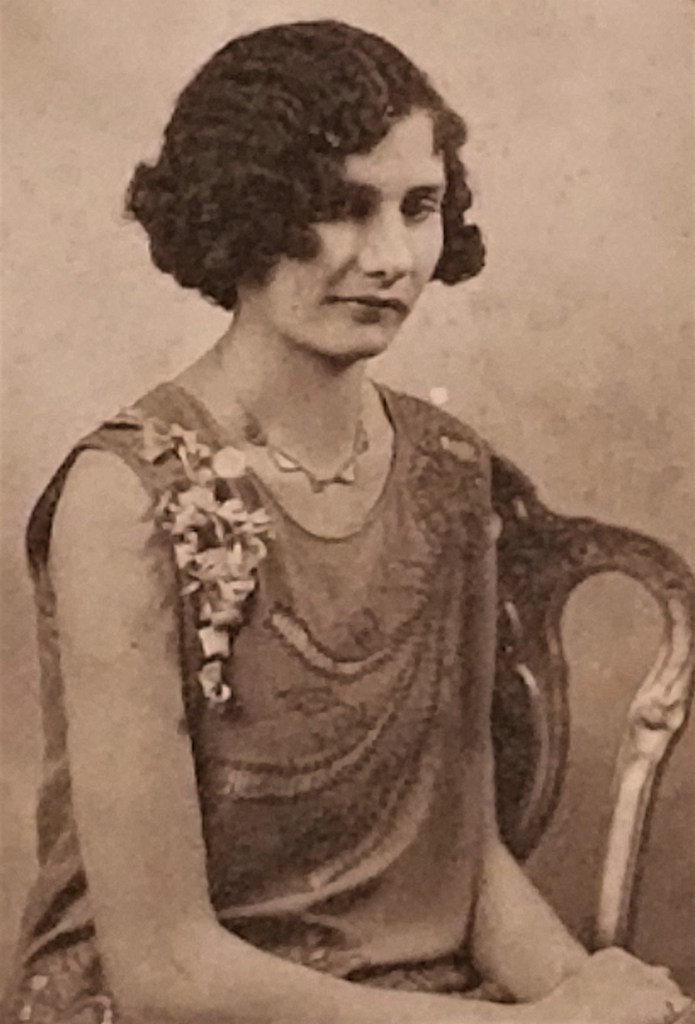
Emelia Anton, around 1920. Also not English.
During Christmas break in grade eight, we visited Grandma Wright. During the visit, my mom said, “Grandma, guess what? Sean is studying German in school!” My first thought was to wonder why great grandma would find that particularly interesting, but my train of thought was quickly interrupted by my great grandmother immediately starting to speak to me in fluent German. I’m sure you could have knocked me over with a feather, I was so surprised. (I was also pleased with myself that I understood some of what she was saying.)
After we left, I asked my mom how it was that great grandma spoke German. My mother responded, “Because she’s German.” She was?!?
Later on, my mother told that my great grandmother was born in Russia. Of course, that confused me further. My mother then explained that her grandmother’s family was actually from Ukraine, but weren’t Ukrainian. That is when I learned about the Germans from Russia, who were colonists who settled in territory held by the Russian Empire in the 18th and 19th centuries.
Fortunately, none of these misunderstandings resulted in me wandering aimlessly down the garden path. Rather, learning the correct facts sparked my interest and put me on the correct path.
Hold on, that was already two weeks ago – or was it? It was under the Gregorian calendar, but under the Julian calendar, it’s…five minutes from now as of the time I write this. Break out the bubbly!
So if this week’s 52 Ancestors Challenge is “Favourite Photo”, why all this talk of the new year?
I’ve written about my great grandmother, Emelia Anton, many times. She was born on January 1, 1903; however, to this day I am uncertain as to whether it was under the Gregorian or Julian calendar.
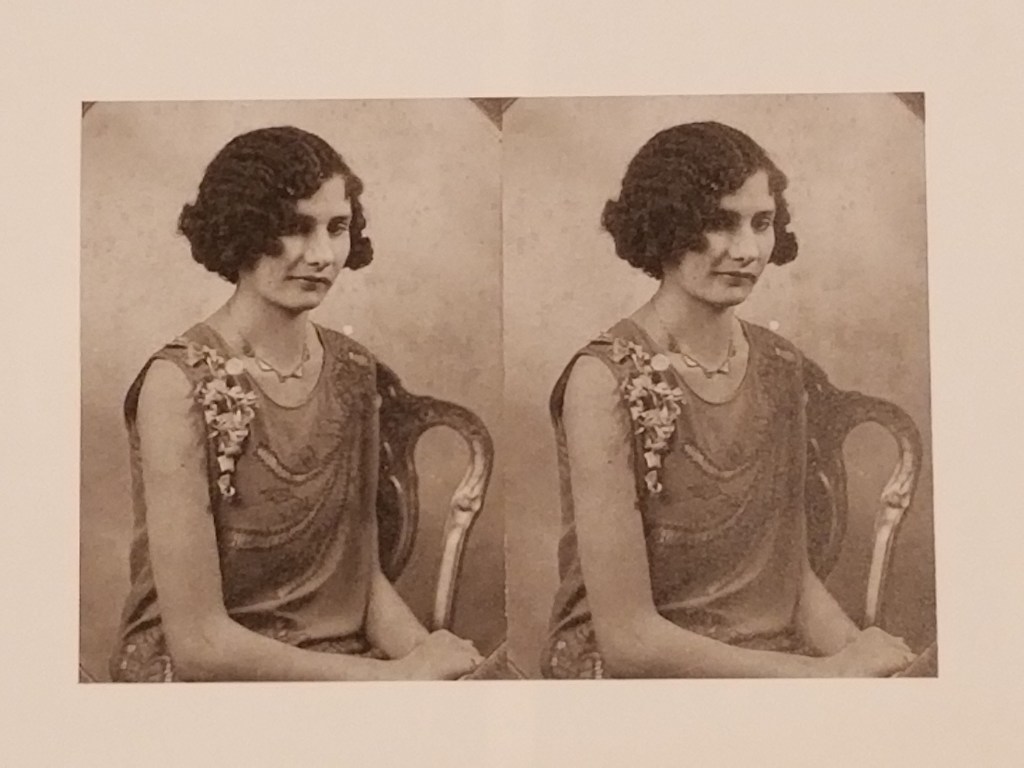
Emelia Anton (1903 – 1997), most likely around 1920.
The maternal side of my mother’s family were Germans from Russia, German colonists who settled in the Russian Empire in the 18th and 19th centuries. For the most part, my ancestors all settled in the Beresan district of Kherson province in what is now Ukraine. By the 18th century, all parts of what is now Germany had adopted the Gregorian calendar. However, the Julian calendar was in use in Imperial Russia until the early 20th century.
From time to time over the years, I have tried to determine whether the German colonies used the calendar of their homeland or had adopted the calendar of the Russians, particularly given that the German colonies were of many decades’ duration. However, most of my inquiries have been inconclusive.
While I have recorded Emelia’s birth in my database as January 1, 1903 under the Gregorian calendar, it might be more likely than not that her birth was recorded under the Julian calendar. While Emelia’s parents were born in the Beresan colonies and five of her older siblings were born in the Beresan as well, by the time Emelia was born the family had migrated to Russia, albeit with other Germans. The family spent about twelve years in Selo Suchoi, Veronesch, Russia, where Emelia was born.
I only discovered this photo of my great grandmother a few weeks ago, when I was visiting my parents over Christmas. While I was there, she pulled out a box of some of her parents’ possessions, looking for some photos of her mother. While many of the photos my mother pulled out I had seen before, I had never seen this one before. Given the composition of two photos side-by-side, it appears that it is a stereogram. If you’re good at those Magic Eye pictures that were the craze in the 90s, you might be able to see the stereo image without using a stereoscope.
Whichever calendar Emelia was born under, this month would have been Emelia’s 100th birthday. Happy 100th!

 A Deck of Ancestors