Many times over the years, I did something like this for my maternal line for my sisters and my niece for Mother’s Day. Only more recently did I think of doing it for my paternal line. Happy Father’s Day!
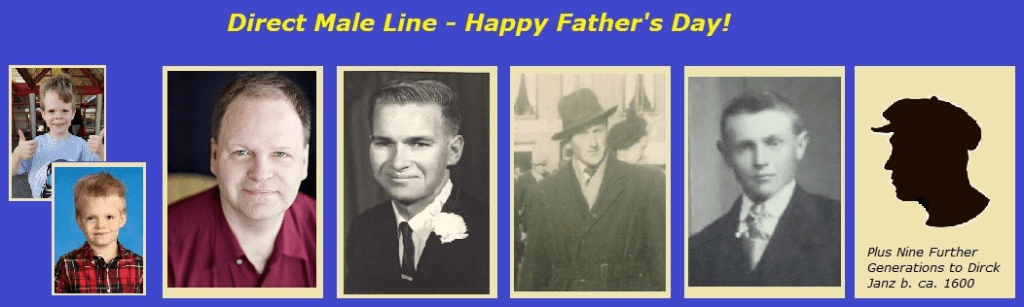
Many times over the years, I did something like this for my maternal line for my sisters and my niece for Mother’s Day. Only more recently did I think of doing it for my paternal line. Happy Father’s Day!
My entry for this week’s theme for the 52 Ancestors Challenge, “Popular Name”, will be shorter than usual. I simply cannot come up with something that is interesting enough to me that seems worth writing about. So what I have are two short snappers.
One thing that popped into mind when I saw the theme was how incredibly popular the name “Jennifer” was at one time. My youngest sister – Jennifer – was born during the height of the name’s popularity. At times during elementary school, there were at least four Jennifers in her class. One year there were three Jennifers and three Michaels. She told me, mostly tongue in cheek, that she’s fairly sure that every Jennifer has a brother named Michael. Which she certainly does.
The other thing that came to mind wasn’t so much a popular name, but not too long ago I learned of an ancestor with a name that has amused me to no end.
I recently discovered one of my 7x great grandmothers, who was named Antje Pieters Butter. Her middle name could likely be a patronymic, suggesting that her father’s name was Pieter.
This means that there is a possibility that my 8x great grandfather was Pieter Butter.
If anything, this week’s theme has caused this song to be stuck in my head:
It’s week 23 of the 52 Ancestors Challenge, on the topic of “Misteak”, er “Mistake”. (See what I did there?)
A few weeks before I turned 19, I visited Ottawa for the first time, during a student conference. I took the opportunity to visit my aunt, who by that time was well-established in the capital. I had already been actively working on my family tree for at least ten years by then, so our conversation turned to our family history.
We ended up talking about our Nelson ancestors. I knew nothing about them beyond my great great grandfather, John Alexander Nelson. My family and I had gone to a family reunion of his descendants in Big Fork, Montana when I was 13.
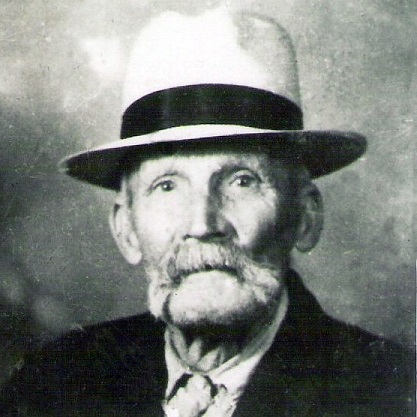
My aunt told me that John’s parents, Robert Nelson and Elizabeth Joseph, had emigrated from Scotland to the United States. My aunt then volunteered two pieces of information that I found particularly exciting.
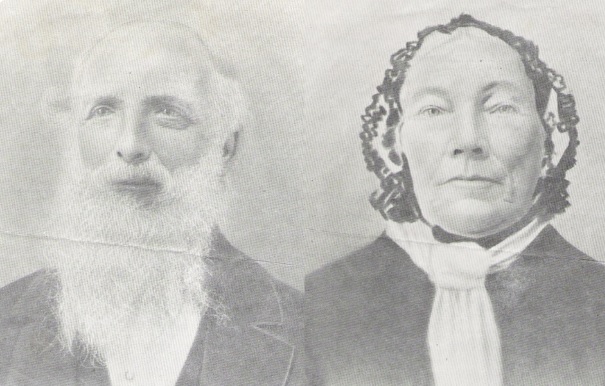
First, she said that the belief was that the Nelson name in Scotland had Viking origins. Vikings? That was even cooler than if she had told me they were descended from pirates. Second, she said that through the Nelson line we might be descendants of Robbie Burns. I was thrilled by that possibility, because Burns was one of my favourite poets.
I knew enough at the time not to accept the idea unconditionally. I had already honed an overdeveloped sense of skepticism. I already knew a few family legends and their lack of veracity, so I had no reason to believe these legends would turn out to be any different. Moreover, while the initial development of the Genealogical Proof Standard was many years in the future, I was well into my undergraduate degree in history and knew full well the importance of proof.
However, I received these pieces of information back at a time when genealogy was done the old-fashioned way. Personal computers were still largely a relatively new and novel thing and it would be a few years before most of us even heard of the internet. It would have taken a lot of time and effort to verify or debunk what I had learned. Besides, the ideas were so cool that I was really not in a hurry to burst the bubble.
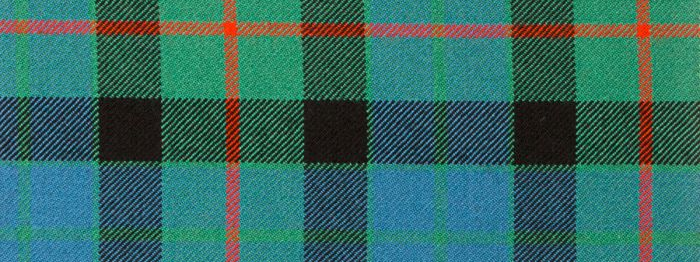
In the meantime, I reveled in the prospect of a Scottish connection. I learned that the Nelsons had connections to Clan Gunn. Shortly afterwards, I spotted a necktie patterned on the Gunn tartan and bought it mostly out of amusement. Plus, I enjoyed bewildering people as to why someone with a Dutch surname was wearing a tartan tie.
Alas, all good things come to an end.
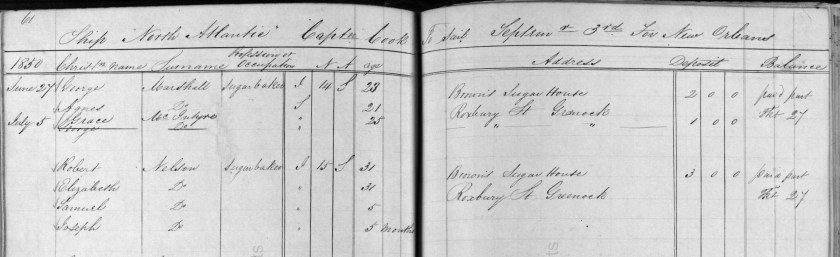
While Robert and Elizabeth had lived in Scotland, they weren’t Scottish. They were Irish. They were both born in Muff, Donegal in 1818 and married there in 1842. Sometime in the early 1840s, likely around 1844, they relocated to Renfrewshire, Scotland. By 1850, Robert was working at Brown’s Sugar House, on Roxburgh Street in Greenock, Scotland as a sugar baker. Sugar bakers usually refined muscovado sugar, an unrefined brown sugar imported from Barbados. In 1848, they joined the Latter Day Saints (“Mormons”). On September 3, 1850 Robert and Elizabeth, along with their three children, departed Liverpool on board the ship “North Atlantic” bound for New Orleans. By 1854, they had settled in Salt Lake City where John, my great great grandfather, was born.
As for the Burns connection, it really did not take much to dispel that myth. Robert Nelson’s mother was a woman named Martha Burns. Martha was born in 1787. So while her surname was Burns and she was born at a time Robbie Burns was busy fathering numerous children, that is where the correlation ends. None of Burns’ children – legitimate and illegitimate – were named Martha. Moreover, Martha was born in Muff, Donegal, not Scotland.
This week’s theme for the 52 Ancestors Challenge, is “Conflict”. I knew right away what I wanted to write about: the fight by my maternal grandfather, Leo Burgess, for his military disability pension. Unfortunately, it has been exceptionally busy at home this week, so I only got to this today.
I have always found the records to be fascinating, because they read quite like a workers’ compensation claim, except in a military context. The records are rather detailed, and include both the legal and medical records that were part of the process. They also included far too much personal information about my grandfather’s personal life, going beyond what was necessary for the adjudicators to decide the issue. Nothing scandalous or unsavoury, just things you really don’t want to think about. As our 11-year-old says when there’s anything remotely romantic in a TV show or movie: ew.
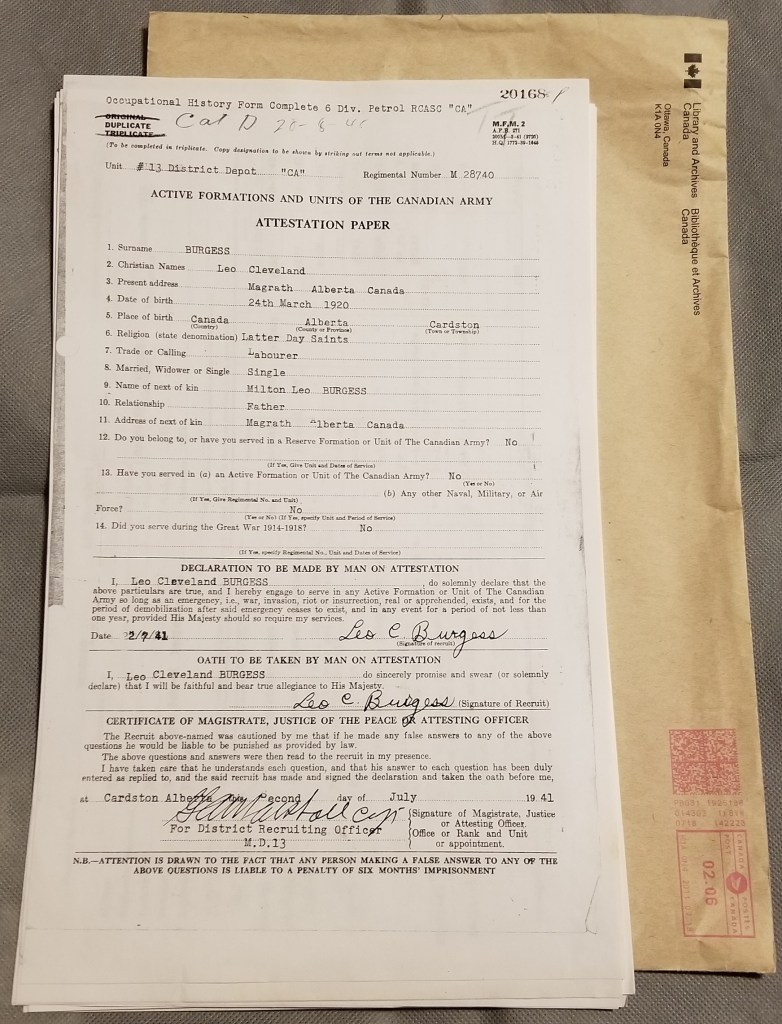
My grandfather’s military service and his injury were often-told tales, which is largely reflected what I found in his military records. My grandfather actually enlisted twice during World War II. The family story is that my grandfather was injured during basic training, due to a prank pulled by a bunkmate. A couple of months after he was discharged, my grandfather enlisted again. The family story is that he decided to re-enlist after a “robust” night on the town with his buddy. It wasn’t until after he was well into basic training the second time that the military seemed to discover that they had already discharged my grandfather once before, and decided to discharge him again.
Now, to the record. Both times, my grandfather was enlisted as a private. He first enlisted in July 1941. Upon enlistment, he was assigned to the 6th Division Petrol Company Royal Canadian Army Service Corps and posted to #13 District Depot in Calgary. However, he was admitted hospital in August 1941 due to appendicitis.
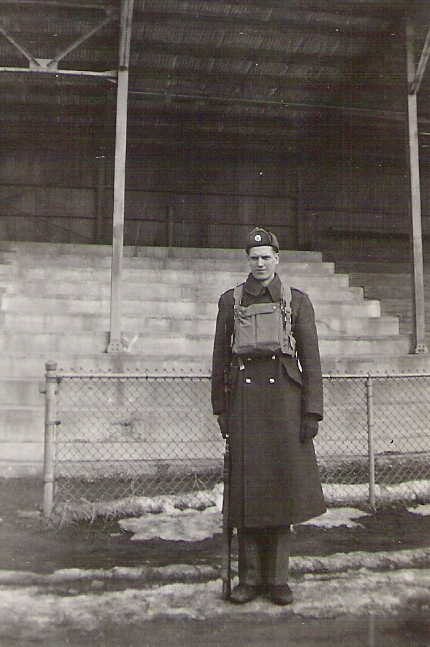
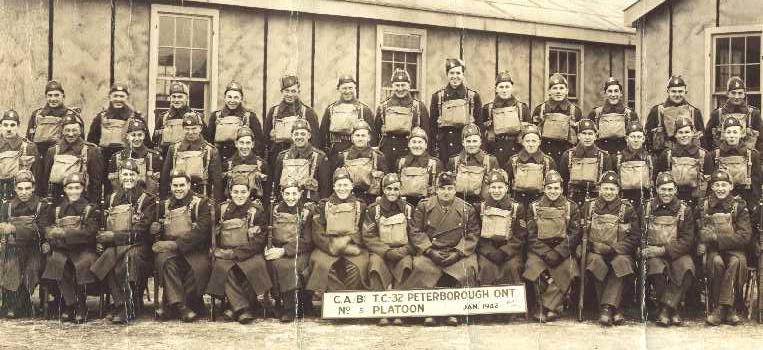
Leo was in hospital until mid-September 1941, but was on sick leave for most of the rest of the year. On December 6, 1941, he arrived at the No. 32 Canadian Army (Basic) Training Centre in Peterborough, Ontario. Later that month, he was indeed injured due to a prank by one of his bunkmates.
According to my grandfather and the witness statement of another soldier, my grandfather had the top bunk of the bed. The man below him thought it was funny to use his legs to push the bunk above as a way to wake my grandfather up in the morning. The man pushed too hard, causing my grandfather to be ejected from his bed, injuring his back. My grandfather’s evidence and the medical records say that subsequent to this incident, his back condition worsened in the course of basic training
By mid-January 1942, my grandfather was in the hospital due to his back condition. He spent time at military hospitals in Peterborough and Kingston until March 1942, when he entered physical rehabilitation. The military discharged my grandfather due to his disability at that time, and he returned to Calgary.
My grandfather enlisted a second time in July 1942. While the family story is that the military didn’t know at the time that my grandfather had already enrolled and been discharged, the records are not so clear. At least one document refers to “re-enlistment”, so it may be that my grandfather’s prior service was not such a surprise to the army.
During his second enlistment, my grandfather was sent to the Canadian Army (Basic) Training Centre No. 133 in Alberta. He did not complete his training as he was discharged as he was “unable to meet the required Military Physical Standards”.
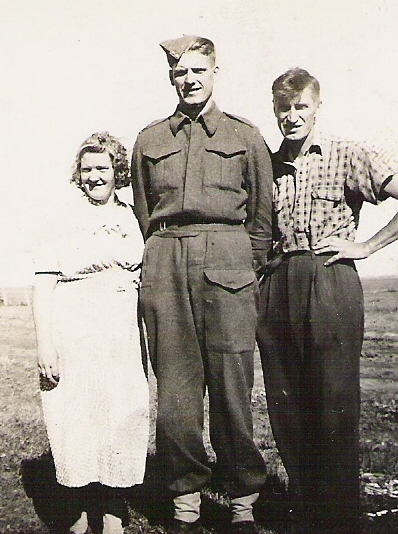
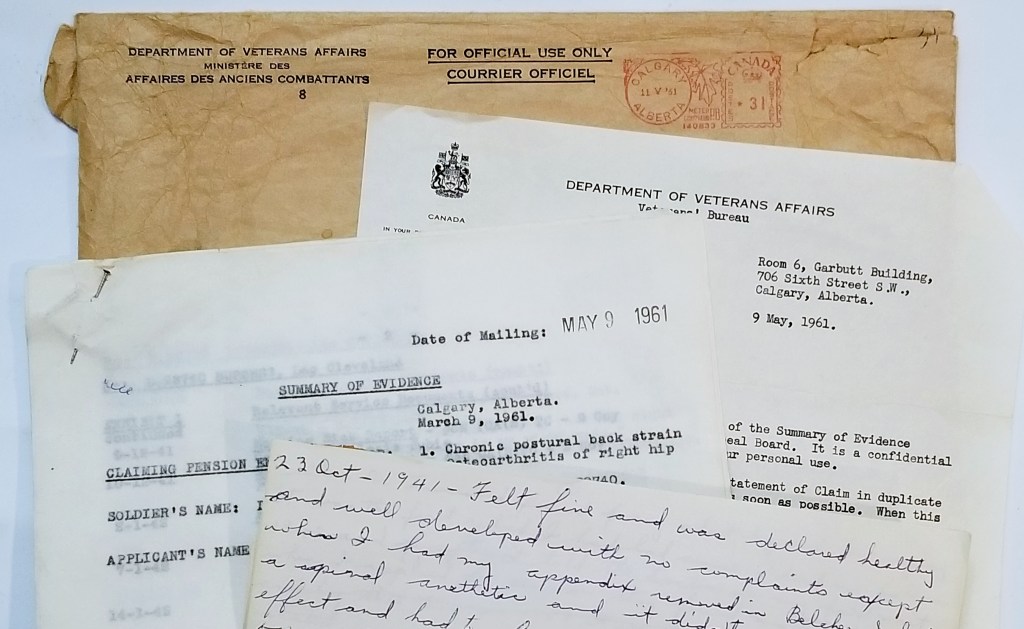
The pension records I have do not tell the whole story. At every level of adjudication, the military had denied my grandfather a disability pension. My grandfather was about 6’4” or 6’5”. Veterans Affairs took the position that my grandfather’s back problems had been due to his height and were not aggravated by his duties during basic training. The documents I have are the statement of claim and a 20 page summary of evidence for what was likely the last level of appeal. I do not know if he was successful, although I do know he was in receipt of some form of military pension after he retired from his career with the Canadian Pacific Railway.
Despite his short and interrupted service, my grandfather was awarded the Canadian Volunteer Service Medal (CVSM), which was established on October 22, 1943 and issued in recognition of eighteen months of voluntary service in the Canadian Forces. The medal was granted upon honourable discharge to any service member of any rank who served on Active Service from September 1939 to March 1947. Leo was also granted the War Service Badge – General Service, awarded to members of the Canadian military who served in the military forces on active service during WWII and who honourably ceased to serve on active service by reason of physical disability.
 A Deck of Ancestors