Many times over the years, I did something like this for my maternal line for my sisters and my niece for Mother’s Day. Only more recently did I think of doing it for my paternal line. Happy Father’s Day!
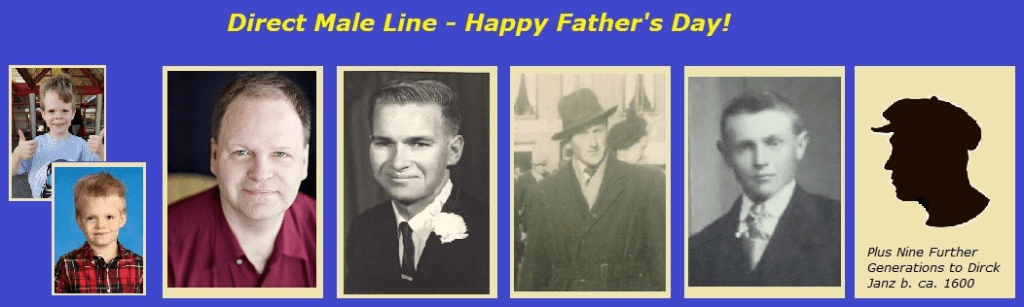
Many times over the years, I did something like this for my maternal line for my sisters and my niece for Mother’s Day. Only more recently did I think of doing it for my paternal line. Happy Father’s Day!
In the “Better Late Than Never Department”, it’s Week 17 of the 52 Ancestors Challenge. It was a busy week, so I am a bit late with what I am referring to as “this week’s theme”, Document. While an excellent album by R.E.M., the topic here actually relates to genealogical records and documenting genealogical events.

Many many years ago, I read Ayn Rand’s The Fountainhead. As political philosophy, it’s nonsense, but I read it as literature. In that regard, there was one turn of phrase she used that I found to be an excellent descriptor of what one might otherwise call a “mixed bag” or “hodge podge”: “a mottled collection of cracked coffee cups“. I think that describes the somewhat random curation of documents I have chosen to highlight.
My original intention was to find the very first physical copy of document I sent away for as part of my genealogical research. I started my family tree when I was eight, but did not start gathering records until my 20s. That was back when you had to write letters and send away for documents. I’m pretty sure the first record I obtained that way included the birth registration for my father’s paternal grandmother, Teetje Pater.
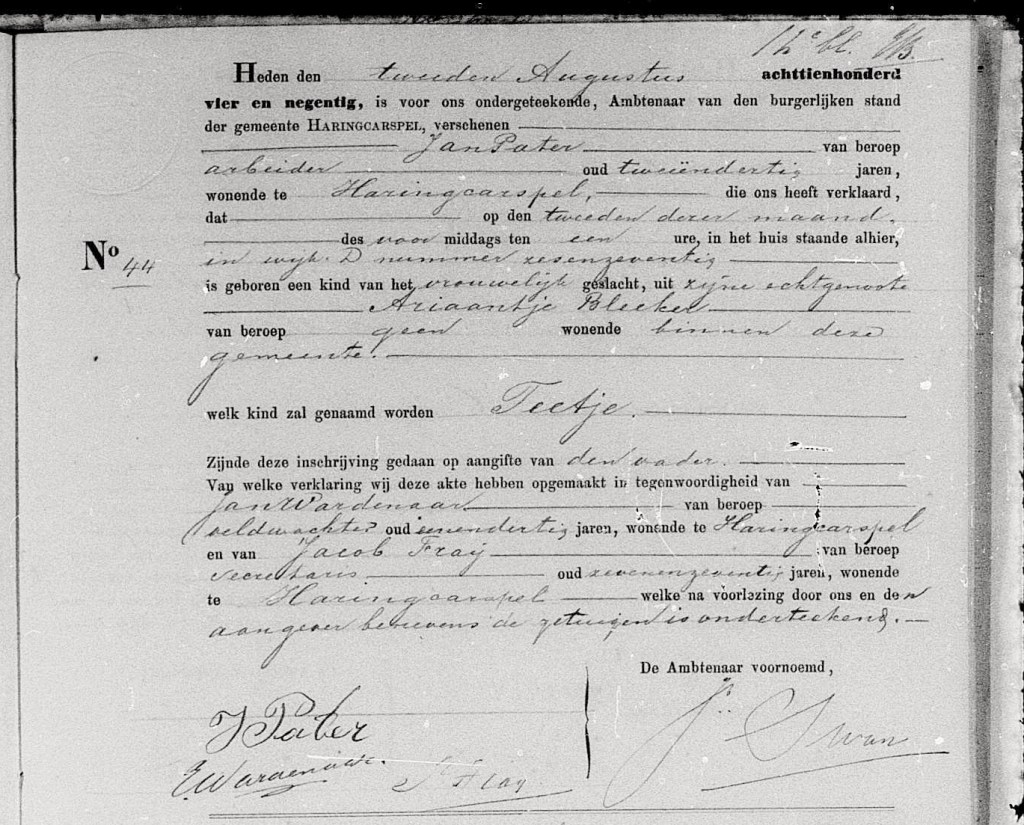
However, I never got around to finding the physical document, although it turns out I had scanned it a long time ago. I got sidetracked in my quest, because I had forgotten how many physical records I had gathered back in the day. I was impressed with myself, seeing the care I had taken to properly sort and store them. Not only documents, but artifacts. Hopefully my Aunt Diana would be proud. It turned into a fun trip down memory lane. What I’ve ended up doing is choosing a few random items that caught my fancy in the moment.
The first item I cast my eye upon was not so much a document qua document, but a book that I store with my documents, the Atlas of Prince Edward Island, Canada, and the World, published by the Cummins Map Co. in 1928. It belonged to my wife’s great grandfather and was given to me by my father-in-law, who has deep Island roots. Not only is it an amazing resource for research, it’s a beautiful work of art. You can see this atlas online.
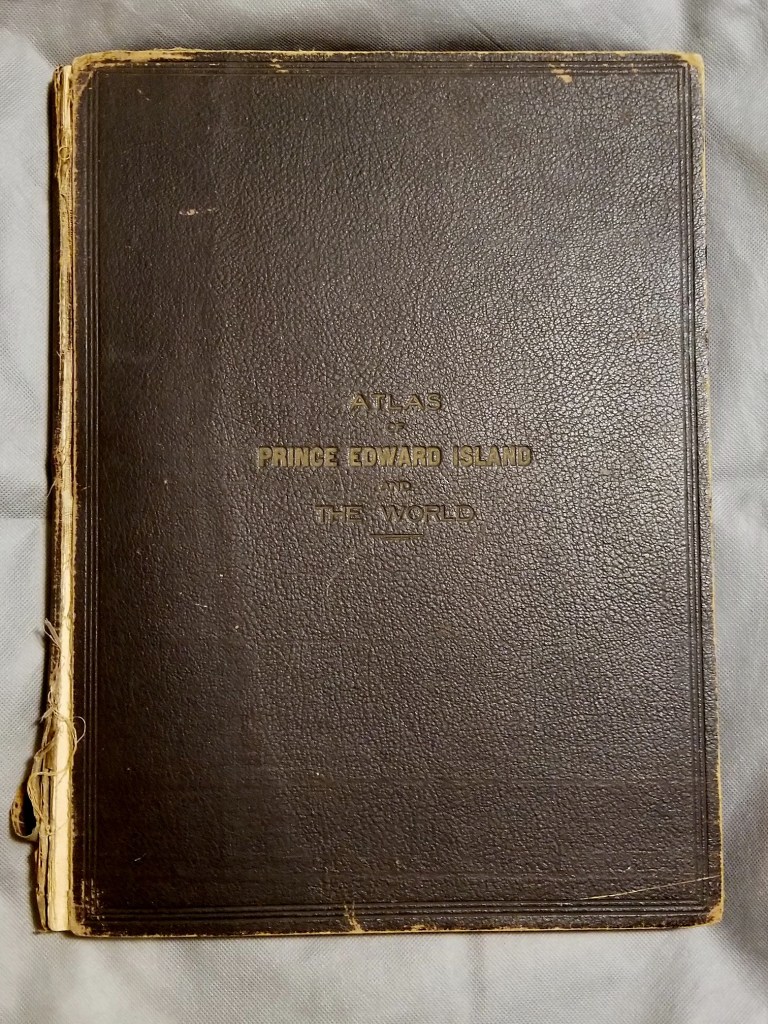
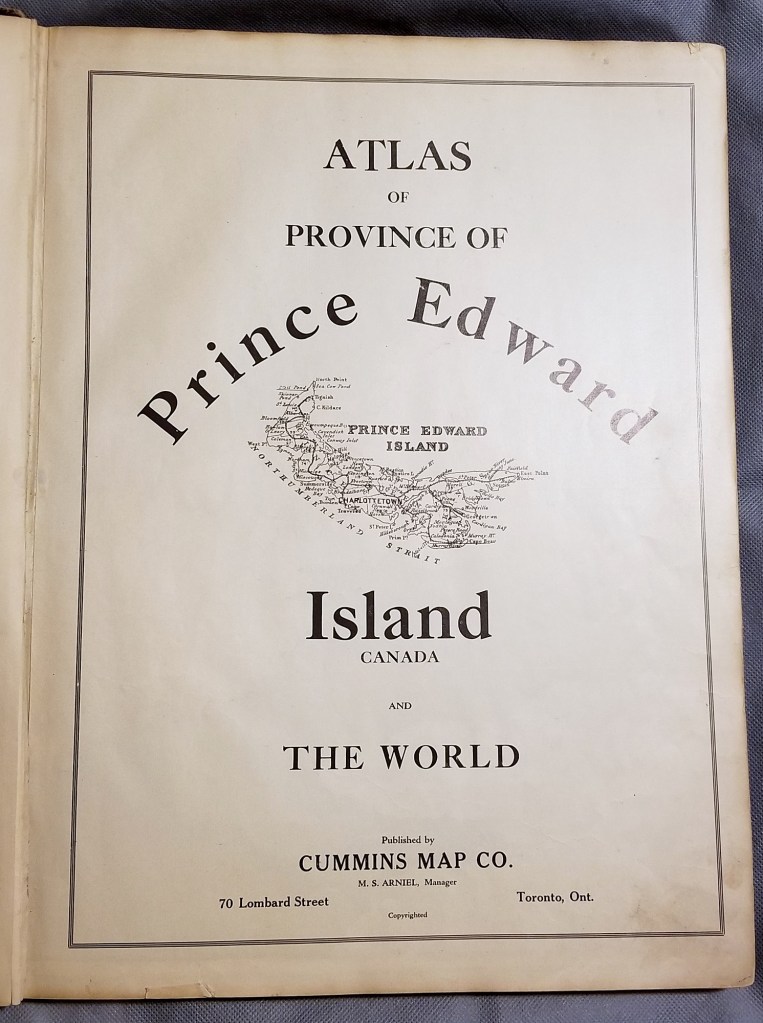
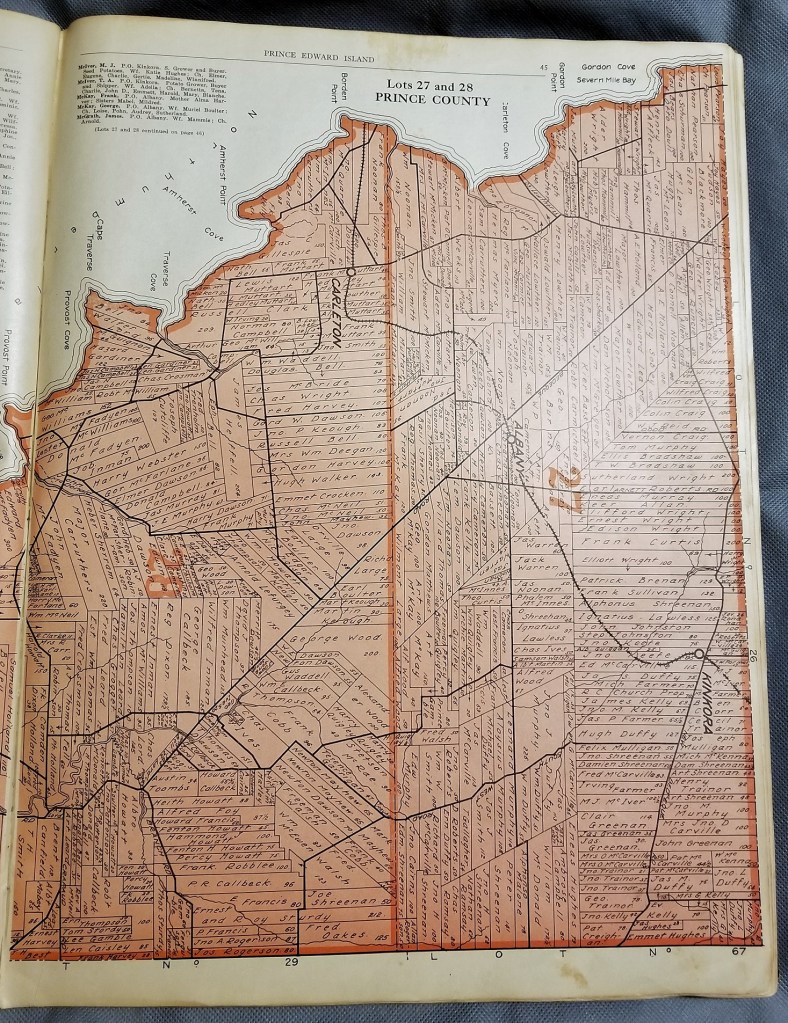
The CBC recently reported about a similar earlier atlas of P.E.I, the Illustrated Historical Atlas of the Province of Prince Edward Island, published by the J. H. Meacham Company in 1880. The Meacham Atlas is available to view online through the University of PEI.
I also have many original records of my maternal grandfather, Leo Burgess. These not only included things like letters he wrote to his grandparents while he was in basic training during World War II, LDS church records, tax and property records, vital stat records, SIN card, drivers licence, but also fun things like a ticket stub when he saw his beloved LA Dodgers with his brother.
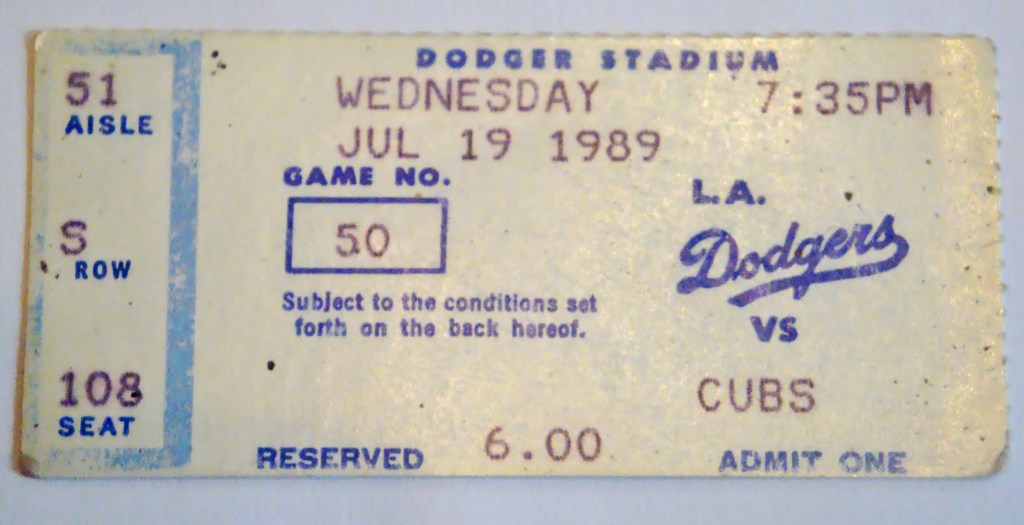
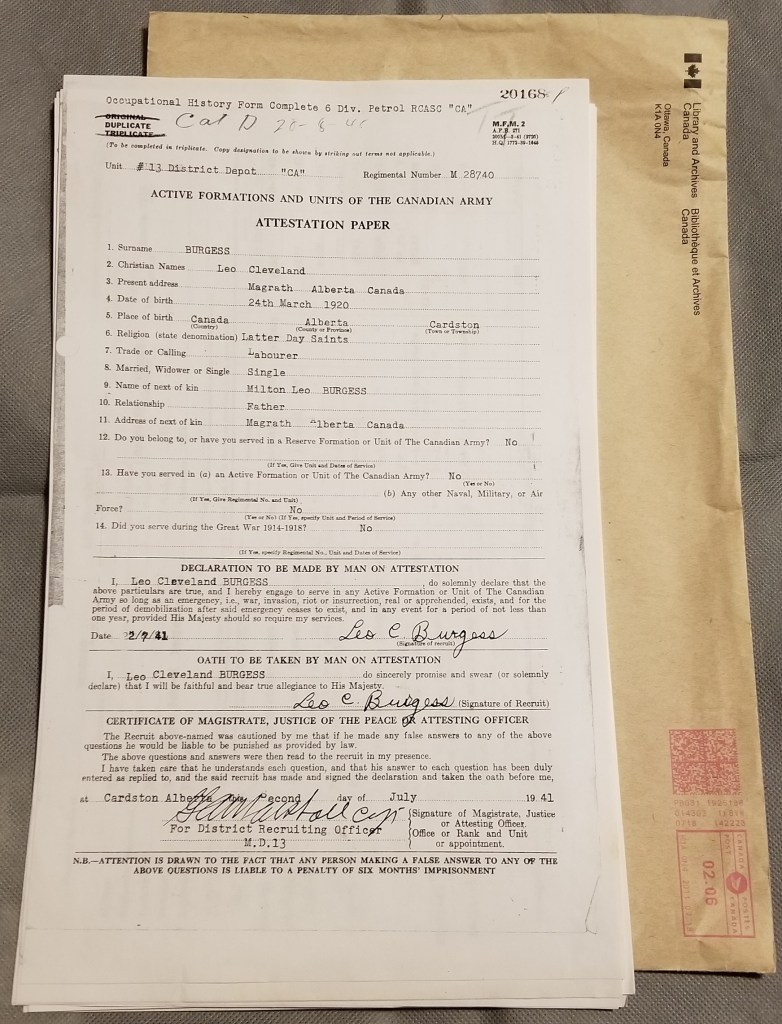
Among other things, I also have the records of his appeal for his military pension. My grandfather enlisted with the army twice during World War II – long story – but was discharged due to an injury he sustained during basic training the first time he enlisted. It wasn’t the training itself that caused his injury, it was a prank his bunkmates pulled on him that resulted in a permanent back injury. The documents read a lot like a workers’ compensation claim, as they use a lot of the same language that you see in workers’ compensation law. I also have my grandfather’s military records, which I obtained from Library and Archives Canada. I only had to wait a year for them, which unfortunately nowadays would be considered a pretty speedy response.
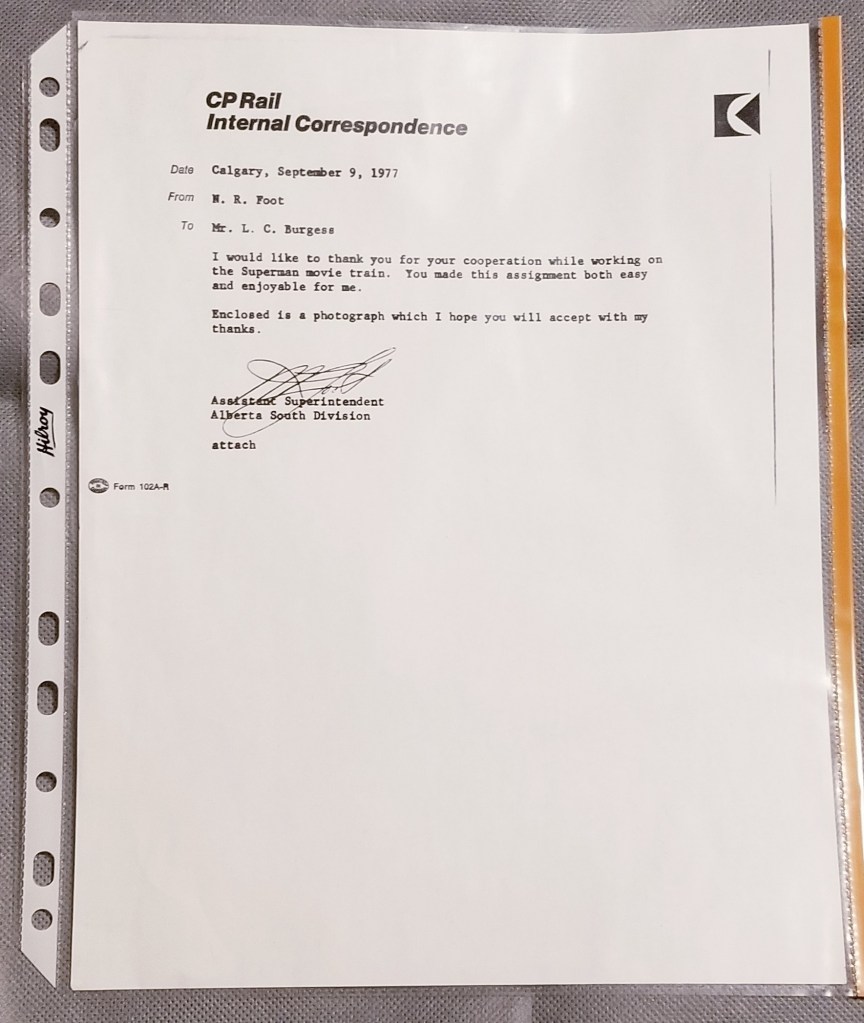
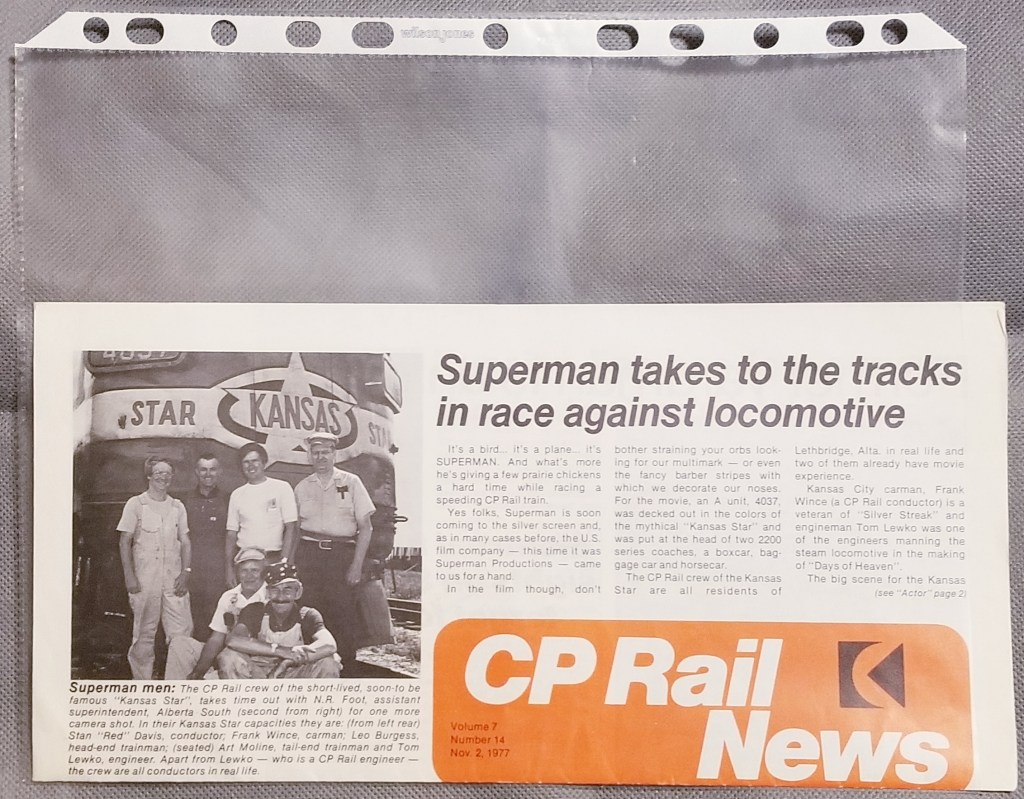
I have mentioned before that my grandfather worked for the Canadian Pacific Railway for over 30 years, first as a brakeman and later as a conductor. During his time with the CPR, he worked on the train crews for movies like Silver Streak and Superman: The Movie.
Working on Superman was one of the highlights of his working life. My grandfather was always proud to talk about meeting one of his favourite actors during filming, Glenn Ford. The scene took six days to shoot. During his memorial service, one of my grandfather’s friends told an anecdote that suggests my grandfather felt that he had gotten familiar with the cast and crew. Apparently during a break in filming, Ford was talking to a group of the railway workers when my grandfather sauntering up, put his arm around the actor, and said, “How’s it going, Glenn?”
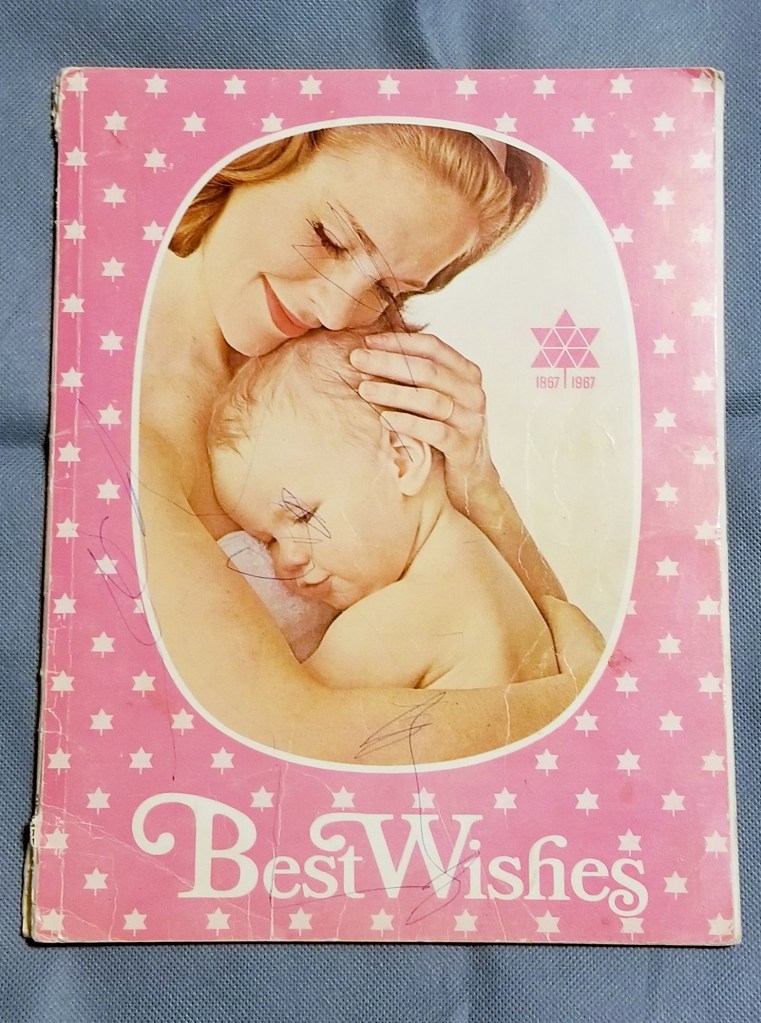
I was also surprised to see the records I have for myself, including an envelope containing a lock of my hair from my first haircut. What I was happiest to find was my baby book. I came across all my siblings’ baby books while visiting my folks over Christmas, but not mine. I forgot my mother had given me mine a long time ago.
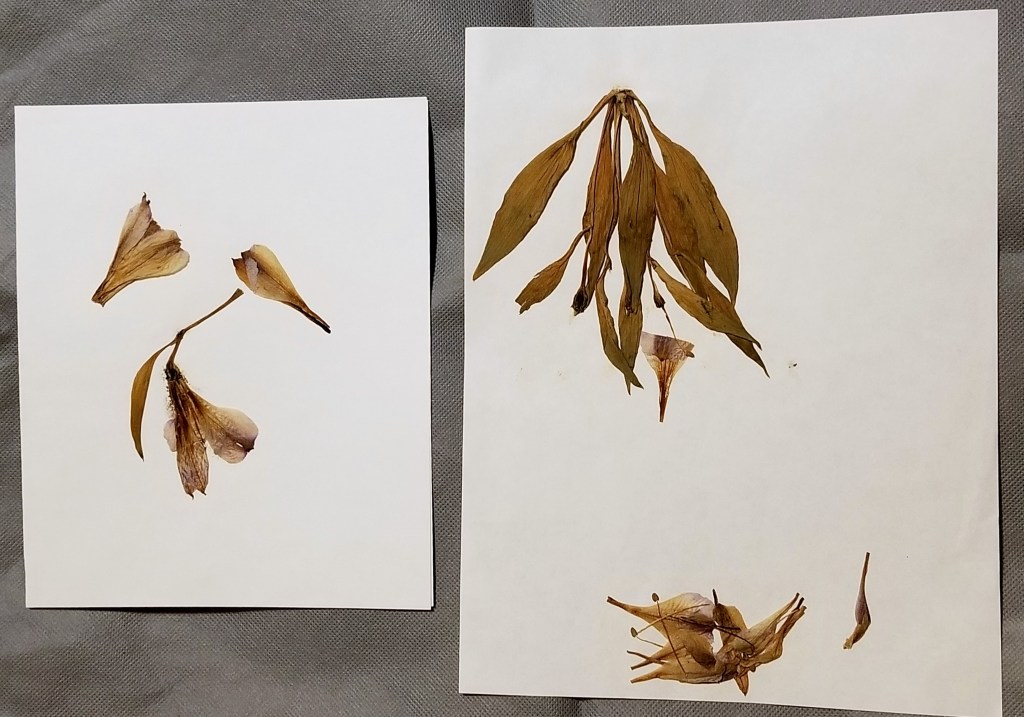
More of an artifact turned into a document, I pressed some of the flowers that relatives in the Netherlands sent for the funeral of my paternal grandmother, Christina Komen. She passed away in Lethbridge, Alberta on Christmas Eve in 2000, only a few hours after I arrived there for the Christmas holidays. I was always sorry I was unable to get there a few days earlier.
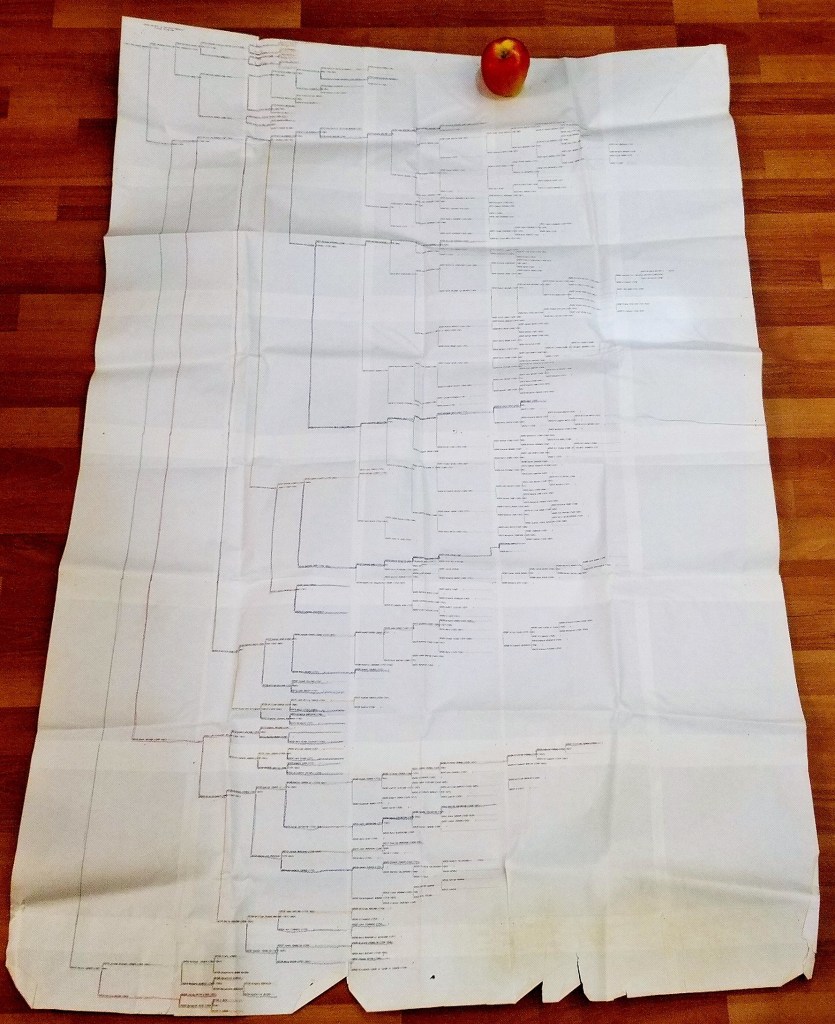
I’d like to end with one document I forgot I had saved. This is one of two wall-sizes pedigree charts I had hanging in the flat where I lived in the 1990s. I created it with the old DOS version of Cumberland Family Tree, probably using a dot matrix printer. It hung on a wall I had dedicated to family history photos.
Now time to play catch up and start on Week 18: Social!
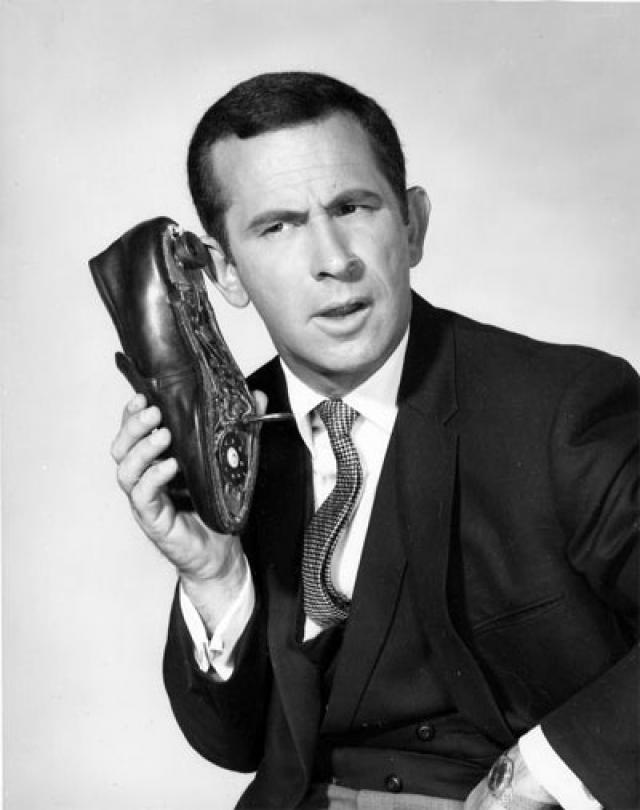
Check It Out was a gawd-awful Canadian sitcom that ran on CTV in the mid-80s. When it first aired, I only watched it because it starred Don Adams, better known for his role on Get Smart as Agent 86 Maxwell Smart. Get Smart was my absolute favourite show when I started watching it in reruns when I was four. My mother tells me that in kindergarten I would not respond to my teacher unless she called me “Max”, something I can actually remember doing. I own the entire series on DVD. Unfortunately, Check It Out was as terrible as Get Smart was terrific. How Check It Out got Don Adams is beyond me. Not every Canadian sitcom can be Corner Gas or Schitt’s Creek.
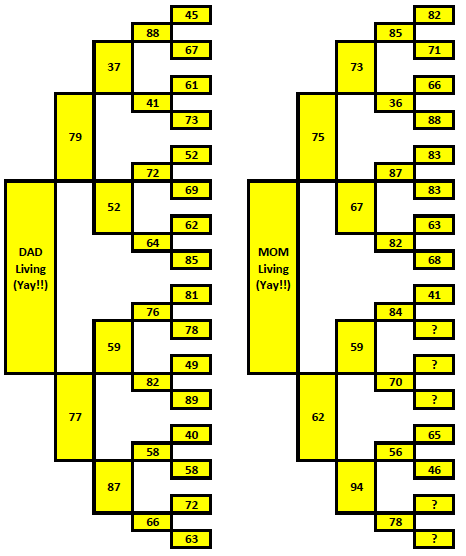
“Check it Out” is also the theme for Week 14 of the 52 Ancestors Challenge. Like the Flowers theme of Week 11, this week’s theme didn’t really inspire me at first. However, in the Facebook post introducing the theme, “check it out” could be a direction to look at something that might be “something neat”. This reminded me of something I was thinking of posting to this blog outside of the 52 Ancestors Challenge.
In a Twitter post six years ago, David Allen Lambert, Chief Genealogist at New England Historic Genealogical Society, suggested creating a “longevity pedigree”, a pedigree chart showing the ages ancestors lived to rather than their names. I thought that was pretty neat, so I created my own. At the time most people, myself included, simply created hand-written charts that we tweeted. For this blog, I tidied it up.
Shortly afterwards, the idea was adapted for birthplace. Here is mine.
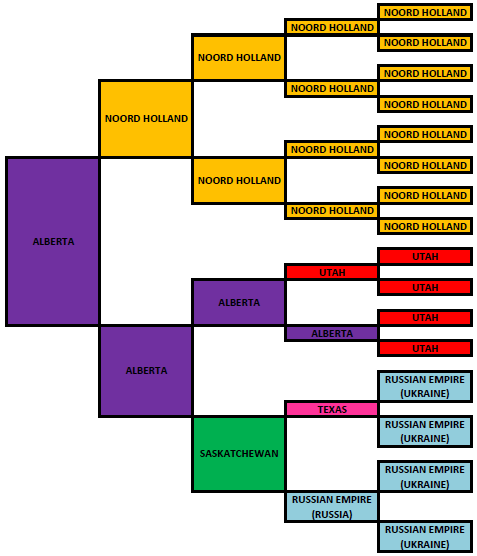
It’s interesting how homogenous it is on my father’s side compared to my mother’s. While it is much more varied on my mother’s side, the variety increases as you go back along my paternal grandfather’s line.
Of course, looking only at a person’s birthplace can be deceptive. For my ancestors born in the Russian Empire, they were neither Russian nor Ukrainian. They were Germans who settled in what is now Ukraine in the 19th century, forming part of a larger group known as Germans from Russia. I have mentioned these ancestors in this blog several times before.
For fun, I did a birthplace pedigree for our kids.
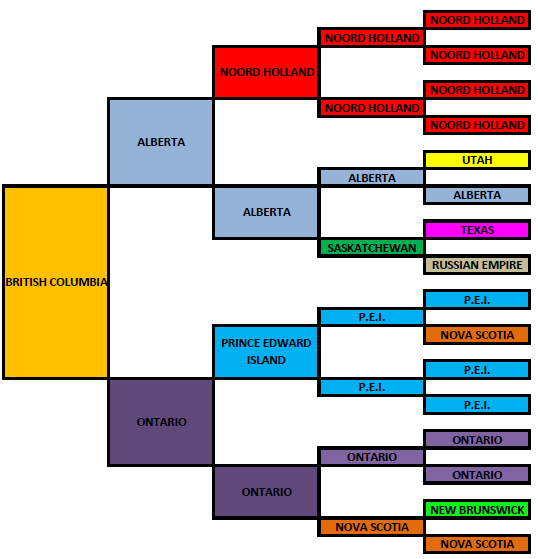
There are all sorts of other kinds of pedigrees like these that you can make. One example I’ve seen is people creating pedigrees for their ancestors’ religions. Another I’ve seen is an occupation pedigree. Then there was this mysterious pedigree Yvette Hoitink posted to Twitter:
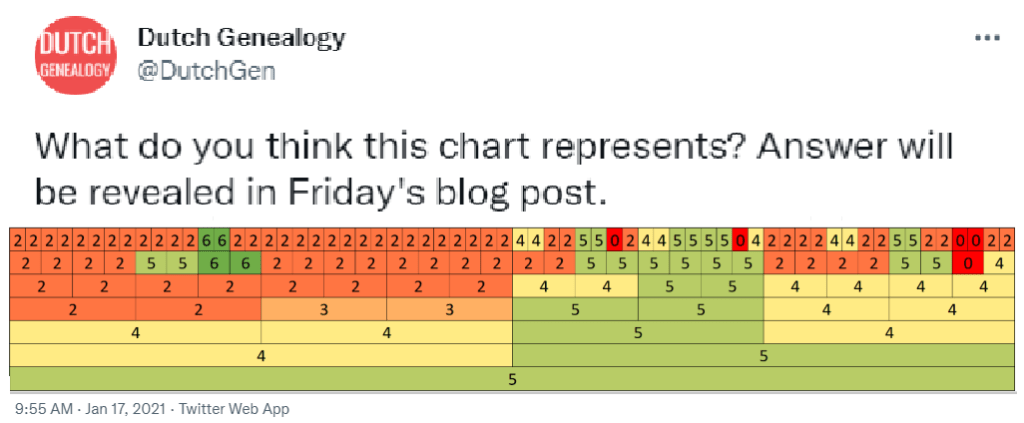
It was her introduction of the Level-Up Challenge, which involves improving the evidentiary foundation for each ancestor in your family tree. While I haven’t “officially” undertaken the Level-up Challenge, I find I’ve been sort of doing it for a few of my lines without actually setting out to do so.
What kinds of interesting variations of a pedigree chart have you created?
 A Deck of Ancestors