For this week’s 52 Ancestors Challenge, Amy Johnson Crow wrote “Are you researching a branch that it feels like there is nobody else in the world who is researching them? What about a collateral line that seems to have gotten lost?”
Turns out that line was mine!
Through sheer chance, through a random encounter with a farmer in the middle of nowhere, I discovered that my great grandfather, Heronimus (“Jerome”) Lerner and his descendants had “gotten lost”. I thought I was looking for them, it turns out they were actually looking for me!
Jerome Lerner was born in Henrietta, Clay County, Texas on March 12, 1895. His parents, Michael Lerner and Barbara Schmidt, were Germans from Russia. They lived in one of the many German colonies in Imperial Russia, in what is now part of Ukraine. These colonies usually bore the names of the places in Germany the original settlers had come from. After Michael and Barbara married, they lived in the village of Rastadt, where their first six children were born. In 1893, the family emigrated to the United States and settled in Henrietta, Clay County, Texas. Jerome was the first of eight children Michael and Barbara had after coming to America.
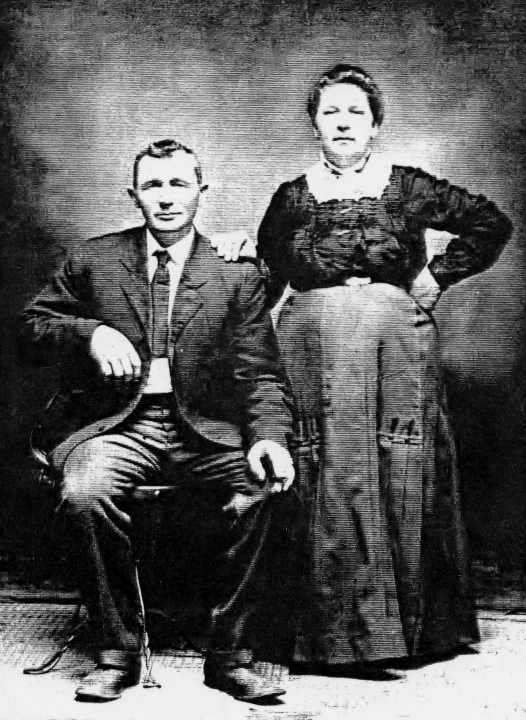
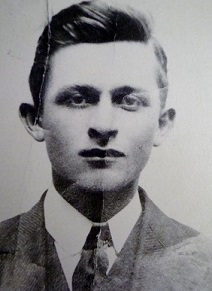
During the mid-1910s, members of the family began moving between Texas and Saskatchewan. Jerome was one of the first. Ultimately, Jerome, his parents, and at least four of his siblings ended up permanently moving to Canada and settled in the area of Fox Valley, Saskatchewan.
Jerome married my great grandmother, Emelia Anton, in 1920. They separated sometime around 1937. As far as I can tell, they never formally divorced. I thought that being Catholic, they might have simply separated without divorcing. However, my great aunt Adeline (their third child) told me that it was more due to the difficulty in obtaining a divorce at the time. Prior to 1968, divorces in Canada were granted through a private act of Parliament, through a difficult and expensive process.
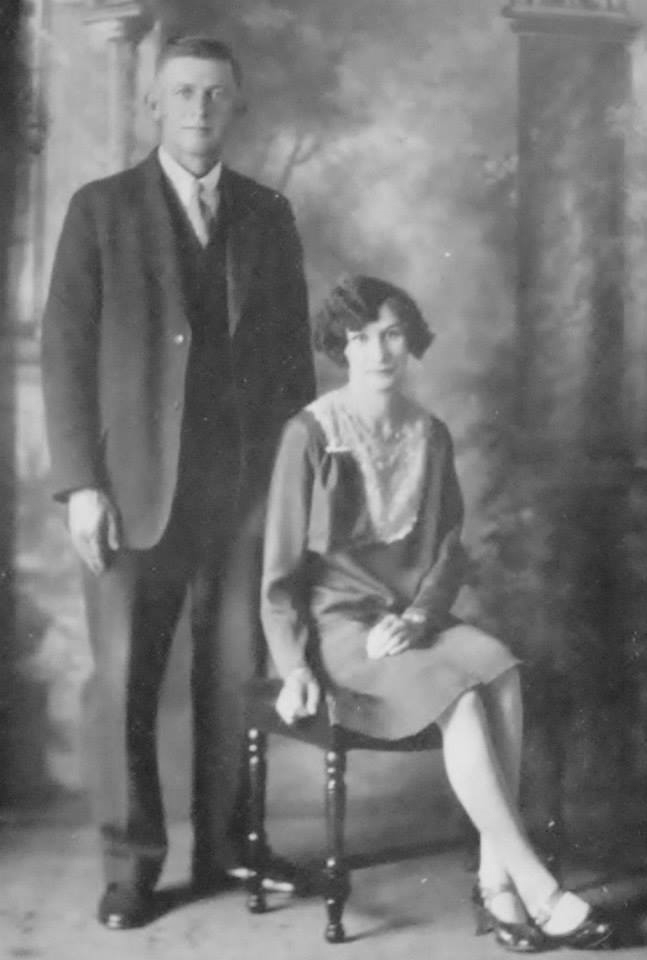
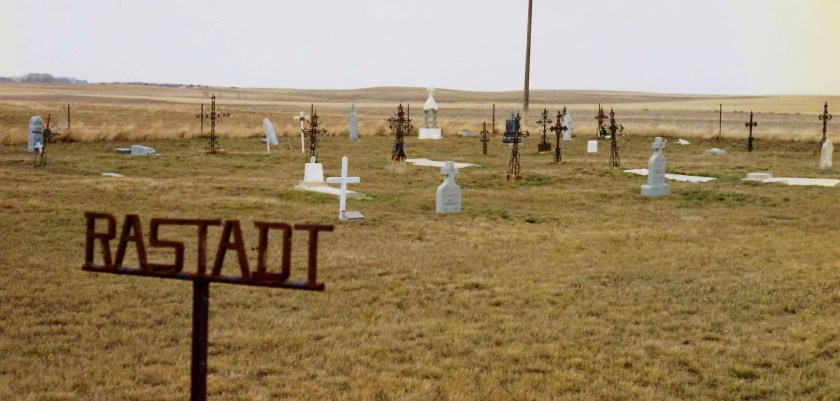
I’d known my great grandmother since I was born. We visited her almost every time we went to my parents’ hometown. As she lived until I was thirty, she was the great grandparent I knew best. I’ve written quite a lot about my Anton ancestors in this blog. They were also Germans from Russia. They came to Canada in 1912 and settled in Rastadt, Saskatchewan. All that is left of Rastadt is the schoolhouse and the cemetery.
While I knew Emelia, I never met Jerome. He died in 1954. My mother never even met him. From what I know, Jerome may have had some mental health problems from sometime around the time he and Emelia separated. As well, from what my mother has told me, the Lerner side of the family was none too pleased with Emelia after she and Jerome separated.
After the separation, Emelia moved to Alberta. I doubt she had much contact with her former Lerner relatives, although it sounds like my grandmother and her siblings might have. Nevertheless, it is easy to see how the Lerner branch of the family might have lost track of Emelia and Jerome’s family. As well, while I know my grandmother, her siblings, and my mother all seem to have been in close contact with their Anton relatives, the fact that branch of the family relocated may have made for a much looser connection. So it seems that Jerome and Emelia’s branch of the family became lost, or lost-ish, to both the Lerners and the Antons.
How were we “rediscovered”?
First, the Antons. In the mid-90s, I made contact online with a Paul Antone of Washington state. It was the early days of online genealogy, so we probably met on a message board or something similar. I wasn’t even using Netscape yet! Paul’s father was one of Emelia’s first cousins. I don’t know if they knew each other. Paul and I sporadically exchanged emails. Through him, I learned of Gordon Anton, a nephew of Emelia’s. At the time, he was compiling a history of the Antons. I don’t know if Gordon ever met Emelia, but it was apparent he didn’t know much about her branch of the family. Apparently he had been in contact with one of Emelia’s sons, my great uncle Herb, but he never got much information through that contact. Gordon ultimately published a history of the Antons, but it was pretty sparse when it came to Emelia and her descendants. Gordon was hoping to publish a second edition, but it never came to be.
Nowadays, finding a lost branch online – even if you are the missing branch being found – is hardly unique or exciting. In comparison, the rediscovery by the Lerner side was largely a matter of coincidence, even though it was because I had been in the right place at the right time. Even today, it would be an unusual occurrence.
In 1997, I left a long-term job and was taking a few months off before embarking on a short-term gig and a return to university. One of the things I did during that time off was visit my parents, who had returned to living in southern Alberta. I had not been to Fox Valley since I was a child, so I suggested to my mother that we go there for a daytrip.
Upon arrival in Fox Valley, we stopped at the village hall where we gathered a wealth of information. Among other things, I was able to discover the exact place where my grandmother was born. After visiting the Rastadt schoolhouse and cemetery, my mother and I made our way to the place where my grandmother was born.
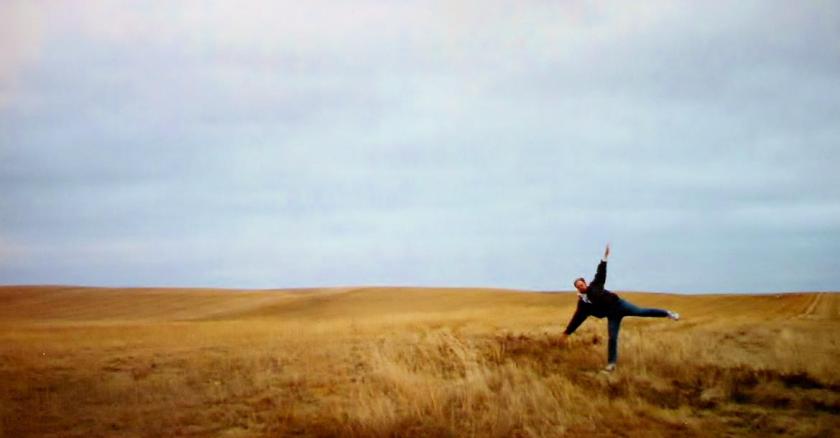
I was not surprised at all to find nothing but a field of wheat. We snapped some photos of the site and decided it was time to head back to Alberta. We drove a bit down the narrow road to find a place to turn around. We soon found a farmhouse with a driveway that provided the opportunity to turn around. After I pulled in, the farmer who lived there saw me and came out, thinking anyone he didn’t know who was out there must be lost.
He seemed surprised that we actually meant to be in his part of the world. We got to talking. It turned out he was a cousin of my grandmother’s. He and his wife invited us in for coffee and they showed us all sorts of interesting family photos and mementos. Talk about serendipity! He even told me the farmhouse my grandmother was born in still existed – a farmer had bought the building and moved it to his land.
Even more fortuitous, he told me that a family history was being put together of the Boechler family. Jerome’s maternal grandmother was a Boechler. The farmer gave me the contact information for the author. My timing was another stroke of luck. I made the call not long afterward and learned that the book was being finalized and would be going to press in a matter of days. It also turned out that Jerome and Emelia’s branch of the family was a huge mystery to the authors. I was able to supply most of the information about Jerome and Emelia’s branch in time for publication.
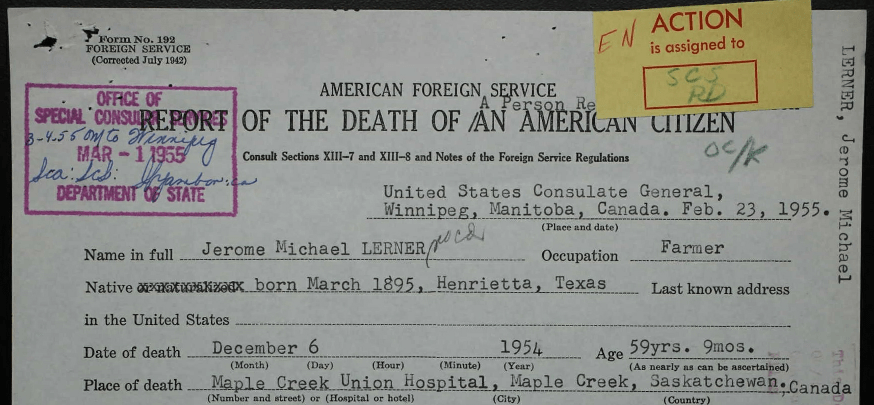
Not only was Jerome’s branch lost to the family, he seems to have been lost by both the United States and Canada. Upon learning of Jerome’s death, the US consulate in Winnipeg submitted a “Report of the Death of An American Citizen” to the American Foreign Service. The Foreign Service stated that it did not have any evidence that Jerome had American citizenship beyond the statement in the registration of death issued by the province of Saskatchewan. This, despite the fact the United States issued Jerome a passport when he first left for Saskatchewan in 1916. Meanwhile, there is no indication that Jerome was ever naturalized as a Canadian (or, at the time, as a British subject in Canada) or that he had renounced his American citizenship (which he was, as evidenced by his US passport).
 A Deck of Ancestors