52 Weeks – Week 44: Shadows

This week’s 52 Ancestors Challenge theme is a difficult one: “Shadows”. It has taken me a while to think of anything relating to this theme. If only I had an ancestor who was a spy. Or maybe I do, and don’t know it, they were that good!

After pondering the theme for a while, I began to consider that what often lies in the shadows are those skeletons in the closet and other parts of family histories that people don’t want to talk about. These things are not always misdeeds or scandals or salacious affairs. Sometimes they are things out of our control that have a cultural or societal stigma, such as mental health. The stories, or even existence, of family members afflicted with mental health problems were often deliberately kept in the shadows.

Two ancestors of mine who most likely had some form of psychological condition come to mind. While the fact they may have had a mental health condition was not entirely kept hidden, I have very little information about their circumstances because their stories came to me second or third hand, with little detail. From the accounts, it seems clear that the lack of detail is due to the hushed nature of the way their circumstances were recounted by those who knew them best.
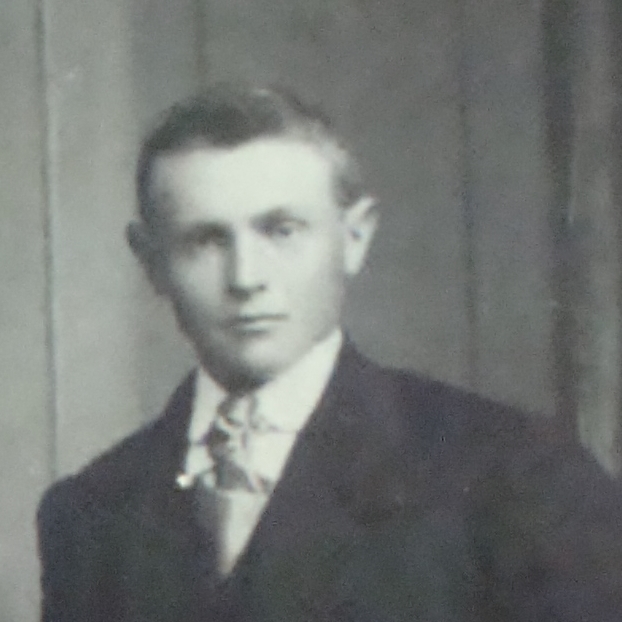
Johannis Albertus van der Fluit (1894-1932)

I will start with my great grandfather, Johannis Albertus van der Fluit. He died when my grandfather was eight years old. I really never had any contact with anyone else who knew Johannis personally or was old enough to remember him. However, over the years I heard passing references to his mental health and related problems.

I do know that my grandfather could recall some of the circumstances of his father’s mental health. Apparently, Johannis sustained some sort of head injury after an accidental blow to the head and began to exhibit strange behavior afterward. He suffered from delusions, which were very unsettling to him. According to one account of a delusional episode, it took my grandfather’s two older brothers and some neighbours to restrain him. From what I know of the story, Johannis was placed in a sanitorium, where he continued to suffer from delerium. However, shortly before his death, he experienced a period of rational thought. At that time, my great grandmother was summoned to see him, which occurred close to the time Johannis died.
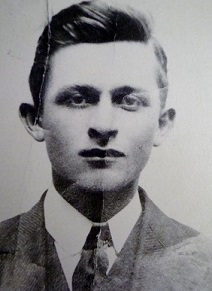
Heronimus Michael “Jerome” Lerner (1895-1954)

Another ancestor who, I believe may have had mental health problems was my mother’s maternal grandfather, Heronimus Michael “Jerome” Lerner. This is based upon things some of my relatives mentioned, briefly, over time. My mother never knew him; her grandparents separated long before she was born. However, my mother believes, based on what she heard from her mother, that Jerome had some sort of mental health condition.

Apparently Jerome’s mental health was a significant factor in the breakdown of his marriage. My mother says that a rift developed between the Lerners and my great grandmother over the separation. It seems there was some sort of expectation that my great grandmother should have remained with Jerome despite his troubles.

Whatever mental health problems my great grandfather may have had, I do not know what they were or how long they persisted. I know Jerome was farming in the 1940s. When my grandmother’s younger sister was in her teens, she went to live with her father on his farm for some time. As well, the record of his death noted that he was a farmer at the time of his death; it also made no mention of any mental health conditions. I spoke to my great aunt at length about her time living with her father, but she never really spoke of his mental health.

Finally, a mental health problem that may have affected a number of my female ancestors was postpartum depression. Again, I have no solid evidence of this. Rather, brief and cryptic conversations and speculation about the circumstances of some ancestors’ experience after childbirth certainly sounds consistent with what was likely postpartum depression.

In recent years, the stigma around mental health has diminished, although it still may be a difficult thing to talk about. Fortunately, there are now many more resources available for people who need help. In Canada, one can start with this “Get Help” resource page.
52 Weeks – Week 43: Organized

Wow, hard to believe that with this post, there are only ten weeks left of this year’s 52 Ancestors Challenge!

This week’s theme is “Organized”. I can be organized, but I hate doing it and it bores me as a topic. The irony is, given some unexpected events, I find myself having to be organized so that I can create this post. If not tonight, then it won’t be done at all!

I decided to do another take on the word. Organized labour came to mind. My maternal grandfather, Leo Burgess, was a strong union man. I thought I had a photo of his union card, which would have been a centerpiece of this post. Turns out I have almost everything but!

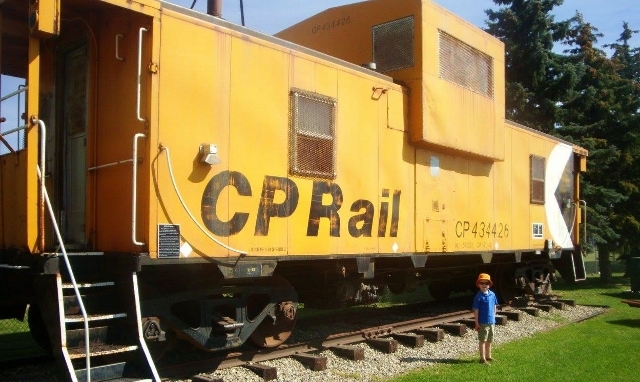
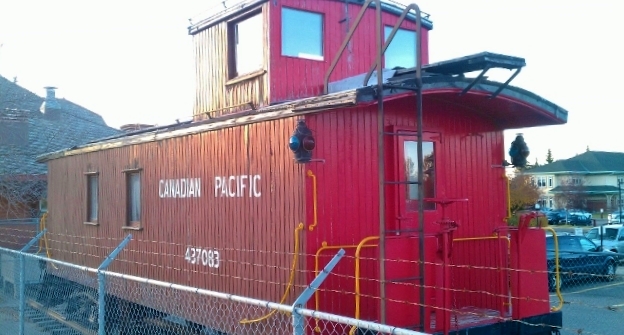
Many years ago, the CPR station in Lethbridge was converted into a public health center and the railyard was removed. However, this caboose remains preserved at the site of the former station. I wonder if my grandfather ever worked on this specific railcar. Heck, I wonder if this is one of the cabooses that he took me on!

My grandfather worked for the Canadian Pacific Railway for 32 years. He started as a brakeman and worked through the ranks, later becoming a yard manager. Early on, because of winter layoffs, he chose to work for the CPR in Cranbrook because there was more work there during the winter to provide a steady income. In 1972 he became a conductor, performing that role until his retirement in 1982.

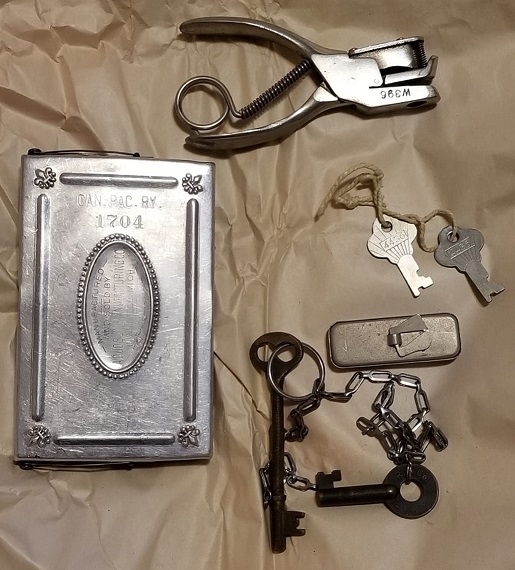
Some of the items my grandfather used for his work as a conductor, which are now in my possession.
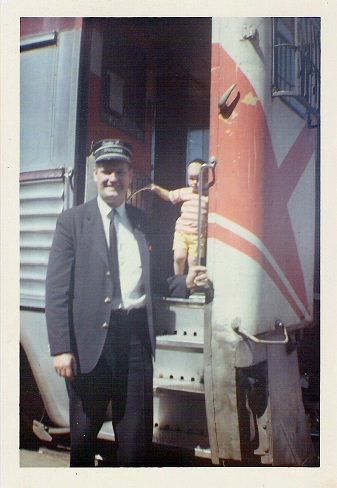
A trip to the train station with my grandfather. I would have been about two or three years old at the time.

My grandfather often brought me to the train station when I was little. Of course, the highlight was always getting to go on to the caboose. When I was older, he’d often take us kids to his favourite haunts, which included the former Labour Club of Lethbridge. We’d always get a treat, like a pop and french fries, but what we loved best were the “pull tabs”. This was many years before lottery scratch tickets, but the idea was similar. They were about the size of a scratch ticket and had semi-perforated tabs that you’d pull off. Underneath were the kinds of images you’d see on a slot machine. Grandpa would buy a bunch and let each of us kids open one up.

My grandmother’s politics were never a secret and she was more than happy to share her opinion about it. However, I don’t remember my grandfather ever talking about politics. I didn’t want to assume what his politics might be, even though he was a staunch union supporter. A few years ago I asked my mom about it. She told me that she rarely heard him talk about politics and he never said what parties he might have supported. My mom had her theories, but had little to base them upon.

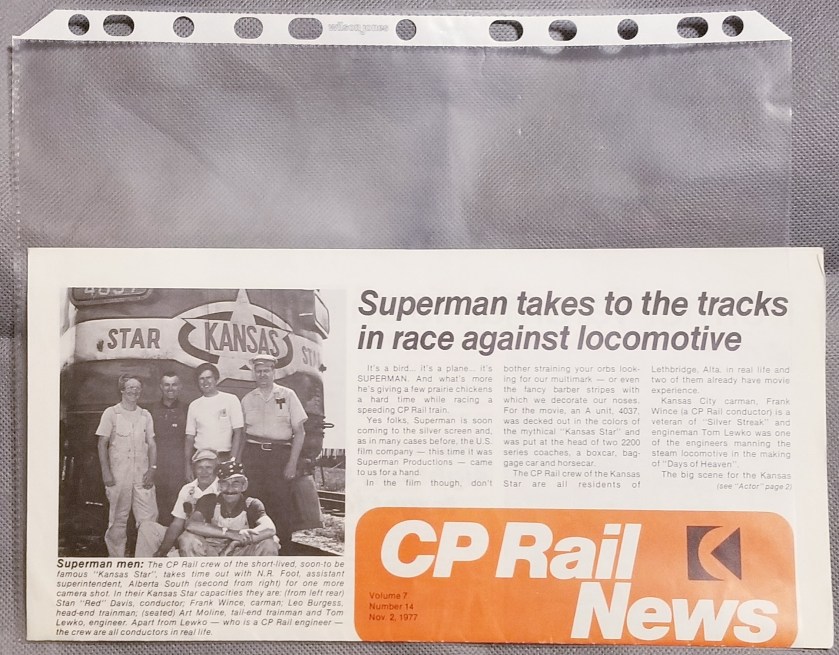
I previously wrote about my grandfather’s role as part of the crew operating the train that was used during the filming of Superman: The Movie.

I’ll be at my folks’ later this week. I’ll have to dig through what of my grandfather’s belongings that my mother still has and see what more I can find.

The CPR caboose on display at the Claresholm & District Museum in Claresholm, Alberta, which is located in a former CPR station. I highly recommend this museum – it is an amazing place for a town of Claresholm’s size.

.

52 Weeks – Week 42: Lost

The theme for this week’s 52 Ancestors Challenge is “Lost”. Given that it’s Week 42, I suppose what has been lost is the answer to the Ultimate Question of Life, The Universe, and Everything. Since I don’t have access to Deep Thought, I will have to consider a much simpler matter.

I began researching my family tree when I was about nine years old.

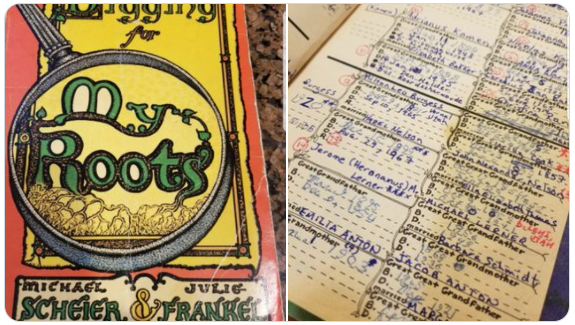
My first genealogy book, which I got through Scholastic Book orders when I was in Grade 4 or 5. Fortunately, it’s not lost and I still have it to this day.

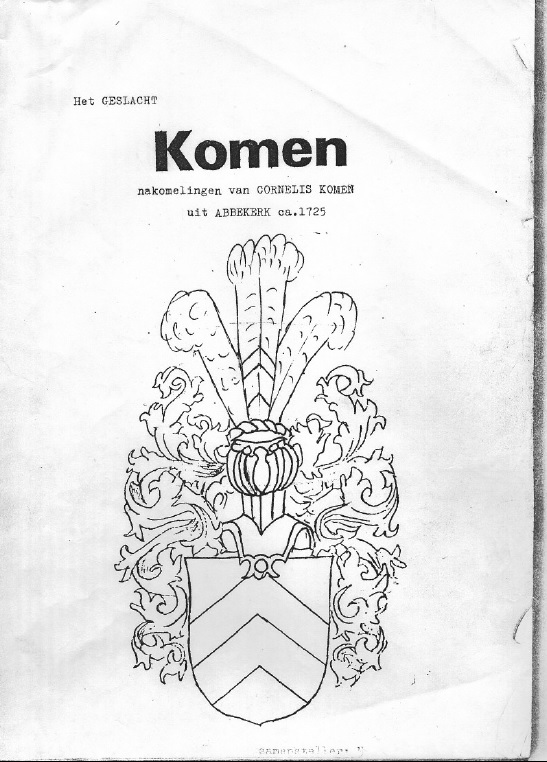
One of the earliest genealogical resources I had was a book my grandmother, Christina Komen, had about her family history, Het Geslacht Komen: Nakomelingen van Cornelis Komen uit Abbekerk ca. 1725 (“The Komen Line/Lineage: Descendants of Cornelis Komen from Abbekerk circa 1725”).

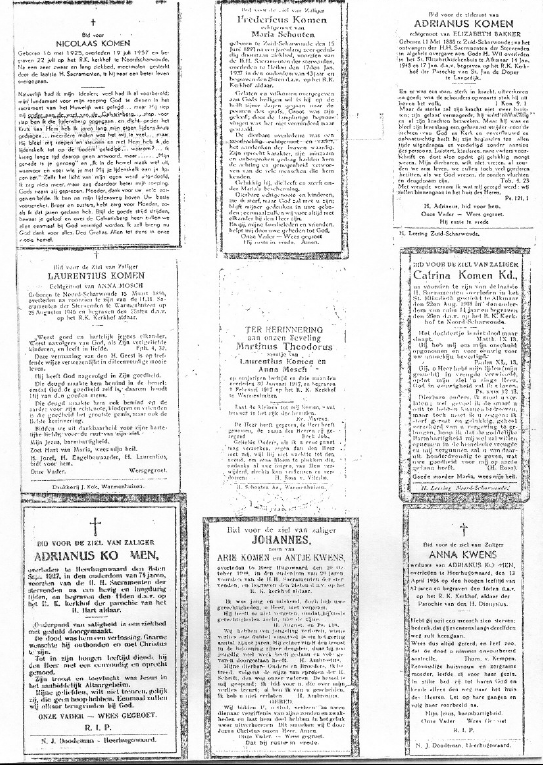
Cornelis Komen is my great 6x grandfather. It attempts to show all of his known descendants up to the time it was published. In addition to 36 pages consisting of a descendants’ narrative, additional pages include illustrations, interesting statistics, maps, numerous photos, and many “bidprentjes” (“prayer cards”, which could also be called funeral cards) and “familieberichten” (“family notices”). The quality of the image reproductions in the book were fairly poor, but they were discernable nonetheless. As well, the book includes a name index.

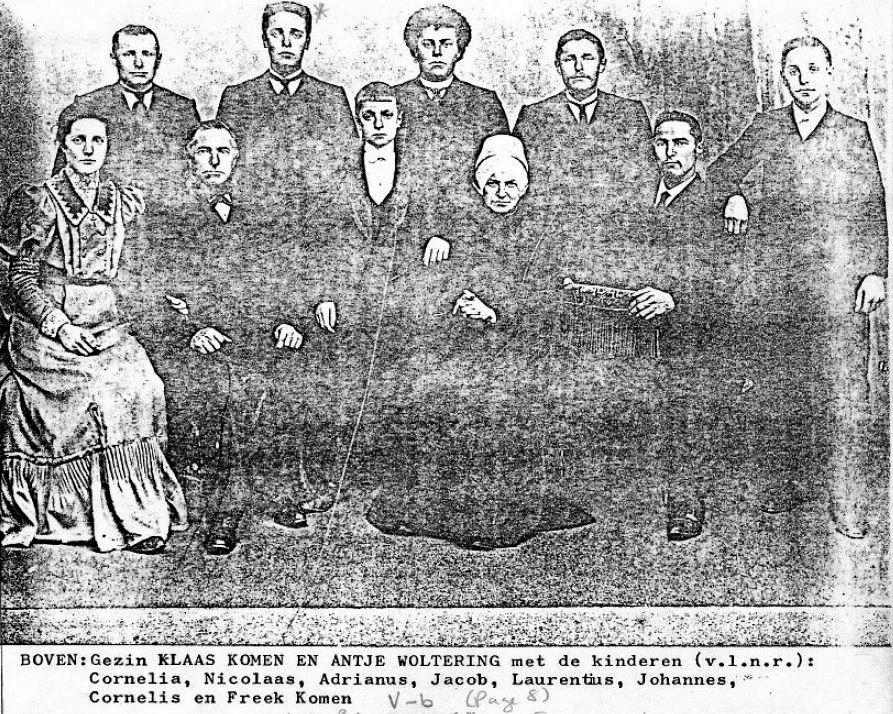
From page 8: “Above: Family KLAAS KOMEN and ANTJE WOLTERING with the children (from left to right: Cornelia, Nicolaas, Adrianus, Jacob, Laurentus, Johannes, Corenlis, and Freek [a diminutive of Frederik].”
Klaas and Antje are my great x2 grandparents (my grandmother’s grandparents).

My grandmother showed the book to me soon after she received it. Needless to say, it was fascinating to me. At the time, it was the furthest back I had ever seen documented for any branch of my family. I think back then, the furthest back ancestors I knew of were probably some of my second great x2 grandparents, and here was a book going four generations back from that. The book was one of the earliest texts I have in Dutch, which started me on a decades-long journey of trying to learn the language. It was also the one of the earliest detailed exposures I had to the geography of the area where my father was born.

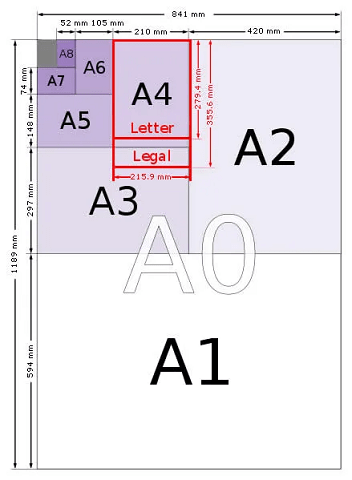
European paper sizes are so much more logical.

Years later, sometime in my late teens or early twenties, my grandmother loaned the book to me. Luckily, one of the first things I did was photocopy it. It wasn’t easy, because it was printed on A3 or A4 sized paper, which are different from the letter and legal sizes commonly used in North America. Today’s computerized photocopiers can easily adapt the size of the copy to fit the original, but such a thing did not exist at the time. Despite the quality of photocopiers at the time, I think the copy turned out fairly well. Many years later, I scanned the photocopies. I know I made the scans when Geocities was still a thing, so I am surprised by the quality of the scans.

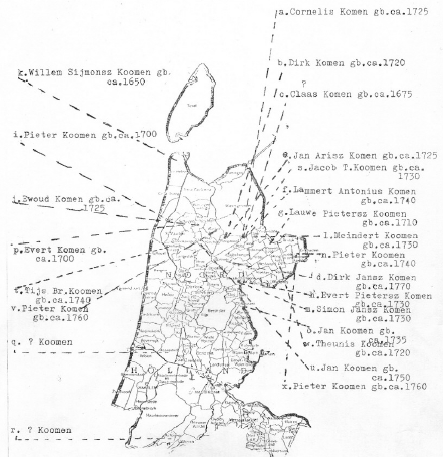
By the time I copied the book, I had moved to Vancouver. Going through it, I was amazed to see that there were other Komen descendants in Canada, all located in British Columbia. Some were in the Okanagan, in south-central B.C., some were on Vancouver Island, and some were in the suburbs of Vancouver, within 25 kilometers of where I was living at the time.

Page iv, showing the locations of various members of the Komen family in Noord Holland (North Holland).

It was fortunate that I copied the book. Years later, my grandmother misplaced it. She spent years looking for it. There might be copies of the book in a Dutch archive, and I am sure that there is – or was – a copy in the holdings of the CBG Centrum voor familiegeschiedenis (“Center for Family History”, formerly the “Centraal Bureau voor Genealogie”, hence “CBG”). However, as far as I knew at the time, the only extant copy of the book was the photocopy I had made.

Page 11, showing the bidprentjes for my great grandfather and his siblings.

After my grandparents passed away, many of the family photos and other items of interest to genealogists ended up in the possession of my father’s youngest sister. She is not really a family historian or genealogist, but she has shown or loaned many of those items with me over the years. While writing this, it crossed my mind that I should ask her if she found the book and has it in her collection. It would be nice to know whether it is still around.

52 Weeks – Week 41: Handed Down

For this week’s theme for the  52 Ancestors Challenge, “Handed Down”, I know exactly what I wanted to share.

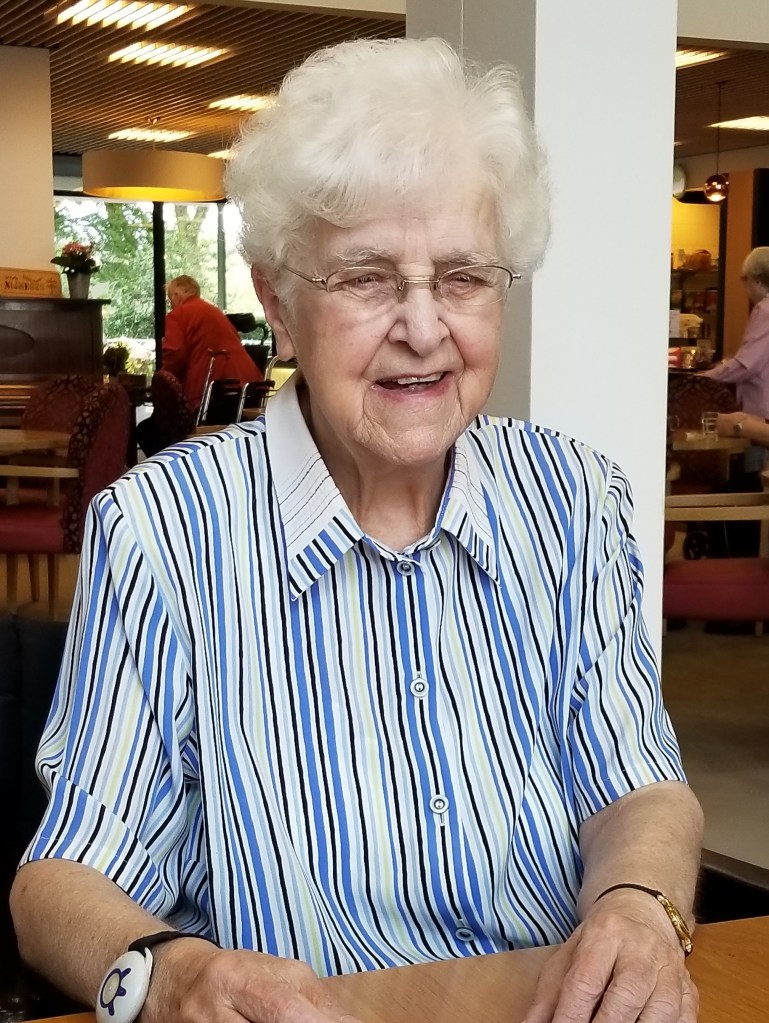
Tante Riet (1932-2021) in 2017.

As I wrote about in Week 10, my Tante Riet served as a missionary in Metro Lampung, Indonesia for many of years. When I was around 15 years old, she visited us during a trip she took to Canada. She gave me a hand-painted silk bookmark from Indonesia. I though I knew where I had been carefully storing it, but to my surprise it wasn’t where I thought it would be. Wat jammer, as you might say in Dutch.

However, I did find many wonderful mementos – wedding invitations, cards, letters, photos, and other souvenirs of special events. I even found a lovely thank you note a close friend of mine gave me thirty years ago. She wrote the first half in Dutch. While I could understand it at the time, with three decades of struggling to learn the language, I’m happy to say that I fully understand it now. Good thing I set it aside for so long!

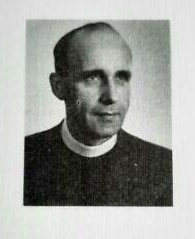
Cornelis Jan “Kees” Komen (1928-1987)

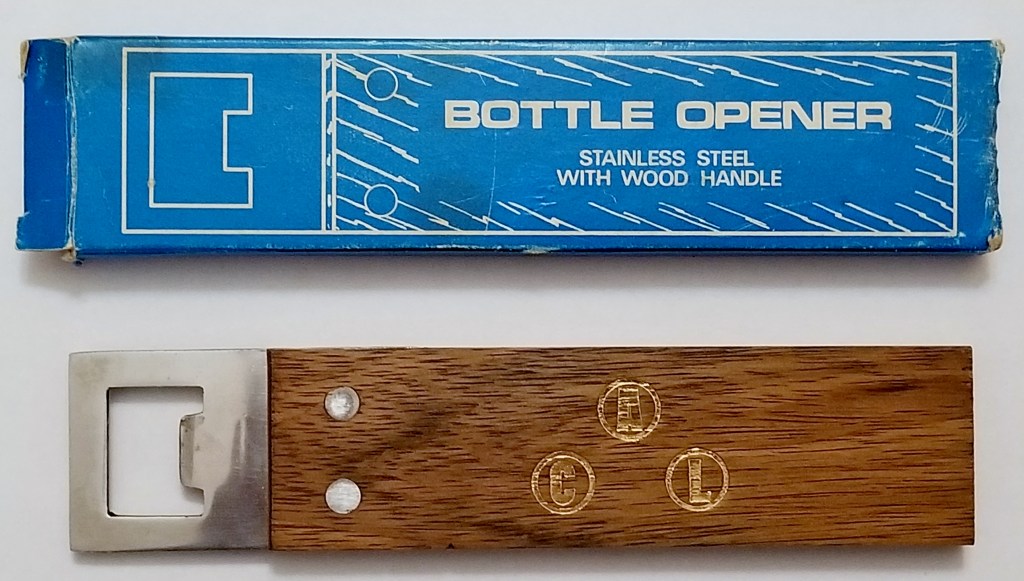
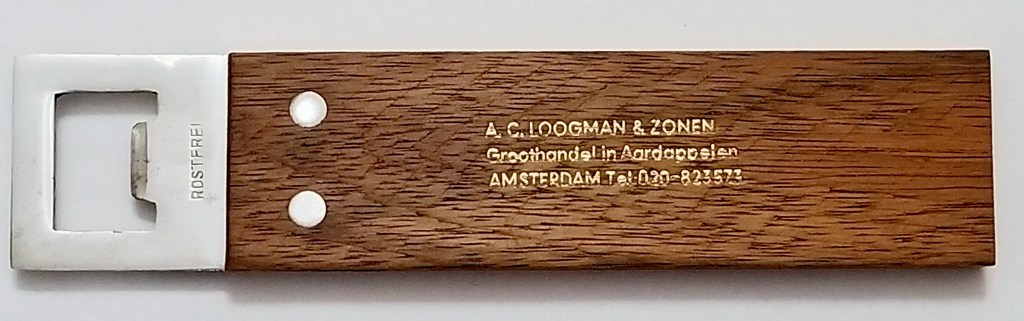
However, none of those items were things that fit this week’s theme. So instead I will share an item I inherited from one of Tante Riet’s older brother, Oom Kees. I also wrote about him in Week 10 and, like his sister, he led a religious life. I never met Oom Kees, who passed away in 1987. Somehow this item made its way from him to my mother, who passed it on to me – a very nice bottle opener. I have no idea if this was of any special significance to him or if there was a story behind it. I also have no idea how or why my great uncle came into possession of this item, which is a promotional item advertising a potato wholesaler. Was his parish a big purchaser of wholesale potatoes?

The note my mother enclosed when she sent it to me -which I still have – does not explain much. It simply says that it belonged to Oom Kees, my dad’s uncle, who had passed away in January that year. However, I received it gratefully, as I had little in the way of physical mementos from my family in the Netherlands.

I haven’t taken this out of the box in decades. I only took it out to photograph it for this post.
The back side.

The back side of the opener advertises “A.C. Loogman & Zonen – Groothandel in Aardappelen”. In English, “A.C. Loogman & Sons – Potato Wholesalers”. It seems odd that they’d have a bottle opener as a promotional item. You would think a more appropriate item might be a potato peeler.

I googled the company and it turns out they were in business up to November 2020, at which time it went bankrupt. Using the Wayback Machine of the Internet Archive, I found the from the last capture of their website (www.acloogman.nl), which included a short company history, which I’ve translated into English:

When you think of quality potatoes, you cannot ignore AC Loogman. Since 1953, we have ensured that customers from all over the world can enjoy the best potato varieties, collected directly from the grower and packed by us according to their wishes. Thanks to our extensive fleet and ultramodern fully automatic packaging machines, we can deliver large quantities within the country and abroad. But smaller regional customers can still count on our personal and committed service.

While a rather nondescript item, it certainly is one of the oddest heirlooms in my possession!

Addendum

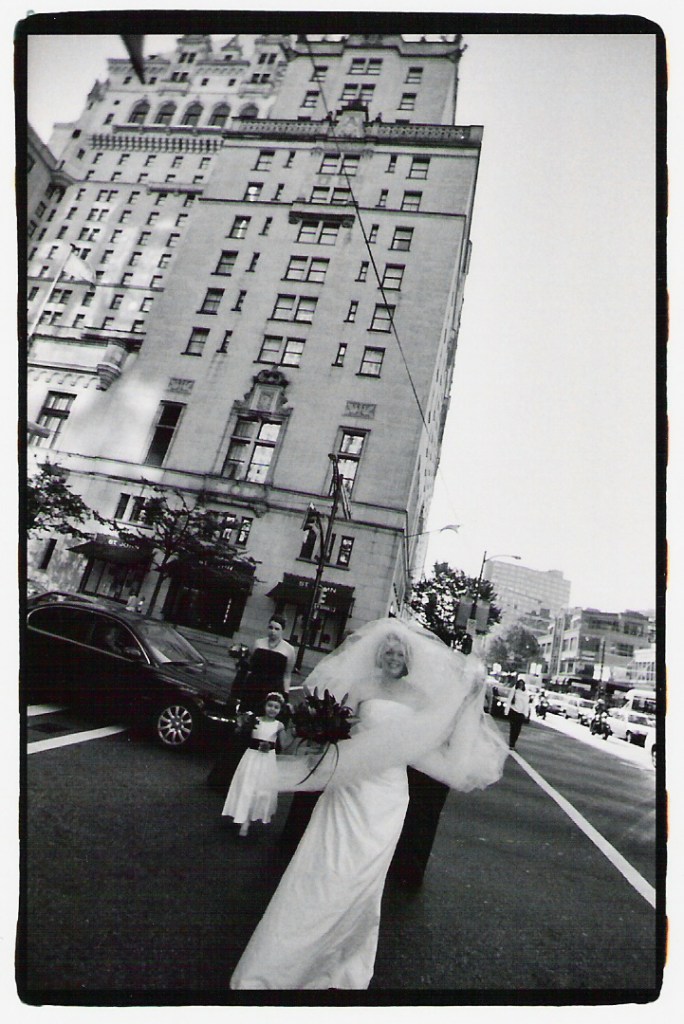
I generally focus on my side of the family in this blog, so it did not occur to me to think of my wife’s veil for our wedding. It was the same veil her great grandmother wore when she got married in 1918. A costume designer my wife knows did some repair work on it and added a bit of volume to it to spruce it up and make it look as good as new.

Addendum to the Addendum (Feb. 17, 2025): I just learned from a September 1918 newspaper that my wife’s great great great grandmother wore the same veil at her wedding in 1866. So my wife was wearing a pre-Confederation item! Talk about something old to go with the something new, borrowed, and blue!