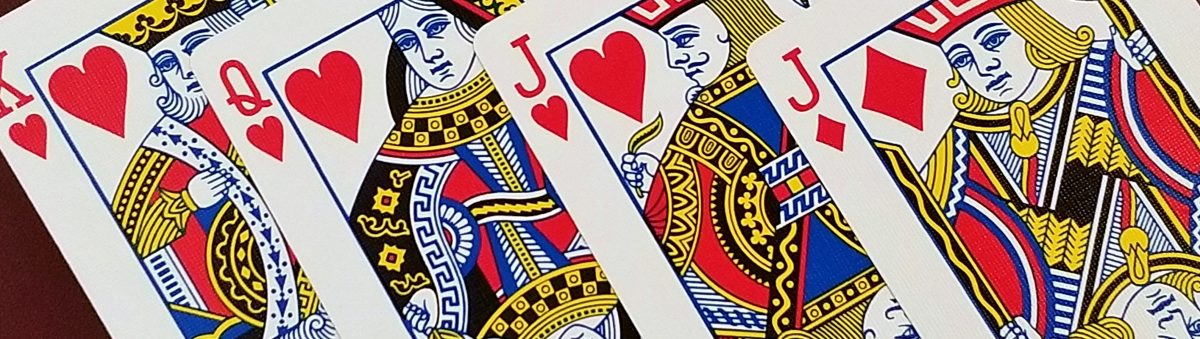
52W Mark IV – Week 19: Card K6 Cornelis Komen

Cornelis Komen (1812 – 1893)

Egad, this year’s 52 Ancestors Challenge  is already on Week 22, and here I am still trying to finish Week 19. I’ve never fallen this far behind in four years of participating in the challenge, but I’m not giving up. As they say, better late than never!

Cornelis Komen was born on September 2, 1812 in Zuid-Scharwoude, Noord Holland, Netherlands. He was the eldest child of Nicolaas Cornelisz “Klaas” Komen, a watermill worker, and Vrouwtje Hilbert Hilberts, who had been a domestic servant up until her marriage. Cornelis was the eldest of six children. While one of Cornelis’s siblings died in childhood, he and his other siblings lived long lives. He and a brother lived into their 80s, another brother lived until age 77.

Cornelis spent most of his life working as a farmer and day labourer in Noord Holland. While he moved several times throughout his life, he never lived much further than a few kilometers from where he was born. In the early 1830s, he worked as a farmer in Oterleek, which is a bit south of Heerhugowaard. By 1840, he was living and working in Heerhugowaard, which is a stone’s throw from Zuid-Scharwoude.

In February 1839, Cornelis married for the first time, to Marijtje Olijkan. Marijtje was born on May 9, 1815 in Opmeer. Cornelis and Marijtje’s marriage registration noted that both were farmers at the time. The marriage also occurred in Opmeer, almost nine kilometers from Heerhugowaard. Considering how Cornelis did not move very far afield* during his life, I don’t know how he came to be married to someone who lived so relatively far from the tiny domain that he inhabited.

Nevertheless, after the wedding Cornelis and Marijtje lived in Heerhugowaard. The couple had two children, both born in Heerhugowaard: Jan, born in 1839, and Trijntje, born in 1840. Sadly, Marijtje passed away on August 23, 1841, less than three weeks after giving birth. She was only 25. Trijntje died ten days after her mother, on September 3, 1840. Jan, on the other hand, lived to be 82.

Cornelis continued to live and work as a labourer in Heerhugowaard after he was widowed. Then, on May 2, 1851, over a decade after Marijtje’s death, Cornelis remarried. His second wife was Maartje Mettes, my Gx3 Grandmother, who was born in Hensbroek on December 25, 1817. Maartje was the daughter of Pieter Ariensz Mettes and Grietje Cornelis Poland. This was also Maartje’s second marriage. She had been previously married for ten years to Klaas Buur, with whom she had four sons. The eldest and the youngest of their children both passed away before Klaas died, in 1847.

By marrying Maartje Mettes, Cornelis Komen became the brother-in-law of…Cornelis Komen! Maartje’s older sister, Neeltje, was also married to a man named Cornelis Komen. The two Cornelises were first cousins once removed. There also may not have been much confusion between the names, because it appears that the other Cornelis more likely went by the variant “Crelis”.

For the first few years after their marriage, Cornelis and Maartje continued to live in Heerhugowaard, where they had two sons: Nicolaas “Klaas” (my Gx2 Grandfather born 1852) and Adrianus “Arie” (born 1853). Sometime shortly after Arie’s birth, the family moved to Zuid-Scharwoude, where Cornelis worked as a day labourer. In 1854 they were living in Pannekeet, on the outskirts of Zuid-Scharwoude, along with Maartje’s sons from her previous marriage and his sons with Maartje.

Cornelis and Maartje, along with Arie, were still living in Zuid-Scharwoude as late as the 1870s, where Cornelis continued to work as a labourer.  Cornelis and Maartje relocated to Heerhugowaard by the 1880s. By then, all their children were adults, but Maartje’s granddaughter, through the children she had with Klaas Buur, was living with Cornelis and Maartje.

The family was still in Heerhugowaard at the time Cornelis died, on November 13, 1893. He was survived by Maartje, who lived until 1896.

Cornelis’s death registration, which notes his marriages to Maartje Olijkan and Maartje Mettes.

*All puns are intended. Intend your puns!

52 Weeks – Week 42: Lost

The theme for this week’s 52 Ancestors Challenge is “Lost”. Given that it’s Week 42, I suppose what has been lost is the answer to the Ultimate Question of Life, The Universe, and Everything. Since I don’t have access to Deep Thought, I will have to consider a much simpler matter.

I began researching my family tree when I was about nine years old.

My first genealogy book, which I got through Scholastic Book orders when I was in Grade 4 or 5. Fortunately, it’s not lost and I still have it to this day.

One of the earliest genealogical resources I had was a book my grandmother, Christina Komen, had about her family history, Het Geslacht Komen: Nakomelingen van Cornelis Komen uit Abbekerk ca. 1725 (“The Komen Line/Lineage: Descendants of Cornelis Komen from Abbekerk circa 1725”).

Cornelis Komen is my great 6x grandfather. It attempts to show all of his known descendants up to the time it was published. In addition to 36 pages consisting of a descendants’ narrative, additional pages include illustrations, interesting statistics, maps, numerous photos, and many “bidprentjes” (“prayer cards”, which could also be called funeral cards) and “familieberichten” (“family notices”). The quality of the image reproductions in the book were fairly poor, but they were discernable nonetheless. As well, the book includes a name index.

From page 8: “Above: Family KLAAS KOMEN and ANTJE WOLTERING with the children (from left to right: Cornelia, Nicolaas, Adrianus, Jacob, Laurentus, Johannes, Corenlis, and Freek [a diminutive of Frederik].”
Klaas and Antje are my great x2 grandparents (my grandmother’s grandparents).

My grandmother showed the book to me soon after she received it. Needless to say, it was fascinating to me. At the time, it was the furthest back I had ever seen documented for any branch of my family. I think back then, the furthest back ancestors I knew of were probably some of my second great x2 grandparents, and here was a book going four generations back from that. The book was one of the earliest texts I have in Dutch, which started me on a decades-long journey of trying to learn the language. It was also the one of the earliest detailed exposures I had to the geography of the area where my father was born.

European paper sizes are so much more logical.

Years later, sometime in my late teens or early twenties, my grandmother loaned the book to me. Luckily, one of the first things I did was photocopy it. It wasn’t easy, because it was printed on A3 or A4 sized paper, which are different from the letter and legal sizes commonly used in North America. Today’s computerized photocopiers can easily adapt the size of the copy to fit the original, but such a thing did not exist at the time. Despite the quality of photocopiers at the time, I think the copy turned out fairly well. Many years later, I scanned the photocopies. I know I made the scans when Geocities was still a thing, so I am surprised by the quality of the scans.

By the time I copied the book, I had moved to Vancouver. Going through it, I was amazed to see that there were other Komen descendants in Canada, all located in British Columbia. Some were in the Okanagan, in south-central B.C., some were on Vancouver Island, and some were in the suburbs of Vancouver, within 25 kilometers of where I was living at the time.

Page iv, showing the locations of various members of the Komen family in Noord Holland (North Holland).

It was fortunate that I copied the book. Years later, my grandmother misplaced it. She spent years looking for it. There might be copies of the book in a Dutch archive, and I am sure that there is – or was – a copy in the holdings of the CBG Centrum voor familiegeschiedenis (“Center for Family History”, formerly the “Centraal Bureau voor Genealogie”, hence “CBG”). However, as far as I knew at the time, the only extant copy of the book was the photocopy I had made.

Page 11, showing the bidprentjes for my great grandfather and his siblings.

After my grandparents passed away, many of the family photos and other items of interest to genealogists ended up in the possession of my father’s youngest sister. She is not really a family historian or genealogist, but she has shown or loaned many of those items with me over the years. While writing this, it crossed my mind that I should ask her if she found the book and has it in her collection. It would be nice to know whether it is still around.