52 Weeks – Week 32: At The Library

Despite having spent the last two weeks on a staycation, I’ve done precious little genealogy. You’d think that with all that time, I wouldn’t be completing Week 32 of the 52 Ancestors Challenge with minutes to spare before Week 33.

My eldest son and I attended the monthly on-line meeting of the B.C. Genealogy Society (BCGS) earlier this week. Otherwise, even with a four-hour block of time to myself today in which I planned to tackle some long-outstanding genealogy tasks, I got through exactly three documents. However, what I have managed to do is create all sorts of family memories, especially with our sons. We’ve had lots of outings around our city and participated in all sorts of fun activities, many of which were on the kids’ bucket lists. Creating family history is just as important and fun as studying it!

One thing we didn’t get up to was a trip to the library, which is normally a regular part of our lives. We love outings to the library, which is easy since we live so close to the Steveston branch of the Richmond Public Library. The kids have had library cards since they were very little. In fact, our youngest went to pre-school in the same building as the library, so it was easy to pop in for a library visit.

Trips to the library were also a regular thing with my family when I was little. My earliest memories include trips to the library with my parents – I can remember doing so as far back as when I was three years old. Family trips to the library continued even into high school, although by that time I was going there more often on my own. Nevertheless, I became quite familiar with my parents’ reading interests while cultivating my own. Usually I’d read not only the books I signed out, but often those of my parents, especially my father. He tended to read a lot of biographies and non-fiction, which was closer to some of my interests.

I also loved the school library. In grades five, six, and seven, I volunteered in the school library. Most days of the week I’d be there after school. The librarian was extremely encouraging and supportive. My favourite activity was helping the librarian with the bulletin boards she was always creating to promote reading. They often had a seasonal theme and more often than not involved some form of play on words. It was always a great source of pride when the librarian liked one of my ideas and let me design a bulletin board using my idea.
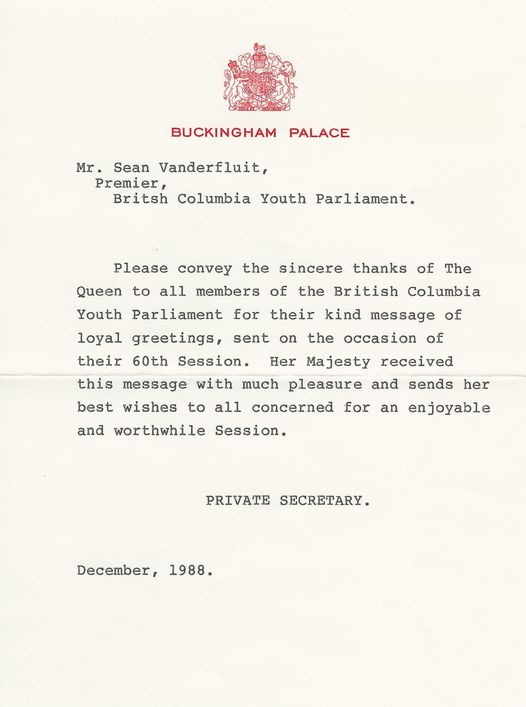
I needed proof of residence to get a library card with the city library. I hadn’t yet received any bills with my address on it and none of my ID had my new address. Luckily, the library accepted any postal mail with your name and address as proof of residence, so I used this letter and the envelope in which it came as proof of residence. The library accepted it and I have had that library card to this day.

After graduating with my history degree, I had a summer job as a librarian’s helper in a small government agency. A year later, after I found a career-path job, I took on a second part-time job at the local library for the extra income. I was worried during the job interview, as I had inadvertently incurred some late return fines that I hadn’t yet paid. Lucky for me, it wasn’t an issue. My job mostly involved shelving books and packing shipments for inter-branch returns, but it was a fun place to work and I got to know a lot about how libraries work.

Of course, libraries are a large part of genealogical research. In the days before on-line research, I was quite dependent on the LDS Family History Centre in Burnaby. From the Vancouver neighbourhood where I lived in the 90s, the Burnaby FHC was a 90-minute bus ride each way. I made that trip a lot. After I actually moved to Burnaby in the early naughts (twenty years later, I still don’t know what we’ve decided to call the first decade of this century!), I never visited the place. Developments in technology had minimized the need to so.

One library I wish I could visit in person more often is the BCGS Walter Draycott Library. It’s a wonderful library. In fact, it’s almost TARDIS-like. It seems so much larger on the inside than it appears from the outside. Unfortunately, it’s a 90-minute round trip and its Saturday hours conflicted with our children’s activities. However, due to the kids’ activities coming to a halt due to COVID, my eldest son (who is also a BCGS member) and I have been able to make the trip to the BCGS library after it reopened following its closure due to the pandemic.
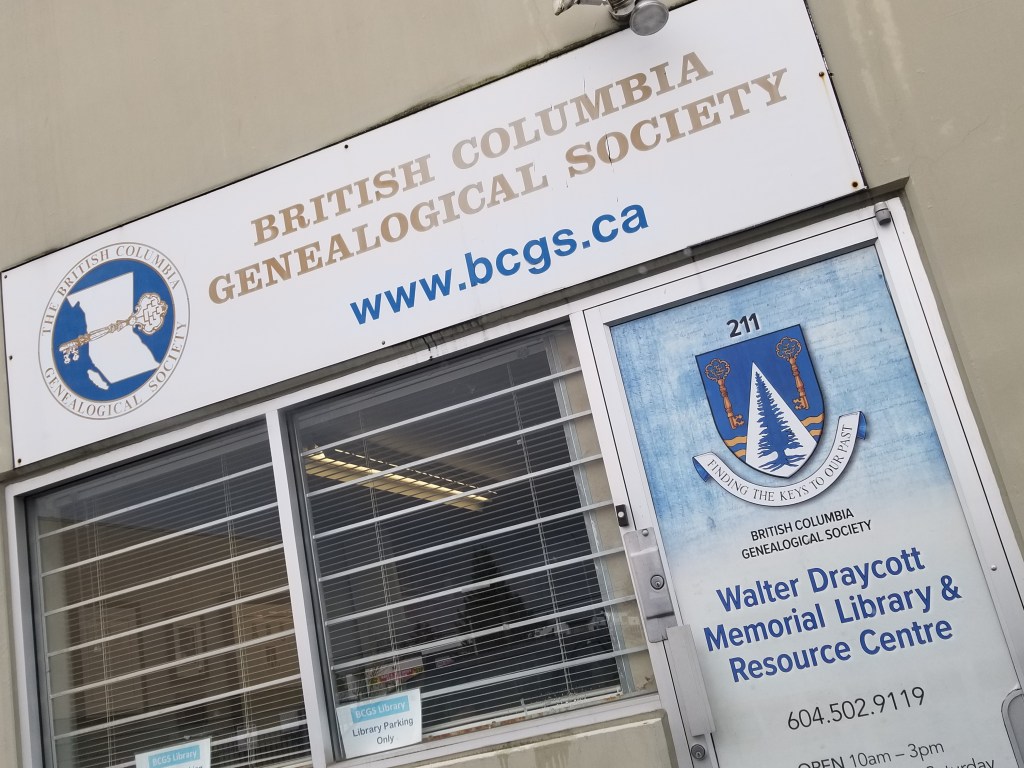
It’s bigger on the inside!

We’re very lucky to have such a gem of a resource, even if we’re only able to take advantage of it infrequently. Of course, with two weeks off work, you’d think I’d be able to squeeze in a visit – if only the BCGS Library wasn’t closed for the summer break!

It was only near the end of my time off that I realized that I could have gone to the Cloverdale Branch of the Surrey Public Library, which has an amazing family history library. The irony is that our most recent family staycation activity took us within 100 meters of the library. In addition to genealogy, our eldest child is crazy for anything transportation related, and whatever the eldest is interested in, little brother is too. So we took them to ride the historic tram operated by the Fraser Valley Heritage Railway Society. Big brother doesn’t have to know that we were practically across the street from the genealogy library.
52 Weeks – Week 31: Help

The greatest genealogical help I received began 26 years ago this summer. It started with a simple invitation I spotted on a message board. Someone was planning a visit to a Dutch archive later in the week and was offering to do a lookup for anyone who might be interested.

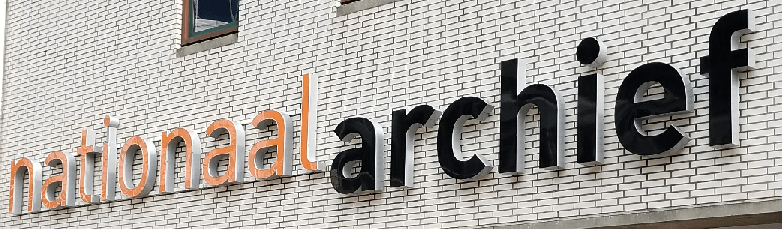
The National Archives of the Netherlands in The Hague.

Two things immediately came to mind when I saw this week’s 52 Ancestors Challenge theme, “Help”. First was the earworm that has resulted in the Beatles’ song bouncing around in my head all day. Second was my friend Nol, who over the years has provided me with an incredible amount of help in researching the Dutch side of my family.

Back in the early days of online research in the 1990s, there wasn’t the variety or depth of resources that we now enjoy today. One source I found said that as of 1996, there were only 10 million users of the internet world-wide. While many libraries, archives, and genealogical societies had begun to stake out a presence, they weren’t yet able to provide the scope of digital materials that are so easily accessible today. It was still often necessary to obtain documents the old-fashioned way, by using the mail. Bulletin boards and Usenet were still a common way of connecting with other genealogists.

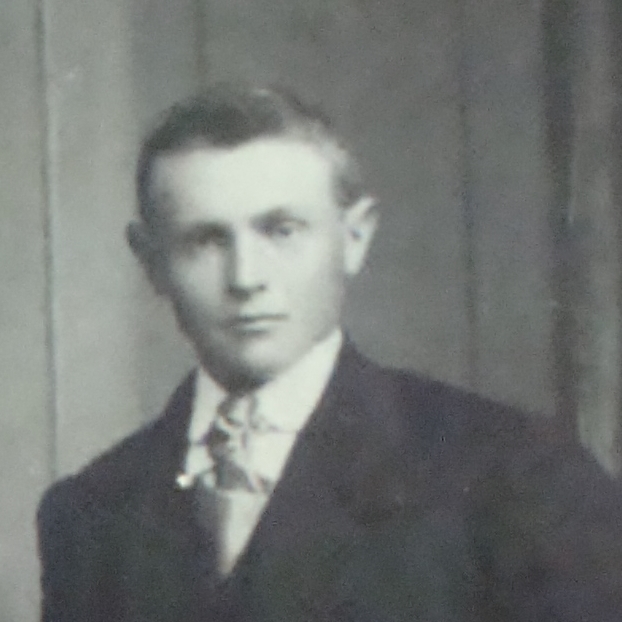
Johannis Albertus van der Fluit (1894 – 1932), the subject of my first query to Nol.

While I know it was sometime in early September 1996, I can’t remember where I first saw the original post I saw by Nol (short for “Arnoldus”), or whether it was a message board or something else. It was just a brief statement saying that he was going into a local archive the next day and asking whether he could look anything up for anyone while he was there. I contacted him and asked him if he’d be willing to look up one name for me, my great grandfather Johannis Albertus van der Fluit.

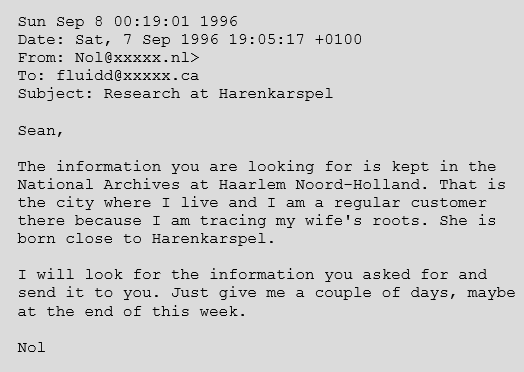
Nol emailed me the next day, telling me that the information I needed was held in the Noord Holland Archives in Haarlem (Noord-Hollands Archief). To my good fortune, Nol lives in Haarlem. He said he would be going into the archive sometime later in the week and he would get back to me.

My first email from Nol after we moved off the message boards. Later in our correspondence, I learned that the family line of Nol’s wife intersected with mine.

Nol followed up less than a week later. Not only had he looked up my great grandfather, but he looked up all four of my father’s paternal great grandparents (my great great grandparents). Furthermore, Nol took it further and looked up several of my great great great grandparents. The email he sent me set out a summary of the birth records for each of them, including the record numbers, dates and places of birth, each person’s parents’ names, the names of the witnesses, and the occupations of the persons named in the records.

While I had some prior knowledge, my early exchanges with Nol provided a significant introduction to the nomenclature with which I am now so familiar, including the types civil institutions and records sources (such as the “Burgerlijke Stand” – civil register), the municipal system of local governance (“gemeente”), population registers, and the Dutch words and phrases associated with genealogical research. So not only has Nol been a mentor in Dutch genealogy, I have often relied upon him as a language coach as I tried to teach myself Dutch. No Duolingo back then!

Over the next two years and over fifty emails, Nol provided me with countless records summaries: births, marriages, and deaths of ancestors and cousins from all over Noord Holland. I still have a copy of each and every one of them. I originally converted each email into a WordPerfect document. Over the years I have updated the format in which they’re saved and made sure that they remain accessible. I still go back to them often. One time several years ago I went through them again, one by one from the beginning, to ensure that I squeezed them for every drop of information I could gather.

The timing during which our paths crossed online resulted in a much longer and deeper relationship than what might have resulted had we met online nowadays. Dutch archives are amazing in how much they’ve scanned and made available online for free. Nowadays, over the course of a week I could probably find scanned online images of everything Nol found for me over that two-year period of in-person archival visits. In fact, over the last many years, I pretty much have found and downloaded digital images of all those records. So while we might still have become acquainted online, I would not have been as reliant on Nol as I might have been in the present.

Unfortunately, I’ve been unable to reciprocate Nol’s incredible kindness. He needs more Canadian relatives! Despite that, what makes me particularly happy is that our connection has evolved into much more of a friendship, particularly given that he and I connected in the early days of Facebook. Our connection has reached a point that I often forget the genealogical origins of our relationship.

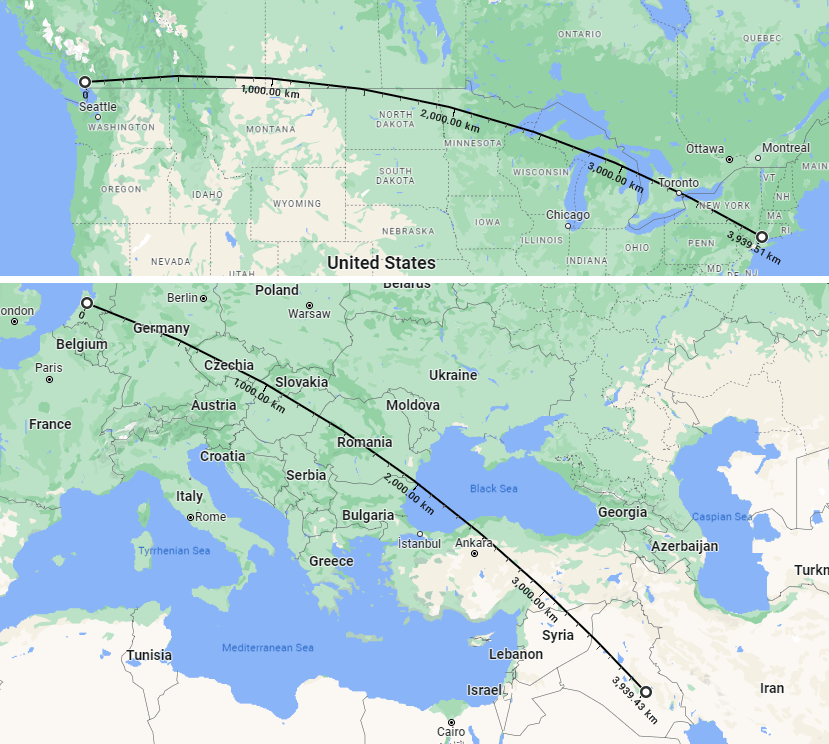
My only regret is that in the 26 years I have known Nol, we have never met in person. Pre-COVID, he often visited the United States, but his travels mainly took him to the east coast. From where I am on the west coast of Canada, the eastern seaboard of the United States is about as far as Baghdad is from Amsterdam. Not exactly a trip down the street. It’s also why I don’t know your cousin in Toronto. 😂

This is why my Dutch relatives and I have such different points of view about long road trips.

I have only been to the Netherlands twice. The first time was before I met Nol. My last trip there occurred in 2017. I had hoped that I could meet Nol at that time, as I was literally going to be in Haarlem during part of my trip. Unfortunately, at the same time I was in the Netherlands, Nol was in the United States. Wat jammer, as you might say in Dutch.

I am still hoping that one day our paths might cross in real life. Nevertheless, I am grateful for all the help, mentoring, and friendship Nol has provided to me over the years. The depth of my gratitude is profound. Dank je wel, Nol!

52 Weeks – Week 30: Teams

Maybe it’s the fact it’s been a long hard couple of weeks, maybe it’s the heat, or maybe it’s the lack of a spark of an idea, but I just don’t have much left in the tank for this week’s 52 Ancestors Challenge. Which might be a good thing – nothing wrong with a short snapper of a post to add some variety to the long posts I usually write.

This week’s theme is “teams”. I decided not to go for the most literal take on it. Instead, I’ll go with the fact my great great grandfather, Horace Burgess, was listed in the 1880 census as a teamster.

1880 United States census, Utah Territory, Utah County, Goshen Precinct, Enumeration District 35, page 3.

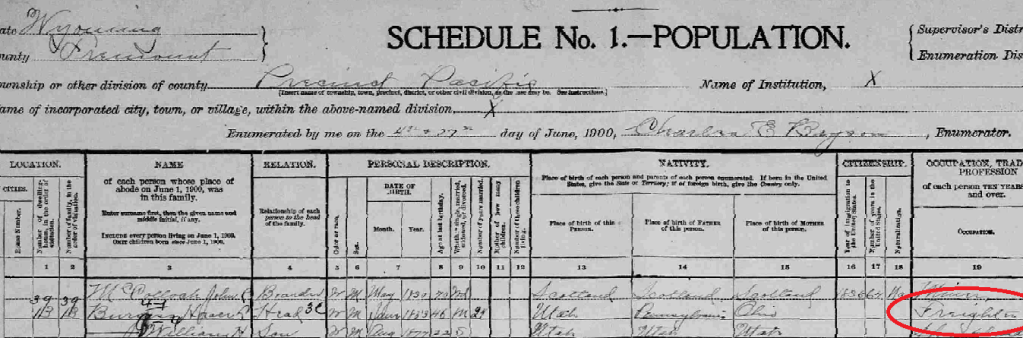
By 1890, Horace was in Wyoming, where his occupation was “freighter”, a related occupation related to cattle work.

1890 United States census, Wyoming, Precinct Pacific, Enumeration District 30, Fremont County

See you next week!

52 Weeks – Week 29: Fun Fact

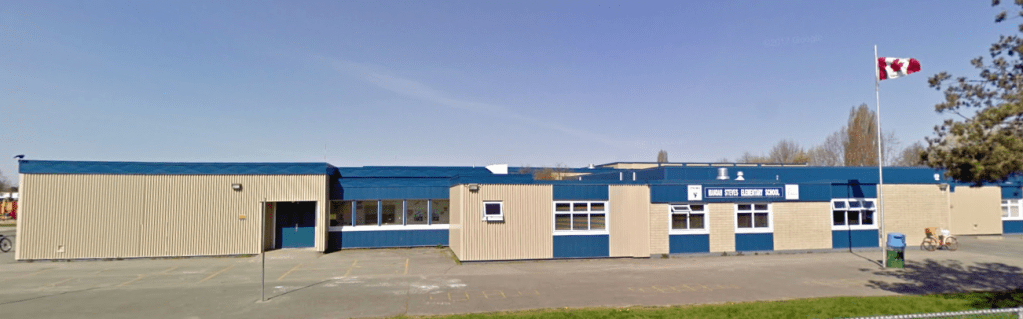
When I noticed that the theme for this week’s 52 Ancestors Challenge was “Fun Fact”, rather than assume what people might consider to be a fun fact, I asked each of my boys, “what’s a fun fact about our family tree?” The 11-year-old answered, “that we have ancestors from the Bailiwick of Jersey!” The 7-year-old said, “that we’re related to someone who has a school named after them!”

 Manoah Steeves Elementary School.
Manoah and my sons are first cousins six times removed.

Pity. Great ideas, but I’ve covered both those topics. It’s as if they both deliberately conspired to suggest my Week 5 post, in which I wrote about both those things.

I gave it a few days and asked again.

“What about having Mayflower ancestors?” Great idea, but that doesn’t actually really interest me or strike me as a fun fact. When I discovered a connection to a Mayflower passenger, I was actually rather disappointed because it’s such a genealogical trope.

“What about that we’re related to three U.S. Presidents?” Three for them, only one for me. Again, that’s as interesting to me as finding a Mayflower ancestor. To me, that’s another well-worn genealogical topic.

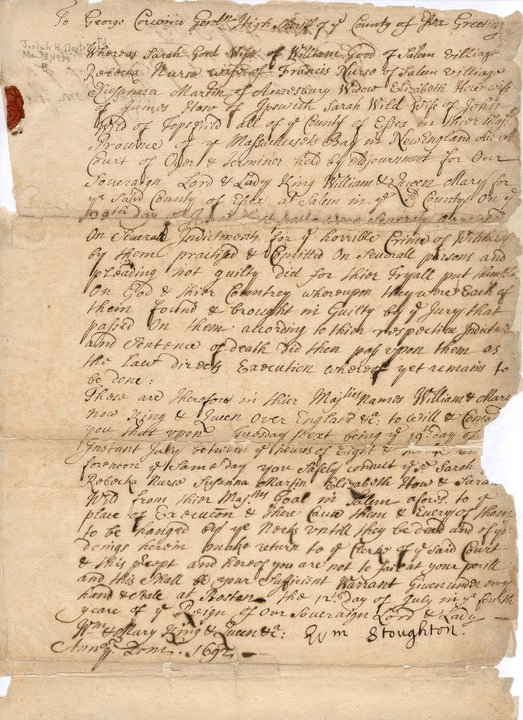
The death warrant for Rebecca Nurse

That said, there is one group I can trace my line to that is a popular genealogical goal, which for some reason I have found somewhat interesting. My Gx10 grandmother was Rebecca Nurse, who was one of the women of Salem Village executed on the false accusation of being a witch. I had avoided reading The Crucible until I made the discovery, because I had no previous interest in that historical event. However, this doesn’t strike my fancy as a “fun fact”.

“What about the fact that we were the missing branch of the family?” That’s a brilliant suggestion. Unfortunately, it’s another thing I’ve already written about!

Despite their enthusiastic responses that all fit the query, I had pretty much written about all the fun facts they suggested. Rather than dampen their excitement, I let them know that they had some brilliant and interesting ideas.

So what’s a fun fact I haven’t already written about?

After sleeping on it, I realized that while I stated on day one that my focus in this blog was on my side of the family, I also noted that from time to time I might delve into my wife’s side of the family “because there are some fairly interesting stories there.”

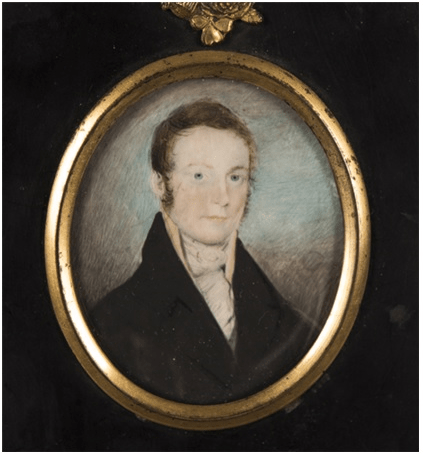
So, finally. Fun fact: my wife’s 4xG grandfather, William Norris Venning, was a silversmith in Saint John, New Brunswick.

William Norris Venning (1795-1877)
Attributed to  Joseph Brown Comingo
Art Gallery of Nova Scotia

William was born sometime about December 1796, likely in Devonshire, England. I don’t know when he came to North America, or if he came on his own or with his parents. It was sometime before he was 19, the time by which he had begun his work in Saint John.

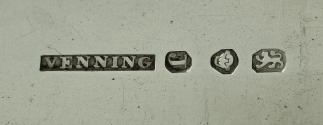
William’s silversmith mark.

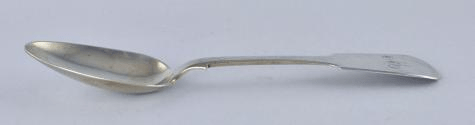
William was active as a silversmith from 1815 to 1871, although one source has him also doing some watchmaking early in his career. Some of William’s work is in the National Gallery of Canada, while the Royal Ontario Museum has a teaspoon he created.

A silver teaspoon by William Norris Venning