52 Weeks – Week 28: Characters

This week’s 52 Ancestors Challenge theme is “Characters”. While that actually provides a wide scope, the inclination might be to write about an ancestor who had a big personality or was quite the extrovert. I’ve decided to write about an ancestor who most likely needed quite a bit of character to have endured what life sent her way.

One of my Gx3 grandmothers was Charlotte Elizabeth Liggett. Charlotte was born on October 2 or 6, 1837, to Conrad Liggett and Louisa Thomas. According to some sources, Charlotte was born born in Dover Township, Union County, Ohio, although most other accounts say it was Ostrander, Delaware, Ohio. While in different counties, these communities are about five kilometers apart.
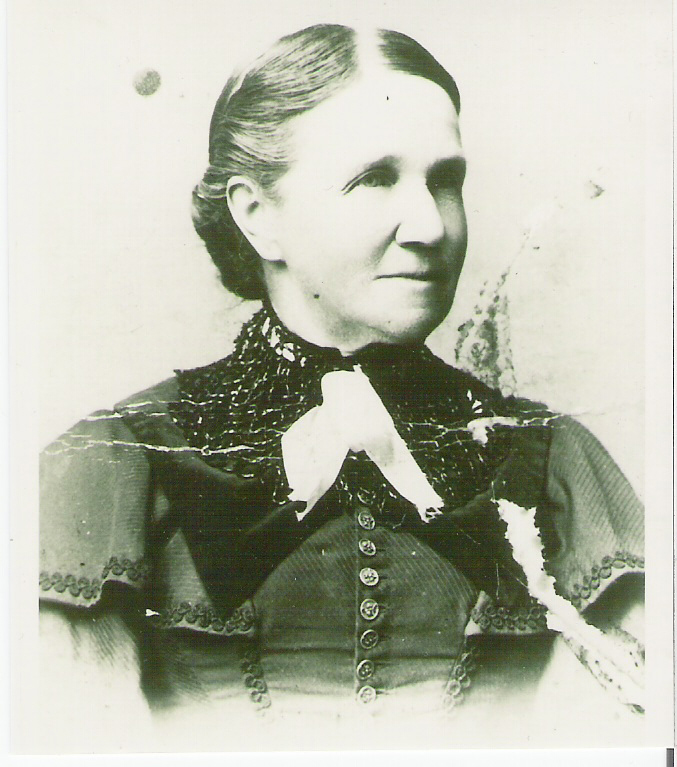
Charlotte Elizabeth Liggett

Conrad and Louisa married on February 28, 1837. Unfortunately, Conrad died shortly after Charlotte was born. I have been unable to find definitive sources as to when and where he actually died, although it is likely that it occurred in April 1838. Several sources suggest he died at Nauvoo, Illinois sometime before 1839. However, the Latter Day Saints (Mormons), of which he was likely a member, did not really begin to settle in Nauvoo until after they were expelled from Missouri in late 1838. It may be that Conrad himself never left Ohio. According to Find a Grave, Conrad is buried in Ohio, although there is always the possibility that his remains were transported to Ohio after his death.

Louisa remarried in 1841, to Aaron Cook. This marriage may have occurred in Nauvoo. With the Mormons being driven out of Nauvoo starting in 1846, Louisa, Aaron, and Charlotte set out in the westward migration to what is now Utah. The migration, undertaken in haste and without time for proper preparations, was arduous. On the way to Winter Quarters in Nebraska, in November 1846, Louisa died. Charlotte had just turned nine.

After time spent at Winter Quarters, Aaron continued to Utah with Charlotte. According to one family history I’ve read, upon reaching Utah Aaron, he “married Charlotte off” to a Mormon elder. That was likely a reference to Charlotte’s first husband, my Gx3 grandfather, William Burgess. The marriage occurred on June 3, 1852, when William was 30 and Charlotte was only 14. Even worse, this was a polygamous marriage, as William was still married to his first wife of 12 years, Maria Pulsipher.

The marriage did not last long. Fortunately for me, it lasted long enough to produce one child, my Gx2 grandfather, Horace Burgess. Apparently Charlotte did not get along with Maria. Charlotte left William sometime in 1857, when she was 19. Many secondary sources suggest that William and Charlotte divorced. However, being a polygamous marriage, there may have been no formal civil registration of the marriage and, therefore, no formal divorce. While at the time of their marriage William and Charlotte had been “sealed” (a Mormon ritual meant to bind familial relationships for eternity), Charlotte had the sealing annulled in 1890.

Shortly after leaving her first husband, Charlotte entered into her second marriage, with William Whitehead Taylor, on September 7, 1857. This was also a polygamous marriage, and at age 28, William was almost 10 years older than Charlotte.

While Charlotte’s early life may have been difficult, it may have been much less onerous after she joined with William. It appears that they remained together for 50 years, until William passed away in 1907. Charlotte and William were never sealed during their lifetimes, as a bishop had told Charlotte that she could not be sealed again. Apparently they were sealed after Charlotte’s death, as it was her “dying wish”.
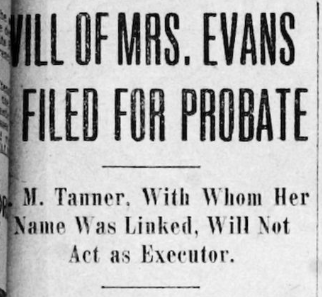
The Salt Lake Tribune, April 25, 1908, Page 11

Charlotte and William had four children. It appears their second child, Louisa, may have died in infancy or childhood. Their eldest, Sarah, died at age 49, when Charlotte was 70. There was a small amount of notoriety in the press when Sarah died. She was married twice. The first marriage was to Prime Evans. The second marriage was with a J. M. Tanner. However, this was not a legal marriage. According to newspaper reports at the time of Sarah’s death, this was a secret polygamous marriage, solemnized within the church after polygamy was outlawed. Tanner had been named executor of Sarah’s will and guardian of children Sarah had adopted (young relatives of hers). However, he ultimately declined to act in either role, likely because of the scandalous nature of his relationship with Sarah.

Charlotte died at home in Lehi, Utah on February 20, 1909 due to apoplexy, a term formerly describing a cerebral hemorrhage or stroke. Charlotte is interred at Lehi City Cemetery, with her second husband.
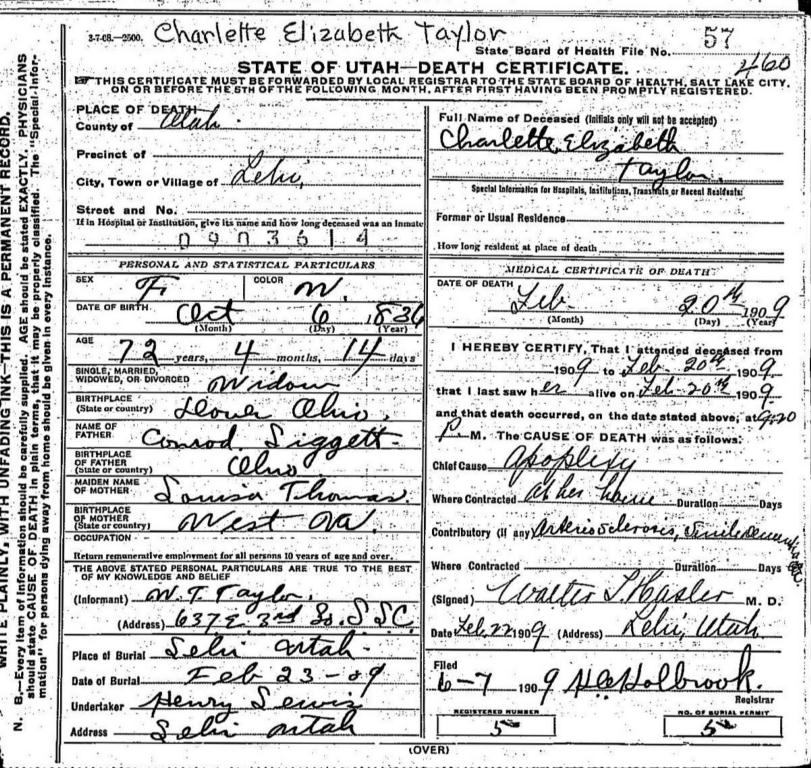
Charlotte’s Death Certificate

52 Weeks – Week 27: Extended Family

For theme of this week’s 52 Ancestors Challenge, “Extended Family”, we are invited to write about relatives other than our direct ancestors: aunts, uncles, cousins, nibblings, or even those to whom we are related by marriage. So many options! After deliberating on the topic, I decided that the best and most impactful way to write on the topic would be to focus on a single relative. But whom? It did not take long to decide: my father’s aunt, Tante (“Aunt”) Anny.

My father actually had two Tante Annys, one on each side of his family. Both were wonderful women and I have very happy memories of both. I chose my Tante Anny on my grandmother’s side of the family because of the close and unique relationship we had.

Anna Adriana (“Anny”) van Kleef was born in Zuid-Scharwoude, Noord Holland in 1926. Anny was the third-born child of Arie Komen (who I wrote about last week) and Elizabeth Bakker. Zuid-Scharwoude is part of the larger “gemeente” (municipality) of Langedijk (which recently merged with a neighbouring gemeente and is now “Dijk en Waard”). Anny lived in Langedijk her whole life.

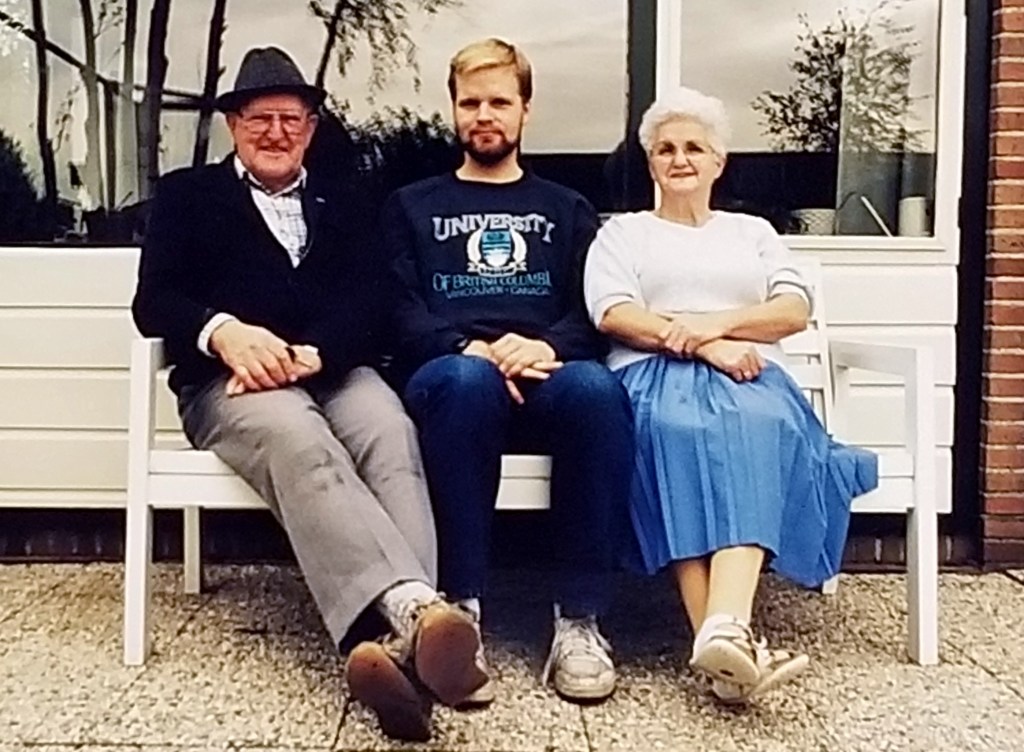
Tante Anny and Ome Nic during their visit to our home in Saskatchwan when I was 12

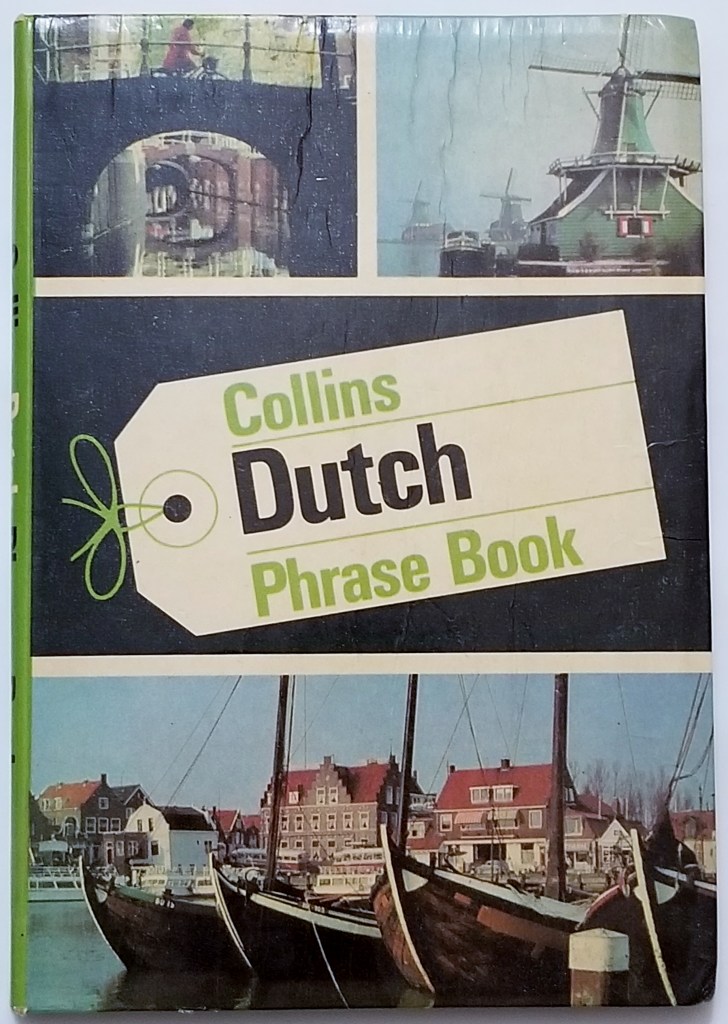
I first met Tante Anny when she and Ome (“Uncle”) Nic van Kleef came to visit Canada when I was 12. While they spent most of their time in Alberta with my grandparents, the four of them planned a road trip to the town in Saskatchewan where we were living at the time. I was so excited by their impending visit, because it would be my first time meeting any of our relatives who lived in the Netherlands. I went to our little bookstore and bought myself a Dutch-English phrase book to prepare for their visit.

I still have the phrase book that I bought when I was 12!

Tante Anny and I clicked right away, despite the fact she spoke no English and the only Dutch I knew was a few phrases I had memorized from my little book. A few days after she arrived, I came down with a small cold. She sat with me for hours while I lay on the couch with my sniffles. She chatted in Dutch, I responded in English, and we spoke a lot with our hands.

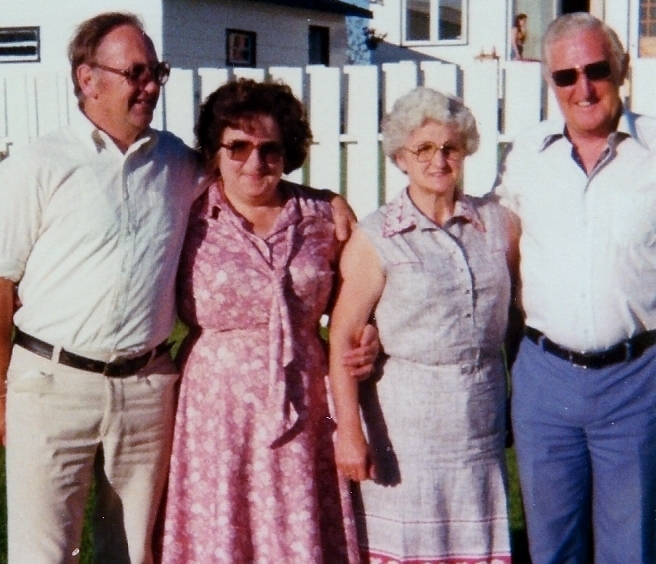
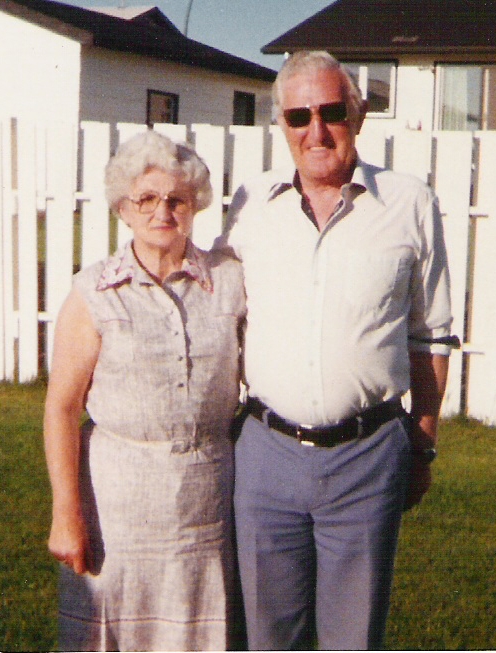
My grandparents, Arie van der Fluit and Christina Komen, with Tante Anny Komen and Ome Nic van Kleef

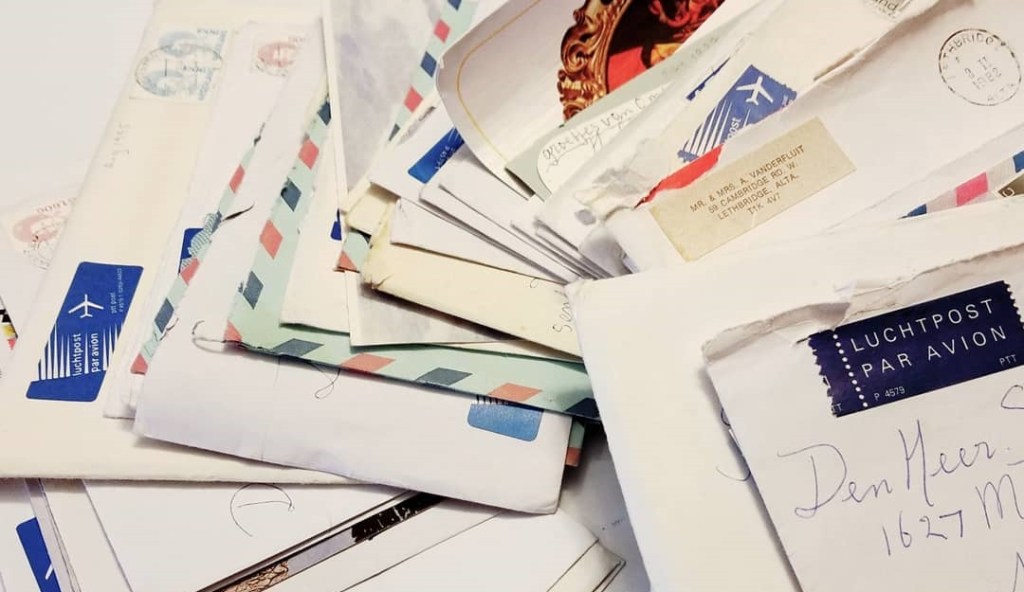
At the end of her visit, I asked Tante Anny for her address. We soon entered into a correspondence that we maintained until she passed away. I’d write in English, she’d write in Dutch. My father would translate her letters for me; Tante Anny’s children would translate my letters for her.

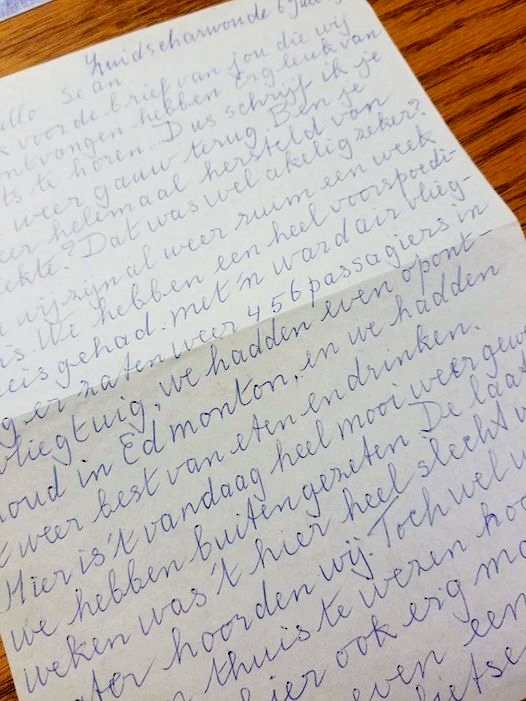
The first letter I received from Tante Anny. Here she’s writing about her return trip from Canada to the Netherlands and the weather at home.

When I moved away from home, I had to painstakingly translate Tante Anny’s letters with only a Dutch-English dictionary. It wasn’t easy, especially when it came to idiomatic phrases. There was no Google Translate back then! Once in a while I’d call my dad, but it wasn’t easy because I didn’t always know the pronunciation of what was written (although I definitely could pronounce the Dutch “g” early on). However, when you look up a word over and over and over again, after a while it sticks.

During my first trip to the Netherlands in 1990, my friend and I stayed with my Tante Anny and Oom Nic for two weeks. She still spoke no English. What little Dutch I knew back then I largely learned from reading her letters, supplemented by a bit of coaching from some Dutch-speaking friends and a Dutch translation of a Richard Scarry book. Nevertheless, we still managed to communicate quite well, and my English-speaking Dutch cousins were very encouraging in my attempts to speak their language. I was particularly happy to understand enough when she told me the stories about the old family photos in her albums. Perhaps the strangest thing was explaining to her what my grandmother – Tante Anny’s older sister – had written to her in a letter that arrived during my visit. It was then that I realized that my grandmother’s Dutch had become heavily Canadianized.

October 1990, on the last day of my stay with Oom Nic and Tante Anny at their home in Zuid-Scharwoude.

Upon my return to Canada, I discovered a night school class that gave me a few basics. However, reading those letters remained a challenge. Happily, with the advent of the internet and things like YouTube videos and DuoLingo, learning on my own has become easier. A few years ago I pulled out my cache of letters from Tante Anny. While my comprehension was not perfect, after so many years I was amazed by my ability to read her letters by myself, without constantly having to look up every second word.

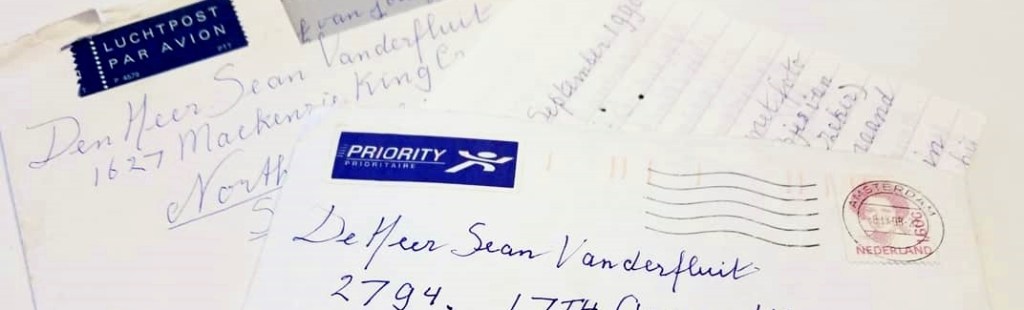
Almost twenty years worth of letters from my great aunt.

I’m happy that in my letters I asked Tante Anny questions about the family history. With one letter, I enclosed a simple questionnaire and a pedigree chart that I spent a lot of time writing in Dutch, in order to make it easier for her to respond. I figured the easier I made it for her, the more likely it was that she’d fill them out. She did, although in her reply letter she queried why I’d want to know about something that was so uninteresting as family history. I often amuse myself by thinking she said that only because there is something interesting worth knowing that she didn’t want me to find. However, in the 25 years since she wrote that, I have not found anything that would support that idea.

I saw Tante Anny one last time in the summer of 1998. She came to Canada on her own to visit my grandmother in Alberta. My parents had moved back to Alberta a few years earlier, so Tante Anny stayed with them for a few days. I made sure to get out there for a visit, because I did not want to miss an opportunity to see her again. By then, I had expanded my efforts to learn Dutch as part of my genealogical pursuits. As a result, it was easy for Tante Anny and I to discuss my sister’s wedding video, which we watched during her visit. However, I was far from conversant on other topics. One night my Dutch was particularly bad and I knew I was making stupid mistakes, so it was no surprise when Tante Anny just waved her hand to indicate I was making little sense.

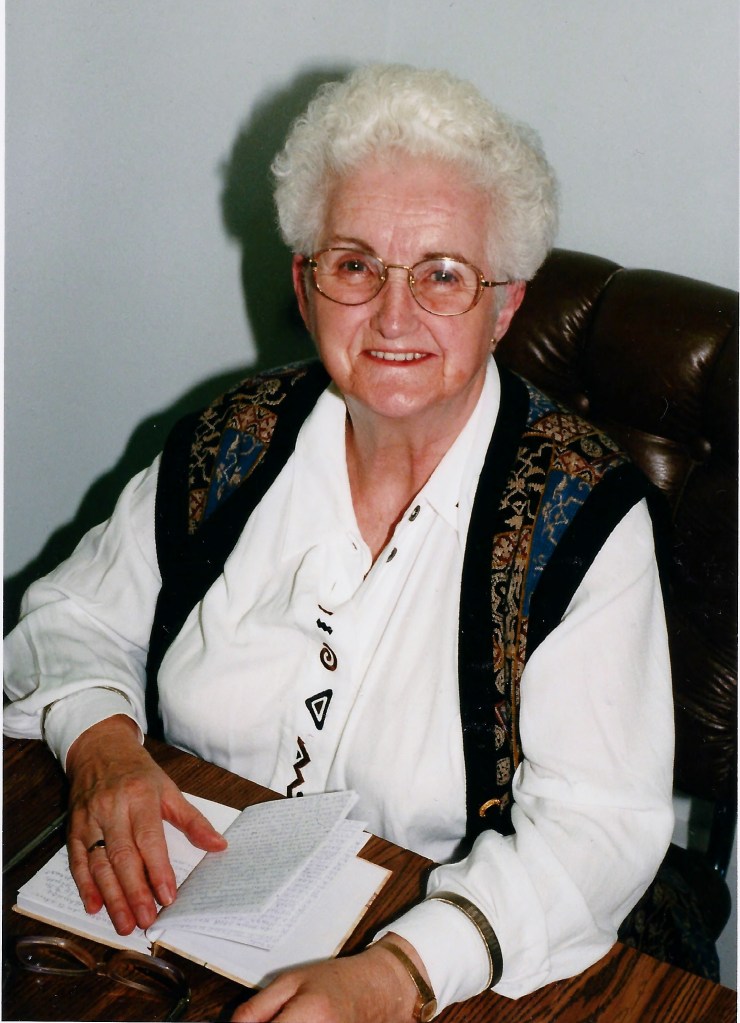
Tante Anny at my parents’ house, August 3, 1998.

I’m glad I was able to see Tante Anny during her visit, because she passed away two months later at age 72. Oom Nic, who was almost seven years older, survived Tante Anny by 15 years. He died in 2013 at age 93.

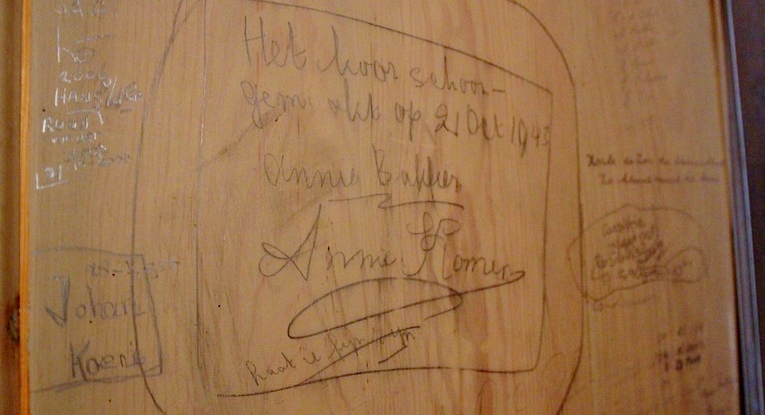
Many years ago I stumbled across the below photo on Flickr that might show my Tante Anny’s signature. It shows a panel of wood inside St. Jan de Doper Katholieke Kerk (“St. John the Baptist Catholic Church”) in Noord-Scharwoude with messages written in pencil. The large message in the centre reads “het koor schoongemaakt op 21 Oct 1943” (“the choir cleaned here on October 21, 1943”) and is signed by Annie Bakker and Annie Komen. Tante Anny would have been 17 years old at the time and this is the church she attended. I should ask my cousins if she was in the church choir. It would not surprise me, because my grandmother had been. Tante Anny’s mother was a Bakker, so Annie Bakker could have been a relative of hers.

Possible “graffiti” by my great aunt? Could this vandalism be the dark secret she was hiding when she told me family history isn’t interesting? 😉

(Posted on Flickr by Regionaal Archief Alkmaar under Creative Commons licence Generic 2.0.)

52 Weeks – Week 26: Identity

How little did I realize that when I decided what to write about on the topic of “Identity” for this week’s 52 Ancestors Challenge it would actually turn out to involve a case of mistaken identity!

A suggestion for this week’s topic was to write about an ancestor beyond just their name. I decided to write about my great grandfather, Adrianus (“Arie”) Komen. He was my father’s maternal grandfather. I chose Arie because of all my great grandparents, he seems to be the one who I consider least often when I write or research. Arie passed away not too long after my father was born, which further served to make him more remote in a way.

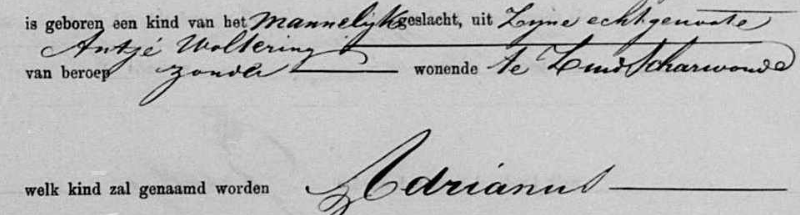
Arie was born on May 11, 1888 in Zuid-Scharwoude, Noord Holland, Netherlands to Nicolaas Komen and Antje Woltering. As far as any record I have indicates, Arie spent his whole life as an agricultural labourer.

The civil register for Zuid-Scharwoude with the record of Arie’s birth
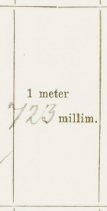
A strange way to state height…

The Netherlands had compulsory military service until the 1990s. When Arie’s name came up in the conscription draw, he sought an exemption from service due to poor eyesight. On December 24, 1907, the military deemed him fit for service. Arie was conscripted into the militia on March 3, 1908. Service was somewhat equivalent to reserve or national guard duty. Adrianus was assigned to the 4e Regiment Vesting-Artillerie (4th Regiment Fortress Artillery) based out of Den Helder. I found the way the military listed his height to be rather odd. Instead of stating that he was 172 cm tall (about 5′ 6 1/2″), it was listed as “1 meter 723 millimeter”.

Arie married Elizabeth Bakker on April 7, 1921 in Noord-Scharwoude, Noord Holland, Netherlands. Elizabeth, or “Oma Komen” as we referred to her when I was a child, lived until I was ten years old. I never met her, but she regularly sent us letters, postcards, and – most significantly to us as children – boxes of goodies in time for Sinterklaas.

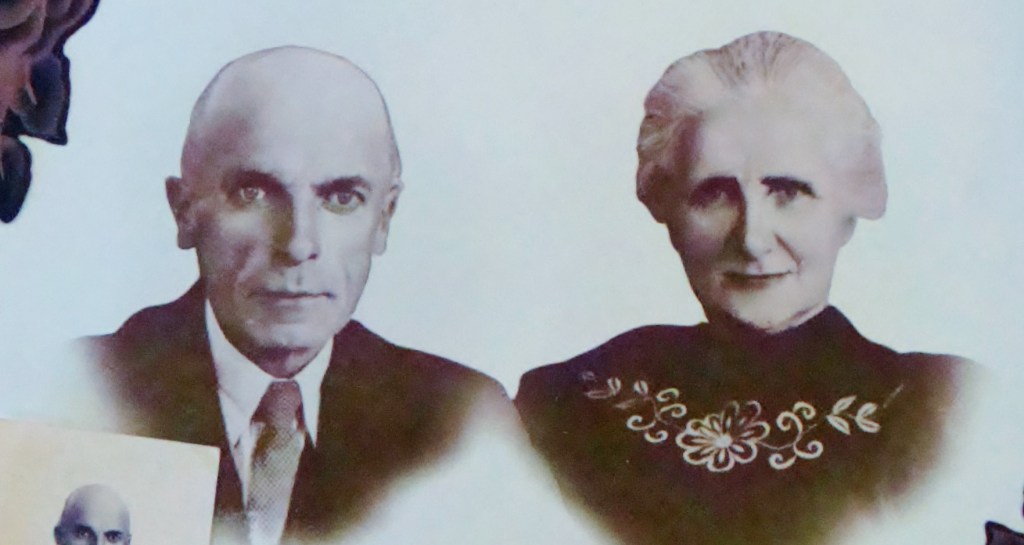
Arie and Elizabeth, from a family history album compiled by my aunt.

Shortly after they were married, Arie and Elizabeth moved into a house on Dorpstraat in Zuid-Scharwoude. I know this street well, as I have relatives who live on this street. In fact, during my last visit to the Netherlands, I stayed with a relative who lives at the north end of this street.

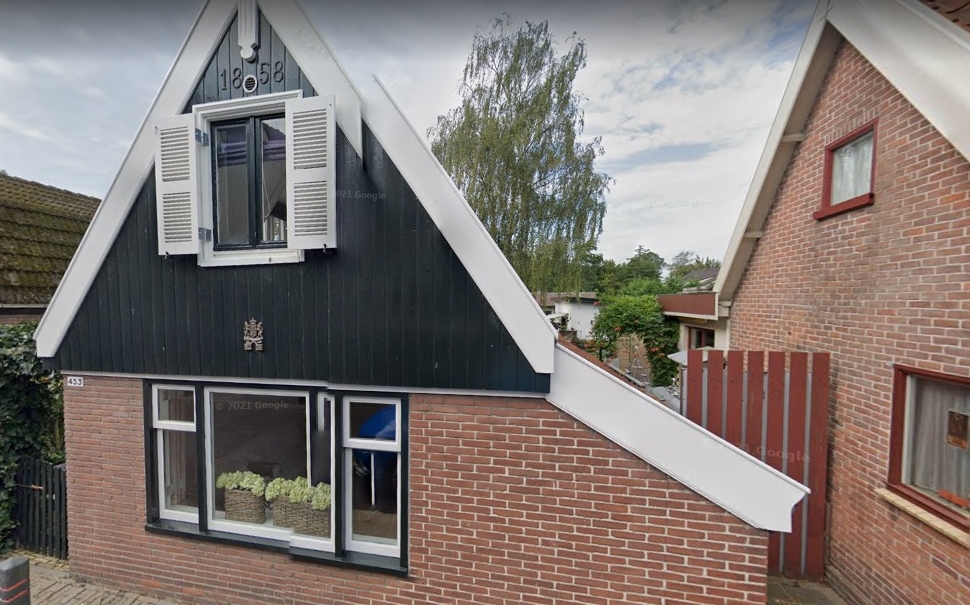
I was fortunate to discover an article in a local history society’s annual magazine that included an article documenting the history of the house that Arie and Elizabeth had moved into. The house itself was built in 1858 and my great grandparents lived there from 1921 to 1928. The article noted that their first three children were born in this house. As the eldest child, this would have included my grandmother, Christina Komen.

The house where my great grandparents lived for the first seven years after they were married. I just realized that during my first visit to the Netherlands, one of my cousins took me by this house and told me this is where my grandmother was born.
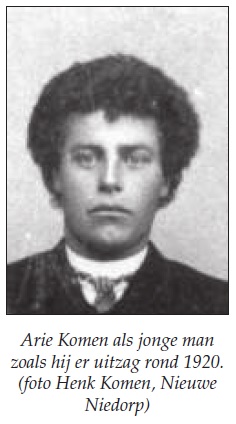
Not so fast, caption writer! This is actually Arie’s older brother, Laurentius (“Louw”) Komen.

Until I found this magazine article, the only photos I had seen of Arie and Elizabeth were taken late in their life. The article had a photo of Elizabeth that I was very familiar with; however, the photo of Arie showed him when he was a younger man of about 32.

Or so I thought.

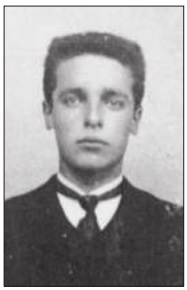
The article appeared in the historical society’s 2004 edition. The 2005 edition included mention of correspondence from my great aunt, Riet Komen, correcting a few errors in the previous year’s publication. One was to note that the photo they had published of Arie was not her father at all, but her uncle, Arie’s older brother Louw. Unfortunately, at the time Tante Riet wrote the magazine, she was unable to provide a photograph of her father. It was another year before the magazine was able to correct the error, two years after the fact.

THIS is Arie Komen!

When I made my original discovery, I emailed my mother the photo of Arie (which was actually Louw) so that she could show my dad. Apparently his response was to say, “what a good looking guy!” When I found the later edition of the magazine with the correction, I sent the actual photo of Arie to my mother for my dad to see. My mom’s response was to say how much they looked alike. I responded by saying that’s probably how the error occurred in the first place.

In December 1928, the family moved to “Pikstraat” in Noord-Scharwoude. I have never been able to find Pikstraat on the map, until today. By happenstance, I found a history of a family unrelated to mine (as far as I know!) in which one of the person’s ancestors lived on Pikstraat. The author of the history noted that the street is now called Werfstraat.

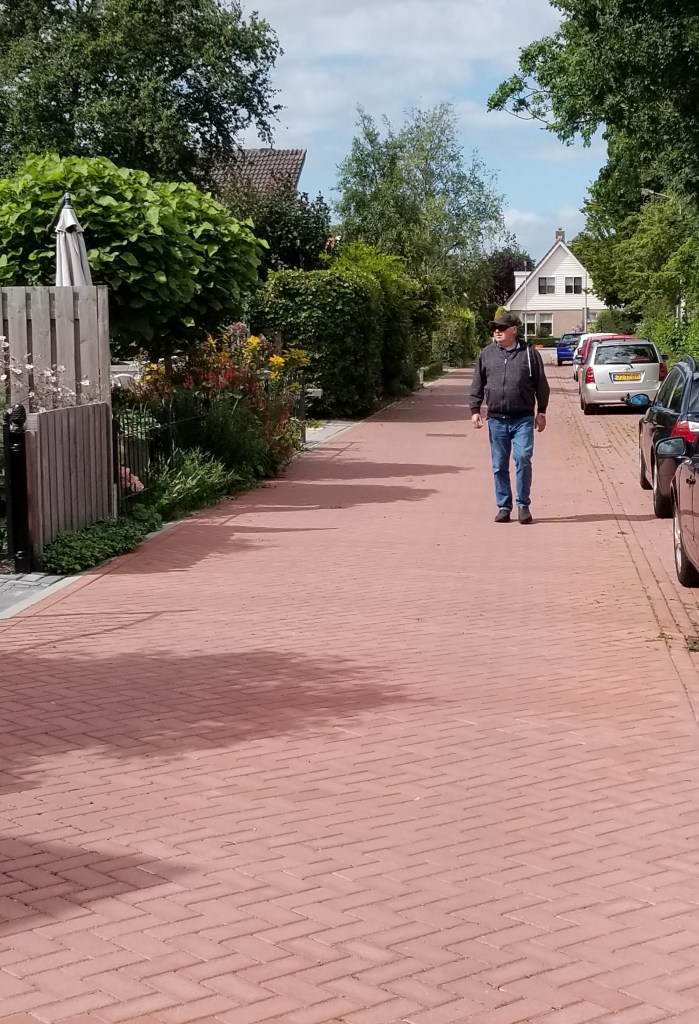
My father walking in front of his grandparent’s house on Werfstraat in Noord-Scharwoude.

I looked it up on Google maps – and discovered I had been there! Werfstraat is just off Dorpstraat at the north end of the municipality, near where I was staying with my family member. My parents were also visiting Noord-Scharwoude at the time, which had partially prompted my trip at the time. One day my father and I were walking around the neighbourhood and he showed me things he remembered from his childhood. One place we went was to where his grandmother, Oma Komen, had lived. I never realized that after Arie passed away in 1948, Oma Komen remained in the same house until she passed away in 1976.

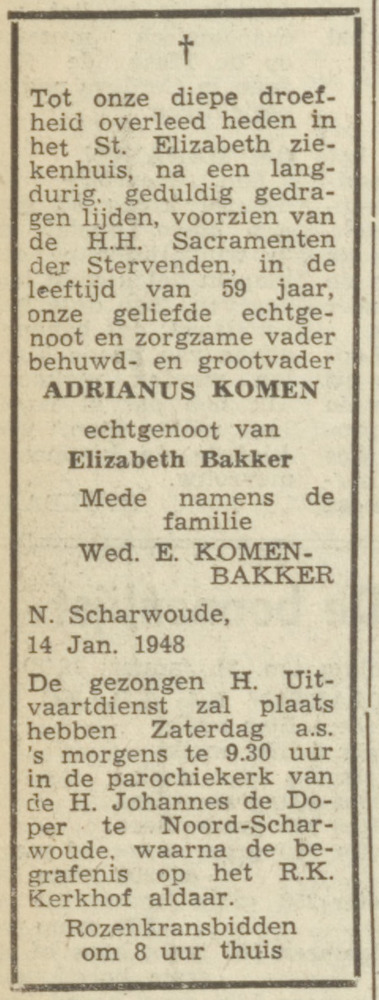
Arie was only 59 years old when he passed away in January 1948. He was buried in the parish churchyard of St. Jan de Doper Katholieke Kerk (St. John the Baptist Catholic Church) in Noord-Scharwoude. I’ve been to that cemetery, but his grave is no longer there. Graves in the Netherlands are usually leased, not purchased, and are routinely cleared after a few decades.

While I’d say I know more about my great grandfather Arie than simply his name, despite all I’ve written about him I still do not feel like I know him. My grandmother never spoke of her father and, to be fair, I never asked her about him. I was very close to one of my grandmother’s sisters, Anny Komen, ever since I was twelve. However, despite the close relationship we had, language was a significant barrier as she never spoke English and my Dutch was very rudimentary for most of the time I knew her (we had our ways of communicating), so asking about her father was not realistic. My grandmother’s youngest sister passed away only last year, but we were not as close. I last visited her in 2017, and it was not really the time for questioning her about her family history. As well, her health in the last many years made correspondence difficult for her. Thus, what I have to rely upon are what records are available. Nevertheless, I am pleased to discover that I know him better than I realized.

52 Weeks – Week 25: Broken Branch

For this week’s 52 Ancestors Challenge, Amy Johnson Crow wrote “Are you researching a branch that it feels like there is nobody else in the world who is researching them? What about a collateral line that seems to have gotten lost?”

Turns out that line was mine!

Through sheer chance, through a random encounter with a farmer in the middle of nowhere, I discovered that my great grandfather, Heronimus (“Jerome”) Lerner and his descendants had “gotten lost”. I thought I was looking for them, it turns out they were actually looking for me!

Jerome Lerner was born in Henrietta, Clay County, Texas on March 12, 1895. His parents, Michael Lerner and Barbara Schmidt, were Germans from Russia. They lived in one of the many German colonies in Imperial Russia, in what is now part of Ukraine. These colonies usually bore the names of the places in Germany the original settlers had come from. After Michael and Barbara married, they lived in the village of Rastadt, where their first six children were born. In 1893, the family emigrated to the United States and settled in Henrietta, Clay County, Texas. Jerome was the first of eight children Michael and Barbara had after coming to America.

During the mid-1910s, members of the family began moving between Texas and Saskatchewan. Jerome was one of the first. Ultimately, Jerome, his parents, and at least four of his siblings ended up permanently moving to Canada and settled in the area of Fox Valley, Saskatchewan.

Jerome married my great grandmother, Emelia Anton, in 1920. They separated sometime around 1937. As far as I can tell, they never formally divorced. I thought that being Catholic, they might have simply separated without divorcing. However, my great aunt Adeline (their third child) told me that it was more due to the difficulty in obtaining a divorce at the time. Prior to 1968, divorces in Canada were granted through a private act of Parliament, through a difficult and expensive process.

Jerome and Emelia, likely sometime around 1931.

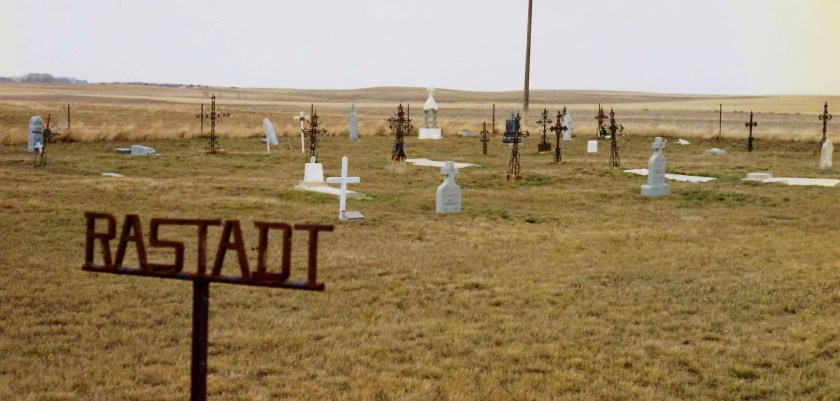
I’d known my great grandmother since I was born. We visited her almost every time we went to my parents’ hometown. As she lived until I was thirty, she was the great grandparent I knew best. I’ve written quite a lot about my Anton ancestors in this blog. They were also Germans from Russia. They came to Canada in 1912 and settled in Rastadt, Saskatchewan. All that is left of Rastadt is the schoolhouse and the cemetery.

Rastadt, Saskatchewan Cemetery, April 1, 1997. 

While I knew Emelia, I never met Jerome. He died in 1954. My mother never even met him. From what I know, Jerome may have had some mental health problems from sometime around the time he and Emelia separated. As well, from what my mother has told me, the Lerner side of the family was none too pleased with Emelia after she and Jerome separated.

After the separation, Emelia moved to Alberta. I doubt she had much contact with her former Lerner relatives, although it sounds like my grandmother and her siblings might have. Nevertheless, it is easy to see how the Lerner branch of the family might have lost track of Emelia and Jerome’s family. As well, while I know my grandmother, her siblings, and my mother all seem to have been in close contact with their Anton relatives, the fact that branch of the family relocated may have made for a much looser connection. So it seems that Jerome and Emelia’s branch of the family became lost, or lost-ish, to both the Lerners and the Antons.

How were we “rediscovered”?

First, the Antons. In the mid-90s, I made contact online with a Paul Antone of Washington state. It was the early days of online genealogy, so we probably met on a message board or something similar. I wasn’t even using Netscape yet! Paul’s father was one of Emelia’s first cousins. I don’t know if they knew each other. Paul and I sporadically exchanged emails. Through him, I learned of Gordon Anton, a nephew of Emelia’s. At the time, he was compiling a history of the Antons. I don’t know if Gordon ever met Emelia, but it was apparent he didn’t know much about her branch of the family. Apparently he had been in contact with one of Emelia’s sons, my great uncle Herb, but he never got much information through that contact. Gordon ultimately published a history of the Antons, but it was pretty sparse when it came to Emelia and her descendants. Gordon was hoping to publish a second edition, but it never came to be.

Nowadays, finding a lost branch online – even if you are the missing branch being found – is hardly unique or exciting. In comparison, the rediscovery by the Lerner side was largely a matter of coincidence, even though it was because I had been in the right place at the right time. Even today, it would be an unusual occurrence.

In 1997, I left a long-term job and was taking a few months off before embarking on a short-term gig and a return to university. One of the things I did during that time off was visit my parents, who had returned to living in southern Alberta. I had not been to Fox Valley since I was a child, so I suggested to my mother that we go there for a daytrip.

Upon arrival in Fox Valley, we stopped at the village hall where we gathered a wealth of information. Among other things, I was able to discover the exact place where my grandmother was born. After visiting the Rastadt schoolhouse and cemetery, my mother and I made our way to the place where my grandmother was born.

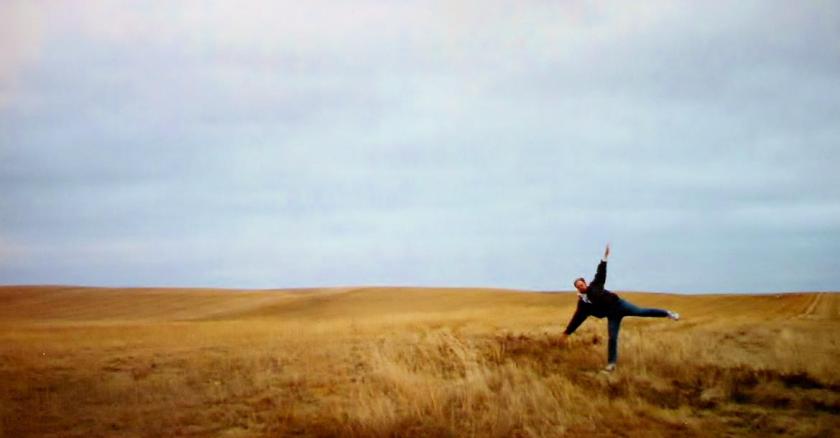
Beautiful downtown Rastadt, Saskatchewan. Actually, this is suburban Rastadt, but no one really is counting. If the middle of nowhere has a middle of nowhere, this is it. Where I am standing once stood the farmhouse where my maternal grandmother, Helen Lerner, was born.

I was not surprised at all to find nothing but a field of wheat. We snapped some photos of the site and decided it was time to head back to Alberta. We drove a bit down the narrow road to find a place to turn around. We soon found a farmhouse with a driveway that provided the opportunity to turn around. After I pulled in, the farmer who lived there saw me and came out, thinking anyone he didn’t know who was out there must be lost.

He seemed surprised that we actually meant to be in his part of the world. We got to talking. It turned out he was a cousin of my grandmother’s. He and his wife invited us in for coffee and they showed us all sorts of interesting family photos and mementos. Talk about serendipity! He even told me the farmhouse my grandmother was born in still existed – a farmer had bought the building and moved it to his land.

Even more fortuitous, he told me that a family history was being put together of the Boechler family. Jerome’s maternal grandmother was a Boechler. The farmer gave me the contact information for the author. My timing was another stroke of luck. I made the call not long afterward and learned that the book was being finalized and would be going to press in a matter of days. It also turned out that Jerome and Emelia’s branch of the family was a huge mystery to the authors. I was able to supply most of the information about Jerome and Emelia’s branch in time for publication.

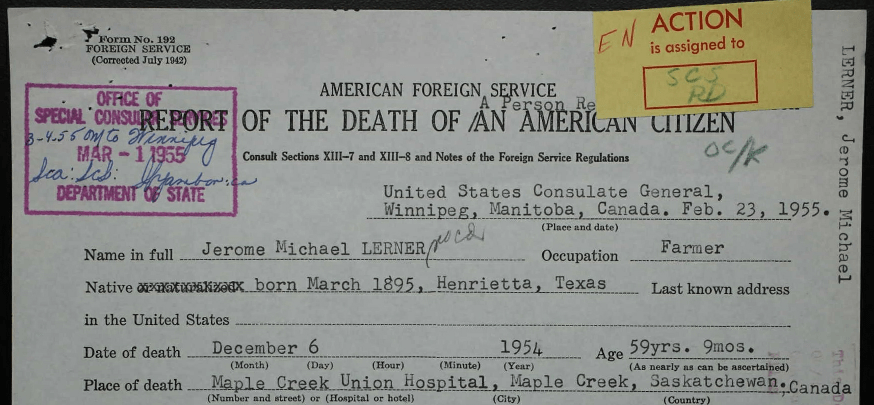
Not only was Jerome’s branch lost to the family, he seems to have been lost by both the United States and Canada. Upon learning of Jerome’s death, the US consulate in Winnipeg submitted a “Report of the Death of An American Citizen” to the American Foreign Service. The Foreign Service stated that it did not have any evidence that Jerome had American citizenship beyond the statement in the registration of death issued by the province of Saskatchewan. This, despite the fact the United States issued Jerome a passport when he first left for Saskatchewan in 1916. Meanwhile, there is no indication that Jerome was ever naturalized as a Canadian (or, at the time, as a British subject in Canada) or that he had renounced his American citizenship (which he was, as evidenced by his US passport).