In this blog I’ve written about many different memberships that my ancestors have been part of: members of the military, the church, and the bar, for example. Something I haven’t really written about is membership in volunteer work, service organizations, and social organizations. So for this week’s 52 Ancestors Challenge, I’d like to share something about my paternal grandmother, Christina (“Tiny”, pronounced “tee-nee”) Komen.
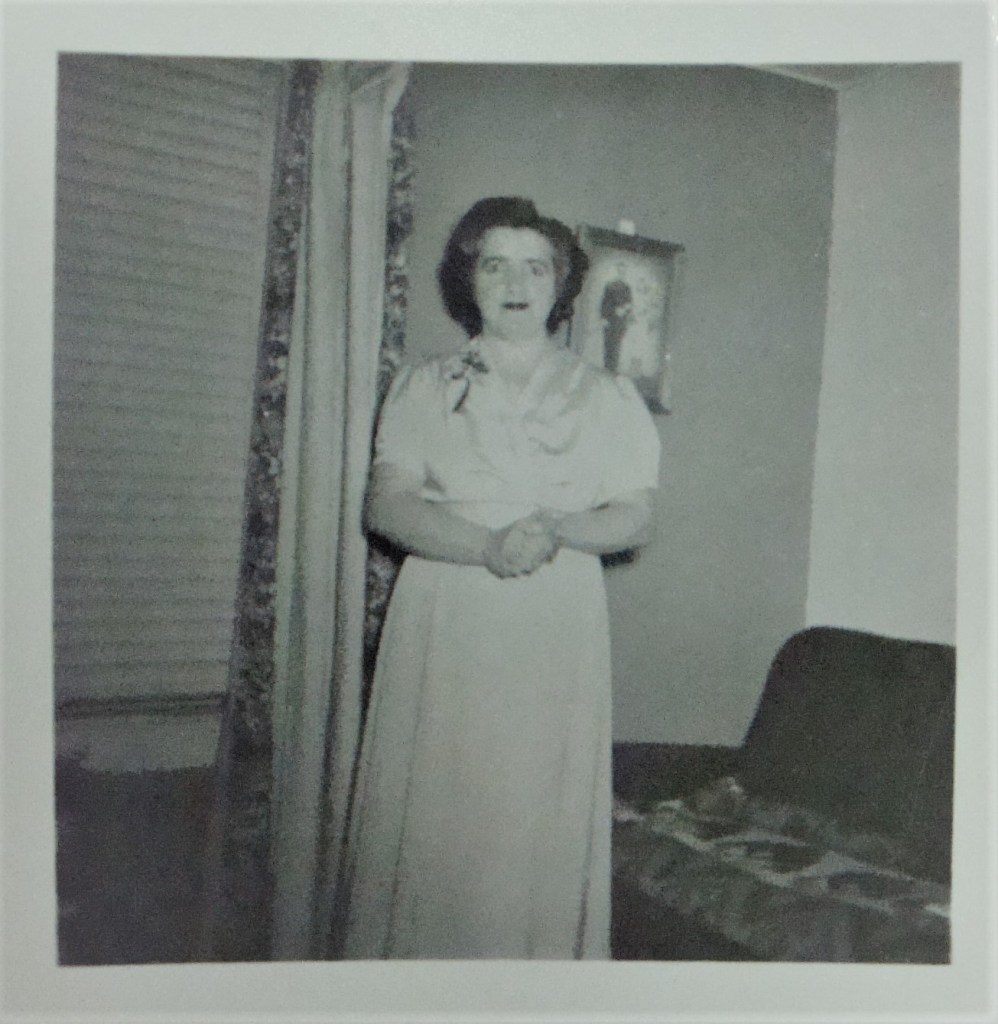
My grandmother, Christina Komen, dressed for one of her choral performances. The date written on the back of the photo is March 5, 1957. Unfortunately, the rest of the notation is about the photo on the wall behind my grandmother. It says that it’s a Canadian soldier and his war bride from Scotland and that they were my grandparents’ neighbour. I believe this means the photo was taken at the neighbours’ house.
My grandmother was a wonderful singer with a beautiful voice. Before emigrating to Canada, she was a member of local and church choirs in her home town. After settling in Canada, my grandparents and the family (including my father) lived in a number of small towns south of Lethbridge, Alberta. However, for most of the late 1950s and early 1960s they lived in Warner, where my grandmother was a member of the Warner Choral Society.
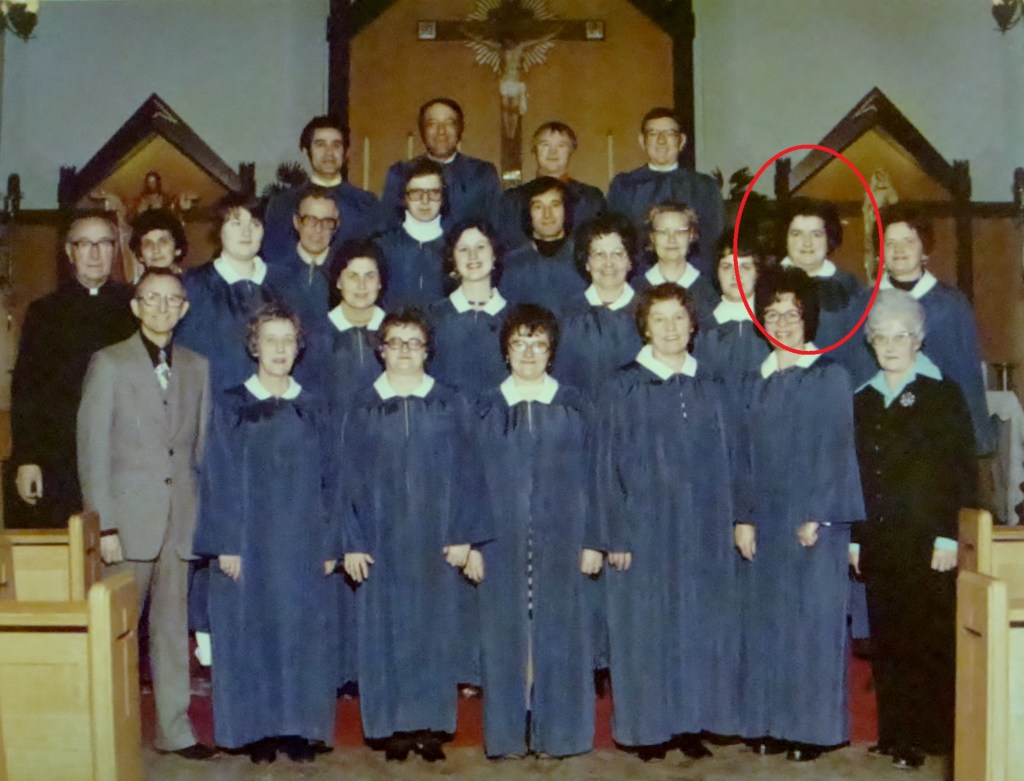
The St. Basil’s Catholic Church Choir, year unknown. My grandmother is in the second row, second from the right.
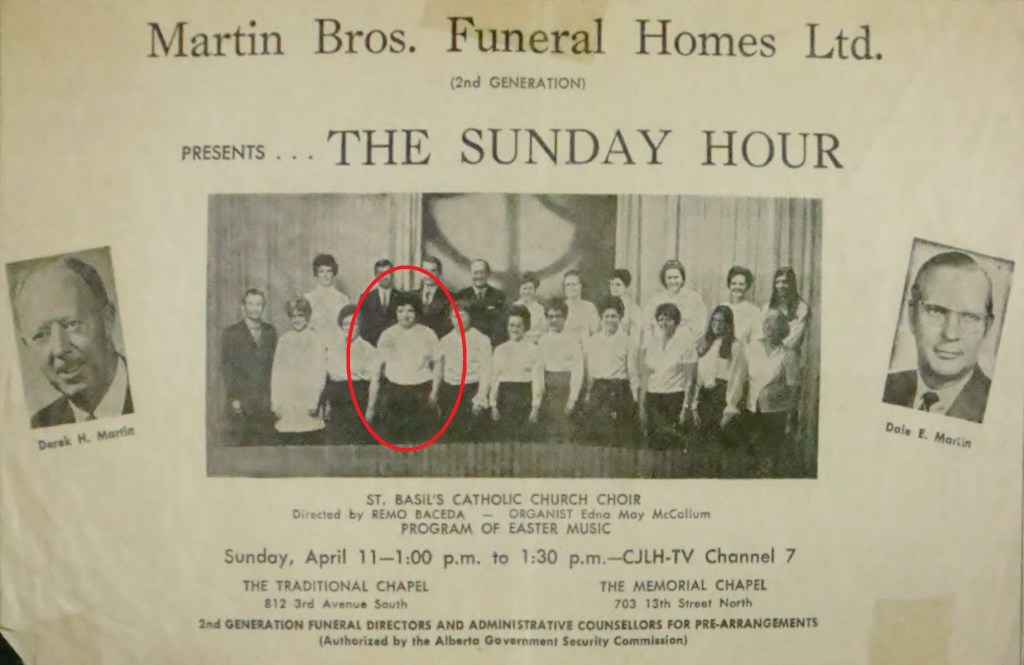
My grandparents later moved into Lethbridge, where my grandmother was a member of the St. Basil’s Catholic Church Choir. The choir would appear on a local television on “The Sunday Hour”, a program that aired on CJLH-TV. At that time, it was a CBC affiliate. It’s now CISA, a Global Television station.
The St. Basil’s Catholic Church Choir were featured on The Sunday Hour on CJLH-TV in Lethbridge on April 11, 1965. While the advertisement is for a program of Easter music, this air date occurred a week before Easter, on Palm Sunday. My grandmother is in the front row, fourth from the left.
I’ve already written about the two luckiest genealogical breaks I’ve had: meeting Nol van den Hurk on an online forum, resulting in the foundation of much of my Dutch family history research; and using a random farm driveway in the middle of nowhere to turn around, thus stumbling upon and meeting a cousin in time to contribute to a family history book project. So it took a bit of thinking to come up with something new for this week’s them of “Lucky” for the 52 Ancestors Challenge.
When most people hear the word “luck” or “lucky”, the assumption is usually good luck. I started off with that premise in mind, only to discover that the example I came up with involves both good and bad luck.
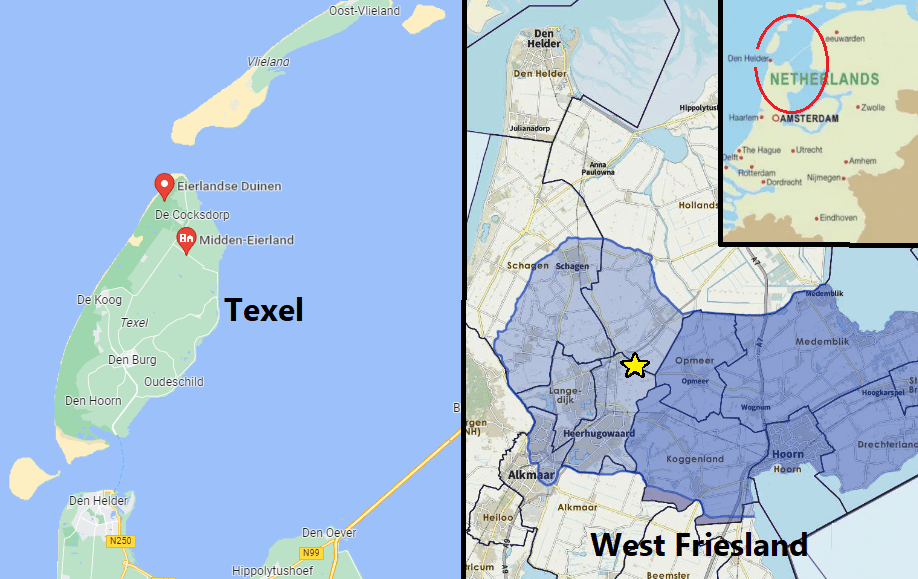
Sometime in the early 1860s, Pieter Jansz van der Fluit, my first cousin four times removed, relocated from Oude Niedorp to Eierland. Oude Niedorp is in the centre of West Friesland (which is actually in the province of Noord Holland). Eierland (“Egg Land”), is located at the northernmost tip of Texel, the largest of the Wadden Sea Islands (or Frisian Islands), which stretch from the western Netherlands to Denmark. Until the 13th century, Eierland was part of the neighbouring island of Vlieland, when natural changes separated the two. In the 1600s, a sandbar developed between Eierland and Texel, which was dammed, merging the two. In the 1840s, developers enlarged this area to create a polder, resulting in new farmland.
I first learned about Pieter in August 1997, in an email from Nol summarizing many birth, marriage, and death registrations. In that email, he wrote that one of the records described Pieter’s occupation as “Farm”, as opposed to “Farmer”, suggesting that he owned his farm in Eierland. In the decades that followed, these archival records have been scanned and posted online. However, the only records I’ve found for Pieter say that he was a “farmer”.
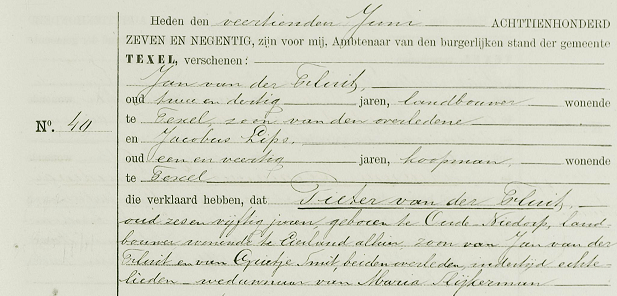
Death registration for Pieter van der Fluit, showing his son Jan as the declarant. It shows that Pieter and Jan were both farmers at Eierland. No mention of Het Fortuin (“The Fortune”), which apparently was the name of the farm.
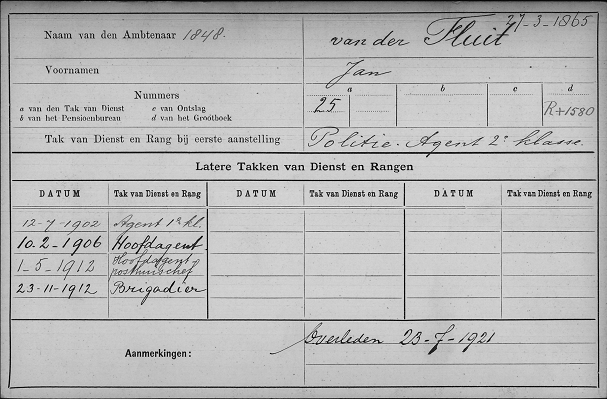
The farm was later taken over by Pieter’s son Johannes Pietersz (“Jan”) van der Fluit. In an a September 1998 email to me, Nol reported that Pieter’s occupation was “farmer on Texel”, at Eierland. Nol added that the farm was named Het Fortuin (“The Fortune”). However, it seems that good fortune was not with Jan, as Nol said that Jan went broke. Nol told me that Jan was 75 Guilders short to pay an unspecified debt. Nol said that this was about the price of three sheep. I don’t know if Jan farmed sheep, but Texel is famous for a breed of sheep developed there. After going broke, Jan relocated to Amsterdam and became a police officer.
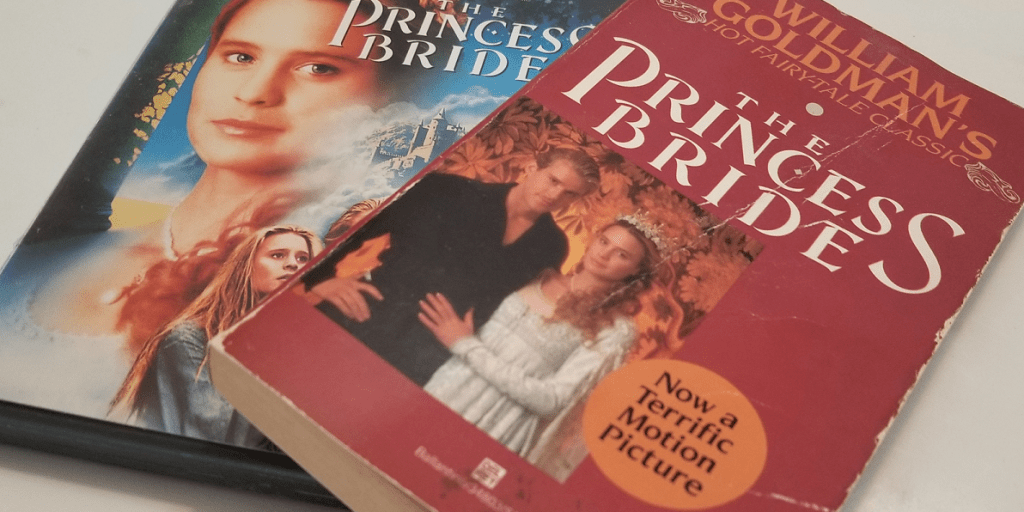
The Dutch guilder was originally called the “gouden florijn” (“golden florin”). The florin was an old Florentine coin. The Dutch coin was alternatively called a “guilder” or “florin”, but soon came to most commonly be known as the guilder. Its symbol was “ƒ” (e.g. ƒ100, or 100 guilders). These names will be familiar to the fans of The Princess Bride: Florin and Guilder were sworn enemies. Prince Humperdink’s scheme was a means of creating an excuse for Florin to attack Guilder.
I’ve found records showing Pieter and Jan farming at Eierland and Jan relocating to Amsterdam and becoming a police officer. Good luck! Unfortunately, I have been unable to find any of the sources Nol might have been looking at confirming that the farm was named Het Fortuin or Jan’s financial woes. Bad luck.
Jan’s Pensioenkaart (Retirement Card) showing his career as a police officer, starting as a police agent second class and ending as a brigadier.
“Het Fortuin” was also the name of a ship that sailed from Texel in September 1723, bound for Indonesia. It was the ship’s maiden voyage. It reached the Cape of Good Hope (South Africa) in January 1724. The ship and its crew of 225 men set sail two weeks later and was never seen again. Not very good luck at all.
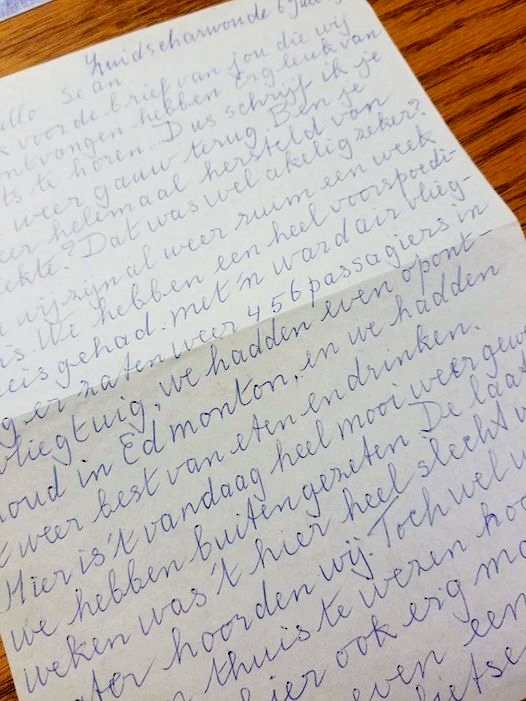
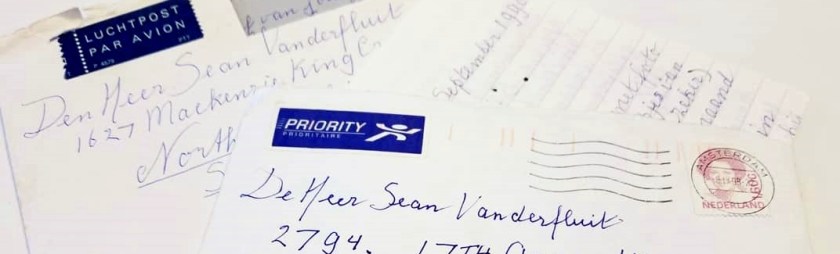
I had a 20-year “pen pal” relationship with my great aunt, Anny van Kleef (née Komen). This is the first letter I received from her. She wrote about returning home from her trip to Canada, as well as the weather.
I have been trying to teach myself Dutch since I was 12. I’ve had a modicum of success.
I was about five-years-old when I first learned that English was not my father’s first language. I begged him to teach me something in Dutch. All he taught me was the word “groen”, meaning “green”. However, the Dutch “g” was not yet familiar to my ear, so I though he was saying “zoom”. I was more than thrilled to run around saying “Zoom! Zoom!, I’m speaking Dutch!”
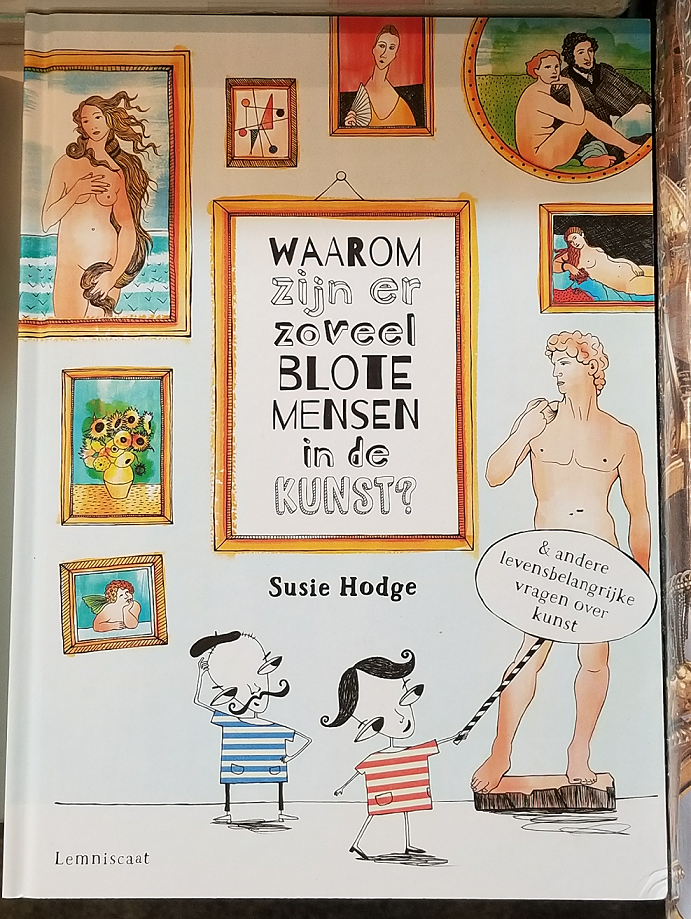
While that’s all the Dutch he has imparted to me, my father is more than happy to teach his grandchildren the very useful Dutch phrase “grote blote billen.” When our youngest son was a toddler, he somehow learned to tell me “je bent gek.” Thanks, dad. I’ll leave you to use Google Translate to figure out those phrases.
Speaking of grote blote billen…
When I was in grade school, the principal often asked me if I was Belgian. I couldn’t figure out why, so I asked my mother. “Because you have a Dutch last name.” That made no sense to me. At the time, I didn’t know that Belgium was bilingual, and thought they only spoke French. I also was confused about her answer that suggested that surnames had ethnic and linguistic connections and meaning. There were few Anglo-Saxon surnames in our town, so to me surnames were just random collections of letters – mine included. I had no idea they had meaning. Mom’s answer was yet another of the many sparks that sparked my interest in genealogy and in learning Dutch.
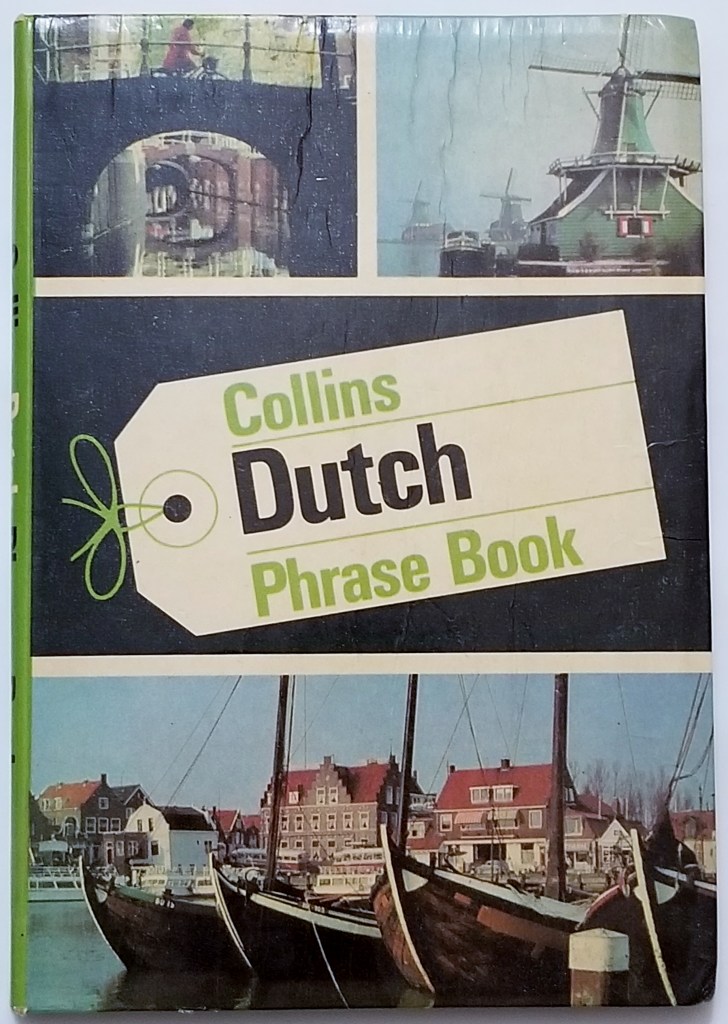
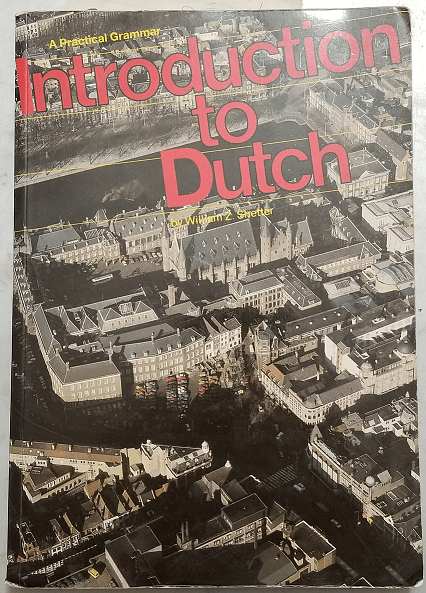
I bought this when I was 12 and still have it.
When I was 12, an aunt and uncle of my father came to Canada for a visit, Tante Anny and Ome Nic. Tante Anny was one of my grandmother’s sisters. I was so excited. I knew we had family in the Netherlands, but I had never met any of them before. I was even more fascinated when I was told they only spoke Dutch. I took some of my spending money and ran to the bookstore to buy myself a Dutch phrase book.
I remember my father being really intrigued by it. He came to Canada as a small boy, so his Dutch never progressed beyond an elementary school level. “So that’s what my mother was saying all those years!”, he said more than once. I still have that book.
Despite the language barrier, Tante Anny and I connected right away during her visit. Shortly after she arrived, I came down with a small cold. She sat with me for hours, chatting to me in Dutch, me answering in English. There was a lot of hand gesturing. After a while, I started to pick up a few bits and pieces. Nothing much, but it was a start.
Me with Ome Nic and Tante Anny in October 1990.
After Tante Anny returned to Canada, we entered into an ongoing correspondence that continued until she passed away twenty years later. I wrote to her in English and her children translated for her. She wrote in Dutch, and my father translated for me. However, I’d pore over those letters, trying to figure them out for myself.
When I moved away from home to start university, I continued my correspondence with Tante Anny, but had to fend for myself with the translation. I bought myself a Dutch-English dictionary (which I still have!) and painstakingly translated each letter on my own. Fortunately, being related languages, some words were not so difficult to work out. As well, after you look up the same word dozens and dozens of times, it starts to sink in. My greatest problem was with idiomatic terms and some of the more informal constructions. Once in a while I’d phone my dad for help, but I had very little grasp of how to pronounce the written words. He enjoyed some gentle teasing at my expense after hearing me mangle the language.
My first trip to Europe was in 1990, with a university friend. Our itinerary had us in the Netherlands for two weeks and we were staying with Tante Anny and Ome Nic. To supplement what I had learned on my own, I enlisted a couple of my Dutch-speaking friends to give me a crash course. One of them loaned me a Dutch translation of a Richard Scarry book. It might have been humbling, but it was a great learning tool.
My family in the Netherlands were very encouraging as I tried to prattle on in Dutch. What surprised me the most was that they all kept saying that I spoke Dutch like my father. That made no sense to me – Dutch was his first language! I finally asked why they kept telling me that. They answered it was because I kept saying “Mijn nederlands is niet zo goed,” which apparently what my father kept saying when he visited the Netherlands a few years earlier. I was also told I spoke Dutch like a book, or an old lady, which was true, because that’s how I had learned.
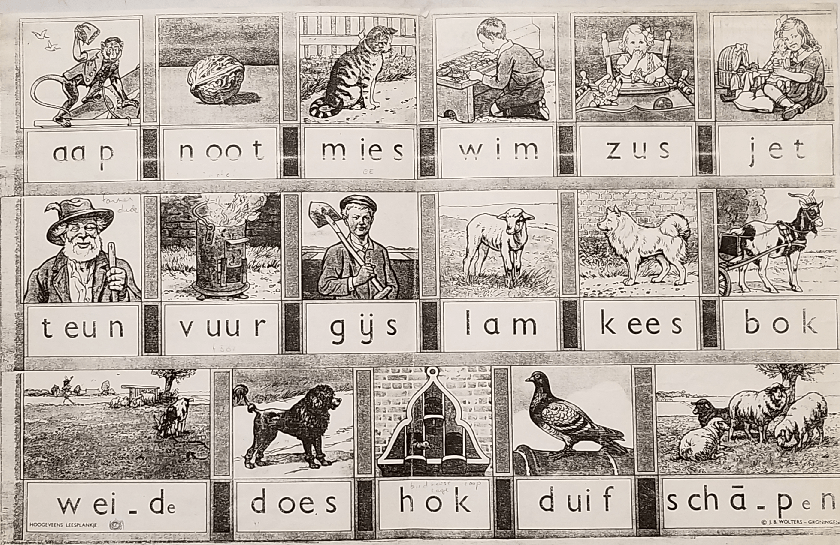
A year or two after my trip, I took a night course in Dutch offered through the local school board. It was the only time I had formal training in the language. I still have my textbook to this day! It was also my introduction to the famous aap-noot-mies leesplankje (“ape nut mouse reading board”). It was developed at the end of the 19th century and generations of Dutch children had it as a tool as they began to learn to read. I still have my textbook from that class, and my photocopy of the leesplankje is still tucked inside.
My decades-old photocopy of the aap-noot-mies leesplankje
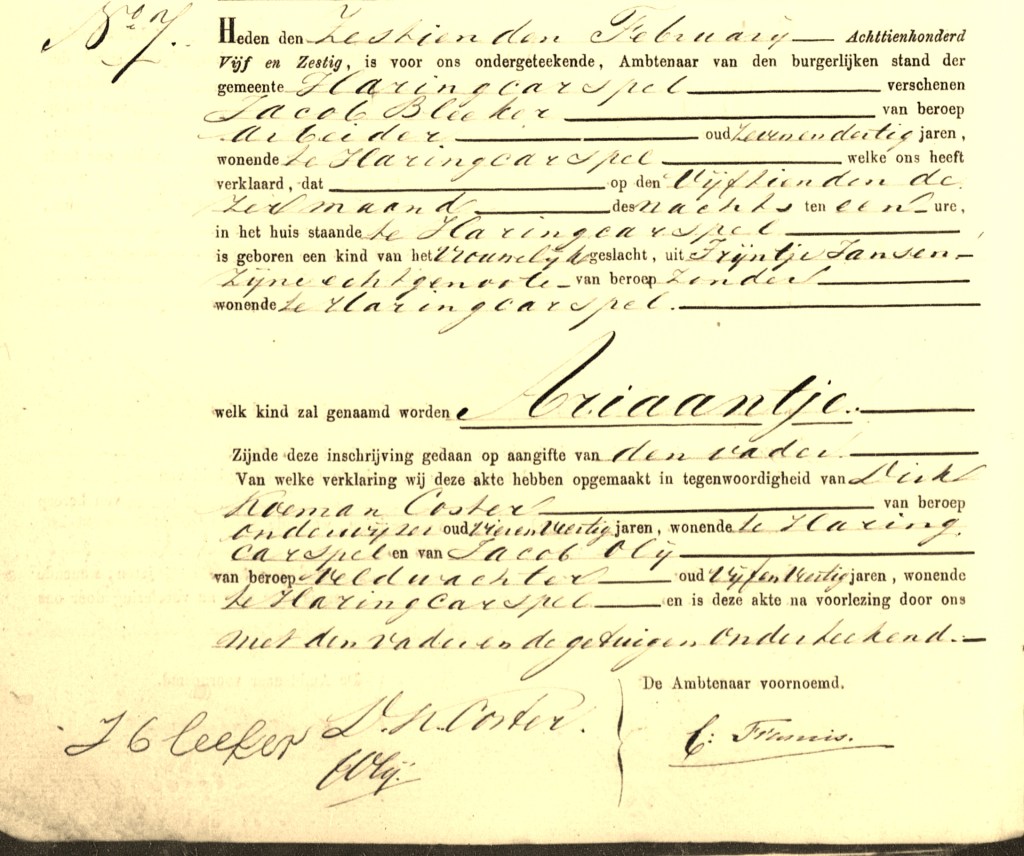
By the mid-1990s, I began to acquire some of family history records from sources in the Netherlands. If memory serves, one of the first documents I ever obtained was the death registration for my great great grandmother, Ariaantje Jacobs Bleeker, born February 15, 1865. Other records followed, including the persoonskaart (“persons card”) for my father and his family. Personal privacy rules weren’t what they are today, so it was easier to obtain records like that, given that at the time everyone named on the persoonskaart was still alive. I also became familiar with the burgerlijke stand (“civil register”). Unlike some unfortunate researchers, I knew right away it was not a village in the Netherlands.
Birth registration for my great great grandmother, Ariaantje Bleeker (1865 – 1929). It took me forever to translate this when I first obtained it. I have now read hundreds of similar birth, marriage, and death registrations, so I am well versed in this vocabulary.
I also used my correspondence with Tante Anny to further my genealogy research. I created a simple questionnaire and a pedigree chart that I spent a lot of time writing in Dutch, in order to make it easier for her to respond. I figured the easier I made it for her, the more likely it was that she’d fill them out. She did, although in her reply letter she queried why I’d want to know about something that was so uninteresting as family history. I often amuse myself by thinking she said that only because there is something interesting worth knowing that she didn’t want me to find. However, in the 25 years since she wrote that, I have not found anything that would support that idea.
Between my genealogical pursuits and correspondence with Tante Anny, there were some subjects I could understand with ease. The last time Tante Anny came to Canada, we watched my sister’s wedding video, and I was able to speak about the people and relationships without too much trouble. I was also very good with talking about cabbage farming.
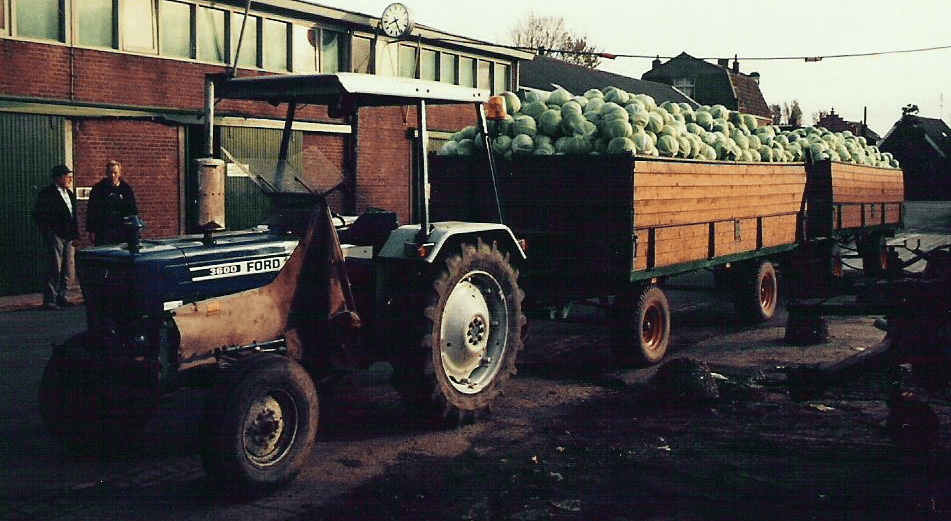
Twee spoorwagens kool bij de zuurkoolfabriek. (“Two carts of cabbage at the sauerkraut factory.”) (Yes, I know “spoorwagen” is a “railway car”, but that’s what my family in the Netherlands calls these.)
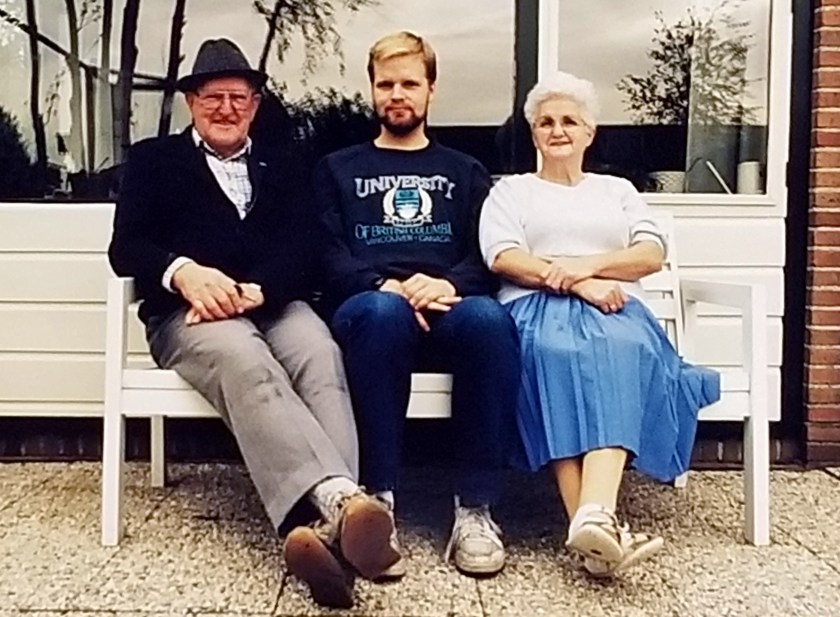
This is at the Kramer sauerkraut factory in Zuid-Scharwoude, North Holland. My Ome Nic took us there for a tour at the crack of stupid in the morning, because of a query my dad made about possibly importing it to Canada. It was actually a pretty cool (or “kool”) experience! My Ome Nic is the person on the left, in the hat.
Over the years, I’ve tried different ways to teach myself Dutch. Just before my last trip to the Netherlands, I started using Duolingo. It was an amazing tool at the time, and my knowledge of Dutch improved rapidly. I even used it every day during my stay in the Netherlands. Unfortunately, Duolingo is not what it once was, and it has changed a lot for the worse in recent years. With its latest changes, I find it is not a good learning tool at all. I’m inclined to quit the site altogether, but for the fact I’ve got an amazing streak going on there. One of the stereotypes of the Dutch is that they’re stubborn, and I am stubbornly hanging on if only to see how far I can take this streak.
My Duolingo streak as of March 5, 2023.
The other great resource I’ve taken advantage of are the free courses offered by FutureLearn. Again, this was a much better resource in the past, but I have taken a number of courses through this program. I have taken their basic Introduction to Dutch course several times. I’ve also taken some genealogy courses through FutureLearn, including one in genetic genealogy that I’ve stalled out on due to sheer lack of free time.
There are now also so many great YouTubers and Instagrammers who provide some wonderful, fun, and educational videos that have been invaluable. These include Learn Dutch with Kim (YouTube, Instagram), JeDutchy (YouTube, Instagram), and Learn Dutch with Bart de Pau (YouTube).
While my proficiency in Dutch is now barely conversational, I have excelled in learning what I need to know of the language to conduct meaningful research in that language. The Netherlands is one of the non-English speaking countries with the highest degree of English-language proficiency in the world and many of their online genealogy resources are offered in English. As well, the “translate” feature of browsers like Chrome can be invaluable, as is Google Translate. However, while there may be transcriptions of the source documents in English, the original records are in Dutch only, and knowing the language allows me to squeeze out so much more information than I might be able to get otherwise. I’m also able to carry out very basic chats in Dutch with cousins in the Netherlands.
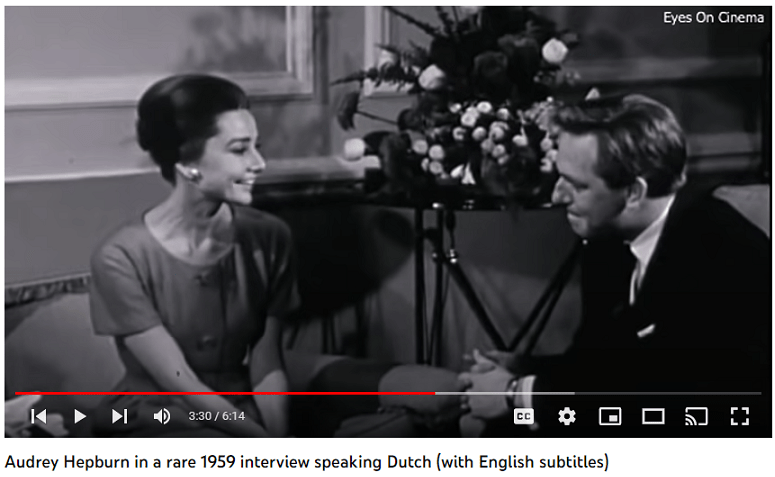
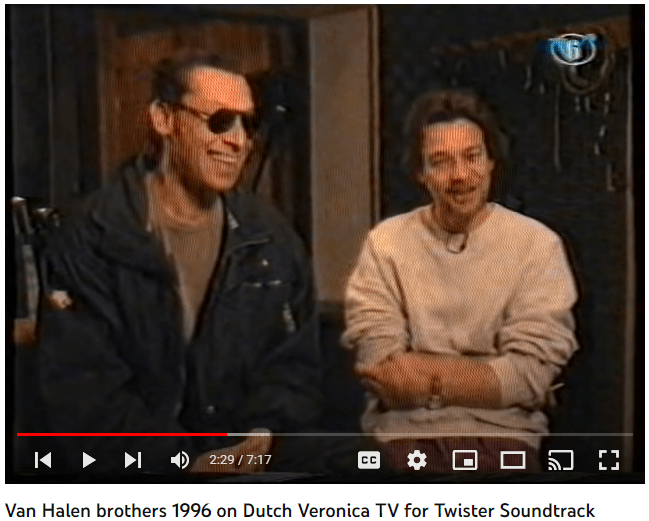
Before leaving, I’d like to share two videos I’ve watched countless times in trying to improve my Dutch. The first is an interview of Audrey Hepburn. Her Dutch is so beautiful and easy to understand. The other is an interview of Eddie and Alex van Halen, who were born in the Netherlands and whose first language was Dutch. I’ve seen her repeat this same interview with the same interviewer in French, and it is equally eloquent and easy to follow. You can click on the images to watch the videos.
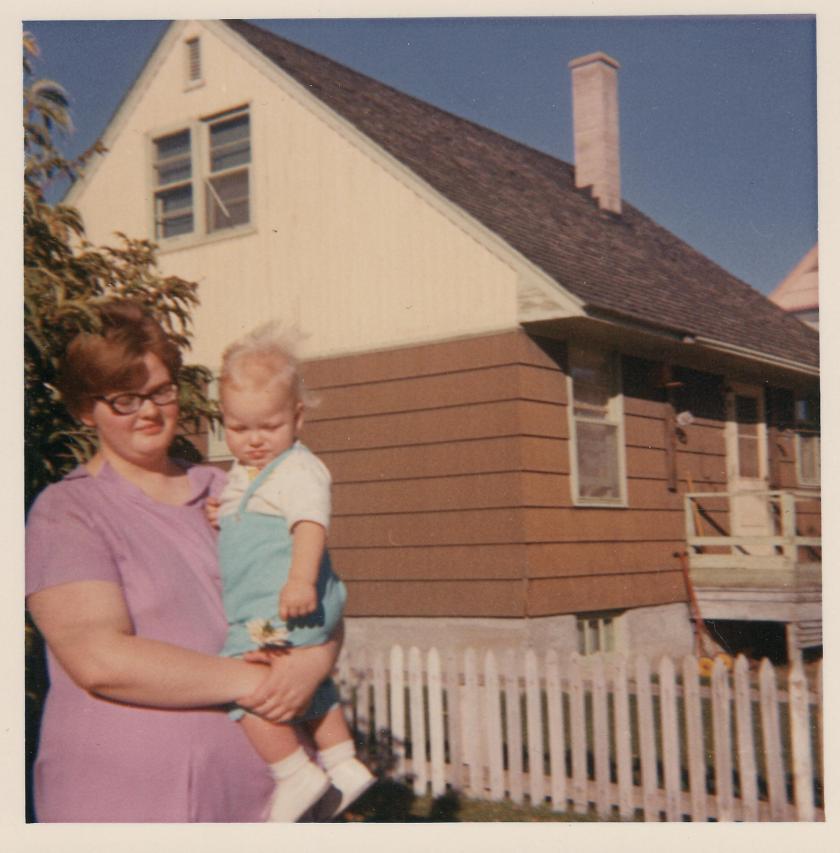
I’ve written many times about my aunt, Helen Diana Burgess. Coincidentally, I wrote a significant piece about her for Week 9 of the 2022 52 Ancestors Challenge. Sadly, she left us too soon, at age 48. Despite the short period of time I had her in my life, Aunt Diana made an incredible impact on me. Even though she died 23 years ago, it is rare for a day to go by in which I do not think of her. Whether it’s a favourite book, a memento, or piece of art, there is always something that brings back fond memories of my aunt. I am frequently sharing stories of her with my wife and children.
My Aunt Diana and me.
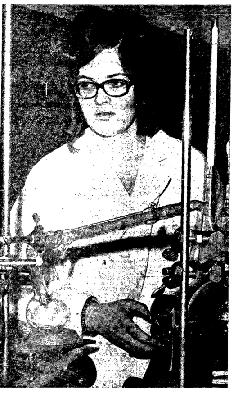
Moreover, as an avid genealogist, I frequently see queries on social media asking about paper preservation and proper storage of family heirlooms. Diana was a leading conservation scientist, whose expertise included paper, so these queries always remind me of her. I wrote about this last year in Week 40, “Preservation”.
Science!!
Unfortunately, in the early 1990s, when she was at the height of her career, Diana developed lupus. She was a senior conservation scientist at the Canadian Conservation Institute at the time, but was forced into early retirement by the effects of the disease in 1998. Aunt Diana passed away a year later. At the annual conference of the Western Association for Art Conservation following her death, several of the presentations were dedicated to her memory.
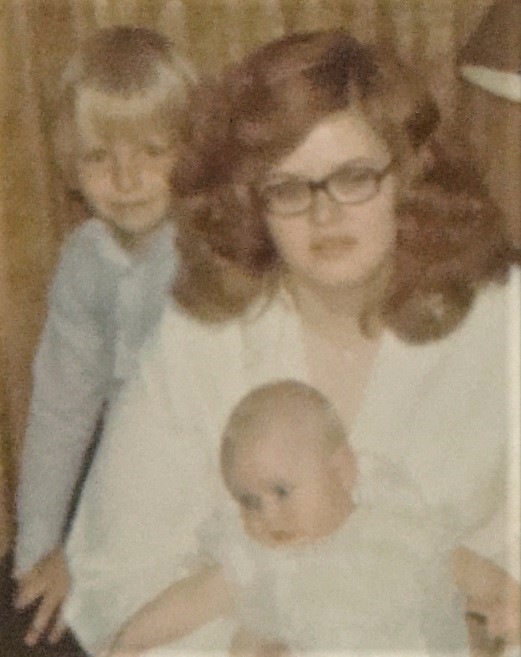
Diana was also godmother to one of my brothers.
Many of my interests that Aunt Diana nurtured in me I have passed on to our children. Some of the most treasured books I have from my childhood were gifts from her. I still have those books and my kids have read and re-read them voraciously. While Diana could not have known it, not only did she foster my development as a person, but that of my kids as well.
 A Deck of Ancestors