Every week, participants in Amy Johnson Crow’s 52 Ancestors in 52 Weeks are invited to post on the hebdomadal theme at her Facebook group, Generations Cafe. In my post there for last week, I noted that it’s been quite the struggle participating in the challenge this year. For every week’s theme this year, it felt like I had already written about the current topic – sometimes more than once. It’s getting hard – challenging even! – to think of something new that fit, which I also found interesting enough to me to write about.
This week, I’m not going to fight it, I’m just going to go along with it. So you’re not experiencing deja vu when reading about my grandfather, Leo Burgess, and his brush with Hollywood.
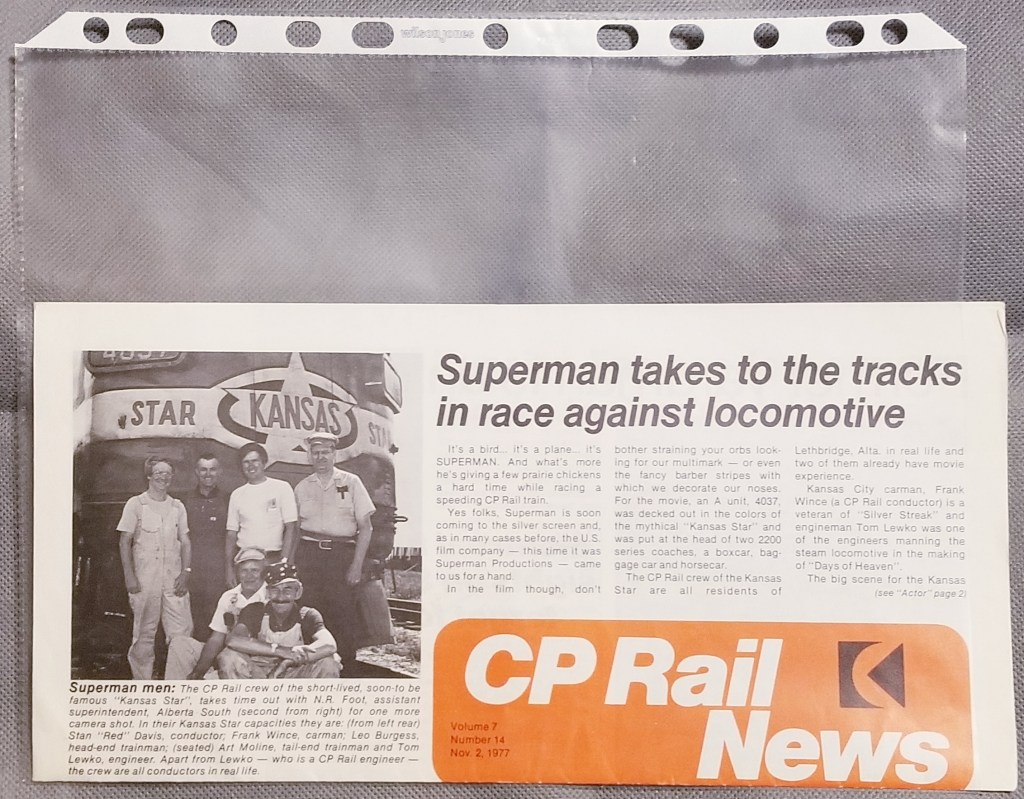
My grandfather worked for the Canadian Pacific Railway for over 30 years, first as a brakeman and later as a conductor. During his time with the CPR, he worked on the train crews for movies like Silver Streakand Superman: The Movie.
My grandfather, Leo Burgess, is the man wearing a cap standing on the right side of the photo.
Working on Superman was one of the highlights of my grandfather’s life. He was always proud to talk about meeting one of his favourite actors during filming, Glenn Ford.
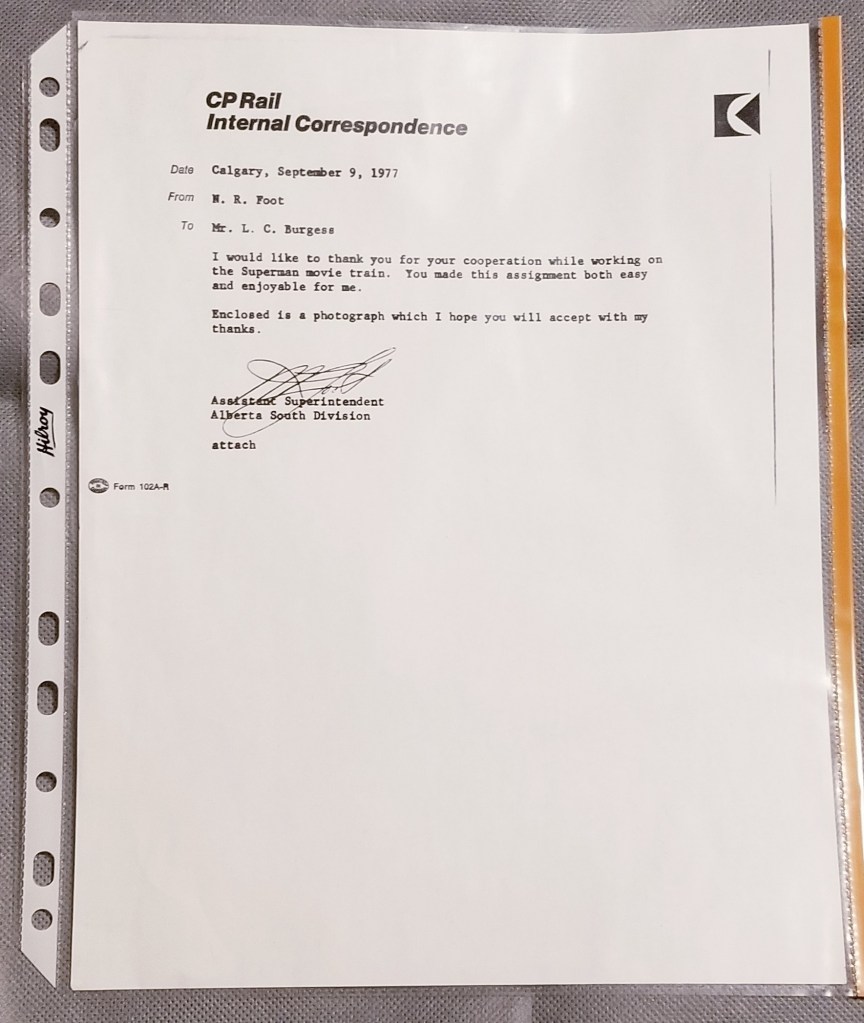
I assume photo referred to in the letter is the same photo that appeared in the CP Rail News, above.
During the eulogy at my grandfather’s memorial service, one of his friends told an anecdote that suggests my grandfather felt that he had gotten familiar with the cast and crew. The scene took six days to shoot. Apparently during a break in filming, Ford was talking to a group of railway workers when my grandfather sauntering up, put his arm around the actor, and said, “How’s it going, Glenn?”
My grandfather was working in the engine during the filming of this scene.
Today my parents live about a 30 minute drive from where this was filmed. The tracks are gone, but the memories live on.
I have really struggled with this week’s 52 Ancestors Challenge theme, “Solitude”. Everything that came to mind was something I wrote about in last year’s challenge, and didn’t need repeating for a second, third, or even fourth time. I also could not think of a creative way to bend the theme to suit some other purpose.
However, two days ago, well after this week’s theme was posted, we had a death in our extended family. Tomorrow is the funeral. It will be at a cemetery I used to pass often, when I lived in a different part of the city. Planning my route for tomorrow, the solitude of the location of the cemetery came to mind. It also reminded me of the quiet solitude of most cemeteries I’ve been to, whether in a remote rural location or in the middle of a bustling urban centre.
Solitude is often characterized by descriptions of melancholy, sadness, misery, and unhappiness. I don’t think that’s accurate. To me, that’s loneliness, the opposite of solitude. Solitude is more a description of the contentment or joy one can experience with being in a quiet place or on your own. It’s descriptive of what we wish for our deceased loved ones when we say, “rest in peace”.
So, to our late family member, rest in peace. May your memory be a blessing.
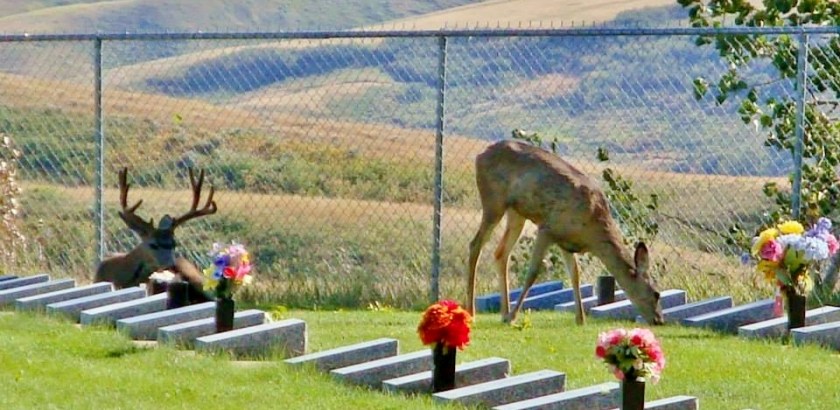
A couple of visitors enjoyng the quiet solitude of Mountain View Cemetery in Lethbridge, Alberta.
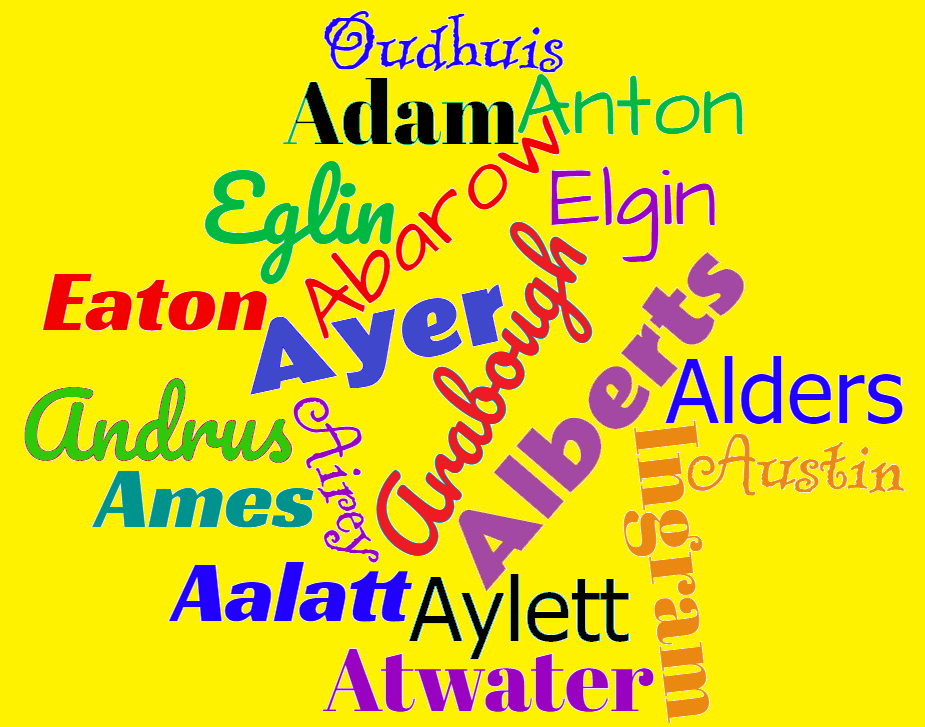
For this week’s 52 Ancestors Challenge, “Begins With A Vowel”, I decided to be more graphical. So I created a word cloud for all the surnames of my direct ancestors whose surnames begin with a vowel.
I have many more surnames in my tree that start with a vowel, but these are just my direct ancestors. There are even a few people in my tree whose first, middle, and last names all begin with vowels!
I have 14 direct ancestors whose surname begins with “A”, three whose begin with “E” (my Eglin and Elgin ancestors are not related, other than through me!), one each for “I” and “O”, and none for “U”, “Y”, and “IJ”.
“What? ‘IJ’??” you say?
In the Dutch language, IJ is treated as a letter unto itself. In fact, in my reading it appears that there is some debate on the matter in the Netherlands, although in Flanders (a Dutch-speaking province in Belgium), it’s considered two letters. Technically speaking, “ij” is a digraph of the letters “i” and “j”, forming a single phoneme (distinct sound). It doesn’t have an exact sound counterpart in English, although it can sound somewhat like a long “i”. When a word that begins with the diagraph is capitalized, both the “i” and “j” are capitalized. The “ij” in Dutch words are often changed to a “y” when adapted into English. In modern Dutch, words with the letter “y” are most often ones that were borrowed from other languages.
For example, a Dutch surname that begins with “IJ” is “IJzerman”, which means “iron man” or “man of iron” in English. You will sometimes see this name changed to “Yzerman” in English. Ice hockey fans will be familiar with Steve Yzerman, whose grandfather immigrated to Canada from the Netherlands at the beginning of the 20th century. Given his success in the sport, “man of iron” is a fitting moniker.
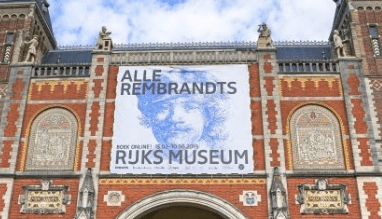
The Rijksmuseum in Amsterdam. Depending on whether you consider “IJ” to be one letter or two, it can be spelled “R-IJ-K-S” or “R-I-J-K-S”
Hard to believe that we’re now a quarter of the way through this year’s 52 Ancestors Challenge! I feel like I’m still at the starting gate.
This week’s theme is “Light a Candle”. Amy says, “Candles are often lit in remembrance, in prayer, or when the power goes out for 5 days because of an ice storm. Be creative with this prompt!” So I’ll be creative!
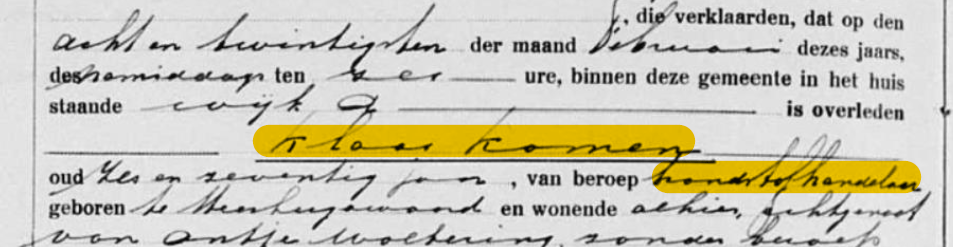
All candles need fuel for the fire, which in their case is the wax. Thinking of fuel reminded made me think of an occupation of one of my ancestors, which has intrigued me many, many years: “brandstoffenhandelaar”. It’s Dutch for “fuel merchant” or “fuel dealer”. My great great grandfather, Nicolaas “Klaas” Komen was a brandstoffenhandelaar in Zuid-Scharwoude, Noord Holland, starting sometime around 1920 up to when he died in 1929.
From the civil register of deaths for Zuid-Scharwoude for Klaas Komen (1852 – 1929), noting his occupation as a brandstoffenhandelaar.
Back in the days before Babelfish or Google Translate, and when my Dutch was still at its most rudimentary as I struggled to teach it to myself, I would often puzzle over what it meant or what the job actually involved. I couldn’t find it in any of the Dutch-English dictionaries I had. However, I knew it was a compound noun. By breaking it down to its component parts I was able to determine that it had something to do with fire and trading or mercantile.
Many years later, I learned that it meant “fuel merchant”, but what exactly did it mean? It’s a term you can find in common use today, especially in the petroleum industry. However, its current use could not possibly mean what Klaas had likely been doing in the 1920s.
Years ago, I trick I figured out for translating unusual or difficult to understand words is to use Google Image Search. Like they say, a picture says a thousand words. I did this for the term “brandstoffenhandelaar“. Not only did that search show the modern usage of the word, but it also showed century-old photos of people with carts or wagons transporting various kinds of fuels, such as coal, oil, and peat. It struck me that those images likely depicted Klaas’s occupation, particularly given that he was a labourer for most of his life. Operating a cart or wagon would be quite consistent with the other work he performed and his station in life.
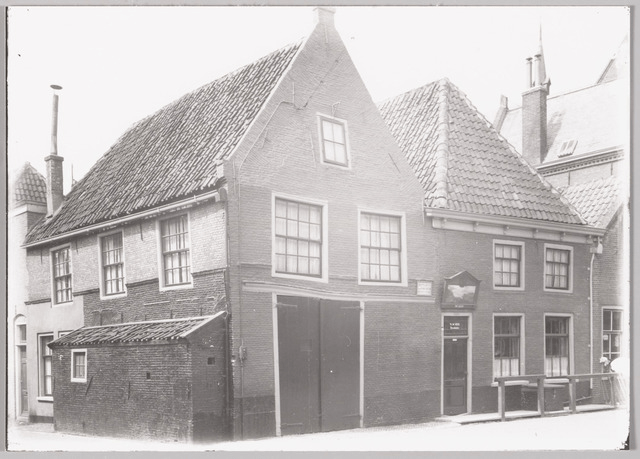
One of my Google Image Search results for brandstoffenhandelaar resulted in this photo in the collection of Regionaal Archief Alkmaar (Alkmaar Regional Archive). This was the warehouse of Dirk Veer, a brandstoffenhandelaar in Alkmaar, which is only a couple kilometers from Zuid-Scharwoude. The image was taken in 1925, so it’s possible Klaas might have known of this place.
In recent years, I discovered the Dutch Genealogy group on Facebook. I posted a query asking whether my understanding of brandstoffenhandelaar was correct, or whether it was more nuanced. The responses led me to believe that I was more or less correct. Several of the responses confirmed that back in Klaas’s day, a brandstoffenhandelaar might be someone transporting fuel by cart, wagon, or small truck, most likely coal, peat, or heating oil.
On occasion, I’ll try to find out what it was that Klaas actually did as a brandstoffenhandelaar. In preparing this post, I thought I’d give Delpher a try. Delpher is a fantastic resource, where you can find historical newspapers, magazines, books, and other publications. The only down-side to Delpher is that the site is only in Dutch, with no English interface. Even if it had one, the search results would be documents that are only in Dutch, so some knowledge of the language is necessary. I get a great language lesson every time I use it!
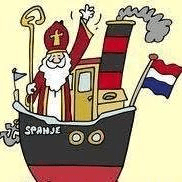
My goal with Delpher was to see if Klaas had placed any ads or notices for his services in the local paper. Delpher has great advanced search features, but I was still stymied in my search. In addition to being a surname, “komen” is also the verb “to come” in Dutch. On top of that, searching for an exact phrase using variations of Klaas’s first name (Nicolaas, Klaas, Nic) with his surname produces a lot of items about Sinterklaas coming to town. Even expressly excluding “sint” or “sinter” from the search didn’t filter them all out.
Hier komt Sint!
Despite the quirks of my search terms, I never found anything for Klaas or his work in the papers I searched. Nevertheless, my curiosity remains fueled.

 A Deck of Ancestors