52 Weeks – Week 23: Mistake

More of a misunderstanding than a mistake, really…

It’s week 23 of the 52 Ancestors Challenge, on the topic of “Misteak”, er “Mistake”. (See what I did there?)
Creative Commons 3 Licence – CC BY-SA 3.0
Original Author: Nick Youngson https://www.picpedia.org/chalkboard/e/error.html

A few weeks before I turned 19, I visited Ottawa for the first time, during a student conference. I took the opportunity to visit my aunt, who by that time was well-established in the capital. I had already been actively working on my family tree for at least ten years by then, so our conversation turned to our family history.

We ended up talking about our Nelson ancestors. I knew nothing about them beyond my great great grandfather, John Alexander Nelson. My family and I had gone to a family reunion of his descendants in Big Fork, Montana when I was 13.
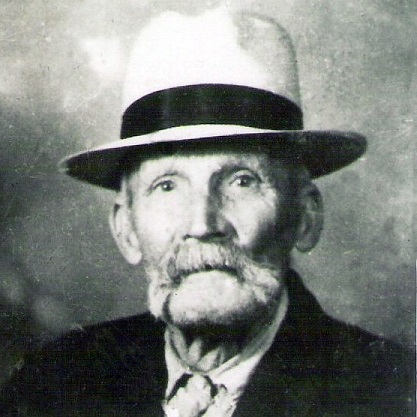
John A. Nelson, circa 1930s.

My aunt told me that John’s parents, Robert Nelson and Elizabeth Joseph, had emigrated from Scotland to the United States. My aunt then volunteered two pieces of information that I found particularly exciting.
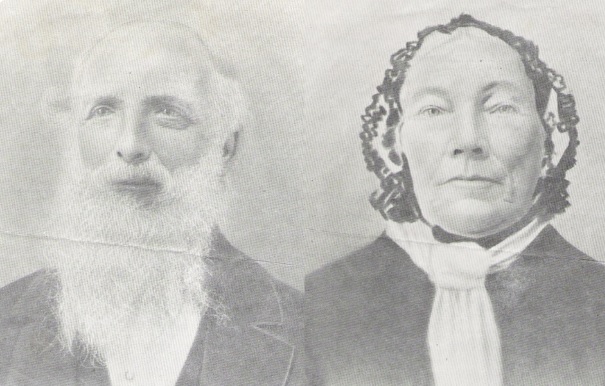
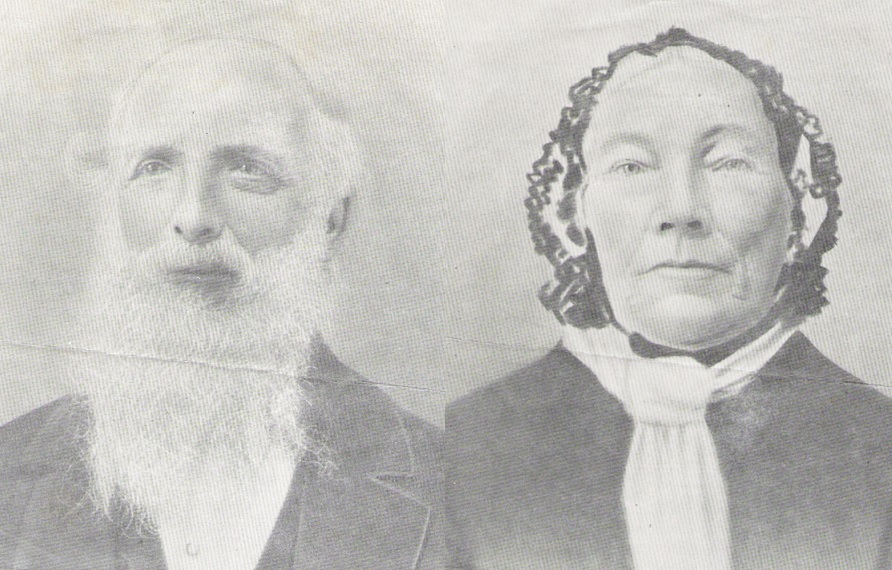
Joseph Nelson (1818-1902) and Elizabeth Joseph (1818-1902)

First, she said that the belief was that the Nelson name in Scotland had Viking origins. Vikings? That was even cooler than if she had told me they were descended from pirates. Second, she said that through the Nelson line we might be descendants of Robbie Burns. I was thrilled by that possibility, because Burns was one of my favourite poets.

I knew enough at the time not to accept the idea unconditionally. I had already honed an overdeveloped sense of skepticism. I already knew a few family legends and their lack of veracity, so I had no reason to believe these legends would turn out to be any different. Moreover, while the initial development of the Genealogical Proof Standard was many years in the future, I was well into my undergraduate degree in history and knew full well the importance of proof.

However, I received these pieces of information back at a time when genealogy was done the old-fashioned way. Personal computers were still largely a relatively new and novel thing and it would be a few years before most of us even heard of the internet. It would have taken a lot of time and effort to verify or debunk what I had learned. Besides, the ideas were so cool that I was really not in a hurry to burst the bubble.

In the meantime, I reveled in the prospect of a Scottish connection. I learned that the Nelsons had connections to Clan Gunn. Shortly afterwards, I spotted a necktie patterned on the Gunn tartan and bought it mostly out of amusement. Plus, I enjoyed bewildering people as to why someone with a Dutch surname was wearing a tartan tie.
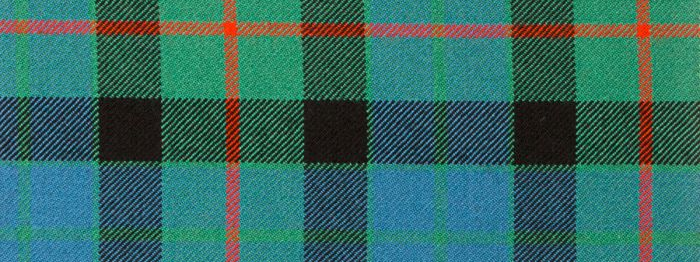
Alas, all good things come to an end.

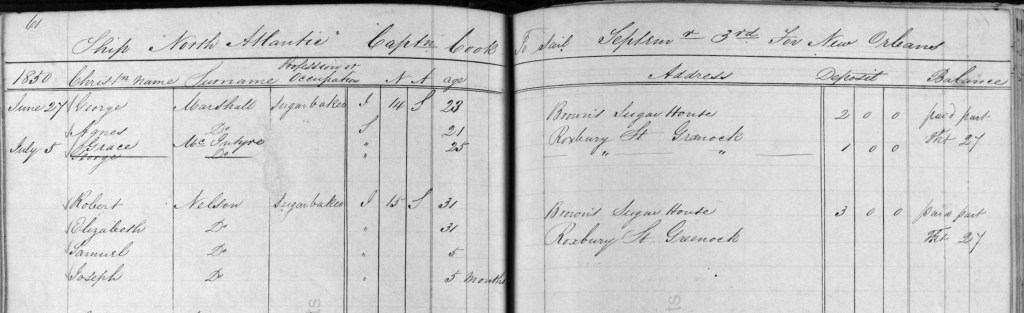
While Robert and Elizabeth had lived in Scotland, they weren’t Scottish. They were Irish. They were both born in Muff, Donegal in 1818 and married there in 1842. Sometime in the early 1840s, likely around 1844, they relocated to Renfrewshire, Scotland. By 1850, Robert was working at Brown’s Sugar House, on Roxburgh Street in Greenock, Scotland as a sugar baker. Sugar bakers usually refined muscovado sugar, an unrefined brown sugar imported from Barbados. In 1848, they joined the Latter Day Saints (“Mormons”). On September 3, 1850 Robert and Elizabeth, along with their three children, departed Liverpool on board the ship “North Atlantic” bound for New Orleans. By 1854, they had settled in Salt Lake City where John, my great great grandfather, was born.
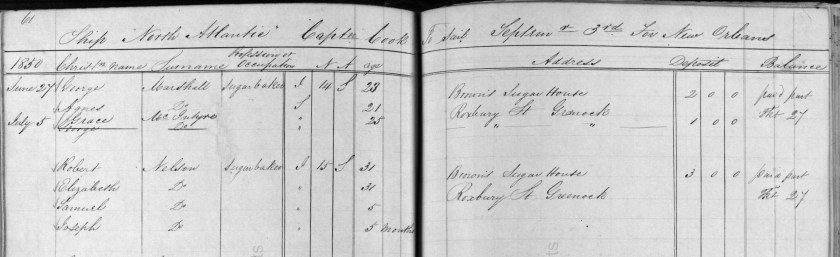
Passenger list for the North Atlantic showing the Nelson family travelling from Liverpool to New Orleans.

As for the Burns connection, it really did not take much to dispel that myth. Robert Nelson’s mother was a woman named Martha Burns. Martha was born in 1787. So while her surname was Burns and she was born at a time Robbie Burns was busy fathering numerous children, that is where the correlation ends. None of Burns’ children – legitimate and illegitimate – were named Martha. Moreover, Martha was born in Muff, Donegal, not Scotland.
Sad trombone

52 Weeks – Week Seven

Landed

I’m starting to realize that when I choose a topic for the theme of the week for the 52 Ancestors Challenge, I should look ahead to see what other topics are coming up. That way I can avoid getting to a topic like this week’s, “Landed”, and seeing that I’ve written on the topic before. Then again, a little repetition here and there won’t hurt.

If I had approached this topic a few hours ago, I would probably be sitting here casting about in my mind as to what “landed” means to me. Fortunately, our eldest son inadvertently gave me a focus to write about. During dinner, out of the blue, he asked “besides Opa, did any of our ancestors come to Canada on steamships?”

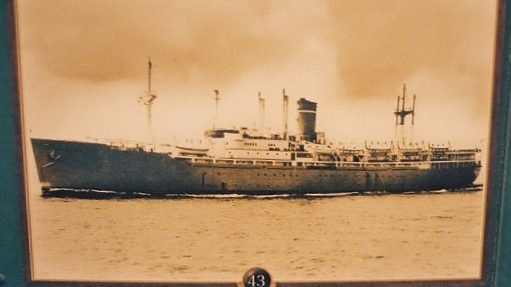
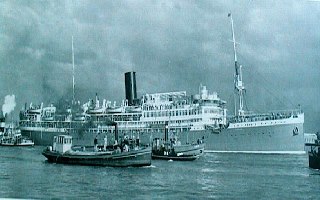
The Sibajak, which brought my father and his family to Canada.
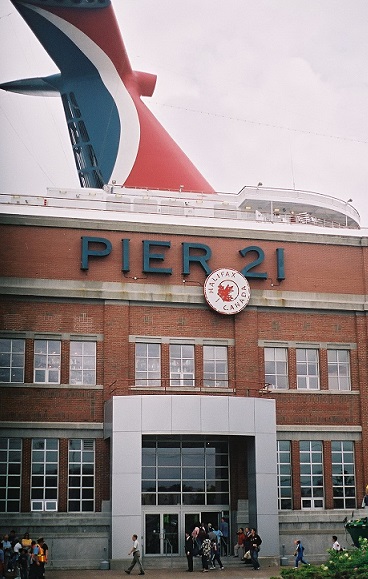
Pier 21, Halifax

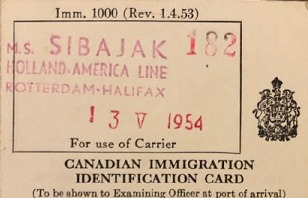
Opa is my father, the Dutch side of my family. I’ve already written about his coming to Canada on the Sibajak. He and his family came in early May 1954, travelling from Rotterdam to Halifax. They landed at Pier 21, which could be described as the Canadian equivalent of Ellis Island. My father’s aunt and uncle came over four months earlier, in January 1954 on the Groote Beer, while another aunt and uncle followed in late May 1954, on board the Castel Felice.

While it was a Holland America ship during his crossing, built and originally operated by Rotterdam Lloyd, along with other ships that they mainly used to go to the East Indies. Built in 1927, the Sibajak served as a troop ship during World War II. After the war, the Sibajak was one of a number of ships operated by Holland America that were used almost entirely for Dutch emigrants, along with the Grote Beer, Waterman, and Zuiderkruis. It was sold and scrapped in Hong Kong in 1959. When I was in Hong Kong in 1996, while travelling around the harbour and between its islands, I wondered how close I might have come to what scraps of it might remain.

This is a fascinating short documentary about a voyage the Sibajak made to Australia carrying Dutch emigrants. The video is in Dutch, but the images convey a lot of meaning.

In the late 1990s, my parents went on an Alaskan cruise on a Holland America ship. During the trip, my father, who loves to talk to people, fell into a conversation with one of the older hands on deck. My father mentioned having come to Canada on the Sibajak. After a few questions from the crew member, my dad learned that the man had been on the Sibajak during my father’s trip, in his first year or two of service.

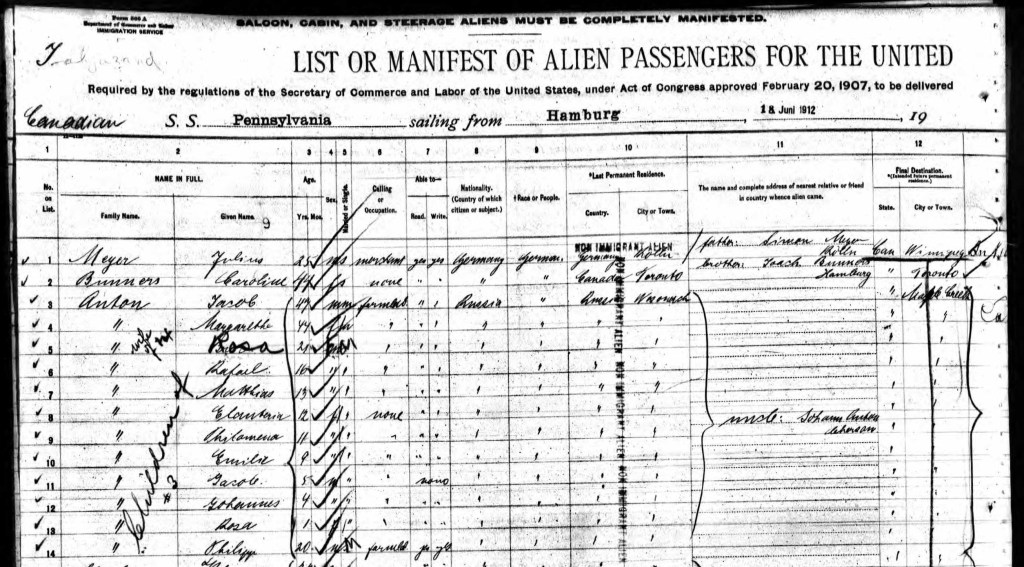
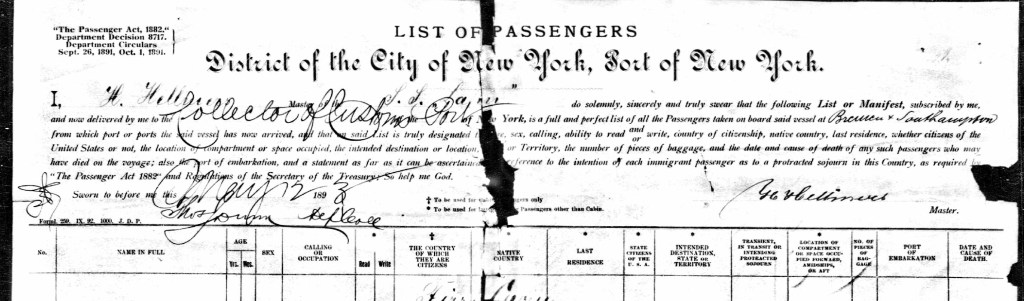
On my mother’s side, the most recent ancestor to arrive by steamship was my great grandmother, Emelia Anton. She came to Canada at the age of nine, with several of her siblings and her parents, Jacob Anton and Margaretha “Margaret” Heck. They were Germans from Russia. The family sailed out of Hamburg on June 18, 1912 aboard the S.S. Pennsylvania. They arrived at the Port of New York (Ellis Island) on July 1, 1912. Their declared destination was Maple Creek, Saskatchewan, to join Emelia’s older brother, Rochus. The passenger manifest stated that Jacob paid for the entire family’s transport, other than that of one of his daughters-in-law, whose passage had been paid by her father.

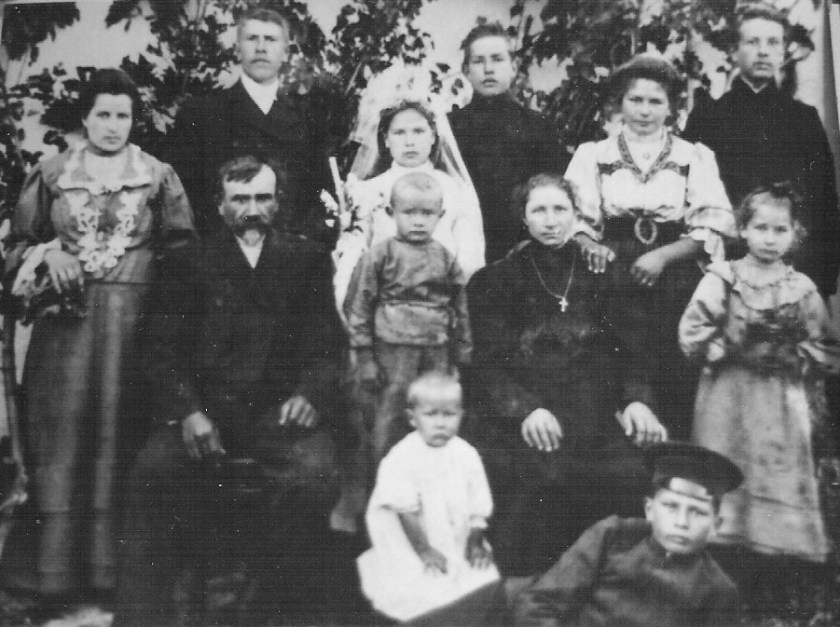
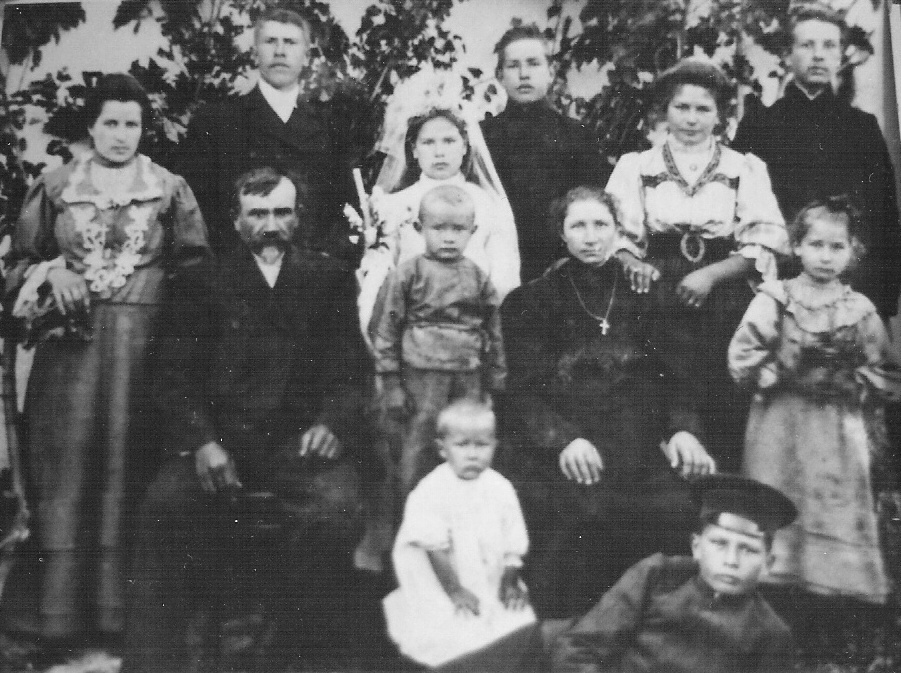
The Anton family, circa 1910. Likely taken in Selo Suchoi, Veronesch, Russia.

Emelia had not had much schooling before coming to North America, but was very religious. She said that she was frightened and nervous during the journey, as she did not know anything about where she was going and did not fully understand what was going on. However, on reaching New York, she said her fears subsided when she saw “the Madonna”. When she saw that, she knew she would be safe and all would be well. Of course, the “Madonna” was the Statue of Liberty. As she had never heard of it before, she thought it was a statue of the Virgin Mary.

Passenger list for the S.S. Pennsylvania showing the Antons.
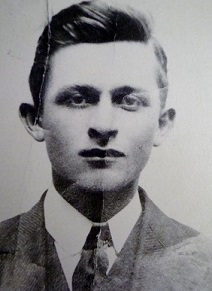
Jerome Lerner (1895-1954)
Michael Lerner (1862-1947) and Barbara Schmidt (1865-1936)

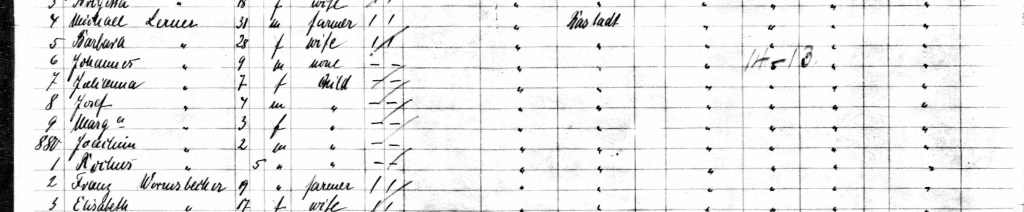
Emelia’s husband, Heronimus “Jerome” Lerner, was born to parents who were also Germans from Russia, Michael Lerner and Barbara Schmidt. Michael and Barbara came to the United States in May 1893 aboard the S.S. Lahn, with the five children they had at the time. They landed at Ellis Island and made their way to Clay County, Texas. Jerome was the first child born to Michael and Barbara in the United States. They had seven other children in Texas after Jerome was born. Jerome moved to Saskatchwan in 1917, preceded by an older brother. Jerome’s parents followed a year later. Other siblings came north at other times.

Passenger list for the Lahn showing the Lerners

The ancestors furthest back in time that I can find who came to North America on a steamship were my great x3 grandparents, Robert Nelson and Elizabeth Joseph. They were both born in Muff, Donegal, Ireland in 1818 and married there in 1842.

Joseph Nelson (1818-1902) and Elizabeth Joseph (1818-1902)

Sometime in the early 1840s they had moved to Linwood, Renfrew, Scotland. They were there at least by January 1844, when their first son, Samuel, was born. By 1850, Robert was working at Brown’s Sugar House, on Roxburgh Street in Greenock, Scotland as a sugar baker. Sugar bakers usually refined muscovado sugar, an unrefined brown sugar imported from Barbados.

On September 3, 1850 Robert and Elizabeth, along with their three children, departed Liverpool on board the ship “North Atlantic” bound for New Orleans. For a long time I had been confused by references I had seen to them coming over on “the north Atlantic”, thinking it meant the route they travelled. It wasn’t until I came across the passenger list that I realized that “North Atlantic” was the name of the ship. Having a name like that makes it difficult refine a search to distinguish the ship from where it sailed. However, while I have not found very good sources, it appears that the North Atlantic was a steam powered ship.

Passenger list for the North Atlantic showing the Nelson family

The records show that there was at least one other family headed by a sugar baker from Brown’s on the same voyage. Robert and Elizabeth were part of a company of Latter Day Saints (Mormon) converts travelling from the United Kingdom to Utah. The family spent a short period of time in Missouri, where in 1852 Elizabeth had her first child born in America. By late 1854 they were in Farmington, Utah, where my great great grandfather John Alexander Nelson was born.

Looking at my pedigree for this post, I realized I might have one other ancestor who might have travelled from the United Kingdom to the United States by means of a steam powered ship. That would be my great x3 grandmother, Maria Hadlond, who was born in Cheltenham, Gloucester, England in 1838 and who emigrated sometime in the 1850s. I have not really researched this branch of my family beyond collecting names and basic vital stats. For whatever reason, it has never caught my interest.

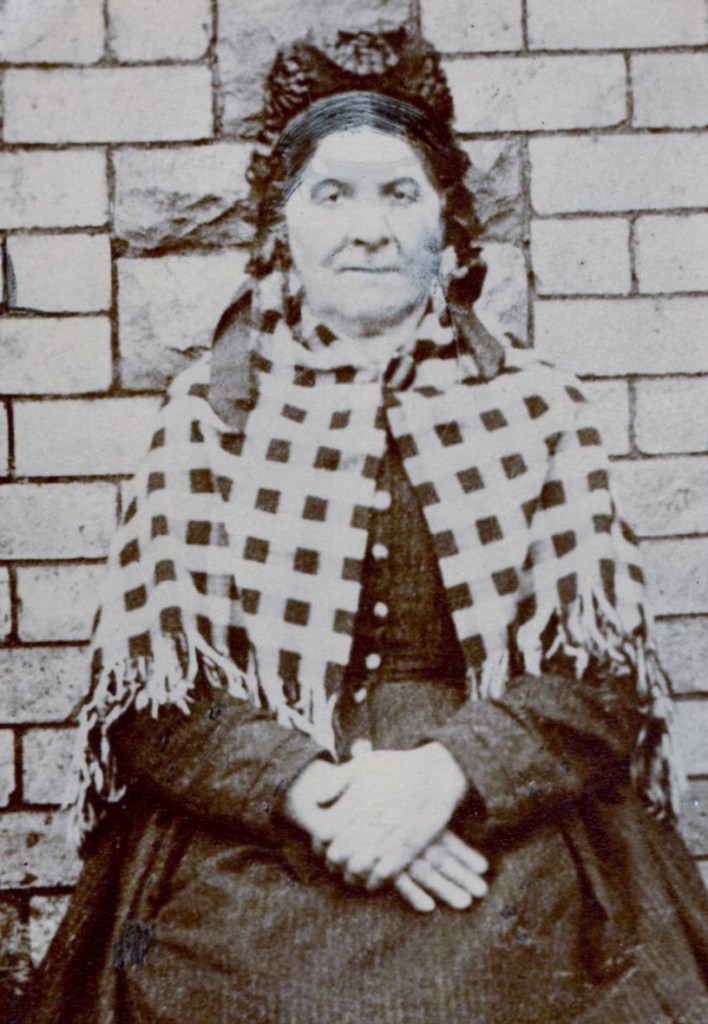
Susan Turple (1818-1906)

I also have a great x3 grandmother, Susan Turple, whose family had been in Nova Scotia since the 18th century, who would have travelled by means of a ship with sails. In 1849, Susan joined the Mormon church in 1849. In 1852, she went from Halifax to Boston to join a westward migration of Mormons. It is most likely that the initial part of Susan’s travels was by means of steam powered ship.

Before these people, any ancestors I have who crossed the Atlantic would have done aboard ships with sails.

Speaking of looking ahead, I see that next week’s theme is “Courting”. Since I am writing this on February 14, I wonder if that should have been this week’s theme!

52 Weeks – Week Three

Favourite Photo

As expected, I found this week’s 52 Weeks challenge to be particularly difficult, as I am lucky to have so many photos that I cherish. So I am going to cheat a little and post more than one, as I really do not have one photo that I favour above all others. With one exception, I’ve had a copy of all these photos for a very long time. Some of these photos were what helped kindle my love of genealogy.

On her Facebook group, Generations Cafe, Amy Johnson Crow suggested telling “the story of a favorite photo: who is in it, where and when it was taken, and why it was taken. What was the event?” I have to admit, for some of these photos I never thought of who took them or why they were taken, even though I had known of them for years.

The Anton family, circa 1910. Likely taken in Selo Suchoi, Veronesch, Russia.

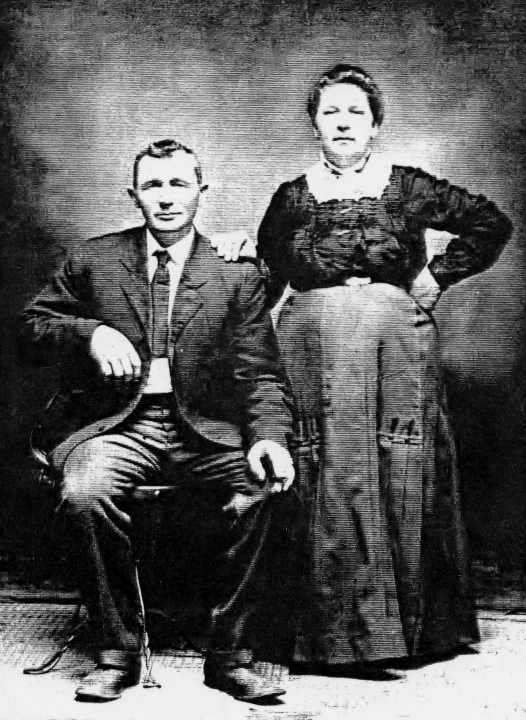
This is a photo of my great great grandparents, Jacob Anton and Margaretha (“Margaret”) Heck. Given the attire, this was likely the confirmation of their daughter, Elataria (“Lottie”). My great grandmother, Emilia, is the girl on the right holding flowers. She was about 7 years old here. She lived to be 94. I visited her many times. She is the one who I mentioned at the outset of this blog, who surprised me by speaking fluent German when I thought she was of English heritage.

While this photo was taken in Russia, the family was German. Their forebears were amongst the many Germans who migrated to the Russian Empire in the 18th and 19th centuries. My family settled in the Beresan region of what is now Ukraine. A few years before Emelia was born, the family migrated to Russia. They stayed there until 1912, when they emigrated to Canada.

The next few photos all relate to my father and his family.

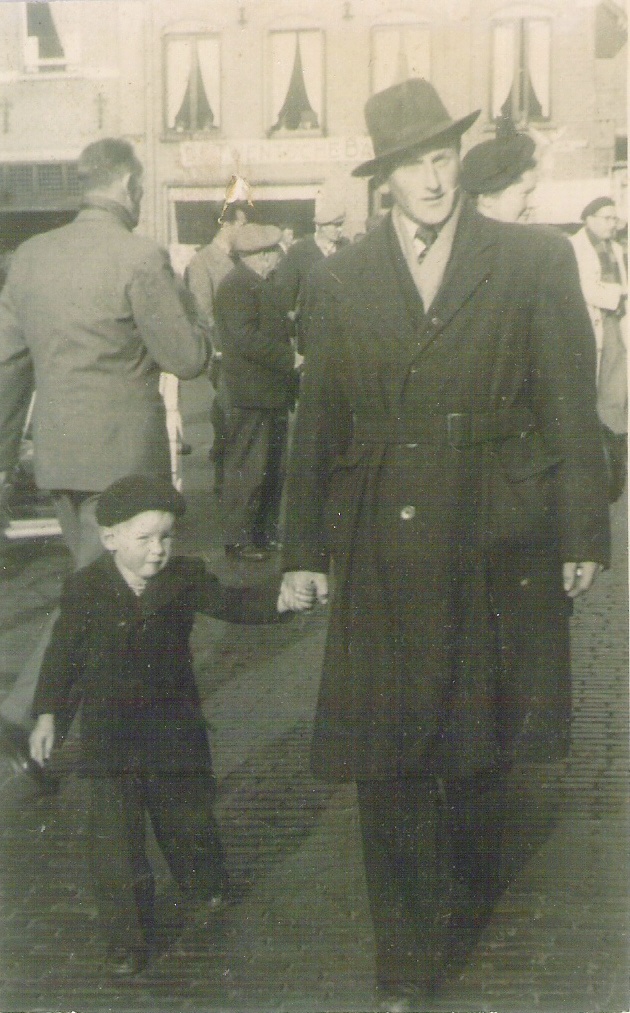
My father and his father, Adrianus (“Arie”) van der Fluit, Schagen, Netherlands, circa 1951.

This photo is definitely a contender for my absolute favourite. While I know when and where it was taken, it never crossed my mind to wonder who took it or why. I have no idea why they would have been visiting Schagen, but there they were. They certainly were dressed very fine and are looking very dapper. My grandfather was a farmer and a labourer, and they’re a bit of a way from home, so it must have been an important occasion. Looking through the family timeline, I can’t find an event that occurred in Schagen at this time.

I was in that same square with my father a few years ago. I should have recreated this photo with him, but I couldn’t quite figure out where in the square this had been taken.

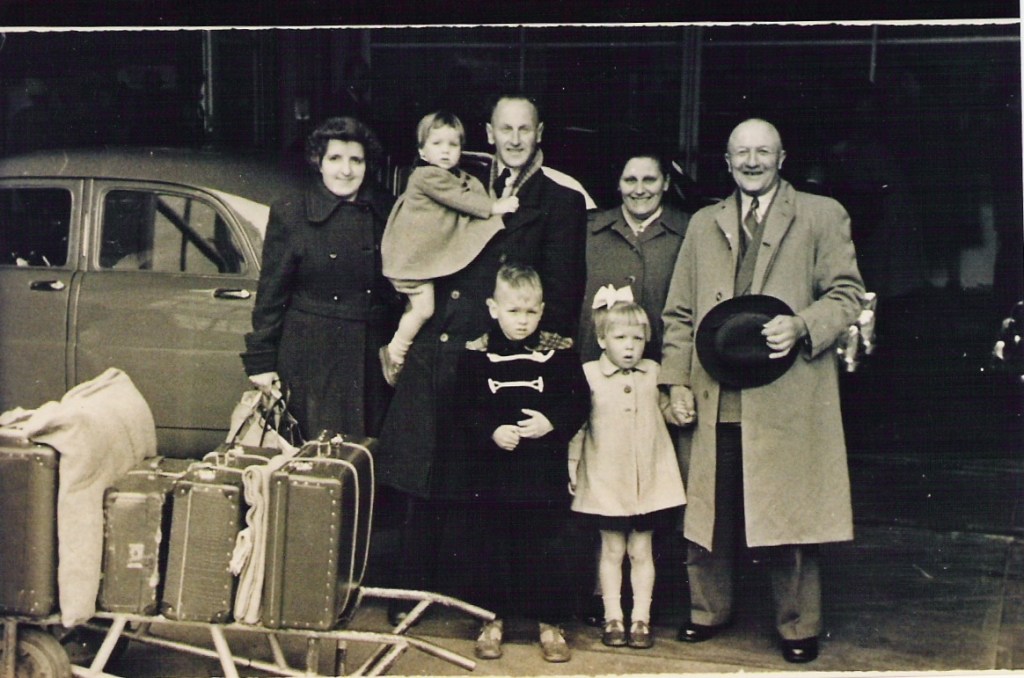
Rotterdam, 1954

This is a photo of my grandparents, my father, and his siblings being dropped off by a family friend at the port in Rotterdam. The family is about to board the ship that will take them to Canada.

Unlike the other photos, this one only came into my possession relatively recently.

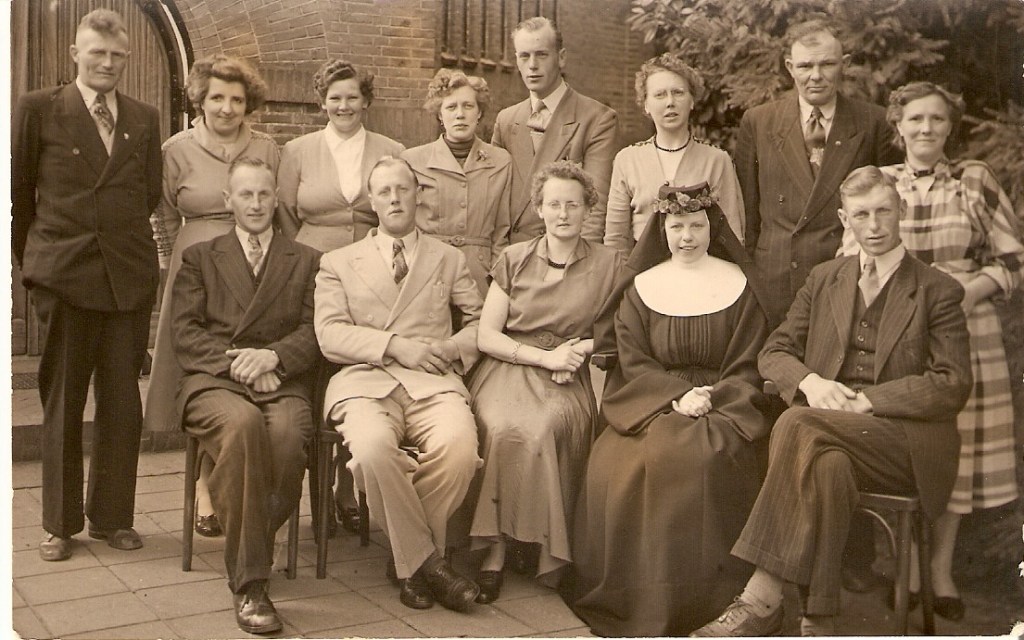
My paternal grandfather had seven siblings. He is the first person seated in the front row on the left side of the photo. My grandmother, Christina (“Tiny”) Komen is standing behind him. All of my grandfather’s siblings are here, except for his youngest sister. She might have been absent because this might have been taken after she emigrated to Canada, sometime in early 1954. My grandfather and grandmother left for Canada later in the spring of 1954. An older brother, Joop, seated immediately beside my grandfather in front of his wife Agie, left for Canada a fortnight after my grandfather.

However, this might have been taken in 1951 to mark the ordination of my great aunt, as an Urseline nun. She went by the name Sister Melania. I considered whether this might have been the occasion for which my grandfather and grandfather were dressed so fine in the above photo, but as far as I can find she was ordained in Bergen, not Schagen.

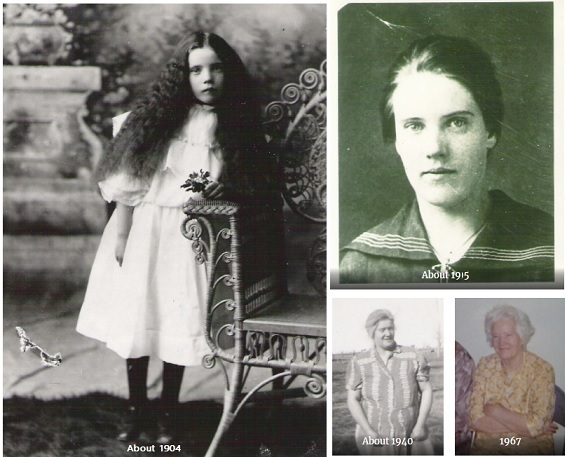
Finally. this set of photos of my mother’s maternal grandmother, Hazel Nelson. It’s the photo on the left, taken when she was about four years old, that is one of my favourites. It’s an amazing photo. I added the others because I thought it was a nice idea to see her progressing through life.

Hazel was born in December 1899. She and her sister Irene were the first twins born in the town of Cardston, Alberta, where her parents were amongst the original settlers. Irene only lived a month, but Hazel lived to be 67. I also have a copy of one of the last photos taken of her, around July 1967. Hazel died only a couple days before I was born. My mother practically went from the funeral to the hospital.

Next week: “Curious”. I wonder what that could be be? 😉

52 Weeks – Week Two

Favourite Find

When I was in my early twenties, I had it in mind to get a Dutch passport and spend a year or two living and travelling in the Netherlands and the EU. I had hoped that the fact my father was born in the Netherlands would enable me to do so. While he came to Canada with his parents when he was a child, he was still a Dutch citizen when he married my mother.

Image of the Sibajak on display at Pier 21. This is the ship that brought my father to Canada.
My dad was here!

Unfortunately – for me – six weeks before I was born my grandfather got my father to get his Canadian citizenship. He was adamantly opposed to the idea that his first-born grandson would be anything other than Canadian. He had gotten his Canadian citizenship as quickly as possible. I’m pretty sure he probably tried the second he landed at Pier 21.

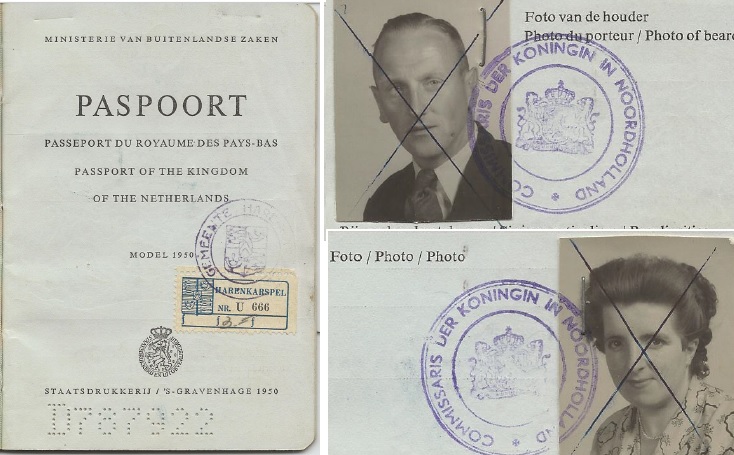
Because my father had been naturalized as a Canadian at the time of my birth, the rules at the time for me to get a Dutch passport required me to produce the passport my father held when he came tot Canada. Of course, he did not hold his own passport when he emigrated, he came under his parents’ passport. I was told that my grandparents’ passport had been long discarded or lost. So much for my plans, thanks grandpa.

Imagine my surprise many, many years later, when this came into my possession. Needless to say, by then life had gone on and my plans had changed. Moreover, the rules for getting a Dutch passport had become more restrictive.

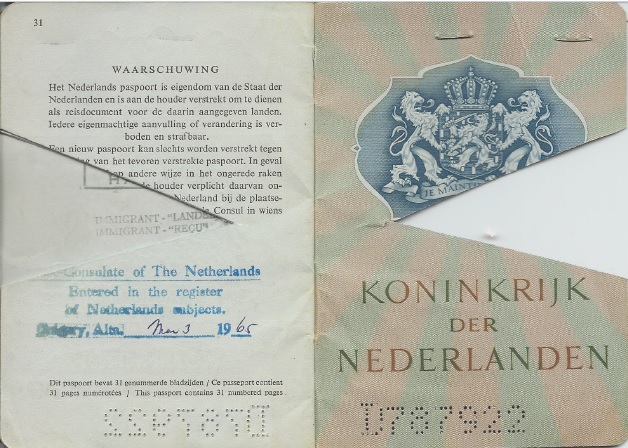
The passport of my grandparents, Adrianus (Arie) van der Fluit and Christina (Tiny) Komen. They both shared the same document, with their photos on separate pages.
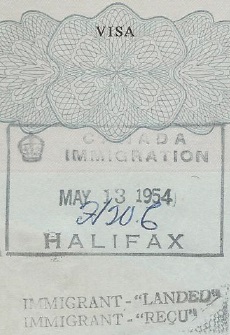
The inside back cover.
They made it!

One thing that I discovered may have made my life more difficult had this been in my possession at the time I was hoping to obtain my own Dutch passport. My father and his younger siblings are all named in the passport, but it misnamed my father. It gives his first name as “Adrianus”, which is not his name. It’s his father’s. (I have birth records showing my father’s actual name, so I know it wasn’t really Adrianus.)

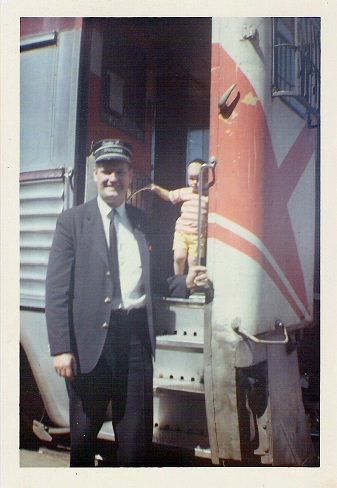
Me with my grandfather, Leo Burgess. If there is any doubt, he is the one on the left.

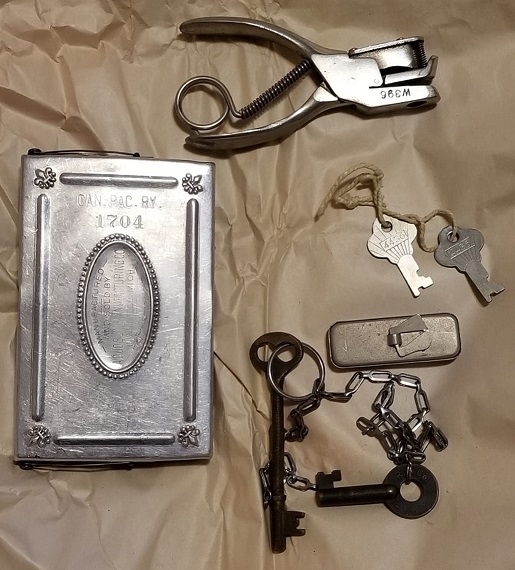
I will share one other thing that has come into my possession. My mother’s father worked for the Canadian Pacific Railway for many years, first as a brakeman and later as a conductor. His claim to fame was being part of the crew on the train that teenage Clark Kent raced in Superman: The Movie. My grandfather was always proud to talk about meeting Glenn Ford, one of his favourite actors, at the time.

Looking at this photo, it astounds me how much my grandfather looks the way I look now. When I was younger, I always thought I more resembled my father’s side of the family.

My mother gave me some of the items he used in his work as a conductor.

Some of the items my grandfather used for work. I believe – hope! – that one of my cousins has his pocket watch. One of my brothers has one of my grandfather’s hats, but I don’t recall if it’s a brakeman’s hat or a conductor’s hat.

I thought this week’s challenge would be difficult, because at first nothing came to mind for favourite find. Turned out to be easier than I expected. Next week will be a challenge: “Favourite Photo”. I have dozens of photos that all could hold that title.