“Favourite Photo” is a perennial topic for the 52 Ancestors Challenge. The prompt started out hard enough the first year I participated in the challenge, because I had so many favourites to choose from. If I had realized back then that it was an annual topic, I wouldn’t have posted so many photos back then!
The other problem is that “favourite photo” suggests one photo that you love more than all your others. How to choose??? Simple! Simply read the prompt as “A Favourite Photo”!
Despite that, it’s still hard to choose. What I’ve decided to do is to try to post something I haven’t shared before. While maybe not my favourite, I’ve selected some photos of a memorable family road trip to Alaska in the mid-80s, when I was in grade twelve. I love road trips, and this is one that I’ve only done once (so far!).
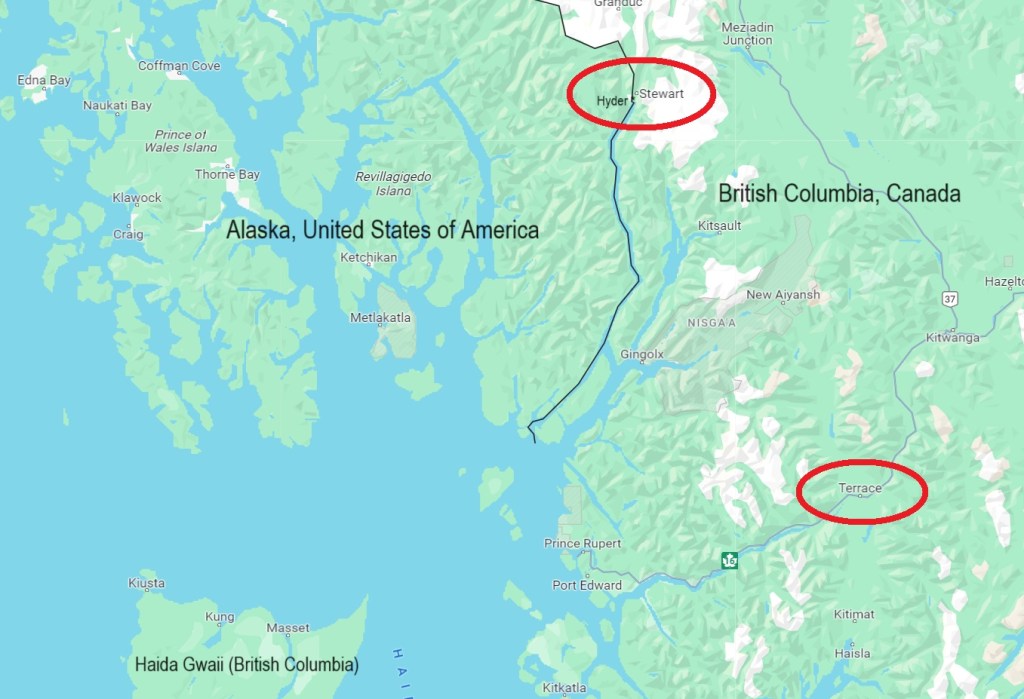
Terrace is near the northwest coast of the province, near the Alaska Panhandle. Just over 300 kilometers away (about a four and a half hour drive) are the border communities of Hyder, Alaska and Stewart, British Columbia.
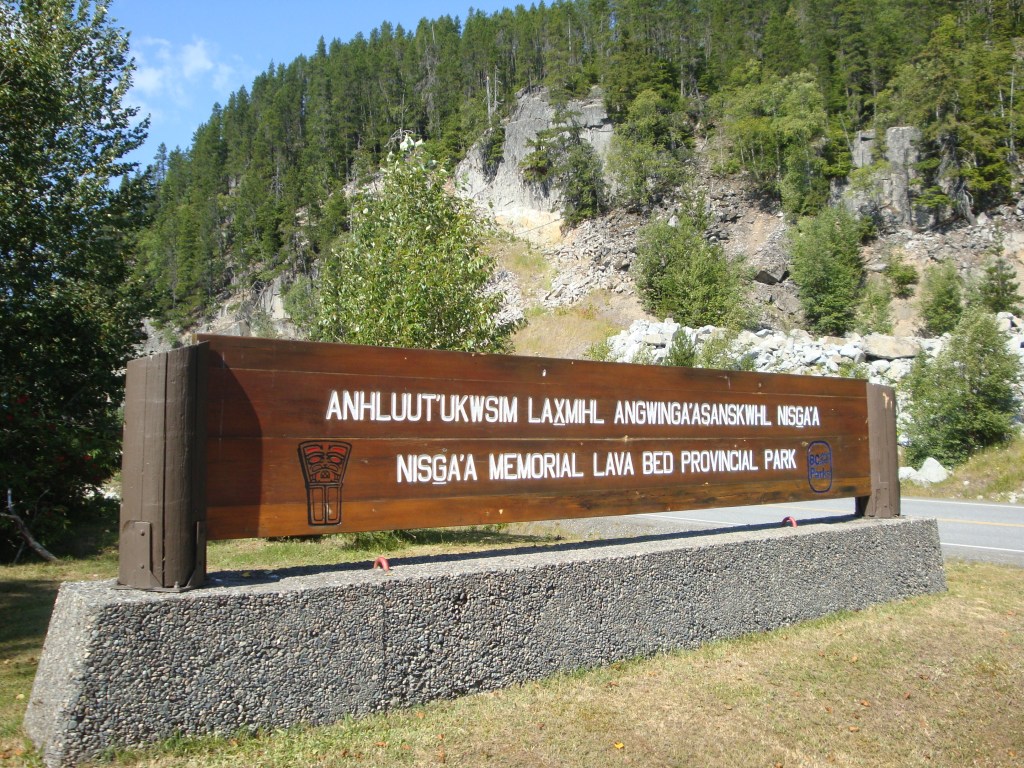
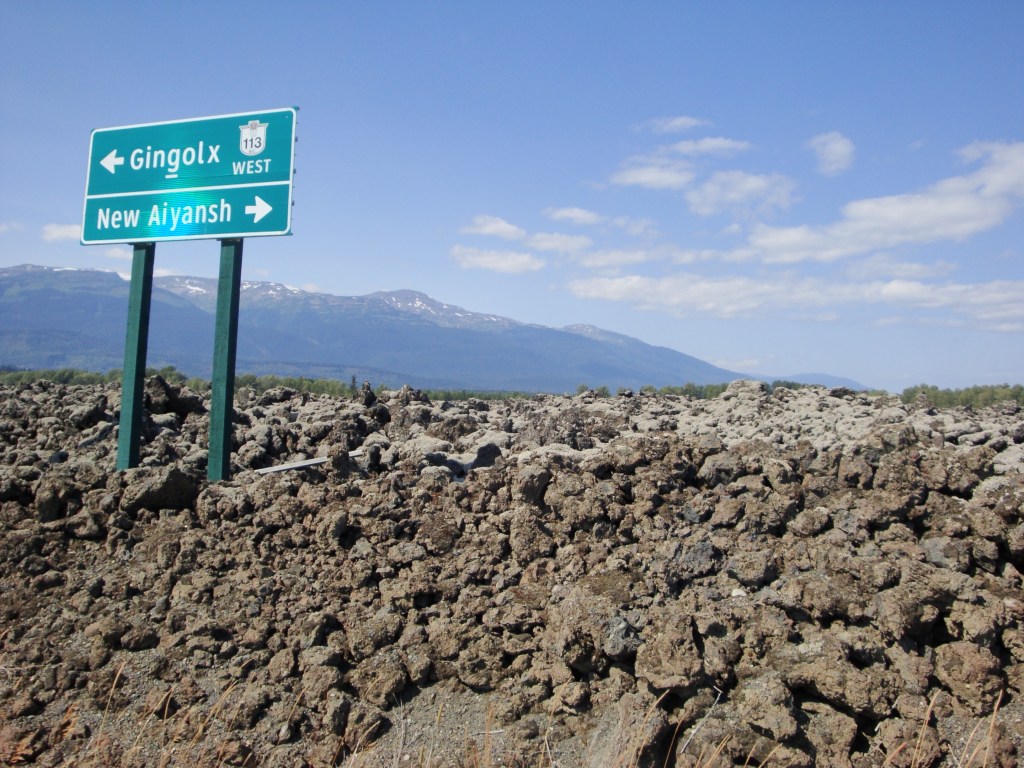
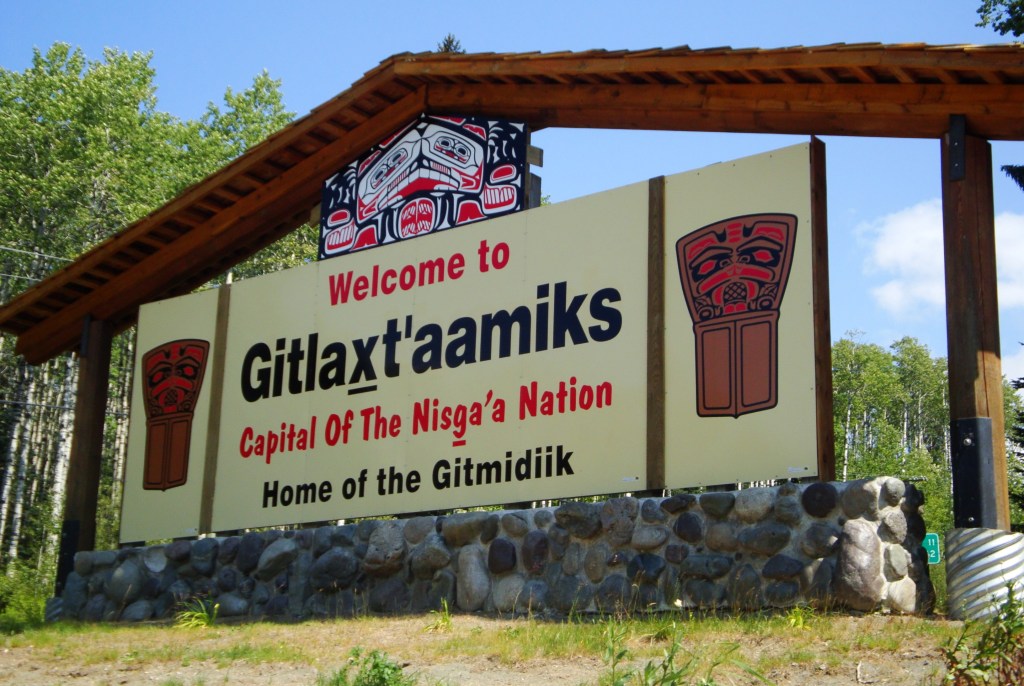
While the destination was novel, it was the journey that was the best. The easiest way to get from Terrace to Stewart/Hyder is along Highway 37. However, we took a less direct and even smaller route, Highway 113, which is now known as the Nisga’a Highway. It travels through lava beds (designated as Nisga’a Memorial Lava Bed Provincial Park in 1992) and the lands of the Nisga’a Nation.
(I’m cheating here. My photos of the lava beds and the Nisga’a territory from the road trip I’m writing about suck. In 2010, I, with my wife and some friends, took a day trip to the Nisga’a, but did not proceed any further north. My photos from that road trip are much better!)
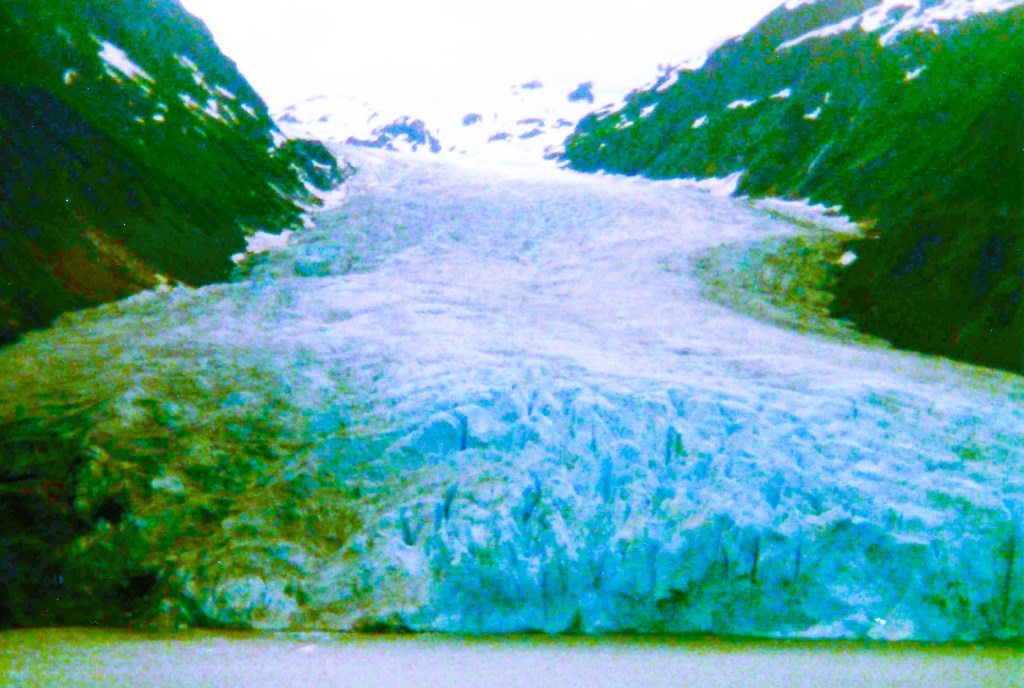
The Nisga’a Highway ultimately connects to Highway 37, which travels north to the Yukon. My folks have actually driven the length of that highway, but we didn’t on this road trip. Rather, we turned west onto Highway 37A at Meziadin Junction. Between Meziadin Junction and Stewart is the Bear Glacier.
The glacier has shrunk an incredible amount in the decades since our road trip. It no longer touches the lake as seen in my photo and is but a sliver of its former self at this location.
At our destination, we stayed in Steward, which was (and still is) the much larger of the two villages. At the time, there was no customs or border station on either side of the border, although there was the remains of one that had clearly been used for target practice. The post office in Hyder was memorable, as it was in an old Airstream (or similar) trailer. I also remember a place selling “Northern Fried Chicken”.
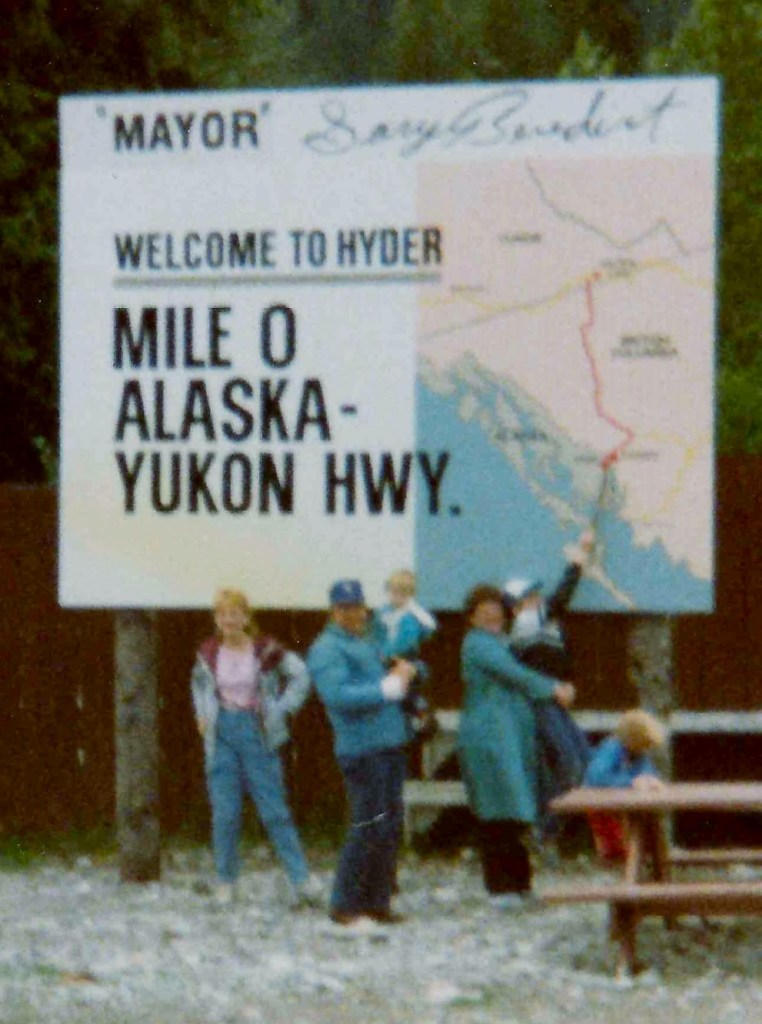
This is a photo of my family at what is purported to be the start of the “Alaska-Yukon Highway.” Of course, I’m not in the photo because I’m the one taking the picture – with a 110 film camera! Otherwise, the whole family is visible here, although my youngest sister (sitting at the table) looks quite odd. It wasn’t the best of cameras, that’s for certain. While you can travel from Hyder/Stewart to Alaska, as shown in the sign, the highway does not officially bear that designation.
One thing we didn’t do in Hyder was get “Hyderized”, which involves taking a shot of Everclear at one of the village pubs. It once appeared in the Guinness Book of World Records as the most alcoholic drink in the world. (Guinness no longer publishes alcohol-related records.) No, Everclear was not something I tried until I was in university.
A great travelogue about Highway 37 (also known as the Stewart – Cassiar Highway, is Nearly 40 on the 37 by my friend Trevor Hughes.
I’m starting to realize that when I choose a topic for the theme of the week for the 52 Ancestors Challenge, I should look ahead to see what other topics are coming up. That way I can avoid getting to a topic like this week’s, “Landed”, and seeing that I’ve written on the topic before. Then again, a little repetition here and there won’t hurt.
If I had approached this topic a few hours ago, I would probably be sitting here casting about in my mind as to what “landed” means to me. Fortunately, our eldest son inadvertently gave me a focus to write about. During dinner, out of the blue, he asked “besides Opa, did any of our ancestors come to Canada on steamships?”
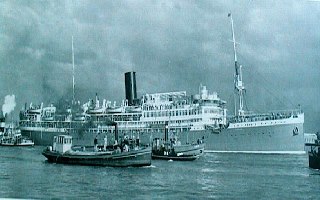
The Sibajak, which brought my father and his family to Canada.
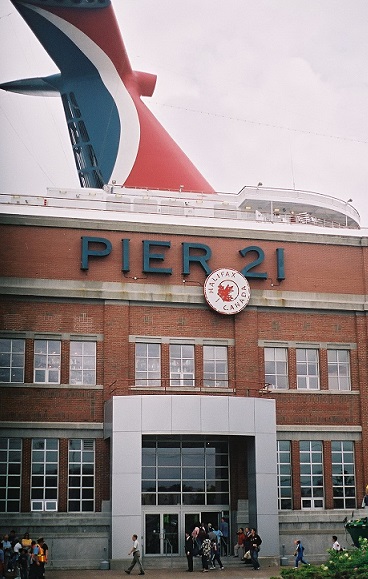
Pier 21, Halifax
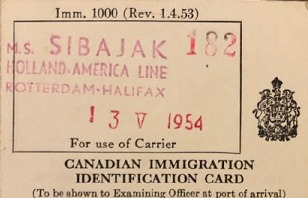
Opa is my father, the Dutch side of my family. I’ve already written about his coming to Canada on the Sibajak. He and his family came in early May 1954, travelling from Rotterdam to Halifax. They landed at Pier 21, which could be described as the Canadian equivalent of Ellis Island. My father’s aunt and uncle came over four months earlier, in January 1954 on the Groote Beer, while another aunt and uncle followed in late May 1954, on board the Castel Felice.
While it was a Holland America ship during his crossing, built and originally operated by Rotterdam Lloyd, along with other ships that they mainly used to go to the East Indies. Built in 1927, the Sibajak served as a troop ship during World War II. After the war, the Sibajak was one of a number of ships operated by Holland America that were used almost entirely for Dutch emigrants, along with the Grote Beer, Waterman, and Zuiderkruis. It was sold and scrapped in Hong Kong in 1959. When I was in Hong Kong in 1996, while travelling around the harbour and between its islands, I wondered how close I might have come to what scraps of it might remain.
This is a fascinating short documentary about a voyage the Sibajak made to Australia carrying Dutch emigrants. The video is in Dutch, but the images convey a lot of meaning.
In the late 1990s, my parents went on an Alaskan cruise on a Holland America ship. During the trip, my father, who loves to talk to people, fell into a conversation with one of the older hands on deck. My father mentioned having come to Canada on the Sibajak. After a few questions from the crew member, my dad learned that the man had been on the Sibajak during my father’s trip, in his first year or two of service.
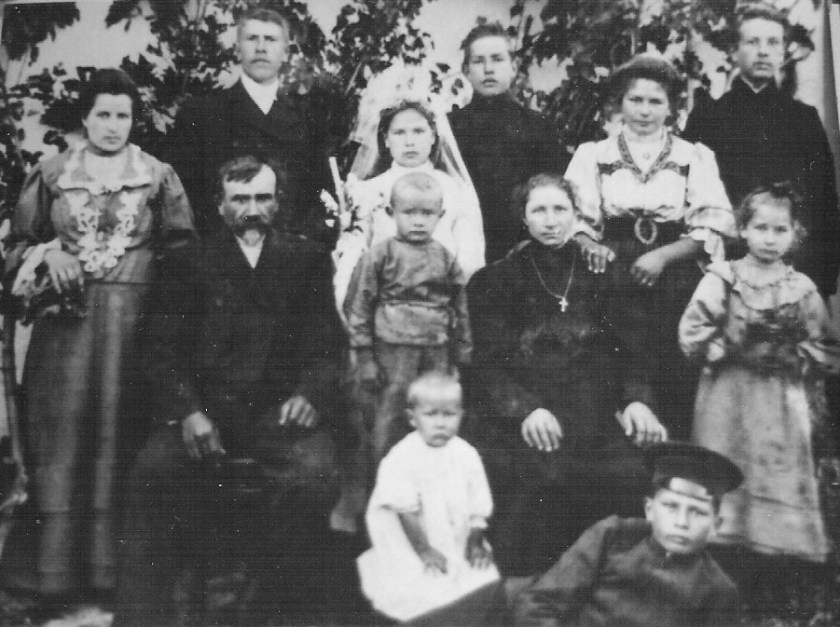
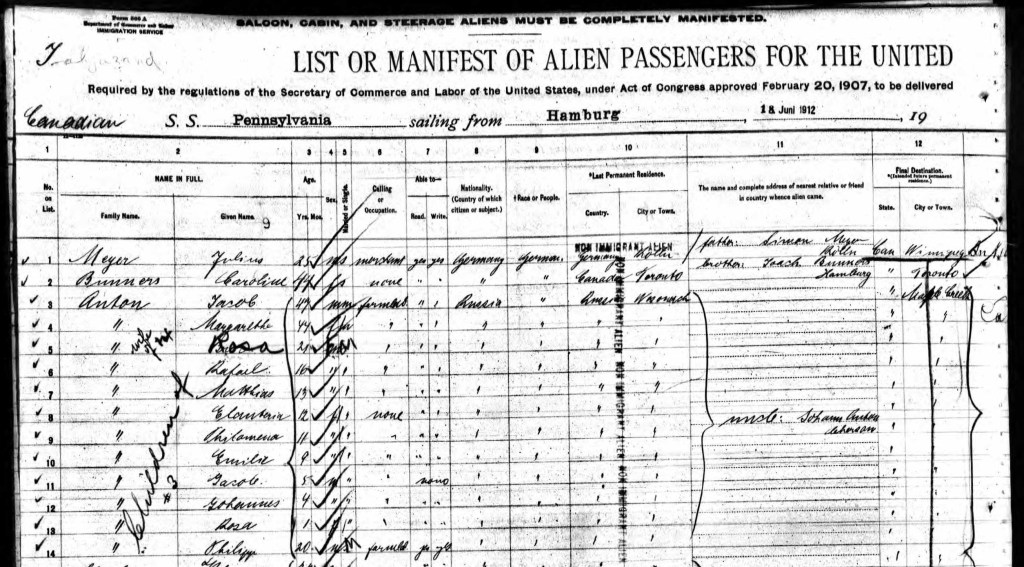
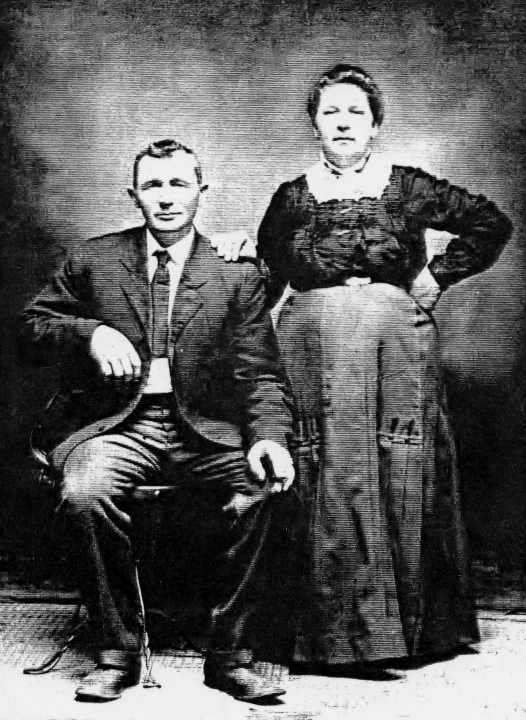
On my mother’s side, the most recent ancestor to arrive by steamship was my great grandmother, Emelia Anton. She came to Canada at the age of nine, with several of her siblings and her parents, Jacob Anton and Margaretha “Margaret” Heck. They were Germans from Russia. The family sailed out of Hamburg on June 18, 1912 aboard the S.S. Pennsylvania. They arrived at the Port of New York (Ellis Island) on July 1, 1912. Their declared destination was Maple Creek, Saskatchewan, to join Emelia’s older brother, Rochus. The passenger manifest stated that Jacob paid for the entire family’s transport, other than that of one of his daughters-in-law, whose passage had been paid by her father.
The Anton family, circa 1910. Likely taken in Selo Suchoi, Veronesch, Russia.
Emelia had not had much schooling before coming to North America, but was very religious. She said that she was frightened and nervous during the journey, as she did not know anything about where she was going and did not fully understand what was going on. However, on reaching New York, she said her fears subsided when she saw “the Madonna”. When she saw that, she knew she would be safe and all would be well. Of course, the “Madonna” was the Statue of Liberty. As she had never heard of it before, she thought it was a statue of the Virgin Mary.
Passenger list for the S.S. Pennsylvania showing the Antons.
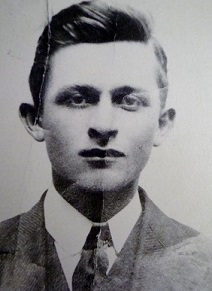
Jerome Lerner (1895-1954)
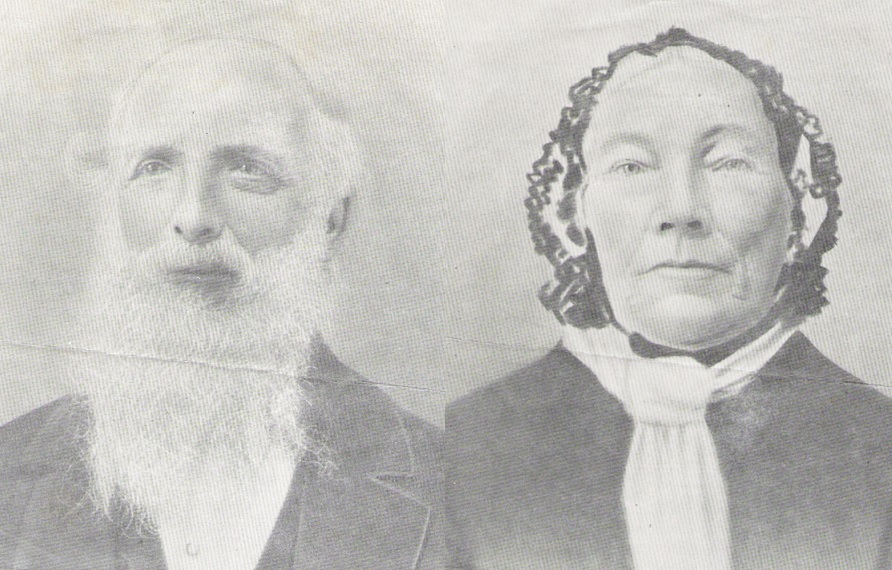
Michael Lerner (1862-1947) and Barbara Schmidt (1865-1936)
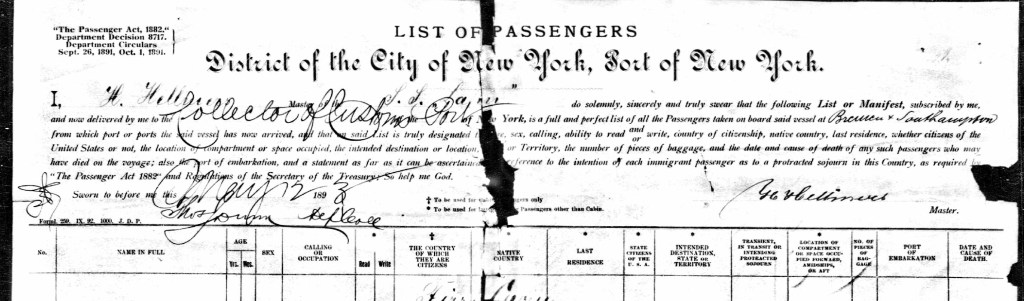
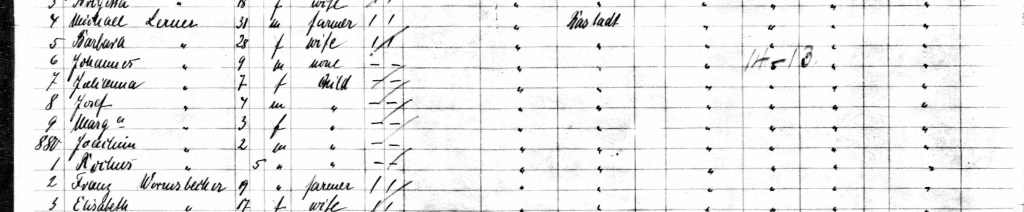
Emelia’s husband, Heronimus “Jerome” Lerner, was born to parents who were also Germans from Russia, Michael Lerner and Barbara Schmidt. Michael and Barbara came to the United States in May 1893 aboard the S.S. Lahn, with the five children they had at the time. They landed at Ellis Island and made their way to Clay County, Texas. Jerome was the first child born to Michael and Barbara in the United States. They had seven other children in Texas after Jerome was born. Jerome moved to Saskatchwan in 1917, preceded by an older brother. Jerome’s parents followed a year later. Other siblings came north at other times.
Passenger list for the Lahn showing the Lerners
The ancestors furthest back in time that I can find who came to North America on a steamship were my great x3 grandparents, Robert Nelson and Elizabeth Joseph. They were both born in Muff, Donegal, Ireland in 1818 and married there in 1842.
Joseph Nelson (1818-1902) and Elizabeth Joseph (1818-1902)
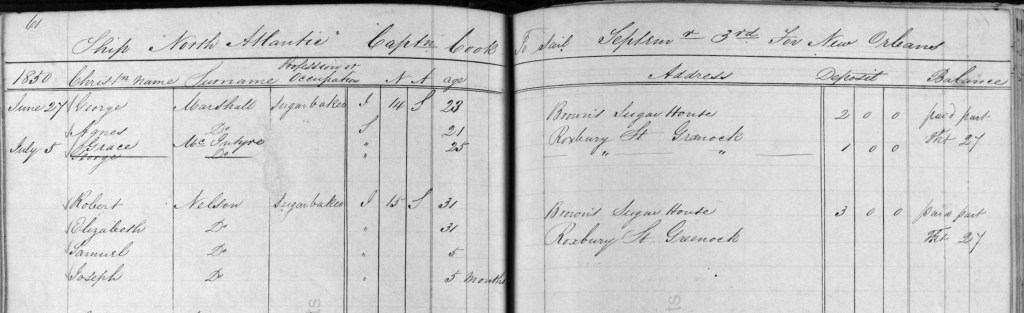
Sometime in the early 1840s they had moved to Linwood, Renfrew, Scotland. They were there at least by January 1844, when their first son, Samuel, was born. By 1850, Robert was working at Brown’s Sugar House, on Roxburgh Street in Greenock, Scotland as a sugar baker. Sugar bakers usually refined muscovado sugar, an unrefined brown sugar imported from Barbados.
On September 3, 1850 Robert and Elizabeth, along with their three children, departed Liverpool on board the ship “North Atlantic” bound for New Orleans. For a long time I had been confused by references I had seen to them coming over on “the north Atlantic”, thinking it meant the route they travelled. It wasn’t until I came across the passenger list that I realized that “North Atlantic” was the name of the ship. Having a name like that makes it difficult refine a search to distinguish the ship from where it sailed. However, while I have not found very good sources, it appears that the North Atlantic was a steam powered ship.
Passenger list for the North Atlantic showing the Nelson family
The records show that there was at least one other family headed by a sugar baker from Brown’s on the same voyage. Robert and Elizabeth were part of a company of Latter Day Saints (Mormon) converts travelling from the United Kingdom to Utah. The family spent a short period of time in Missouri, where in 1852 Elizabeth had her first child born in America. By late 1854 they were in Farmington, Utah, where my great great grandfather John Alexander Nelson was born.
Looking at my pedigree for this post, I realized I might have one other ancestor who might have travelled from the United Kingdom to the United States by means of a steam powered ship. That would be my great x3 grandmother, Maria Hadlond, who was born in Cheltenham, Gloucester, England in 1838 and who emigrated sometime in the 1850s. I have not really researched this branch of my family beyond collecting names and basic vital stats. For whatever reason, it has never caught my interest.
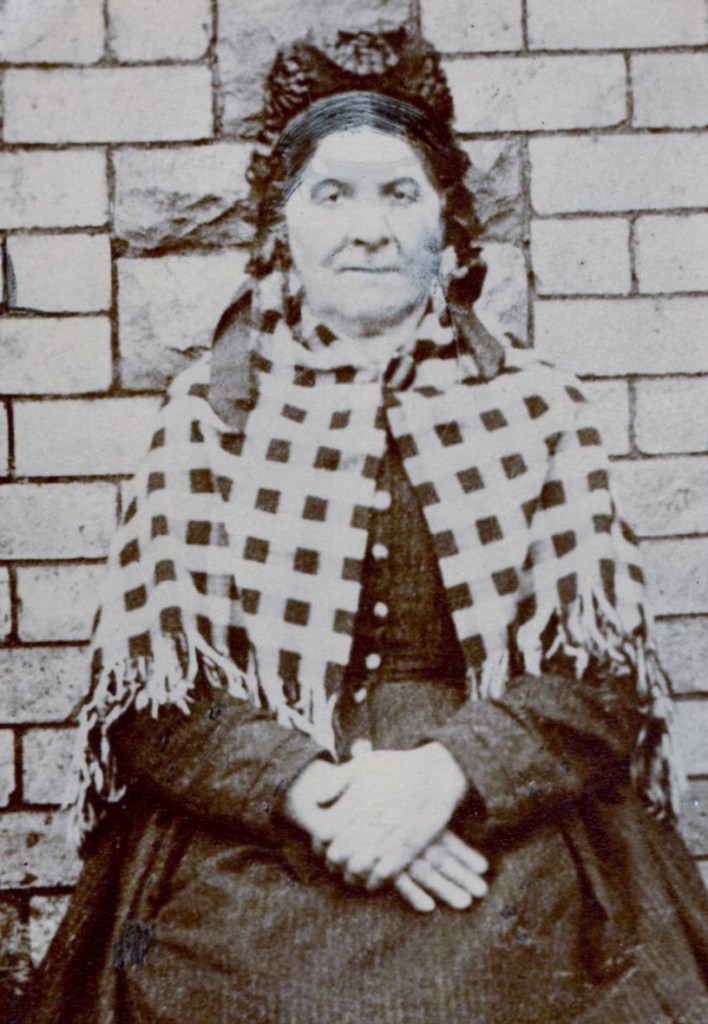
Susan Turple (1818-1906)
I also have a great x3 grandmother, Susan Turple, whose family had been in Nova Scotia since the 18th century, who would have travelled by means of a ship with sails. In 1849, Susan joined the Mormon church in 1849. In 1852, she went from Halifax to Boston to join a westward migration of Mormons. It is most likely that the initial part of Susan’s travels was by means of steam powered ship.
Before these people, any ancestors I have who crossed the Atlantic would have done aboard ships with sails.
Speaking of looking ahead, I see that next week’s theme is “Courting”. Since I am writing this on February 14, I wonder if that should have been this week’s theme!
 A Deck of Ancestors