
52 Weeks Mark III – Week 3: Favourite Photo

“Favourite Photo” is a perennial topic for the 52 Ancestors Challenge. The prompt started out hard enough the first year I participated in the challenge, because I had so many favourites to choose from. If I had realized back then that it was an annual topic, I wouldn’t have posted so many photos back then!

The other problem is that “favourite photo” suggests one photo that you love more than all your others. How to choose??? Simple! Simply read the prompt as “A Favourite Photo”!

Despite that, it’s still hard to choose. What I’ve decided to do is to try to post something I haven’t shared before. While maybe not my favourite, I’ve selected some photos of a memorable family road trip to Alaska in the mid-80s, when I was in grade twelve. I love road trips, and this is one that I’ve only done once (so far!).
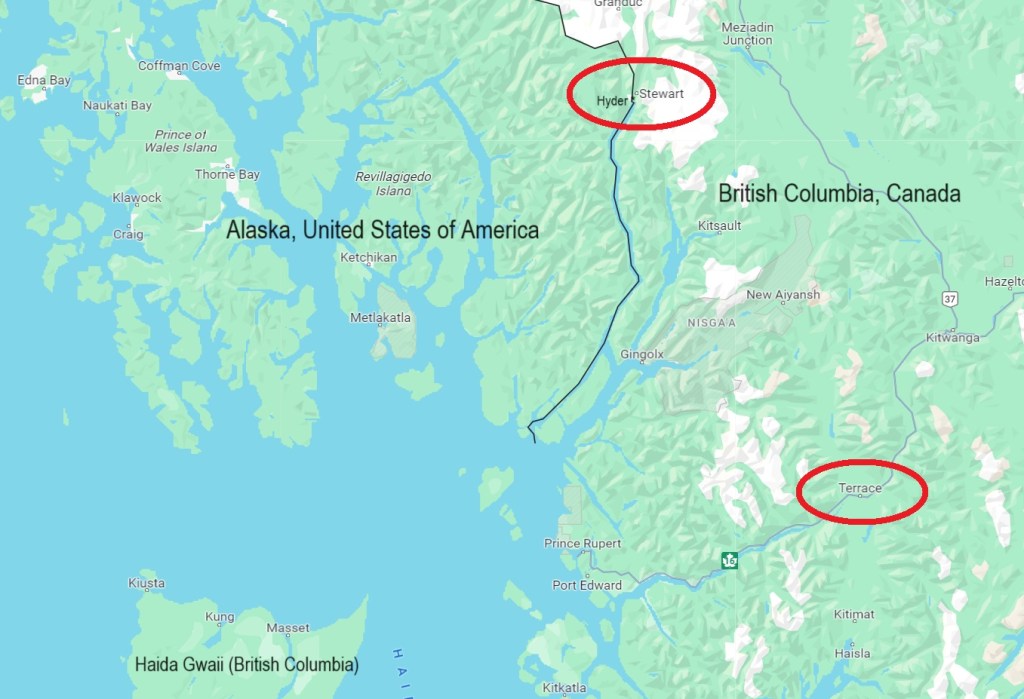
Terrace is near the northwest coast of the province, near the Alaska Panhandle. Just over 300 kilometers away (about a four and a half hour drive) are the border communities of Hyder, Alaska and Stewart, British Columbia.

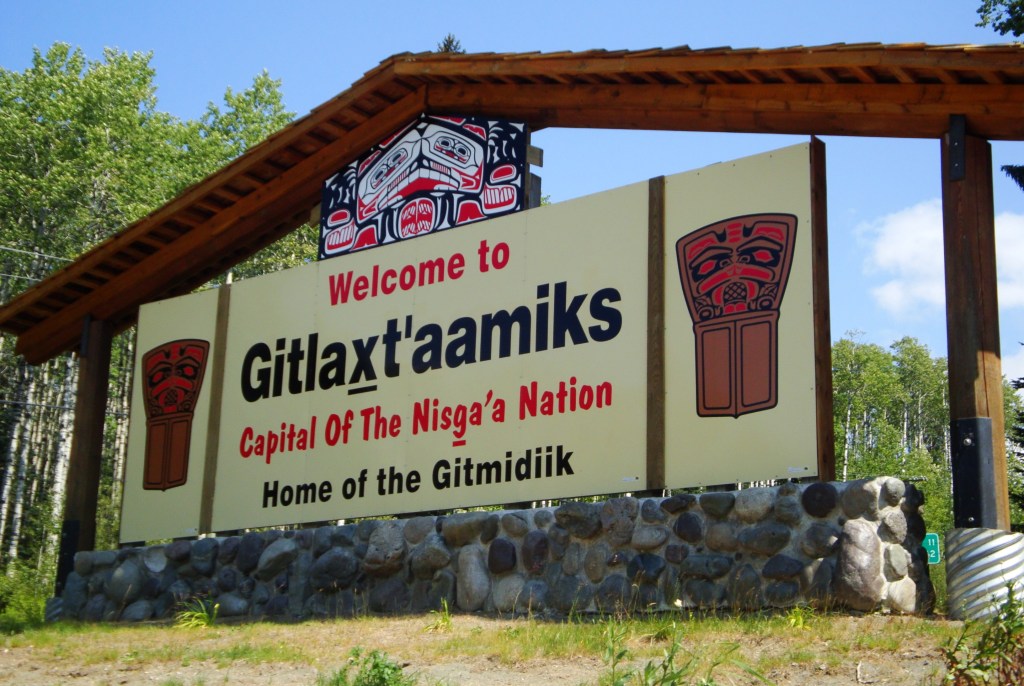
While the destination was novel, it was the journey that was the best. The easiest way to get from Terrace to Stewart/Hyder is along Highway 37. However, we took a less direct and even smaller route, Highway 113, which is now known as the Nisga’a Highway. It travels through lava beds (designated as Nisga’a Memorial Lava Bed Provincial Park in 1992) and the lands of the Nisga’a Nation.
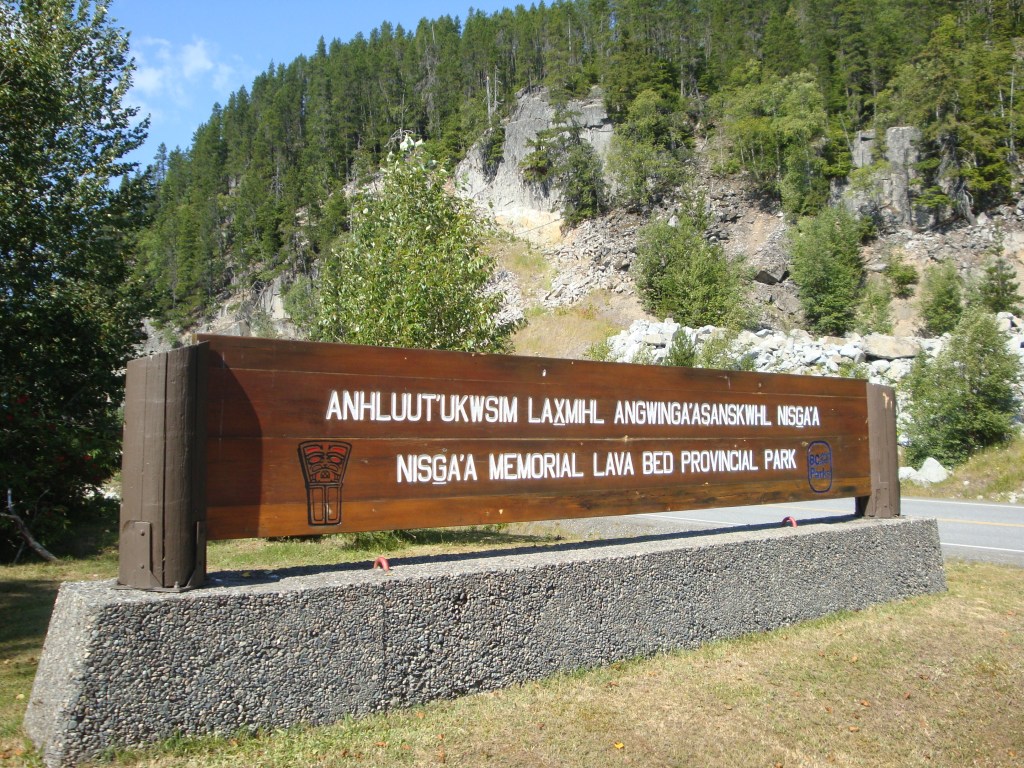
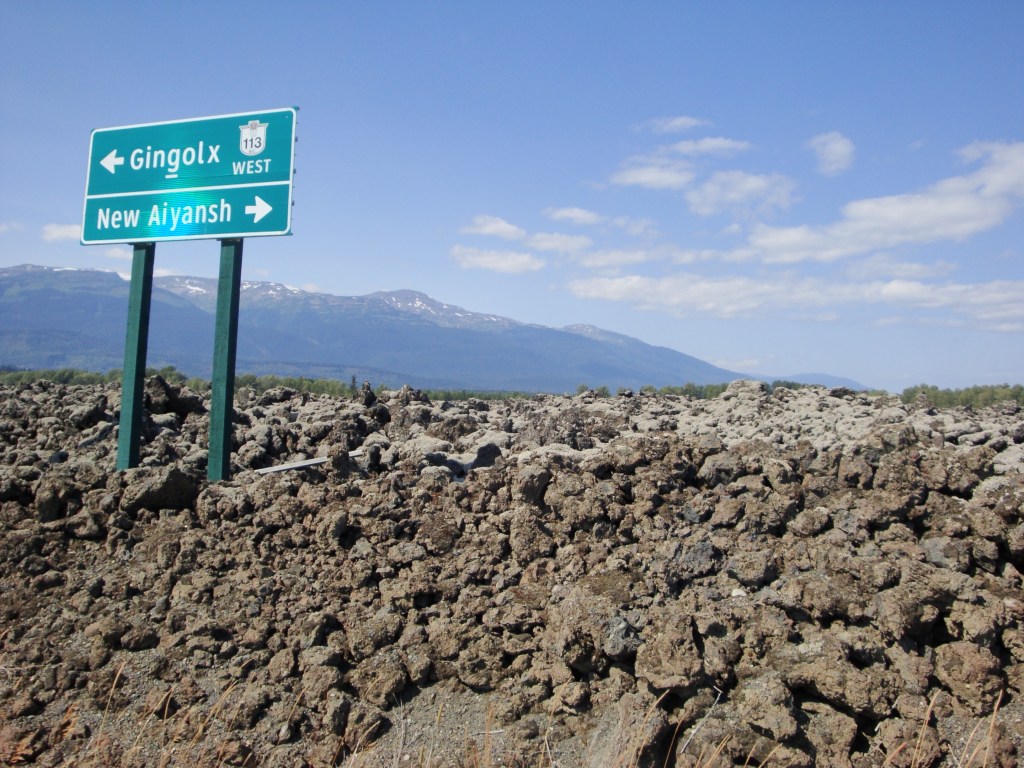
(I’m cheating here. My photos of the lava beds and the Nisga’a territory from the road trip I’m writing about suck. In 2010, I, with my wife and some friends, took a day trip to the Nisga’a, but did not proceed any further north. My photos from that road trip are much better!)

The Nisga’a Highway ultimately connects to Highway 37, which travels north to the Yukon. My folks have actually driven the length of that highway, but we didn’t on this road trip. Rather, we turned west onto Highway 37A at Meziadin Junction. Between Meziadin Junction and Stewart is the Bear Glacier.
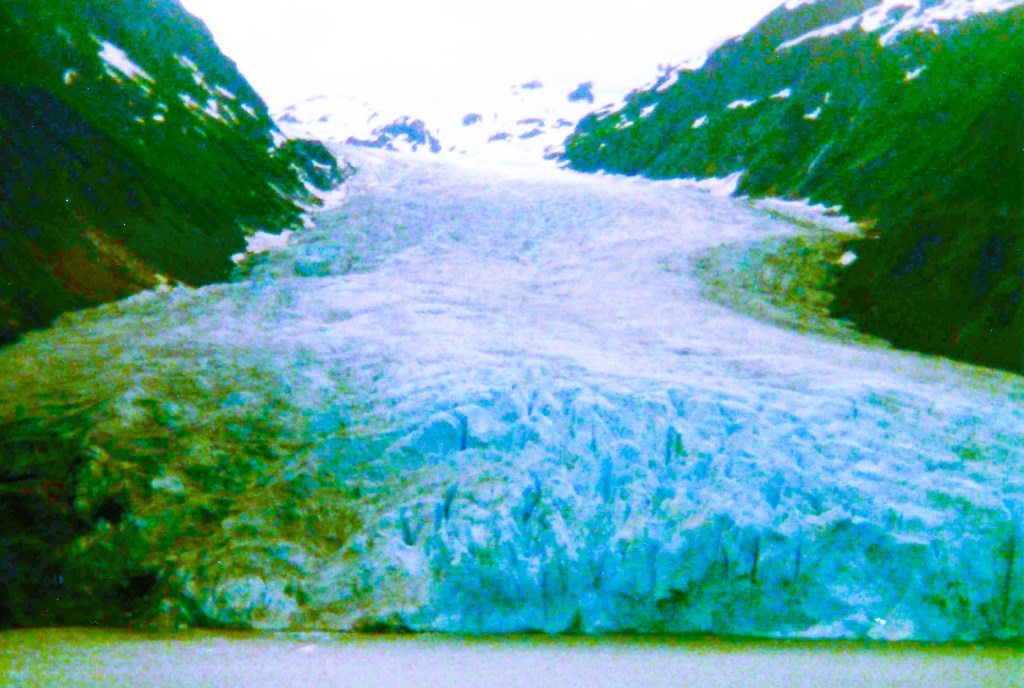
The glacier has shrunk an incredible amount in the decades since our road trip. It no longer touches the lake as seen in my photo and is but a sliver of its former self at this location.

At our destination, we stayed in Steward, which was (and still is) the much larger of the two villages. At the time, there was no customs or border station on either side of the border, although there was the remains of one that had clearly been used for target practice. The post office in Hyder was memorable, as it was in an old Airstream (or similar) trailer. I also remember a place selling “Northern Fried Chicken”.
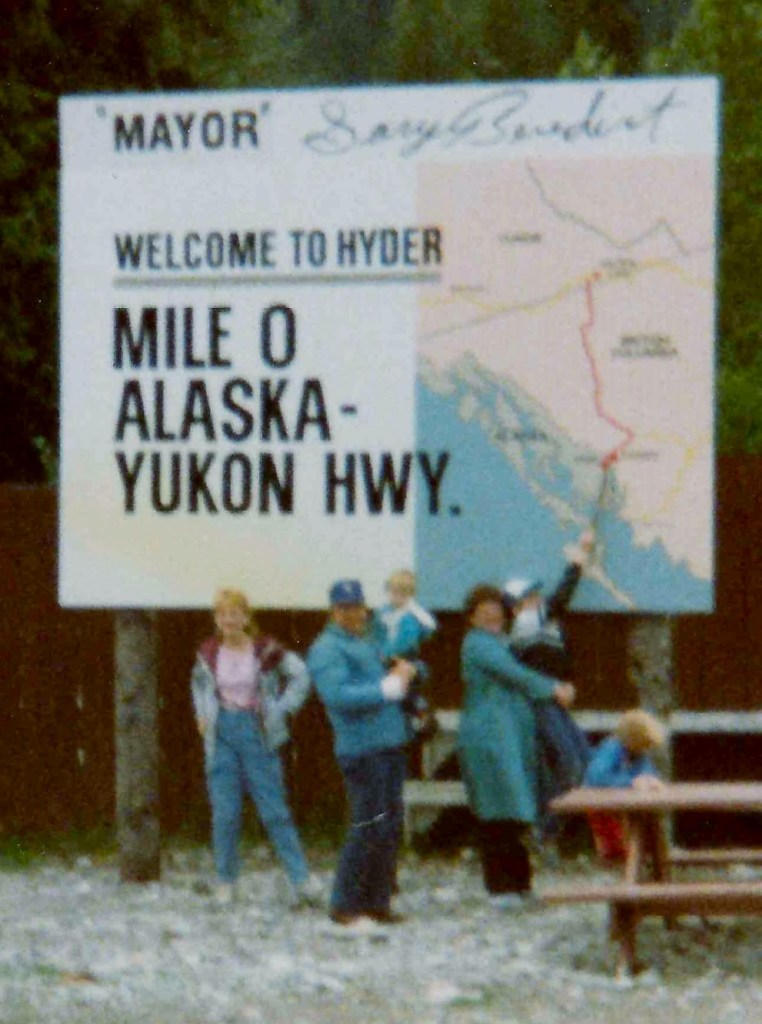
This is a photo of my family at what is purported to be the start of the “Alaska-Yukon Highway.” Of course, I’m not in the photo because I’m the one taking the picture – with a 110 film camera! Otherwise, the whole family is visible here, although my youngest sister (sitting at the table) looks quite odd. It wasn’t the best of cameras, that’s for certain. While you can travel from Hyder/Stewart to Alaska, as shown in the sign, the highway does not officially bear that designation.

One thing we didn’t do in Hyder was get “Hyderized”, which involves taking a shot of Everclear at one of the village pubs. It once appeared in the Guinness Book of World Records  as the most alcoholic drink in the world. (Guinness no longer publishes alcohol-related records.) No, Everclear was not something I tried until I was in university.

A great travelogue about Highway 37 (also known as the Stewart – Cassiar Highway, is Nearly 40 on the 37 by my friend Trevor Hughes.
52W Mark II – Week 41: Travel

I knew I’ve written a lot about travel for the 52 Ancestors Challenge over the two years I’ve been participating, but I was surprised to discover just how much when I went back through past posts to ensure I wasn’t repeating myself. I’ve written many times about my ancestors’ migrations, as well as my own genealogical travels: Fox Valley and Rastadt, Saskatchewan; Waarland, Noord-Holland; Leidschendam-Voorburg, Zuid-Holland; Brant, Alberta; and Cardston, Alberta, to name a few.

So seeking inspiration and a different perspective on the theme, I looked at our kids’ maternal side and their Gx3 grandfather, Charles Crittenden Van Norman. He was a merchant and businessperson and was involved in a number of enterprises. Charles’s many business interests involved a great deal of travel. To that end, Charles was an early member of the Commercial Travellers’ Association of Canada and he remained so for thirty years.

Charles was born on August 10, 1849, in Keswick, York, Canada West, Province of Canada. Charles began working around the age of 16. His earliest work included the wholesale and retail book and stationery trade. The 1891 census said he was a “greens clerk”. Later, he became a wholesale manufacturer of boots and shoes, retiring from that endeavour in 1902. Later in his career, he was a director of the Ontario, Manitoba & Western Land Company and was Vice-President of the McElroy Manufacturing Co. Charles also had a significant interest in the Alberta Farm & Cattle Company, in which he was Vice-President. Charles also had an interest in banking, primarily as a shareholder. While I have not yet verified it, Charles may have been a director as well.

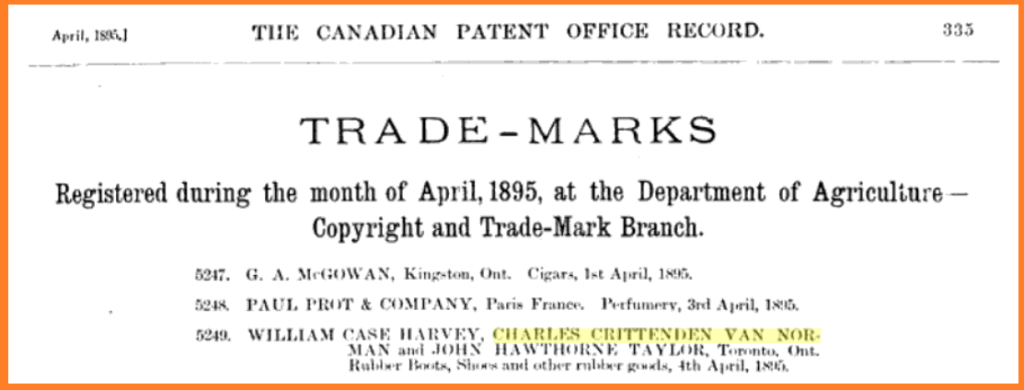
The Canadian Patent Office Record and Register of Copyrights and Trade-Marks, Volume 23, 1896. Charles and his partners held a trade-mark in rubber boots, shoes, and other rubber goods.

Amongst his many endeavors, Charles was an executive and director of a number of insurance companies. From about 1880 to 1920, Charles was a manager and vice president of the Metropolitan Fire Insurance Company in Toronto. During the same period, he was a director and vice president of the Equity Fire Insurance Company in Toronto. From 1904 to about 1920, Charles was the president and managing director of the Independent Fire Insurance Company in Toronto, of which he was one of the founders. Despite his high position in these companies, for the 1911 Canadian census Charles modestly reported his occupation as “insurance agent”.

Charles retired in 1921, at the age of 72. He died on February 2, 1939 in Toronto.

The Commercial Travellers’ Association of Canada was founded in 1874. Its purposes included providing its members with travel and insurance benefits. Charles joined in 1880 and remained a member until 1910. He was a director and a vice president of the organization for many years and served two terms as its president.

The Commercial Travellers’ Association also provided what we would now call networking opportunities and frequently had banquets and social gatherings for its members. Its members had a considerable amount of influence, such that it was common for a Prime Minister or cabinet ministers to be in attendance. In 1989, the organization changed its name to the Canadian Professional Sales Association.

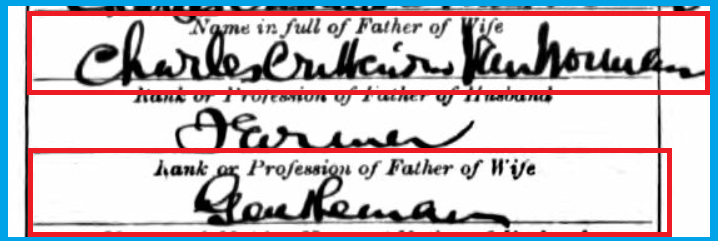
While he was a prominent and successful business person with many commercial interests, what I enjoy most is Charles’s occupation set out in the Marriage Affidavit and Certificate for his daughter Madeline (our children’s great great grandmother): “Gentleman”.

Extract from the Marriage Affidavit for the marriage of Madeline Van Normand and Robert Willan Mann, who married in Toronto on September 6, 1911.