
52W Mark III – Week 24: Hard Times

It was through hard times that my grandfather came to own his first dog.

My grandfather, Adrianus “Arie” van der Fluit (1923 – 2002), loved dogs. When he was a teen in the Netherlands, he supplemented his income training dogs. After moving to Canada, in the 1950s and 1960s, he even trained dogs for the police. As long as I can remember, my grandfather always had at least one dog, usually a German shepherd. My favourite was Sheba, the first dog of his that I’m able to remember. He had dogs until the day he died at age 79, still training them even after he lost his foot due to complications associated with diabetes.
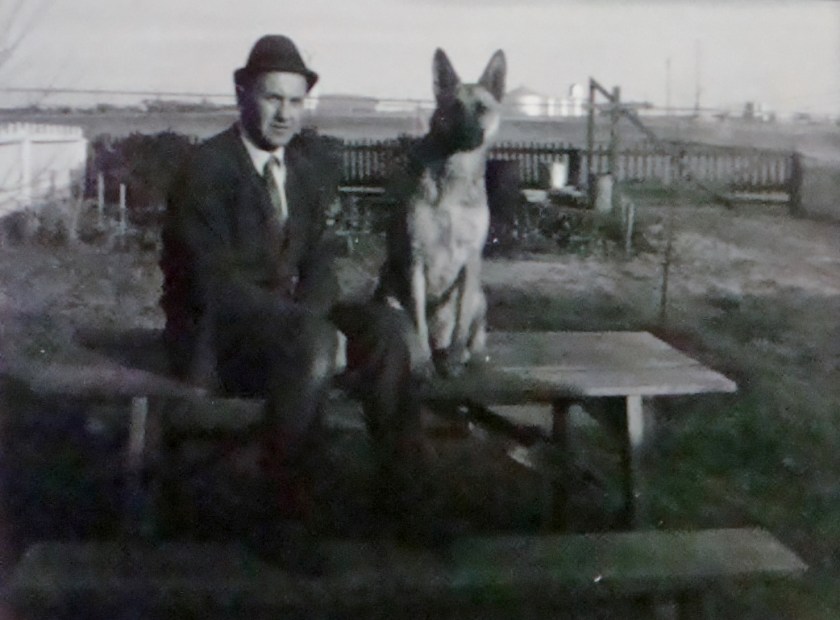
My grandfather with Sheba, sometime around 1970.

While I would have thought he had a dog ever since he was little, he told me that he did not have one until he was fifteen. It came to be during, and because of, hard times – the Great Depression. However, based on the story he told me, my grandfather could have gotten his first dog anytime after he was eight to when he was in his late teens.

Arie’s father, Johannis Albertus van der Fluit (1894 – 1932) died when my grandfather was eight years old. His mother, Theresia “Teetje” Pater was left a widow. Sometime after Johannis died, Teetje’s younger brother Johannes “Jan” Pater (1900 – 1948) moved in with the family. I always understood it was soon after Johannis died, which would make sense. Teetje was left a widow at age 37, with eight children. I am sure it would have been of great help if Jan moved in with his sister as soon as her need arose.
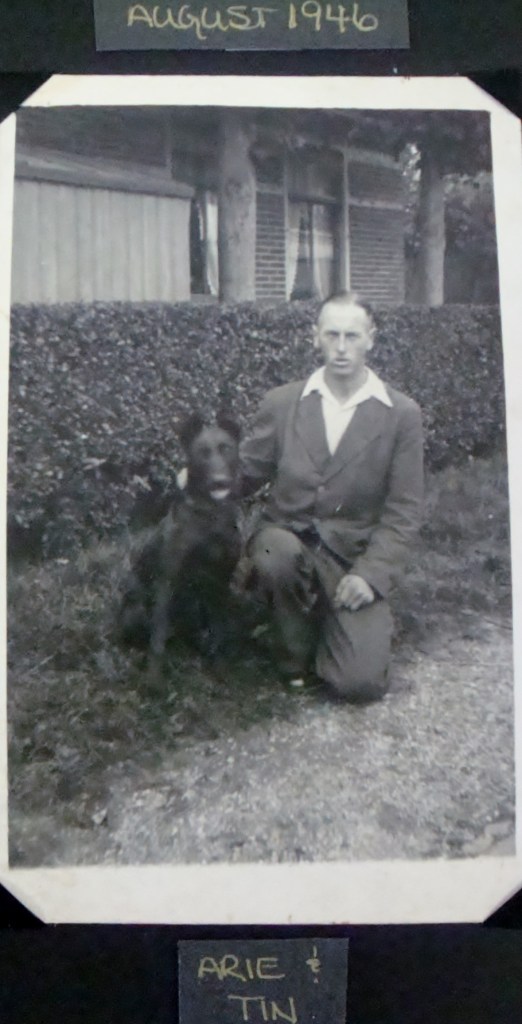
My grandfather in the Netherlands, a few months before he married my grandmother.

Jan had a dog, but Arie’s mother detested dogs. She insisted the dog go. However, because of the depression, it was difficult to even give a pet away as it was too expensive to keep one fed. Jan decided to drown the dog. Arie witnessed this. He swore to himself that no dog would suffer with him around, so he even got himself one.

This, of course, caused a conflict with Arie’s mother. She refused to allow a dog in her household, so Arie moved out. As his two older brothers were out of the house, and the other children were too young, Arie was the primary breadwinner for the household. Faced with the loss of the family’s main income, after a few weeks Arie’s mother relented and allowed the dog in the house.

Needless to say, the timeline is a bit problematic. If Jan moved in with his sister’s family shortly after Johannis died, my grandfather’s story would have taken place before he was ten years old. The most apparent way to reconcile the chronology is if Jan moved in with his sister when Arie was 15, around 1938. I don’t know much about Jan and I don’t know of any life events that would have caused him to move in with Teetje other than the death of her husband. Jan never married, so I can rule out him becoming widowed as a catalyst for change. The depression was still causing hard times – with harder times shortly over the horizon – so that part of the story still works.
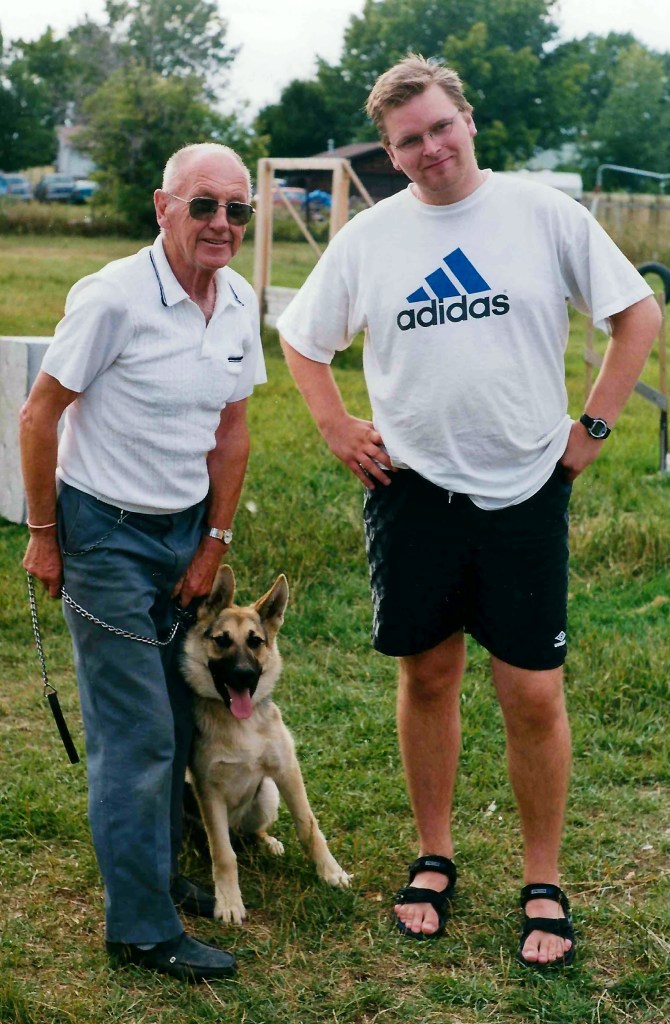
My grandfather in Raymond, Alberta, in September 1999, age 76, with Dekker, along with my brother Trevor.

52 Weeks Mark III – Week 13: Worship

Wow, we are now one-quarter of the way through this year’s 52 Ancestors Challenge!!

In the Netherlands, there has not been much of a tradition of preparing and publishing obituaries of deceased persons. Deaths were once noted in local newspapers in regular reports of recent entries of births, marriages, and deaths taken from the local civil registry (“burgerlijke stand”). What is more common to see in newspapers are “familieberichten” (“family notices”). These are all secular forms of announcing and commemorating the death of a person.

For Roman Catholics, another common form of remembrance is a “bidprentje” (“prayer card”). In Germany, they are known as a “totenzettel”. These are usually given out at funerals and commemorate a deceased person. They usually consist of a short prayer or biblical verse along with the name of the deceased. However, bidprentjes can be used to mark other religious milestones, such as baptisms, first communions, confirmations, marriages, and ordinations into the priesthood. While they originated as a Roman Catholic tradition, in recent decades the practice of making these cards has occurred within other religious traditions.

Bidprentjes are a fantastic source of genealogical information. In addition to the name of the deceased they usually include the dates and places of their birth and death and the name of the deceased’s spouse. They also often have details of the date and place of the funeral and interment. Older bidprentjes are quite beautiful as they were adorned with religious art and iconography. In more recent years, they are more likely to include the name of the deceased’s children. In that regard, they now appear quite similar to familieberichten.

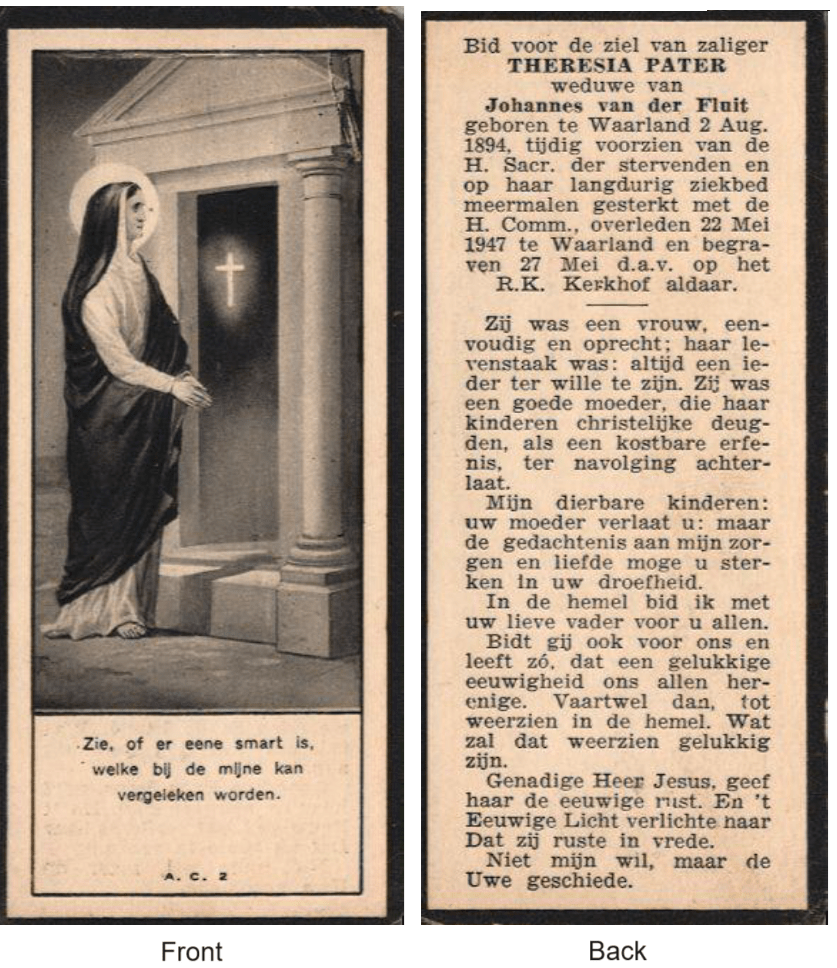
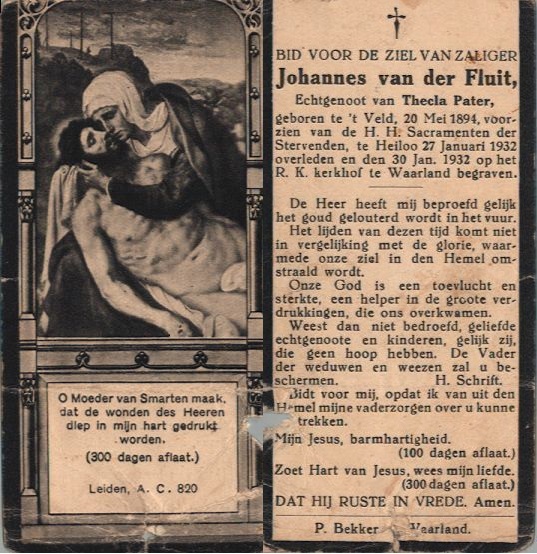
Bidprentje for my great grandfather, Johannis Albertus van der Fluit (1894-1932)
Bidprentje for my great grandmother, Teresia (“Teetje”) Pater (1894-1947)
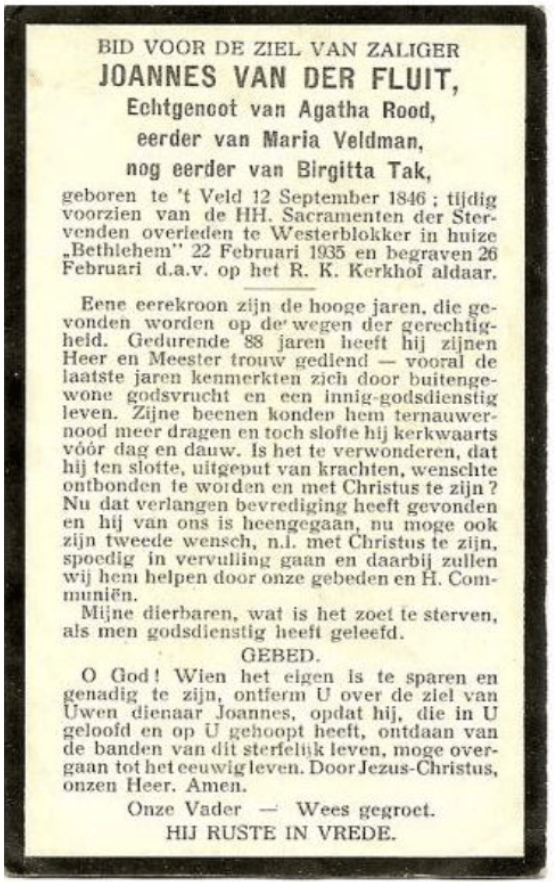
Bidprentje for my great great grandfather, Jan Dirksz van der Fluit (1846 – 1935). It notes that at the time he died he was the widower of Agatha Rood and that he had been previously married to Maria Veldman (my great great grandmother) and before Maria he was married to Brigetta Tak. Jan had outlived all three of his wives.

Neither bidprentjes nor familieberichten are government documents. They are private documents created, distributed, and published by the family. This means a primary source of bidprentjes would be the family of the deceased. There are also genealogical societies that have collections of bidprentjes. The Centrum Voor Familiegeschiedenis (“Centre for Family History” or “Central Bureau for Genealogy”) also has a collection of bidprentjes. While you can search the collection, you must be a member to view and download the document. Familieberichten can be found at Online Familieberichten and Mensenlinq.

52 Weeks Mark III – Week 6: Earning a Living

While most of my Dutch ancestors were farmers and labourers, it should come as no surprise that a few worked in windmills. On my father’s maternal side of the family, three of my Gx4 grandfathers were watermolenaaren (singular, watermolenaar – “water mill worker”). These were the windmills used for pumping water.

On my father’s paternal line, the surname “van der Fluit” may have originated with a windmill (“Fluijtermolen” – “Whistler Mill”) or the polder (“Fluitpolder”) on which it stood in Veur, Zuid-Holland (now part of Leidschendam). Alternatively, the windmill and polder might have been named after my ancestor, Johannes Dircks (“Jan”) (van der Fluit or Goeman) who owned or constructed them.

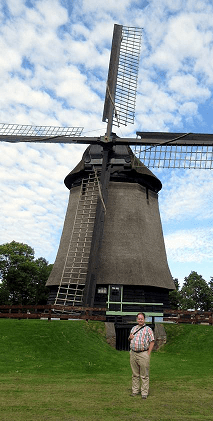
Me standing in front of the windmill in Waarland, Noord Holland, at more than a metre below sea level, about a kilometer from where my father was born and 200 metres from where he was baptized.

My paternal grandmother’s father was Adrianus Komen (1888-1948). Three of his four great grandfathers were all water mill workers. There is a strong possibility all three worked in the same windmill at the same time. I know that two of them, Nicolaas Cornelisz “Klaas” Komen (1786-1864) and Jan Smit (1786-1852) worked at the windmill located in Heerhugowaard, Noord Holland. However, the records I have consulted do not indicate when they worked in the windmill. At most, it is quite likely that Jan was working at the windmill until at least 1852.

I have no idea where and when the third, Johannes “Jan” Woltering (abt 1788-1834) worked in a windmill. I know that it was sometime before 1814, by which time he was working as a carpenter, as documented in the registration of his marriage. Unfortunately, the source from which I obtained the fact he had been a watermolenaar was simply an index and no longer exists. I have not found this item in other sources and records I’ve consulted. The population registers I have seen do not include his occupation. A notarial record I’ve found is dated 1817, which shows Jan working as a carpenter.

Despite this, I have reason to believe that Jan may have worked in the windmill in Heerhugowaard. Jan was born in 1788 in what is now Vreden, North Rhine-Westphalia, Germany. Vreden is about three kilometers from the Dutch border. What he did between his birth and marriage I don’t know, but by 1814 he was living in Akersloot, Noord Holland, which is about 14 kilometers south of Heerhugowaard. After he married he lived and worked in Langedijk, Noord Holland, which is immediately adjacent to Heerhugowaard.

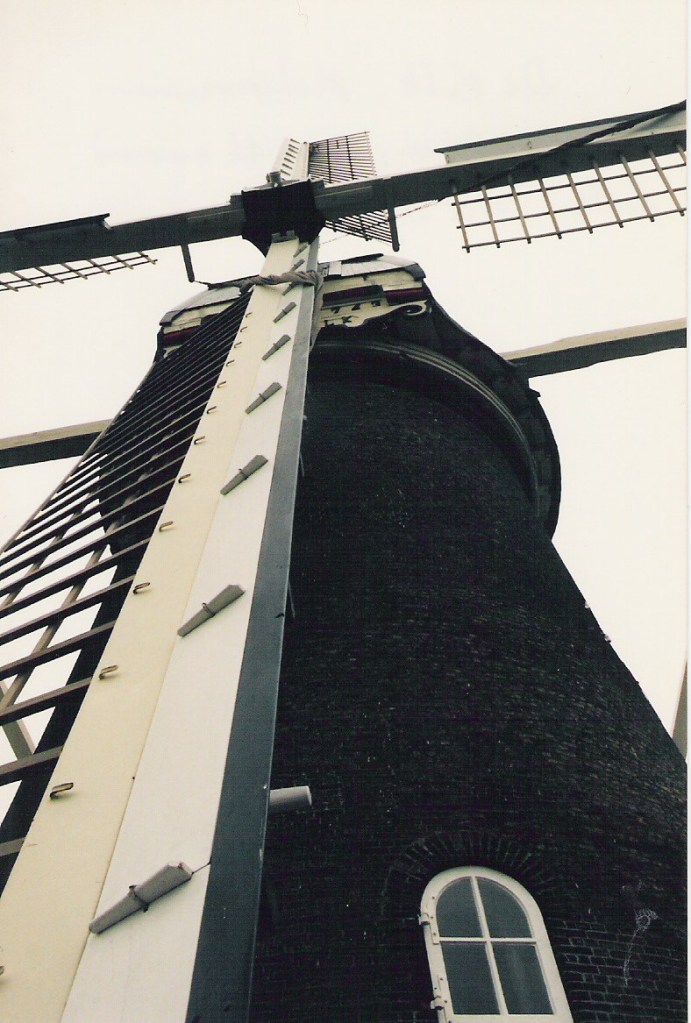
“De Valk” (The Falcon), a windmill in Leiden, Zuid Holland, about 10 kilometers from where Fluijtermolen once stood.

There is one fact in particular that makes me suspect Jan may have worked in the windmill in Heerhugowaard is that Jan Woltering’s son Cornelis married Jan Smit’s daughter Neeltje. Thus, it is possible that the families knew each other because Jan and Jan worked together in the same windmill. Then again, Heerhugowaard was not a large place in 1814 and it is quite possible they knew each other the way everyone in a small town tends to know each other.

Turning to Jan Dircks, the website for the municipality of Leidschendam-Voorburg used to have this information, which I have translated from Dutch:

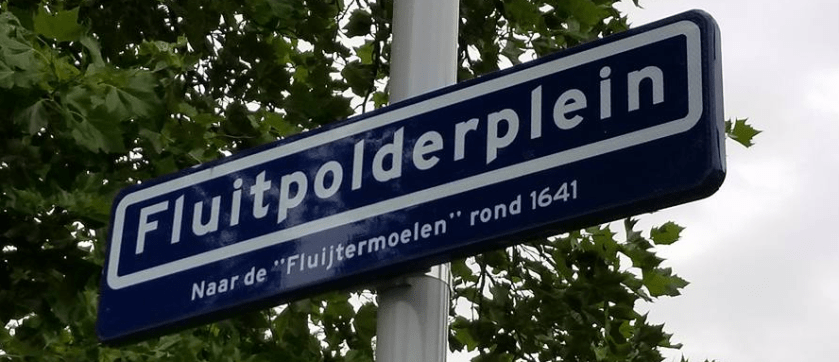
The square and adjacent street between Prinsensingel, Noordsingel, de Amstelweg, and de Graaf Willem de Rijkelaan is called Fluitpolderplein. This was decided in 1970. But where does the “fluit” in “Fluit Polder” come from anyway? According to a historian of Veur, Hendrik Brouwer Schut, it may have something to do with the whistle of the grinding mills, or possibly the “fluitenkruid” (“cow parsley” or “Queen Anne’s lace” in English). [The Dutch name of the plant refers to the fact a flute or whistle can be made from the stem.] However, there may be a better explanation. In 1648 a large part of the territory of the polder already belonged to a certain Jan Dirckxz, who also went by the name “Fluijt”.

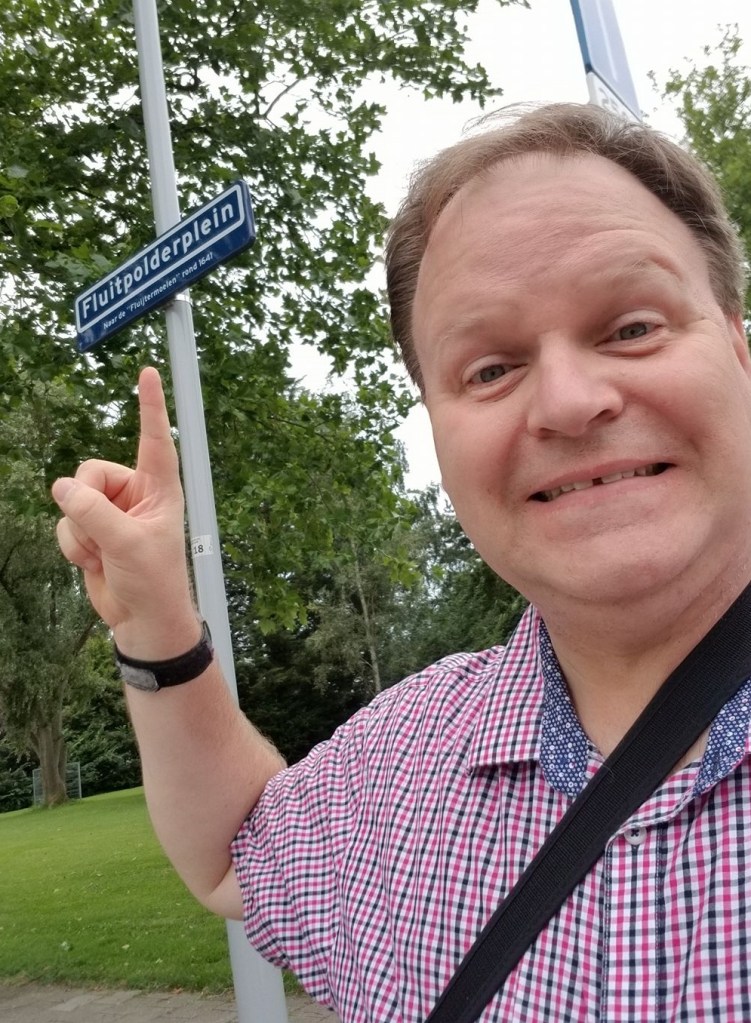
According to the street sign for Fluitpolderplein, the polder was located alongside the “Fluijtermolen” (Fluit Windmill), which was built around 1641. 

Am I named after the polder or is the polder named after me?

52 Weeks Mark III – Week 4: Witness to History

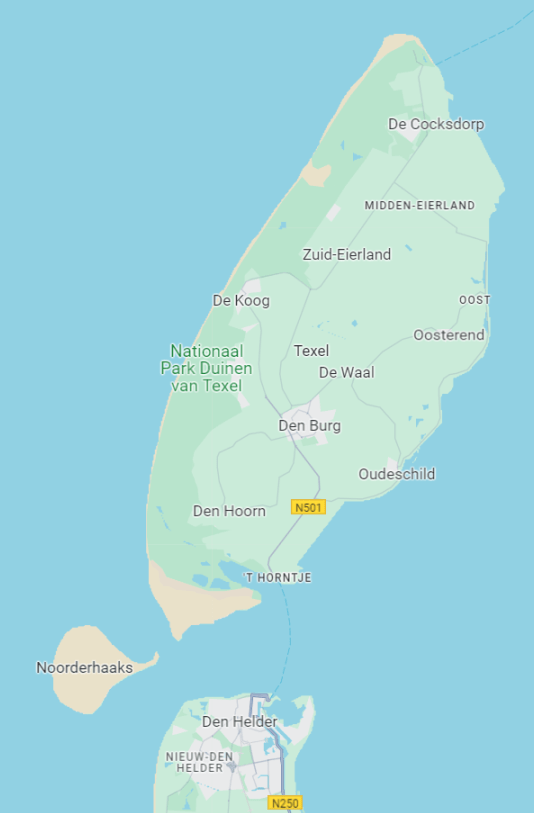
Two weeks ago, I wrote about my roots in the Dutch island of Texel. While the focus was primarily on my paternal grandmother’s ancestors, my paternal grandfather’s side of the family also has a strong connection to Texel. This includes several van der Fluit cousins of varying degrees, many of whom are descendants of my 4x Great Grandfather, Petrus Pieterszoon “Pieter” van der Fluit. I’ve written about at least one of those cousins, Pieter Jansz van der Fluit.

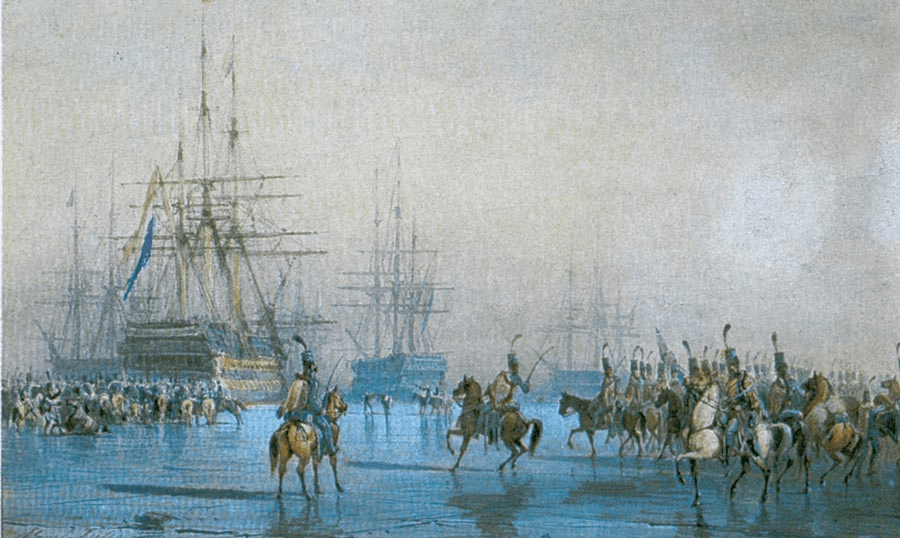
Both sides of my father’s family had a presence on Texel during the French occupation of the Netherlands during the Napoleonic Wars. Many of my ancestors were living on the island during one of the most unusual military confrontations in history, involving a confrontation between cavalry and naval forces.

A depiction of the capture of the Dutch fleet at Texel by French naval painter Antoine Léon Morel-Fatio (1810–1871)

The French invaded the Dutch Republic over the period from 1793 to 1795. There was a great deal of support for the French in the Dutch provinces. The Patriotten (“Patriots”) shared the ideals of the French Revolution. During the French incursion, a French-supported uprising led by the Patriots overthrew the previous regime.

By January 19 , 1795, the Patriots had succeeded and established the Batavian Republic (later the Batavian Commonwealth). While nominally independent, the Batavian Republic was essentially a French vassal state. However, Napoleon was dissatisfied by the rate of change in the new state and was not impressed by its degree of opposition to the English. In 1806 he replaced the Batavian Republic with the Kingdom of Holland, with his brother Louis (Lodewijk in Dutch) installed as its King. When Lodewijk proved to be too sympathetic to his subjects, Napoleon removed him from office and incorporated the Netherlands into France itself.

After the success of the Batavian revolution, the provisional government ordered loyalist Dutch forces to stand down. Despite the support for the French in the Netherlands, the Navy remained loyal to the previous regime. It had formidable forces centred at Den Helder, a major naval port.

The winter of 1794-95 was particularly cold. A storm threatened the Dutch fleet at Den Helder, so it sought shelter on the leeward side of Texel. Nevertheless, the fleet found itself frozen in the ice offshore. Wishing to take advantage of the loyalists’ plight, the French ordered the appropriately-named Admiral Jan Willem de Winter to Den Helder to secure the fleet for the Franco-Dutch forces. De Winter led forces comprised of cavalry and artillery. They arrived on January 22, 1795.

The senior officer of the fleet prepared to scuttle his ships, while de Winter prepared for an attack. However, once news confirmed that the revolutionaries had succeeded and taken over the government, the two sides negotiated a surrender.

There were other reasons why a battle might not have occurred, even if the rebels had not succeeded in overthrowing the government. If the battle had occurred, it would have been a very rare occasion of a land force attacking and (possibly) overtaking a naval force.

Texel was of significant military value during the French occupation. It was a lynchpin of defence against an English naval attack on the Dutch coast. So much so, Napoleon himself visited the island in 1811. One of the key locations he visited were two fortresses at De Schans, a kilometer or so outside of Oudeschild, where many of my ancestors lived. I would love to know what my ancestors might have seen and experienced at that time!

A cousin of mine has a story about one of our van der Fluit ancestors that took place on Texel during the French occupation. He didn’t say who it was specifically, other than a van der Fluit. Whether or not the story is true, or has a kernel of truth, I really cannot say. Nevertheless, whether fact or fantasy, it’s a fascinating legend.

In the course of the wars, Napoleon instituted conscription in many of the French territories, including the Netherlands. Orders were sent to round up all able-bodied men of fighting age and press them into service. One of our Texelaar van der Fluit ancestors sought to evade conscription by hiding in a hay rick while soldiers were rounding up men. The soldiers suspected that people might try to hide in the hay ricks, so they went from rick to rick and pierced them with their bayonets. Legend has it that this particular van der Fluit was praying the rosary while hiding. While doing so, a bayonet passed between his chest and upper arm. He went unscathed and undetected, so he evaded conscription.