52W Mark III – Week 2: Origins

Week Two for the 2024 edition of the 52 Ancestors Challenge, and I’m already struggling. While my experience with the challenge has been rewarding and continues to be so, as I start my third year participating I am finding it harder to find things I haven’t previously written about one way or another. For this week’s prompt, “Origins”, it would have been quite easy to simply recycle any one of a number of past posts. However, I am trying to do something relatively new each week, because I think that’s most in keeping with the purpose and goal of the challenge.

Finally, today, now that Week Three’s prompt has been issued (on another recurring topic!), I thought I had finally come up with something I hadn’t written about before. Turns out that it’s something I’ve touched upon before. Nevertheless, I’m running with it because it’s never been the primary focus of a post.
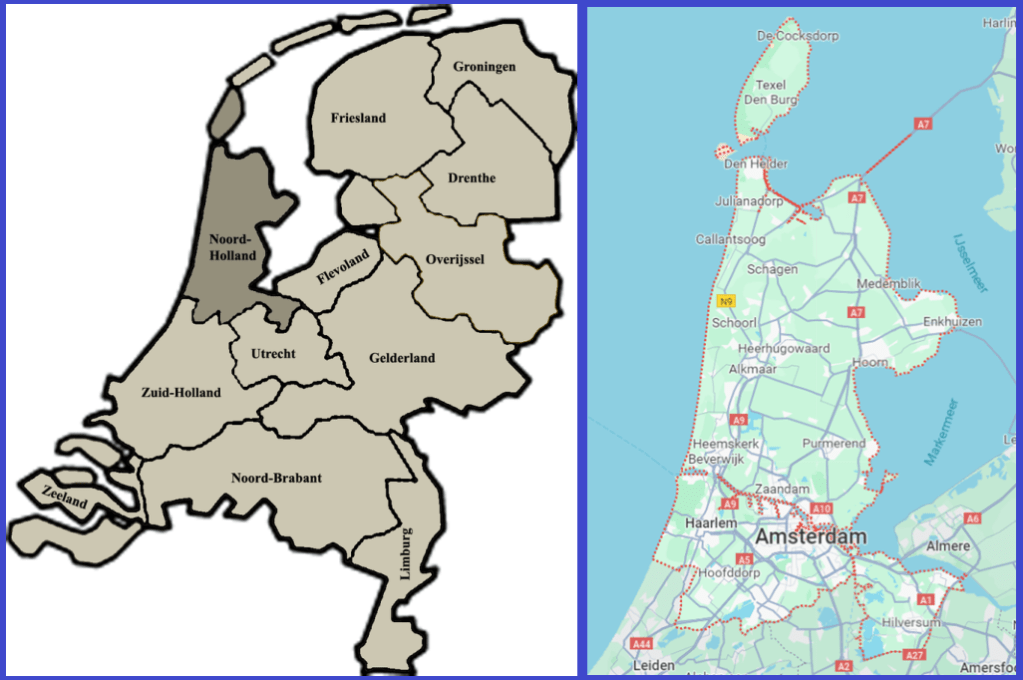
My father was born in the Netherlands, so I have deep Dutch roots. My direct ancestors are primarily from the central part of what is now the province of Noord Holland, going back centuries. My paternal line has been there for 200 years but originated in Zuid Holland, in towns and villages between Den Haag (The Hague) and Leiden. Most of my Noord Holland ancestors were born, lived, and died roughly within a 280 square kilometre area.
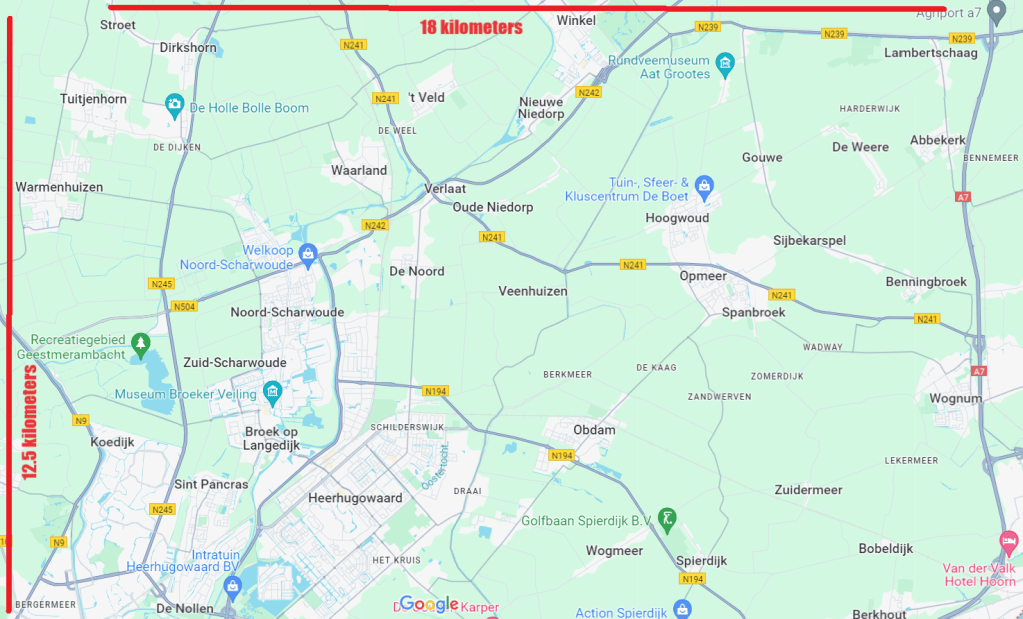
The area of Noord Holland where many of my paternal ancestors lived. This is immediately north-east of Alkmaar, one of the larger cities in the area.

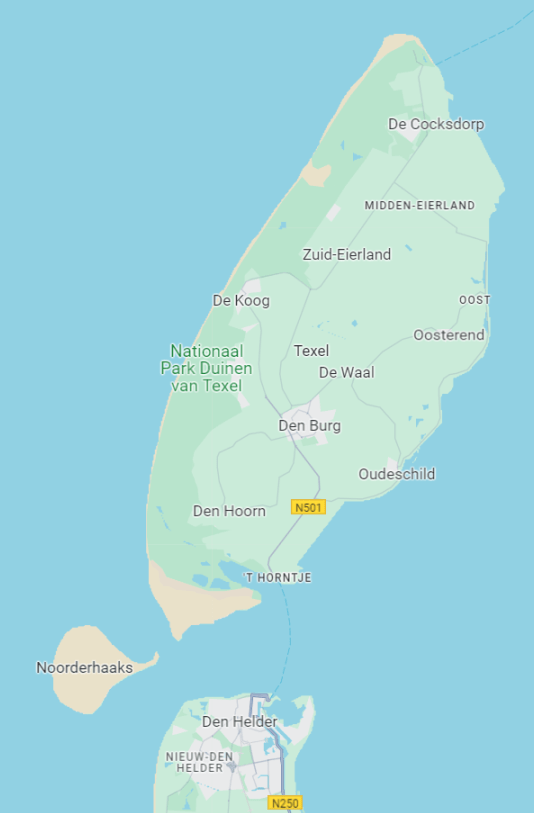
However, several of my Noord Holland ancestors were from Den Helder, a city on the northern tip of the mainland of Noord Holland. It is an important port city. In the 16th and 17th centuries, it was a significant mustering and departure point for Dutch overseas trade and exploration. It is now the home of the Netherland’s main naval base.

Three kilometers north of Den Helder, across the Marsdiep strait, is the island of Texel. Through my father’s maternal grandmother, Elisabeth Bakker (1888-1976), I have significant roots in Texel. I do not know how far back those roots truly go, but I know that one branch of Elisabeth’s maternal line was on Texel by end of the 15th century.

In English, the “x” is pronounced the same as it is in “Texas”. In Dutch, it’s pronounced “Tessel”. Texel is the first and largest of the Wadden Sea islands, which stretch along the entire north coast of the Netherlands. Nine hundred years ago, Texel was part of the mainland. A catastrophic flood in 1170 dramatically changed the geography of north-west Netherlands, including the creation of the island of Texel. There has been settlement on Texel since at least the 12th century. Texel even has its own dialect, Tessels. It was common until the 1950s, after which time it went into significant decline.

The island received city rights in 1415. It has been the site of significant naval engagements over the last 400 years. It was also the site of one of the last battles of World War II in Europe. The island had been relatively unscathed during the war itself. It was only after the war was over that it was devastated. A German battalion made up of Georgian soldiers occupied Texel during the war. Supported by the Dutch Resistance, they rebelled in April 1945. Fighting between the Georgians and Germans lasted well beyond VE Day, ending only with the arrival of Canadian troops on May 20, 1945.

Historically, Texel’s primary economic activity involved agriculture and the sea. It is famous for a breed of sheep, Texels, that originated there. In present times, the island is primarily dependent on tourism. While most of my Dutch ancestors were primarily farmers and labourers, many of my Texel ancestors were sailors.

Both of Elisabeth Bakker’s grandfathers, Jan Cornelis Bakker (1819-1859) and Cornelis Ran (1824-1897), were harbour pilots. I suspect it was that line of work that led them to relocate and settle in Den Helder. Two of Elisabeth’s four great grandfathers, Cornelis Dirksz Bakker (1789-1858) and Reijer Ran (1792-1860), were also sailors. It was Elisabeth’s father, Cornelis Jan Bakker (1855-1914) who broke with that tradition. He was a cobbler and shoemaker.

One of Elisabeth’s great grandfathers who was not a sailor was Jan de Waard (1787-1863). He began his working life as a labourer but for the last twenty years of his life he was a shopkeeper. Jan is interesting because nearly all my paternal line were Roman Catholic, but Jan was baptised in the Reformed Church. However, his wife Cornelia Pieters Kooij was Catholic and their children were baptised as Catholics. It is possible that Jan might have converted.
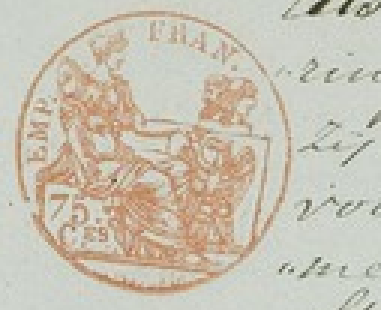
The other interesting thing about Jan and Cornelia is that they were amongst the last to be married during the period of French rule during the Napoleonic wars. They married at Texel on October 10, 1813. The record of their marriage is written in Dutch, but bears the seal of Imperial France. Less than a month after their marriage, a popular uprising resulted in the ouster of the French. On November 30, 1813, the son of the former stadholder of the country returned from exile and was named William I, Sovereign Prince of the United Netherlands and subsequently King.

The other of Elizabeth’s great grandfathers who was not a sailor, Johannes Puinbroek (1786-1865), was not even from Texel. In fact, he is quite the oddity in my family tree. He was born so far south from Texel that the town where he was born, Vrasene, is in Belgium (which at the time was the Austrian Netherlands). Sometime around 1822 and 1824 Johannes relocated to Den Helder, where he met and married his third wife. I have no idea beyond speculation as to what prompted him to move. I thought I had written about him before, given his unusual story, but searching through my posts I found nothing. Well! There is something I haven’t written about before! Stay tuned…
52W Mark II – Week 38: Adversity

In which my grandparents unwittingly recreate the Four Yorkshiremen sketch

My paternal grandparents were 16 and 17 years old when the Nazis invaded the Netherlands in 1940. The occupation was a difficult one. My grandfather and his brothers were all rounded up to work as forced labourers in Germany; somehow my grandfather escaped. Only a few weeks ago I found records about one of my great uncle’s time as a forced labourer through the Arolsen Archives – International Center on Nazi Persecution. I was surprised to find that discovery, only because I was expecting to find records about one of the other brothers.

Needless to say, my grandparents rarely spoke about the war in my presence. In particular, the two times I ever heard my grandmother speak about it were astonishing because it was so rare it was for her to do so. My grandfather must have spoken about it more often, because I have heard several stories about the hardships he endured and the close scrapes he had with the Nazi occupiers. My father also tells the tale of when he was a boy, after his family had immigrated to Canada, about walking in a farm field with my grandfather. While they were walking, a small airplane flew overhead. My grandfather instinctively dove to the ground for cover. The war would have been over for at least ten years at the time, but clearly it had left its scars.

While the war was generally a proscribed topic, much to my amazement it came up during a visit I had with them in the late 90s, shortly before my grandmother passed away. I can’t remember how the topic came up, but I remember being absolutely gobsmacked that it did. It was particularly stunning that my grandmother participated in the discussion. Even more amazing was that the topic of conversation was the Hongerwinter (“Hunger Winter”), a famine the Nazis imposed on the Netherlands during the last winter of the war. However, what started off as a very somber recollection of their experience quickly spiraled into the famous Monty Python sketch.

The Allied strategy in the Netherlands was to get to Germany as quickly and directly as possible. This meant bypassing large parts of the northwest part of the country, including Amsterdam and the province of Noord-Holland. The Germans retained control of those areas until they surrendered on May 5, 1945. Over the winter of 1944-1945, which was particularly harsh, the Nazis deliberately blockaded the food and fuel supplies into the occupied portions of the Netherlands, resulting in the Hongerwinter. Malnutrition was rampant and about 22,000 people died of starvation.

My grandparents both lived in the central part of Noord-Holland and experienced full effects of the Hongerwinter. The famine occurred before they were married, so they experienced the hardship with their families.

When the topic came up, my grandparents began discussing how hard that winter had been and how they had each suffered. What caused the discussion to go sideways was when my grandmother said to my grandfather, “At least you lived on a farm!”

My grandfather countered by acknowledging the fact, but adding that my grandmother’s family was much better off economically. My grandmother reciprocated by pointing out some other advantage she believed my grandfather had that she did not. I am certain that my grandfather added that his mother was raising the family on her own, as his father had passed away in 1932.

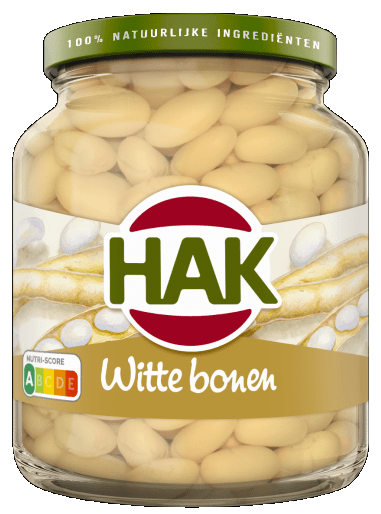
They then began countering with what foodstuffs the other had access to, which they themselves did not. Finally, one of them said, “all we had to eat was the white beans!”, to which the other responded in a somewhat overdramatic voice, “oh, if only we had the white beans!”

I am certain that the competition to outdo the other’s hardship was black humor that served to ameliorate the trauma they had both experienced, even though it had been fifty years in the past.

I feel nothing but love and empathy for my grandparents when I think back on this. To this day, whenever I am in a Dutch store (my favourites are the Holland Shopping Centre in New Westminster and Coombs Wooden Shoe on Vancouver Island), I always make a point of buying a jar of white beans in their honour.

White Beans

52W Mark II – Week 36: Tradesperson

The vast majority of my ancestors on both sides of my family were farmers or labourers. Not all the labourers were agricultural workers, but it was still hard work and far from what might be considered a trade.

There are a few interesting exceptions. Cornelis Jan Bakker, my great great grandfather, was a cobbler. I also discovered that my Gx9 grandfather, Gregory Cooke, was a cordwainer. A cordwainer is a shoemaker who specializes in fine, soft, new leather shoes, in contrast to a cobbler, who works with old shoes. I’ve also written about my great great grandmother, Ella Elizabeth Thomas, who was a midwife in Cardston, Alberta, for more than 40 years.

What caught my eye in thinking about the topic for this week’s 52 Ancestors Challenge, “Tradeperson”, was an interesting branch of my family on the Dutch side of my family tree.

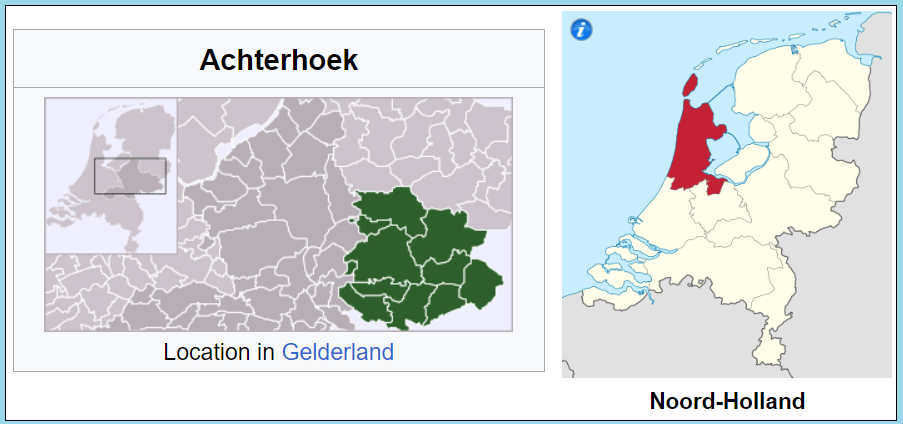
Almost all of my Dutch ancestors who I have identified to date are from the provinces of Zuid-Holland and Noord-Holland, which prior to 1840 were one province, Holland. So I was quite surprised to learn early last year that I have a branch of my family that originates in the Achterhoek (literally, “back corner”), the easternmost part of the province of Gelderland that pokes into Germany.

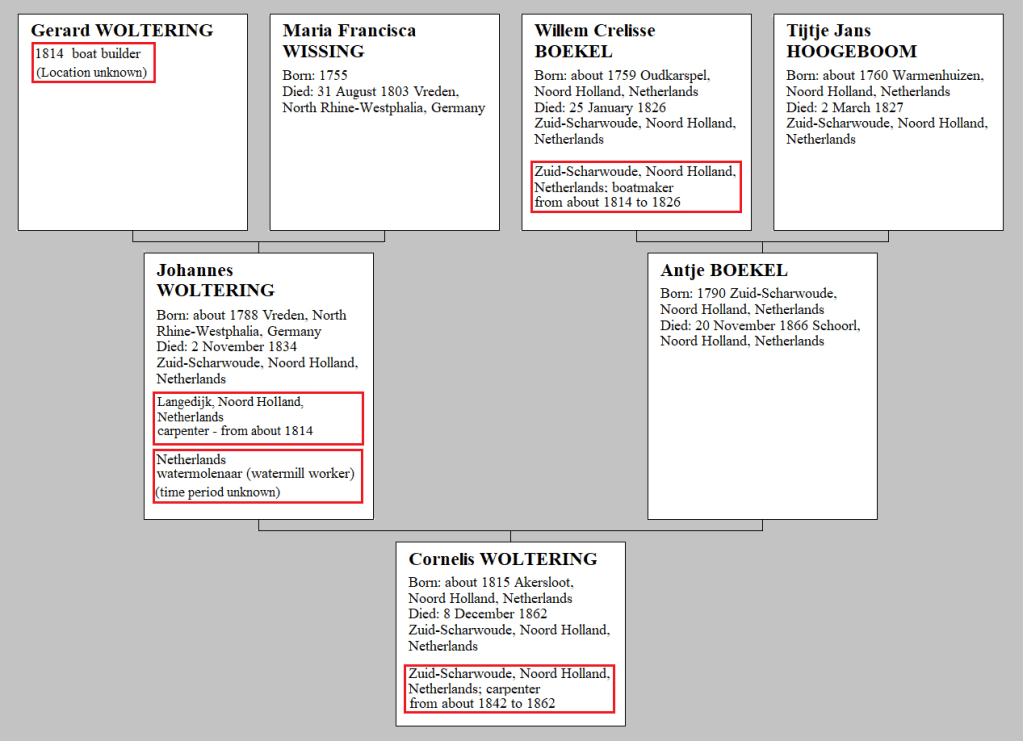
My paternal grandmother was Christina Komen. Her paternal grandmother (my great great grandmother) was Antje (“Anna”) Woltering. Anna’s father, Cornelis, is one of my few ancestors who can be described as a tradesperson. As far as I have discovered, he was a carpenter almost all of his entire adult life. The earliest mention of his occupation was in the registration of his marriage to his wife Neeltje Smit, which occurred on May 8, 1842. It is most likely that Cornelis was a carpenter, or a carpenter’s apprentice, for many years before he married.

While it seems that Cornelis spent most of his life, including his years as a carpenter, in Zuid-Scharwoude, Noord-Holland, he was born about 15 kilometers to the south in the village of Akersloot. How this came to be I have no idea. His parents, Johannes “Jan” Woltering and Antje Boekel, had married in Noord-Scharwoude in 1814 and all of Cornelis’s younger siblings were born in Zuid-Scharwoude. However, it appears that Jan had been living in Akersloot prior to marrying Antje. It may be that the couple returned to Jan’s residence after they married and relocated to Antje’s home town of Zuid-Scharwoude shortly after Cornelis was born.

The bigger surprise to me was that Cornelis’s father, Jan, my Gx4 grandfather, was born in 1788 in what is now Vreden, North Rhine-Westphalia, Germany. Vreden is about three kilometers from the Dutch border and the Achterhoek. Sometime before September 1814, when he married Antje, Jan literally moved across the Netherlands to Noord-Holland. I have no idea why he moved, which was incredible because it was unusual for people to move such distances at that time. Even now it’s about a three-hour drive, which to many of my Dutch relatives is an astounding distance. (For a Canadian, not so much!)

I have not yet determined where Jan’s parents, Gerard Woltering and Maria Francisca Wissing (Cornelis’s paternal grandparents), were born. Gerard and Maria married on April 26, 1787, in Vreden. However, prior to the marriage, Gerard had been living in Buurse, Overijssel, Netherlands. Buurse is three kilometers from the German border and twelve kilometers due north of Vreden. Meanwhile, Maria had been living in Enschede, Overijssel, which is a city about 20 kilometers north of Vreden.

What is more surprising is that Gerard’s occupation was boatbuilder. I am unsure where he carried out that trade, given that the closest large body of water to where he lived and married is at least 100 kilometers away.

Cornelis’s maternal grandfather, and Antje’s father, was Willem Crelisse Boekel, was also a boatmaker. However, unlike Gerard, Willem lived rather close to the water, as he spent his entire life in Noord-Holland.

52W Mark II – Week 35: Disaster

This year marks the 70th anniversary of the North Sea Flood of 1953. A combination of high tides and winter storms on the evening of January 31 and the morning of February 1 resulted in a massive flood that affected England, Scotland, Belgium, and the Netherlands. It was one of the worst floods to hit the Netherlands since 1916.

The southern provinces of Zeeland and Zuid-Holland were particularly hard hit, with the highest death tolls for the country. In the province of Noord-Holland, where my father lived, Red Cross and other sources indicate that there were fewer than a dozen deaths. In addition to the dead and missing, thousands were displaced from their homes and there was massive property damage.

My father was just a boy when the flood struck, but he remembers it well. It is apparent that when he recalls his childhood in the Netherlands, it is one of his clearest memories. The Netherlands still had not yet recovered from World War II and the flood was devastating. While the reasons for emigrating are multifaceted and complex, the devastation of the flood of 1953 was one of the many things that prompted my grandparents to think about leaving the country.

While this video is in Dutch, it is the images that tell the tale. It also primarily shows the devastation in the south of the country. (“Watersnood” is “flood” and “ramp” is “disaster.)