52W Mark III – Week 46: Cultural Tradition

My wife and I dread December. Not only is the whole month a whirlwind of activity leading up to Christmas, both our children have December birthdays. My brother-in-law is Jewish, and we’re always welcomed into the Hannukah festivities. The worst year was when a birthday, Christmas, and first night of Hannukah all occurred on the same day – something that is happening again this year. Plus, of course, we celebrate Sinterklaas.

Sinterklaas is a traditional holiday generally celebrated in the Netherlands and its former colonies, Belgium, and parts of Germany and France. It takes its name from its central figure who, like Santa Claus, has his origins in St. Nicholas, an early Christian bishop who lived in what is now Turkey. In fact, Santa Claus owes much of his origin to Sinterklaas.

Sinterklaas has much in common with Christmas. However, unlike Christmas, Sinterklaas is celebrated on December 6, the feast day of St. Nicolas in the Christian calendar. Both Sinterklaas (also called “Sint”) and Santa deliver gifts the night before their respective holidays, Sinterklaas often arrives in the Netherlands in mid-November and travels around the country visiting children, participating in parades, and handing out treats and gifts.
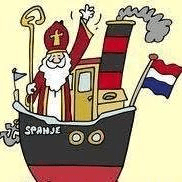
While Sint and Santa have much in common, they have many differences. Sint lives in Spain (probably rooted in the fact that the Netherlands was part of the Spanish empire until the 16th century), travels by steamboat, and rides a horse. As well, Sint’s appearance is rooted in his church origins, so he is dressed like a bishop.
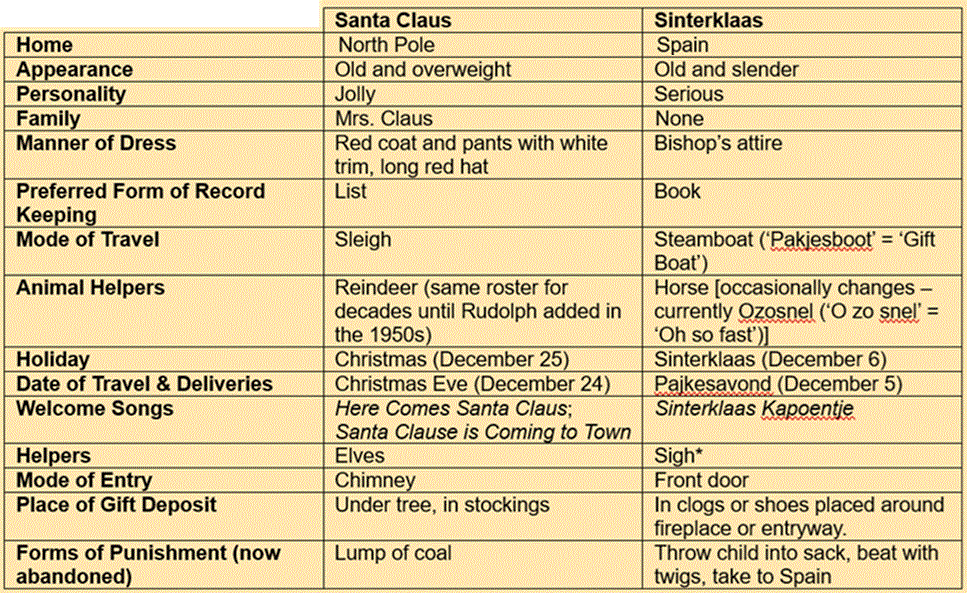
A Few Differences Between Santa and Sint
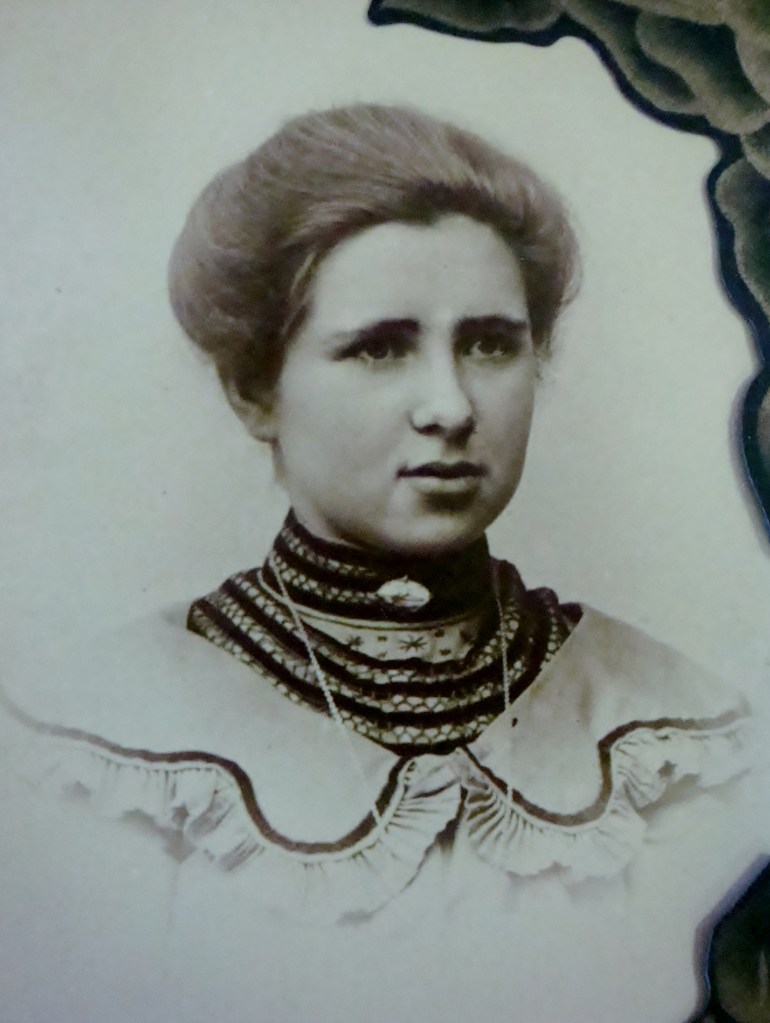
Elizabeth Bakker

Since only my father is Dutch, we did not observe many of the Dutch cultural traditions, and definitely not in the way they do in the Netherlands. My great grandmother, Elizabeth Bakker (1888 – 1976), always sent us a package of goodies for Sinterklaas. However, at the time I didn’t know it was for Sinterklaas. I never even heard of Sinterklaas until well after my great grandmother died. I thought the package was for Christmas and that she sent it early in the month so it would get to us in time.

I loved those packages – they always contained many of the traditional Sinterklaas treats: pepernoten, kruidnoten, taai taai, and speculaas (all forms of spiced cookies, somewhat like gingerbread, although the former two are quite small); marzipan; borstplaat; and, of course, chocoladeletters  (“chocolate letters”)!!

The letters originated centuries ago as baked goods, but are now almost exclusively made of chocolate. It is traditional to receive a chocolate letter of the initial of your first name. When we were kids, there was always an argument that some letters were bigger than others so they had more chocolate. The truth is that, while the surface area of each letter might differ, they are manufactured in different thicknesses so that every letter contains the same amount. The other problem is finding letters that are uncommon initials for names in the Netherlands, although that is less of a problem than it used to be.
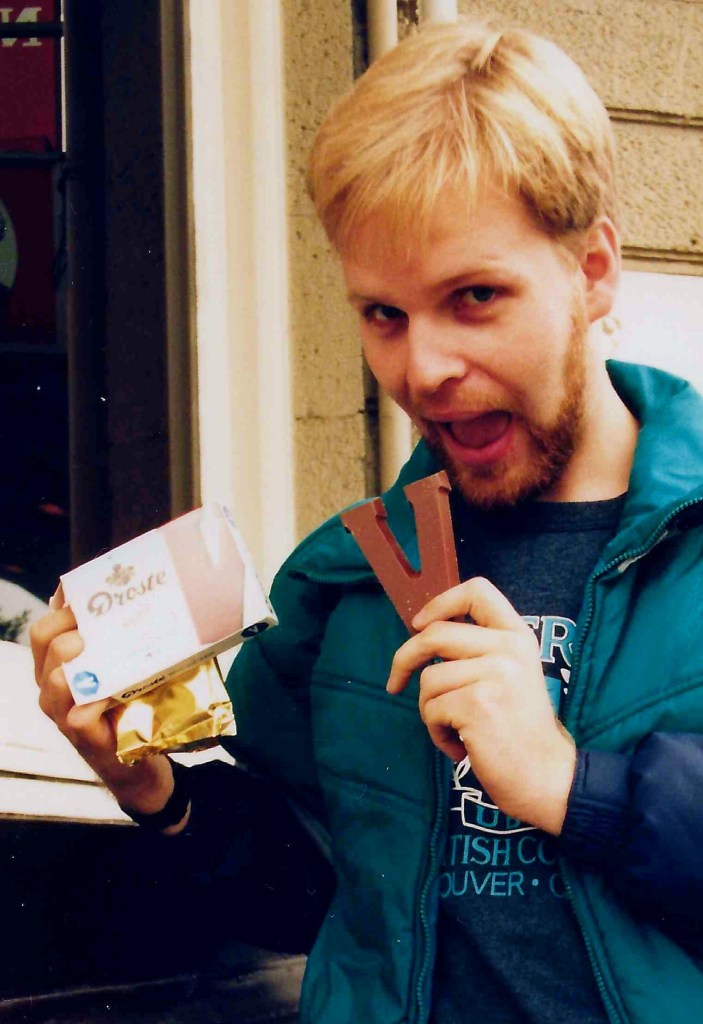
I found a Droste store in Amsterdam!

Chocolate letters are another item for which, outside the Netherlands, the availability seems to change over time. When I was a kid, they seemed to be available everywhere. Purdy’s made their own for a while, but I haven’t seen them there in a long time. In recent years, the only place I could find them were in Dutch stores. Even then, I could not find Droste letters – the absolute best ones, bar none – anywhere. You could only find the secondary brands. I once asked a vendor if Droste no longer shipped to Canada, and was told they were simply too expensive to carry. Luckily, a couple years ago I found Droste chocoladeletters in a Dutch store in Lethbridge.

Fortunately, chocolate letters seem to be getting easier to find again, as I saw them being sold in many mainstream supermarkets and shops last Christmas. I first noticed them showing up a couple years ago in a local independent grocery store that specializes in Asian foods and ingredients of all places. Plus, in our neighbourhood of Steveston, there is a chocolatier that makes them – in every letter!
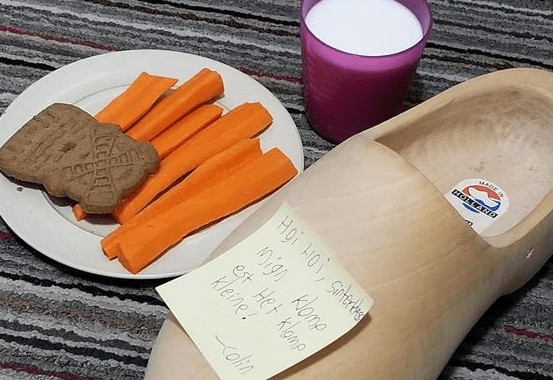
I have no idea where my son learned the Dutch he wrote on the note. There are a couple small mistakes, but it says “Hi, my clog and the little clog” (the small one’s not in the photo).

Our kids are more immersed in Sinterklaas. We’ve been marking it every year since our eldest was born. In fact, we thought he might arrive on Sinterklaas! Every year, the kids will put out their shoes along with some klompen (clogs), as well as a snack for Sint and his horse. The last few years they’ve also left notes. Then we’ll watch a few YouTube videos with Sinterklaasliedjes (“Sinterklaas songs”) and then off to bed.
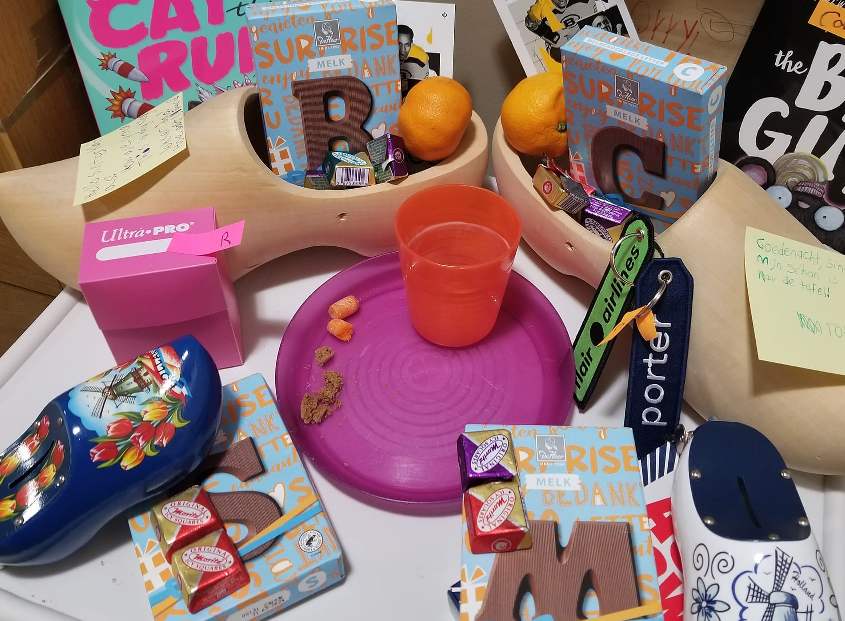
The kids didn’t do too bad last year.

When our eldest was in second or third grade, he made a presentation to his class about Sinterklaas. He asked for help with that, and I gave him a few things he could take to school. Our youngest did the same thing last year – except I had no idea he was doing it until after the fact! He had asked me to email his teacher a video of a Sinterklaas song, but I didn’t know what it was for or that it was part of his presentation. His teacher emailed us to say that he knocked it out of the park!
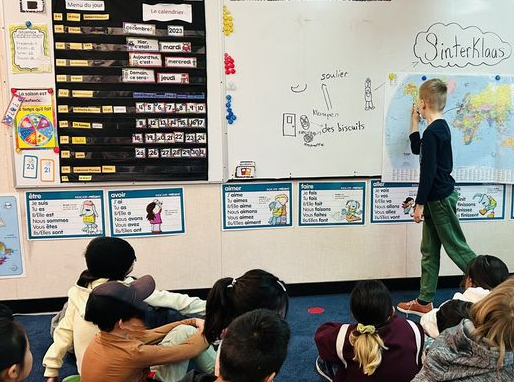
Sharing Sinterklaas with his class!

Of course, anyone even vaguely familiar with Sinterklaas has probably heard of Zwarte Piet (“Black Piet”). For decades, Zwarte Piet was seen as Sint’s delightful helper. The association many people have with a beloved childhood memory likely makes it difficult to accept the unsavory fact that Piet is anything other than a negative stereotype. I don’t buy any of the arguments defending this outdated and offensive figure, which are based on fallacies, myths, and disregard for history. It’s often a waste of breath to argue and about this time of year I have to mute my social media feeds connected to the Netherlands.

While a bit on the academic side, Black Pete: Analyzing a Racialized Dutch Tradition Through the History of Western Creations of Stereotypes of Black Peoples provides a thoughtful analysis of the problem.

While Piet remains a polarizing topic, in recent years it seems that attitudes are changing and the popularity of Zwarte Piet as traditionally depicted has begun to decrease dramatically. Over the last ten years or so, there has also been a shift to reforming or rebooting the character, with the emergency of Roetveegpiet (“Sooty Piet”) (characters with dirty faces due to the soot of the chimney) and Kleurenpiet (“Coloured Piet”) (characters with faces of all colours of the rainbow).

Meanwhile, Sinterklaas is less than a month away – better start planning for another busy December!
“Sinterklaas Kapoentje” – You can see the lyrics, English translation, and history of the song here.

52W Mark III – Week 45: Colourful

I’ve written a fair amount about my Aunt Diana (Helen Diana Burgess 1951 – 1999), but usually I’ve focused on her scientific side. However, I’ve always considered her a true Renaissance Woman, because the arts were just as important to her. It’s why her scientific pursuits lead her into the colourful world of art conservation.

According to the obituary published in the Canadian Conservation Institute Newsletter in November 1999,

Helen loved paper and textiles, flowers, beautiful ceramics and glass, and cats. She was often teased by her friends for picking flowers wherever she could find them, including, in one instance, the Faculty Club garden at Queen’s. Helen enjoyed painting flowers and donated several of her watercolours to the Lupus Society.

Diana took me to the first movie I ever saw in a cinema, Bedknobs and Broomsticks. Going to that movie was also the first time I rode a city bus. She also had some marvelous record albums, which included the original edition of Jesus Christ Superstar. I remember listening to it over and over again while reading all of my uncle’s comic books whenever we visited my grandparents.

This is the copy my Aunt Diana gave me, which my sons now have.

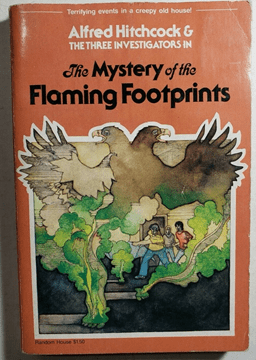
Books were often a welcome gift from her, often titles I had never heard of but came to love. Diana had a huge library of fiction and non-fiction books. In particular, she loved detective novels. The best book she gave me was from the Alfred Hitchcock and the Three Investigators series, Mystery of the Flaming Footprints. The books are about three boy detectives, which were everything boring old Hardy Boys books were not. I went on to buy many more from the series. I’ve passed them all on to my sons, who have read them all several times over.

When I was in undergrad, Diana introduced me to L.R. Wright and her first novel, The SuspectThat book quite blew my mind – a detective novel not only set in Canada rather than the US or UK. Moreover, it wasn’t someplace like Toronto, rather, it was set in the small town of Sechelt, only a short drive away from where live. It’s now been turned into a TV series, Murder in a Small Town.

Diana took me on tours of art galleries, including the National Gallery of Canada in Ottawa and the Vancouver Art Gallery. It was wonderful having someone so knowledgeable about art as my guide. Diana loved to paint as well. When I was 10, she gave me my first set of oil paints, along with a small canvas, brushes, turpentine, and linseed oil. It didn’t take long for me to accidentally spill some on the gold shag carpet in our living room. Oops. At least it was purple, which pairs well with gold.

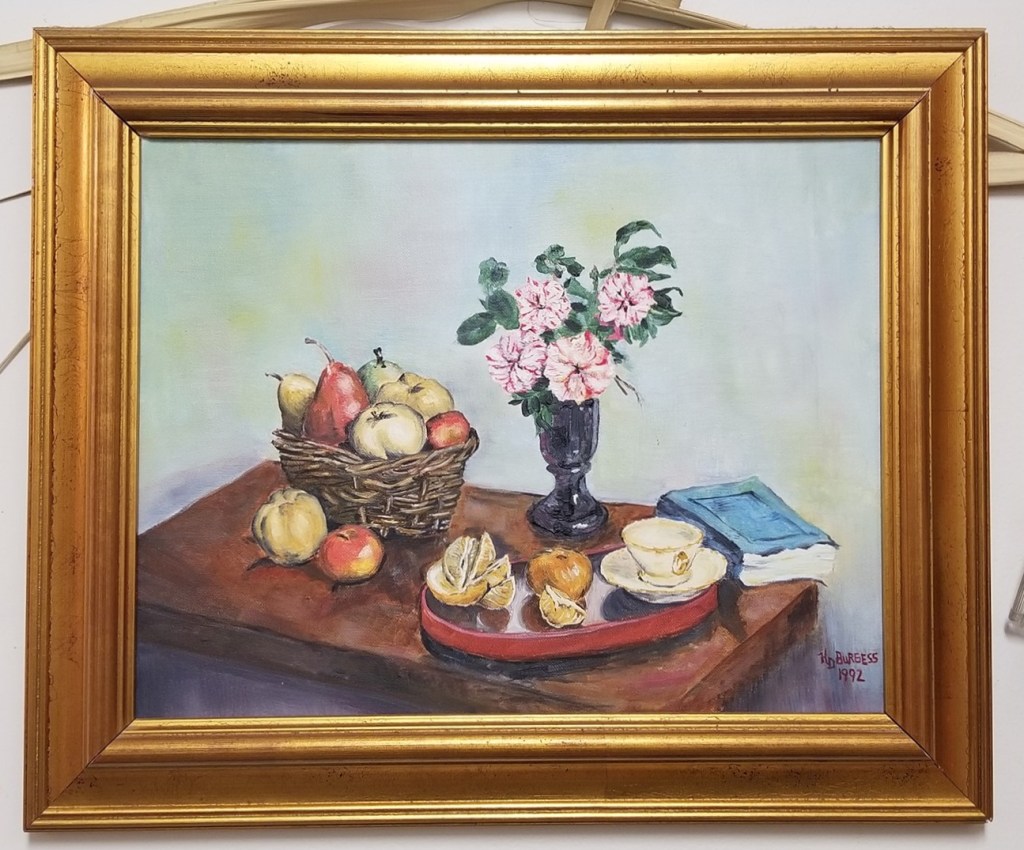
She mostly painted still life, often in vibrant or bright colours, although sometimes she used a more muted palate. My mother has a few of her works, one of which now hangs in her living room.

52W Mark III – Week 44: Challenging

The prompt this week for the 52 Ancestors Challenge is “Challenging”. You know what is challenging? The 52 Ancestors Challenge, that’s what!!

Starting the 52 Ancestors Challenge was hard:

Three years in a row, I signed up for Amy Johnson Crow’s “52 Ancestors in 52 Weeks”. The first two times, that was as far as I got. Hopefully, third time’s the charm. Hence this blog, only a quarter century behind the times.

As I later described it:

I originally signed up for the 52 Ancestors Challenge for 2020, but did nothing afterwards. I signed up again for 2021, for which I also did nothing.

Somehow third time was the charm. I know there was something that spurred me on to actually do something for the 2022 challenge, but now for the life of me I can’t recall what that was!

Halfway through my first year actually participating in the Challenge, I wrote:

Holy smokes, we’re now halfway through the year. Moreover, with 26 installments, we’re halfway through this year’s 52 Ancestors Challenge! With that, I’ve managed to consistently blog for six months. While it has been a bit of a slog the last few weeks, I’m so pleased I’ve stuck with it and made it this far!

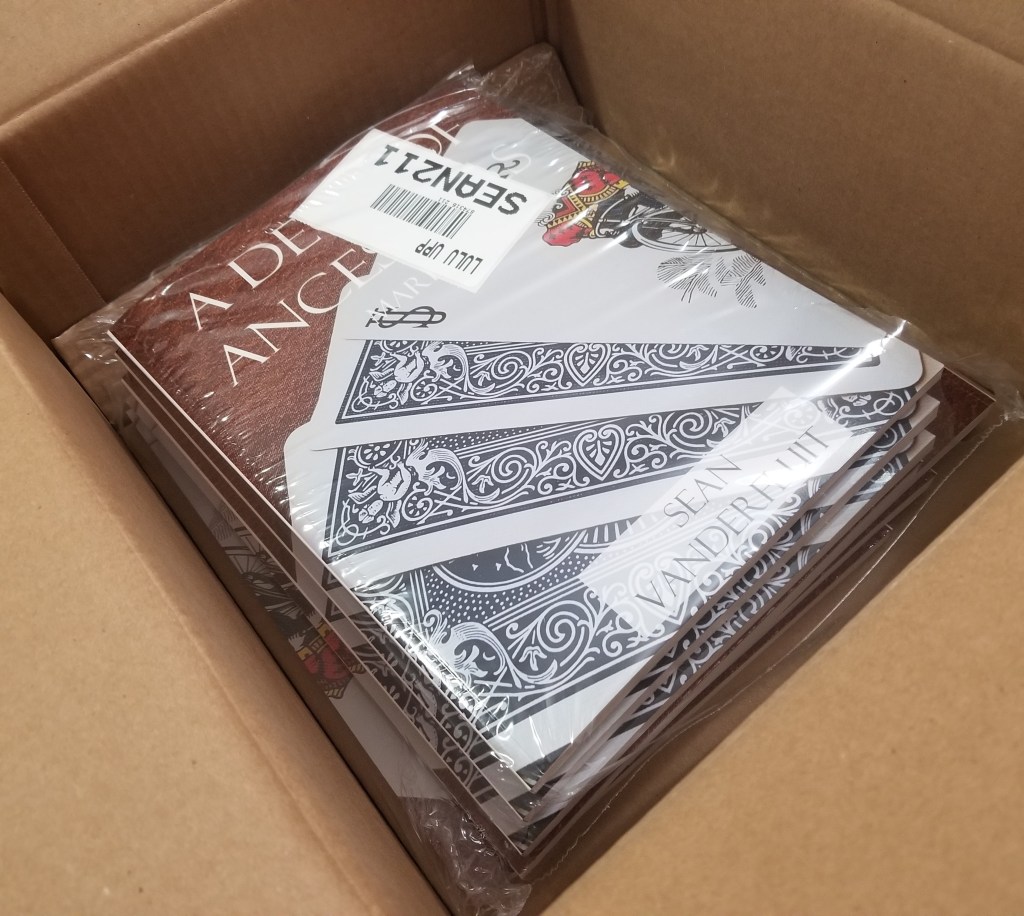
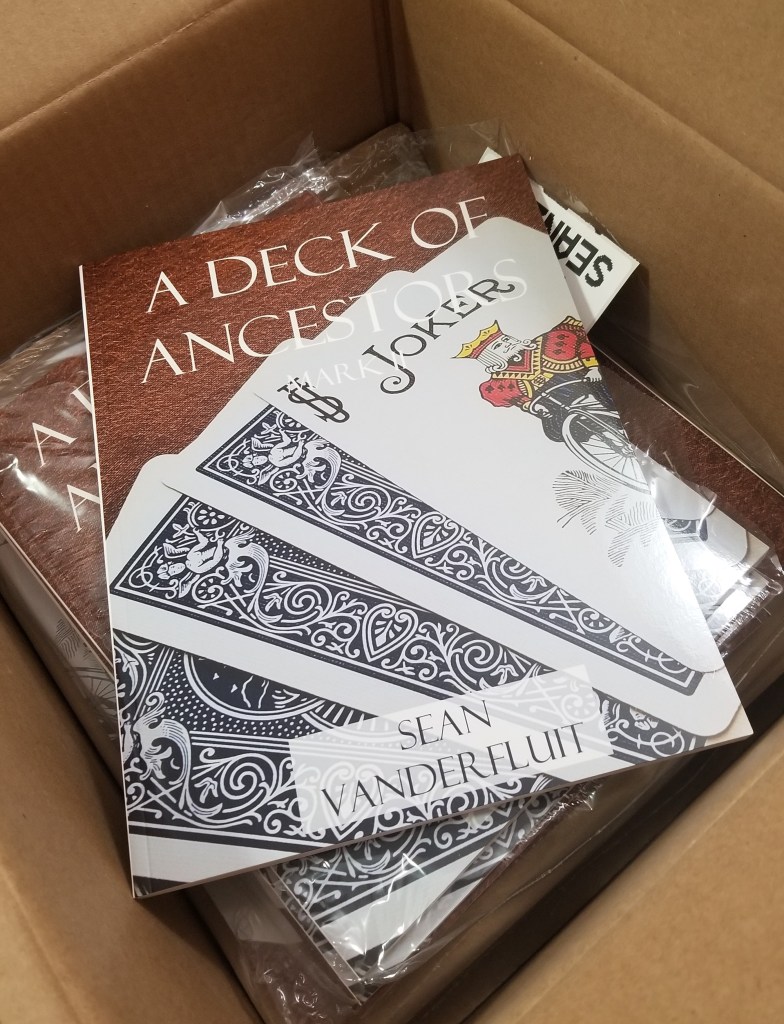
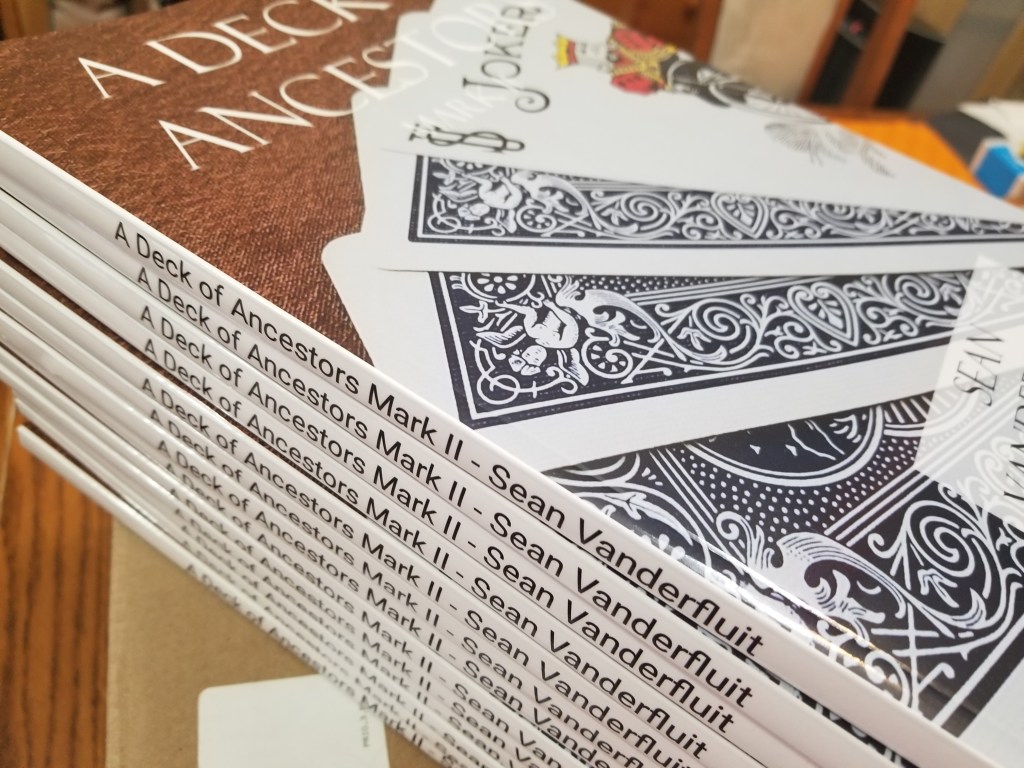
I persevered and successfully completed the year. Building on that success, I signed up for 2023 edition of the Challenge. Once again, I completed all 52 weeks. Not only that, but I turned my first year’s set of posts in to a book that I printed and handed out as Christmas and Hannukah gifts!

Buoyed by that success, I re-upped a third time, for the 2024 edition of the Challenge. With eight weeks to go, I’m confident I’ll successfully complete all 52 weeks.

However, I have to be honest. The Challenge is becoming more challenging. I’ve picked the low hanging fruit several times now. It’s getting harder and harder to write about things I haven’t already covered before – sometimes more than once. Many times this year I thought I had come up with something entirely new, only to discover partway through or near completion that I had already written about the same thing. This year seems to have a few reruns, as I really did not want to start over. In fact, just discovered that I’ve already sort of covered the topic of the challenge of participating in the Challenge.

As a result, for the last month or so I haven’t produced anything for the current week before the next prompt is posted. (Although, ironically, the one week I was ahead of the prompt, it was delayed!) I know what Amy would say about that, but I’d still enjoy it more if I could keep more current.

As I’ve said before, the primary purpose of undertaking this blog was to get myself to write more about my family history after decades of researching and compiling information. Even though this year has been more challenging, I am still achieving that goal and continue to find value in participating.

That said, I don’t think I have it in me to do another full year of the Challenge, at least not in the way I’ve participated for nearly three years. However, I will need to think of something that is still regular and structured; without it, I can see a future where posts become fewer and farther apart in time, until it just peters out. Fortunately, Amy recently posted (I can’t remember if it was in her Facebook group, Generations Cafe, or in her emails) that she was planning something new or different for 2025. I can’t wait to see what that might be!

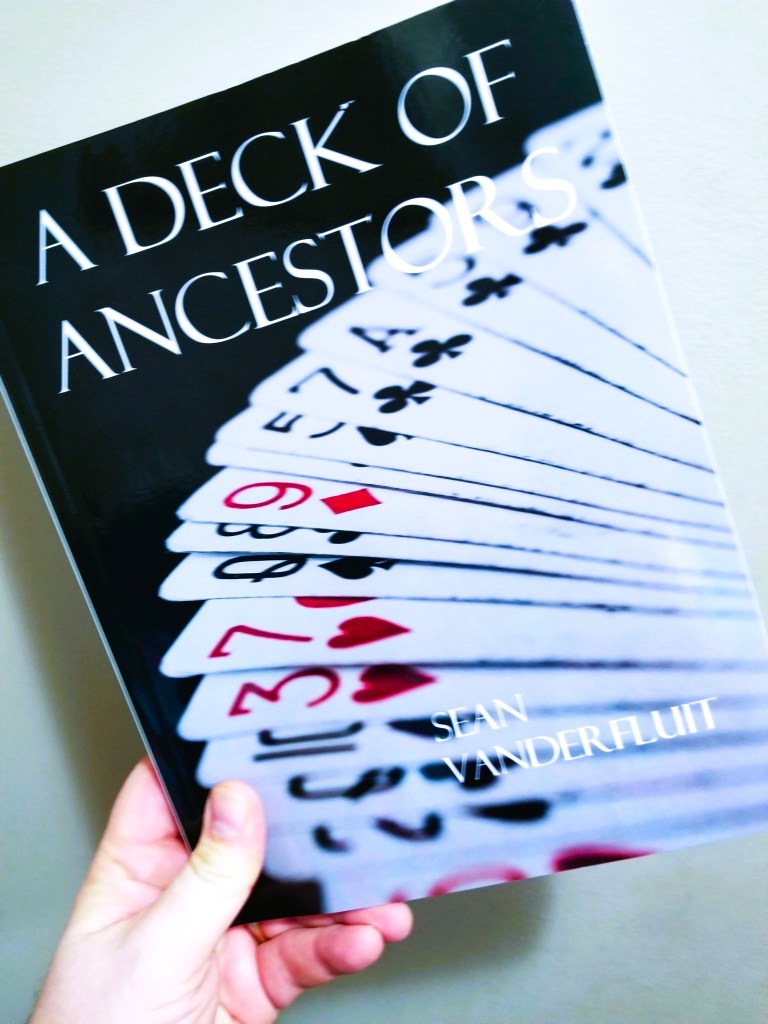
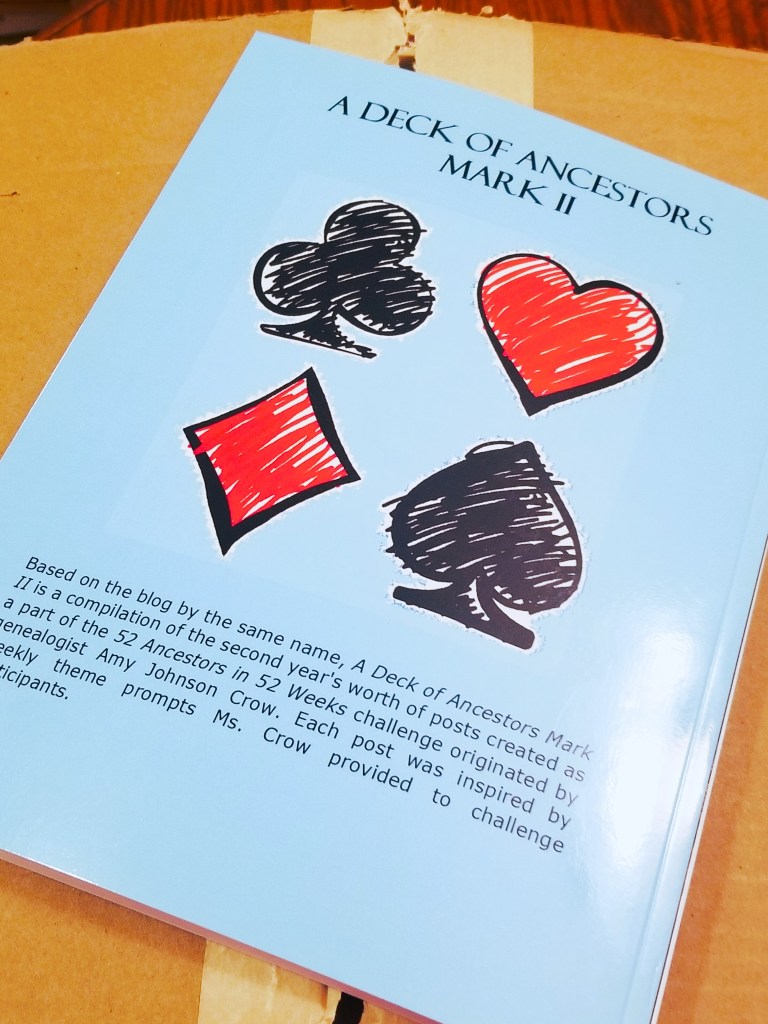
In the meantime, having completed a second full year of posts, I once again created a family history book based upon the compiled collection of entries for 2023! I hadn’t planned on another print edition, but as I started working on the electronic version I began to feel the need to be able to hold it and read it the old fashioned way. So here it is, A Book of Ancest0rs – Mark II!!

52W Mark III – Week 43: Lost Contact

This week’s prompt for the 52 Ancestors Challenge is “Lost Contact”. Losing contact is one way of losing a connection. Sometimes losing the connection might be necessary.

There are countless ways as to why a tree is such an excellent metaphor for genealogy. One comparison that might not be considered so often is that, like a tree, sometimes one’s family history might need some pruning.

As our research progresses over time and we add to our trees, we might discover that there are branches that no longer belong, which should never have been there in the first place. They might have been grafted to our trees early on, when we were new to genealogy, and did not realize that the connection was not supported by the evidence. There might be branches that seemed to be supported by the evidence that was available at the time, but new evidence comes to light that disproves the connection. When this happens, we have to cut that branch and end contact with the false connection.

I know that sometimes many genealogists have had a hard time making the cut. After all, until the connection was disproved, the individuals on the branch were considered family.

Over the years, I’ve made cuts now and again. Some small, some big. A few years ago I found a significant cut I had to make for my 6xG Grandfather, James Turner (1715-1773). James is on a branch of my tree for which I’ve had less interest than others over the years. He was the great grandfather of my 3xG Grandfather, Preston Thomas (1814-1877). While I’ve done quite a lot of research on Preston – and written about him here many times – I have not done much research on his lineage. Most of what I have is names and dates I gathered in the mid-90s during my earliest visits to the Family History Centre in Burnaby, and never really looked at again very seriously. It comes as no surprise to me when I have to prune some of the branches on Thomas’s line, including the parents of James Turner (which I wrote about on Week 8 of the 2023 52 Ancestors Challenge).

The other branches of my tree that I know need some more serious research and that might result in some pruning, or at least some revision, are the paternal lines of my maternal grandmother, Helen Burgess (1921-1984). I have great confidence in the information I have for Helen’s grandparents and her attachment to them. However, I have doubts about the lineage of her great grandfather Franciscus “Franz” Lerner (b. bet. 1835-1840 – d. 1876 or 1877) and her great grandfather Georg Jacob Anton (1843-1908).

My grandmother’s is a descendant of Germans from Russia, which I have written about here quite often. Those ancestors are my most difficult branches to research, for many reasons.

For Franz, I am confident in the identity of his paternal grandfather [Franz Ignaz Lerner (1759-abt 1816 or later)]. The main problem is identifying his father. Franz’s father is one of either two individuals:

  • Michael Lerner born 11 Jul 1793 in Malsch, Karlsruhe, Baden, wife Maria Eva Eberle born 1793 in Pleisweiler, Bergzabern, Pfalz (although possibly Eva Eberle), or
  • Bernard Lerner born 27 Feb 1798 in Malsch, Karlsruhe, Baden, wife Barbara Heil born abt 1799 in Niederlustadt, Germersheim, Pfalz.

As for Georg Jacob, he might not actually be Georg Jacob. It is possible he is actually simply just Jacob. As for Georg Jacob’s father, the name I have is Johannes Anton; however, he might actually have been Peter Johannes Anton. Not only are the names I have slightly off from some other indicators, the birthdates I have for both is in question. Interestingly, the identity of their spouses does not seem to be as dubious. This leads me to believe that there is no mistaken branch here; rather, it is simply a matter of properly identifying Georg Jacob and Johannes.

I will add that even when I prune a branch, I keep a record of it. If large enough, I create a separate database for it; if not, I keep notes in my research logs or in the notes for the child whose parents I ended up cutting. That way I don’t retrace my steps or fall into old traps. Moreover, should it turn out the information actually was correct, I have it handy and can graft the branch back onto my main tree.