52W Mark III – Week 26: Family Gathering

Save the date – July 25, 2026 – for the Steeves Family Reunion in Steveston, British Columbia!
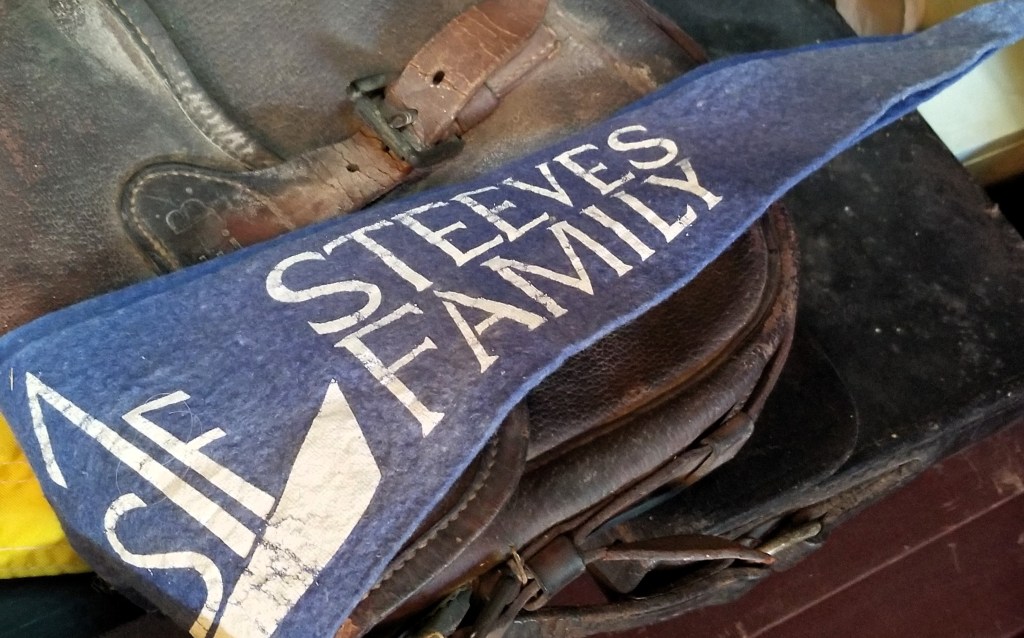
If you’re a “Steeves” in North America, odds are you’re a direct descendant of Heinrich Stief and Regina Stahleker. In 1749, they emigrated from Münsingen in the Duchy of Württemberg (now southwest Germany) and settled in Pennsylvania. There they had seven sons. 250 years ago, in 1766, under land grants arranged by Benjamin Franklin and others, they moved to what is now New Brunswick and were amongst the original settlers of Moncton. The family later settled in Hillsborough, New Brunswick and there they started multiplying.

Apparently there are over 200,000 direct descendants of Heinrich and Regina. Our kids are two of them! At a family reunion in New Brunswick in 2016, there was an attempt to set a Guinness World Record for largest gathering of individuals with the same last name. Unfortunately, the attempt fell short.

Notable Steeves descendants include the Hon. William H. Steeves (one of the “Fathers of Confederation” of Canada), Jack Layton (late Leader of the Opposition in Canada’s parliament), Laurence J. Peter (author of The Peter Principle), and Janette Oke (author). A few years ago, I gave a presentation on “Law and Genealogy”, using my sons’ Steeves connection as a research example. Through sheer serendipity, the presenter who spoke before me was also a Steeves descendant, John Steeves, a now-retired Justice of the B.C. Supreme Court. Right before the program started, I leaned over and quietly asked him if it was okay to incorporate him into my presentation.
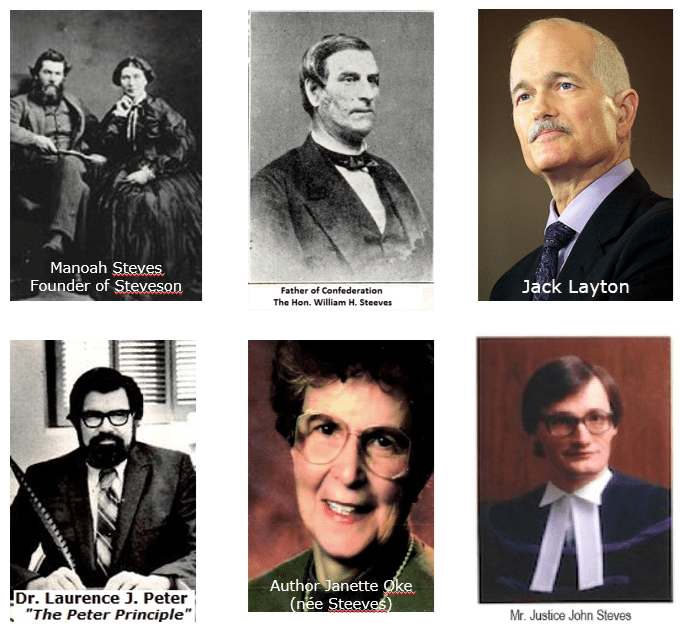
Coincidentally enough, our Steeves connection does not end there. Several years ago we moved to Steveston, a fishing village that is now part of  Richmond, B.C. The village was founded by Manoah Steeves, who left New Brunswick with his wife Martha Taylor, dropped an “e” from his surname, bought land in the southwestern corner of Lulu Island in 1877, and established a dairy farm.
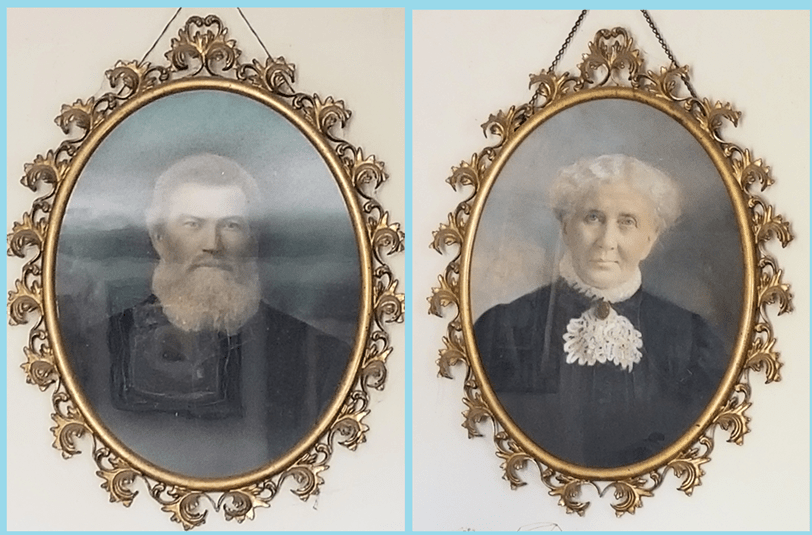
Manoah and Martha Steves

Nearly all of Lulu Island is now part of Richmond. In 1880, Manoah’s son William Herbert obtained a crown grant of the land that became the townsite of Steveston.
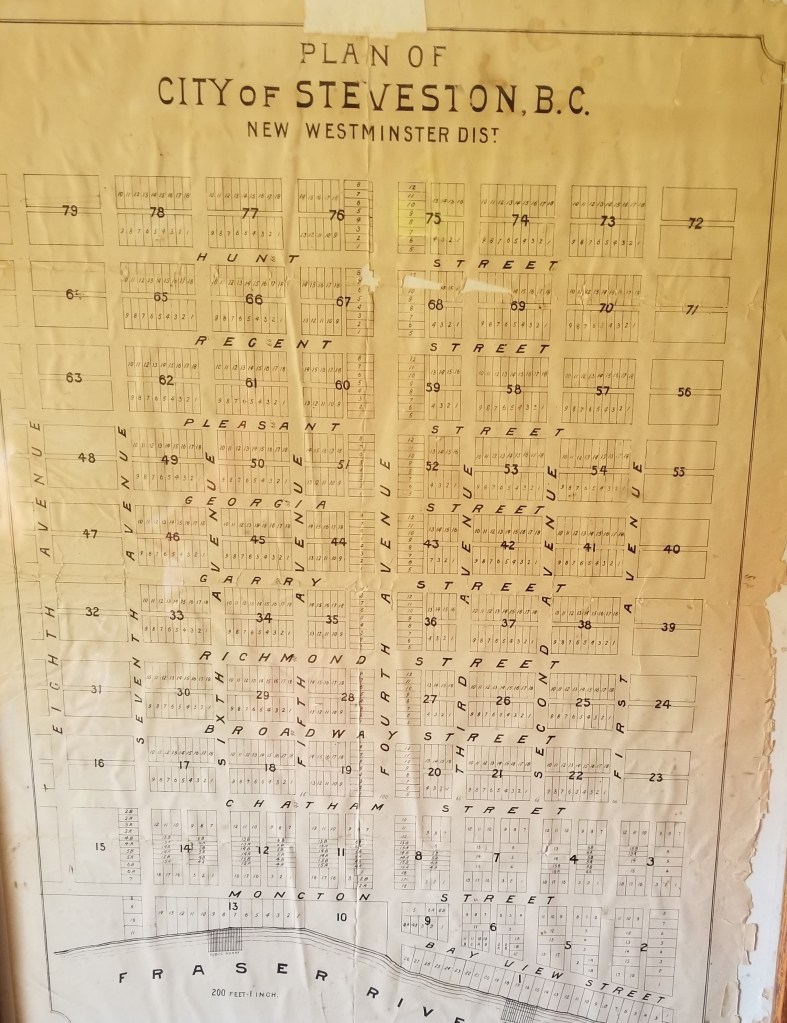
The streets in our neighbourhood share the names of Steeves relatives and places in New Brunswick. Manoah’s descendants still operate a farm on the land he originally purchased.

One of the houses on the property was built in 1917. Harold Steves, Manoah’s great grandson, lives there. Harold served one term as a Member of the Legislative Assembly of British Columbia and many terms as a Richmond city councillor. He is also a life-long farmer and an active conservationist – he was a driving force behind the creation of the Agricultural Land Reserve in British Columbia.

Harold has turned part of the house into a private museum. In addition to artifacts reflecting all aspects of his and the Steves family history of farming, politics, and conservation activism, Harold has turned part of the home into a recreation of the Hong Wo Store, a general store that had been established in 1895. Beside the Hong Wo store, Harold has recreated the canteen his parents operated during World War II, serving the soldiers stationed at a base beside the farm.

Manoah Steeves Elementary School.

Harold opened up his museum to the general public earlier this year as part of “Doors Open Richmond”, a city-wide festival of culture and community operated by the Richmond Museum. Needless to say, we couldn’t pass up the opportunity. I could have spent days in there. His bookshelves alone could keep me occupied for weeks. Plus it was a chance for the boys to meet their fourth cousin three times removed! 😉
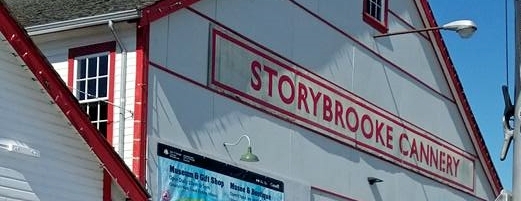
Steveston, B.C., or as you might recognize it from television, Storybrooke, Maine.

52W Mark III – Week 25: Storyteller

I’ve wracked my mind, and I cannot think of who the storytellers in our family might be. However, I have no problem identifying the storykeepers. They might not spin yarns or be captivating narrators, but they are always willing to share the family lore if asked. I wouldn’t call my mother a good storyteller, but I can absolutely count on her to provide the answers to questions I might have about even the most obscure bits of familial trivia.

I’ve been keeping the family history since I was in elementary school!

While I don’t consider myself a storyteller, I definitely count myself amongst the family storykeepers. I think by definition, genealogists are storykeepers. It’s not often that I’m asked, but I’m more than happy to share the stories whenever someone in the family should ask.

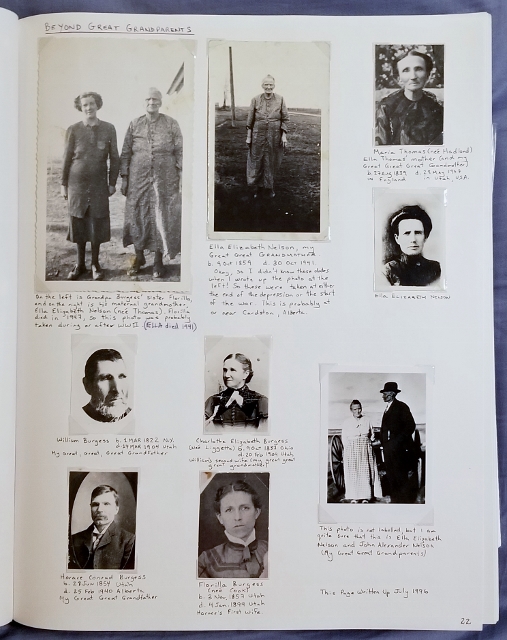
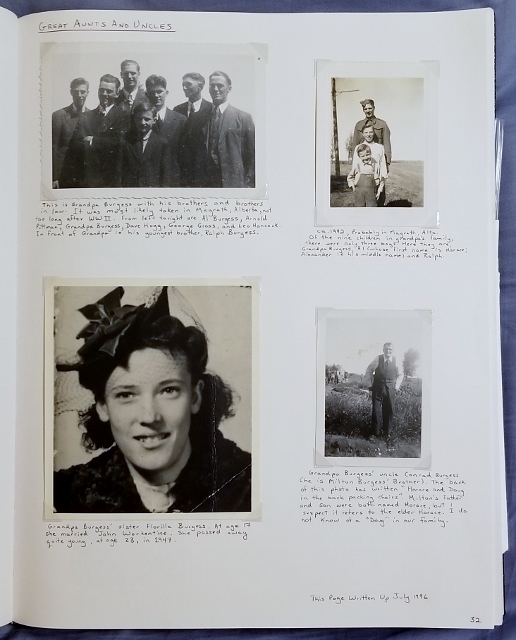
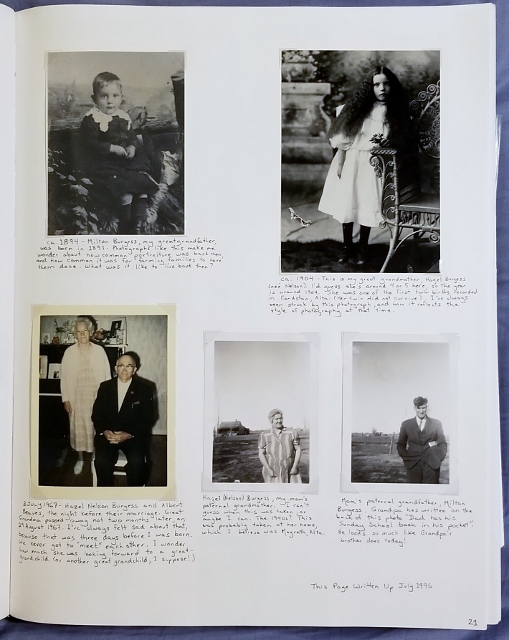
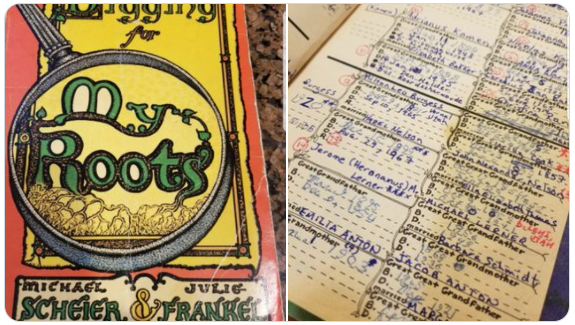
Pages from a family history photo album I made.

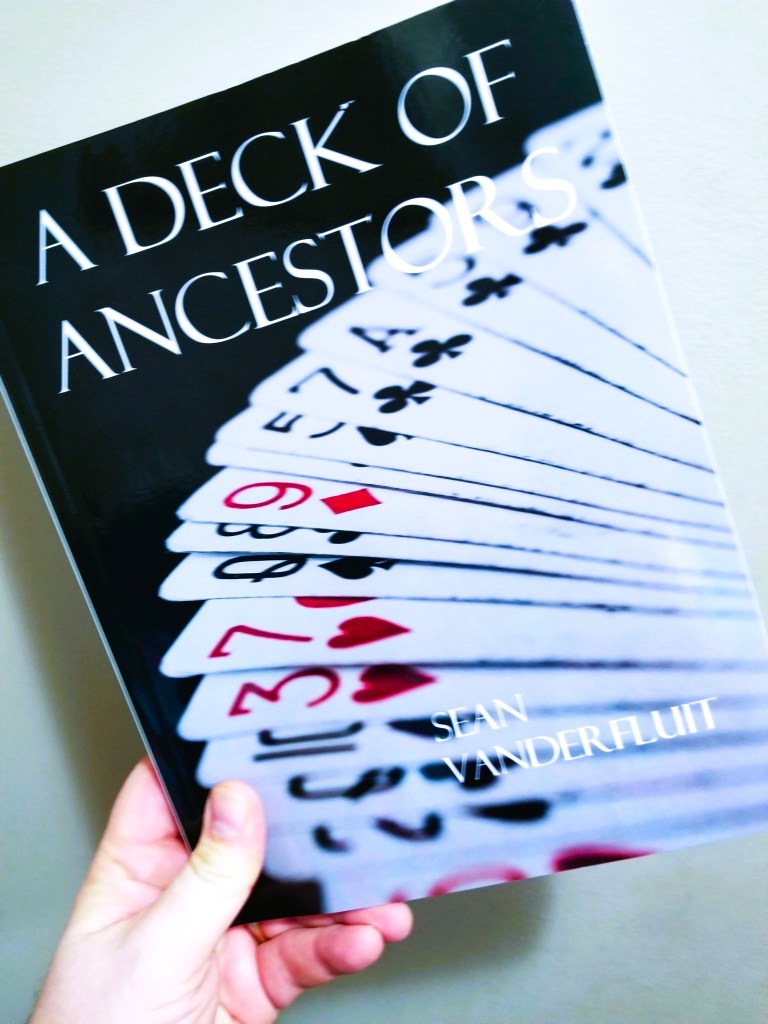
I will concede, however, that maybe I have become a storyteller. This blog is now two-and-a-half years old. This is my third time participating in Amy Johnson Crow‘s 52 Ancestors in 52 Weeks and my 129th post as part of the challenge. I’ve even turned my first year’s set of posts into a print book and have nearly completed turning the second year’s worth into a digital book.

I guess that makes me a storyteller!

52W Mark III – Week 24: Hard Times

It was through hard times that my grandfather came to own his first dog.

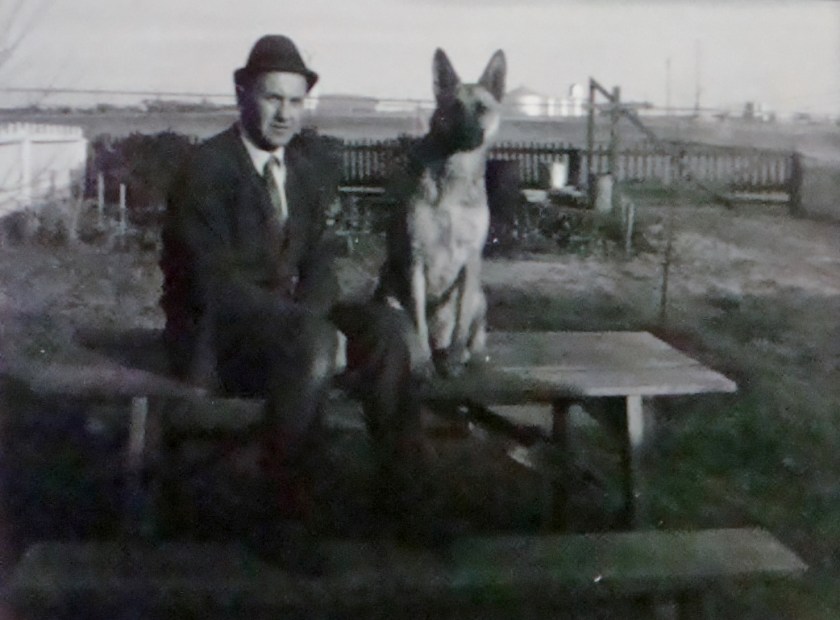
My grandfather, Adrianus “Arie” van der Fluit (1923 – 2002), loved dogs. When he was a teen in the Netherlands, he supplemented his income training dogs. After moving to Canada, in the 1950s and 1960s, he even trained dogs for the police. As long as I can remember, my grandfather always had at least one dog, usually a German shepherd. My favourite was Sheba, the first dog of his that I’m able to remember. He had dogs until the day he died at age 79, still training them even after he lost his foot due to complications associated with diabetes.

My grandfather with Sheba, sometime around 1970.

While I would have thought he had a dog ever since he was little, he told me that he did not have one until he was fifteen. It came to be during, and because of, hard times – the Great Depression. However, based on the story he told me, my grandfather could have gotten his first dog anytime after he was eight to when he was in his late teens.

Arie’s father, Johannis Albertus van der Fluit (1894 – 1932) died when my grandfather was eight years old. His mother, Theresia “Teetje” Pater was left a widow. Sometime after Johannis died, Teetje’s younger brother Johannes “Jan” Pater (1900 – 1948) moved in with the family. I always understood it was soon after Johannis died, which would make sense. Teetje was left a widow at age 37, with eight children. I am sure it would have been of great help if Jan moved in with his sister as soon as her need arose.

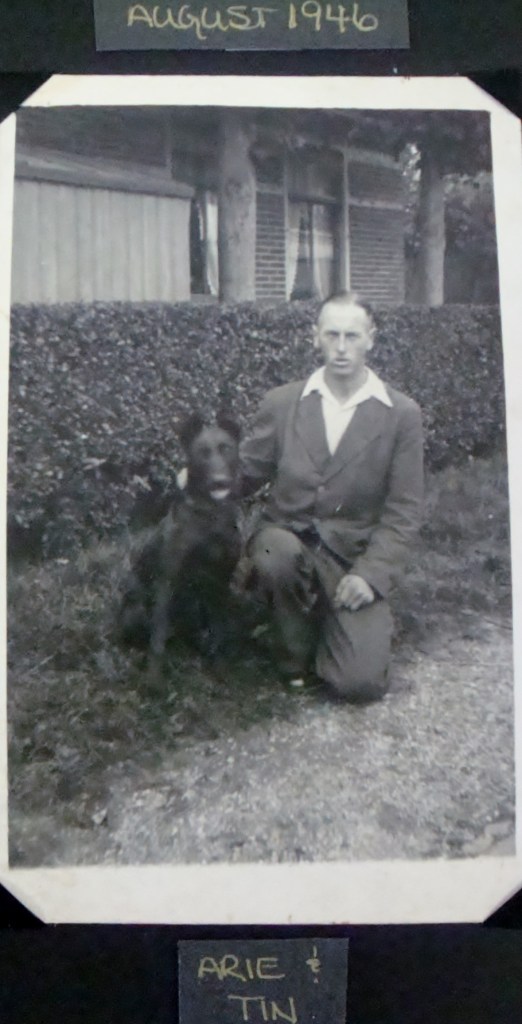
My grandfather in the Netherlands, a few months before he married my grandmother.

Jan had a dog, but Arie’s mother detested dogs. She insisted the dog go. However, because of the depression, it was difficult to even give a pet away as it was too expensive to keep one fed. Jan decided to drown the dog. Arie witnessed this. He swore to himself that no dog would suffer with him around, so he even got himself one.

This, of course, caused a conflict with Arie’s mother. She refused to allow a dog in her household, so Arie moved out. As his two older brothers were out of the house, and the other children were too young, Arie was the primary breadwinner for the household. Faced with the loss of the family’s main income, after a few weeks Arie’s mother relented and allowed the dog in the house.

Needless to say, the timeline is a bit problematic. If Jan moved in with his sister’s family shortly after Johannis died, my grandfather’s story would have taken place before he was ten years old. The most apparent way to reconcile the chronology is if Jan moved in with his sister when Arie was 15, around 1938. I don’t know much about Jan and I don’t know of any life events that would have caused him to move in with Teetje other than the death of her husband. Jan never married, so I can rule out him becoming widowed as a catalyst for change. The depression was still causing hard times – with harder times shortly over the horizon – so that part of the story still works.

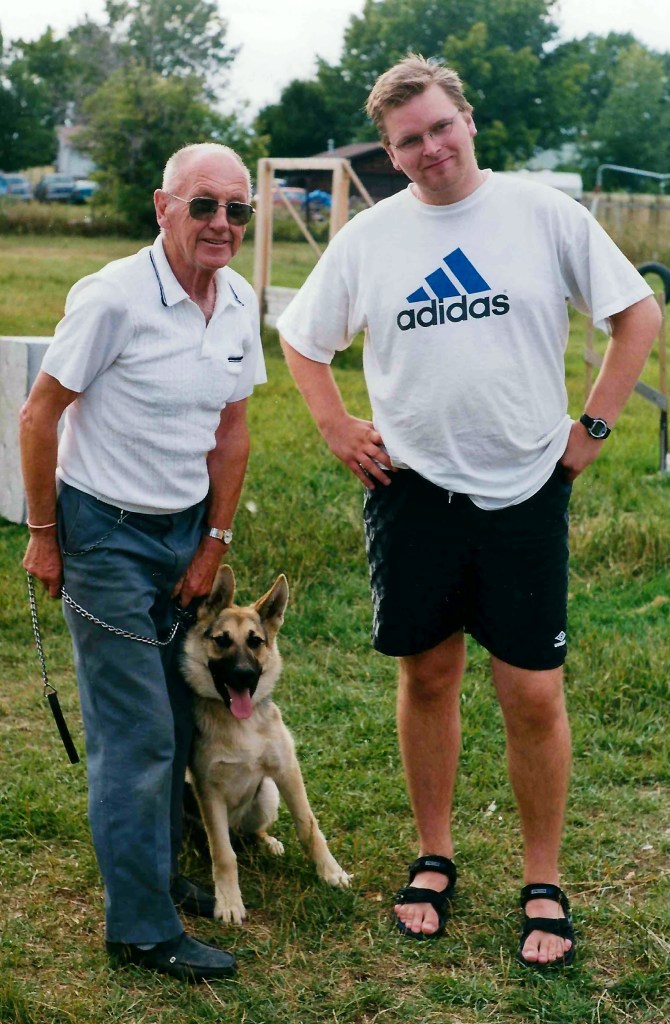
My grandfather in Raymond, Alberta, in September 1999, age 76, with Dekker, along with my brother Trevor.

52W Mark III – Week 23: Health

While I descend from a long line of farmers and labourers, I sure have a lot of healthcare providers in my family tree!

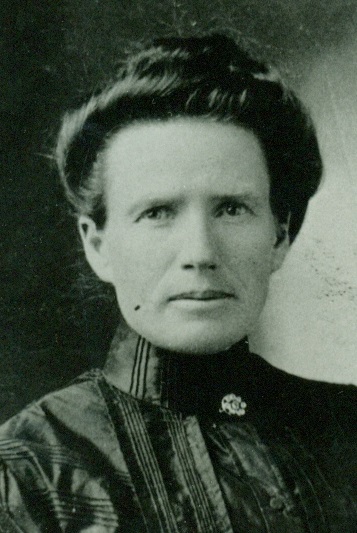
I’ve written about my grandmother, Helen Lerner, who ended up becoming a hospital lab technician instead of attending Normal School to become a teacher. I’ve also written about my great great grandmother, Ella Thomas, who was a midwife for over 40 years. I have a sibling who is a physician, and her mother-in-law is also a prominent well-known physician. One of my siblings is a pharmacist. I have two aunts who were nurses. I have a sister-in-law who works in healthcare public policy and another who is a nurse practitioner specializing in mental health. Even my occupation is part of the healthcare system.

My wife’s family is also replete with people in the healthcare industry. There are numerous physicians in her maternal line, including her great grandfather who was a colleague of Dr. Frederick Banting, who co-discovered insulin. In fact, his daughter was one of Dr. Banting’s first patients to receive the medication. Many of the physicians in my wife’s tree served as medics in World Wars One and Two. Her grandmother also drove ambulance for the Red Cross during World War Two.

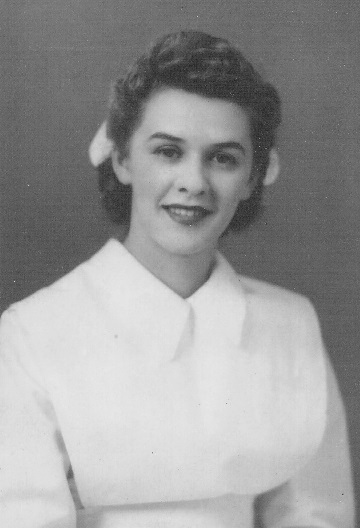
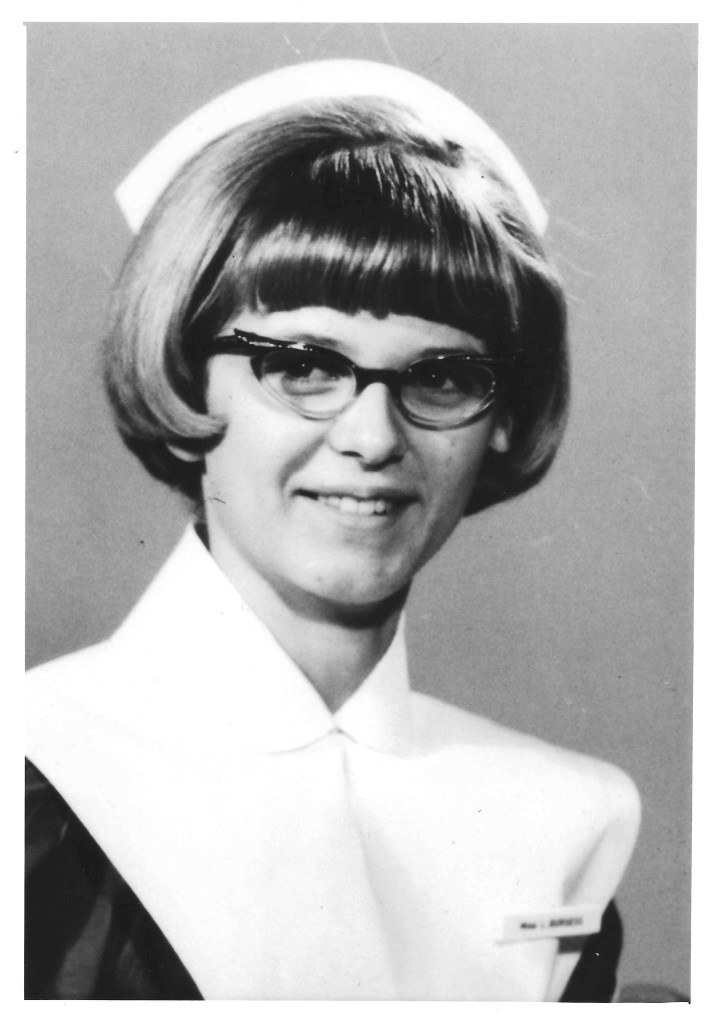
My own mother went into nursing. However, she was only in the training program for four months. She had to leave the program because at the time you could not be married or have children. That was about to change. My parents married after my mother left the program, and I came along not too much later.

My mother in nursing school