52W Mark II – Week 24: Last One Standing

Are you an “endling”?
This week’s 52 Ancestors Challenge is “Last One Standing”. The suggestion is to write about an ancestor about whom you feel you are the only one researching. I am sure we all have someone for whom we’re the only researcher. However, to me, the first thing to come to mind is someone who is the last of a family line.

At the monthly general meeting of the BC Genealogical Society in December 2022, the guest speaker was David Landers. He gave a fascinating talk on the topic of the last of a family line, which he termed an “endling”. The discussion after his talk proposed applying “endling” to other genealogical ends, such as when a senior branch of a family dies out, leaving only the cadet lines, or the end of a surname, such as when a family only has daughters.

Mr. Landers acknowledged that he had not come up with the term, but he certainly was a strong advocate for adopting it. He even applied the term to himself, as he did not have children, and his family line was ending with him.

Unfortunately, I have been unable to find anything online regarding Mr. Landers or anything relating him to the topic. I only have my recollection of his presentation to rely upon. What I do remember was that he identified the source of the term as it relates to genealogy. In particular, I remember him saying that the original proponent of the neologism wrote to a magazine to advance the cause of employing “endling”.

While it might not be the same place where Mr. Landers discovered the word, I was able to find this article at The New Yorker, What Do You Call The Last of a Species?, which fits my recollection of Mr. Lander’s talk. The article credits a physician in Georgia, Robert Webster, with coining the term.

Dr. Webster contacted Merriam-Webster to propose adding “endling” to its dictionary, but was told a word would need to regularly appear in print before it could be considered for inclusion. Taking up the challenge, Dr. Webster took out an advertisement in a medical journal to suggest adoption of the term. Later, Dr. Webster and a colleague wrote a letter to Nature, arguing the “need for a word in taxonomy, and in medical, genealogical, scientific, biological and other literature, that does not occur in the English or any other language.”

I believe “endling” is a perfectly cromulent word and would love to see its adoption for genealogical use!
The 1931 Canadian Census is Out!

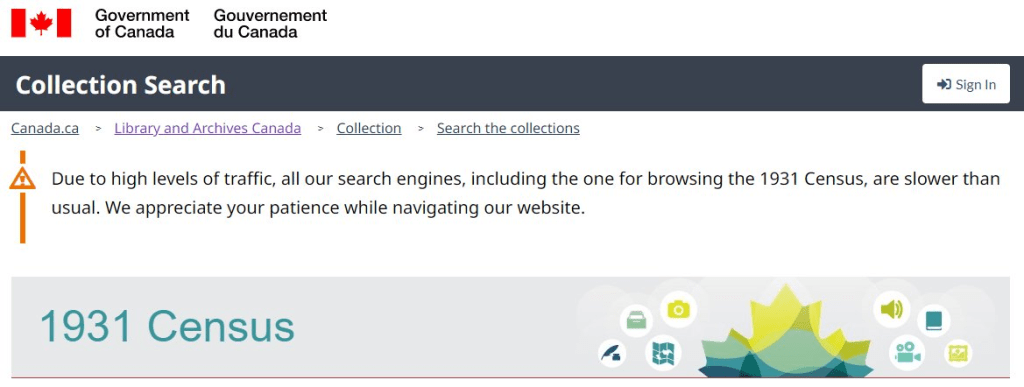
Last week, on June 1, 2023, the Library and Archives Canada released the 1931 Canadian census. The site was overwhelmed at first, but now it seems to be operating without any problems. As of now, the LAC only has the raw images, in that they are not indexed. You can search the images by Province, District, and Sub-District. Fortunately, I knew where to look for many of my ancestors and found them without any problem.

The Library and Archives Canada page for the 1931 Canadian Census on June 1, 2023

Yesterday, Ancestry Canada went live with a searchable indexed version of the 1931 census. It enabled me to find some of my more elusive family members, particularly some of those in urban areas for whose sub-districts I could not quite identify.

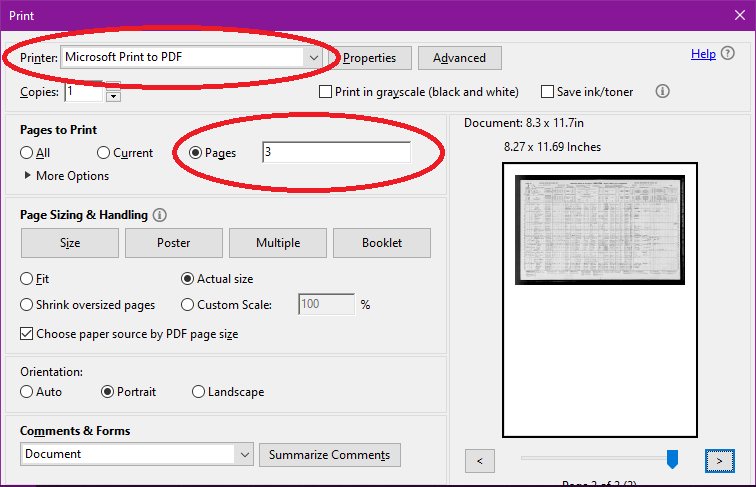
Both the LAC and Ancestry.ca allow you to download census records in jpg format. The LAC also allows you to download entire sub-district files in pdf format. What I’ve done is download both versions. For the pdf version, I’ve used the “print to pdf” function to create a file for the single page I am interested in.

I save the single page with my family members with a unique file name, using the system I established for myself many years ago.

The LAC website seems to be better set up for those who are searching in French, looking for francophone ancestors. For now, Ancestry recommends searching first in English and then again in French if the initial search was unsuccessful.

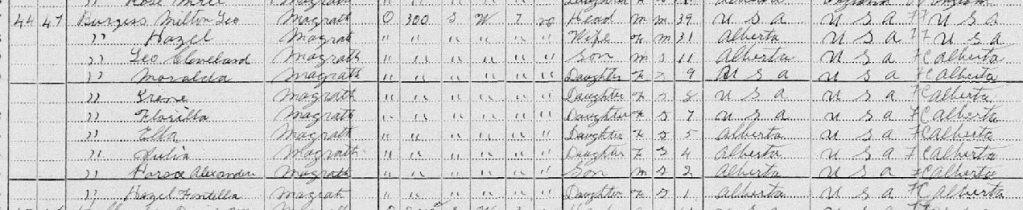
So far, the biggest surprise was learning that my great aunt (who’s still alive) is a year older than I thought she was. The census was taken on June 1, 1931. Everything I had so far indicated that my aunt was born in October 1931, which was after the census was taken, so she shouldn’t have been there. However, the entry for my great grandparent’s family includes my great aunt, saying that she was 8 months old at the time. This means she would have been born in October 1930.

My mother’s maternal grandparents, and her mother Helen. My great grandparents separated later in life. I don’t have an exact date, but the fact they’re still together here is consistent with my theory that they separated around 1937. I guess I’ll have more evidence in 5 years, when the 1936 prairie census come out, and more in 10 years, when the 1941 census comes out.

This is the second census in which my maternal grandfather, Leo Burgess, appears. I see the enumerator was much more careful than his predecessor who prepared his entry for the 1921 census, which for some bizarre reason stated my grandfather was Dutch. Wrong grandfather.

This census includes my grandfather and all his siblings, other than his youngest brother Ralph, who was born in 1935. His youngest sister, Fon, (seen here as Hazel Fontella), was an avid genealogist. She missed being able to see herself her by 18 months.

One of the most interesting things about the 1931 census was that it asked whether the household owned a radio. It was no surprise to me that neither of my grandparents’ families owned a radio. However, I was surprised to see that another member of the extended family, who was very successful and well-off, did not. My suspicion was that he was not interested in such new-fangled things like radios.

52W Mark II – Week 23: So Many Descendants

The theme for this week’s 52 Ancestors Challenge is “So Many Descendants”. The approach I’ve chosen to take is to look at immediate descendants – children only – rather than foray into who in my tree might have the most grandchildren and beyond.

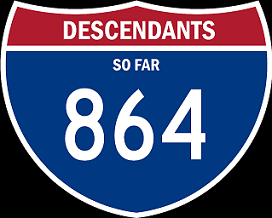
That said, I will take a moment to note my great x10 grandfather, Dirck Jansz. Dirck is the furthest back I’ve traced my direct paternal line, “van der Fluit”. One of my projects has been to find all known descendants of Dirck, a project which of course is nigh impossible and will never finish. That said, I’ve found about 864 direct descendants of Dirck.

Onward and upward, Dirck.

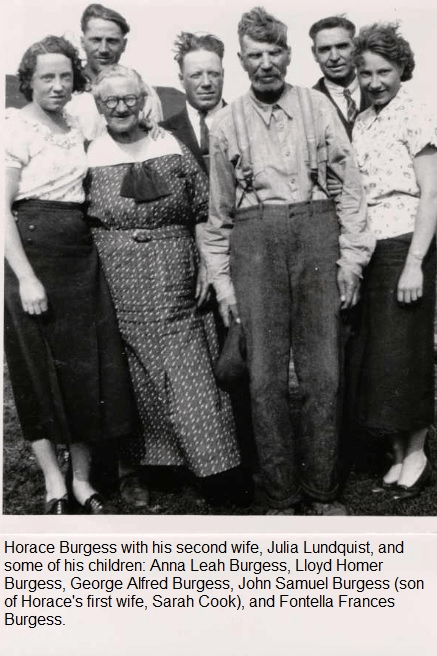
Of course, the person with the most children in my tree is a father. My great great grandfather, Horace Burgess, had nineteen children. He had nine children with his first wife, my great great grandmother Sarah Cook. Their eight child, and youngest son, was Milton Leo Burgess, my great grandfather. After Sarah died, Horace remarried, to Julia Josephine Lundquist, with whom he had ten children.

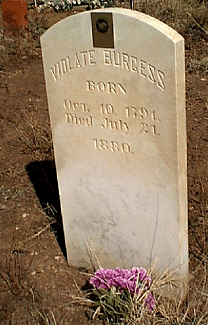
The woman in my family tree who appears to have had the most children is Horace’s paternal grandmother, Violate Stockwell. Violate and my great x 4 grandfather, William Burgess Sr., had 12 children, including my great x 3 grandfather William Jr. Violate had her first child, Harrison Burgess, a year after she married William. Violate was 19-years-old when Harrison was born. Violate was 42 when her last child, Vilate, was born. There is a 22-year difference between Harrison and Vilate. In fact, Harrison had been married for two years when his youngest sister was born.

Forget about so many descendants – so many kids! I highly doubt Harrison was put to work helping his mother with his younger siblings. I’m willing to bet that task fell upon the eldest of his sisters, Rosina, who was four years younger than Harrison. Needless to say, times have changed. My mother absolutely put me, the eldest of five, to work helping her with the household and with my younger siblings. It certainly provided me with plenty of life skills I am grateful to have.

52W Mark II – Week 22: At the Cemetery

During my last visit to the Netherlands, I was fortunate to visit a graveyard where several of my relatives are interred. I say fortunate, because in the Netherlands graves are routinely cleared after a few decades.

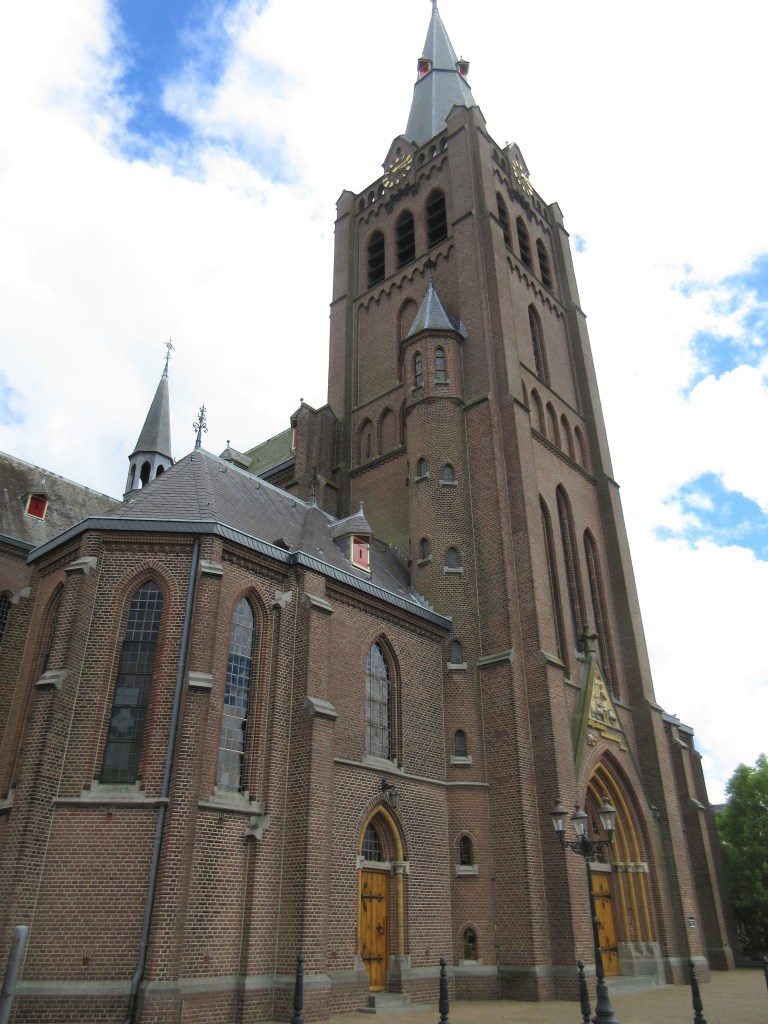
Kerk van Sint-Joannes de Doper, Noord-Scharwoude, Noord Holland, Netherlands

I was staying with a cousin whose home is only a few hundred metres from the Kerk van Sint-Joannes de Doper (Church of Saint John the Baptist – link is in Dutch). I walked past it every day. One afternoon my father and I, along with a few of our cousins, explored the church and the adjacent graveyard, Het Parochiële Kerkhof Sint Jan de Doper (The Parish Cemetery of Saint John the Baptist – link is to Find a Grave).

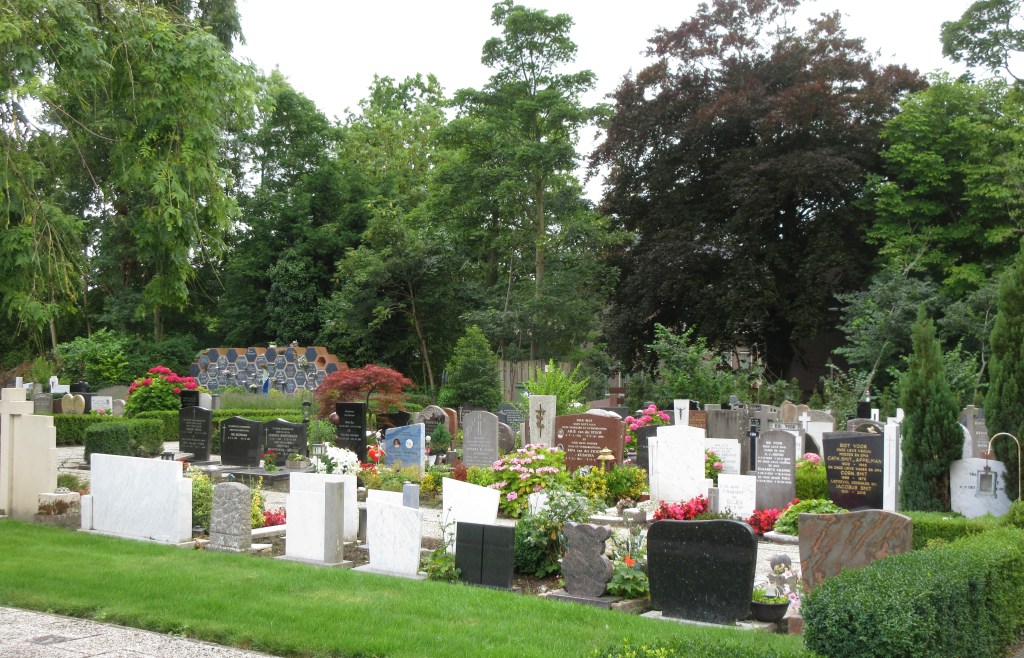
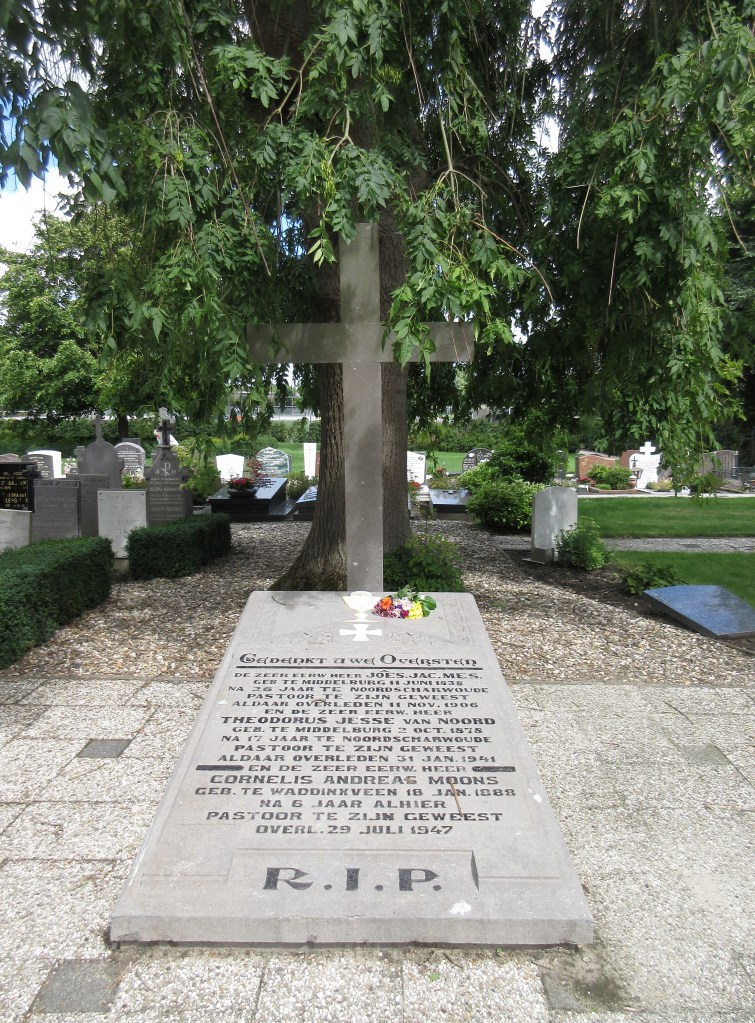
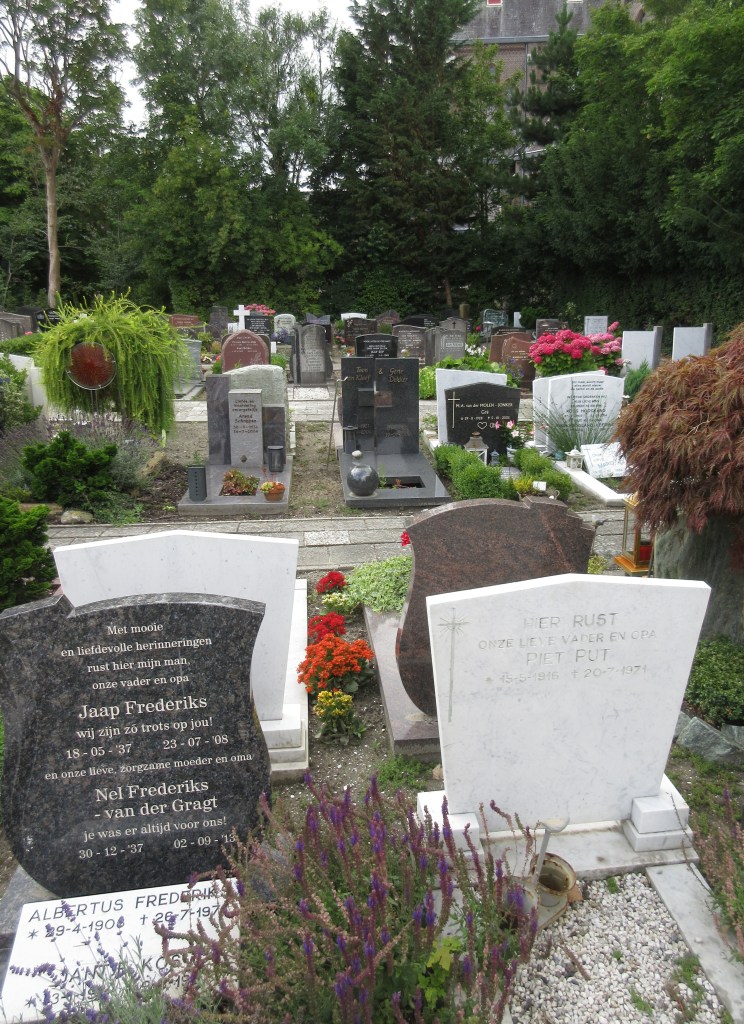
Het Parochiële Kerkhof Sint Jan de Doper (The Parish Cemetery Saint John the Baptist), Noord Scharwoude.

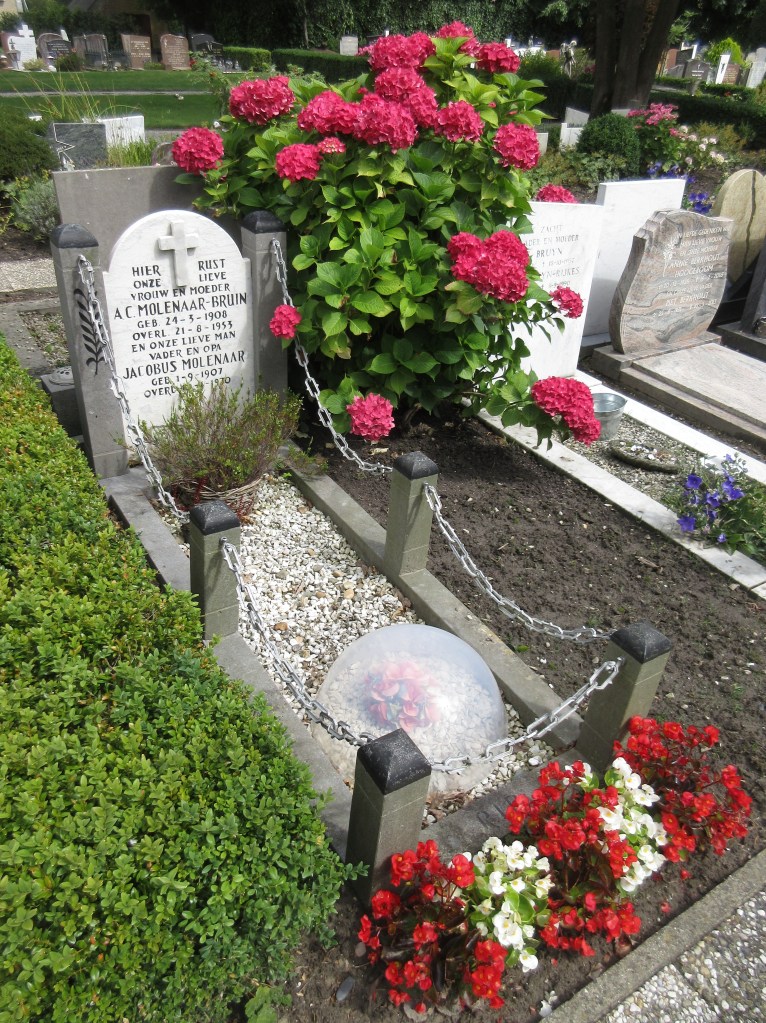
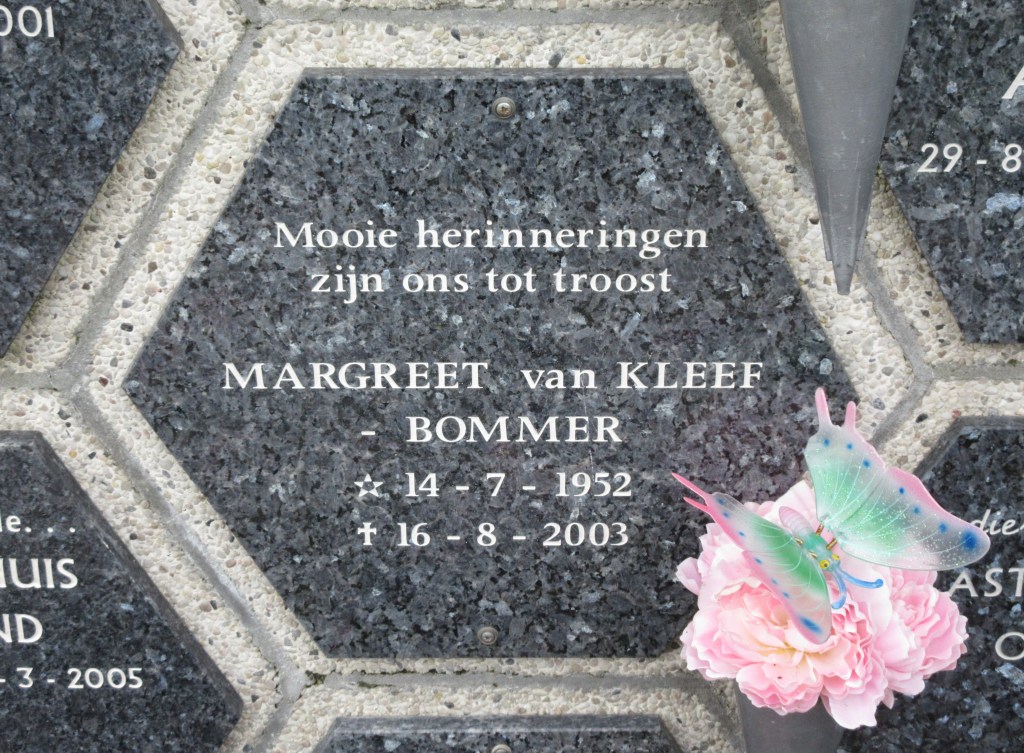
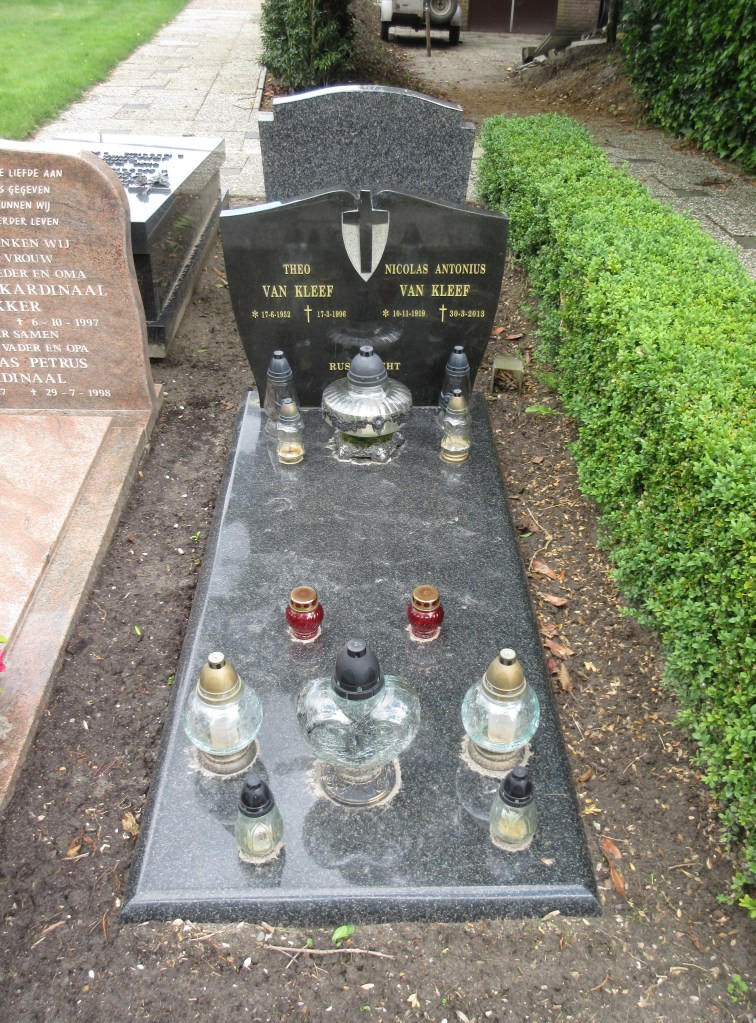
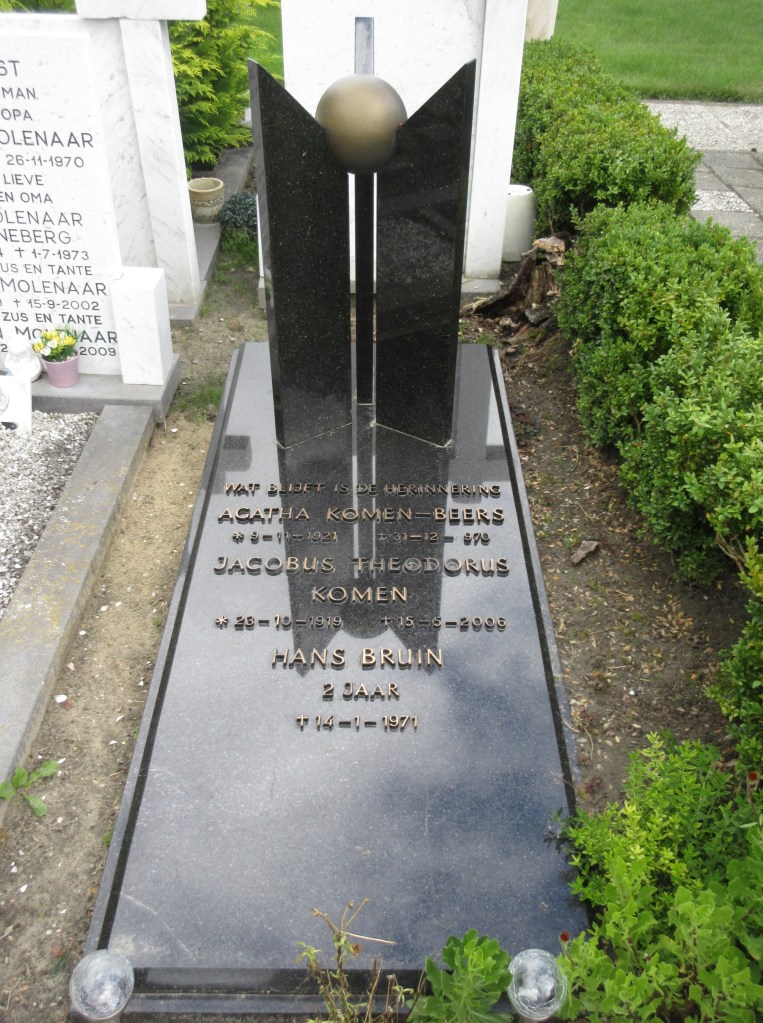
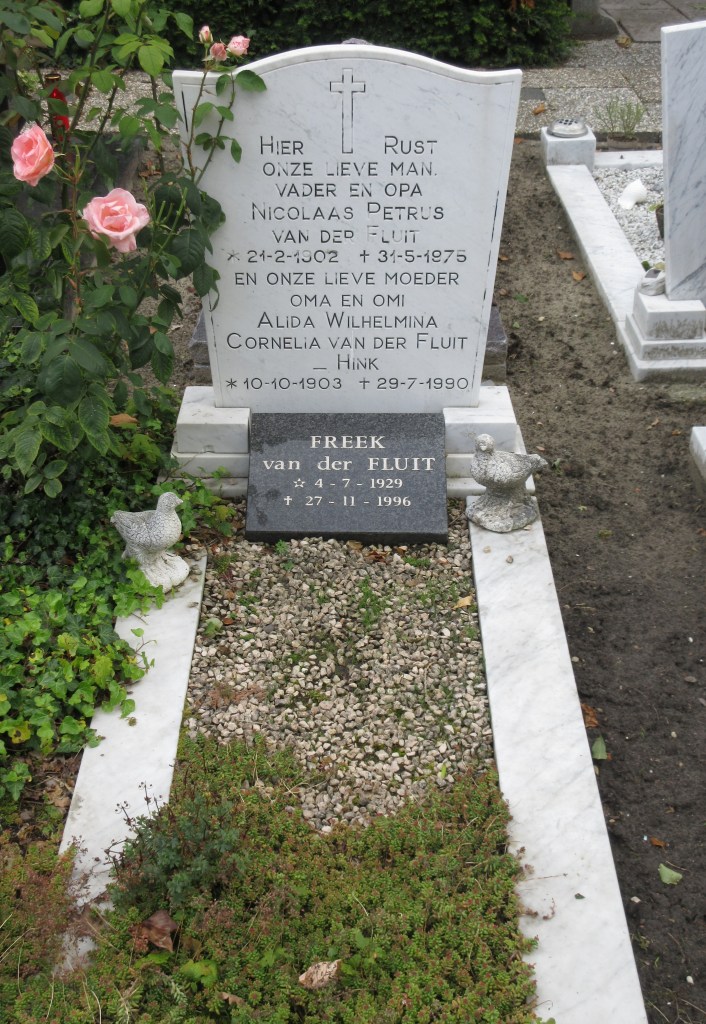
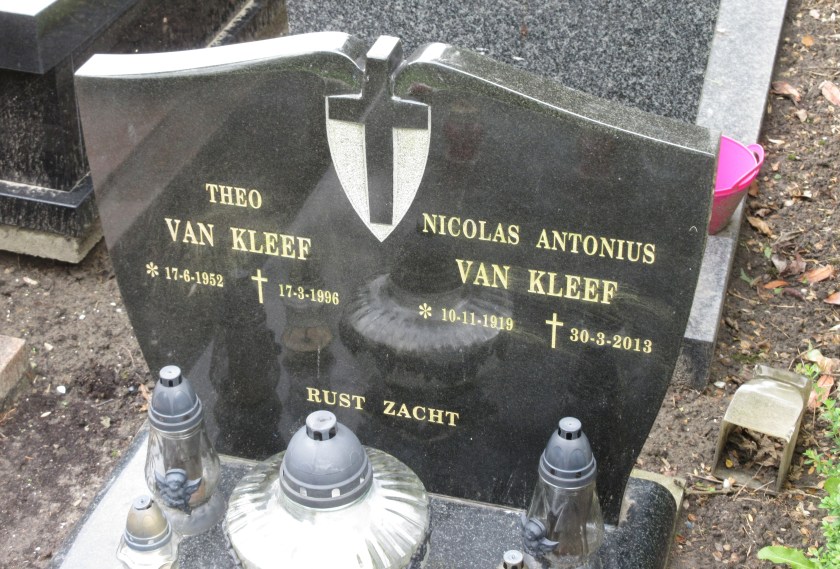
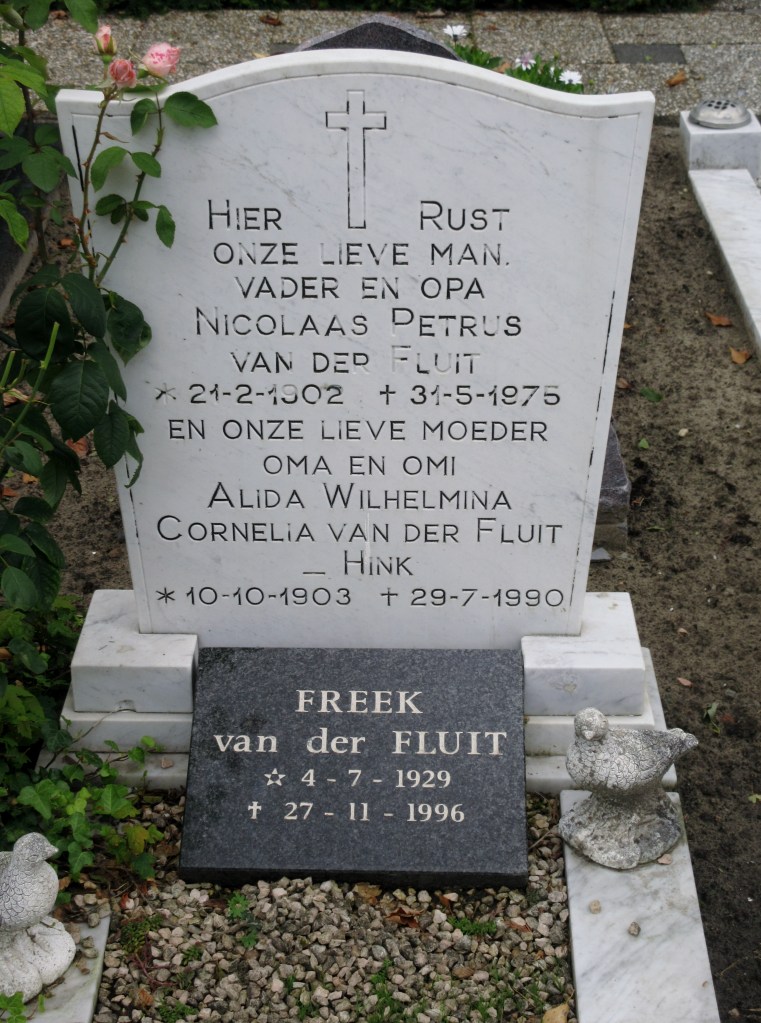
Here are a few of the graves of some of some of my extended family, several of whom I had the pleasure of knowing, including my great uncle, Nic van Kleef.

(As cemeteries are a big part of genealogy, it should come as no surprise that it forms a common theme for the 52 Ancestors Challenge. For Week 46 of the challenge in 2022, the theme was “Tombstones“.)