52W Mark II – Week 27: The Great Outdoors

Whenever I pointed out to my father how my younger siblings always got things that I was never allowed to have, he’d say, “at least I took you fishing!”

That answer sufficed for the seconds it took me to remember… “Dad, they hated fishing!”

Some of my earliest memories are going fishing with my father. We also did a fair amount of camping, but far less frequently. Fishing was our favourite outdoor activity. Growing up, we lived all over western Canada, so we’ve fished in all sorts of lakes and rivers, as well as the ocean. During trips to Alberta to see our grandparents, we’d often go fishing with my maternal grandfather as well.
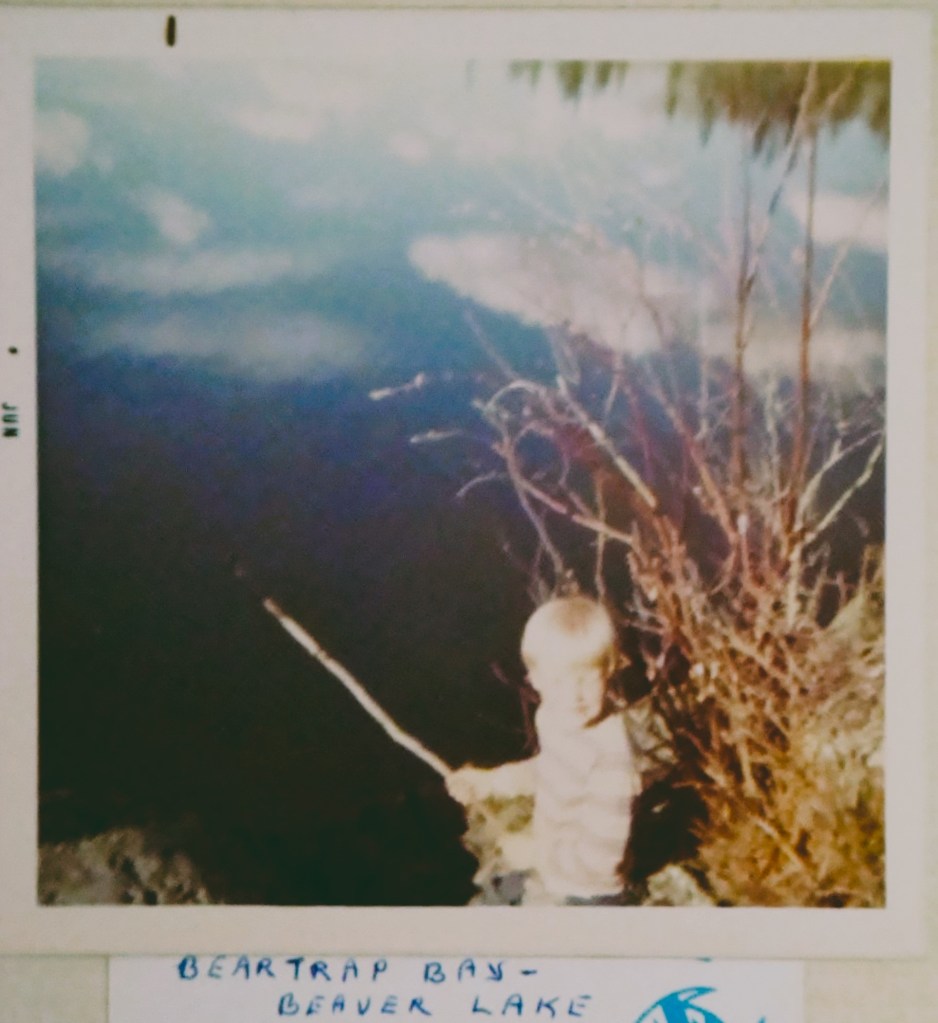
I was four and a half. We were living in Creighton, Saskatchewan at the time. We must have been on a road trip to my parents’ friends, who lived in southern Manitoba.

While we have angled for all types of fish, my favourite catch was always pickerel, which is what walleyes are called in western Canada. We also caught a lot of jackfish, which is another name for northern pike.
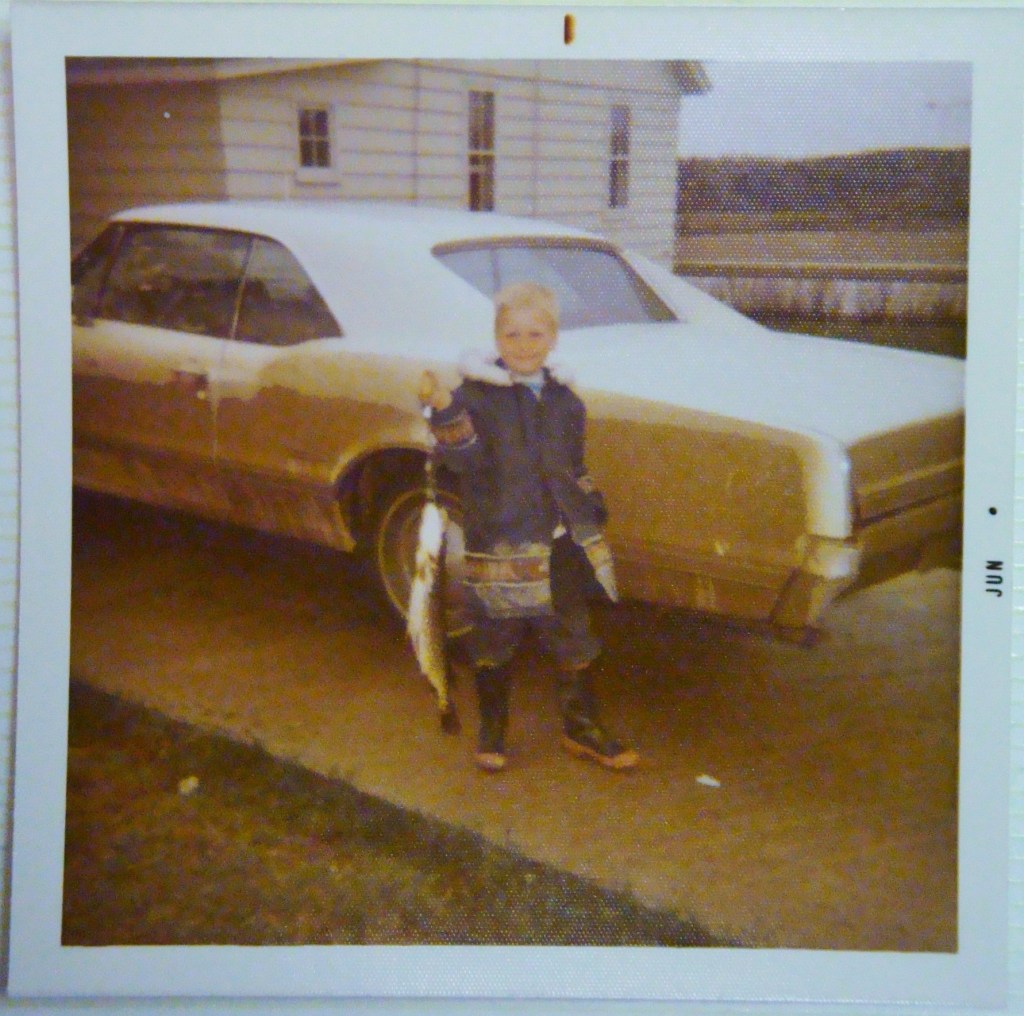
A month later, closer to my fifth birthday. In our driveway in Creighton.

One of the greatest controversies in my family involved pickerel. When we lived in North Battleford, Saskatchewan, one of our favourite fishing destinations was where the Battle River meets the North Saskatchewan River. In late summer, water levels were so low that a large sandbar developed, forming a sort of island. Water levels often were low enough that you could wade to the “island”, which took you to a particularly good spot where the pickerel seemed to gather.

During one of those late-summer fishing expeditions, my brother caught two particularly large pickerel. However, he was about four years old at the time, and not strong enough to reel them in – one of the great things about pickerel is the fight they put up despite their size – so my father had to help them.
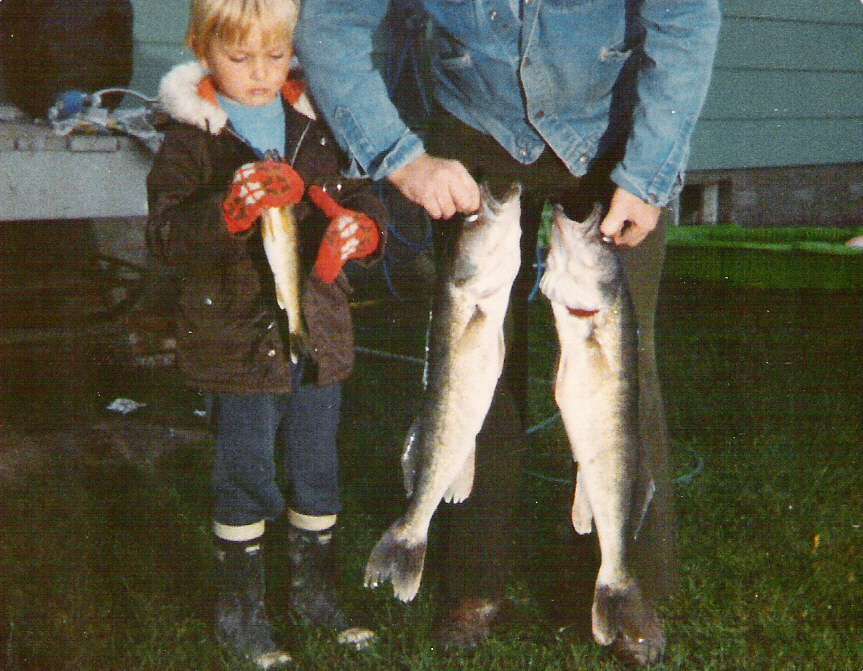
My brother and father with the controversial pickerel – along with one my brother was able to reel in himself.

Pickerel are not a large fish by nature, so the eight-pounders my brother caught were pretty impressive. So much so that my father decided to have them mounted. However, in the decades that followed, they both claim that they caught the fish and have tried to take sole credit. In recent years, they’ve reached a compromise, and both recognize each other’s role in the achievement.
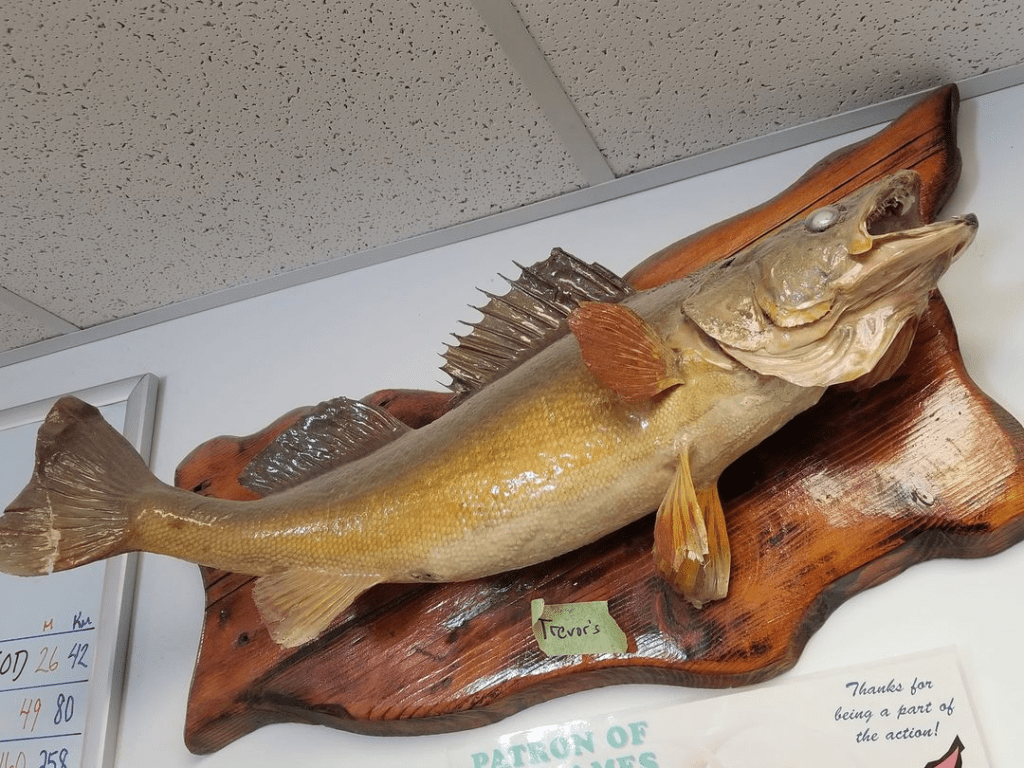
One of the two infamous controversial pickerel.

I also much prefer freshwater fishing to saltwater. However, one of my most memorable fishing trips was when I was in high school. At the time, we were living in Terrace, British Columbia. My father had a friend in Prince Rupert who had a fishing boat, who invited my father, me, and one of my brothers (he of pickerel fame) out one weekend. (My youngest brother was an infant at the time, so he wasn’t invited.) I’m sure my sisters were welcome to join us, but they had no interest.

Quickly after we started, not far offshore, we dropped some crap traps, and then set out for open water. Our goal was halibut, and we were quite successful. One of the best parts of the trip was that, at various times, we were able to see the coast of Haida Gwaii and Alaska. The most amazing part was seeing porpoises swimming along side us during part of the voyage. I’m sure my brother’s most significant memory of the trip was being nauseous.
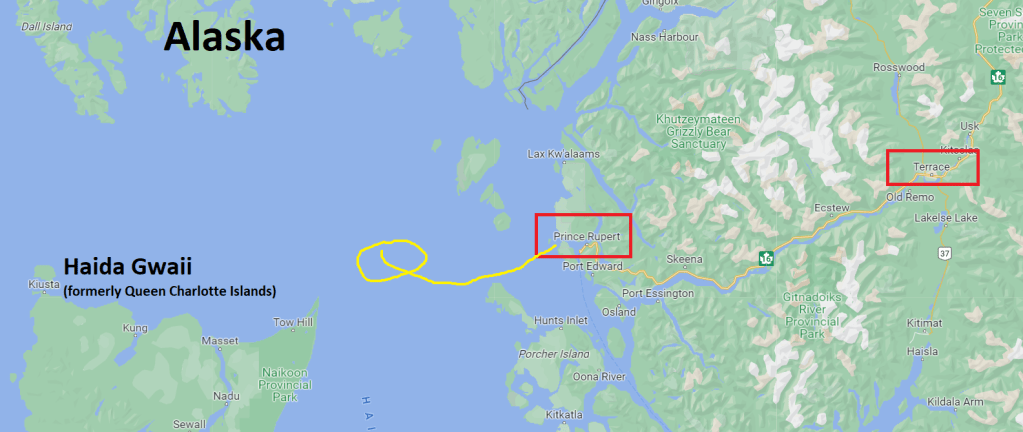
A rough approximation of our fishing trip. The red box on the coast is Prince Rupert, the one inland is Terrace, where we were living at the time.

52W Mark II – Week 26: Slow

Talk about “slow”, this week’s theme for the 52 Ancestors Challenge. It has taken me forever to think of anything that suits, no matter how broadly I interpreted the word. After alternatively wracking my brains and sleeping on it, I was reminded of something my great grandmother, Emelia Anton, once said.

My great grandmother lived to be 94. While she experienced some dementia in her last year or so, she remained active. She regularly participated in bingo outings with my grandfather (her son-in-law), playing multiple cards at once, keeping pace better than I could (or still can).

Great grandma’s favourite game was bridge, a game I’ve struggled to grasp despite being an avid and seasoned card player. She took great pride in the fact she still had the mental acuity for the game, even into her 90s. However, but complained that her peers were getting too slow for her.

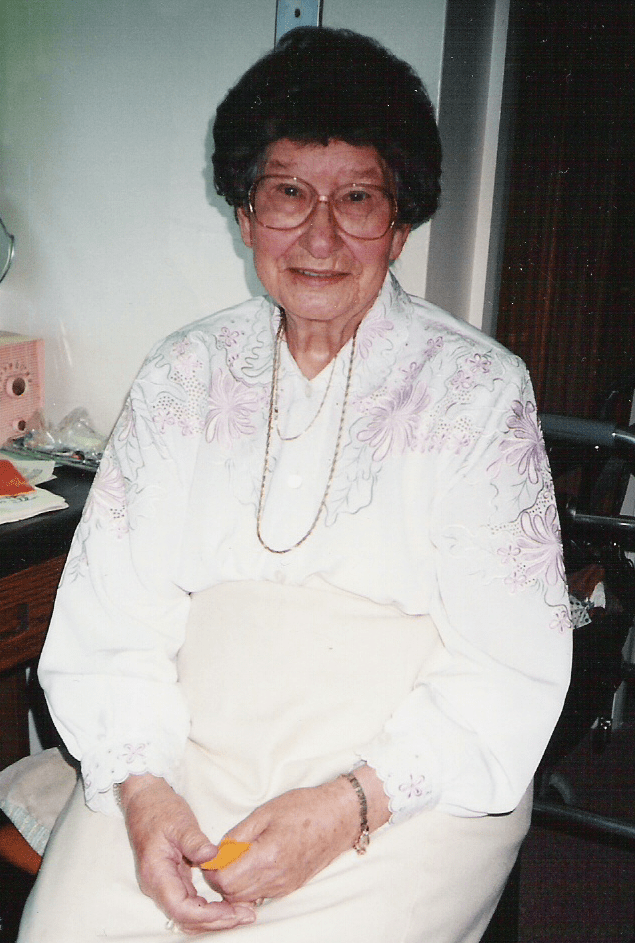
My great grandmother, Amelia Anton, late in her life, and still an avid bridge player.

Donate Your Genealogical Material To The Archives

(Don’t Forget Family Search!)

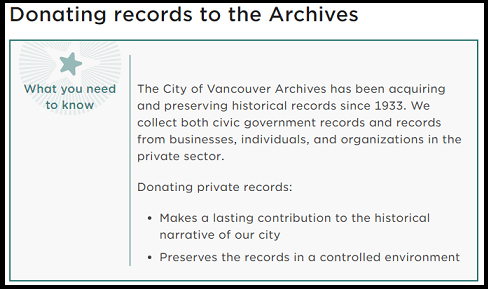
While it might just be me, lately it seems that many archives are going out of their way to encourage donations. It even appears that they are targeting genealogists in these pitches. Even if an archive isn’t actively seeking donations, many archives’ websites provide information as to how to donate materials and published works.

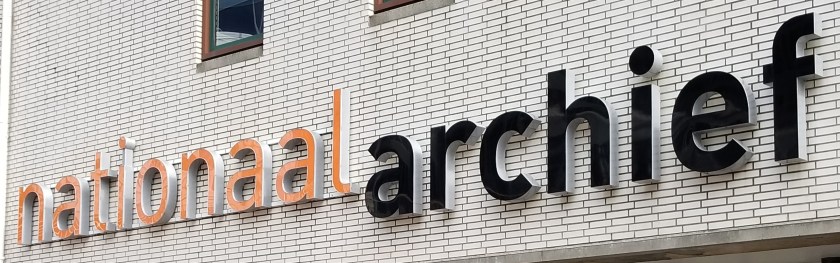
Sure, the focus of this post is Canadian archives, but the last time I physically visited an archive was during my last trip to The Hague, where I popped into the Nationaal Archief.

What a great idea, particularly given how much I see on social media by genealogists pondering where their work will go, either because their children don’t care or because they have no descendants or nibblings to pass their work on to. However, even if you aren’t an endling or have someone would happily receive your genealogical materials, you should still consider what you might donate to an archive. If you’ve published a family history book, you should definitely consider it.

Don’t limit your thinking. Archives of all kinds accept donations: municipal, provincial, state, national, private, and institutional archives. Because I am based in greater Vancouver, Canada, most of the examples I am listing are Canadian. Here are but a few:

  • The University of British Columbia, my alma mater. I spent countless hours in its archives and special collections division for academic and personal research – little of which was genealogy related! “Donate“.
  • The British Columbia Archives: “Donating Records“.
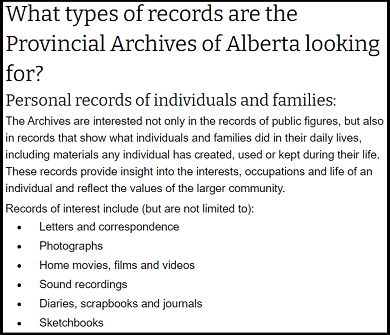
  • Most other Canadian provincial archives have a donation page on their website. I’ll note two in particular. First, the Provincial Archives of Alberta. I note on their donation page, they expressly state that the kinds of records they are seeking include personal records of individuals and families: “Donate Your Records“.

Given that there are fifty states and countless other institutions in the US, I will leave it to readers to Google the American archives that might be suitable for their records donations. However, the Society of American Archivists provides a great overview on “Donating Your Personal or Family Records to a Repository“.

Another place to consider – which might seem obvious once you think about it – is FamilySearch: “How Can I Donate?” They accept: family histories; published genealogical books; published historical books such as local and county histories; periodicals; directories; indexes and transcriptions of records in book format; yearbooks; journals (over 70 years old); family bibles containing genealogical information; and autobiographies and biographies.

Donate materials to an archive for all researchers to enjoy and benefit from!

52W Mark II – Week 25: Fast

This week’s 52 Ancestors Challenge is “Fast”. Ironic, because I was anything but fast in thinking of anything that even remotely had anything to do with “fast”. In fact, on her Facebook group, Generations Cafe, Amy Johnson Crow has already posted next week’s theme. [Spoiler alert: it’s “Slow”.]

However, one of the main goals of the 52 Ancestors Challenge is to get us to write. So the important thing is just to get something down. So bearing that in mind, I’ve found something, which I can get down fast.

According to his obituary, my wife’s great uncle, Ralph Dimock MacDonald was:

[a]n avid sailor from his youth, Ralph loved the sea and competed in a number of ocean races, including the Marblehead and Bermuda classics. He served as Commodore of both Armdale Yacht Club and the Royal Nova Scotia Yacht Squadron and was instrumental in the relocation of the RNSYS harbour site to the Pearson property on the Northwest Arm.

the Halifax Chronicle Herald, January 28, 2008

I haven’t investigated whether Ralph won any of the races in which he competed, but I am sure he would have been pretty fast regardless.