52W Mark III – Week 36: We Don’t Talk About It

With the prompt of “We Don’t Talk About It” for this week’s  52 Ancestors Challenge, the expectation was likely that participants would write about the bad secrets. However, not all secrets are bad!
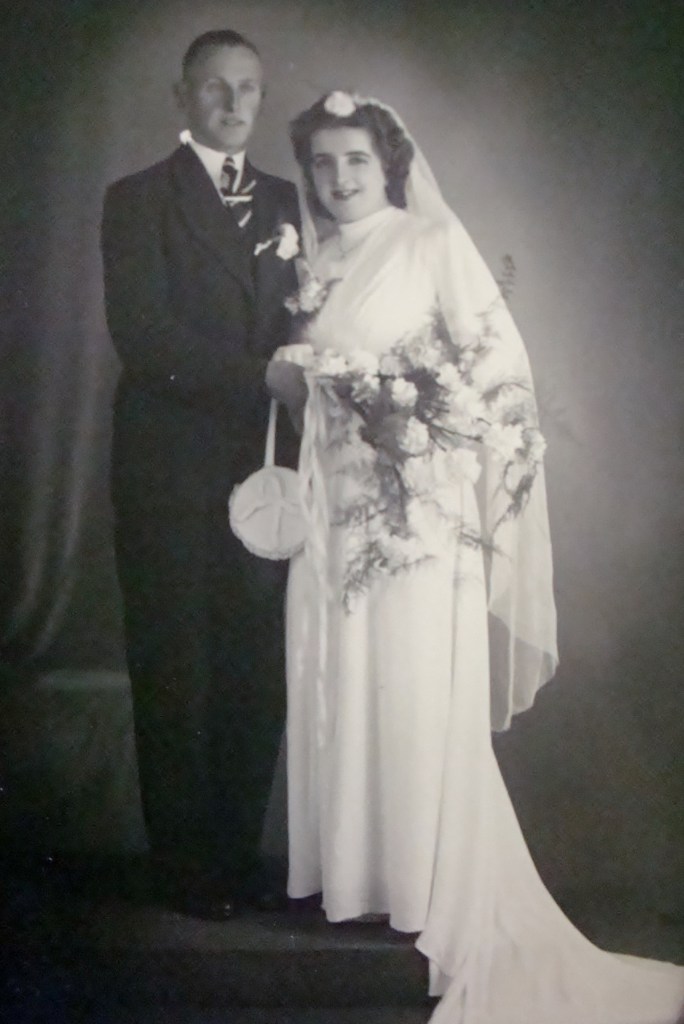
Adrianus Joseph “Arie” van der Fluit (1923 – 2002) and Christina (“Tiny”) Komen (1923 – 2000) on their wedding day.

My father and his siblings organized a surprise party to celebrate my paternal grandparents’ 40th wedding anniversary. Adrianus (“Arie”) van der Fluit and Christina (“Tiny”, rhymes with “genie”) Komen were married on November 7, 1948, in Langedijk, Noord Holland, Netherlands at St. Jan de Doper Katholieke Kerk (St. John the Baptist Roman Catholic Church).
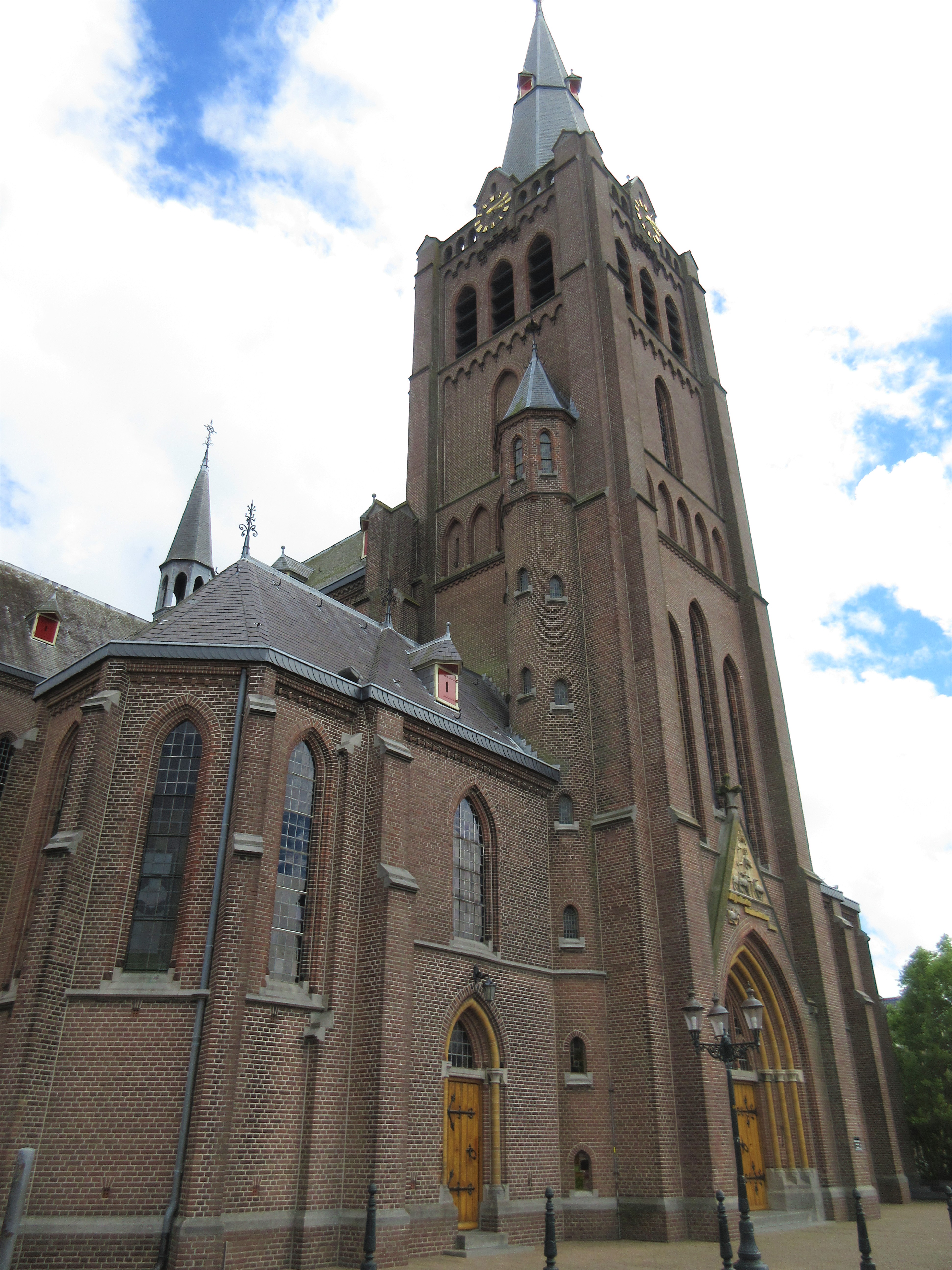
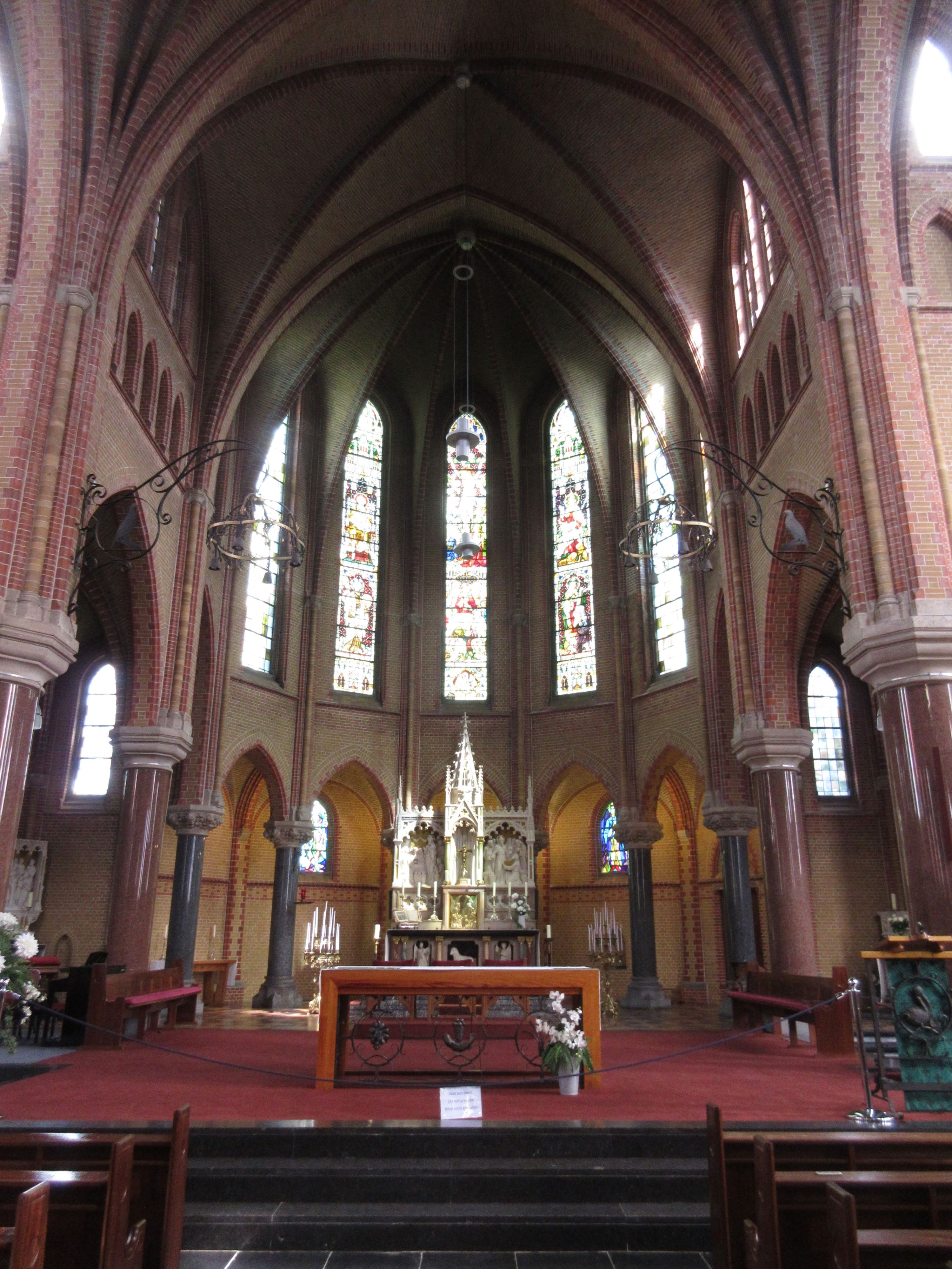
Kerk van Sint-Joannes de Doper, Noord-Scharwoude, Noord Holland, Netherlands, where my grandparents were married.

All my father’s siblings lived in Lethbridge, like my grandparents, so all the family living there were in attendance. My parents and siblings were living in northern British Columbia at the time, so my folks left my brothers and sisters with some family friends. In addition to all their children and most of their grandchildren, several family members also came over from the Netherlands to join in the festivities.
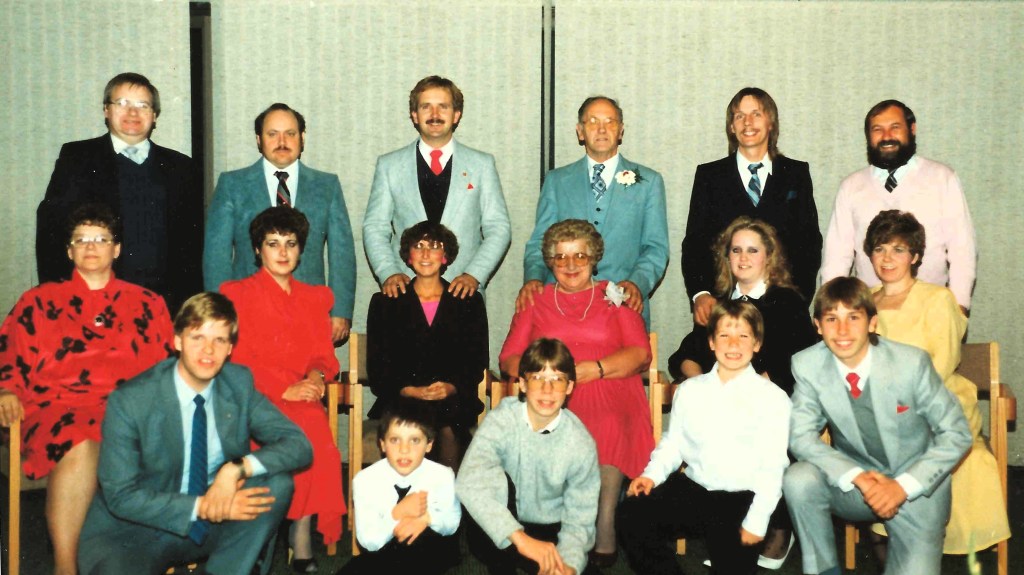
My grandparents, all their children and spouses, and about half their grandchildren (my four younger siblings did not attend). Several more grandchildren were born years after this celebration.

I had already left home and was living in Vancouver, so I flew to Alberta. I had lived in Vancouver long enough to have gotten used to the very mild winters there, forgetting that it was real winter elsewhere. So I boarded my flight wearing only a light jacket, only to be greeted by -11°C weather.
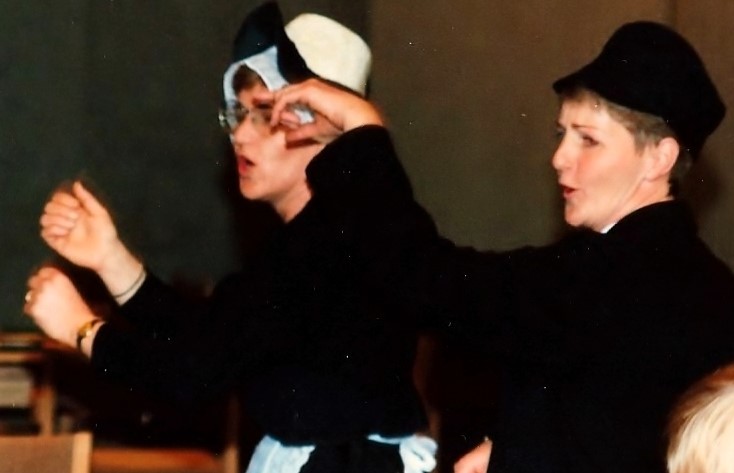
Two of my father’s cousins who made the trip from the Netherlands to celebrate my grandparents’ 40th wedding anniversary. That’s my noggin in the lower right.

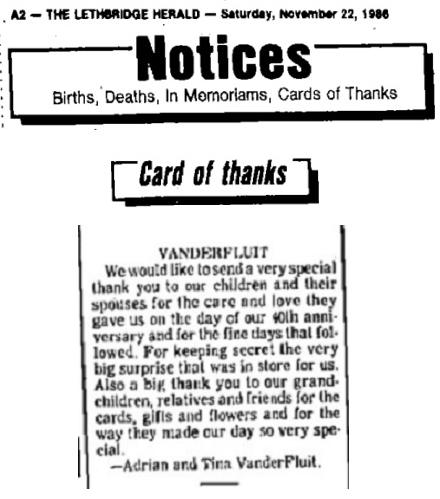
My grandparents took out a “thank you” notice in the Lethbridge Herald on November 22, 1986:

“We would like to send a very special thank you to your children and their spouses for the care and love they gave us on the day of our 40th anniversary and for the fine days that followed. For keeping secret the very big surprise that was in store for us. Also a big thank you to our grandchildren, relatives and friends for the cards, gifts and flowers and for the way they made our day so very special.”
Speaking of surprises, I was surprised to discover that I had written about this before, for last year’s 52 Ancestors Challenge! Upon making that discovery, I thought I might scrub this and choose a new topic. However, I changed my mind because (a) I’m feeling lazy (b) I have too many other things to do and (c) I had chosen several different photos than before. But let’s not talk about it, okay?
52W Mark III – Week 35: All Mixed Up

Imagine changing municipalities several times in your life while living in the same house the entire time. With the ever changing municipal boundaries of the Netherlands, it can become All Mixed Up – which is the prompt for this week’s 52 Ancestors Challenge!

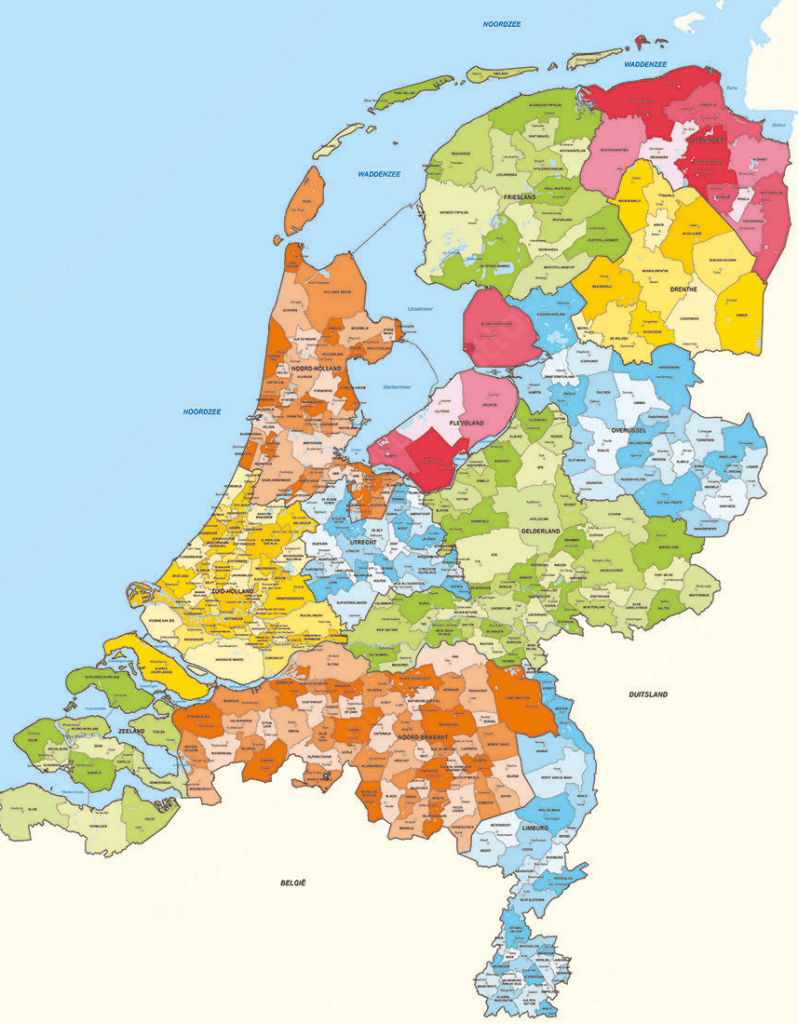
The Netherlands has thousands of villages, towns, and cities; however, the smallest administrative unit of government is the gemeente, which roughly translates as “municipality” or “local authority”. They are the third and lowest level of government after the national and provincial governments. Some gemeentes (in Dutch the plural is “gemeenten”) consist of a single community, such as gemeente Amsterdam. Many consist of multiple villages and towns.

The gemeentes of the Netherlands as of 2024. The colour groups indicate the provinces of the Netherlands.

In 1812, immediately after the end of Napoleonic rule, the Netherlands had more than 1,100 gemeentes. I don’t know if that includes or excludes modern-day Belgium, which until 1830 was part of the Netherlands. Over the following two centuries, the municipal map was revised many times. Gemeentes expanded, shrank, divided, and merged, such that almost 1,700 different gemeentes have existed over time.

Since January 1, 2023, the most recent reorganization, there are 342 gemeentes in the European part of the Netherlands. There are three in the Caribbean Netherlands, except there they are a “Caribisch openbaar lichaam” (“Caribbean Public Body”).

My father was born in Waarland, a village that currently has about 2,700 inhabitants. When my father was born, it was in gemeente Harenkarspel, which had been in existence for centuries. Its boundaries changed twice after my father was born.

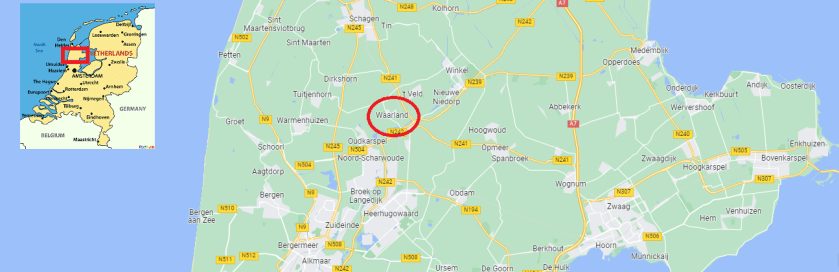
Waarland’s location in the Netherlands.
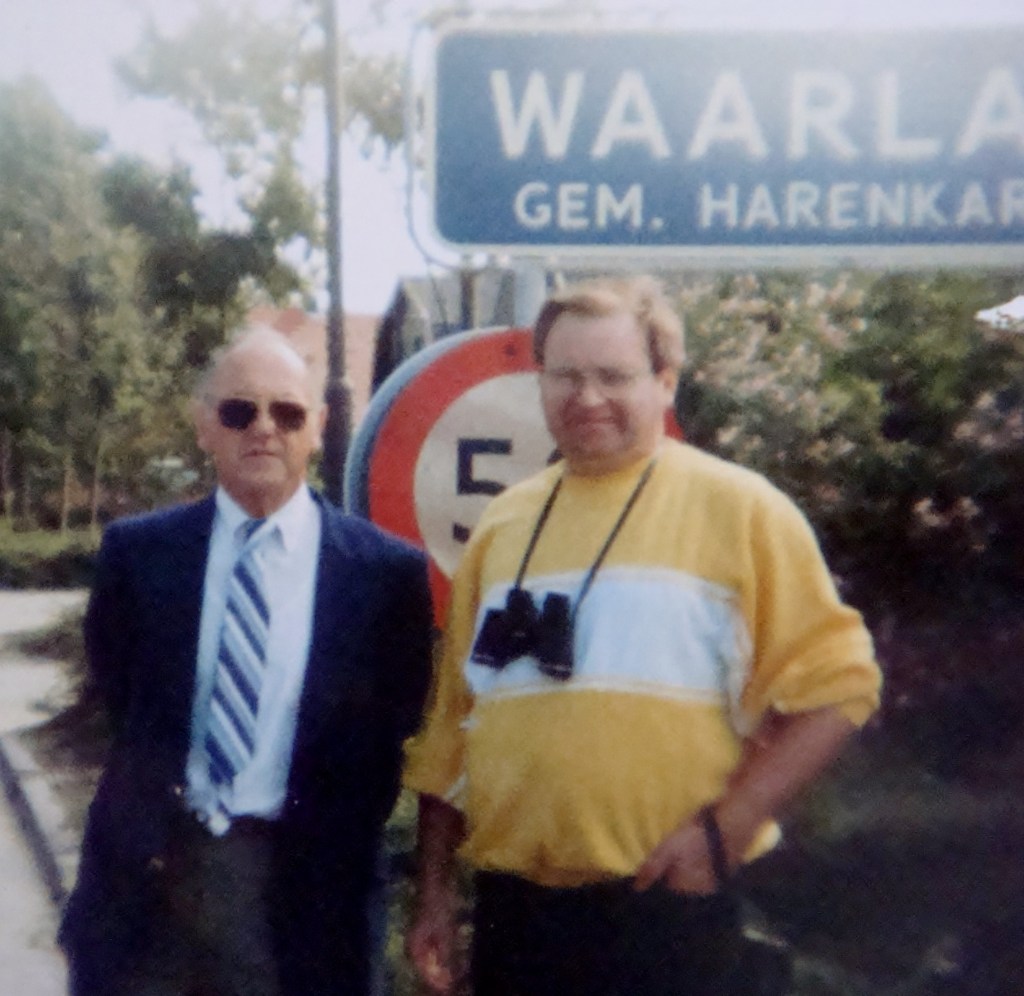
My grandfather and father visiting Waarland in the late 1980s. It was my father’s first time back since they emigrated to Canada. The sign says “Waarland Gemeente Harenkarspel”. Waarland was in Harenkarspel the first time I visited it; it was in Schagen the next time I was there.

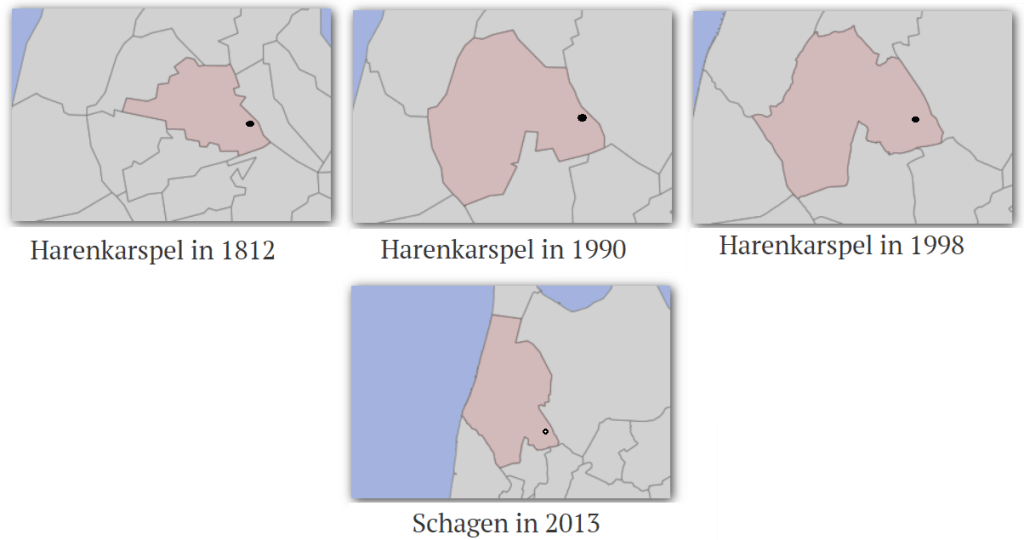
In 2013, Harenkarspel merged with Zijpe and Schagen and ceased to exist as a separate gemeente. Since the merger, the gemeente is simply Schagen. Zijpe itself had six different iterations between its creation in 1817 and its merger with Schagen in 2013.

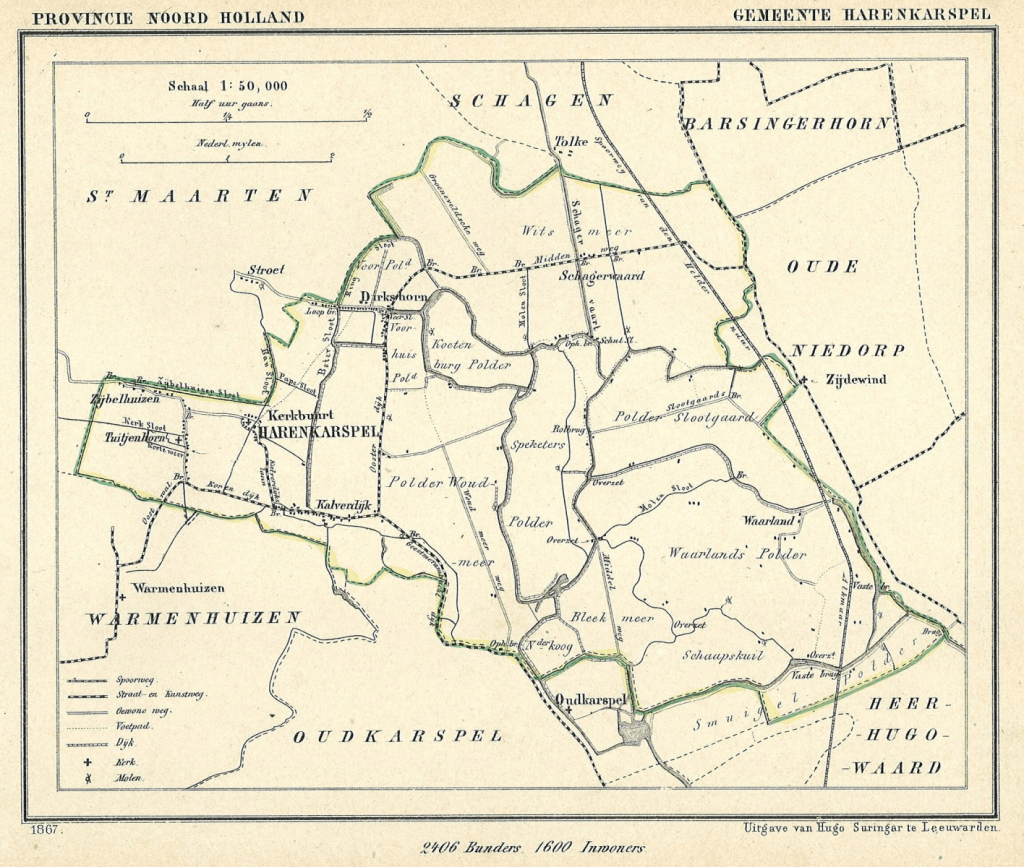
Harenkarspel in 1867. Waarland is in the south-east, near the border with Niedorp.
Waarland’s location within Harenkarspel and, now, Schagen.

When I enter a Dutch location into my database for any particular fact, I always use the smallest unit, even if it is not an independent administrative body. While gemeentes come and go, or expand and contract, the villages, towns, and cities largely stay the same. Thus Waarland is Waarland, regardless of what gemeente it is in. Fortunately, there is a website that helps track all the gemeentes that have existed “from ancient times” to present: “Gemeentegeschiedenis” (“Municipal History”). With it, you can find which gemeente a place might have been at any time in Netherlands history. No need to be all mixed up!

52W Mark III – Week 34: Member of the Club

My Gx3 grandfather, William Burgess, was an active member of his community. In addition to participating in local politics as a school board trustee and later as an alderman, he was involved in a variety of social activities.

William was one of the original Mormon settlers of Utah, having travelled west with Brigham Young’s company, in a party of 1220 individuals. William and his first wife, Maria Pulsipher, arrived in 1848 and first settled in Huntington. Within a year, they had relocated to Salt Lake City. In 1852, William entered into a polygamist marriage with my Gx3 grandmother, Charlotte Liggett. The family then moved to Lehi in 1854.

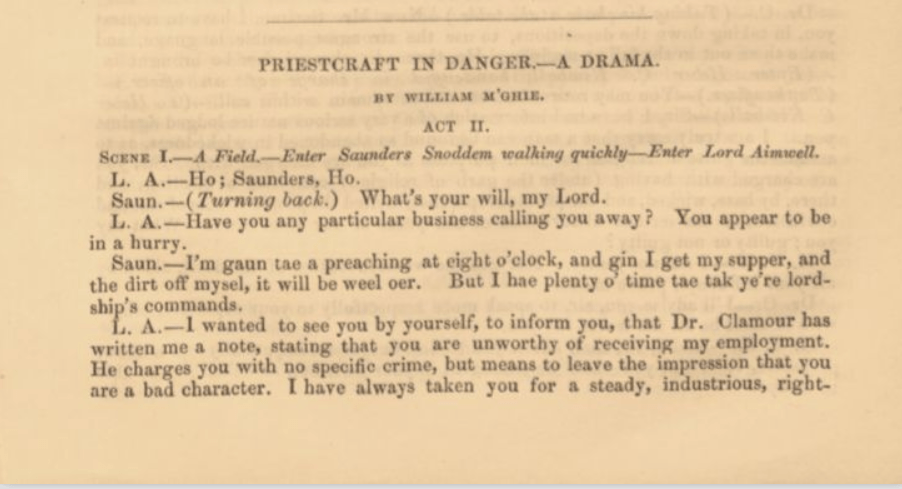
William was one of the founders of the Lehi Dramatic Club. On February 16, 1855, he obtained the necessary licence to produce plays from the town, without fee. The club performed in Lehi’s log schoolhouse, using tallow candles for footlights and painted wagon covers for scenery and curtains.

The first productions of the club were plays called “Luke the Labourer” and “Priestcraft in Danger”. The former, a melodrama written by John Baldwin Buckstone in 1826, is the tale of a farm worker and his turbulent dealings with his former employer. The latter, by William M’Ghie, was first published in The Latter-day Saints’ Millennial Star, a periodical in Manchester, England, on May 15, 1849.

I doubt William actually performed on stage. Rather, I believe he was one of the people working behind the scenes overseeing the operations of the club. Nevertheless, it is entirely possible that he may have been treading the boards!

52W Mark III – Week 33: Favourite Discovery

While the prompt for this week’s 52 Ancestors Challenge is “Favourite Discovery”, I’m hard pressed to choose just one. Rather, what immediately comes to mind is my Favourite Exploration, when I visited the farmhouse where my father was born, Waarland, North Holland. At the time it was part of Gemeente Harenkarspel (Municipality of Harenkarspel), but now Waarland is part of Gemeente Schagen.

Waarland’s location in the Netherlands

The first time I visited the Netherlands was part of a post-university backpacking tour through Europe with one of my friends. In the Netherlands, we stayed with one of my grandmother’s sisters and her husband, Tante Anny and Ome Nic, who lived in Zuid-Scharwoude, Gemeente Langedijk (which is now part of Dijk en Waard). It’s only a few kilometers from Waarland. Near the end of our stay in Langedijk, Ome Nic and I went for a bicycle ride to Waarland so I could meet my grandfather’s (van der Fluit) side of the family.

Waarland

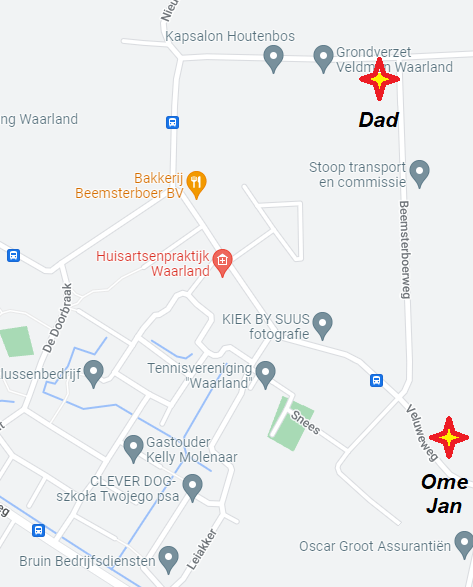
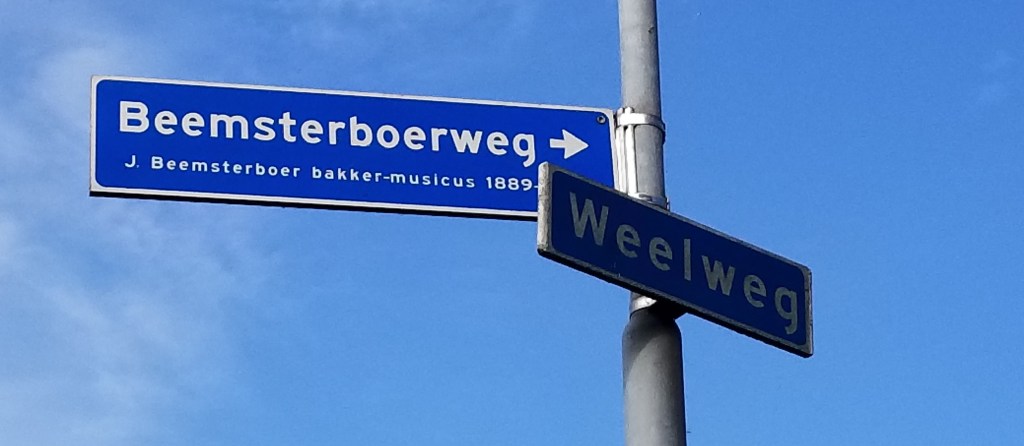
Once in Waarland, we went to the home of my grandfather’s oldest brother and his wife, Ome Jan and Tante Marie. Their house is less than two kilometers due south of the house where my father was born. Ome Jan’s house was also the place where he and and my grandfather were both born. Many of Jan and Marie’s children and grandchildren were there for our visit.

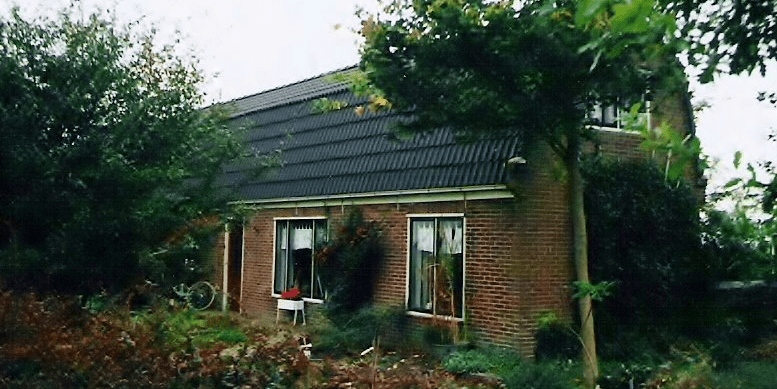
One of Jan and Marie’s children (my father’s cousin), Pieter, took me on a short bike ride up the road to the house where my dad was born. Not only that, he knew the current owner, so we were able to go inside. That was incredibly special. I was even in the room where my father was born!

The house where my father was born, the first time I visited Waarland

Many many years later, in 2017, my parents planned to take a cruise that departed out of Amsterdam, so they went early so they could spend time with our family in Noord Holland. I had always wanted to visit the Netherlands with my father, so I made the trip over there.

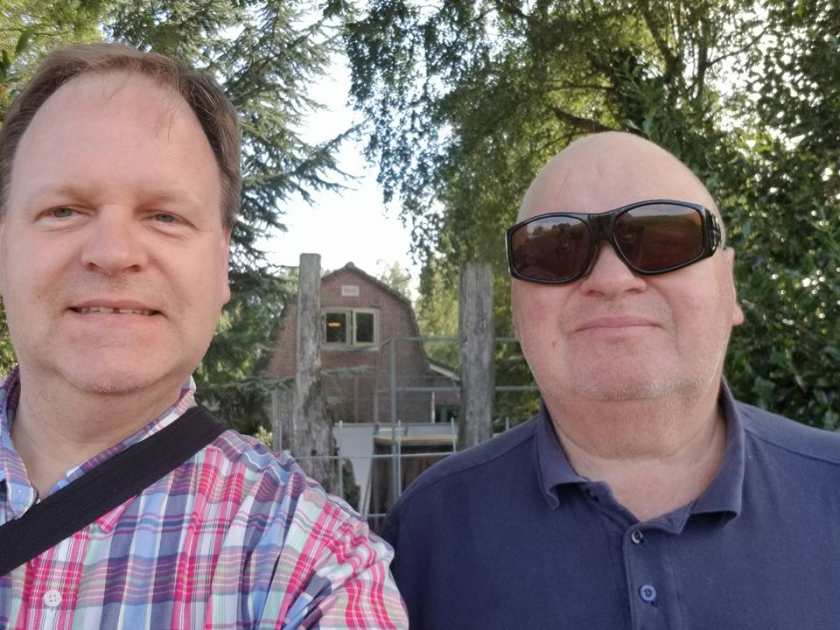
With my father outside the house here he was born. He’s more than happy to say, yes, he was born in a barn.

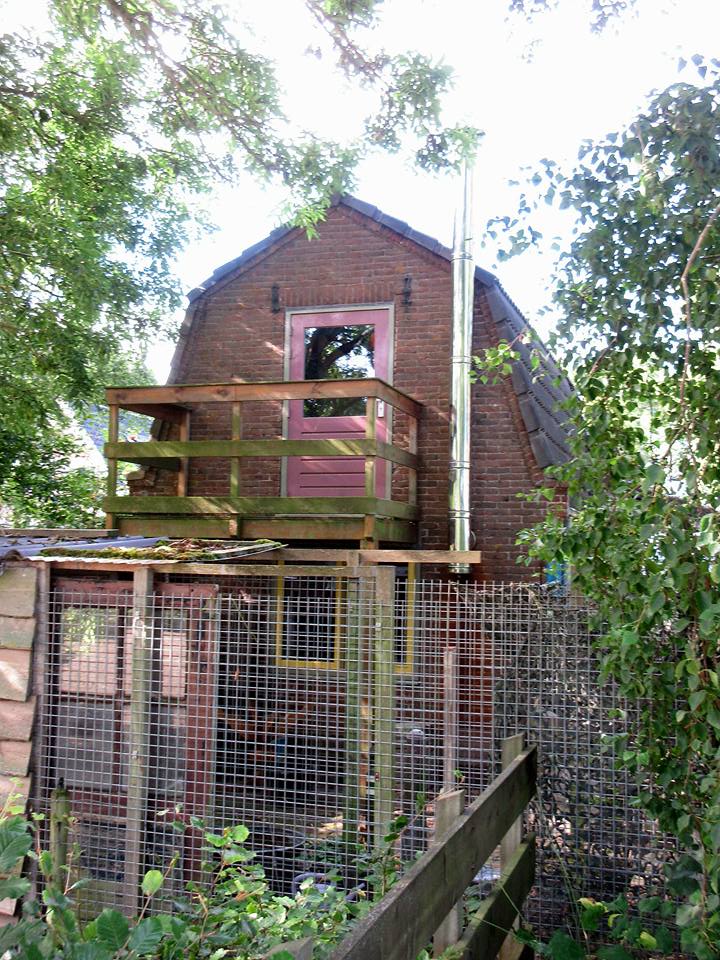
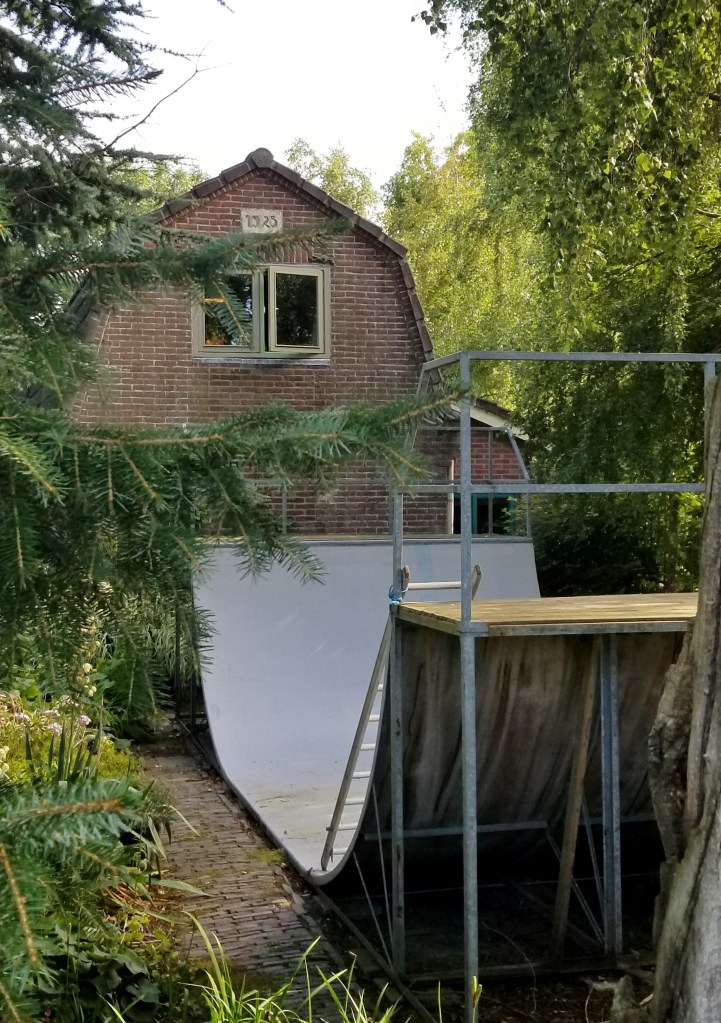
Of course, the trip would not have been complete without a visit to Waarland. After a short visit with one of my father’s cousins, we made our way to the house where my father was born. It looked as if the place had not been well maintained by its current owners. It looked quite run down since the last time I was there. I also had to tease my father by asking him whether he remembered the skateboard halfpipe that was in the back yard.

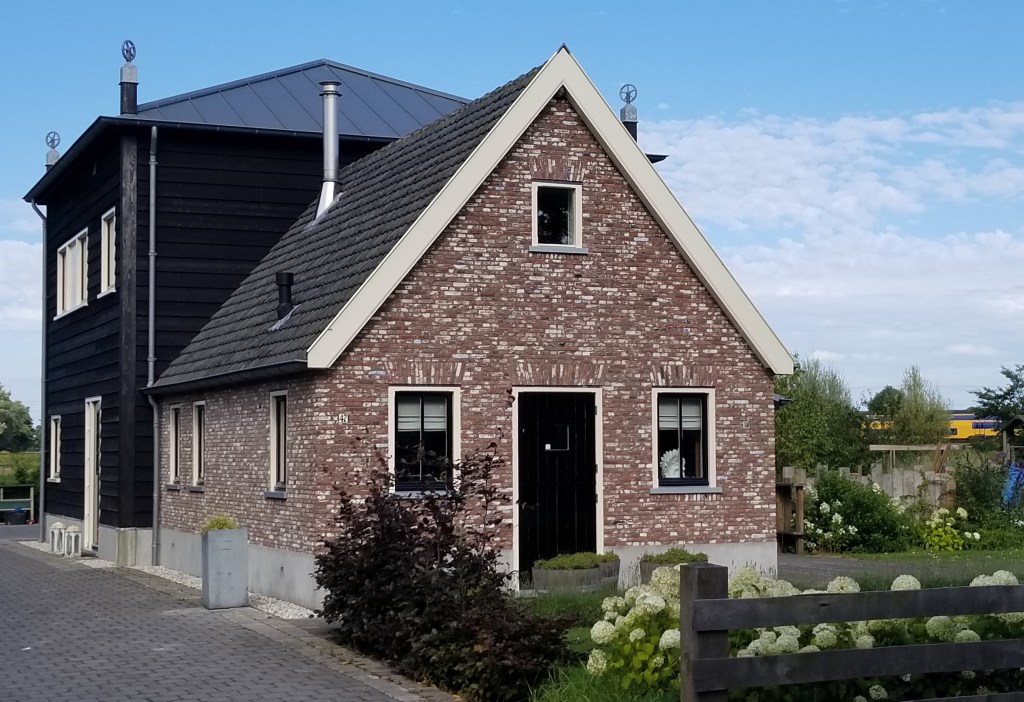
We then made our way to Ome Jan’s and Tante Marie’s house. Ome Jan had passed away in 2011 and Tante Marie died in 2013, so the house had a new owner. In fact, it was an entirely new house. The old one had been demolished, but the new one that replaced it looked almost identical. 

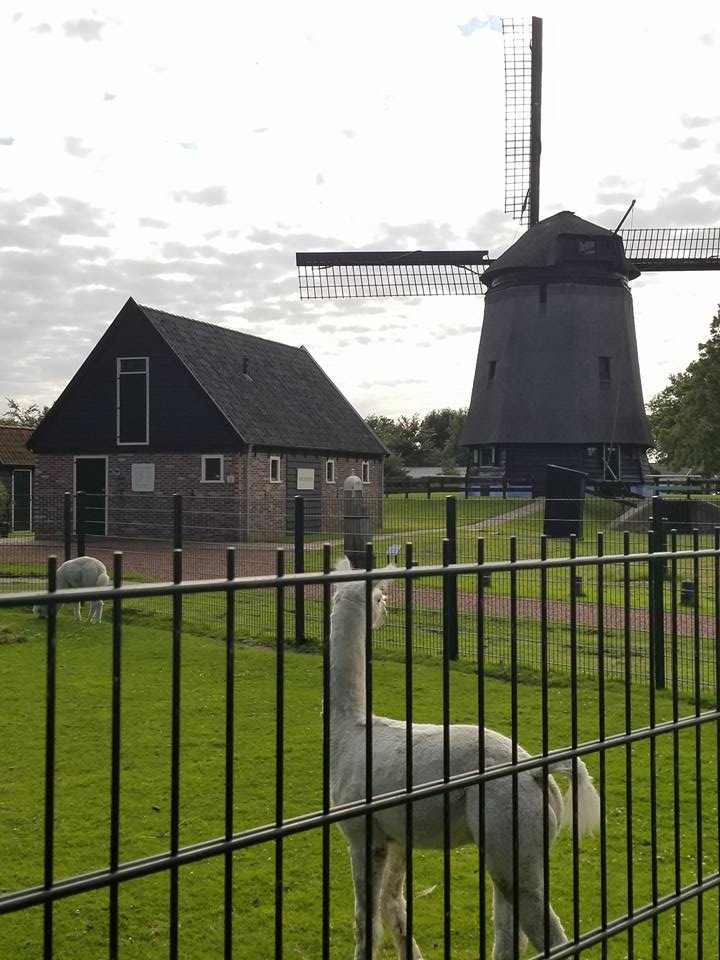
We also passed by the church where my father was baptized. Unfortunately, there wasn’t time to go inside. As well, we stopped by a 450-year-old windmill that has been a museum since 1920, where I suppose I did make a surprising discovery – llamas! They were grazing on the property immediately adjacent to the windmill.