
52 Weeks Mark III – Week 11: Achievement

March is Women’s History Month and March 8 was International Women’s Day. From the International Women’s Day website:

Celebrate women’s achievement. Raise awareness about discrimination. Take action to drive gender parity.

My mother’s aunt, Adeline (“Addie”) Lerner (1930-2023) was a strong advocate for women’s rights during her lifetime, starting in the early 1970s. She was a founding member of one of the first women’s groups in Lethbridge, Alberta, which opened up a women’s centre. Addie also participated in establishing one of the first daycare centres in Lethbridge. She was also a member of the Alberta Status of Women Action Committee – Lethbridge Branch and served on the provincial board as a regional representative in 1989-90.
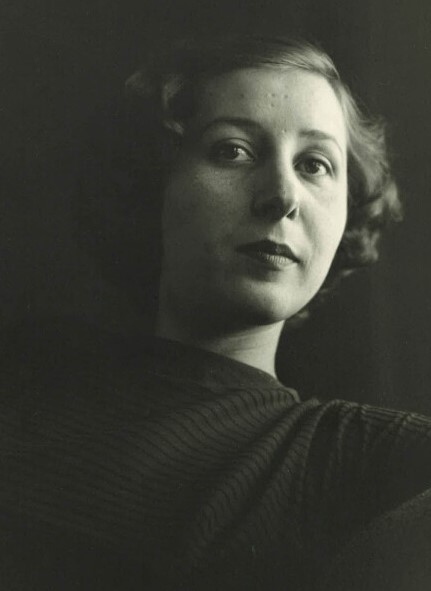
Adeline Lerner 1930-2023

Sometime around 2017, the Alberta Labour History Institute conducted a series of “Interviews Relating to Women and Work in Alberta”. This was part of the ALHI’s “Moving Forward” project. Its goal was:

“…to record and recognize the important work carried out by women throughout Alberta’s history, and to honour the achievements of women in various areas of work and the labour movement. The project involves the gathering and recording of the stories of and about women and work, and making this history available to the public.”

The ALHI interviewed a number of women as part of the Moving Forward project. My Aunt Addie was one of them.

YouTube video of the ALHI interview of my great aunt, Addie Miron (née Lerner). A transcript is available on the ALHI website.

Addie noticed the inequities as a child:

I can remember one time when I was a little girl, my mother did let me run around all over the place, I was free that way. Some relatives came to visit. They came in a buggy and horse, and they had three rowdy boys with them. When they drove up I had a rim of a wagon wheel and I was running around pushing it with a stick. The lady said to my mother, isn’t she a little old to be running around like that with that wheel? Suddenly I felt like I was doing something wrong, but I never would’ve though of that. I guess she was referring to me being a girl and here I am running around like a tomboy. She herself was also indoctrinated to think that way. I don’t think people tried to make you feel bad, it’s just the way they thought.

Adeline Miron

One of Addie’s foundational steps in her participation in the women’s movement was when she took a course called “What is a Woman?” through the University of Lethbridge:

I’m going to find out what is a woman, and I took the course at the university. I don’t think I realized what it was going to be all about, but it was nice to take the course and have these experiences with all these other young women and the odd man in there who was resentful… We’d try and argue some of these things we talked about when we were being put down and the ways we were being treated in society. Some of these people could not see that. But most of the women who took the course took it for the same reason I did. They wanted to know more about why they feel repressed and what they could do about it.

Adeline Miron

Soon afterwards, Addie and some friends decided to start a women’s movement in Lethbridge. In the early days, there were about 35 to 75 women involved.

We decided to start a women’s movement in Lethbridge. We applied for a grant the fall of ’73. We received our grant in ’74 and we opened up a women’s center. I think we used to meet at each other’s houses for a while. There was a building downtown where the birth control center was, that was a new place too, and we rented a couple of rooms in there. It was nice when we got a house all to ourselves. We became quite active, even before we had a place all to ourselves, we gave courses at the library on things to do with women, like women in male oriented jobs, women in female oriented jobs, women in health, and so on.

Adeline Miron

One of the important issues at the time (as now) was childcare.

We lobbied city council. They didn’t seem to fall for it to begin with but eventually we talked them into allowing us to open up a public daycare in Lethbridge. After awhile I worked there for about five years. Some of us that were lobbying were also running the daycare and helping with the children. The children were between two and
six. We also had a kindergarten.

Adeline Miron

Addie worked at the childcare centre from 1980 to 1985. Among other things, she worked with toddlers aged 19 months to three years old, and sometimes cared for children with disabilities.

I think Aunt Addie believed her work and the women she worked with made a positive change. However, there was still a lot of work to be done:

There needs to be a lot of improvement but things have really become better. There’s still room for a lot of improvement, don’t you think so? There’s an attitude that hasn’t gone away completely anywhere – it’s still a male oriented society, more or less.

Adeline Miron

Aunt Addie remained active into her 80s. After her husband Ross passed in 2009, Aunt Addie continued to live on her own in the same house until a few years ago. Sadly, in her last days, it was necessary for her to move into a care home. She passed away last summer, at age 92.

Ross Miron and Addie Lerner

I was fortunate to know Aunt Addie quite well and always made a point of visiting her when I visited Lethbridge. I also had the wisdom to – or dumb luck to think about it -interview her about her life. During one visit about 10 years ago she told me a story about going to her grandmother’s every day after school. It dawned on me that she was talking about someone born in the 1860s. I made a point of asking to visit her again a few days later to interview her. I managed to ask all sorts of questions I should have asked her years ago!
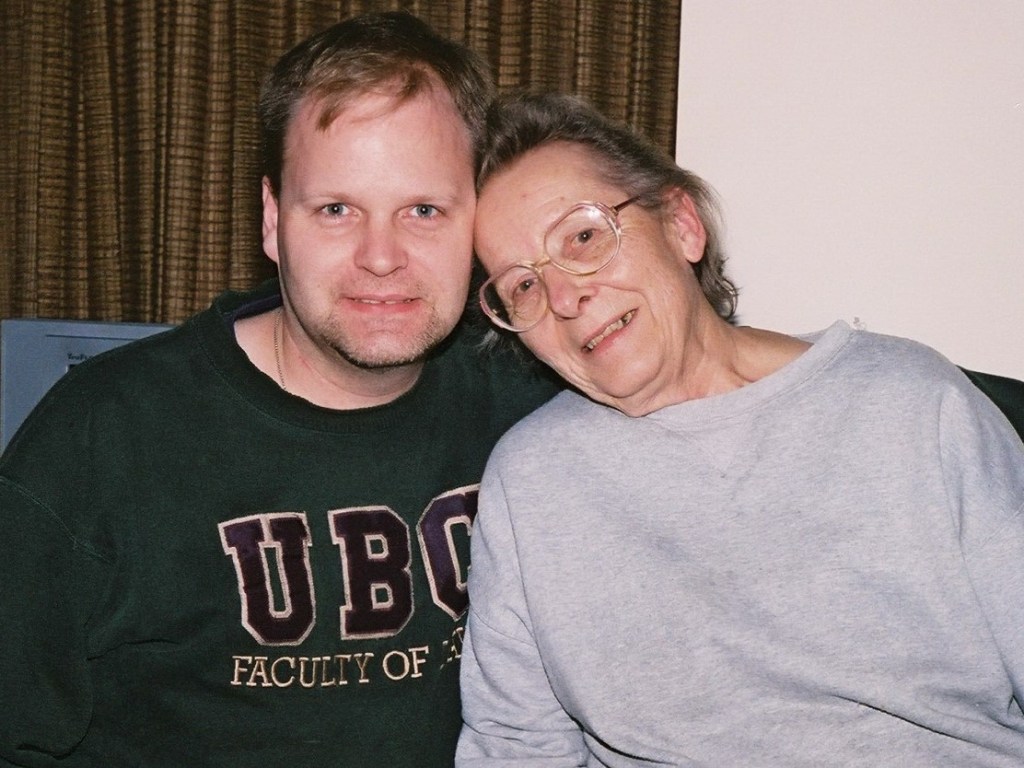
Me with Aunt Adeline

Aunt Addie’s advocacy and work definitely contributed to the achievement of women that we celebrate every International Women’s Day!
52 Weeks Mark III – Week 10: Language

As I’ve written about before, my family are avid board gamers and card players. Something else many of us love are puzzles. Jigsaw, crosswords, logic puzzles, trivia, cryptograms, sudoku, and, of course, word search puzzles. Our youngest child not only loves doing mazes, he has been creating his own for the family to solve ever since he was six years old. Heck, the way I studied for the LSAT was by working my way through a stack of Dell‘s Logic Problems and Word Games. I was essentially just continuing to do something I was doing anyway, and I did very well on the exam. (Dell was also was the origin of the modern-day sudoku, which ran in its magazine under the name “Number Place” in the late 1970s – which was where I first saw the game.)

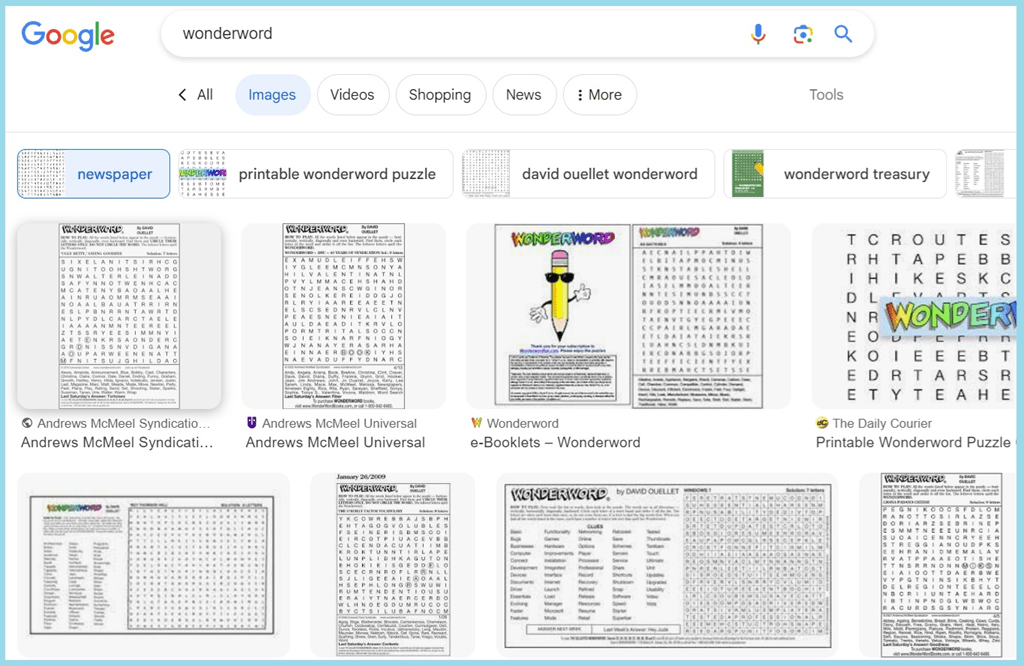
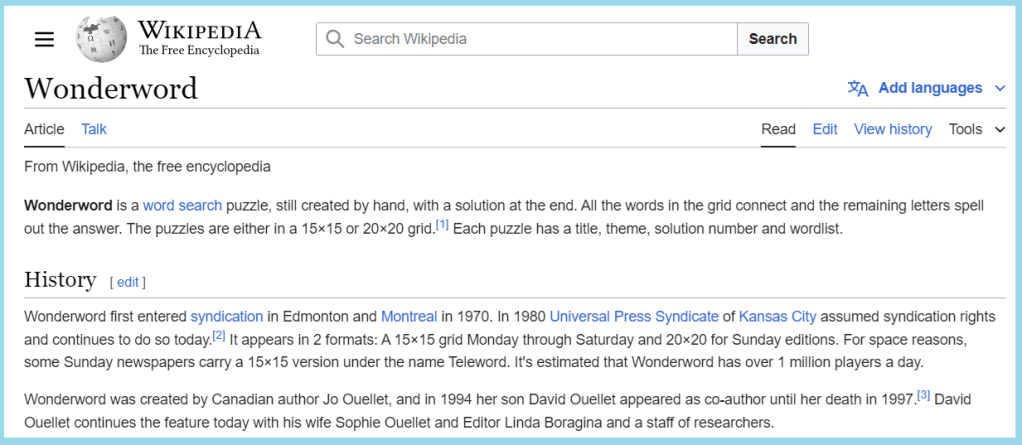
While he was primarily a card player – especially cribbage – my maternal grandfather, Leo Burgess, loved the Wonderword, a word search puzzle.

Google Image Search for the Wonderword. I was quite surprised to learn that it’s still a thing!

He did it every day. Unfortunately, his local paper, The Lethbridge Herald, stopped publishing it. However, we were living in Saskatchewan at the time and the Saskatoon Star-Phoenix continued to publish it. So I diligently clipped it from the paper every day. When I had what I considered to be enough, I’d mail him a small collection.

I loved doing it for him. I kept it up for a few years. I only stopped when we moved to British Columbia and our new local paper didn’t publish it.

Maybe my love for puzzles and word games is why I love genealogy. It’s essentially one perpetual puzzle!

52 Weeks Mark III – Week 8: Heirlooms

I’m one of five siblings. My sisters and I live in British Columbia, both of my brothers live in Alberta. Until a few years ago, both my brothers lived in the same town as my parents. During the first summer of the pandemic, the elder of my two brothers moved to another town, about 90 minutes away from my folks. As a result, it was a couple years until I saw his new home.

In October 2022, my father’s younger brother passed away. That same week, my father ended up in hospital with a broken hip. I flew out to Alberta for the memorial service and to see our dad. On my return trip home, I spent a night at my brother’s new place.

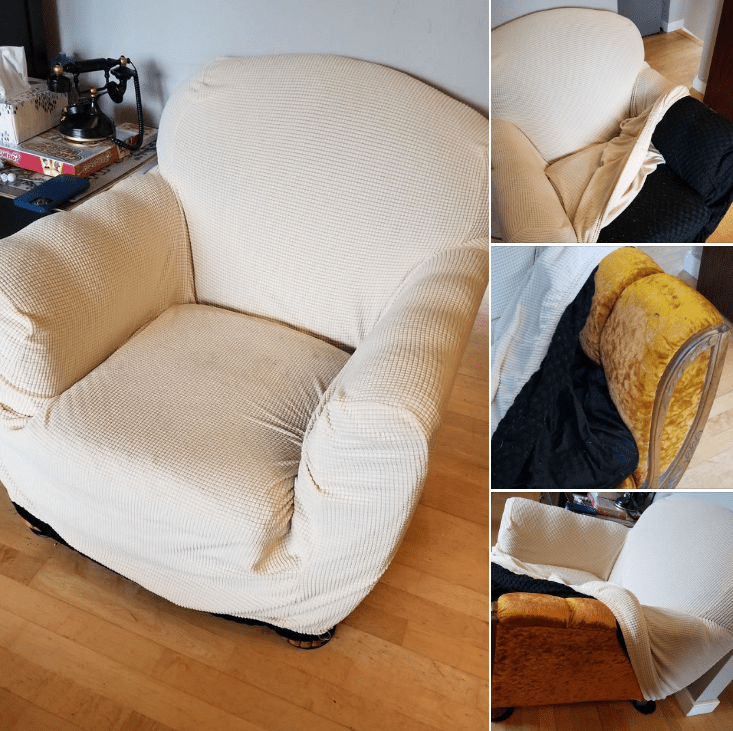
I was completely flabbergasted to discover that in his living room, under two upholstery covers (they have a lot of pets!), was the armchair that belonged to my great grandmother, Emelia Anton. I have no idea how old it actually is.

I know my grandmother acquired it from her mother sometime in the late 70s or early 80s and had it reupholstered. I thought it was disposed of after my grandfather passed away. I never realized that it ended up with my brother someway, somehow. It was really cool to see something that had once belonged to my great grandmother, which I remember well from our visits with her when I was a kid.

Update: Talking to my mother in August 2025, it turns out that this chair belonged to her other grandmother, her father’s mother, Hazel Nelson.

52 Weeks Mark III – Week 7: Immigration

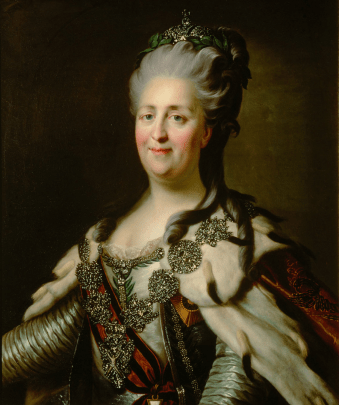
My mother’s maternal line are all Germans from Russia. The Russian Empire expanded significantly during the 18ths century. When Catherine the Great came to power in 1763, she encourage immigration, partly to re-establish farming in regions that had laid fallow during periods of warfare, modernize the country, and to populate regions the Empire had absorbed.

Catherine the Great

Catherine’s manifesto inviting settlers bears some resemblance the homestead schemes introduced in the United States and Canada over a century later.

Among other things, she promised land, free transportation to Russia, and economic incentives (including freedom from taxes for a period of time and interest-free loans for the purchase of equipment). As well, settlers were promised that they could freely practice their religion, retain their language, and be free from military service. The settlers were also promised a degree of self-government.

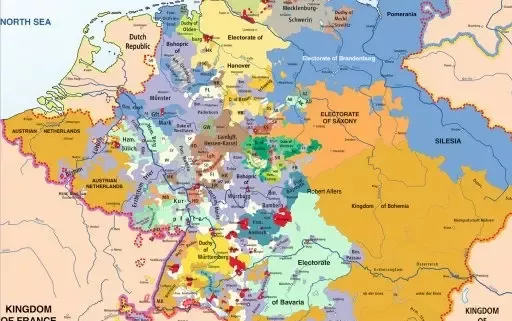
While settlers came from several places in Europe, a majority were Germans. At the time, there was no “Germany”. Rather, the region was primarily composed of a multitude of principalities, dutchies, and other small states. While Catherine’s promises provided a significant pull, economic and political conditions in the German states provided a significant push.

Germany in 1789

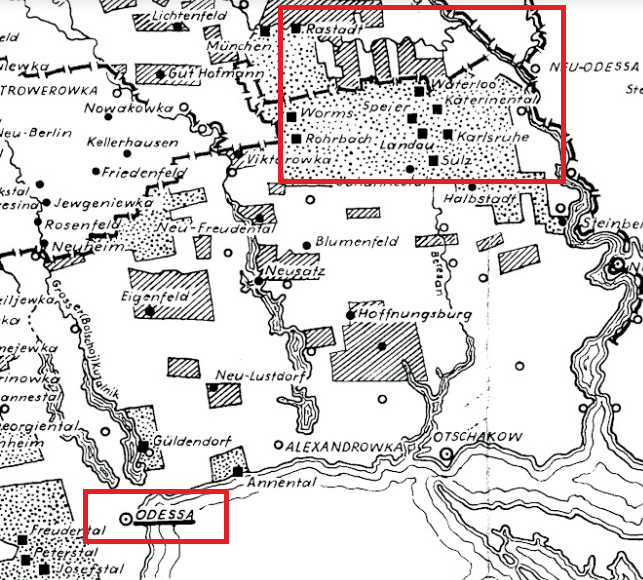
The first wave of settlers formed colonies in the Volga region (“Volga Germans”). The next wave occurred after Catherine’s grandson, Alexander I, issued a similar manifesto with many of the same promises. My ancestors were part of this wave of settlers, who formed colonies in what is now southern Ukraine, particularly in the area north of Odessa (“Black Sea Germans”).

The German colonies in the Beresan district in 1890, as seen in relation to Odessa. All four of my maternal grandmother’s grandparents came from Rastadt and Karlsruhe, located in the upper right-hand corner.

The German colonies were usually composed of members of the same religion. The main colonies were Catholic, Lutheran, and Mennonite. These colonies thrived for decades. However, in 1871, Czar Alexander II repealed the manifestos of Catherine and Alexander I. The German colonists lost many of their privileges. Shortly afterwards, they lost their exemption from military service. The next Czar, Alexander III, took further steps to incorporate the German population into general Russian society, which included discouraging the German language and encroaching on the school system established by the colonists.

Needless to say, this immediately sparked waves of emigration of the German colonists, many of whose families had been in Imperial Russia for decades. Many of these Germans left for the United States and Canada, relocating to the plains stretching from Texas to Saskatchewan. Other colonists left for Argentina and Brazil.

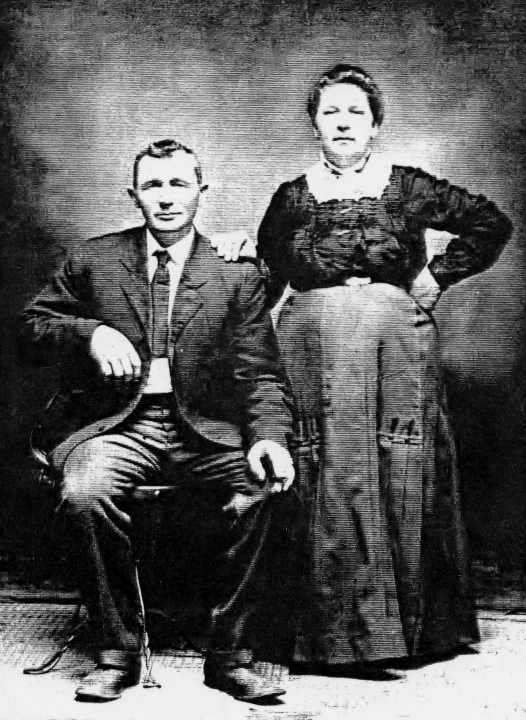
My grandmother’s paternal line originally settled in Texas, starting with my great great grandparents, Michael Lerner and Barbara Schmidt and their six children. They came over in 1893 on the S.S. Lahn, which landed at Ellis Island – less than 18 months after it had opened. Michael and Barbara had six more children after settling in Texas, the first of whom was my great grandfather, Heronimus “Jerome” Lerner. Over time, many of their children relocated to Saskatchewan, including Jerome. Michael and Barbara ultimately made the same move themselves, leaving behind several of their adult children.

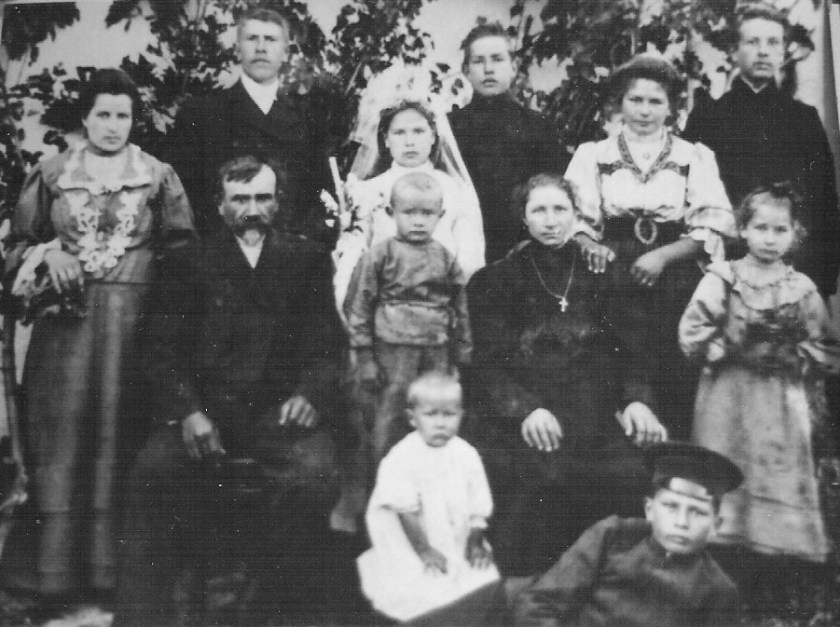
My grandmother’s maternal grandparents,  Jacob Anton and Margaretha “Margaret” Heck, came directly to Canada in 1912 with all their children and settled in Saskatchewan. This included my great grandmother, Emelia Anton, who was nine years old at the time. She lived to be 94 and I knew her well.

The Anton family, circa 1910. Likely taken in Selo Suchoi, Veronesch, Russia. My great grandmother, Emelia, is the little girl standing at the edge of the right side of the photo.

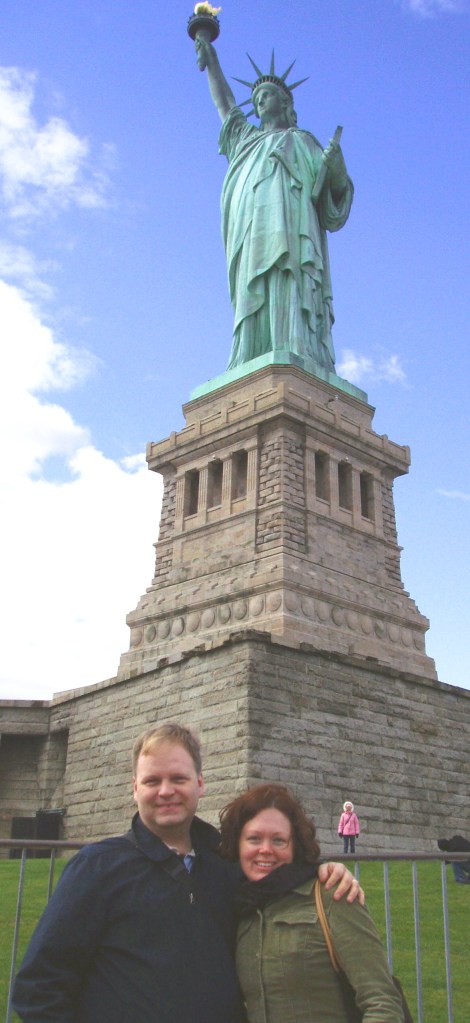
Emelia had not had much schooling before coming to North America, but was very religious. She said that she was frightened and nervous during the journey, as she did not know anything about where she was going and did not fully understand what was going on. However, on reaching New York, she said her fears subsided when she saw “the Madonna”. When she saw that, she knew she would be safe and all would be well. Of course, the “Madonna” was the Statue of Liberty. As she had never heard of it before, she thought it was a statue of the Virgin Mary.

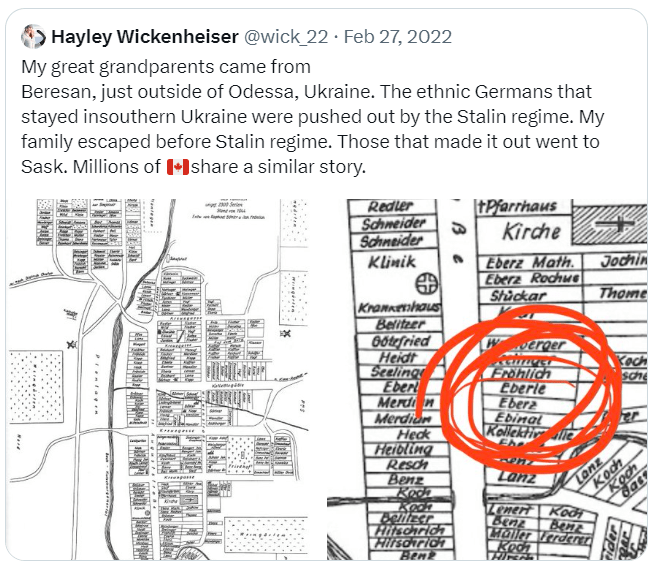
There are many well-known descendants of the Germans from Russia. They include Lawrence Welk, who married my grandmother’s fourth cousin. While I am generally disinterested in celebrity, I was excited to learn that Hayley Wickenheiser is a descendant of Germans from Russia. Her great grandparents lived in Rastadt, where Mike and Barbara had lived before emigrating. However, her family was there decades after mine left, as the did not leave until they fled Stalin’s regime.