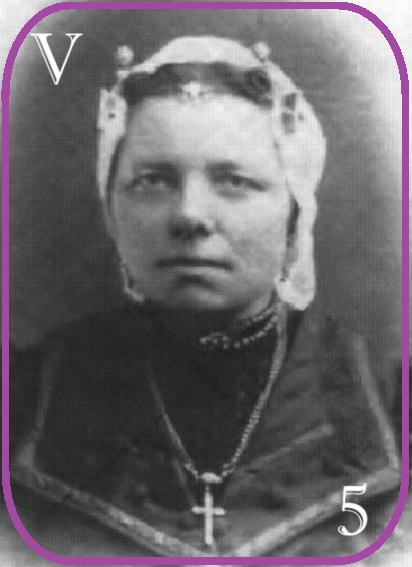
(1865-1929)
When I first started tracing my Dutch line further back further than my great grandparents, I started coming upon some very clearly Germanic and feminine sounding names but did not sound cute in any way. Then again, what should I expect from a language where the word for “cute” is “schattig” – definitely not a cute sounding word to an Anglo ear, especially with that Dutch “g”!
One of the standouts of these was my second great grandmother, Ariaantje Jacobs Bleeker. Ariaantje did not easily roll off the tongue when I first encountered it, but it came to me quickly. Like most people in the Netherlands, she did not go by Ariaantje on a daily basis. She is often referred to as “Adriana” or “Jaantje” in the records.
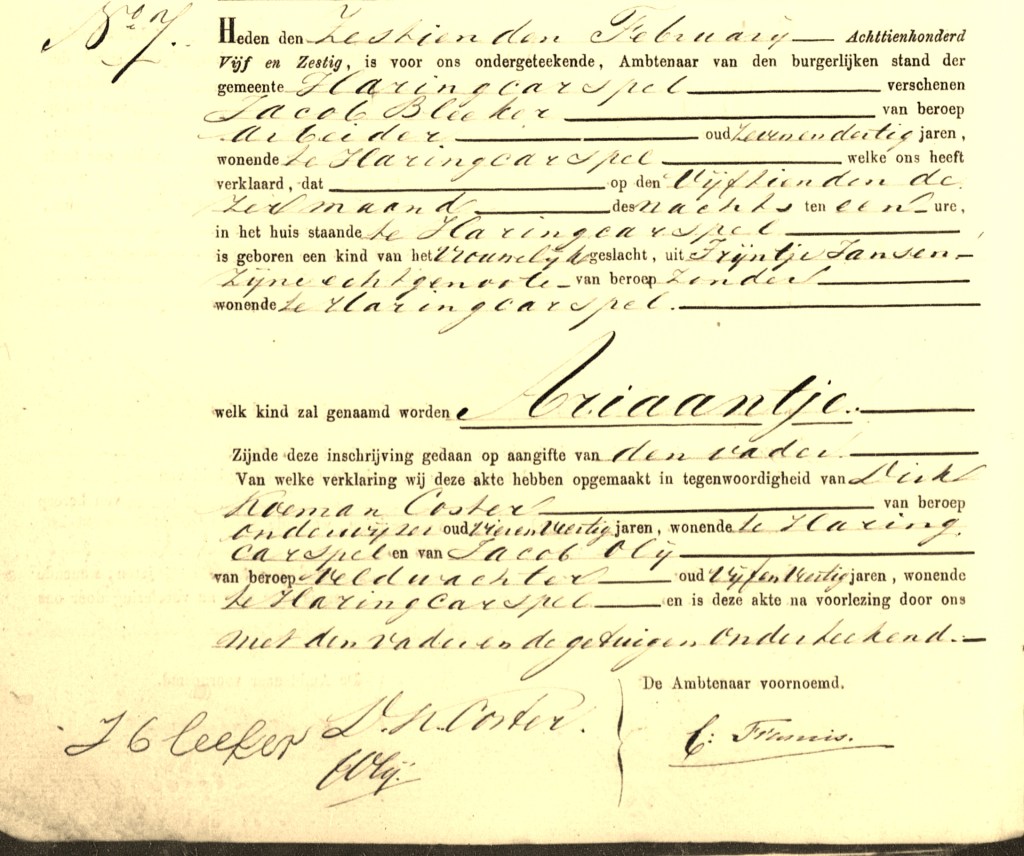
Adriana was born on February 15, 1865 (160 years ago this month!) in Harenkarspel, Noord Holland. For the longest time, I have had Adriana as the third of three children born to Jacob Bleeker and Trijntje Jansen. However, given the age gap between Adriana and her older brother, Cornelis, I suspected there might have been some other children in between.
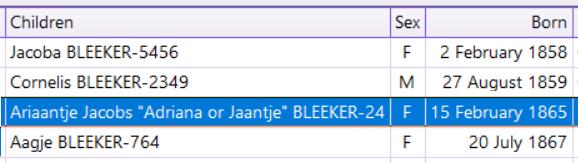
I’ve done some digging to fill the gap. One strategy I’ve employed is looking at Adriana’s FAN club: her “Friends, Associates, and Neighbours”. So far I haven’t found any missing siblings. It’s still on my research to-do list, although it has not been a priority.
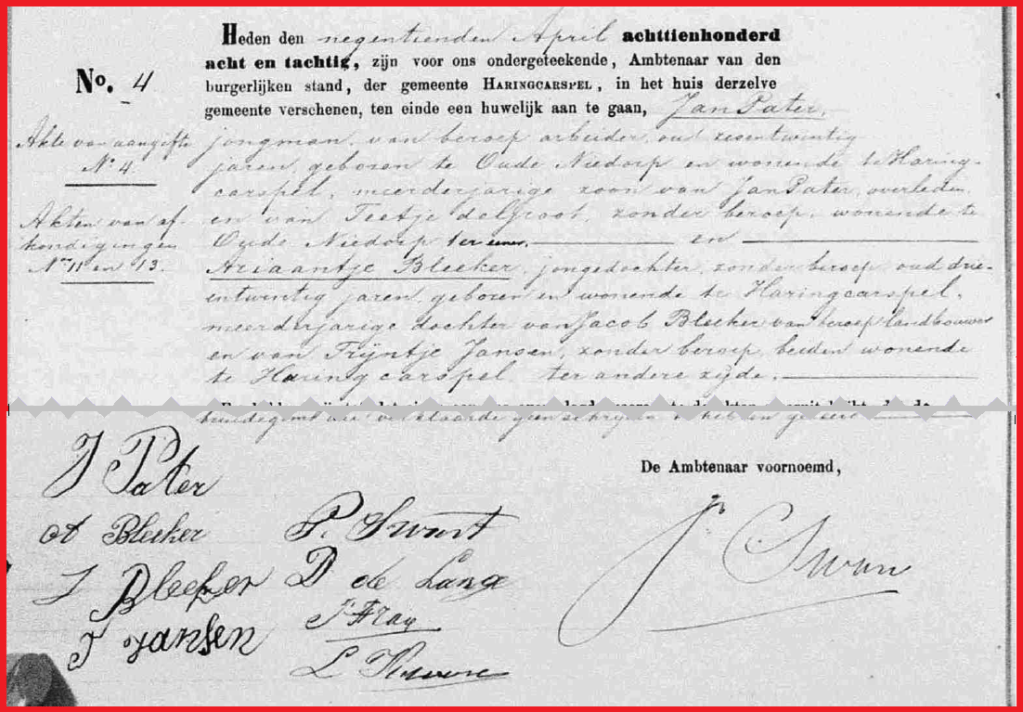
It appears that Adriana lived with her parents in Harenkarspel until she married Jan Pater on April 19, 1888. The Bevolkingsregister (population register) for Harenkarspel shows that she relocated to Heerhugowaard on April 20, 1888. Jan and Adriana had four children: Johannes (who only lived two weeks), Jacob, Teetje (my great grandmother), and Jan. Only Jacob and Teetje married. Jan worked on his parents’ farm for many years after reaching adulthood.
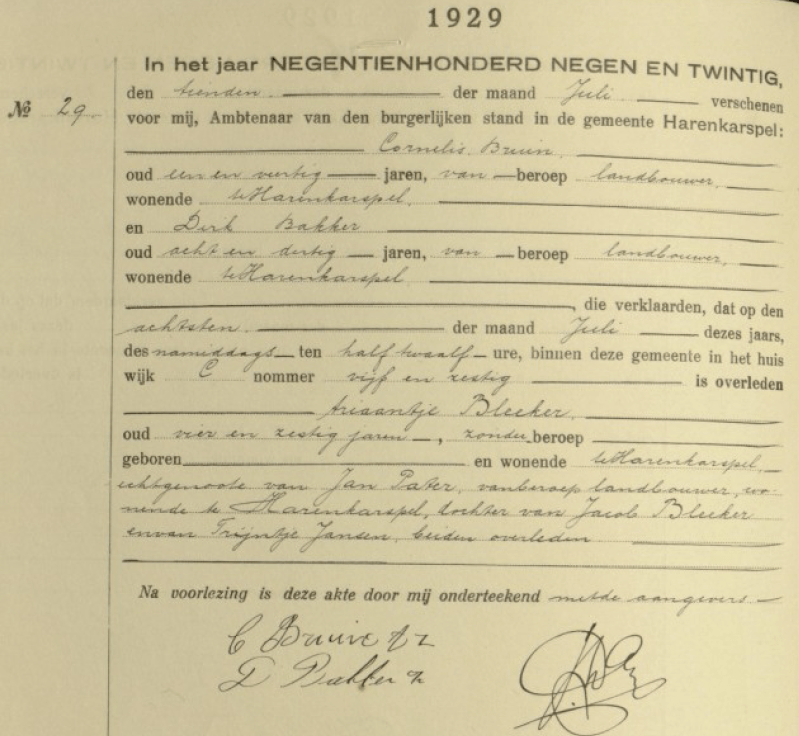
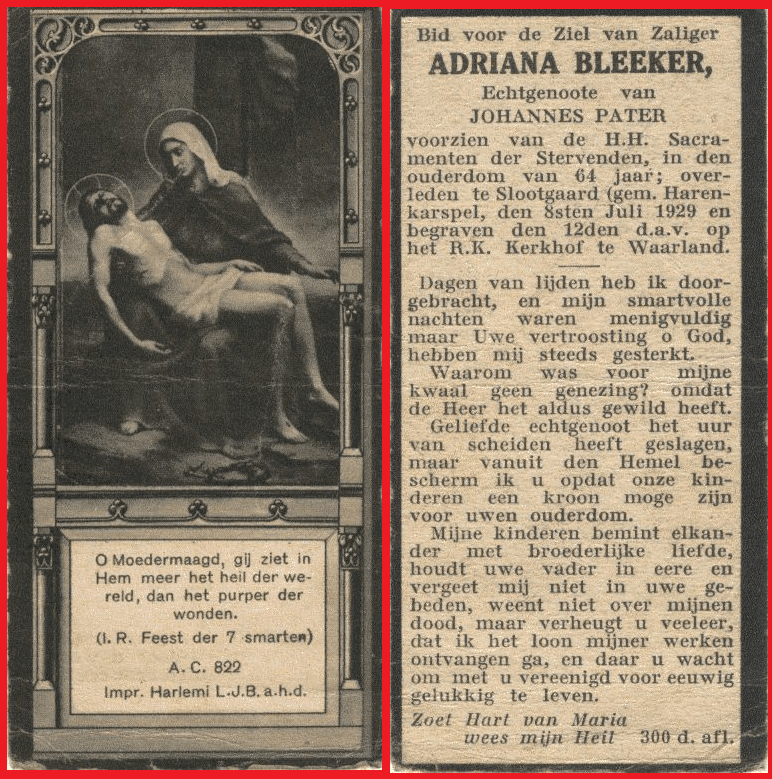
Adriana died on July 8, 1929, at home in Slootgaard, a village in gemeente Harenkarspel.
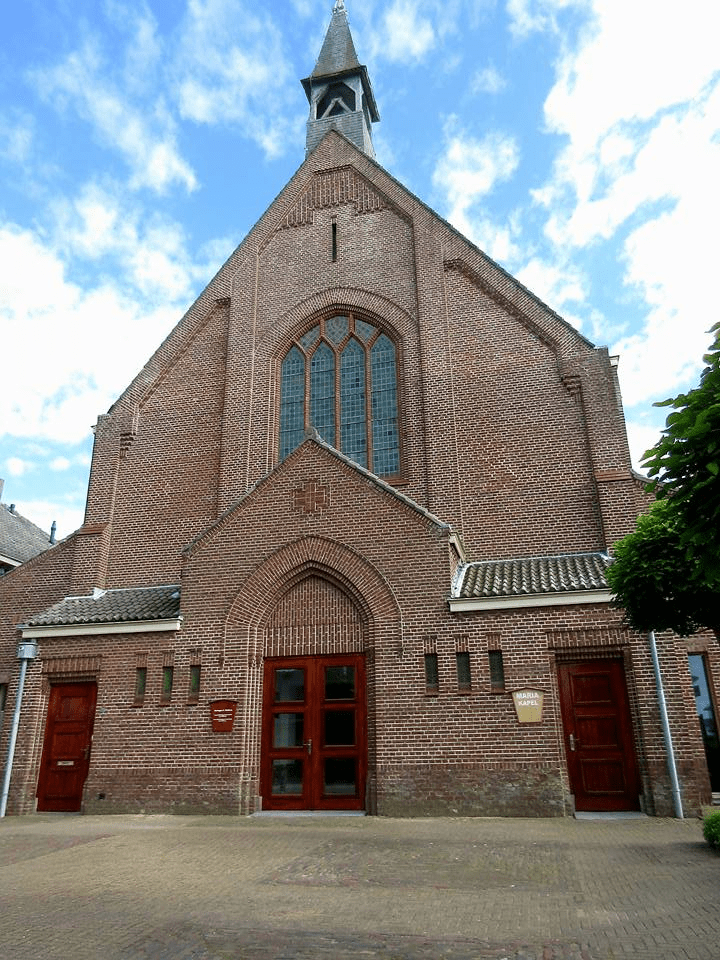
The bidprentje (prayer card or in memoriam card) for Adriana’s funeral states that she was buried at the church cemetery in Waarland, which at the time was part of gemeente Heerhugowaard. This would be St. Wulfram’s Church (left), which I drove past the last time I was in the Netherlands. However, there would have been no point in stopping to look for her grave, because graves in the Netherlands are usually cleared within thirty years. A quick check of Online Begraafplaatsen (a database of Dutch cemeteries) shows no entries for Adriana at the St. Wulfram cemetery, which is consistent with her grave having been cleared.
 A Deck of Ancestors