52W Mark III – Week 34: Member of the Club

My Gx3 grandfather, William Burgess, was an active member of his community. In addition to participating in local politics as a school board trustee and later as an alderman, he was involved in a variety of social activities.

William was one of the original Mormon settlers of Utah, having travelled west with Brigham Young’s company, in a party of 1220 individuals. William and his first wife, Maria Pulsipher, arrived in 1848 and first settled in Huntington. Within a year, they had relocated to Salt Lake City. In 1852, William entered into a polygamist marriage with my Gx3 grandmother, Charlotte Liggett. The family then moved to Lehi in 1854.

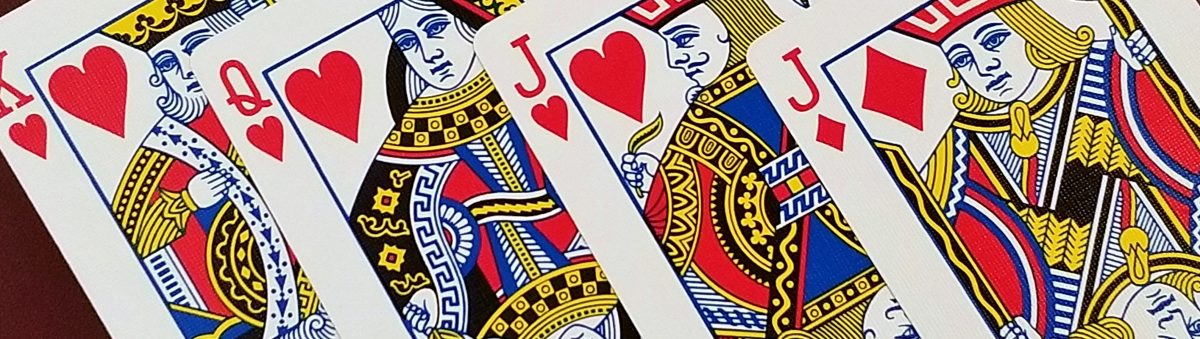
William was one of the founders of the Lehi Dramatic Club. On February 16, 1855, he obtained the necessary licence to produce plays from the town, without fee. The club performed in Lehi’s log schoolhouse, using tallow candles for footlights and painted wagon covers for scenery and curtains.

The first productions of the club were plays called “Luke the Labourer” and “Priestcraft in Danger”. The former, a melodrama written by John Baldwin Buckstone in 1826, is the tale of a farm worker and his turbulent dealings with his former employer. The latter, by William M’Ghie, was first published in The Latter-day Saints’ Millennial Star, a periodical in Manchester, England, on May 15, 1849.

I doubt William actually performed on stage. Rather, I believe he was one of the people working behind the scenes overseeing the operations of the club. Nevertheless, it is entirely possible that he may have been treading the boards!

52W Mark III – Week 28: Trains

My grandfather, Leo Burgess (1920 – 1995), worked for the Canadian Pacific Railway for 32 years. I’ve written about various aspects of his time with the railway, such as the fact he was a proud member of his union and his brushes with Hollywood, including meeting his movie idol Glenn Ford.

Some of the items my grandfather used as a conductor, which are now in my possession

Leo was based out of Lethbridge, Alberta. He started as a brakeman and worked through the ranks, later becoming a yard manager. Early on, because of winter layoffs, he chose to work for the CPR in Cranbrook because there was more work there during the winter to provide a steady income. In 1972 he became a conductor, performing that role until his retirement in 1982.

One of my earliest memories was travelling on the train from Medicine Hat to Lethbridge. I’m sure my mother would correct me if I’m wrong, but in that memory I am sure my grandfather was travelling with us.

My grandfather often brought me to the train station in Lethbridge when I was little. Of course, the highlight was always getting to go on to the caboose. Of course, I’m showing my age in being able to recall a caboose as an everyday working part of a train and not just as a museum piece.

One of my favourite photos, showing me with my grandfather. If there’s any doubt, he’s the one on the left.

The station building still exists and has been designated with heritage status. In the 1980s, the railyard was relocated a few kilometers west of the city and the tracks were removed from central Lethbridge. In 1987, the station building was converted into the Lethbridge Community Health Centre and it still serves in that capacity.

The former train station in Lethbridge is now the Community Health Centre. This caboose remains preserved beside the former station building. I wonder if my grandfather ever worked on this specific railcar. Heck, I wonder if this is one of the cabooses that he took me on!

Of course, I would be remiss if I did not repeat the fact that working on the train crew for Superman: The Movie was one of the highlights of his time with the CPR. During the eulogy at my grandfather’s memorial service, one of his friends told an anecdote that suggests my grandfather felt that he had gotten familiar with the cast and crew. The scene took six days to shoot. Apparently during a break in filming, Ford was talking to a group of railway workers when my grandfather sauntering up, put his arm around the actor, and said, “How’s it going, Glenn?”

My grandfather was working in the engine during the filming of this scene. My parents live about a 30 minute drive from where this was filmed. The tracks are gone, but the memories live on.
My grandfather is the man wearing a cap standing on the right side of the photo.

52W Mark III – Week 23: Health

While I descend from a long line of farmers and labourers, I sure have a lot of healthcare providers in my family tree!

I’ve written about my grandmother, Helen Lerner, who ended up becoming a hospital lab technician instead of attending Normal School to become a teacher. I’ve also written about my great great grandmother, Ella Thomas, who was a midwife for over 40 years. I have a sibling who is a physician, and her mother-in-law is also a prominent well-known physician. One of my siblings is a pharmacist. I have two aunts who were nurses. I have a sister-in-law who works in healthcare public policy and another who is a nurse practitioner specializing in mental health. Even my occupation is part of the healthcare system.

My wife’s family is also replete with people in the healthcare industry. There are numerous physicians in her maternal line, including her great grandfather who was a colleague of Dr. Frederick Banting, who co-discovered insulin. In fact, his daughter was one of Dr. Banting’s first patients to receive the medication. Many of the physicians in my wife’s tree served as medics in World Wars One and Two. Her grandmother also drove ambulance for the Red Cross during World War Two.

My own mother went into nursing. However, she was only in the training program for four months. She had to leave the program because at the time you could not be married or have children. That was about to change. My parents married after my mother left the program, and I came along not too much later.

My mother in nursing school

52W Mark III – Week 22: Creativity

In addition to being a scientist, my Aunt Diana was also liked to create. My mother has several of her paintings hanging in my parents’ home. In addition to amazing books and sciency items, gifts from Aunt Diana would occasionally be pieces of art.

I don’t have any photos of Aunt Diana’s paintings (I’ll have to rectify that next time I visit my parents), but I do have some of the little art pieces she gave to me when I was a kid. However, in going to find them, I came across these pysanky – Easter eggs – my great aunt Connie made.

Aunt Connie is my mother’s last living aunt. She was married to Ralph Burgess (1935-1999), my grandpa Leo Burgess’s youngest brother.

Until recent years, Aunt Connie made pysanky – Easter eggs. While associated with Ukraine, pysanky are common to many slavic cultures. I have not researched Aunt Connie’s lineage, but if memory serves her heritage includes Germans from Russia, people from the various German states who settled in the Russian Empire in the 18th and 19th centuries. This included colonies in what is now Ukraine.

Writing about Aunt Connie, I am reminded of two things. First, she also made some of the most delicious sausage I’ve ever eaten. Second, I owe her a letter!