52W Mark III – Week 15: School Days

I typically consider myself as a descendant of many, many farmers. However, I am always surprised to remember that I am also descended from many individuals for whom education was important. There are also several educators in my extended family, including a high school principal. One of my sisters was a school teacher before becoming a medical doctor. As well, my maternal grandmother, Helen Lerner, originally intended to become a school teacher until a nun steered her in another direction.

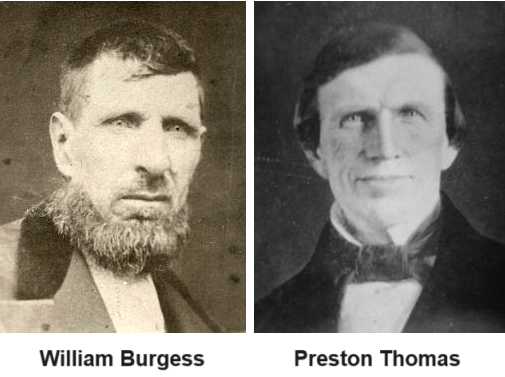
In particular, several of my direct ancestors were school board trustees. The earliest were my Gx3 grandfathers, William Burgess (1822-1904) and Preston Thomas (1814-1877). They served together on the first school board for the Lehi, Utah school district. The school district was created by the city of Lehi by resolution dated February 17, 1854. An election was held three days later, on February 20, 1854. Three school trustees were elected: William, Preston, and Daniel Collett.
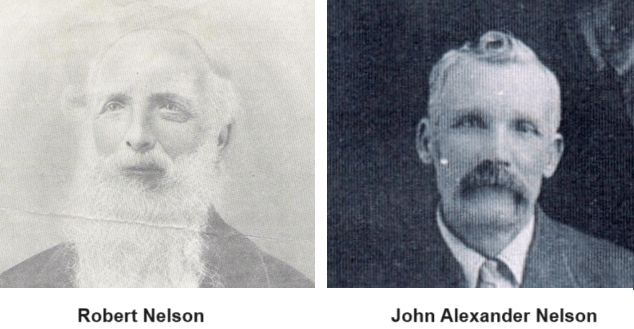
My Grandpa Burgess also had several other school trustees on his maternal line, the Nelson family. According to the 1880 US Census, his great grandfather (another of my Gx3 grandfathers), Robert Nelson (1818-1902) was a school trustee in Smithfield, Utah. Twenty-seven years later Robert’s son, John Alexander Nelson (my Gx2 grandfather) held the same office in Woolford, Alberta. John was one of the founders of the Woolford school board and was one of its first board members.
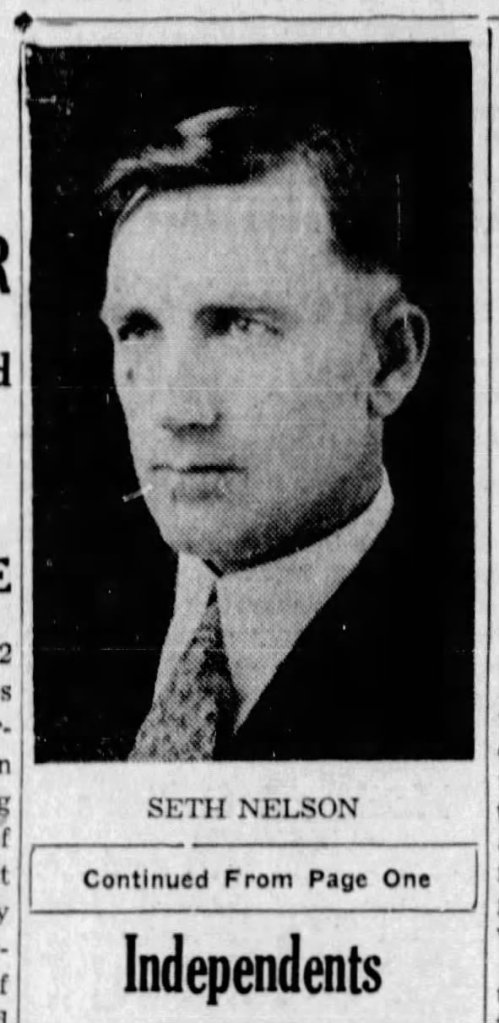
John’s son (my grandfather’s uncle), Seth Henry Nelson Q.C. (1891-1975), also served as a school board trustee in Cardston, Alberta. Seth was a school trustee for 15 years, from 1924 to 1939. Seth served as the Board’s Secretary for the last 10 years of his time in office. Following his last term as a school trustee, Seth made an unsuccessful run for a seat in the Alberta provincial legislature during the 1940 general election. Seth ran as an independent against the incumbent Social Credit candidate, Nathan Tanner. Tanner was a former Speaker of the legislature who was appointed to Cabinet in 1937. Despite running as an independent, it was a close race. Tanner defeated Seth in a two-way race, 2,160 votes to 1,808 (54.4% of the vote).

Education was also a facet of my wife’s side of the family, one of whom also served as a school trustee. Frank Eden (1839-1907), our children’s Gx3 grandfather, was a prominent Halifax, Nova Scotia merchant whose primary business was shoe manufacturing and sales. Frank served two non-consecutive terms as an alderman on the Halifax city council (1892-1893 and 1895-1896). Concurrent with both terms of office on city council, Frank served on the Halifax Board of School Commissioners.

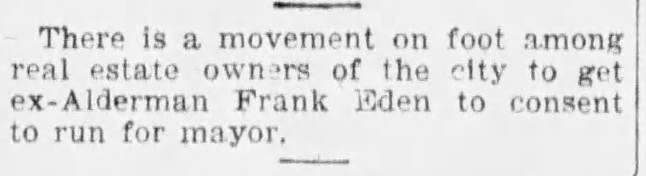
In 1902, there was an attempt to persuade Frank, who was still in the shoe industry, to run for Mayor of Halifax. As stated on page nine of the Halifax Herald, on January 1, 1902: “There is a movement on foot…to get ex-Alderman Frank Eden to consent to run for mayor.” As far as I’m concerned, all puns are intended.
52 Weeks Mark III – Week 12: Technology

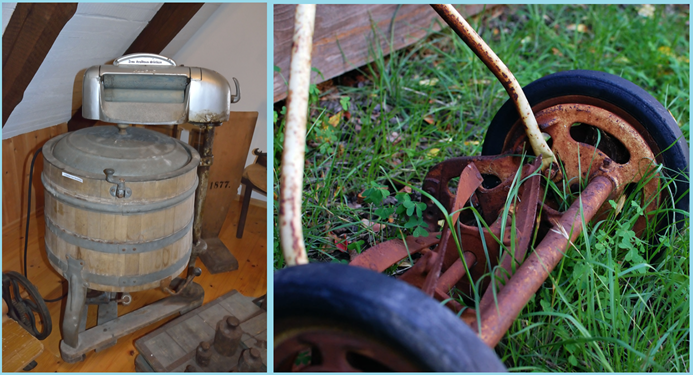
In the early 1970s, my maternal grandparents, Leo Burgess and Helen Lerner, were more than happy to rely on what seemed me to be horribly outdated and obsolete technology. My grandmother still used a wringer-washer and my grandfather used a push mower that to me seemed to be older than Methuselah.

These were both very much like the implements my grandparents used. I remember they each let me have a try at using them. Needless to say, both were hard work. I’ll stick to our modern gizmos, thanks.
[Images shared per Creative Commons licences 3.0 Unported and 2.0 Generic, respectively. Links: washer; lawn mower.]

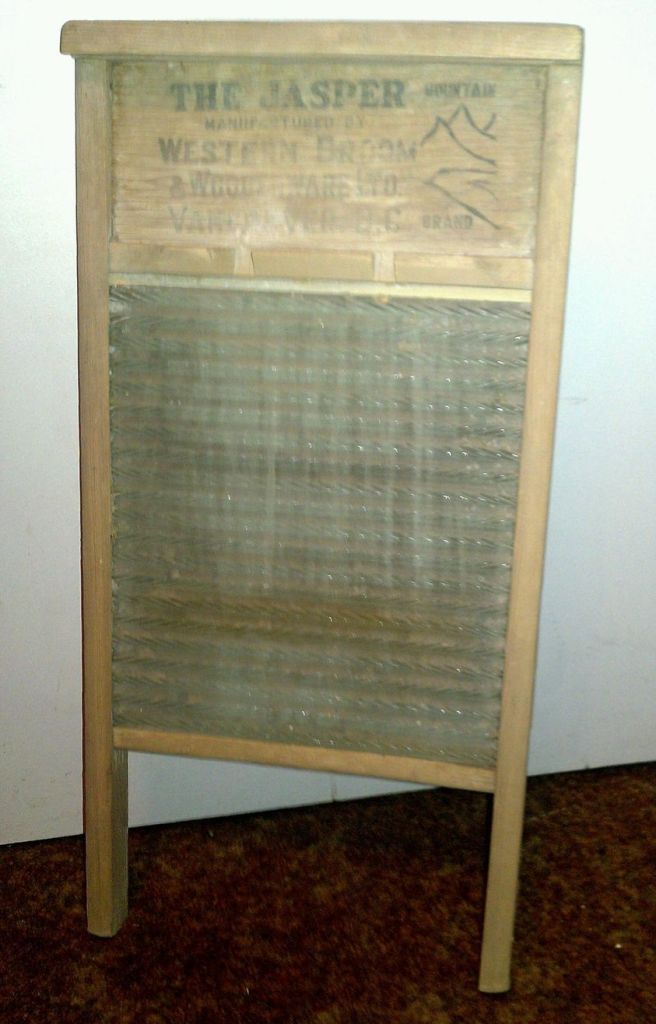
My mother still has the scrub board my grandmother used. She used to keep it in a spare room, which is where I photographed it. A few years ago my folks built a new house, so it now sits in a place of pride.

As can be faintly seen on the washboard, it was manufactured by Fraser Western Broom and Woodenware Ltd. in Vancouver, B.C. I see that the Museum of Vancouver, which is less than a half hour drive from where I live, has one in its collection. Based on the information on the item on its website, this washboard could not have been manufactured any later than 1950. That means my grandmother’s washboard must have been at least 25 or 30 years old when I first saw it.

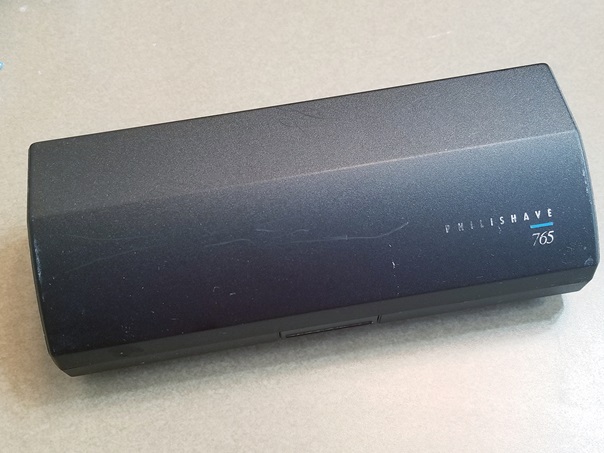
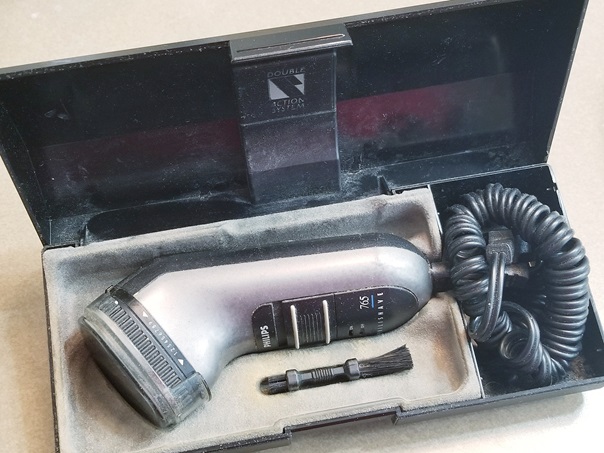
While it may seem my grandparents clung to the past, they did not eschew more modern technology. Ever since before I was in kindergarten, my grandfather always used an electric razor. We always loved it when he would hold it up to our cheeks so that we could have a shave, too. I have the last electric razor my grandfather owned before he passed away in 1995, a Philishave 765. Not only does it still work, but to my surprise I’m still able to buy replacement blades for it. I rarely use it, however, because I still prefer to use a manual razor; plus, several years ago my wife bought me a new one.

This razor must be at least 30 years old, if not older, but it still works!

52W Mark II – Week 45: War and Peace

With Remembrance Day (Veteran’s Day in the United States), this week’s 52 Ancestors Challenge theme is “War and Peace”. Rather than write about my own ancestors’ experiences with war and peace, I’d like to call attention to an exciting undertaking by the British Columbia Genealogical Society (“BCGS”).

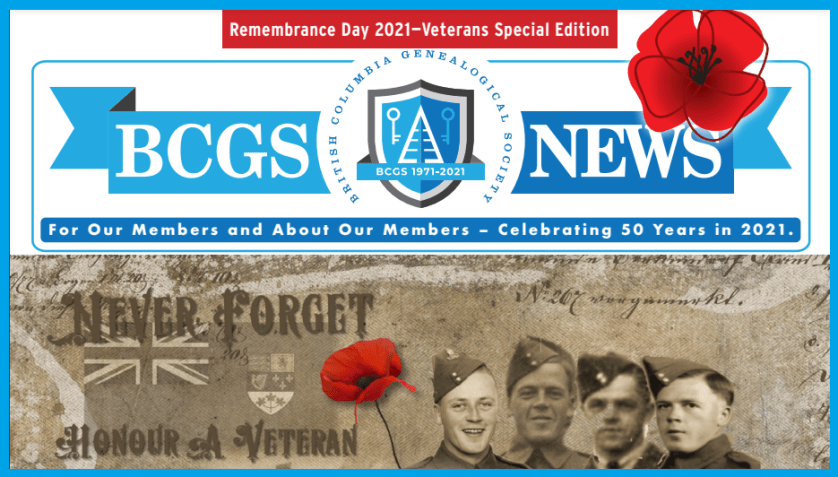
Every month the BCGS publishes The BCGS News. For the last few years, it has been only published in electronic format. Every issue since January 2020 is available on the BCGS website. You don’t have to be a member of the society to access this part of the website (although there’s lots of benefits to be one – they just launched their 2024 membership drive!).

In November 2021, the BCGS published a “Veterans Special Edition” of The BCGS News. Members were invited to submit stories about their veteran ancestors, regardless of what conflict in which they had served. Submissions included veterans of the American Revolution, the War of 1812, the Lower Canada Rebellion, the North-West (Riel) Rebellion, the Fenian Raids, the South African War (often referred to as the Second Boer War), World War I, World War II, and the Korean Conflict.

This year, The BCGS News team (spearheaded by its Editor/Designer Sue Sullivan) is going even bigger and better – they’re doing a book! Throughout most of 2023, BCGS members have been encouraged to submit stories and photos of their veteran ancestors – any time in history, any conflict, any place. Moreover, it’s not limited to those who actually fought, it includes those who served in peacetime or on any peacekeeping mission.

The book will be available to BCGS members as a digital download. The editorial team is also considering publishing it in print form, but that has yet to be determined.

Remarkably, I have very few ancestors who served in wartime. They were usually too young or too old to have served in the conflicts of their time and place. However, I provided two submissions for the veterans book, both of which involve individuals I’ve written about in this blog: my maternal grandfather Leo Burgess; and Lee Anton, my maternal grandmother’s second cousin (also her first cousin once removed through a different ancestor). The editor invited me to submit a larger piece on Lee, as she hopes to have a few “featured” veterans.

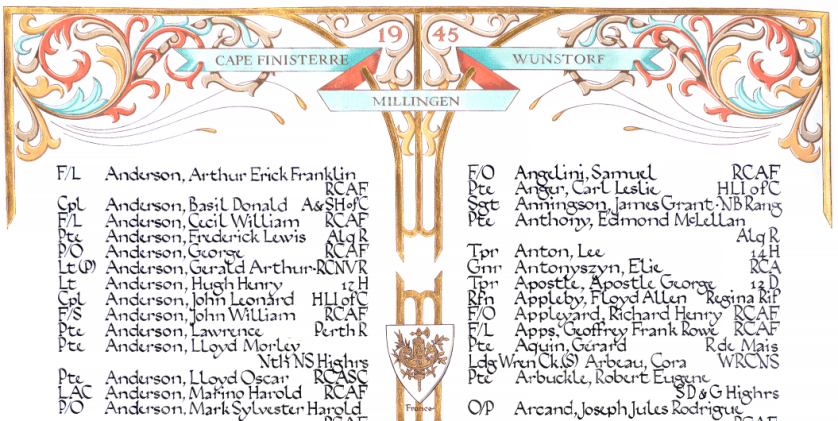
Lee Anton commemorated on page 491 of the Second World War Book of Remembrance.
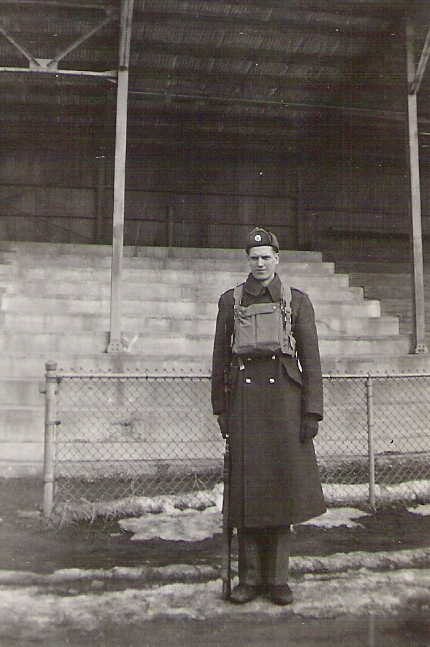
My maternal grandfather Leo Burgess during basic training in Peterborough Ontario.

Hopefully the book will be ready by Remembrance Day. I know that it has been a huge undertaking by a small band of volunteers, so it would be understandable if it comes out sometime later this month. Either way, I am really looking forward to it!

52W Mark II – Week 43: Dig A Little Deeper

Most of my ancestors have been labourers. Many of them did a lot of digging as part of their work, especially since a lot of them were agricultural workers. Some may have only deep enough to plant crops, while others may have dug a little deeper.

I’ve already speculated about  my 4x Great Grandfather, Petrus Pieterszoon “Pieter” van der Fluit and the possibility that the reason he relocated from Zuid Holland to Noord Holland was to work digging canals and other work related to polder construction and waterworks. Unfortunately, the timing does not seem quite right. Furthermore, and of greater importance, I’ve yet to discover any real evidence to support the theory.

Turning to my mother’s side of the family, my great grandfather Milton Leo Burgess was a man of many occupations over his working life: farmer; plumber; and woolen mill worker (where he lost a finger of his left hand due to a work injury). Unique amongst the labouring jobs held by my ancestors, apparently Milton spent a short period of time sometime around 1950 working as a gravedigger. The only source I have for this is my mother. While she knew her grandfather well, if he was a gravedigger in the early 1950s she would have been too young to have had any memories of the time he held that job. It is something he likely told her when she was older.

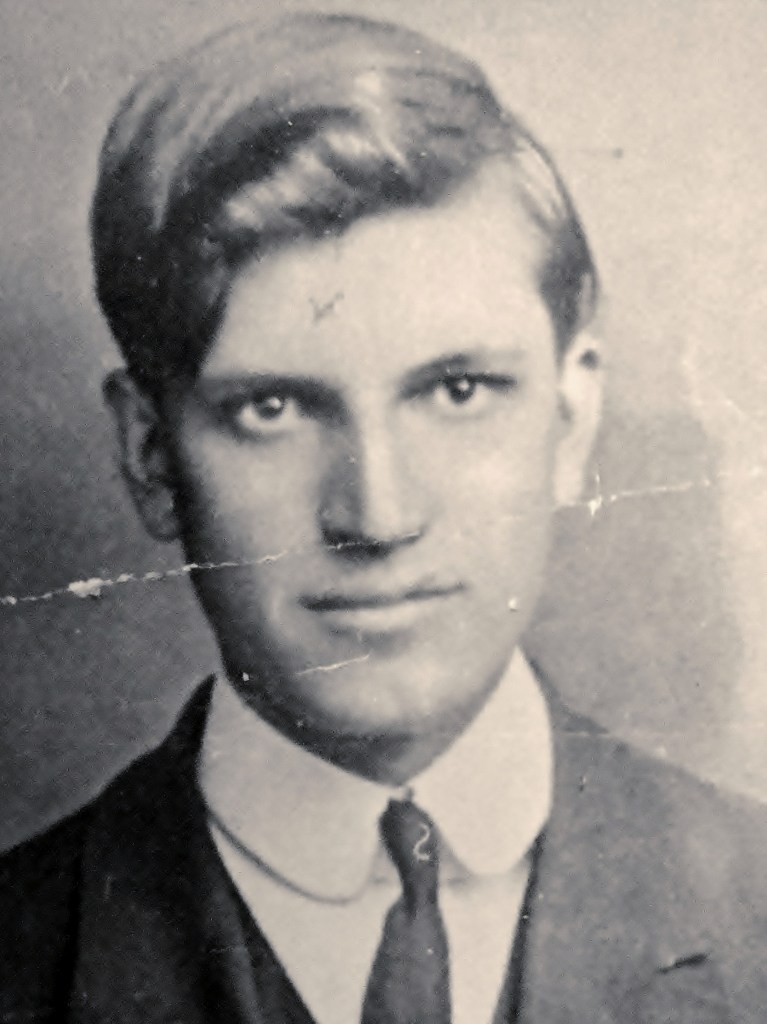
Milton Leo Burgess in an undated photo.