52 Weeks – Week 47: Wrong Side of the Law

Absent any very well-kept family secrets, I don’t have a lot of possibilities for this week’s 52 Ancestors Challenge theme, “Wrong Side of the Law”. For the most part, I have more ancestors who have been on the correct side of the law.

The only ancestor who readily came to mind who had any significant legal problems was my Great x5 Grandmother, Hannah Newland of Norton, Massachusetts. Today her problem – if it would even have been a problem had she been able to do as she wanted – would have been more of a social than legal issue and, frankly, one that would be no one else’s business.

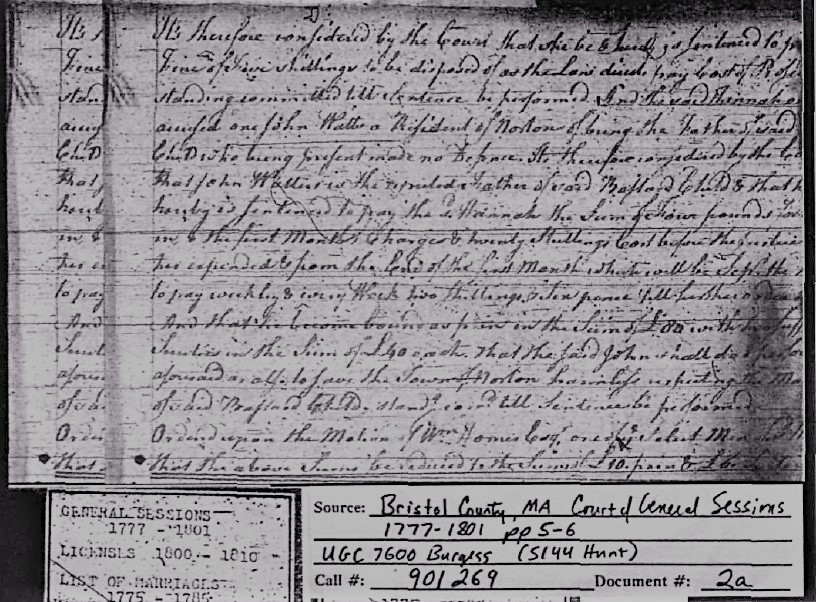
48. John Watterman residing in Norton and Hannah Newland, both Norton. Entered February 15th, 1777, and cryed one time and forbid by the Selectmen.

Hannah’s problem arose from her relationship with a John Watterman (often described as Watters due to the legibility of the records). It seems that John may have been a Hessian mercenary who fought for the British during the American revolution, but later who joined with the rebels. In February 1777, Hannah and John declared their intention to marry. However, the Selectmen of Norton, Massachusetts denied them permission to do so.

While not well documented, one account was because of John’s “questionable” German background. If so, that is somewhat ironic, given that Hannah ultimately ended up marrying another Hessian mercenary, my Great x5 Grandfather, “Chris John Burgess”. Despite this rather English-sounding name, Chris John was born Johann Christian Borges (or Burges) in Prussia. Like John Watterman, Chris John also came to America to fight for the British, only to change sides later in the war. The legend is that he changed his name after doing so, in order to better fit in with the colonials.

However, what is more likely is that Hannah and John had conceived a child out of wedlock. The child, Benjamin Newland, was born in August 1777, six months after Hannah and John declared their intention to marry. A copy of an extract of a court record that I have shows that Hannah was fined five shillings for “fornication and having had a bastard child born of her body”, as well as paying the cost of the prosecution. John was in attendance at the court proceeding and essentially acknowledged paternity. The court ordered John to pay for the maintenance of the child. It appears clear from the court record that the order was less for social welfare purposes and more to prevent the town from bearing the cost of supporting an unwed mother.
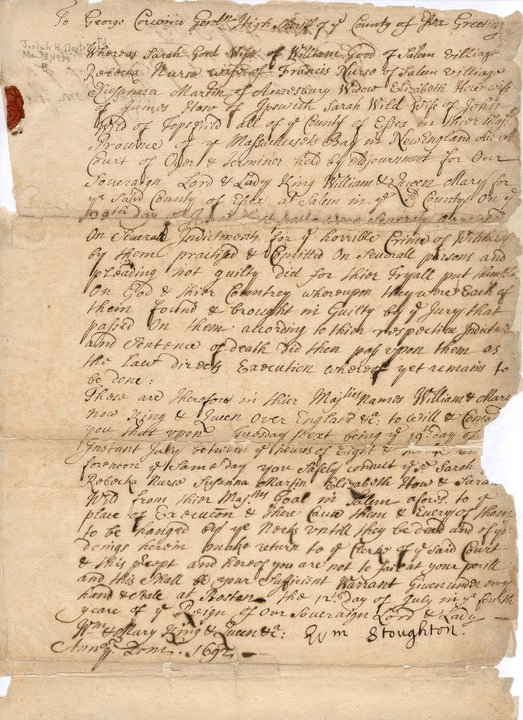
The death warrant for Rebecca Nurse

Of course, after completing this post I remembered an ancestor who was infamously on the wrong side of the law. My Gx10 grandmother was Rebecca Nurse, who was one of the women of Salem Village executed on the false accusation of being a witch. While on the wrong side of the law – albeit through a mockery of the law, even by the standards of the day – Rebecca certainly was on the wrong side of what constitutes justice.

Suffice to say, one need not necessarily be a scoundrel, ne’er-do-well, or criminal to be on the wrong side of the law. Just make sure you don’t live in the wrong era, depending on what you do.
52 Weeks – Week 46: Tombstones

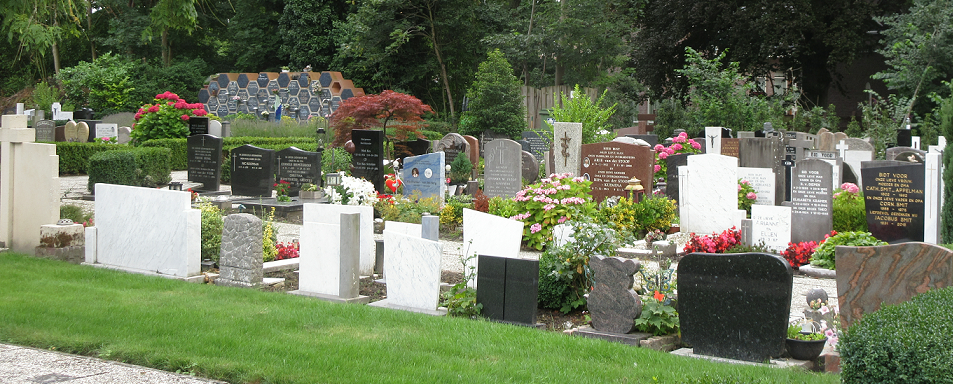
Pretty much anyone who has been doing genealogy for a significant period of time has likely visited their fair share of cemeteries. So it’s no surprise that one of this year’s weekly themes for the 52 Ancestors Challenge is “Tombstones”.

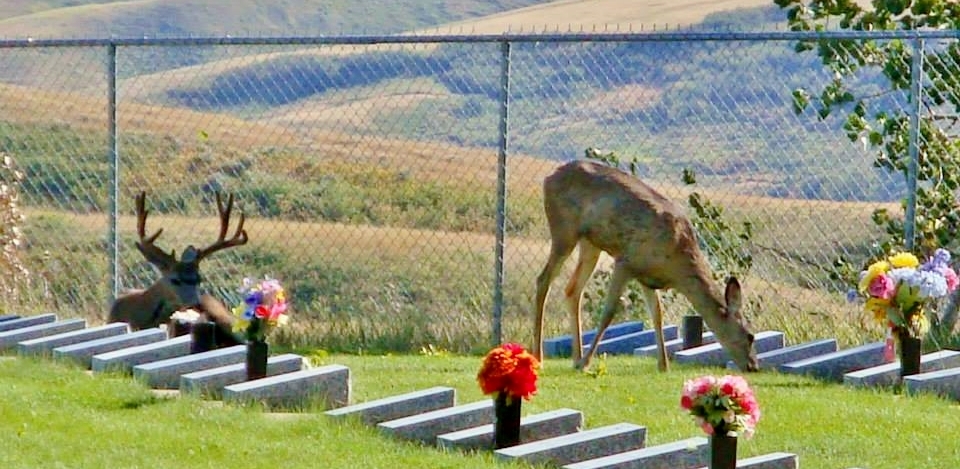
A couple of visitors I ran into at Mountain View Cemetery in Lethbridge, Alberta.

On Week 14, “Check it Out“, I considered some unique ways to consider my pedigree. For this week’s theme, I thought about my pedigree in terms of whose tombstone/headstone/grave marker I have visited.

What I was surprised to realize is that I’ve visited the final resting place of more of my great great grandparents than my great grand parents. I’ve been to where two of my great grandparents are buried, but to the site of three of my great grandparents. Granted, it’s a matter of three to two, but still, it seems like an odd statistic.

None of these include my Dutch ancestors. In general, Dutch graves are cleared after a few decades. I’ve only been to one church graveyard in the Netherlands, the Parochiële Kerkhof of St Jan de Doper (St. John the Baptist) in Noord Scharwoude, North Holland. My father has at least one aunt and uncle buried there, as well as a number of cousins of varying degrees.

Parochiële Kerkhof of St Jan de Doper

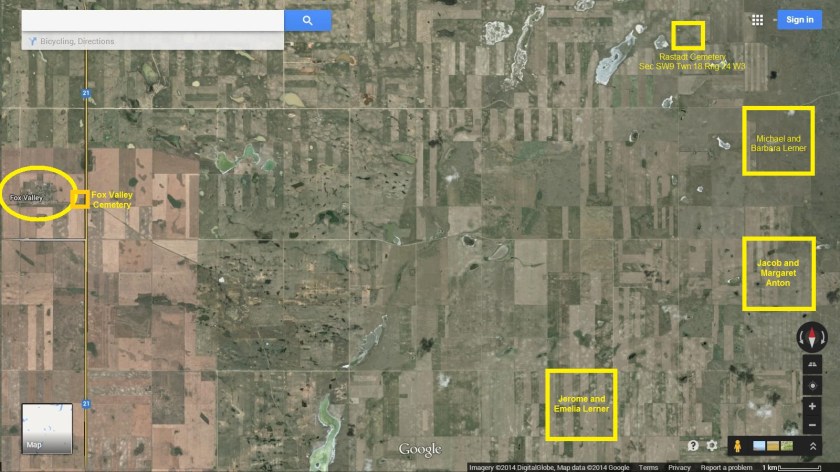
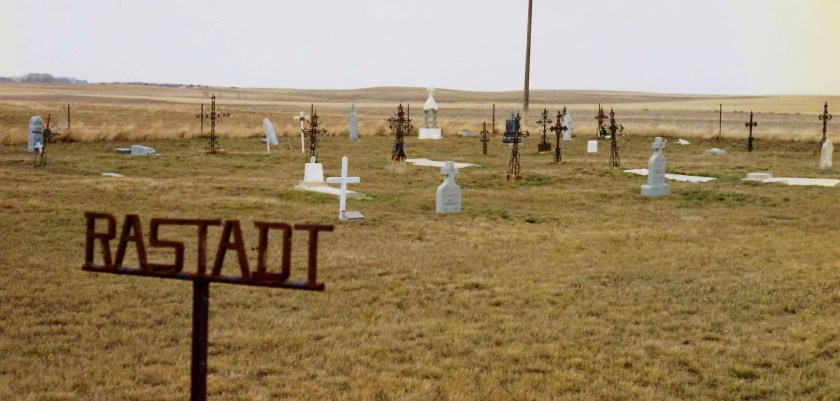
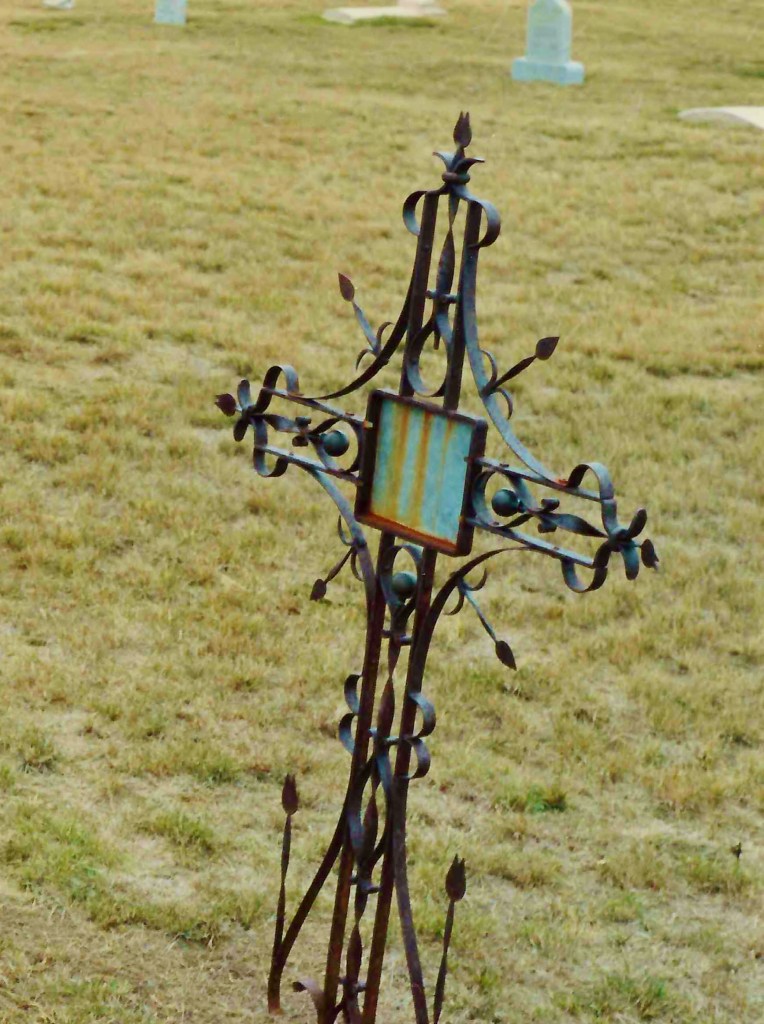
I’ve written several times about my road trip to Fox Valley, Saskatchewan with my mother, where we visited the Rastadt and Fox Valley cemeteries. My great great grandfather Jacob Anton is buried at Rastadt, while his son-in-law (my great grandfather) Heronimus (“Jerome” or “Jerry”) Lerner is buried in Fox Valley.

Fox Valley is the oval on the left, with the Fox Valley cemetery immediately to the east. The Rastadt cemetery is located in the upper right hand corner.
Rastadt, Saskatchewan Cemetery, April 1, 1997. Located at 50°30’00.9″N 109°15’32.3″W
You can find the cemetery listing here.

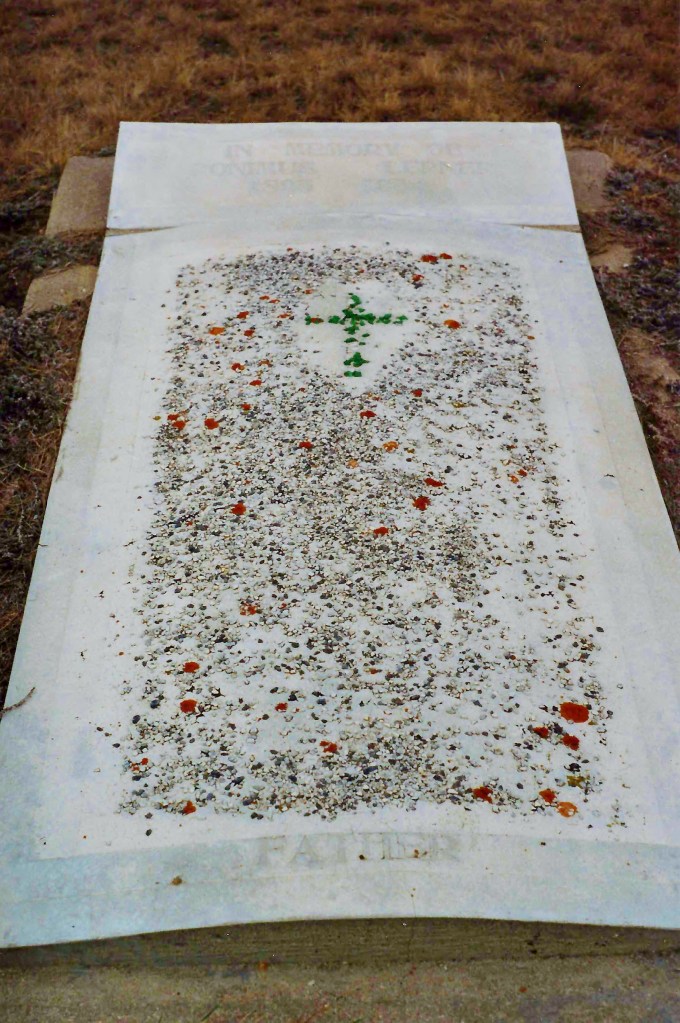
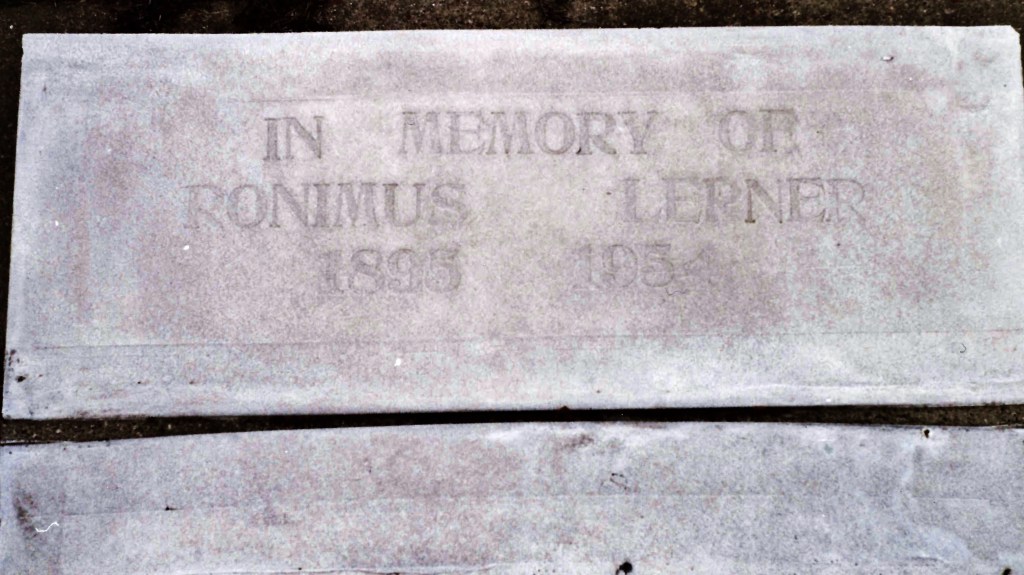
There’s an error on the headstone. I guess you could say that it’s a grave mistake.

The inscription on my great grandfather’s headstone is wrong. It should read “Heronimus” rather than “Ronimus”. During our visit, we tried to determine if the first two letters (“HE”) had worn off the headstone or if it had been deliberately written this way. Because of the centering of the text, it appears to have been deliberate. The Medicine Hat News, of December 20, 1954, page 4 states, “Jerome Lerner, of Fox Valley, Sask., who died at Maple Creek December 6. Interment was in Fox Valley cemetery.”

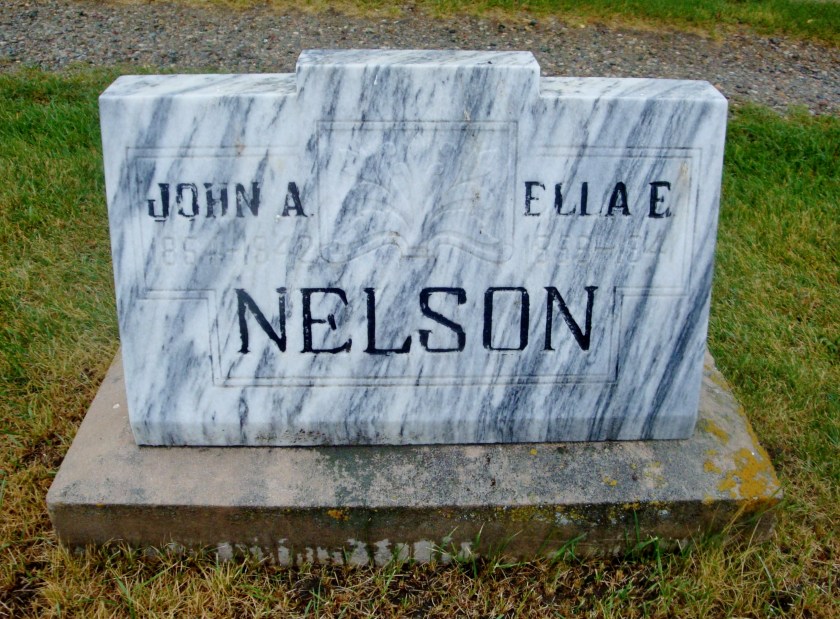
The other great great grandparents whose grave I’ve visited are John Alexander Nelson and Ella Elizabeth Thomas. They’re buried at the Cardston Cemetery. I wrote about my visit there on Week 36.

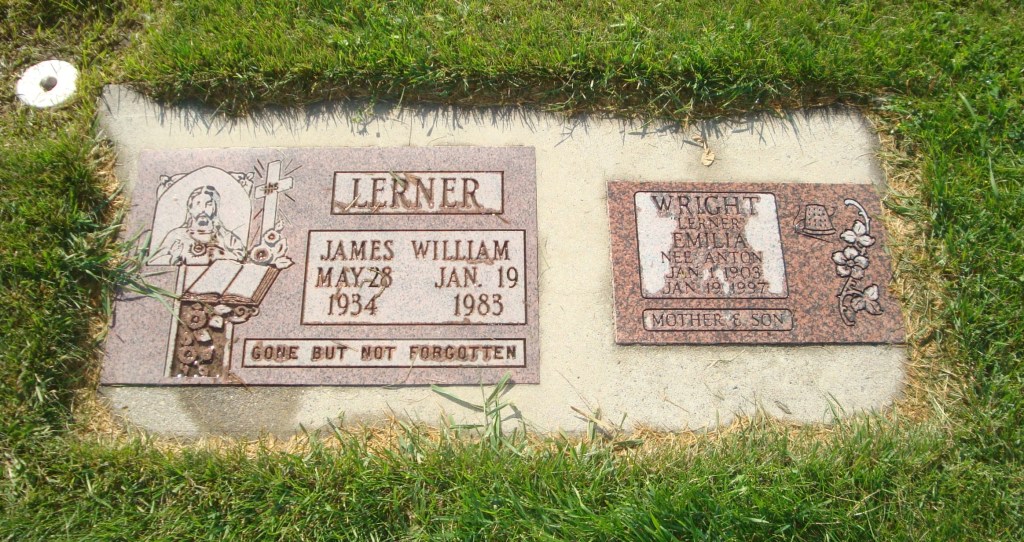
Besides Jerome, the only other great grandparent whose grave I have visited is that of his wife, Emilia Anton. She is buried at Mountain View Cemetery in Lethbridge, Alberta, along her son (my great uncle) Jim Lerner.

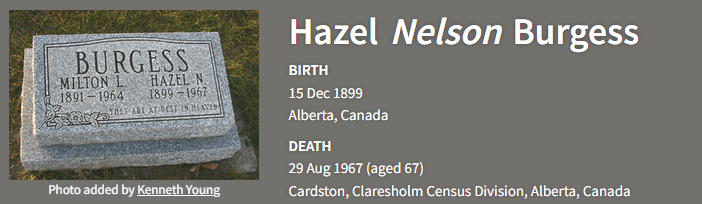
Then again, for what it’s worth, my mother was at the burial of her grandmother Hazel Nelson the day before I was born. She was buried at the Magrath, Alberta cemetery alongside my great grandfather, Milton Burgess, so in a way I’ve been to the burial site of four of my great grandparents. I’ve been to Magrath many times, just never to the cemetery.

Screenshot of the entry for Hazel Nelson at Find a Grave. The headstone is for both Hazel and her husband, Milton Burgess.

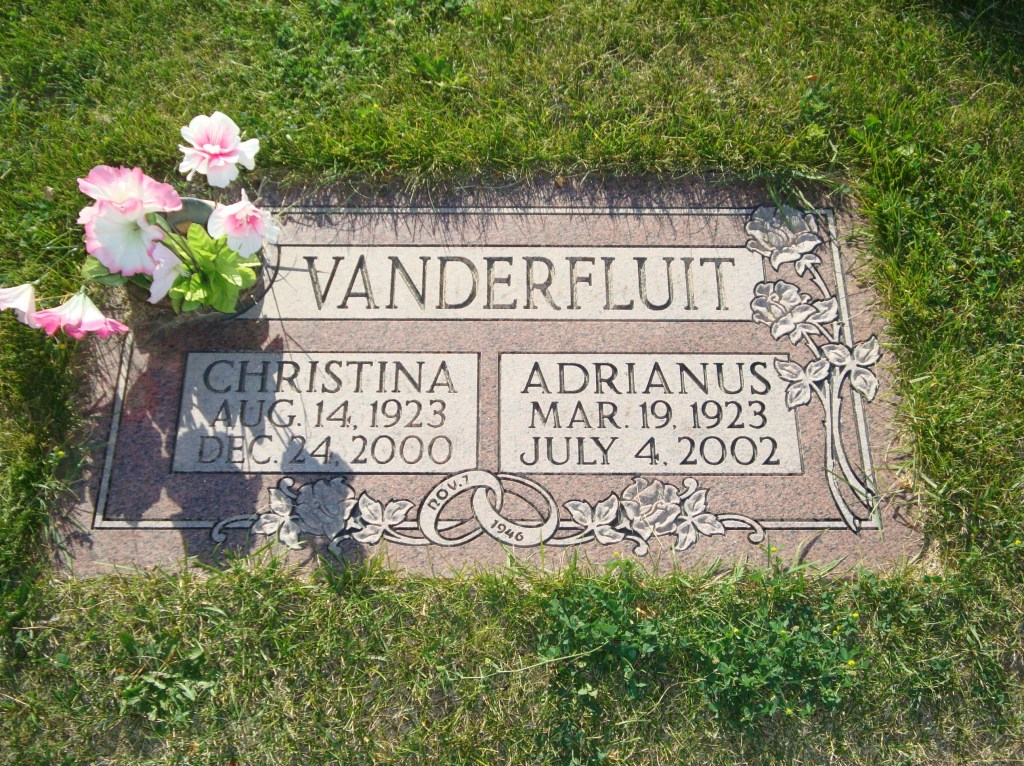
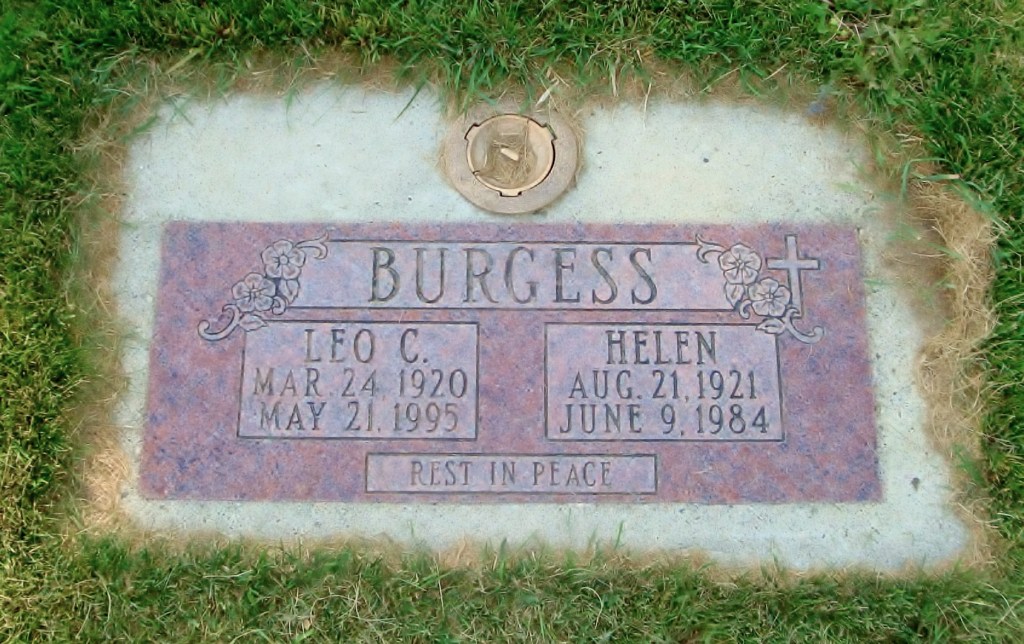
However, I should add that I’ve been to where all four of my grandparents are interred, although I was only present for three of their funerals. I was in high school and writing final exams when my grandmother, Helen Burgess, passed away. Both pairs of my grandparents are buried in close proximity to each other at Mountain View Cemetery in Lethbridge. Among others, they’re also close to Emelia, as well as my aunt Helen Diana Burgess.

52 Weeks – Week 43: Organized

Wow, hard to believe that with this post, there are only ten weeks left of this year’s 52 Ancestors Challenge!

This week’s theme is “Organized”. I can be organized, but I hate doing it and it bores me as a topic. The irony is, given some unexpected events, I find myself having to be organized so that I can create this post. If not tonight, then it won’t be done at all!

I decided to do another take on the word. Organized labour came to mind. My maternal grandfather, Leo Burgess, was a strong union man. I thought I had a photo of his union card, which would have been a centerpiece of this post. Turns out I have almost everything but!

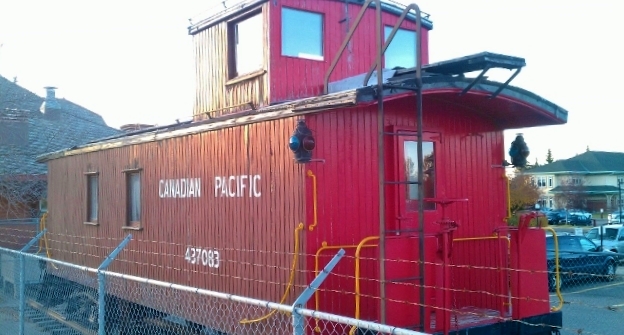
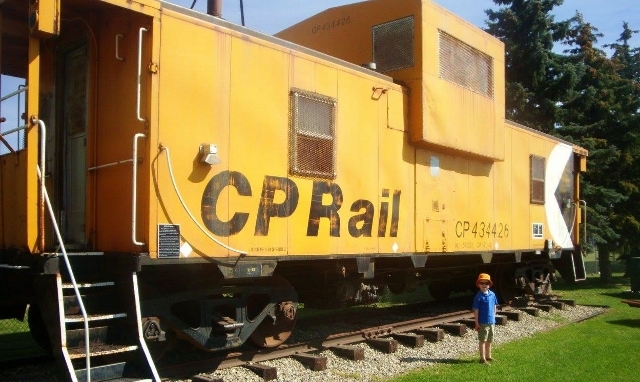
Many years ago, the CPR station in Lethbridge was converted into a public health center and the railyard was removed. However, this caboose remains preserved at the site of the former station. I wonder if my grandfather ever worked on this specific railcar. Heck, I wonder if this is one of the cabooses that he took me on!

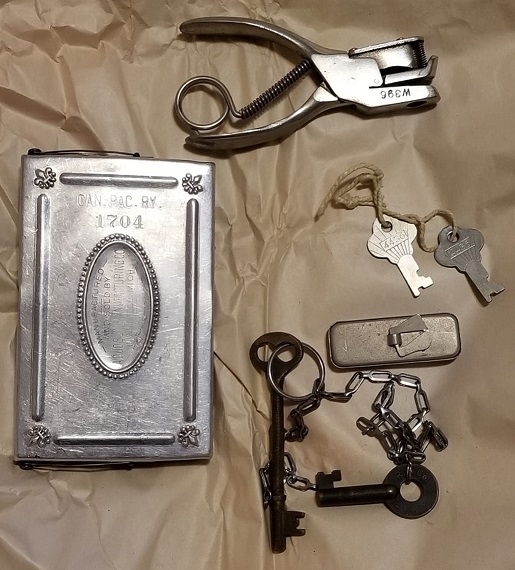
My grandfather worked for the Canadian Pacific Railway for 32 years. He started as a brakeman and worked through the ranks, later becoming a yard manager. Early on, because of winter layoffs, he chose to work for the CPR in Cranbrook because there was more work there during the winter to provide a steady income. In 1972 he became a conductor, performing that role until his retirement in 1982.

Some of the items my grandfather used for his work as a conductor, which are now in my possession.
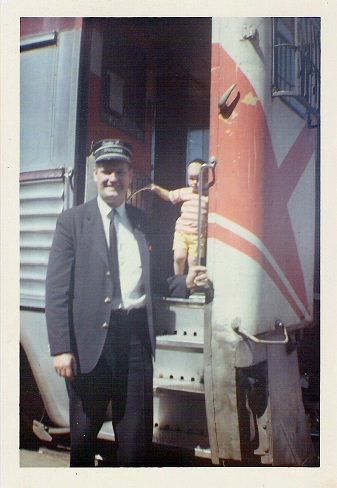
A trip to the train station with my grandfather. I would have been about two or three years old at the time.

My grandfather often brought me to the train station when I was little. Of course, the highlight was always getting to go on to the caboose. When I was older, he’d often take us kids to his favourite haunts, which included the former Labour Club of Lethbridge. We’d always get a treat, like a pop and french fries, but what we loved best were the “pull tabs”. This was many years before lottery scratch tickets, but the idea was similar. They were about the size of a scratch ticket and had semi-perforated tabs that you’d pull off. Underneath were the kinds of images you’d see on a slot machine. Grandpa would buy a bunch and let each of us kids open one up.

My grandmother’s politics were never a secret and she was more than happy to share her opinion about it. However, I don’t remember my grandfather ever talking about politics. I didn’t want to assume what his politics might be, even though he was a staunch union supporter. A few years ago I asked my mom about it. She told me that she rarely heard him talk about politics and he never said what parties he might have supported. My mom had her theories, but had little to base them upon.

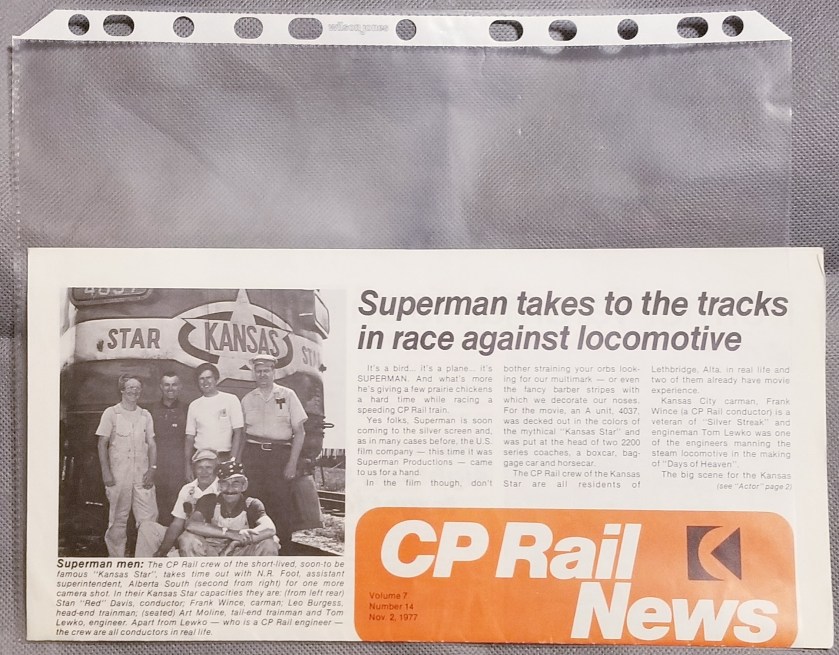
I previously wrote about my grandfather’s role as part of the crew operating the train that was used during the filming of Superman: The Movie.

I’ll be at my folks’ later this week. I’ll have to dig through what of my grandfather’s belongings that my mother still has and see what more I can find.

The CPR caboose on display at the Claresholm & District Museum in Claresholm, Alberta, which is located in a former CPR station. I highly recommend this museum – it is an amazing place for a town of Claresholm’s size.

.

52 Weeks – Week 37: High and Low

Highs and lows bring to mind the Guinness Book of World Records. So for this week’s 52 Ancestors Challenge, I thought I’d consider some of the superlatives in my family tree. Bear in mind that this is for entertainment purposes only, because some of these superlatives have not been sufficiently researched or verified such that they can be taken as fact.

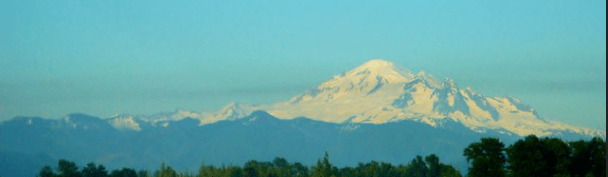
Here’s a high: Mount Baker, Washington

I cannot verify with certainty the longevity of the few centenarians in my database. According to my database, my longest-lived ancestor died at age 110. I don’t believe that for a second, so I won’t even name them. The person for whom I have at least a scintilla of information regarding their longevity is Joseph Metz, my first cousin three times removed. According to his headstone, as seen on Find a Grave, Joseph lived to be about 102 or 103. The longest-lived person in my database with the most reliable information regarding their lifespan is my fourth cousin three times removed, Fern Renner. She was better known to the world as Fern Welk, as she was married to the well-known band leader, Lawrence Welk.

My relative who was the oldest on their wedding day was my great great great uncle, Samuel Nelson, who married for the fourth time when he was 77. The bride, Cecilie Anderson, was 62. Samuel lived to be 93, making him one of my longer lived relatives.

The newlyweds, Hazel Nelson and Albert Beaves, about July 5, 1967.

My great grandmother, Hazel Nelson, married for a second time at age 67, not quite two months before she passed away. Her husband, Albert Beaves, was also a widower marrying for the second time. Albert was 85 years old at the time. He lived another nine years after Hazel’s death. Albert died when he was 94.

While Samuel Nelson had been married four times, the record for most marriages is my 7x great uncle, Archelaus Kenney, who apparently married five times. Not even any of the Mormon polygamists in my tree married that many times. However, I have not verified any of Archelaus’s marriages.

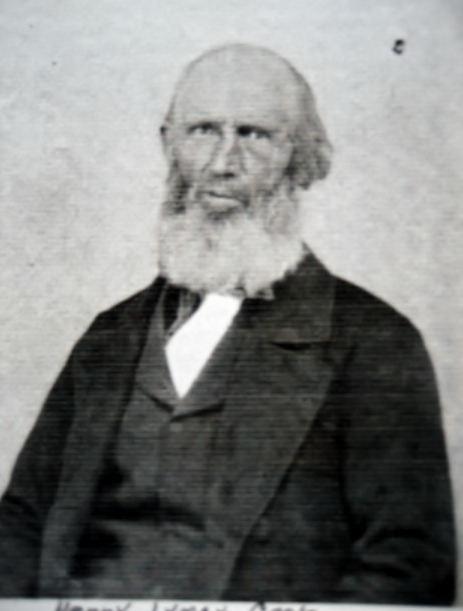
Otherwise, Samuel’s record was tied by his younger brother, my great great grandfather, John Alexander Nelson. However, while it appears that Samuel had been widowed each time he remarried, John was a polygamist. Another ancestor, my great x3 grandfather, Henry Lyman Cook, was also a polygamist who married four times. Other polygamist ancestors, including my great x3 grandfathers William Burgess, Jr. and Preston Thomas, only married three times.

A bunch of polygamists: John A. Nelson, Henry L. Cook, William Burgess Jr., Preston Thomas.

It probably comes as no surprise that the women in my family tree have had fewer multiple marriages than the men. I can find few examples of women who married more than twice. One of the exceptions is my great x4 grandmother, Louisa Thomas, who married three times. Her first husband, Lazarus Beakley, died a year or two after they married, when Louisa was around 24 or 25 years old. Louisa’s second husband, my great x4 grandfather Conrad Liggett, died 18 months after they married, when Louisa was 26. Louisa married again at age 29, to Aaron Cook. Unfortunately, that was another short-lived marriage, as Louisa died when she was 35.

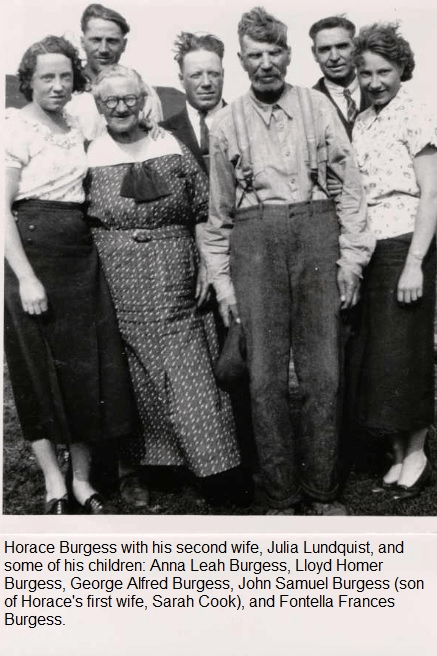
Of course, with marriage there are often children. Of course, the person with the most children in my tree is a father. My great great grandfather, Horace Burgess, had nineteen children. He had nine children with his first wife, my great great grandmother Sarah Cook. Their eight child and youngest son was Milton Leo Burgess, my great grandfather. After Sarah died, Horace remarried, to Julia Josephine Lundquist, with whom he had ten children.

The woman in my family tree who appears to have had the most children is Horace’s paternal grandmother, Violate Stockwell. Violate and my great x 4 grandfather, William Burgess Sr., had 12 children, including my great x 3 grandfather William Jr, who had 12 children with three different wives.

Delving far from what I’ve established through the genealogical proof standard, the earliest occurrence of a surname in my direct lineage is de Fleg, which dates back to the 10th century, through my 9x great grandfather Thomas Flegg. My connection to Thomas is through Henry Lyman Cook. While I have done a pretty good job at demonstrating my connection to Henry, I have not really done much work on his ancestry beyond the basics.

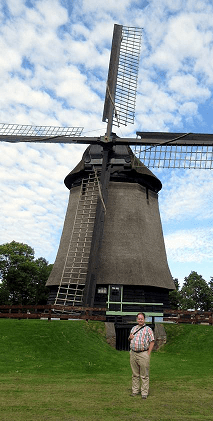
Here’s a low: standing a meter below sea level in Waarland, Netherlands

I realize that in this examination of superlatives, I have only considered the highs. Of course, considering the people in my tree who are at the opposite end of most of the categories I have discussed are in the multiples. The one category that might lend itself to reasonable consideration of the low end is the surname that might be the opposite end of earliest occurrence. In other words, the surnames I have traced the least far back in time. I’ve identified all 32 of my great x3 grandparents. It is the next generation where I face my first brick walls. I am missing nine of my 64 great x4 grandparents, all on my maternal grandmother’s side of the family. They are all Germans from Russia, who are particularly difficult to research. These lines trace back to settlements in what is now Ukraine, when it was part of the Russian Empire.

Genealogy: all the highs and lows are fascinating!