
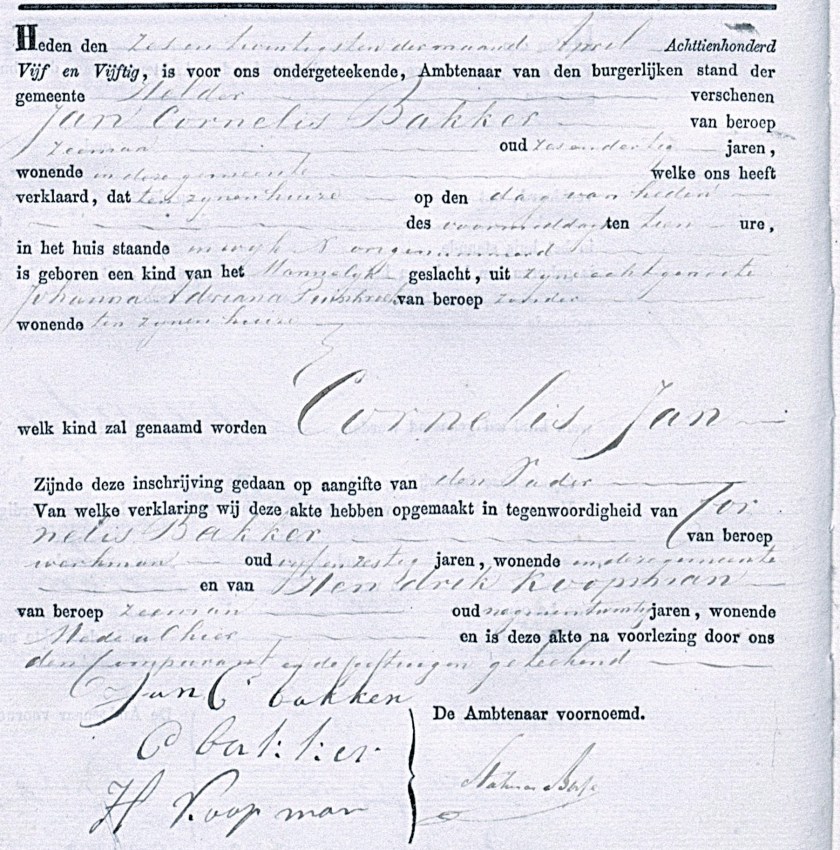
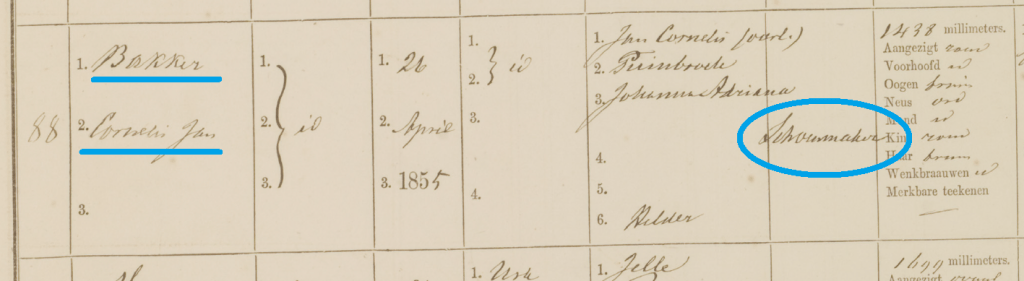
Cornelis Jan Bakker was born on April 26, 1855 in Den Helder, Noord Holland, the only son of Jan Cornelis Bakker and Johanna Adriana Puinbroek. Cornelis was only four when his father died. While Johanna remarried to a man named Pieter Dekker when Cornelis was six, the death of his father must have undoubtedly must have left a mark on his life. He remained an only child, as Johanna and Pieter never had any children that I could find.
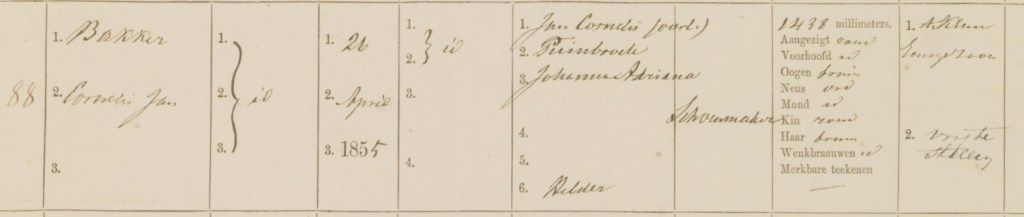
Cornelis spent his life in Den Helder, a port city in the north-west corner of the Netherlands and home of the Netherlands’ primary naval base for centuries. In 1875, Cornelis registered for mandatory military service in Den Helder but never served. The register shows that he was exempted from service because he was an only child.
It should come as no surprise that Cornelis had a number of ancestors who were civilian sailors in Den Helder. Cornelis’ father and a maternal uncle were sailors, as were several other direct ancestors, along with his step-father and his father-in-law. In fact, Cornelis’s wife also had many sailors in her lineage.
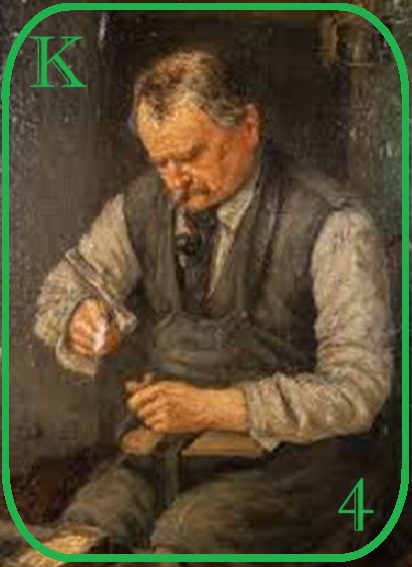
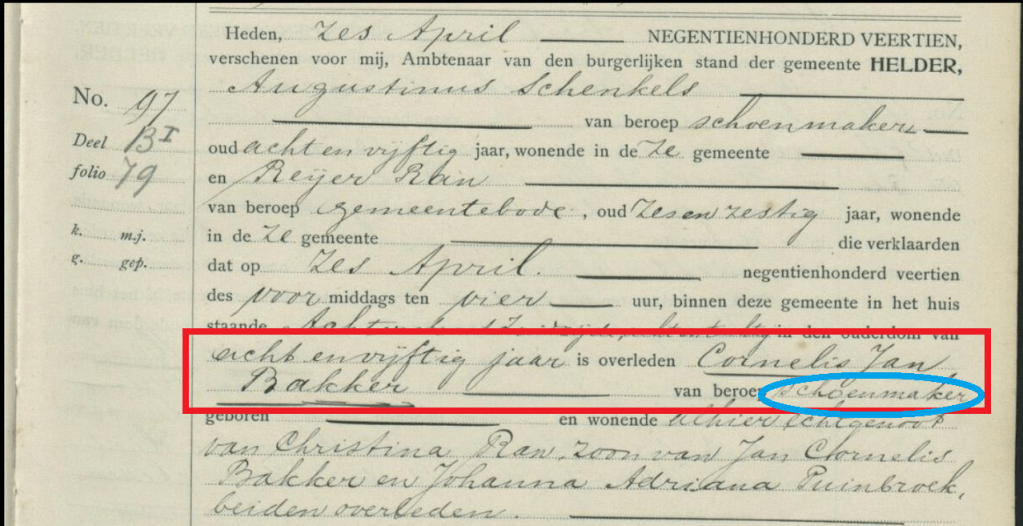
Cornelis broke with that tradition. Around 1875, Cornelis began his work as a cobbler or a shoemaker, a trade he maintained for nearly four decades, up until his death in 1914. Three of Cornelis’s five sons became shoemakers, although one later gave up the trade to work in a bank.
On September 29, 1881, when he was 26 years old, Cornelis married Christina Ran in Den Helder. Christina was born in Den Helder on February 13, 1858 and, like Cornelis, spent her entire life in that city. Together, Cornelis and Christina had eleven children. While Cornelis and Christina remained rooted in Den Helder their entire lives, several of their children later moved further afield, including my great grandmother Elizabeth Bakker who ended up in Langedijk, about 30 kilometers to the south. Other children ended up in the provinces of Utrecht and Zuid Holland.
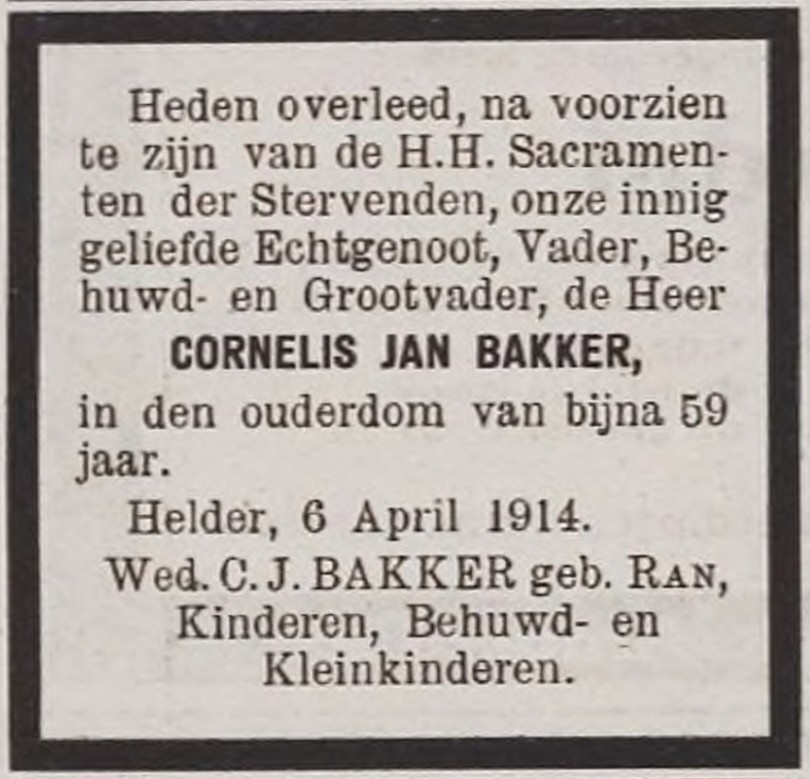
Cornelis died on April 6, 1914 at the age of 58 in Den Helder. He was buried in Den Helder, at the Begraafplaats Huisduinen (“Huisduinenen Cemetery”). The cemetery is now also known as Algemene Begraafplaats Den Helder (“General Cemetery of Den Helder”). Huisduinen is a village on the outskirts of Den Helder and was the original settlement centuries ago. When the harbour was built in Den Helder, its growth outpaced the original neighbouring village.
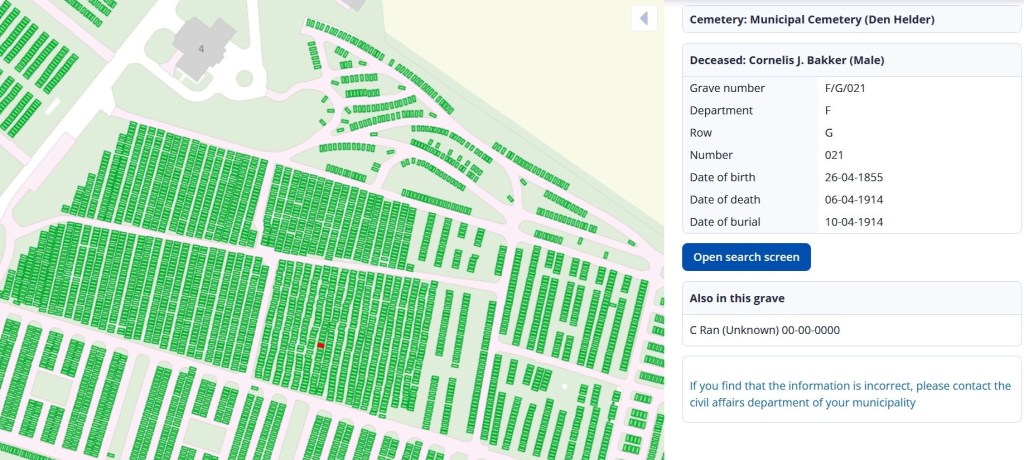
Graves in the Netherlands are usually leased, not purchased, and are routinely cleared after a few decades, so imagine my surprise when I discovered that Cornelis, along with his wife, is still interred in his original resting place! According to the Dutch version of Wikipedia, there are gravestones at Begraafplaats Huisduinen dating back to 1671 and that there are many centuries-old headstones. In fact, in 2023, many of the old graves and headstones were restored and renovated.
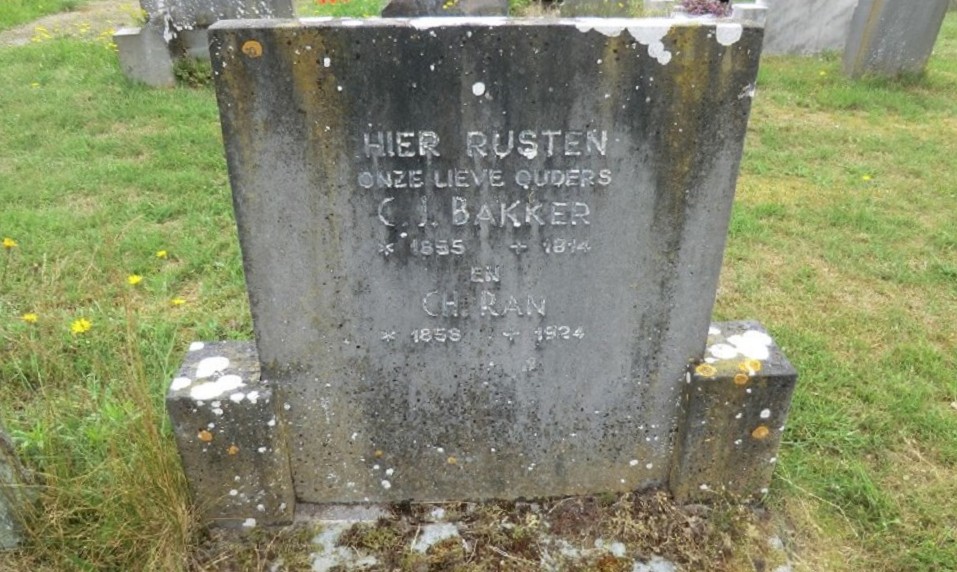
If I had known about this when I visited Den Helder many years ago, I would have loved to have visited the site!

 A Deck of Ancestors