For theme of this week’s 52 Ancestors Challenge, “Extended Family”, we are invited to write about relatives other than our direct ancestors: aunts, uncles, cousins, nibblings, or even those to whom we are related by marriage. So many options! After deliberating on the topic, I decided that the best and most impactful way to write on the topic would be to focus on a single relative. But whom? It did not take long to decide: my father’s aunt, Tante (“Aunt”) Anny.
My father actually had two Tante Annys, one on each side of his family. Both were wonderful women and I have very happy memories of both. I chose my Tante Anny on my grandmother’s side of the family because of the close and unique relationship we had.
Anna Adriana (“Anny”) van Kleef was born in Zuid-Scharwoude, Noord Holland in 1926. Anny was the third-born child of Arie Komen (who I wrote about last week) and Elizabeth Bakker. Zuid-Scharwoude is part of the larger “gemeente” (municipality) of Langedijk (which recently merged with a neighbouring gemeente and is now “Dijk en Waard”). Anny lived in Langedijk her whole life.
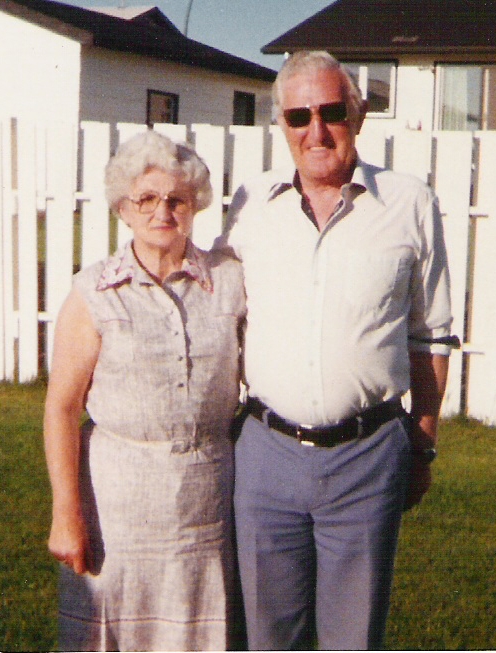
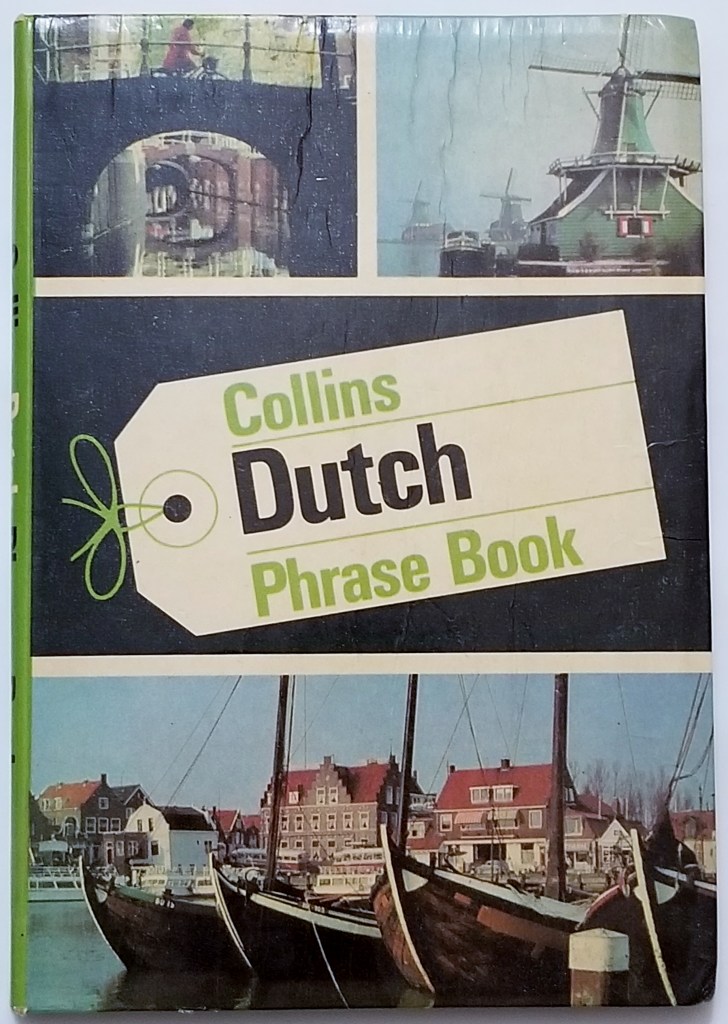
I first met Tante Anny when she and Ome (“Uncle”) Nic van Kleef came to visit Canada when I was 12. While they spent most of their time in Alberta with my grandparents, the four of them planned a road trip to the town in Saskatchewan where we were living at the time. I was so excited by their impending visit, because it would be my first time meeting any of our relatives who lived in the Netherlands. I went to our little bookstore and bought myself a Dutch-English phrase book to prepare for their visit.
Tante Anny and I clicked right away, despite the fact she spoke no English and the only Dutch I knew was a few phrases I had memorized from my little book. A few days after she arrived, I came down with a small cold. She sat with me for hours while I lay on the couch with my sniffles. She chatted in Dutch, I responded in English, and we spoke a lot with our hands.
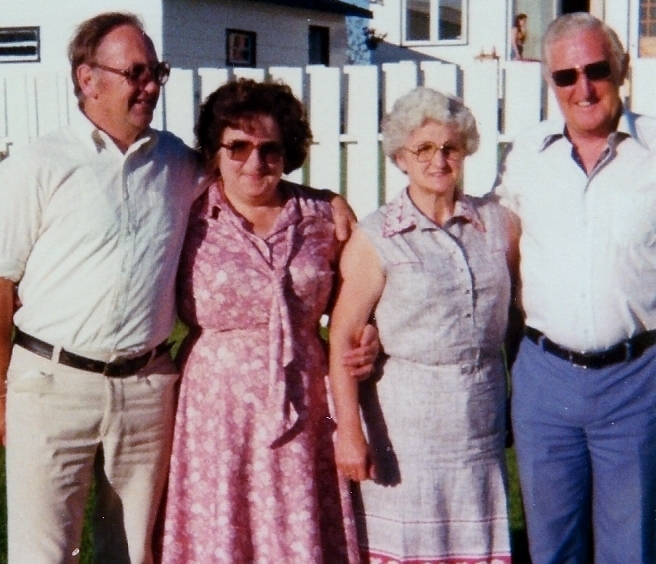
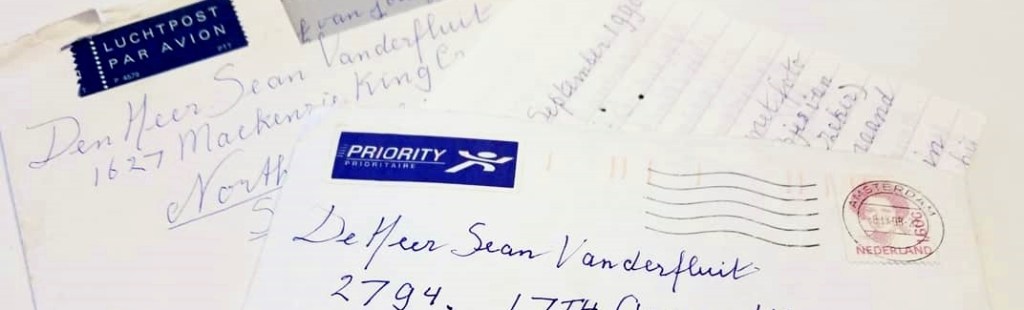
At the end of her visit, I asked Tante Anny for her address. We soon entered into a correspondence that we maintained until she passed away. I’d write in English, she’d write in Dutch. My father would translate her letters for me; Tante Anny’s children would translate my letters for her.
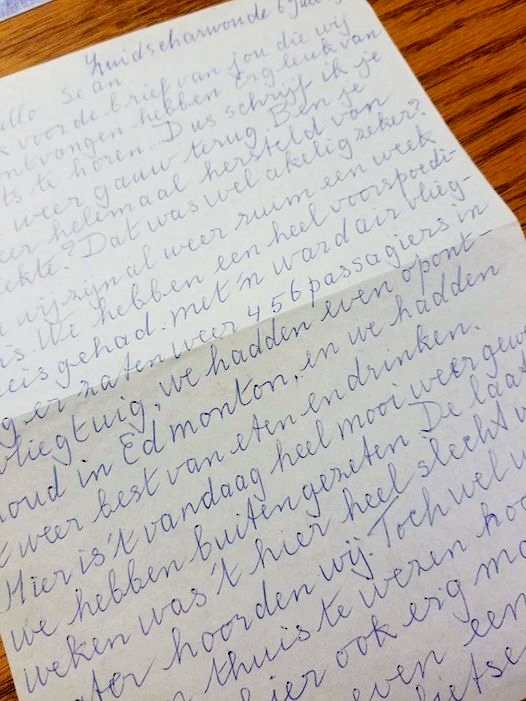
When I moved away from home, I had to painstakingly translate Tante Anny’s letters with only a Dutch-English dictionary. It wasn’t easy, especially when it came to idiomatic phrases. There was no Google Translate back then! Once in a while I’d call my dad, but it wasn’t easy because I didn’t always know the pronunciation of what was written (although I definitely could pronounce the Dutch “g” early on). However, when you look up a word over and over and over again, after a while it sticks.
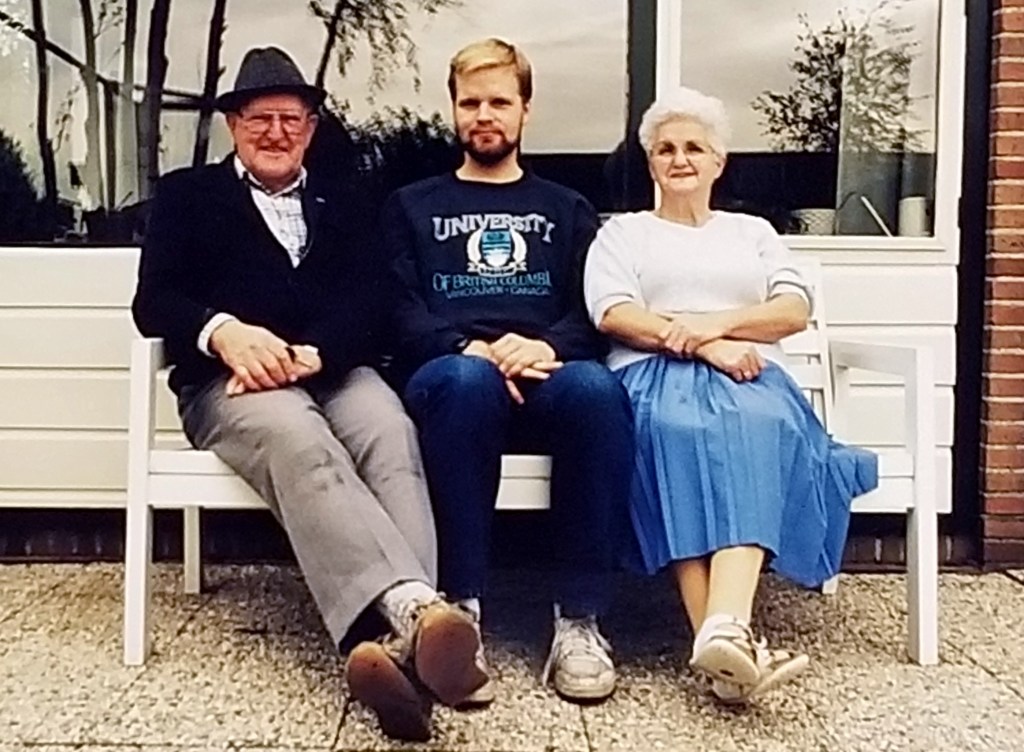
During my first trip to the Netherlands in 1990, my friend and I stayed with my Tante Anny and Oom Nic for two weeks. She still spoke no English. What little Dutch I knew back then I largely learned from reading her letters, supplemented by a bit of coaching from some Dutch-speaking friends and a Dutch translation of a Richard Scarry book. Nevertheless, we still managed to communicate quite well, and my English-speaking Dutch cousins were very encouraging in my attempts to speak their language. I was particularly happy to understand enough when she told me the stories about the old family photos in her albums. Perhaps the strangest thing was explaining to her what my grandmother – Tante Anny’s older sister – had written to her in a letter that arrived during my visit. It was then that I realized that my grandmother’s Dutch had become heavily Canadianized.
Upon my return to Canada, I discovered a night school class that gave me a few basics. However, reading those letters remained a challenge. Happily, with the advent of the internet and things like YouTube videos and DuoLingo, learning on my own has become easier. A few years ago I pulled out my cache of letters from Tante Anny. While my comprehension was not perfect, after so many years I was amazed by my ability to read her letters by myself, without constantly having to look up every second word.
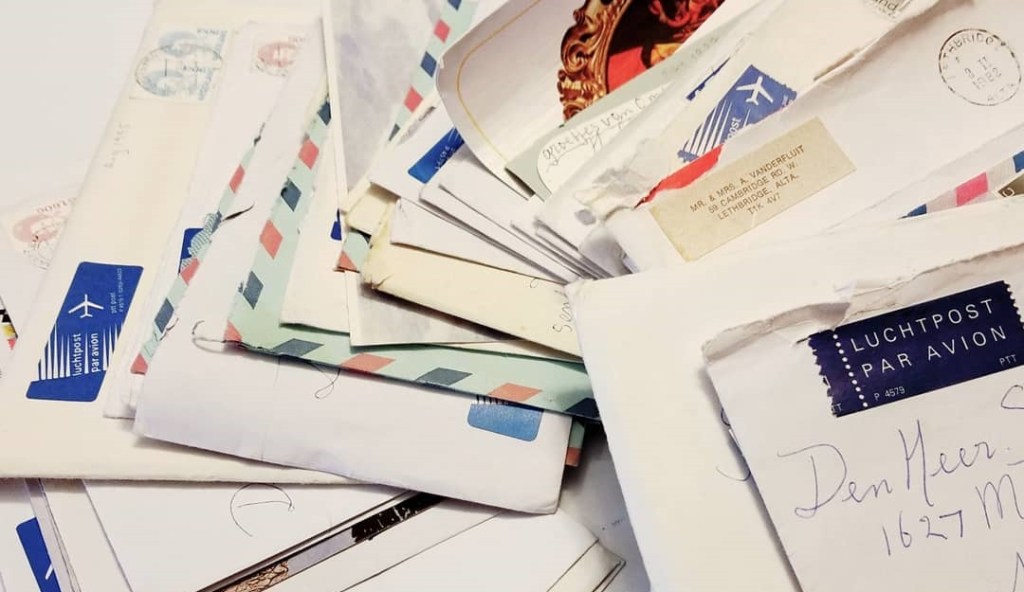
I’m happy that in my letters I asked Tante Anny questions about the family history. With one letter, I enclosed a simple questionnaire and a pedigree chart that I spent a lot of time writing in Dutch, in order to make it easier for her to respond. I figured the easier I made it for her, the more likely it was that she’d fill them out. She did, although in her reply letter she queried why I’d want to know about something that was so uninteresting as family history. I often amuse myself by thinking she said that only because there is something interesting worth knowing that she didn’t want me to find. However, in the 25 years since she wrote that, I have not found anything that would support that idea.
I saw Tante Anny one last time in the summer of 1998. She came to Canada on her own to visit my grandmother in Alberta. My parents had moved back to Alberta a few years earlier, so Tante Anny stayed with them for a few days. I made sure to get out there for a visit, because I did not want to miss an opportunity to see her again. By then, I had expanded my efforts to learn Dutch as part of my genealogical pursuits. As a result, it was easy for Tante Anny and I to discuss my sister’s wedding video, which we watched during her visit. However, I was far from conversant on other topics. One night my Dutch was particularly bad and I knew I was making stupid mistakes, so it was no surprise when Tante Anny just waved her hand to indicate I was making little sense.
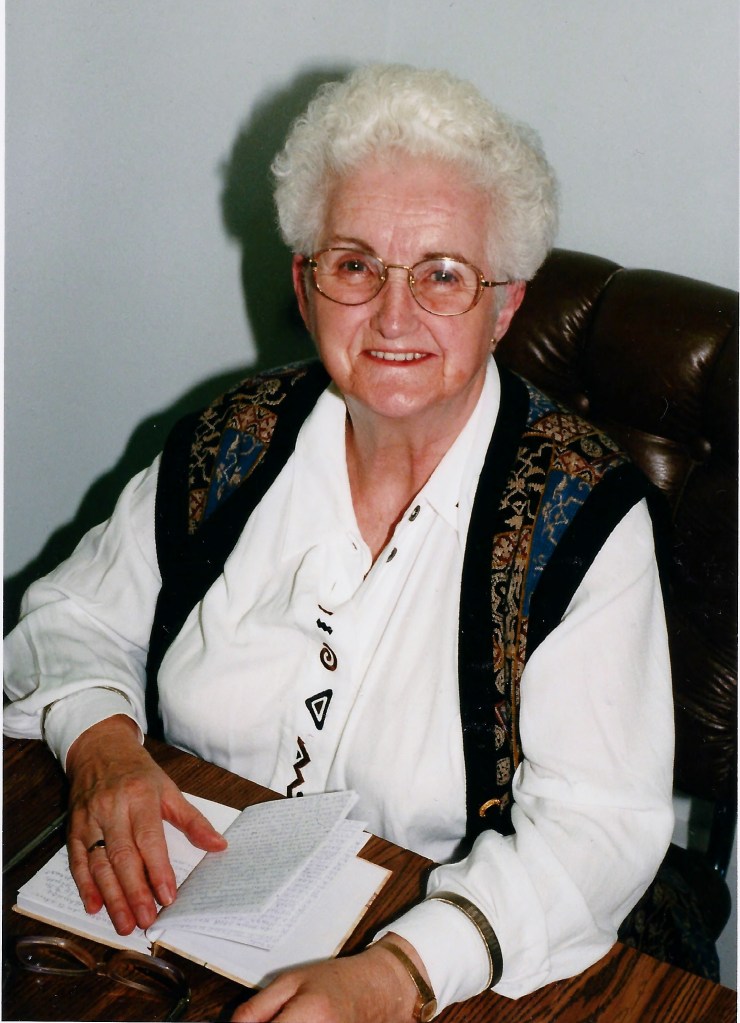
I’m glad I was able to see Tante Anny during her visit, because she passed away two months later at age 72. Oom Nic, who was almost seven years older, survived Tante Anny by 15 years. He died in 2013 at age 93.
Many years ago I stumbled across the below photo on Flickr that might show my Tante Anny’s signature. It shows a panel of wood inside St. Jan de Doper Katholieke Kerk (“St. John the Baptist Catholic Church”) in Noord-Scharwoude with messages written in pencil. The large message in the centre reads “het koor schoongemaakt op 21 Oct 1943” (“the choir cleaned here on October 21, 1943”) and is signed by Annie Bakker and Annie Komen. Tante Anny would have been 17 years old at the time and this is the church she attended. I should ask my cousins if she was in the church choir. It would not surprise me, because my grandmother had been. Tante Anny’s mother was a Bakker, so Annie Bakker could have been a relative of hers.
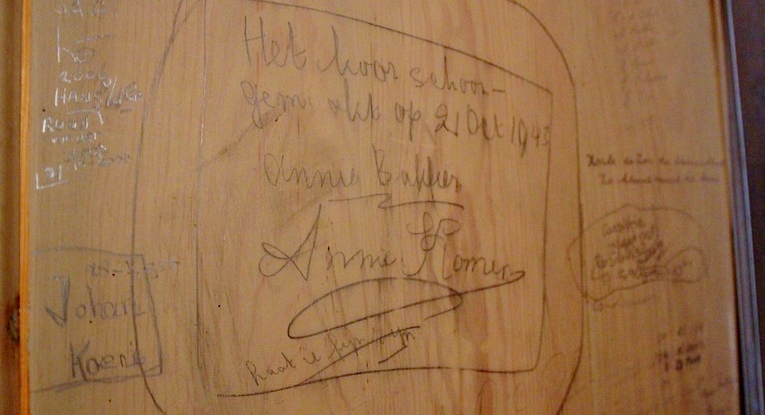
(Posted on Flickr by Regionaal Archief Alkmaar under Creative Commons licence Generic 2.0.)
 A Deck of Ancestors