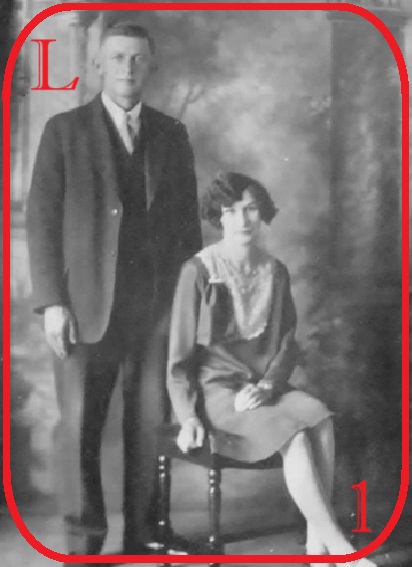
52W Mark IV – Week 40: Card L1 Heronimus Michael “Jerome” Lerner and Emelia Anton

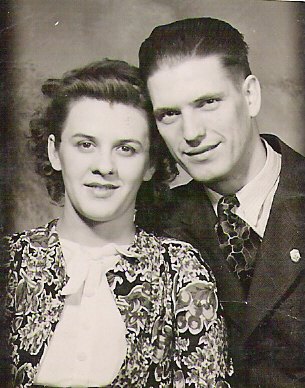
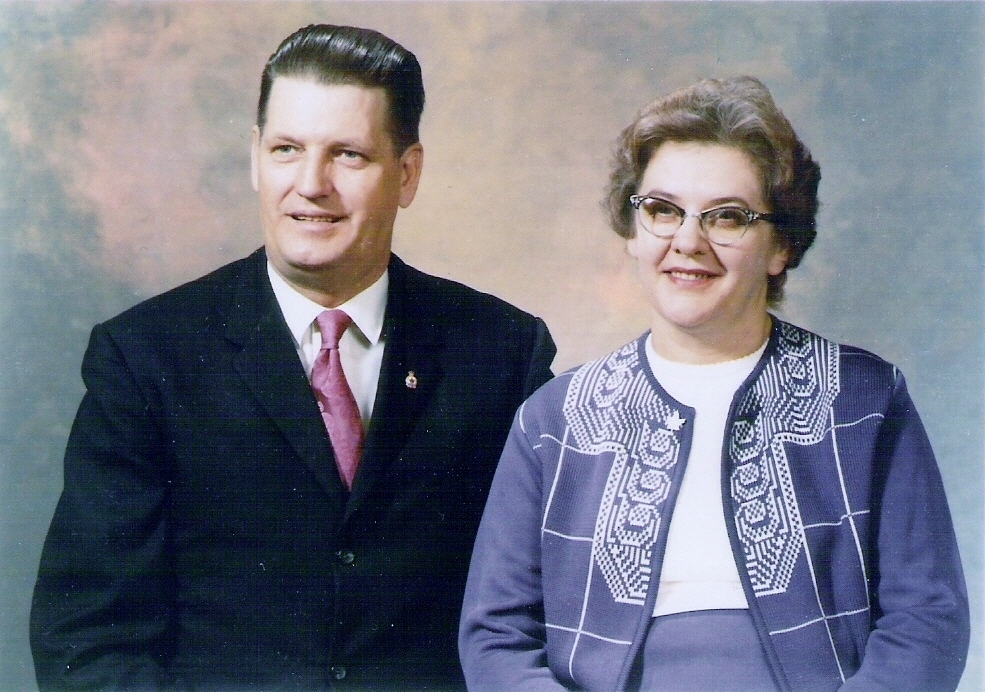
Heronimus Michael “Jerome” Lerner (1895-1954)
Emelia Anton (1903-1997)

Welcome to the last suit of the deck of ancestors I’ve been writing about for the 2025 edition of the 52 Ancestors Challenge – with the unique spin I’ve given the challenge this year. This final suit relates to my mother’s maternal grandparents, Heronimus Michael “Jerome” Lerner (1895-1954) and Emelia Anton (1903-1997). Both were Germans from Russia. I never met my great grandfather – neither did my mother – but I knew my great grandmother very well, who passed away shortly before I turned 30.

Very long story short, just after Catherine the Great, Empress of Russia, came to power in 1762, she issued a manifesto inviting foreign settlement in lands controlled by Russia. A significant number of those who responded to the offer were German peoples (as there was no “Germany” at the time). Even a summary of the reasons behind Catherine’s invitation and why so many Germans responded would significantly detract from the topic at hand.

There are some similarities between what Catherine promised in her manifesto (and subsequent manifestos by future Czars) and what later was promised to homesteaders by the United States and Canada. Catherine’s incentives included free transportation to Russia, free land, freedom from taxes for 10 to 30 years, interest-free loans to buy equipment, freedom of religion, exemption from military service, retaining their language, and local self-government. However, circumstances changed, so in the late 19th and early 20th centuries the descendants of those original colonists left to homestead in the United States and Canada.

Both Jerome and Emelia’s ancestors originally hailed from what is now western Germany, particularly the Rhineland-Palatinate and Baden-Württemberg. Those ancestors all settled in colonies located in what is now the Ukraine (“Odessa” or “Black Sea” Germans), particularly what was known as the Beresan District, north-east of Odessa. Most of the colonies took the names of the German cities and towns from which the settlers came. Many of my German-Russian ancestors were located in Rastadt and Karlsruhe.
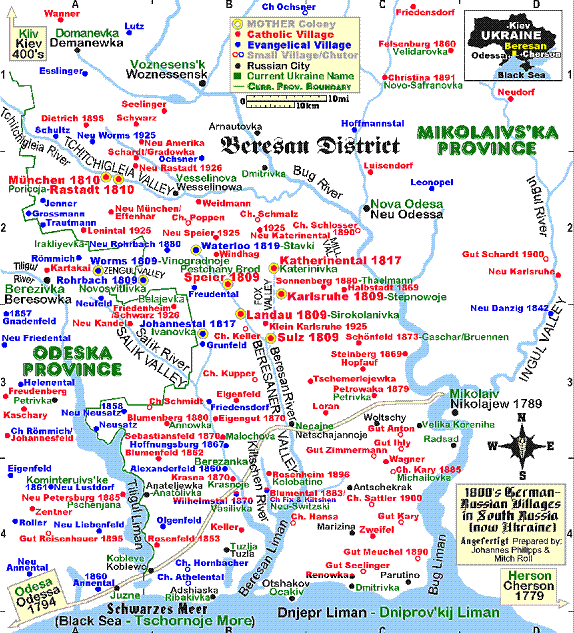
The Beresan in the 1800s (source: http://www.rollroots.com/beresanmap.htm). Essentially all colonies were based upon the religion of the settlers. Rastadt is in the upper right corner; Karlsruhe is close to the centre. Both were Roman Catholic colonies.
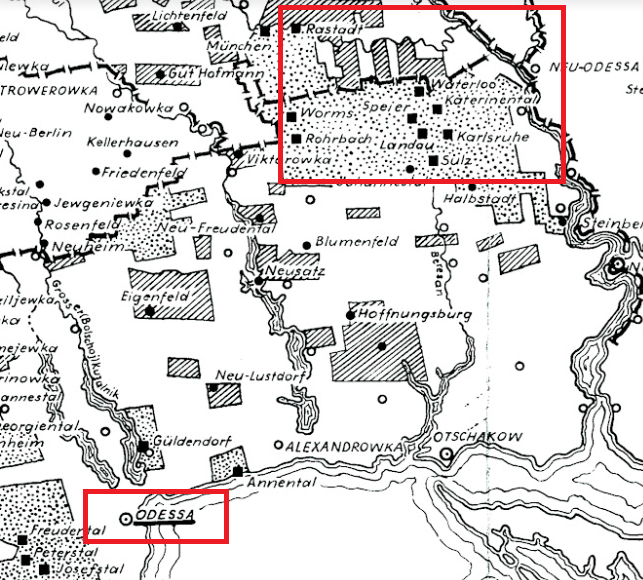
The Beresan District in relation to Odessa, in what is now Ukraine.

Neither Jerome nor Emelia were born in the Beresan, where each of their parents were born. Jerome was born in Henrietta, Texas on March 12, 1895, less than two years after his parents emigrated from the Beresan. Emelia was born in Selo Suchoi, Veronesch, Russia on January 1, 1903. I assume that date is under the Julian calendar. Emelia’s parents had left the Beresan sometime around 1899 and remained in Russia until 1912, when they left for Canada.

Emelia’s family first settled near Maple Creek, Saskatchewan. By 1920, they were living in Rastadt. Just as the German place names followed the colonists to Russia, they followed them to the new world as well. In the meantime, Jerome’s older brother had moved to the area, starting a gradual migration of the Lerner’s to and from Saskatchewan. Jerome came to Canada in 1917 and settled near Fox Valley, not far from Rastadt, taking up farming like he had in Texas. Jerome never obtained Canadian citizenship; I don’t know if Emelia ever did.

Jerome and Emelia married in Rastadt on August 3, 1920. Jerome continued to farm land south of Rastadt throughout the marriage. They had six children together over their 17 year marriage.
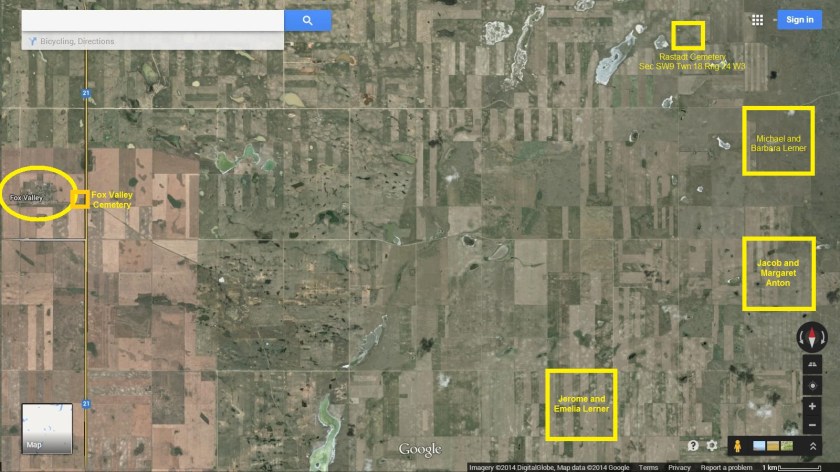
This map shows where Jerome and Emelia lived while they were together. Fox Valley is in the circle on the left. Michael and Barbara Lerner (née Schmidt) were Jerome’s parents; Jacob and Margaret Anton (née Heck) were Emelia’s parents.

Unfortunately, Jerome developed a mental health condition*, which contributed to the breakdown of his marriage with Emelia. Their daughter, my Aunt Adeline (“Addie”), told me that she believed her father had schizophrenia, although I doubt there was ever any formal diagnosis.
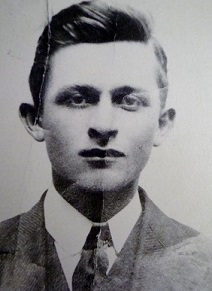
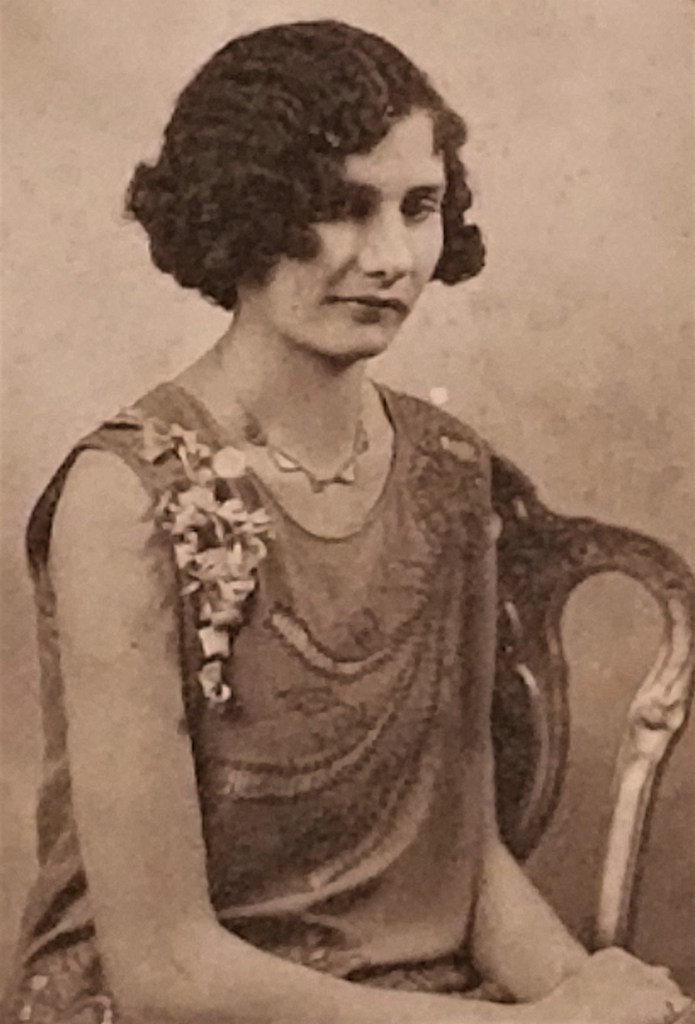
My great grandparents separated sometime between 1937, when their youngest son Herb was born. My guess is that when the 1931 census is released in 2033, it will show them as having been separated. Jerome and Emilia most likely did not file for divorce. They do not come up on the Library and Archives Canada divorce database. Being Catholic, they might have simply separated without divorcing. However, my Aunt Addie told me it had nothing to do with being Catholic, it was because it was so difficult to get a divorce at the time they separated. (It was not until 1968 that the divorce laws in Canada were liberalized to make it easier to obtain a divorce.)

My mother once told me that a rift developed between the Lerners and my great grandmother over her separation from Jerome. It seems there was some sort of expectation that my great grandmother should have remained with Jerome despite his troubles.

After they separated, Jerome continued farming in the Rastadt area. Aunt Addie told me that after her parents separated, her father lived with his father, Michael Lerner. Michael had become a widower not long before Jerome and Emelia separated. Aunt Addie told me that her father was still able to care for himself, such as dressing himself and cooking, but he needed some guidance.

When her parents separated, Aunt Addie went with her mother, but when she was about 13 years old (around 1944), she moved in with her father and grandfather for about a year. Aunt Addie described her father as quiet and intelligent, and was able to reason through things quite well. He did not talk much, but would “explain stuff” to Addie from time to time. Addie remembers that he read the newspaper a lot. Aunt Addie added that he could become upset very quickly, which she attributed to his mental condition. Addie said that her Grandfather took care not to upset Jerome or “push his buttons.”

When I asked Aunt Addie whether her father was still working at the time, she told me that he didn’t really work and that work would upset him. He would help with the harvest, but he would “moan and groan all night.” Aunt Addie believed he wasn’t used to that kind of regular work and it really wore out his muscles. To whatever degree Jerome was still able to work, I note that the registration of his death stated that he was a farmer at the time.
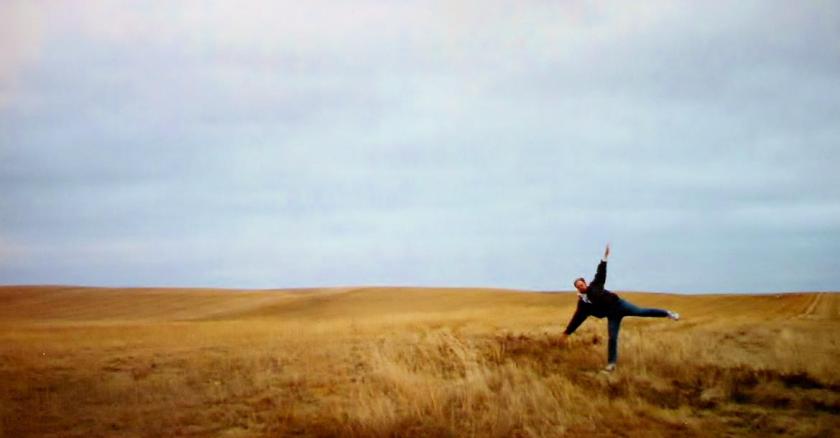
This is me on the land my Great Grandfather Jerome farmed. This was taken in April 1997, only a few months after my Great Grandmother Emelia passed away. The house they lived in – where my grandma Helen Lerner was born – stood around here. At the time, the house still existed, but had been moved elsewhere.

Aunt Addie said that her father spoke both English and German. Her grandfather mostly spoke German, but could understand English. So both languages were used at home. Aunt Addie said that her Addie said that this meant she grew up speaking both languages, although she had lost her ability to speak German later in life. mother mostly spoke to her in German, because it was better than her English. She added that her mother also spoke some Russian, which my mother had told me as well. As my mother described it, when her grandmother was still living in Russia, she’d speak German with her family and Russian with people working the farm.

When I told Aunt Addie that I was 13 before I learned her mother could speak German (which caught me quite by surprise!), she commented on how her mother spoke with an accent that wasn’t quite German and not quite Russian. She concluded it was its own thing. I concurred, because I could never tell what kind of accent my great grandmother had before I learned she was multilingual. In fact, I don’t recall thinking she had an accent; I think I thought she sounded the way she did because of her age.

According to Aunt Adeline, it sounds like her mother remained at the home she had shared with Jerome after their separation. Addie said that her mother leased out the farm land. How long my great grandmother remained there, I do not know. However, Emelia was still there when Aunt Addie moved in with her father in 1944. Sometime afterwards, Emelia moved to Alberta, likely first to Medicine Hat, and then on to Lethbridge.
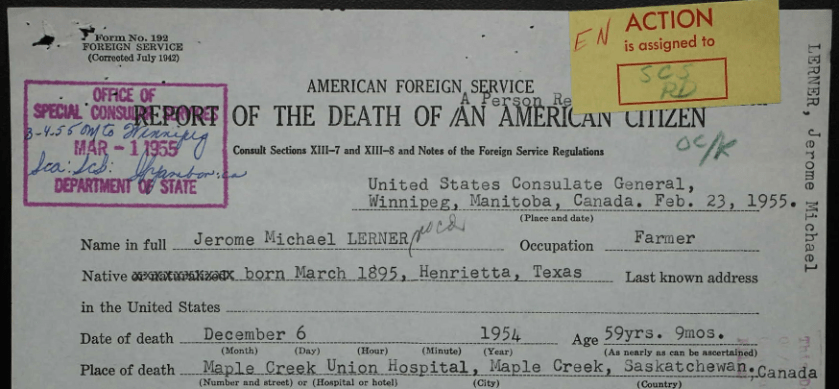
Jerome passed away in hospital in Maple Creek on December 6, 1854, due to kidney disease. He was buried at the Fox Valley Community Cemetery. Meanwhile, by the mid-1950s Emelia was working as a chambermaid at the Alexander Hotel in Lethbridge. By 1958 Emelia had largely retired. She was collecting a pension and was living off an inheritance she had received from her father. She bought a house on 19th Street in Lethbridge.

Sometime in 1958 or 1959, Emelia married Walter Henry Wright. He died on December 4, 1978. While I saw him every time we visited my great grandmother, I don’t really know much about him. Most of what I learned about him is from his obituary, from when he died in December 1978. Other than the fact Walter served in World War II, I have no idea about his life before marrying my great grandmother or what he did for a living.
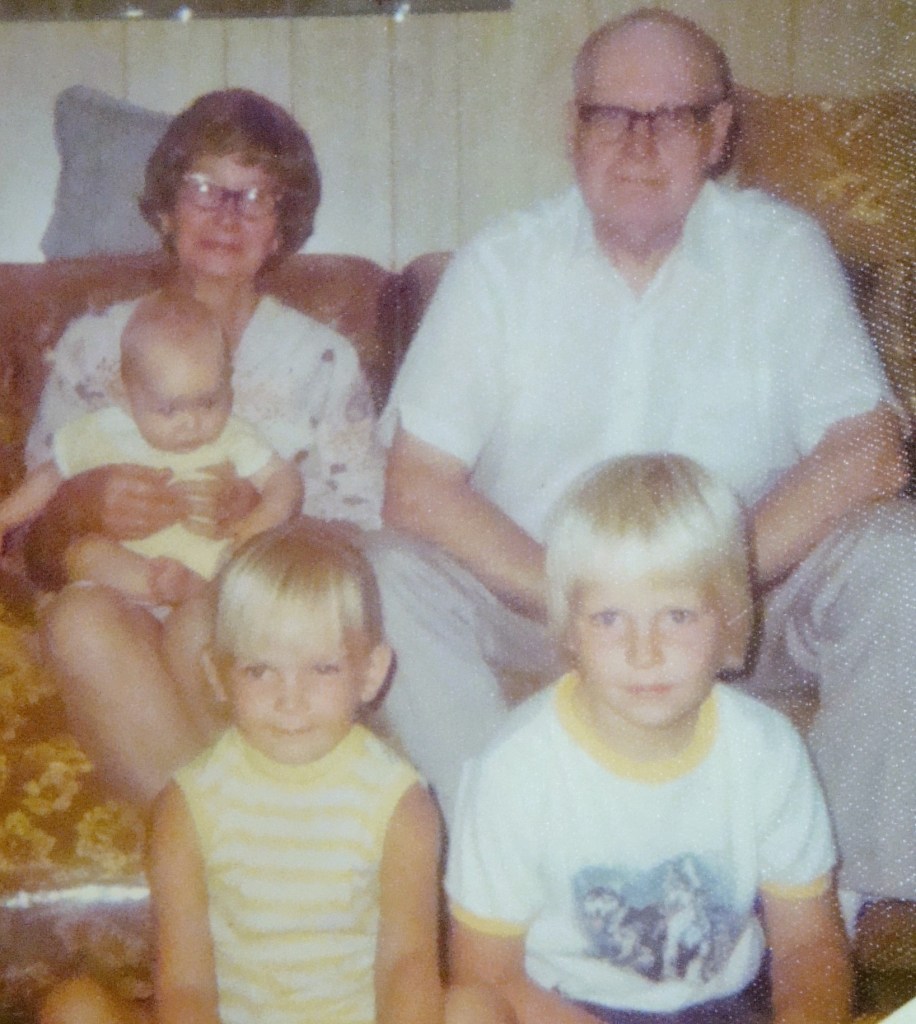
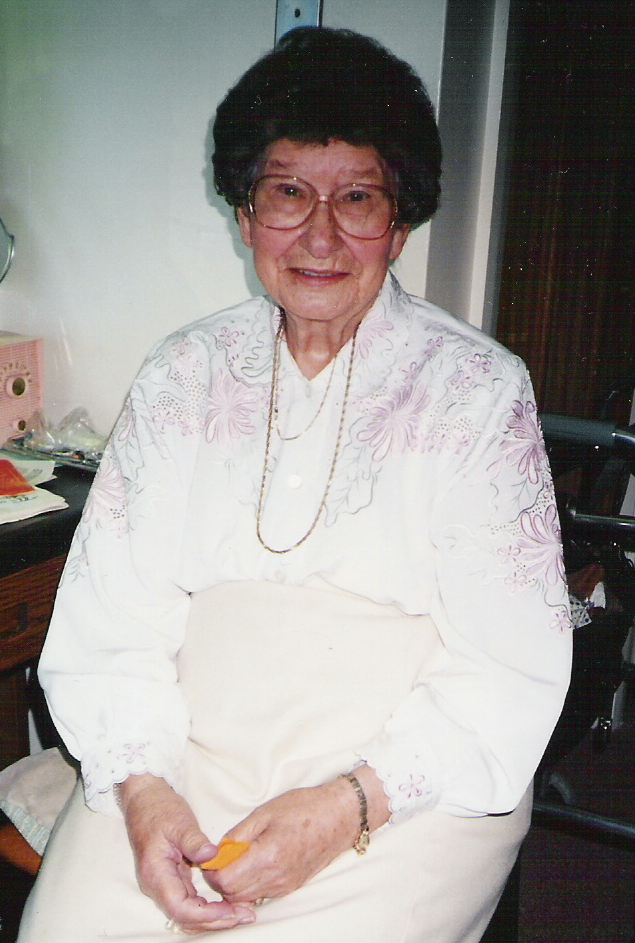
Me and two of my siblings with Emelia and Walter.

Emelia survived Jerome by fifty years and Walter by twenty years. She even outlived my grandmother, Helen Lerner, by more than ten years. Emelia continued to live on her own at home for many years after Walter’s death, but ultimately moved into a nursing home. I honestly cannot remember when she moved. She was there at least by her late 80s – I know she was there before she turned 90. I messaged my mother to ask if she could recall when, but couldn’t. I thought one of my sisters had a reason to remember, but she couldn’t recall it either.

In the last years of her life, Emelia’s activities included bridge and bingo. She was proud of her mental acuity and ability to play the game, but was always unhappy that her peers did not. My grandfather, Leo Burgess, often took Emelia to bingo. I remember my grandfather “complaining” that he was in his mid-70s and still had mother-in-law problems.

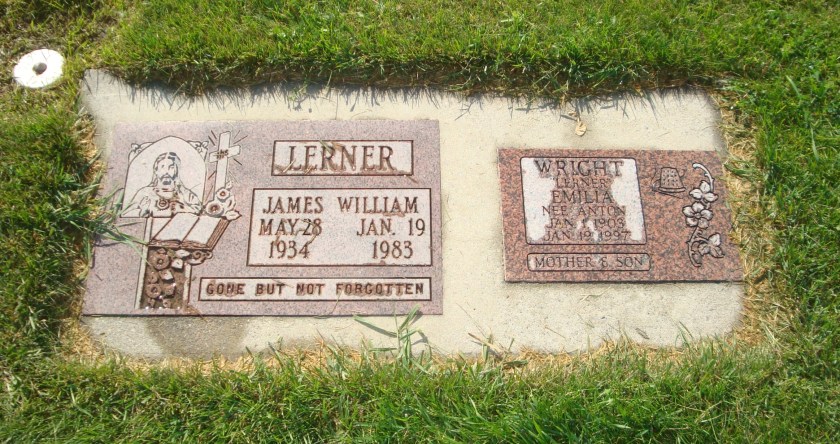
Emelia died on January 19, 1997 in Lethbridge. The memorial mass was held at St. Basil’s Catholic Church in Lethbridge and my mother gave the eulogy. Emelia was cremated and buried at Mountain View Cemetery, alongside her son Jim, who died in 1983.
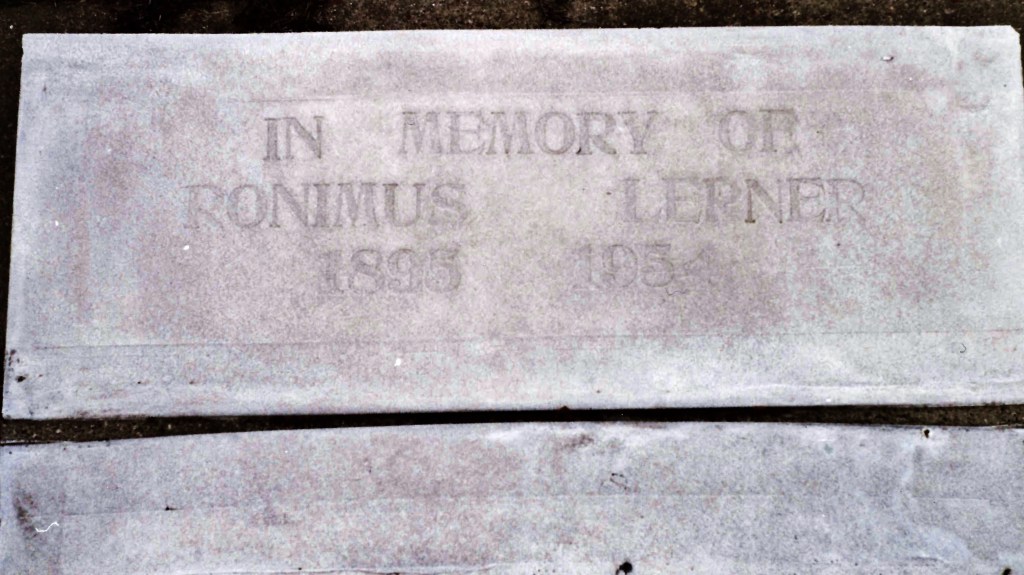
Jerome’s grave at the Fox Valley Community Cemetery
Emelia’s grave at the Mountain View Cemetery in Lethbridge, alongside her son Jim.

* There are resources available if you need help with your mental health. In British Columbia, where I live, this includes:

→  Calling 2-1-1 will connect you with community and social services.

→  9-8-8 is the Suicide & Crisis Lifeline

https://www2.gov.bc.ca/gov/content/health/managing-your-health/mental-health-substance-use

https://www.canada.ca/en/public-health/services/mental-health-services/mental-health-get-help.html

52W Mark III – Week 48: Very Funny

This week’s 52 Ancestors Challenge prompt is not just funny, but apparently very funny!

Margaretha (“Margaret”) Heck
(1 April 1868-21 October 1946)

My mother shares a birthday – April Fools’ Day! – with her mother’s maternal grandmother, Margaretha (“Margaret”) Heck. In fact, my grandmother gave my mother Margaret as a middle name in honour of her grandmother.

My grandfather always called my mother “Maggie”, which of course is a derivative of her middle name. When I asked my mother why he preferred to do so, she said that her mother had wanted to give her Margaret as her first name, since my mother shared a birthday with her great grandmother. However, her father objected because people would call her Maggie, so my grandmother agreed to give my mother Margaret as her middle name.

My mother’s parents, Leo Burgess and Helen Lerner. Margaret Heck was Helen’s maternal grandmother.

Milton Burgess: “There’s Maggie!”

When my mother’s parents brought her home, her paternal grandfather was there and said, “there’s Maggie!” Since that time, Lorraine’s father and grandfather called her Maggie. Later, the immediate family and some of her cousins came to call her Maggie.

Of course, my mother was often teased by being called an April Fool because of her birthday. When we were kids, the tradition was that the time for pranking ends at 12 noon. My mother was adamant that she wasn’t an April Fool because she was born in the afternoon.

Once we were at my grandparents on April Fools’ Day and everyone was giving my mother grief about being an April Fool. My mother repeated her defense that she was born in the afternoon. My grandmother interjected and called out from the other room, “no you weren’t, you were born in the morning!”

Grandmothers: always siding with their grandchildren. Very funny!

52W Mark III – Week 43: Lost Contact

This week’s prompt for the 52 Ancestors Challenge is “Lost Contact”. Losing contact is one way of losing a connection. Sometimes losing the connection might be necessary.

There are countless ways as to why a tree is such an excellent metaphor for genealogy. One comparison that might not be considered so often is that, like a tree, sometimes one’s family history might need some pruning.

As our research progresses over time and we add to our trees, we might discover that there are branches that no longer belong, which should never have been there in the first place. They might have been grafted to our trees early on, when we were new to genealogy, and did not realize that the connection was not supported by the evidence. There might be branches that seemed to be supported by the evidence that was available at the time, but new evidence comes to light that disproves the connection. When this happens, we have to cut that branch and end contact with the false connection.

I know that sometimes many genealogists have had a hard time making the cut. After all, until the connection was disproved, the individuals on the branch were considered family.

Over the years, I’ve made cuts now and again. Some small, some big. A few years ago I found a significant cut I had to make for my 6xG Grandfather, James Turner (1715-1773). James is on a branch of my tree for which I’ve had less interest than others over the years. He was the great grandfather of my 3xG Grandfather, Preston Thomas (1814-1877). While I’ve done quite a lot of research on Preston – and written about him here many times – I have not done much research on his lineage. Most of what I have is names and dates I gathered in the mid-90s during my earliest visits to the Family History Centre in Burnaby, and never really looked at again very seriously. It comes as no surprise to me when I have to prune some of the branches on Thomas’s line, including the parents of James Turner (which I wrote about on Week 8 of the 2023 52 Ancestors Challenge).

The other branches of my tree that I know need some more serious research and that might result in some pruning, or at least some revision, are the paternal lines of my maternal grandmother, Helen Burgess (1921-1984). I have great confidence in the information I have for Helen’s grandparents and her attachment to them. However, I have doubts about the lineage of her great grandfather Franciscus “Franz” Lerner (b. bet. 1835-1840 – d. 1876 or 1877) and her great grandfather Georg Jacob Anton (1843-1908).

My grandmother’s is a descendant of Germans from Russia, which I have written about here quite often. Those ancestors are my most difficult branches to research, for many reasons.

For Franz, I am confident in the identity of his paternal grandfather [Franz Ignaz Lerner (1759-abt 1816 or later)]. The main problem is identifying his father. Franz’s father is one of either two individuals:

  • Michael Lerner born 11 Jul 1793 in Malsch, Karlsruhe, Baden, wife Maria Eva Eberle born 1793 in Pleisweiler, Bergzabern, Pfalz (although possibly Eva Eberle), or
  • Bernard Lerner born 27 Feb 1798 in Malsch, Karlsruhe, Baden, wife Barbara Heil born abt 1799 in Niederlustadt, Germersheim, Pfalz.

As for Georg Jacob, he might not actually be Georg Jacob. It is possible he is actually simply just Jacob. As for Georg Jacob’s father, the name I have is Johannes Anton; however, he might actually have been Peter Johannes Anton. Not only are the names I have slightly off from some other indicators, the birthdates I have for both is in question. Interestingly, the identity of their spouses does not seem to be as dubious. This leads me to believe that there is no mistaken branch here; rather, it is simply a matter of properly identifying Georg Jacob and Johannes.

I will add that even when I prune a branch, I keep a record of it. If large enough, I create a separate database for it; if not, I keep notes in my research logs or in the notes for the child whose parents I ended up cutting. That way I don’t retrace my steps or fall into old traps. Moreover, should it turn out the information actually was correct, I have it handy and can graft the branch back onto my main tree.

52W Mark III – Week 42: Full House

Growing up in a household with two parents and five children, it may have felt like we had a pretty full house. However, given the gaps in our ages, it wasn’t until I was 15 that there were seven of us sharing one home. Moreover, for the most part, despite all the moving around, by the time there were three of us children, the houses we lived in usually had three bedrooms. Until I was 15, that meant that there were never more than two in a room. I think my youngest brother was still in a crib by the time I moved away from home.

I compare that to my mother, who lived in the same house from age one to the time she married my father. She grew up in a tiny house in Lethbridge, which was built as part of the housing stock developed for veterans after World War II. My grandparents, Leo Burgess (1920-1995) and Helen Lerner (1921-1984), moved into the house in 1949, along with my mother and her older brother, Leo Jr. (1945-2014). Two more siblings followed, my Aunt Diana (1951-1999) and Uncle Curtis (1957-2024). In addition to her three siblings and her parents, my mother’s youngest uncle, Herb Lerner (1937-2004), also lived with them for a period of time.

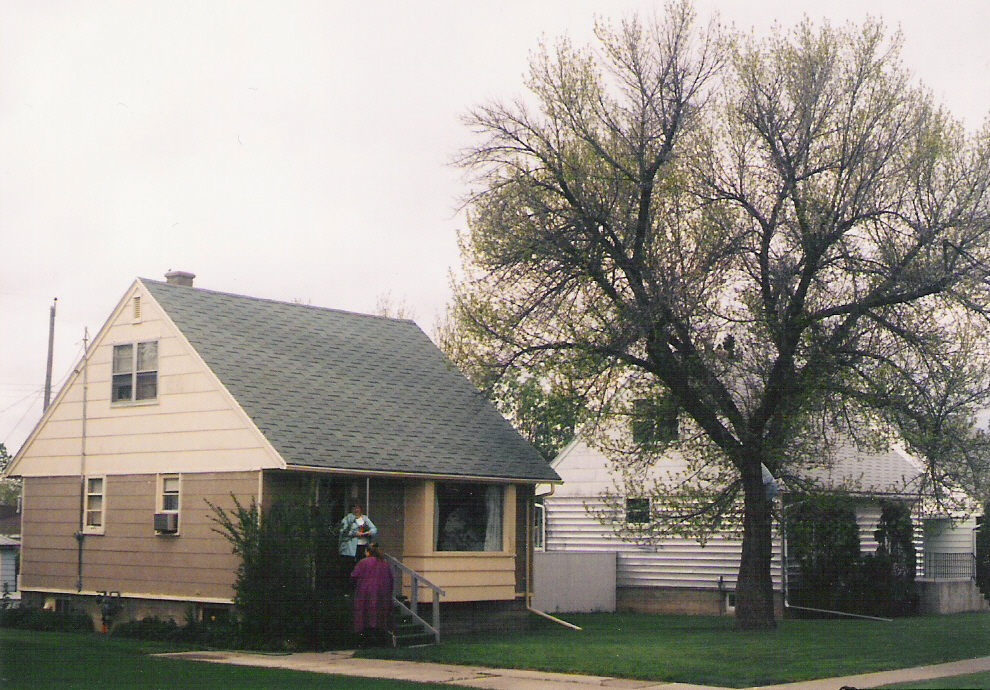
May 1995, shortly after my grandfather Leo Burgess passed away. My mother and Aunt Diana are on the stairs at the front entrance. We were there to go through some things as part of cleaning out the house and settling the estate. The window on the top floor is for the bedroom that my mother and aunt shared as kids.

While it was a three bedroom house, in reality there was a tiny master bedroom on the main floor and two little shoeboxes in the attic that served as bedrooms. Because they were in the attic, the ceiling in both bedrooms was slanted to the floor. Not much fun for my mom’s brothers, who were both well over 6’5″.What was fun were the hardwood stairs that went up the middle of the house from the main floor to the attic. We treated it as a slide. Bumpy, yes, but loads of fun when we were little.

My uncles and their uncle Herb shared one room; my mother and her sister shared the other. By the time I was born, my Diana and Curtis had their rooms to themselves. By the time I was six, my Uncle Curtis had the whole floor to himself.

My grandmother, Aunt Diana, my mother, Uncle Leo, and grandfather, probably around 1955.

My grandfather renovated the interior a few times. The one I remember most was when he knocked out some of the walls between the dining room and living room. It made the place look palatial. Later they added a bay window to the living room at the front of the house. The least-best thing he did was when he installed shag carpet in the living room, covering up the gorgeous hardwood floor. It was the trendy thing to do at the time, something that definitely fell out of fashion a couple decades later. My grandfather also occasionally renovated the exterior, particularly the front and back entry ways.

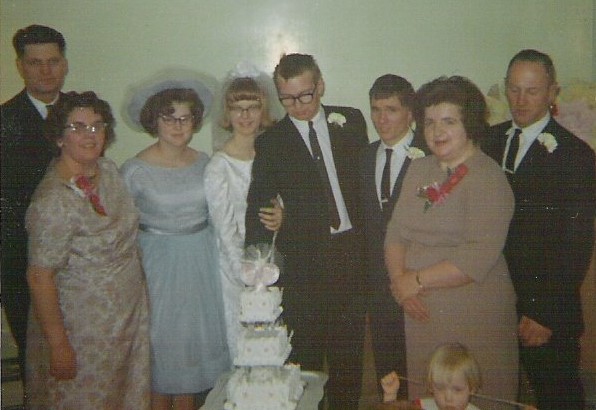
My grandparents hosted a small reception at their home for my parents after their wedding ceremony. Here, everyone is gathered in the living room. My maternal grandparents are at the left of the photo; my paternal grandparents are on the right. My parents are flanked by the Maid of Honour and the Best Man.

We moved away from Lethbridge about a year after I was born. Nearly every summer vacation afterwards involved a road trip to Lethbridge, no matter where we were living at the time. Sometimes we visited for Easter or Christmas, as well as special occasions like weddings. Almost every time we visited, we spent half our time at this house. The other half we spent at my paternal grandparents’ house, although it seems like more often than not we spent more time at my maternal grandparents’. By then my aunts and uncles had all moved away, so my folks and siblings and I would use the upstairs rooms during those visits.

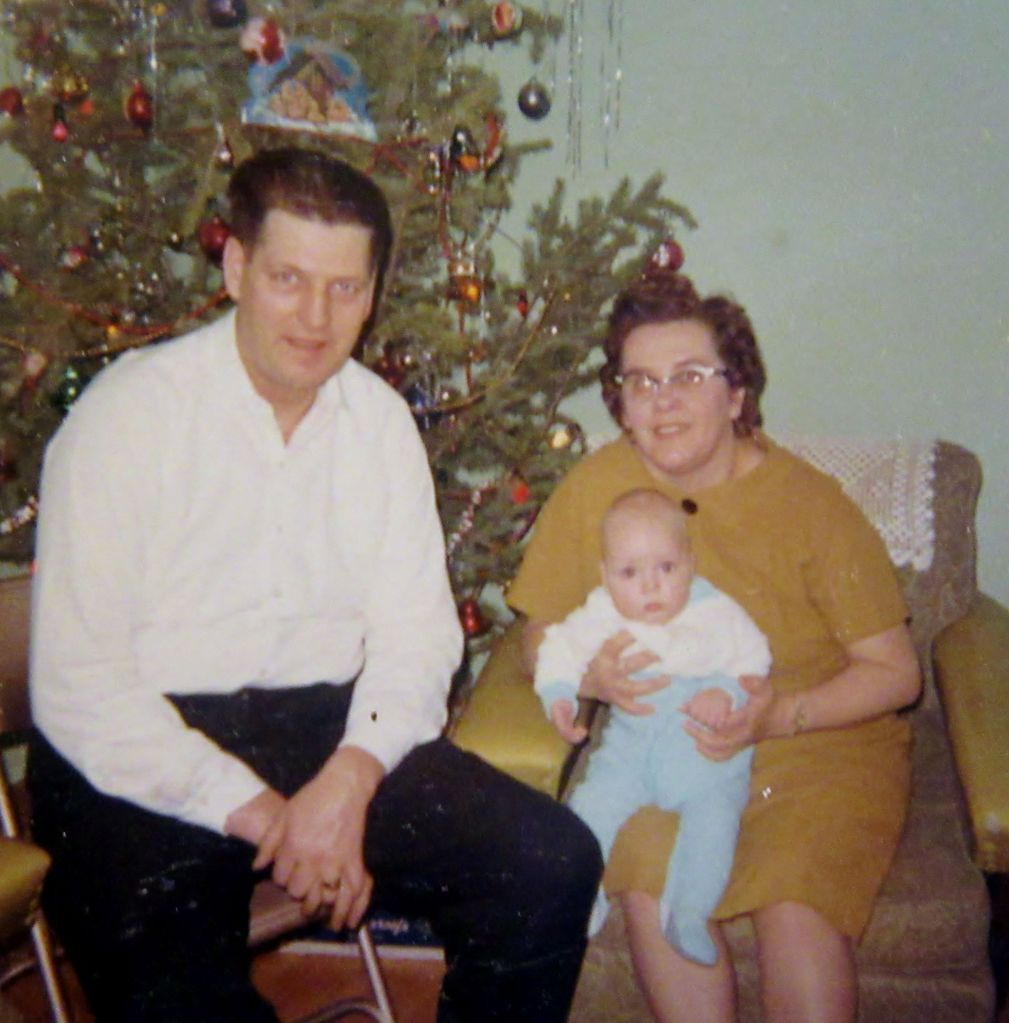
My first Christmas, with my grandparents in their living room.

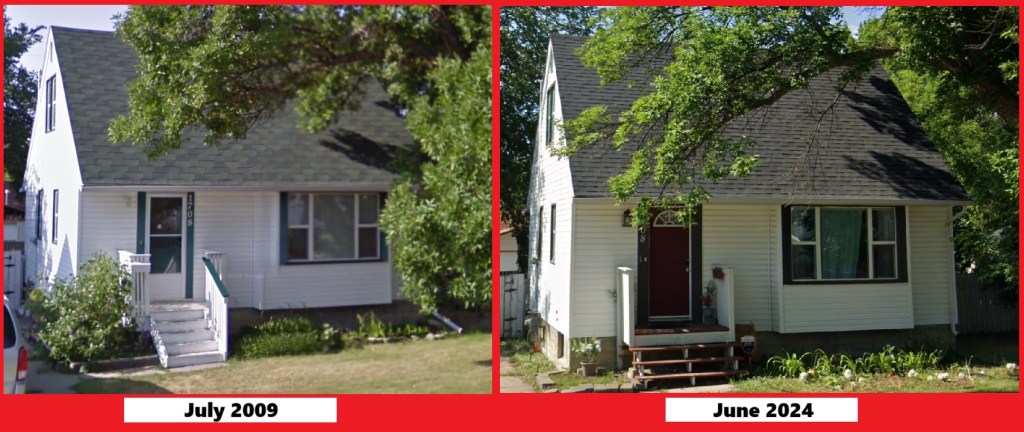
My grandmother passed away in 1984; my grandfather passed away in 1995. My mother and siblings sold the house shortly after they settled my grandfather’s estate. The new owners were quick to renovate. The house has passed through several owners since then, each one renovated to some degree. I wish I had taken screen shots of the listing the last time it was listed for sale, which showed all the work they had done. The sellers had completely renovated the interior, plus they had finished the basement, something my grandfather never really worked on beyond installing some rough framing. Plus someone had gotten rid of that awful shag carpet.

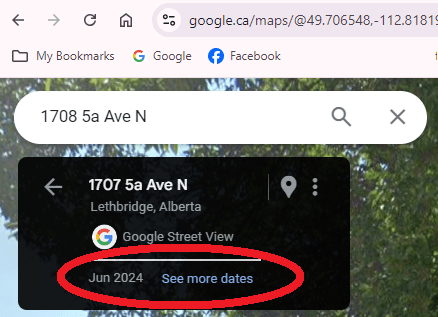
One of the great features of Google Street View is that it allows you to view the various images of a location taken over time, particularly if it is a place that Google frequently revisits. Using that function, I can see the evolution of my grandparents’ home from 2009 to 2024.

Click “See More Dates”…
…and you’ll get a set of options for past views.