Just because it’s written in stone doesn’t mean it’s correct.
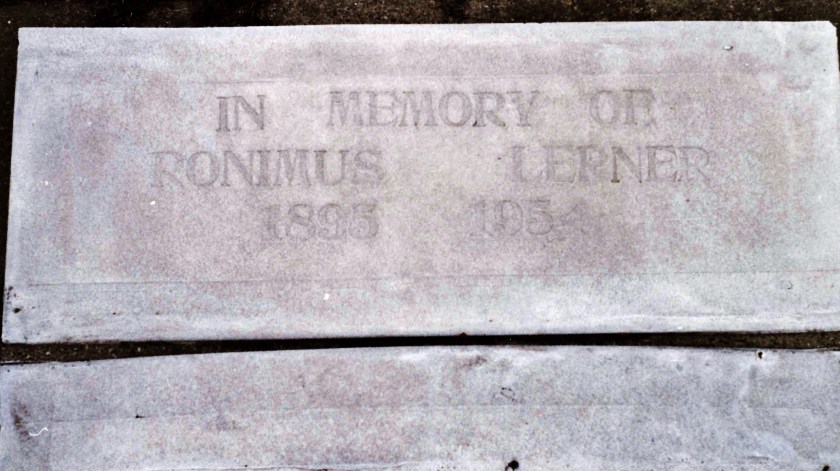
A prime example in my tree is the headstone for my mother’s maternal grandfather, Heronimus Michael Lerner (1895 – 1954), who went by Jerome. However, the headstone on his grave is in memory of “Ronimus Lerner”. It’s clear that there had not been a preceding “Je” that wore away or that had been otherwise removed.
Headstone for Heronimus “Jerome” Lerner, Fox Valley Cemetery, Fox Valley, Saskatchewan
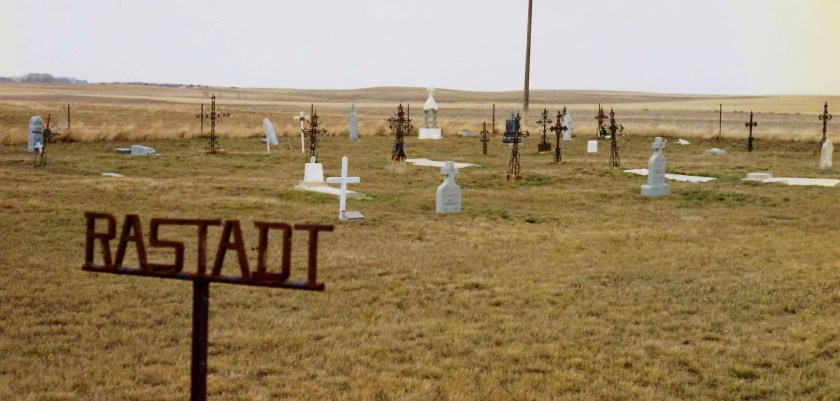
Another example is in the nearby Holy Trinity Roman Catholic Cemetery in Rastadt, Saskatchewan, where a number of my mother’s ancestors and relatives are interred. The marker for my mother’s great aunt, Marianne Roeder, says she died “6/21/29” (June 21, 1929). However, church records show that she died on June 2, 1921 and was buried July on 1, 1921.
Holy Trinity Roman Catholic Cemetery at Rastadt, Saskatchewan, April 1, 1997.
While there are several other examples in my tree, my wife’s maternal line has a significant number of tombstone typos.
The headstone for my wife’s Gx2 grandmother, Ellen Sophie Butcher Dwyer (1867 – 1952), puts her year of birth as 1866 or 1867, but the record of her marriage puts her year of birth as 1865. The 1921 census puts her birth in 1867. The headstone for Ellen’s grandmother, Agnes Pellow (1794 – 1869) erroneously states that she died in 1879.
Other apparent errors might not actually be so. For example, my wife’s Gx11 grandfather, Thomas Newman. Thomas most likely lived from about 1560 to 1649, dying at age 89. His headstone says that he was was “over eighty years old” at the time of his death. If he died at 80, Thomas would have been 15 years old when his third child, Richard, was born. However, it was more likely that Thomas was age 20 when his first child was born. While it might seem that Thomas’s headstone may have been incorrect, if Thomas died at age 89 then it was correct to say he was over 80 years old at the time of his death.
These examples underscore the importance of at least two of the elements of the Genealogical Proof Standard: the need for reasonably exhaustive research and to resolve any contradictory evidence.
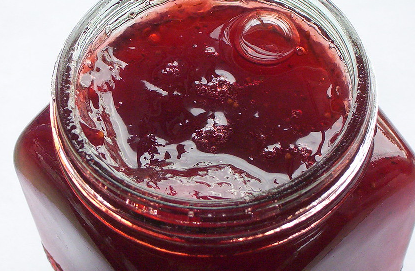
I am absolutely certain my grandmother, Helen Lerner, could have made anything from scratch, sweet or savory. She was a fantastic baker. She made her own pickles from what my grandfather grew in the garden. She made homemade noodles for her homemade soups. I’m pretty sure there was a time back in the day she made her own soap. Of course, she made her own jams, jellies, and preserves. One of my favourites was her chokecherry jam.
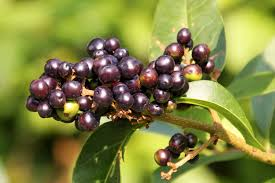
Chokecherries
My grandmother passed away when I was finishing my last month of grade eleven. In the last year or two of my grandmother’s life, my mother often went to Lethbridge to help her out and, later, visit her in hospital. After one of her last visits, my mother returned home with a bunch of things my grandmother had made, including several jars of chokecherry jam. I was pretty sure that they did not last long in our family of seven.
Fast forward to just over a year later. I moved to Vancouver to attend my first year of undergrad at the University of B.C. A few weeks after having moved into residence, my mother sent me a box of my things. Imagine my surprise when I discovered that the box included the last jar of my grandmother’s chokecherry jam. Needless to say, I did not rush through that jar. I used it judiciously and sparingly, without being stingy, and savored every bit of it. It was a wonderful way to remember my grandmother.
The topic of food is one of the prompts that shows up in the 52 Ancestors Challenge every year. This makes it a difficult topic to write about, since I covered it broadly in the first and second year I participated in the challenge. However, as Amy often reminds participants, the prompts are merely suggestions and we can interpret them as broadly as we want. Which I’ve done, writing about pets when the prompt was flowers, and vice versa!
With this week’s prompt, I’ve not stretched the topic as far as pets to flowers. Rather, I am looking at the favourite treats of my ancestors.
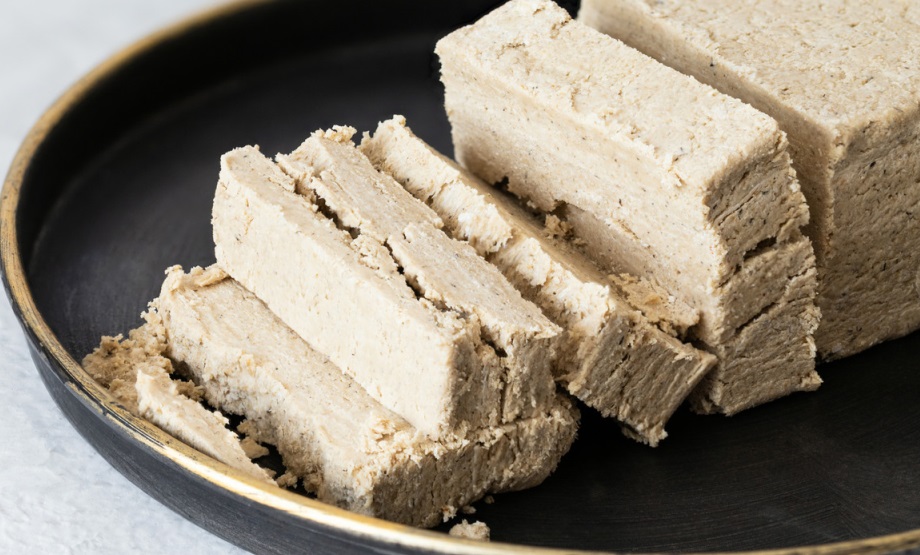
I’ll start with my mother’s maternal line. As I’ve often written about here, that branch of the family are Germans from Russia. One of their favourite treats is halva. It’s a confection that originated in Persia (now Iran) that spread throughout the Middle East and, later, throughout the Ottoman Empire. While halva was originally made with a variety of different ingredients, such as flour and dates, the traditional Turkish version is usually made with sesame seeds and most often sweetened with honey or sugar. You can find halva in many varieties. Halva with pistachios, chocolate, or vanilla is quite common.
Many German settlements in the Russian Empire were in what is now the Ukraine, which the Russians had taken from the Ottoman Turks in a series of wars in the 17th and 18th centuries. While the German population was originally introduced to the Turkish version of halva, they most likely learned of the sweet treat from the local Jewish population that had been in Ukraine for centuries, including the time of Ottoman rule. However, the Germans soon modified the recipe using sunflowers, which are abundant in Ukraine and that are a symbol of that country. I’ve heard that many German-Russians prefer the sunflower variety, but I’ve never seen it. My grandmother and mother always bought the traditional Turkish version. While not a traditional Christmas food, that is the time of year my mother would most often buy it. My mother often spread it on toast, which is quite delicious.
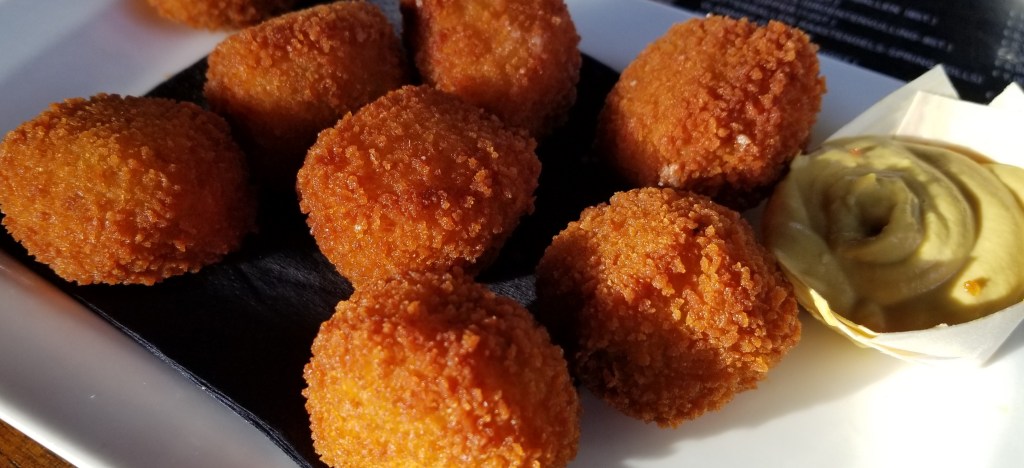
Turning to my father’s side of the family, I’ll admit that Dutch cuisine is not world-famous for many good reasons. That said, there are many delicious treats that make up for it. One of my favourites, bitterballen, is commonly found as a bar snack. They are somewhat similar to croquettes, but are smaller and rounder. They are made of a mixture of minced beef, roux, onions, and seasonings, breaded, and fried. They’re addictive little snacks. There is a chain of cafes and coffee shops in the Netherlands called The Bulldog. In the 1990s, they had a location in Vancouver. I often went there for lunch with a friend and we always started with bitterballen.
Bitterballen are traditionally served with mustard. Lekker!
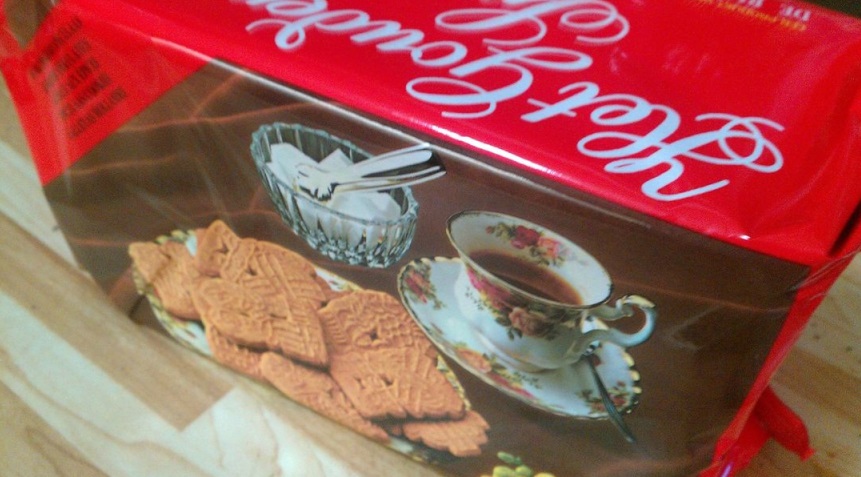
The Dutch also have many sweet treats. Almond-based treats (including marzipan) and baked goods made with warm spices are quite popular. The one I can remember having ever since I was little is speculaas. They always contain ginger, along with spices such as cinnamon, nutmeg, cloves, cardamom, anise, allspice, and white pepper. With those flavours, they were a common Christmastime treat, but now it is common to enjoy them year-round. They are particularly good with coffee. While speculaas might have been obscure outside the Netherlands and its former colonies, they’ve always been relatively easy to find in Canada. I’ve also noticed them popping up on baking and cooking shows in recent years.
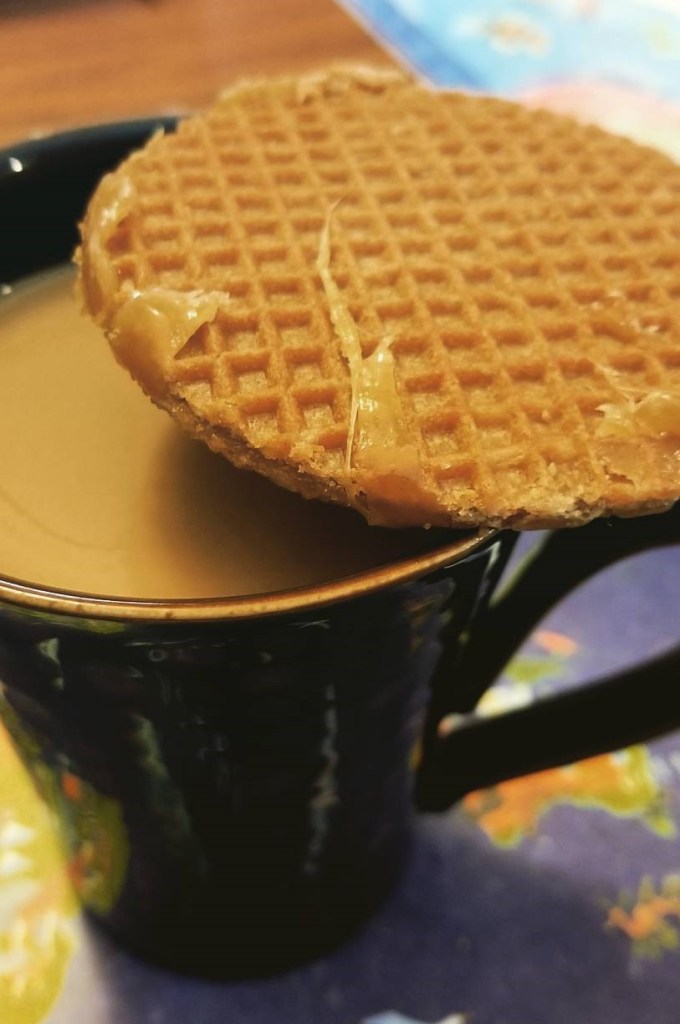
Another delicious treat that is also good with coffee are stroopwafels. They’re made up of thin waffle-like wafers with a thin layer of caramel sandwiched in the middle. (“Waffle”, by the way, is an English word of Dutch origin.) They originated in the city of Gouda as a means for bakers to repurpose crumbs and scraps. You can get them freshly made from street vendors in the Netherlands, as well as bakeries and cafes. The availability of stroopwafels in Canada seems to wax and wane, although they’re always available in Dutch specialty stores. They were also featured as the technical challenge during “Caramel Week” on Season Eight of The Great British Bake Off (airing as The Great British Baking Show in the United States and Canada). It’s common to place them on top of a hot cup of coffee, which warms and softens them. So delicious!
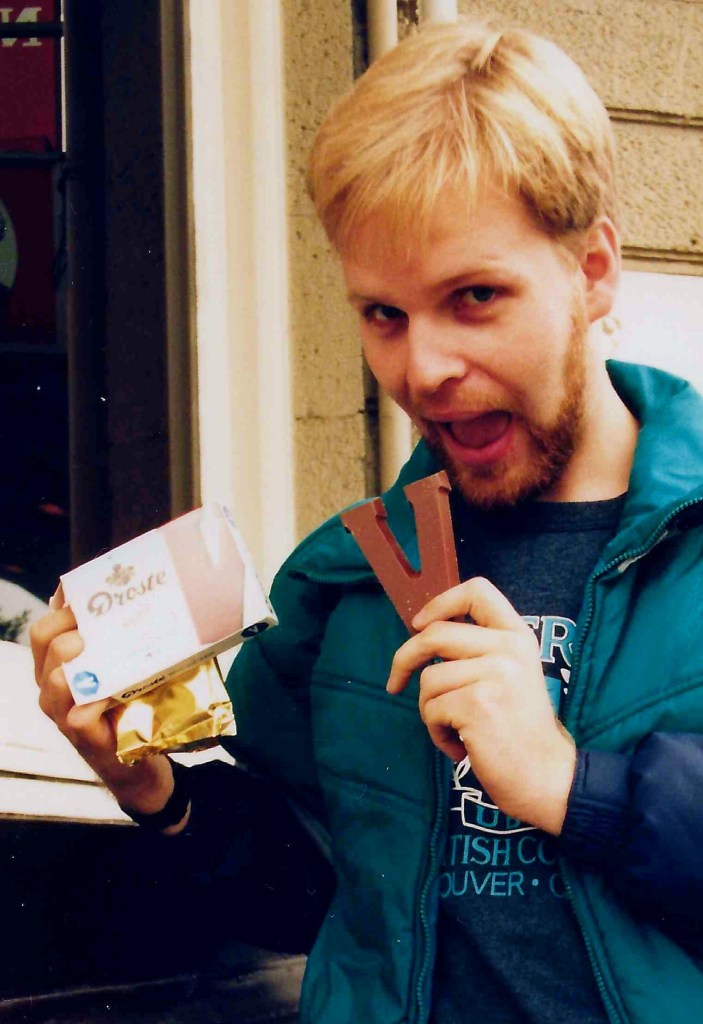
Finally, many people know that the Netherlands is famous for its chocolate. During Sinterklaas, a favourite treat is chocoladeletters (“chocolate letters”). Centuries ago they originated as baked goods, but are now almost exclusively made of chocolate. It is traditional to receive a chocolate letter of the initial of your first name. My great grandmother, Elizabeth Bakker, always included chocolate letters in the box of goodies she sent us every Christmas. When we were children, there was always an argument that some letters were bigger than others so they had more chocolate. The truth is, while the surface area of each letter might differ, they are manufactured in different thicknesses so that every letter contains the same amount. The other problem is finding letters that are uncommon initials for names in the Netherlands, although that is less of a problem than it used to be.
Chocolate letters are another item for which, outside the Netherlands, the availability seems to change over time. When I was a kid, they seemed to be available everywhere. Purdy’s made their own for a while, but I haven’t seen them there in a long time. In recent years, the only place I could find them were in Dutch stores. Even then, I could not find Droste letters – the absolute best ones, bar none – anywhere. You could only find the secondary brands. I once asked a vendor if Droste no longer shipped to Canada, and was told they were simply too expensive to carry. Luckily, a couple years ago I found Droste chocoladeletters in a Dutch store in Lethbridge.
Fortunately, chocolate letters seem to be getting easier to find again, as I saw them being sold in many mainstream supermarkets and shops last Christmas. I first noticed them showing up a couple years ago in a local independent grocery store that specializes in Asian foods and ingredients of all places. Plus, in our neighbourhood of Steveston, there is a chocolatier that makes them – in every letter!
During my first trip to the Netherlands, I discovered a Droste store directly across from the Amsterdam Centraal Station. I enjoyed being able to buy any letter I wanted, well out of season! Sadly, the last time I was in Amsterdam, the store was gone.
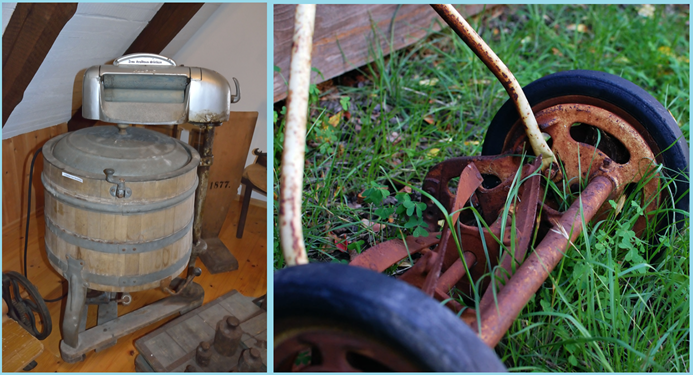
In the early 1970s, my maternal grandparents, Leo Burgess and Helen Lerner, were more than happy to rely on what seemed me to be horribly outdated and obsolete technology. My grandmother still used a wringer-washer and my grandfather used a push mower that to me seemed to be older than Methuselah.
These were both very much like the implements my grandparents used. I remember they each let me have a try at using them. Needless to say, both were hard work. I’ll stick to our modern gizmos, thanks. [Images shared per Creative Commons licences 3.0 Unported and 2.0 Generic, respectively. Links: washer; lawn mower.]
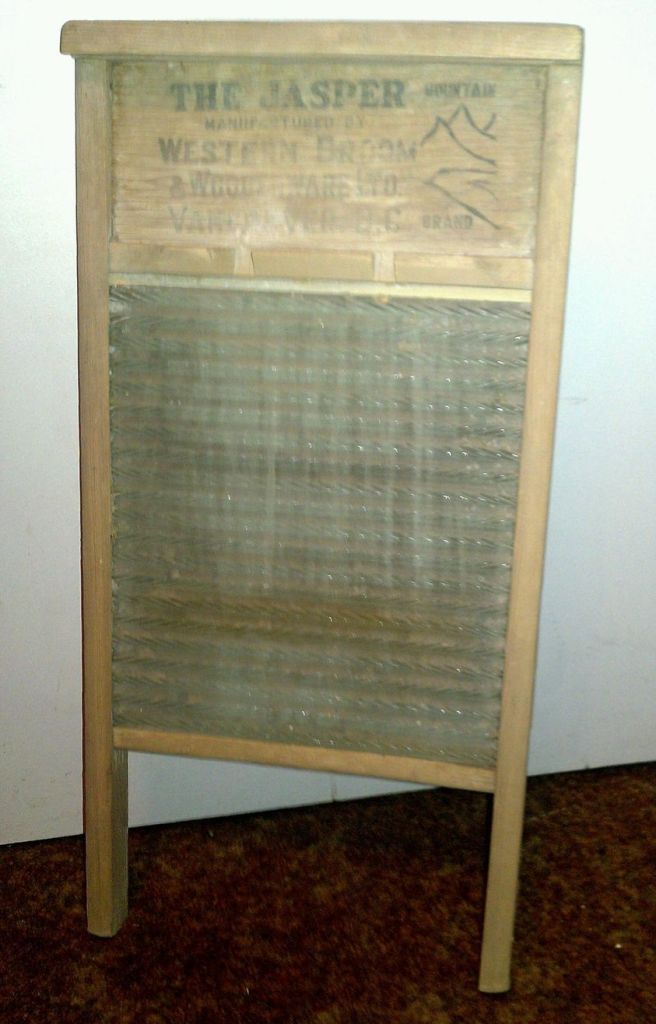
My mother still has the scrub board my grandmother used. She used to keep it in a spare room, which is where I photographed it. A few years ago my folks built a new house, so it now sits in a place of pride.
As can be faintly seen on the washboard, it was manufactured by Fraser Western Broom and Woodenware Ltd. in Vancouver, B.C. I see that the Museum of Vancouver, which is less than a half hour drive from where I live, has one in its collection. Based on the information on the item on its website, this washboard could not have been manufactured any later than 1950. That means my grandmother’s washboard must have been at least 25 or 30 years old when I first saw it.
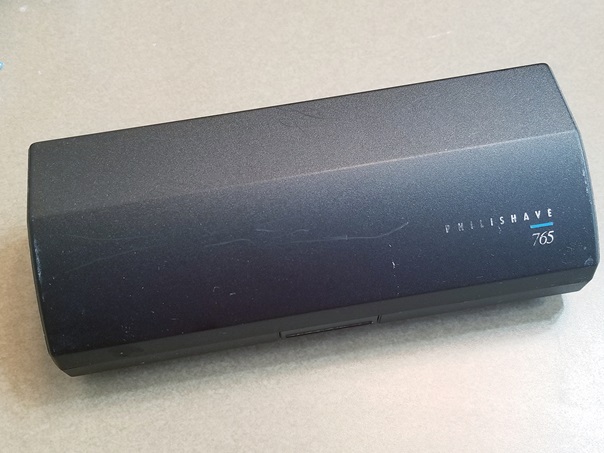
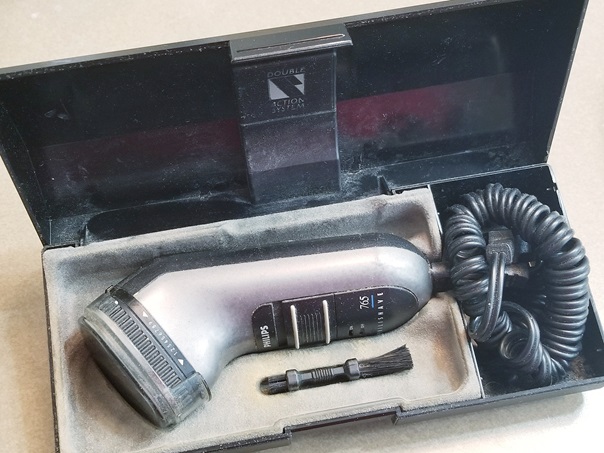
While it may seem my grandparents clung to the past, they did not eschew more modern technology. Ever since before I was in kindergarten, my grandfather always used an electric razor. We always loved it when he would hold it up to our cheeks so that we could have a shave, too. I have the last electric razor my grandfather owned before he passed away in 1995, a Philishave 765. Not only does it still work, but to my surprise I’m still able to buy replacement blades for it. I rarely use it, however, because I still prefer to use a manual razor; plus, several years ago my wife bought me a new one.
This razor must be at least 30 years old, if not older, but it still works!
 A Deck of Ancestors
