My maternal grandmother, Helen Lerner, originally wanted to be a teacher. After finishing high school, she moved to Regina, Saskatchewan to work and earn money to pay to go to Normal School (teacher’s college). Helen applied to the school in Regina run by the Sisters of St. Martha, who were based out of Antigonish, Nova Scotia.
Waiting for her interview, Helen fell into a conversation with an older nun. After chatting for a while, my grandmother was called in for her interview. Following the interview, Helen was told she would not be admitted to the program. However, she was offered the opportunity to train as a lab technician at St. Michael’s Hospital in Lethbridge, Alberta, which was operated by the Sisters of St. Martha. Helen accepted.
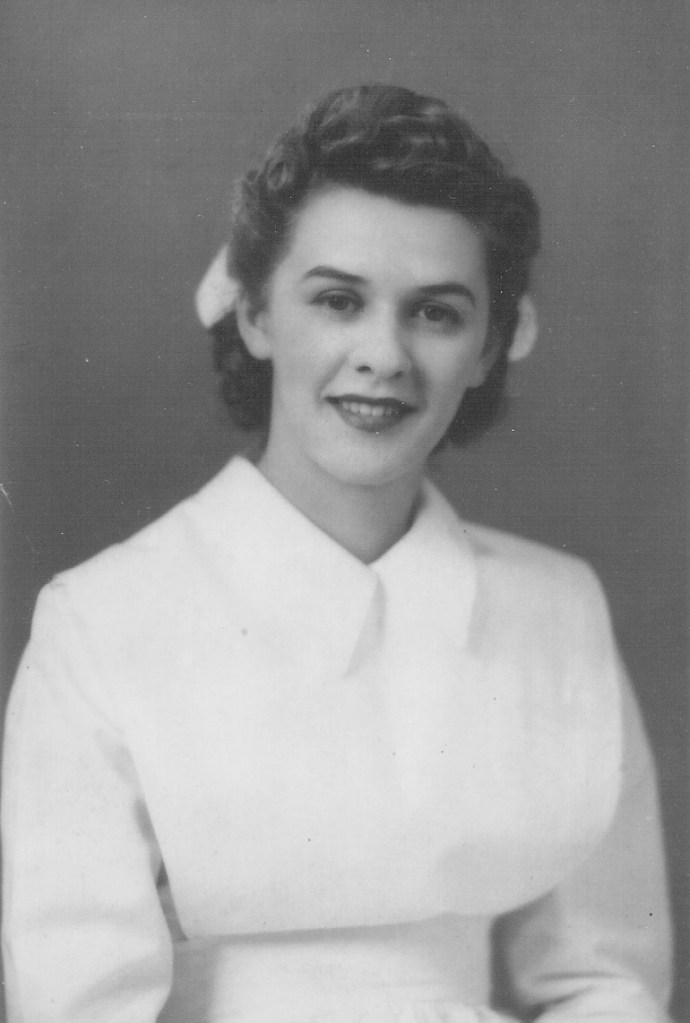
Helen in the uniform she wore as a lab technician.
One day at the hospital after my grandmother had begun working in her new occupation, there was a great commotion in preparing for a visit by the Mother Superior. When the Mother Superior arrived, Helen recognized her as the nun she had been chatting with before her Normal School interview. It turned out that based upon what Mother Superior learned of Helen during their conversation at the school, she advised the interviewers that she believed Helen was an ideal candidate for the hospital and told them to deny her admission to the Normal School.
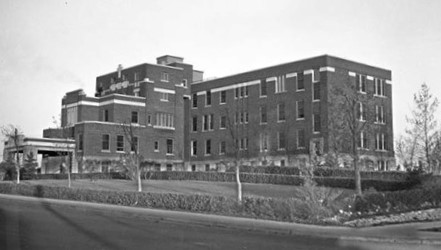
St. Michael’s Hospital in Lethbridge, Alberta, which opened in 1931.
The Mother Superior’s directive was significant for me, because St. Michael’s Hospital is where Helen met my grandfather, Leo Burgess. Leo worked as an orderly at St. Michael’s at the time my grandmother was a lab technician. Many years later, I was born at St. Michael’s.
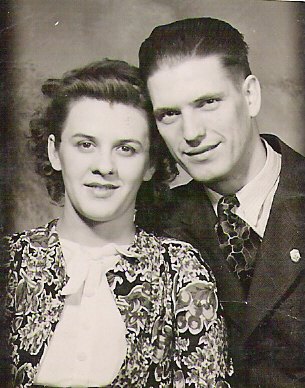
My grandparents, likely sometime in the mid to late 1940s.
Wow, hard to believe that with this post, there are only ten weeks left of this year’s 52 Ancestors Challenge!
This week’s theme is “Organized”. I can be organized, but I hate doing it and it bores me as a topic. The irony is, given some unexpected events, I find myself having to be organized so that I can create this post. If not tonight, then it won’t be done at all!
I decided to do another take on the word. Organized labour came to mind. My maternal grandfather, Leo Burgess, was a strong union man. I thought I had a photo of his union card, which would have been a centerpiece of this post. Turns out I have almost everything but!
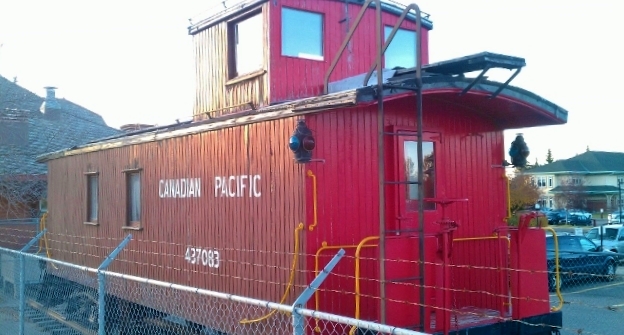
Many years ago, the CPR station in Lethbridge was converted into a public health center and the railyard was removed. However, this caboose remains preserved at the site of the former station. I wonder if my grandfather ever worked on this specific railcar. Heck, I wonder if this is one of the cabooses that he took me on!
My grandfather worked for the Canadian Pacific Railway for 32 years. He started as a brakeman and worked through the ranks, later becoming a yard manager. Early on, because of winter layoffs, he chose to work for the CPR in Cranbrook because there was more work there during the winter to provide a steady income. In 1972 he became a conductor, performing that role until his retirement in 1982.
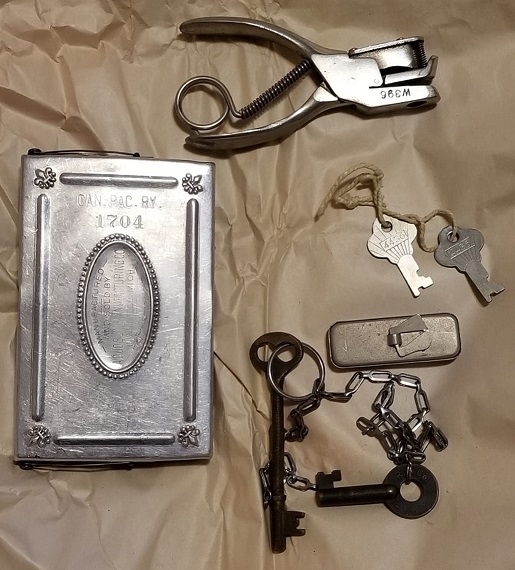
Some of the items my grandfather used for his work as a conductor, which are now in my possession.
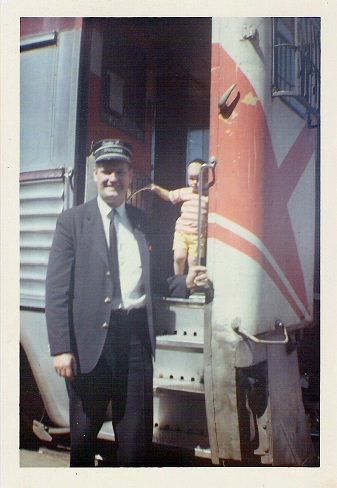
A trip to the train station with my grandfather. I would have been about two or three years old at the time.
My grandfather often brought me to the train station when I was little. Of course, the highlight was always getting to go on to the caboose. When I was older, he’d often take us kids to his favourite haunts, which included the former Labour Club of Lethbridge. We’d always get a treat, like a pop and french fries, but what we loved best were the “pull tabs”. This was many years before lottery scratch tickets, but the idea was similar. They were about the size of a scratch ticket and had semi-perforated tabs that you’d pull off. Underneath were the kinds of images you’d see on a slot machine. Grandpa would buy a bunch and let each of us kids open one up.
My grandmother’s politics were never a secret and she was more than happy to share her opinion about it. However, I don’t remember my grandfather ever talking about politics. I didn’t want to assume what his politics might be, even though he was a staunch union supporter. A few years ago I asked my mom about it. She told me that she rarely heard him talk about politics and he never said what parties he might have supported. My mom had her theories, but had little to base them upon.
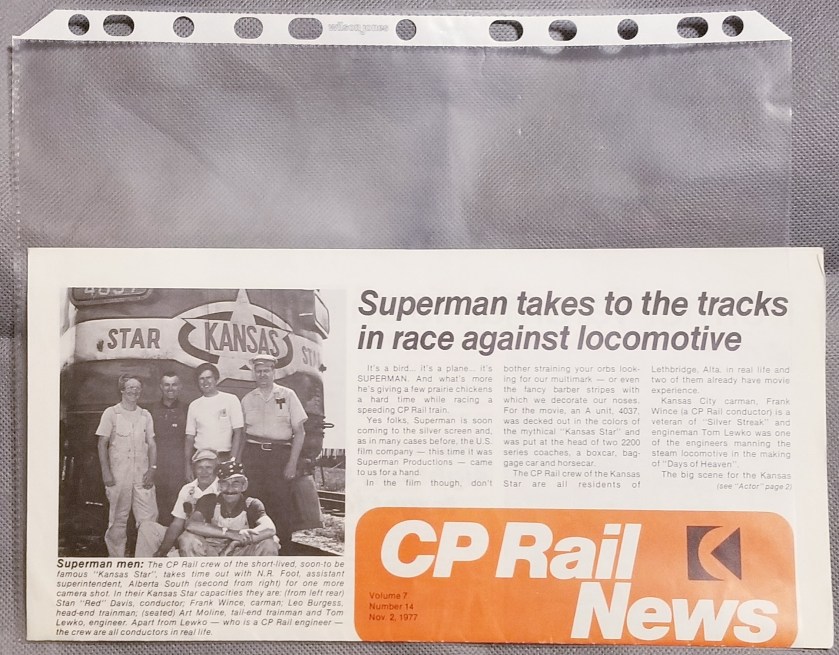
I previously wrote about my grandfather’s role as part of the crew operating the train that was used during the filming of Superman: The Movie.
I’ll be at my folks’ later this week. I’ll have to dig through what of my grandfather’s belongings that my mother still has and see what more I can find.
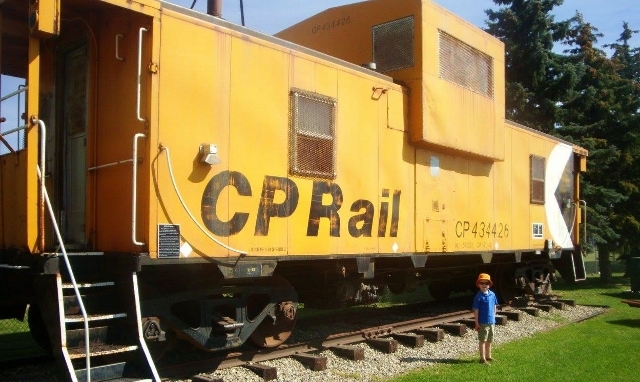
The CPR caboose on display at the Claresholm & District Museum in Claresholm, Alberta, which is located in a former CPR station. I highly recommend this museum – it is an amazing place for a town of Claresholm’s size.
I’ve written about military service and religious service, so the twist I’ve taken for this week’s 52 Ancestors Challenge, “Service”, is to look at domestic service. Most of my ancestry consists of labourers and agricultural workers, so none were so posh as to have had servants. However, I do have ancestors who were the servants.
Sometime in my early teen years, I heard it told that during the war my paternal grandmother worked as a domestic servant. I’m unable to verify the story, as there is no longer anyone who would have first-hand knowledge of that fact. What civil records that might provide more information are not yet publicly available due to privacy laws and the lack of passage of sufficient time.
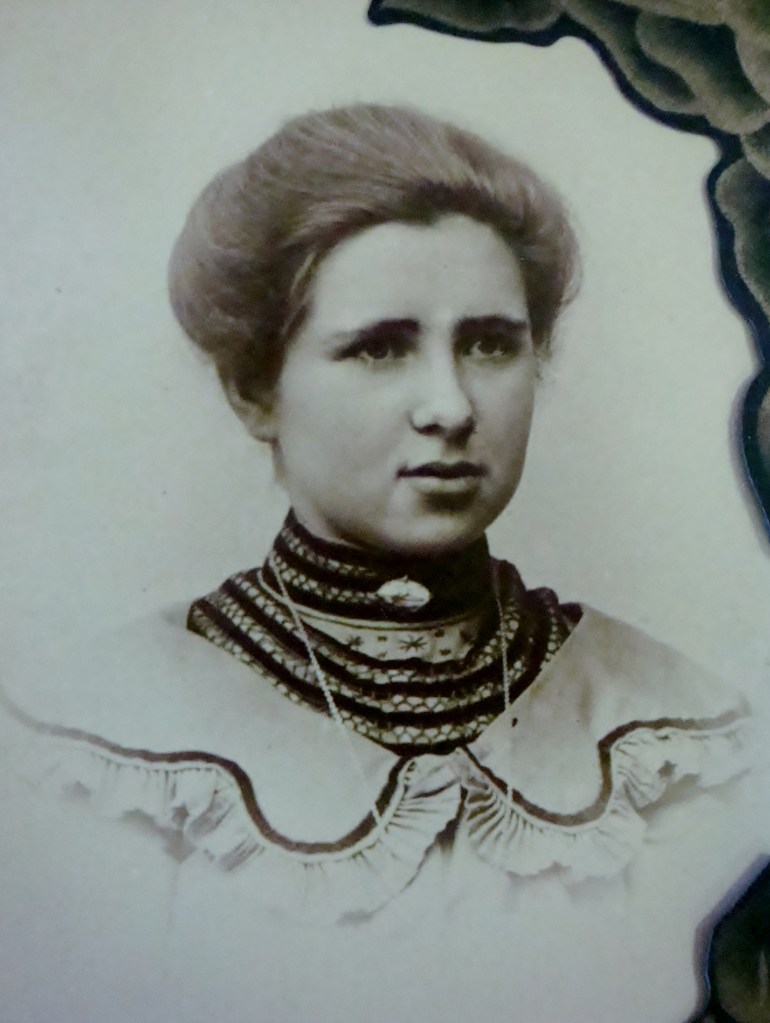
Elizabeth Bakker
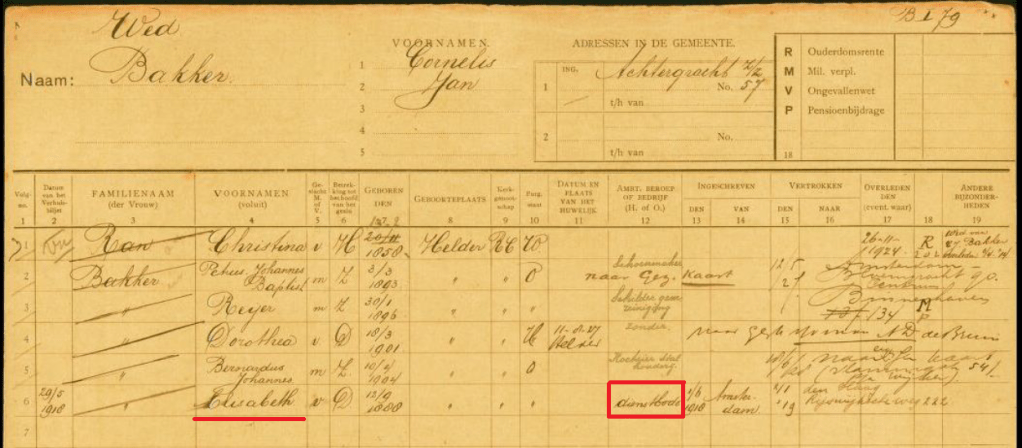
My grandmother’s mother, Elizabeth Bakker, was also a domestic servant (“dienstbode” in Dutch) before she married. It appears she spent time working in Amsterdam as a domestic servant before returning to her hometown of Den Helder, where she performed similar work until 1920 or 1921. However, by the time she married in April 1921, she as “zonder beroep” (“without job”). Elizabeth’s older sister Johanna and her younger sister Cornelia also worked as a domestic servants.
The Bevolkingsregister (“Population Register”) family card for Cornelis Jan Bakker and family. His daughter Elizabeth (my great grandmother) is shown as a dienstbode (“domestic servant”).
My third great grandmother, Maartje Mettes, was a domestic servant when she married her first husband, Klaas Buur. Klaas was also a domestic servant at the time of the marriage. My suspicion is that they may have worked in the same household, which I will need to research. However, by the time Maartje married her second husband, my third great grandfather Cornelis Komen, she was “van beroep zonder” (“without a job”).
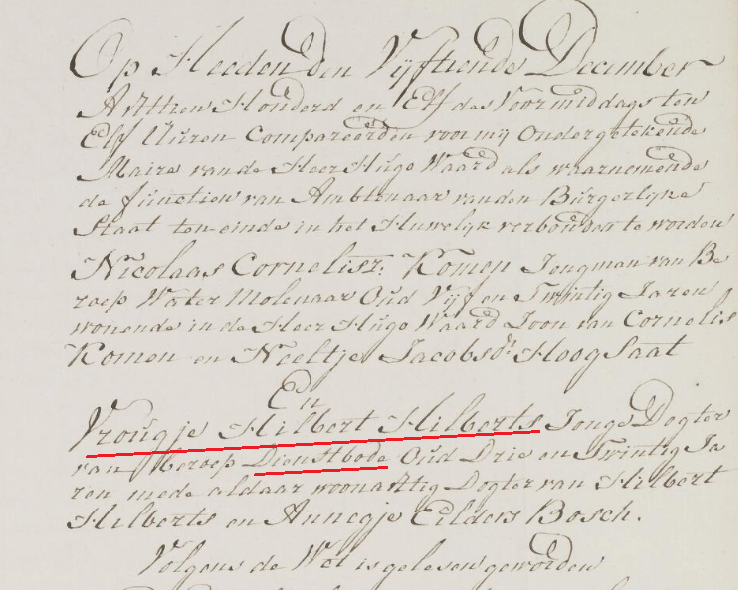
My great x4 grandmother, Vrouwtje Hilbert Hilberts, also spent time as a domestic servant and was doing that work when she got married.
Marriage registration for my great x4 grandparents, Nicolaas Cornelisz (“Klaas”) Komen and Vrouwtje Hilbert Hilberts. Vrouwtje was noted as van beroep dienstbode (“working as a domestic servant”) at the time of marriage in 1811.
Although in the majority, women were not the only domestic servants in my tree. While I have not done much research on my great x4 grandfather, Thomas Hadlond, he was a domestic servant in England before leaving for America and settling in Nebraska. I also have a 3x great uncle, Petrus (“Pieter”) van der Fluit who worked as a dienstknecht (“manservant”). Finally, in another form of domestic service, William Stockwell, my 8x great grandfather, likely came over to America as an indentured servant, gaining his liberty before he married.
A new month brings a new theme for the 52 Ancestors Challenge, “Women”. The first week of the month shares that theme. It took a fraction of a second for me to think of who I wanted to write about this week.
I often see questions posed in genealogy forums about the preservation of records. Every time I see one, it reminds me of my Aunt Diana. The world knew her as Helen Burgess, a scientist and a leading expert on paper preservation, but with family she went by her middle name because she shared her first name with my grandmother. While Aunt Diana passed away more over 20 years ago – not yet even 50 years old – I can still find her work is cited in modern papers.
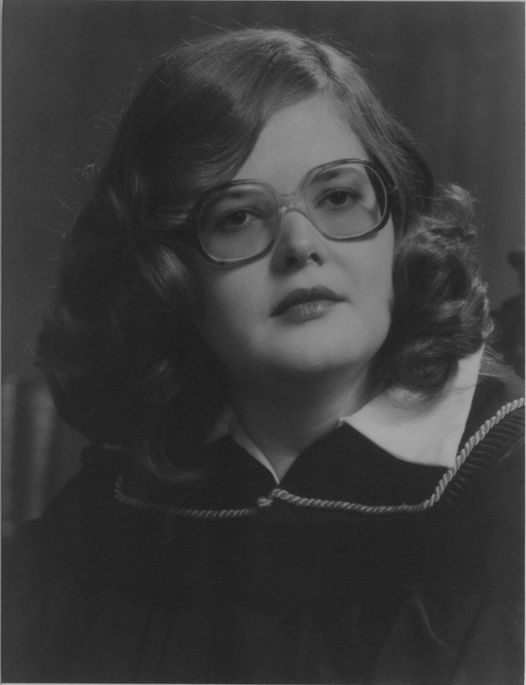
Helen Diana Burgess, B.Sc., M.Sc., M.A.C. (1951 – 1999)
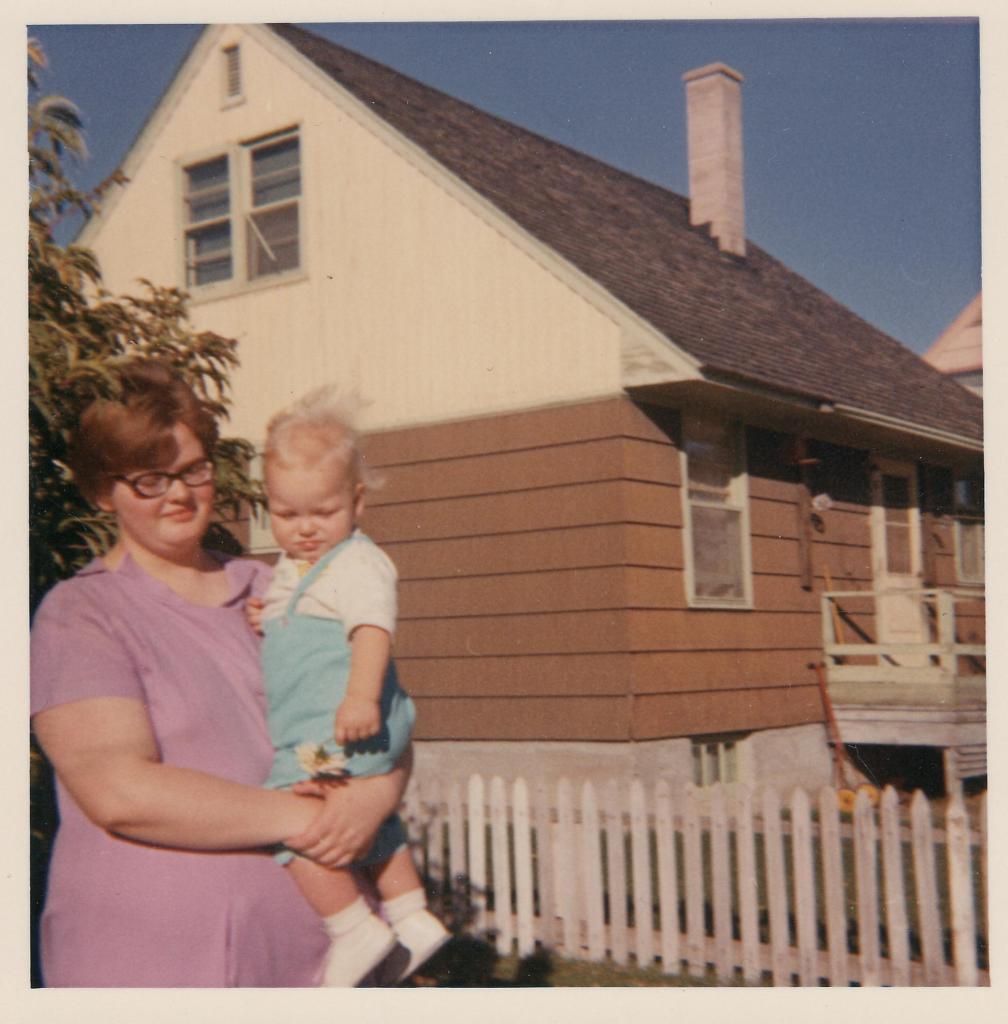
Me with my Aunt Diana. My grandparents’ house is in the background. I have no idea why we were in the neighbour’s yard.
I idolized my Aunt Diana when I was a kid. At the time, she was an undergraduate student at the University of Lethbridge. She was the only person I knew in university at the time. However, to me, her academic pursuits and later career were only part of her identity. I modeled a lot of my behaviour after her, from sharing her interests to developing a love of some of her favourite foods.
Aunt Diana excelled at nurturing children’s intellect without any us even realizing it. Many of my favourite gifts as a kid came from her, including many books. I still have a lot of them. While Aunt Diana read all kinds of books, her favourite genre was mystery novels. She had walls of bookshelves filled with them, and a few of the books she gave me were in that vein. These included the Alfred Hitchcock and the Three Investigators series, about three boy detectives, which were everything boring old Hardy Boys books were not. I’ve passed those on to my sons. She also gave me a copy of L.R. Wright’s award-winning novel, The Suspect. That book kind of blew my mind, because it was a murder mystery set in Sechelt, Canada not far from where I lived, and not Sometown USA.
Aunt Diana also instilled in me her love of art. She loved to draw and paint. When I turned ten, she gave me a set of oil paints, complete with canvases, brushes, turpentine, and linseed oil. I often received postcards from her from around the world, as her work took her to some of the greatest museums of the world. I still have every one of those postcards. I was lucky enough to visit a few museums with her. It was something to have her as my own personal tour guide and art expert.
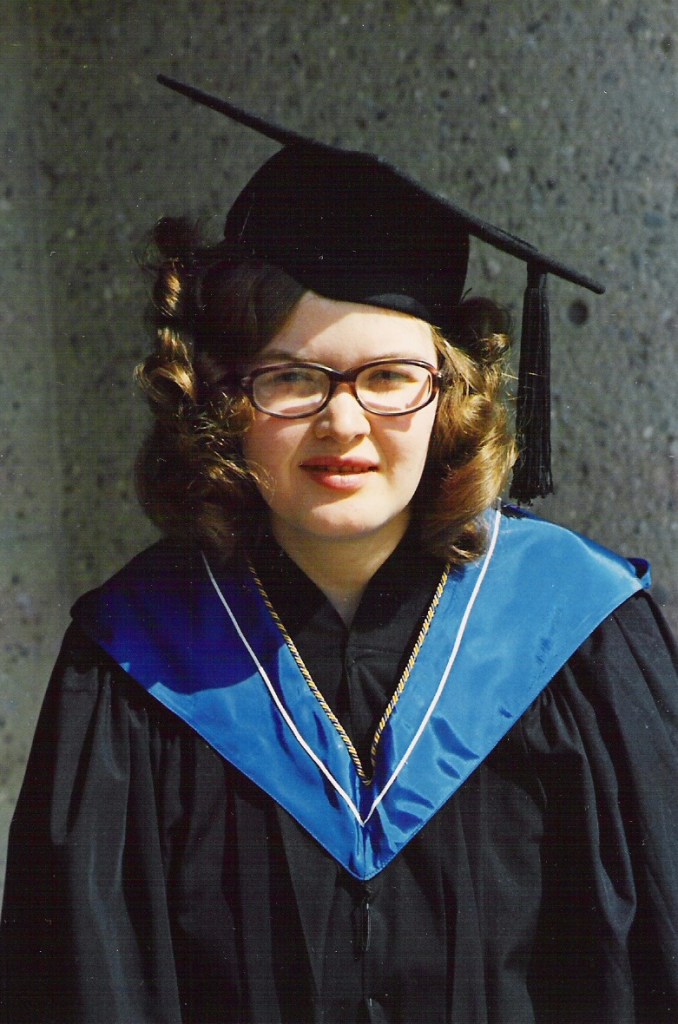
Diana graduating from the University of Lethbridge, 1973
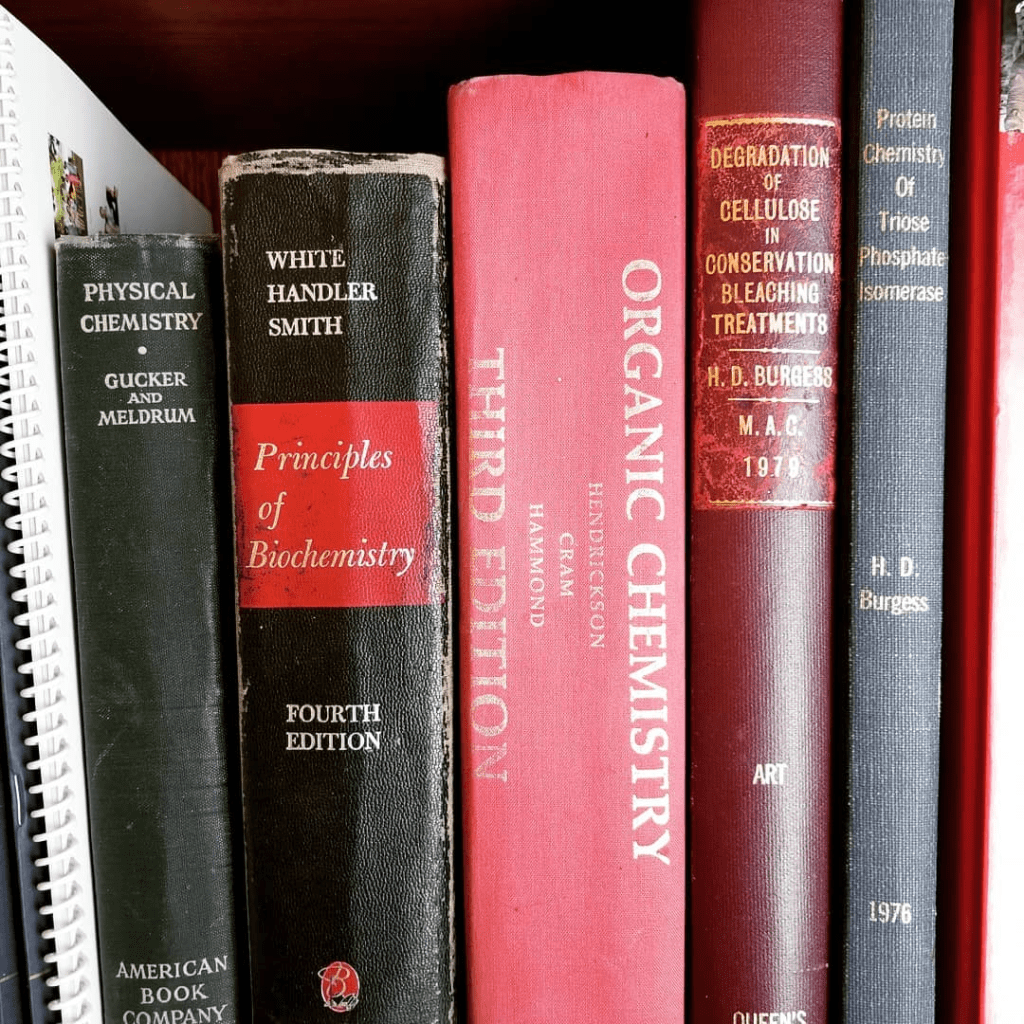
Aunt Diana obtained a Bachelor of Science (Honours) in chemistry in 1973. Diana followed this with a Masters of Science in bio-organic chemistry from U.B.C. in 1977 and a Master of Conservation from Queen’s in 1979. Her thesis at Queen’s was about the “degradation of cellulose during conservation bleaching treatments”. To mark its 40th anniversary, the Queen’s Art Conservation Program conducted an interview series regarding leaders in conservation with a link to the school. One of the sets of interviews was about my aunt, conducted with her friends and colleagues.
Some of my Aunt Diana’s books, including her two masters theses, which now sit on my mother’s bookshelf. After getting an “A” in Grade 12 chemistry, I could almost understand the title of her U.B.C. thesis.
Science!
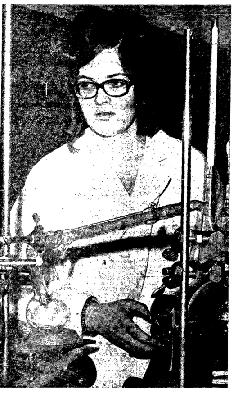
In 1978, Aunt Diana started her career with the Canadian Conservation Institute in Ottawa. By the time she took early retirement in 1998 due to her health, Aunt Diana was a Senior Conservation Scientist. She specialized in the conservation of paper artifacts, but she also worked with other materials. Diana was an expert in conservation bleaching, the use of enzymes, deacidification, and cellulose degradation analysis.
It was a big deal to me and my family when Aunt Diana was one of the scientists featured on an episode of The Nature of Things. The episode, “Turning to Dust“, was about the deteriorating paper in old books and their preservation.
On a more practical level, Aunt Diana would often give my mother tips about what household products – particularly bleach-based products – were worth it and which were rubbish. She also taught me decades ago about the perils of adhesive photo albums and the wonders of acid-free and archival paper products.
Of course, because Aunt Diana was a scientist who was at the top of her field, it always seemed normal to me that women could be scientists. Every time I see a query about preservation of genealogical records, it makes me wish I could ask her and reminds me how much I miss her.
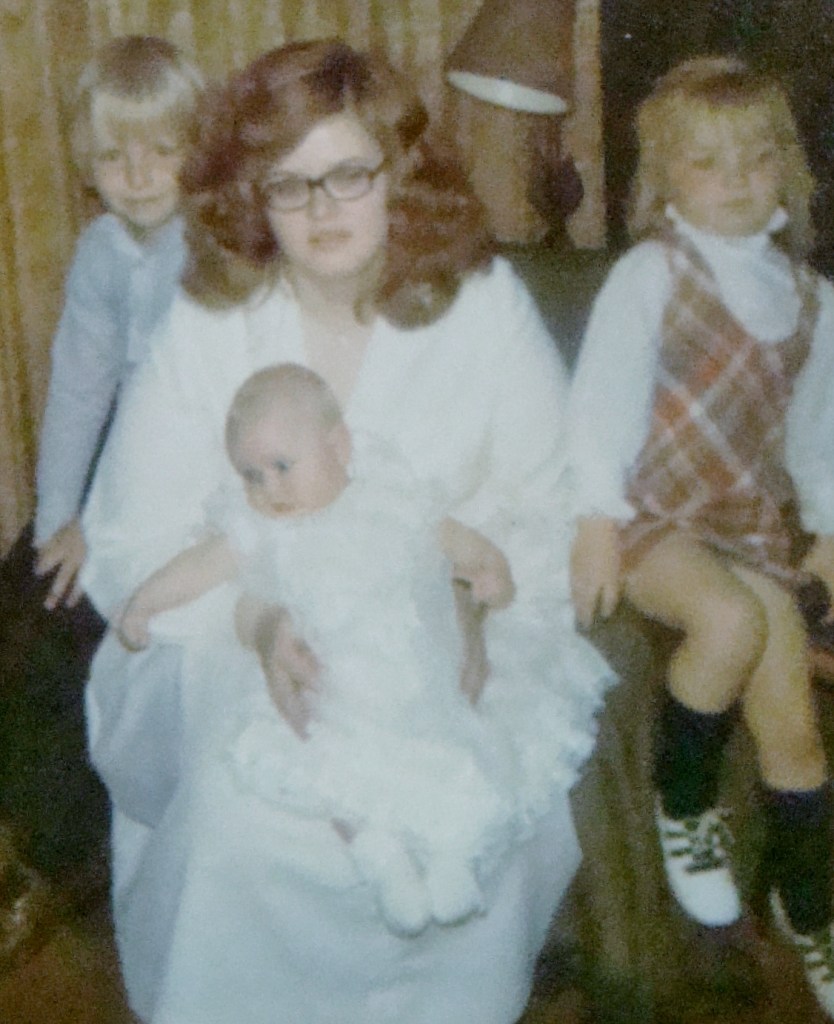
With Aunt Diana back when I only had two siblings. She was my brother’s godmother. Her we are after the baptism.
 A Deck of Ancestors